Bonsai Soil Mix Recipe
Creating the right bonsai soil mix recipe is the foundation of healthy, thriving miniature trees. This comprehensive guide covers everything from essential ingredients like akadama, pumice, and lava rock to species-specific ratios for conifers, deciduous, and tropical varieties. Master the art of soil mixing and watch your bonsai flourish.
Key Takeaways
- Drainage is king: A proper bonsai soil mix recipe prioritizes fast drainage and aeration over water retention to prevent root rot.
- Three core ingredients: Akadama, pumice, and lava rock form the backbone of most professional bonsai soil mixes worldwide.
- Species matter: Conifers need grittier mixes (70% aggregate), while deciduous and tropical trees prefer more moisture-retentive blends (50-60% aggregate).
- Particle size consistency: Screen all components to 1/4 inch to 1/16 inch for optimal root development and water distribution.
- Regional adjustments: Modify your bonsai soil mix recipe based on local climate, humidity, and watering frequency.
- Organic matter sparingly: Use pine bark or compost at 10-20% maximum for nutrient holding capacity without compromising drainage.
- Test before committing: Always test your mix drainage rate and water retention before repotting valuable specimens.
Quick Answers to Common Questions
What is the best all-purpose bonsai soil mix recipe for beginners?
A 1:1:1 ratio of akadama, pumice, and lava rock works for 80% of temperate species. Screen all components to 1/8-1/4 inch. Adjust slightly wetter (more akadama) for deciduous, drier (more pumice/lava) for conifers.
Can I use regular potting soil for bonsai?
No. Regular potting soil retains too much water, lacks aeration, and breaks down quickly in shallow pots. It causes root rot in bonsai. Use mineral-based components like akadama, pumice, and lava rock instead.
How often should I change my bonsai soil mix?
Repot and refresh soil every 1-3 years depending on species and climate. Fast-growing deciduous trees need annual repotting. Slow conifers can go 3-5 years. Akadama breaks down in 2-3 years; pumice and lava last indefinitely.
What can I substitute for akadama if it is unavailable?
Turface MVP (calcined clay) is the best widely available substitute. Use the same particle size. It holds less water than akadama, so increase the akadama portion by 10-15% in your recipe to compensate.
Do I need to sterilize bonsai soil components?
No. Sterilizing kills beneficial microbes. Quality components from reputable sources are clean enough. If concerned about pests, solarize moist soil in black plastic bags for 2 weeks in summer sun. This reduces pathogens while preserving biology.
📑 Table of Contents
- Why Your Bonsai Soil Mix Recipe Matters More Than You Think
- The Core Philosophy: What Bonsai Roots Actually Need
- The Big Three Ingredients: Building Blocks of Every Mix
- Species-Specific Bonsai Soil Mix Recipes
- Regional Adjustments: Your Climate Dictates the Mix
- Advanced Techniques: Taking Your Mix to the Next Level
- Common Mistakes and How to Fix Them
- Testing Your Mix: Quality Control Before You Commit
- Sourcing Ingredients: Where to Buy Without Breaking the Bank
- Seasonal Soil Management
- Building Your Soil Mixing Station
- Conclusion: Your Soil Journey Starts Now
Why Your Bonsai Soil Mix Recipe Matters More Than You Think
If you have ever watched a beautiful bonsai decline despite perfect pruning and ideal lighting, the culprit was likely hiding beneath the surface. The soil is not just dirt to hold the tree upright. It is the engine room where roots breathe, drink, and eat. A poorly designed bonsai soil mix recipe suffocates roots, invites fungal diseases, and turns a living sculpture into a slow tragedy.
I learned this lesson the hard way with my first Japanese maple. I used standard potting soil because the bag said “good for containers.” Within six weeks, the fine roots had rotted into black mush. The tree never recovered. That painful mistake sent me down a rabbit hole of research, experimentation, and conversations with bonsai masters. What I discovered changed everything: there is no single perfect mix, but there is a perfect framework. Once you understand the principles, you can build a bonsai soil mix recipe tailored to any tree, any climate, and any lifestyle.
This guide distills decades of collective wisdom into practical, actionable knowledge. Whether you are repotting a nursery stock juniper or refining a decades-old pine, you will walk away with the confidence to mix soil like a professional. Let us dig in.
The Core Philosophy: What Bonsai Roots Actually Need
Oxygen First, Water Second
Here is the counterintuitive truth that separates bonsai soil from garden soil: roots need air more than they need water. In nature, tree roots grow in soil pores filled with oxygen. In a shallow bonsai pot, gravity pulls water down, but the limited depth means the bottom layer stays saturated. Without large pore spaces, oxygen cannot penetrate. The roots drown.
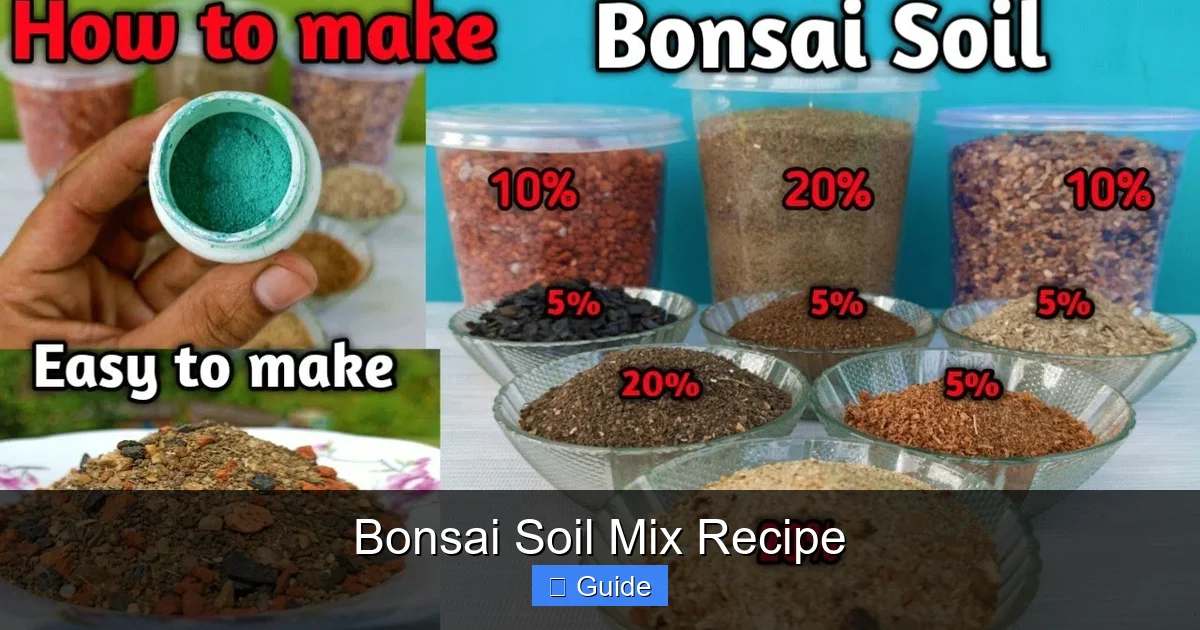
Visual guide about Bonsai Soil Mix Recipe
Image source: simplifygardening.com
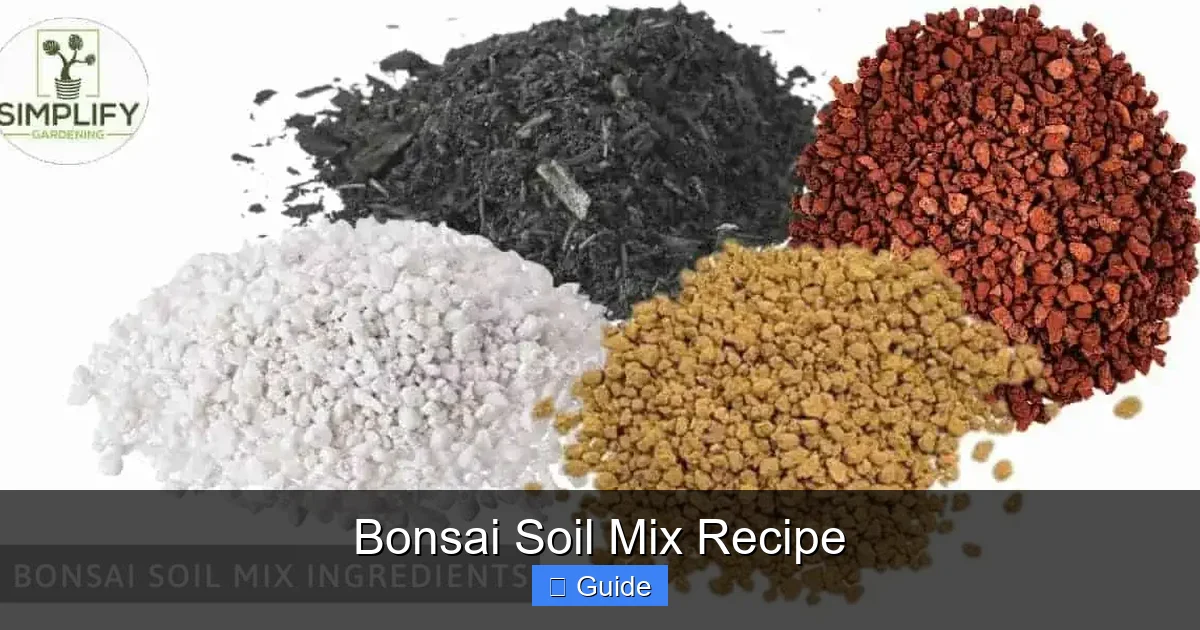
A proper bonsai soil mix recipe creates a matrix of macro pores (for air exchange and drainage) and micro pores (for water retention). Think of it like a sponge with large holes cut through it. Water coats the particles, but air moves freely through the channels. This balance is why particle size and shape matter more than the specific brand of akadama you buy.
The Perched Water Table Problem
Physics works against us in shallow containers. Water does not drain evenly from top to bottom. It forms a saturated layer at the bottom called a perched water table. The shallower the pot, the higher this saturated zone reaches into the root zone. In a two-inch deep shohin pot, the perched water table can occupy the entire bottom half of the container.
This is why you cannot simply use “well-draining” potting soil. The particle size in commercial mixes is too small and too uniform. The perched water table rises too high. A bonsai soil mix recipe uses larger, irregular particles to lower that saturation zone and keep the majority of the root zone aerated.
Particle Size: The Golden Rule
If you remember only one technical detail, make it this: screen everything between 1/4 inch (6mm) and 1/16 inch (1.5mm). Particles larger than 1/4 inch create voids that dry too fast and destabilize the tree. Particles smaller than 1/16 inch (fines) clog pore spaces, raise the perched water table, and turn your mix into concrete over time.
Invest in a set of bonsai soil sieves. They cost twenty dollars and last a lifetime. Screen every batch of akadama, pumice, lava rock, and pine bark. Dust the fines into your garden beds. Your trees will thank you with vigorous spring growth.
The Big Three Ingredients: Building Blocks of Every Mix
Akadama: The Japanese Gold Standard
Akadama is a volcanic clay mined in Japan, fired at low temperatures to create stable, porous granules. It is the heart of traditional bonsai soil mix recipes for good reason. The granules hold water inside their pore structure while the surface remains relatively dry, creating an ideal moisture gradient for root tips. As roots grow, they penetrate the granules, effectively mining water and nutrients on demand.
Not all akadama is created equal. Hard quality (Double Red Line brand) breaks down slowly over two to three years. Standard quality (Single Red Line) degrades in one to two years. Soft quality turns to mud in a single season. For beginners, I recommend hard quality despite the higher price. The consistency saves you from emergency repotting.
One caveat: akadama is expensive and increasingly difficult to source outside Japan. Many growers now substitute or supplement with calcined clay products like Turface MVP or Oil-Dri. These work well but lack the root-penetrable structure of true akadama. If you use substitutes, increase the aggregate percentage slightly to compensate.
Pumice: The Lightweight Aerator
Pumice is volcanic glass foam, essentially frozen bubbles of gas in lava. It is incredibly light, highly porous, and structurally stable for decades. In a bonsai soil mix recipe, pumice creates the macro pores that keep oxygen flowing. It holds some water in its vesicles but releases it readily. Roots love growing along pumice surfaces.
Look for horticultural grade pumice, not the chunky landscaping stone sold for pathways. The ideal size is 1/8 to 1/4 inch. White pumice is most common, but gray or pink varieties work identically. Avoid “pumice sand” or fines. They defeat the purpose.
Pumice is my desert island ingredient. If I could only have one aggregate, it would be pumice. It never breaks down, never compacts, and buffers pH beautifully. It is also widely available and affordable in most regions.
Lava Rock: The Structural Anchor
Lava rock (scoria) is denser than pumice with a rougher, more irregular surface. It provides ballast in the pot, preventing top-heavy trees from tipping in wind. The craggy texture offers immense surface area for beneficial bacteria and mycorrhizal fungi to colonize. It holds less water than pumice but releases it more slowly.
Red and black lava rock are both excellent. Black tends to be denser; red is often more porous. Choose based on availability and aesthetic preference. Some growers avoid red lava in formal display pots because the color shows through the soil surface. For training pots, it makes no difference.
Like pumice, lava rock lasts essentially forever. A single bag serves decades of repotting. It is the gift that keeps giving.
Species-Specific Bonsai Soil Mix Recipes
Conifers: Pines, Junipers, Spruces
Conifers evolved in well-drained, often rocky soils. They hate wet feet. Their mycorrhizal partnerships depend on high oxygen levels. The classic Japanese conifer mix is 70% aggregate (pumice and lava rock) to 30% akadama. Some masters go 80/20 for collected yamadori or high-elevation species.
Standard Conifer Recipe:
- 40% pumice (1/8 – 1/4 inch)
- 30% lava rock (1/8 – 1/4 inch)
- 30% hard akadama (1/8 – 1/4 inch)
High-Drainage Variation (for wet climates or yamadori):
- 50% pumice
- 30% lava rock
- 20% akadama
Moisture-Retentive Variation (for hot, dry climates):
- 30% pumice
- 20% lava rock
- 40% akadama
- 10% pine bark fines (screened)
Notice I do not include organic matter in the standard recipe. Conifers in development (pre-bonsai) benefit from 10-15% pine bark for nutrient holding. Refined show trees often run pure mineral mixes with fertilizer cakes on the surface.
Deciduous Broadleaf: Maples, Elms, Hornbeams, Beeches
Deciduous trees generally prefer more consistent moisture than conifers. They have higher transpiration rates during leaf season and finer root systems. The classic ratio flips to 50-60% akadama with 40-50% aggregate.
Standard Deciduous Recipe:
- 50% hard akadama
- 30% pumice
- 20% lava rock
Development Stage Recipe (thickening trunks, building branches):
- 40% akadama
- 20% pumice
- 15% lava rock
- 25% pine bark (screened 1/8 – 1/4 inch)
The added pine bark provides sustained nutrition for vigorous growth. Once the tree enters refinement, reduce bark to 10% or eliminate it entirely.
Azaleas and Rhododendrons (Ericaceous):
- 60% kanuma (acidic volcanic clay)
- 20% pumice
- 20% lava rock
Kanuma is non-negotiable for azaleas. Standard akadama is neutral to slightly alkaline. Azaleas demand pH 4.5-5.5. If kanuma is unavailable, substitute 50% peat moss and 50% pumice, but expect faster breakdown.
Tropical and Subtropical: Ficus, Schefflera, Bougainvillea, Fukien Tea
Tropicals grow year-round in warm conditions. They need moisture retention but cannot tolerate stagnation. They also benefit from more organic matter since they are often fertilized heavily.
Standard Tropical Recipe:
- 40% akadama (or calcined clay)
- 30% pumice
- 20% pine bark (screened)
- 10% lava rock
High-Vigor Variation (for rapid development):
- 30% akadama
- 20% pumice
- 30% pine bark
- 10% lava rock
- 10% coconut coir (washed and screened)
Coconut coir holds water exceptionally well without breaking down quickly. Wash it thoroughly to remove salts. Soak in calcium nitrate solution (1g/L) for two hours, then rinse until runoff reads low EC. This buffers the cation exchange sites and prevents potassium lockout.
Special Mention: Olive, Pomegranate, and Mediterranean Species
These trees bridge the gap between temperate and tropical. They want sharp drainage but appreciate some organic matter.
Mediterranean Recipe:
- 40% pumice
- 30% lava rock
- 20% akadama
- 10% pine bark
Regional Adjustments: Your Climate Dictates the Mix
Hot and Arid (Southwest US, Mediterranean, Australia Interior)
Evaporation is your enemy. Increase water-retentive components by 10-15%. Add a top dressing of sphagnum moss during peak summer. Consider incorporating 5% vermiculite in the bottom third of the pot for a moisture reservoir. Water early morning and late afternoon on extreme days.
Cool and Wet (Pacific Northwest, UK, Northern Europe, Japan)
Drainage is paramount. Increase aggregate to 70-80% for all species. Reduce or eliminate akadama for conifers. Use larger particle sizes (1/4 inch minimum). Pot on feet or risers to maximize airflow under the container. Consider a rain shelter for winter.
Humid Subtropical (Southeast US, Southeast Asia, Gulf Coast)
Fungal pressure is high. Prioritize airflow. Use 60% aggregate minimum. Add 5% horticultural charcoal to absorb excess moisture and filter pathogens. Avoid organic matter in summer mixes. Repot in early spring before humidity peaks.
Four-Season Continental (Midwest, Northeast, Central Europe, Canada)
You face freeze-thaw cycles. The mix must not hold water that expands and cracks roots. High aggregate (60%+) protects against winter wet. For trees overwintering in unheated garages or cold frames, use pure mineral mixes (no bark) to prevent anaerobic pockets during thaw cycles.
Advanced Techniques: Taking Your Mix to the Next Level
Layered Soil Profiles
Nature does not have uniform soil from surface to bedrock. Neither should your pot. A layered bonsai soil mix recipe mimics natural horizons and optimizes each zone for its function.
Bottom Layer (Drainage Layer) – 1/2 to 1 inch: Coarse lava rock or pumice (1/4 – 1/2 inch). This ensures the exit holes never clog and creates a buffer against the perched water table.
Middle Layer (Root Zone) – Bulk of pot: Your standard species mix. This is where 80% of fine roots live.
Top Layer (Surface) – 1/4 to 1/2 inch: Finer grade of your main mix (1/16 – 1/8 inch) or pure akadama. This protects surface roots from rapid drying, supports moss establishment, and looks refined.
Some growers add a thin layer of pure pumice at the very bottom (1/4 inch) as a “filter” preventing fines from washing into the drainage layer. It is a nice touch but not essential if you screen well.
Mycorrhizal Inoculation
Conifers and many deciduous trees depend on mycorrhizal fungi for nutrient uptake, especially phosphorus. These fungi colonize root tips and extend hyphae into the soil matrix, effectively increasing root surface area by hundreds of times.
When repotting, dust the root ball with mycorrhizal inoculant powder before backfilling. Better yet, incorporate a teaspoon per gallon of soil mix. Look for products containing Rhizopogon, Suillus, and Pisolithus species for conifers; Glomus species for deciduous and tropicals.
Do not use chemical fungicides (especially systemic ones) on inoculated trees. They kill the symbionts. If you must treat, wait six weeks before re-inoculating.
pH Management Through Soil Choice
Your bonsai soil mix recipe sets the baseline pH. Akadama runs neutral (6.5-7.0). Kanuma is acidic (4.5-5.5). Lava rock and pumice are neutral but buffer toward slightly alkaline over time. Pine bark is acidic (4.0-5.0).
Test your mix pH after hydrating. Mix one part soil with two parts distilled water, let sit thirty minutes, then test. Adjust with sulfur (to lower) or lime (to raise) at 1 gram per liter of soil. Retest after one week.
Most temperate species prefer 5.5-6.5. Azaleas want 4.5-5.5. Olives tolerate 7.0-8.0. Match the mix to the tree, not the other way around.
Fertilizer Integration Strategies
Organic fertilizer cakes (rapeseed, cottonseed, bone meal) sit on the soil surface and break down slowly with each watering. They work beautifully with mineral soils because the nutrients leach directly into the pore water where roots absorb them.
For development trees, incorporate slow-release fertilizer (Osmocote Plus 15-9-12, 8-9 month) into the middle layer at 3g per liter of soil. This provides steady nutrition without weekly attention.
Liquid fertilizer at quarter strength weekly works for refined trees. The low CEC (cation exchange capacity) of mineral mixes means nutrients flush quickly. Frequent, weak feeding beats heavy, infrequent feeding every time.
Common Mistakes and How to Fix Them
Mistake 1: Using Unsifted Components
Fines turn to mud. Mud kills roots. Always sift. No exceptions. If you are too busy to sift, you are too busy for bonsai. Buy pre-sifted components if necessary. They cost more but save hours of labor and prevent heartbreak.
Mistake 2: Copying a Recipe Without Understanding It
A mix that works for a Japanese master in Saitama will drown your juniper in Florida. The principles are universal; the ratios are local. Start with a standard recipe, then adjust based on your observation. How fast does the surface dry? How long until the bottom dries? Does the tree push vigorous spring growth? Let the tree teach you.
Mistake 3: Repotting Into Wet Mix
Always mix soil dry. Dust creates mud when wet. Mix your components in a large tub or on a tarp. Wear a mask. Akadama and pumice dust irritates lungs. Once thoroughly blended, lightly mist until the mix holds a clump when squeezed but crumbles when poked. This “field capacity” moisture level makes repotting easier and reduces transplant shock.
Mistake 4: Over-Packing the Pot
Roots need space to grow. Chopstick the soil gently to settle it around roots, but do not compress. The soil should feel springy, not hard. Over-packing eliminates the macro pores you carefully created. If water pools on the surface, you packed too hard.
Mistake 5: Ignoring the Pot Shape
Deep pots drain better than shallow pots. Wide pots have larger perched water tables than narrow pots. Adjust aggregate percentage up for shallow/wide pots, down for deep/narrow pots. A cascade pot needs 10% more aggregate than a standard oval of the same volume.
Testing Your Mix: Quality Control Before You Commit
The Drainage Test
Fill a nursery pot with your mix. Saturate thoroughly. Time how long until water stops dripping from the bottom. Ideal: 30-60 seconds for the first drops, steady stream for 2-3 minutes, then complete stop within 5 minutes. If water trickles for 10+ minutes, increase aggregate. If it stops in 30 seconds, increase akadama or bark.
The Moisture Retention Test
Weigh the saturated pot. Place in your growing environment. Weigh daily at the same time. Plot the curve. You want a gradual decline over 2-3 days in spring conditions, not a cliff drop in 12 hours or a flat line for a week.
The Root Penetration Test
After one growing season, bare-root a test tree (or a sacrificial seedling). Examine root distribution. Roots should be evenly distributed throughout the pot, not clustered at the bottom (too wet) or only at the edges (too dry). Fine root tips should be white or pale yellow, not brown or black.
The Breakdown Test
Take a handful of used soil after two years. Rub between fingers. Akadama should still have granular structure, not smear into clay. Pumice and lava should be unchanged. Bark should be darkened but fibrous, not powdery. If components have broken down significantly, adjust your recipe or repotting schedule.
Sourcing Ingredients: Where to Buy Without Breaking the Bank
Local Landscape Yards
Call ahead and ask for “horticultural pumice” or “lava rock 3/8 minus.” Many yards carry these for green roof installations. Bring your sieves and screen on-site if they allow. You can often fill a truck bed for the price of two bags at a bonsai nursery.
Turf and Athletic Field Suppliers
Turface MVP (calcined clay) is sold for baseball infields and golf course topdressing. A 50lb bag costs $15-20. It is not akadama, but it is a excellent substitute for 50-70% of the akadama portion in most mixes.
Online Specialty Retailers
Bonsai-specific vendors (Bonsai Jack, Eisei-en, Dallas Bonsai, etc.) sell pre-screened, pre-mixed soils. Expensive but consistent. Good for beginners or small collections where mixing is impractical.
DIY Pine Bark
Buy aged pine bark mulch (not fresh, not cedar, not hardwood). Screen to size. Age an additional six months if possible. Free or nearly free if you have a pickup truck and a local mulch yard. The best organic component money can’t buy.
Seasonal Soil Management
Spring: The Repotting Window
Most temperate trees repot as buds swell but before leaves open. This is when root healing is fastest. Prepare your mixes in late winter. Store dry in sealed containers. Have more than you think you need. Running out mid-repotting forces compromises.
Summer: Monitoring and Top-Dressing
Hot winds crust the surface. Lightly cultivate the top 1/4 inch with a root rake monthly. Apply fresh top-dressing (fine akadama or moss) after heavy rains wash it away. Check drainage holes for root blockage.
Autumn: Pre-Winter Prep
Reduce organic matter in late summer mixes for trees overwintering outdoors. Stop fertilizing six weeks before first frost. Ensure pots are on feet. A frozen saturated pot cracks roots; a frozen dry pot is safe.
Winter: Protection and Planning
In cold climates, bury pots in mulch or place in cold frames. The soil mix should be slightly dry at freeze-up. Plan next year’s mixes. Order akadama early (spring shipments sell out). Experiment with new components on less valuable trees.
Building Your Soil Mixing Station
You do not need a fancy setup, but a dedicated space makes the process enjoyable rather than chaotic. Here is my ideal station:
- Heavy-duty folding table at waist height (saves your back)
- Large plastic storage tub (50 gallon) for mixing batches
- Set of four sieves: 1/4, 1/8, 1/16 inch, and dust pan
- 5-gallon buckets for each component (labeled)
- Garden hose with mist nozzle
- N95 or P100 respirator (non-negotiable for lung health)
- Nitrile gloves (akadama dries skin terribly)
- Shop vac for cleanup
- Clipboard with recipe cards for each species group
- Scale for weighing test batches
Mix in batches of 20-30 gallons. That covers a full repotting session for a medium collection. Store finished mix in heavy-duty contractor bags, sealed, off the ground. It keeps indefinitely dry.
Conclusion: Your Soil Journey Starts Now
We have covered a lot of ground. From the physics of perched water tables to the nuances of kanuma for azaleas, from the discipline of screening every particle to the joy of watching roots explode in a perfect mix. The perfect bonsai soil mix recipe is not a destination. It is a conversation between you, your trees, and your environment.
Start simple. Pick one standard recipe for your most common species. Mix a batch. Screen it carefully. Repot one tree. Watch it through a full growing season. Take notes. Take photos. Then adjust one variable at a time. More pumice. Less bark. Finer top layer. Deeper drainage layer.
In five years, you will have a mix that is uniquely yours. Your trees will show it in their vigor, their ramification, their resilience to stress. And when a fellow enthusiast asks for your secret, you will smile and say, “It is just soil. But it is my soil.”
Now go get your sieves. Your trees are waiting.
Frequently Asked Questions
What is the ideal particle size for bonsai soil mix ingredients?
All components should be screened to 1/4 inch (6mm) maximum down to 1/16 inch (1.5mm) minimum. Particles larger than 1/4 inch create unstable voids. Particles smaller than 1/16 inch (fines) clog pore spaces and impede drainage. Consistent sizing ensures even water distribution and root penetration throughout the pot.
Can I make bonsai soil mix without akadama?
Yes. Many growers use 100% mineral mixes of pumice and lava rock (50/50) with great success. Add 10-20% screened pine bark for nutrient retention. Calcined clay products like Turface MVP or Oil-Dri are common akadama substitutes. The key is maintaining particle size discipline and drainage regardless of ingredients.
How do I know if my bonsai soil mix is draining properly?
Water should begin draining from the bottom within 30-60 seconds of watering. The flow should be steady for 2-3 minutes, then stop completely within 5 minutes. The soil surface should dry within 4-8 hours in spring conditions. If water pools or the pot stays wet for days, increase aggregate percentage.
Should I add fertilizer to my bonsai soil mix when repotting?
For refined trees, no. Apply organic fertilizer cakes on the soil surface after repotting. For trees in development, incorporate slow-release fertilizer (3g per liter of soil) into the middle layer only. Never place fertilizer directly on roots or in the bottom drainage layer. Liquid feed at quarter strength weekly during growing season.
What is the difference between akadama and kanuma?
Akadama is neutral pH (6.5-7.0) volcanic clay from the Kanto region of Japan. Kanuma is acidic pH (4.5-5.5) volcanic clay from the Kanuma region. Kanuma is essential for azaleas, rhododendrons, and other ericaceous species. They are not interchangeable. Using akadama for azaleas causes chlorosis and decline.
Can I reuse old bonsai soil when repotting?
Generally no. Used soil has broken down structure, accumulated salts, depleted nutrients, and potential pathogens. Pumice and lava rock can be recovered by washing and sieving, but akadama and bark should be discarded. The cost of fresh soil is negligible compared to the risk of losing a valuable tree. Compost old soil for garden use.