Strawberry Pest Problems and Solutions
Strawberry pest problems and solutions are essential knowledge for every berry grower. This guide covers the most common pests like slugs, aphids, and spider mites, plus proven organic and chemical controls to keep your plants healthy and productive.
Growing strawberries brings so much joy. There is nothing quite like walking into your garden and plucking a sun-warmed berry straight from the plant. But that joy can turn to frustration fast when you discover holes in your fruit or sticky residue on the leaves. Strawberry pest problems and solutions become the top thing on your mind when your harvest is at risk.
I have been there. You wait all season for those first ripe berries. Then you flip over a leaf and see a cluster of tiny green bugs. Or you pick a perfect red strawberry only to find a slug has already enjoyed half of it. The good news is that most strawberry pests are manageable if you know what to look for and act quickly. This guide walks you through the most common troublemakers and gives you practical, effective ways to deal with them.
Key Takeaways
- Early detection matters: Inspect plants daily during growing season to catch infestations before they spread.
- Slugs and snails cause the most visible damage: They eat holes in ripe berries and leave telltale slime trails.
- Aphids weaken plants and spread viruses: These tiny insects cluster on new growth and leaf undersides.
- Spider mites thrive in hot, dry conditions: Look for stippled leaves and fine webbing on leaf undersides.
- Beneficial insects are your best allies: Ladybugs, lacewings, and predatory mites naturally control many pests.
- Crop rotation and sanitation prevent future problems: Remove plant debris and avoid planting strawberries in the same spot yearly.
- Integrated pest management works best: Combine cultural, biological, and chemical controls for sustainable results.
Quick Answers to Common Questions
What is the most damaging pest for strawberry fruit?
Slugs and snails cause the most direct fruit damage by eating large holes in ripe berries, while spotted wing drosophila larvae develop inside fruit making it soft and unmarketable.
How can I tell if I have spider mites?
Look for tiny yellow or white speckles on leaf tops, fine webbing on leaf undersides, and leaves turning bronze and dry. Use a 10x hand lens to see the tiny moving dots.
Are there any strawberry varieties resistant to pests?
No variety is completely pest-proof, but some have tougher skins that resist spotted wing drosophila slightly better, and upright growth habits that reduce slug hiding spots and improve air flow.
When should I apply beneficial nematodes for root weevils?
Apply beneficial nematodes as a soil drench in late summer or early fall when larvae are small, soil is warm (above 60°F), and moist. Water thoroughly after application.
Can I use insecticidal soap during harvest?
Yes, insecticidal soap has a zero-day pre-harvest interval. You can spray and pick the same day once the spray has dried. Always wash fruit before eating.
📑 Table of Contents
- Know Your Enemy: The Most Common Strawberry Pests
- Cultural Controls: Your First Line of Defense
- Biological Controls: Recruit Nature’s Helpers
- Mechanical and Physical Controls
- Organic and Reduced-Risk Sprays
- Managing Specific Problem Pests
- Monitoring and Record Keeping
- Putting It All Together: An IPM Plan for the Season
- Common Mistakes to Avoid
- When to Call an Expert
- Conclusion
Know Your Enemy: The Most Common Strawberry Pests
Before you can solve a problem, you have to identify it. Different pests leave different clues. Learning to read those clues saves you time and helps you choose the right solution. Let us look at the usual suspects you will meet in the strawberry patch.
Slugs and Snails
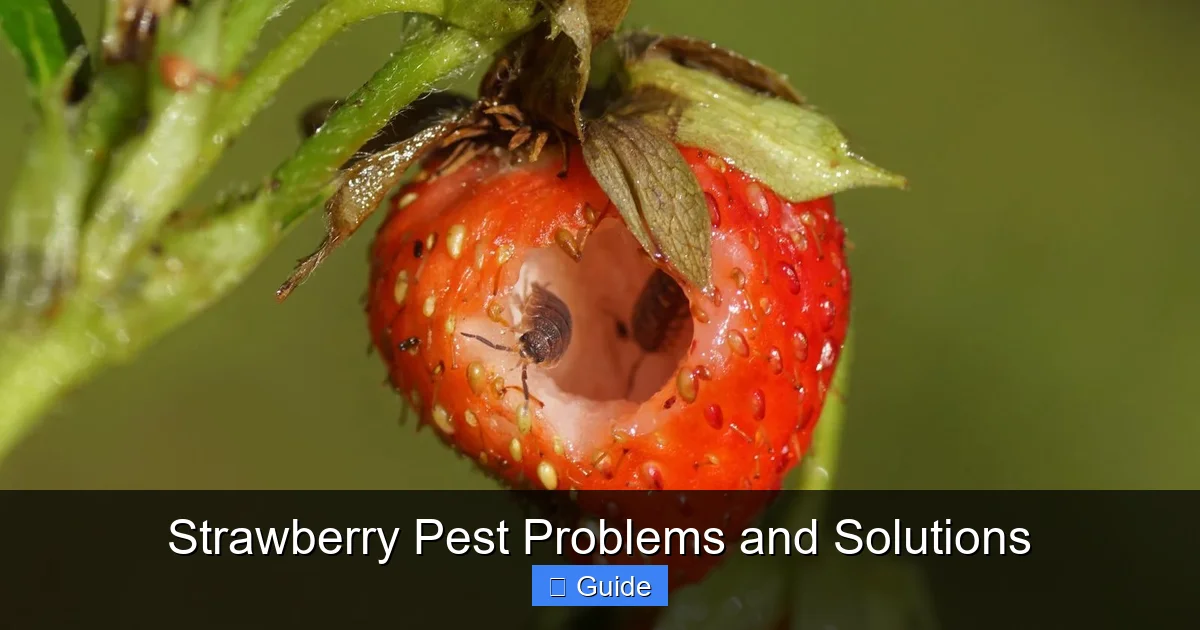
Slugs and snails are the number one pest for many strawberry growers. They come out at night or on cloudy, damp days. They rasp large, irregular holes in ripe and ripening fruit. You will also see holes in leaves, but the fruit damage hurts the most. The telltale sign is the shiny slime trail they leave behind on leaves, fruit, and the soil.
These mollusks love mulch, boards, rocks, and any cool, damp hiding spot. They lay eggs in the soil that look like small, translucent pearls. A single slug can lay hundreds of eggs. That is why you often see a sudden population explosion after a stretch of wet weather.
Aphids
Aphids are tiny, soft-bodied insects that come in green, black, pink, or yellow. They cluster on new growth, flower stems, and the undersides of leaves. They suck sap from the plant, which causes leaves to curl, yellow, and become distorted. Heavy infestations stunt plant growth and reduce yield.
But the damage does not stop there. Aphids excrete a sticky substance called honeydew. This coats leaves and fruit, attracting ants and promoting sooty mold, a black fungus that blocks sunlight. Even worse, aphids transmit viruses like strawberry mild yellow edge virus and strawberry crinkle virus. These viruses weaken plants permanently and have no cure.
Spider Mites
Spider mites are not insects. They are arachnids, related to spiders. They are tiny, barely visible to the naked eye. You usually see their damage before you see them. Look for tiny yellow or white speckles on the upper leaf surface. This stippling happens because mites pierce leaf cells and suck out the contents.
As populations grow, you will see fine webbing on leaf undersides and between leaves. Leaves turn bronze, dry up, and drop. Spider mites love hot, dry, dusty conditions. They often explode in numbers during heat waves or in greenhouses and high tunnels. Dusty roads near fields make the problem worse because dust kills their natural predators.
Tarnished Plant Bugs
Tarnished plant bugs, also called lygus bugs, are fast-moving, mottled brown insects about a quarter inch long. They feed on flowers and developing fruit. Their feeding injects a toxin that kills the tissue around the feeding site. This causes misshapen, cat-faced, or button berries that are hard, seedy, and unmarketable.
These bugs overwinter as adults in weeds and plant debris. They become active early in spring and move to strawberries when weeds dry up. They have a wide host range, including alfalfa, clover, and many weeds. Mowing nearby fields or roadsides can drive them into your strawberry patch.
Strawberry Root Weevils
Root weevils are night-feeding beetles. The adults notch the edges of leaves, creating a distinctive scalloped pattern. This leaf damage is mostly cosmetic. The real damage comes from the larvae. They are white, C-shaped grubs with brown heads. They live in the soil and chew on roots and crowns.
Plants with heavy root weevil infestations wilt, stunt, and may die, especially during dry periods. You often see patches of declining plants in the field. The adults cannot fly, so they walk from plant to plant. This means infestations spread slowly but persist for years if not managed.
Spotted Wing Drosophila
Spotted wing drosophila, or SWD, is a relatively new invasive fruit fly. Unlike other fruit flies that only attack overripe or rotting fruit, SWD females have a serrated ovipositor. They can lay eggs in firm, ripening fruit. The tiny white larvae develop inside the berry, turning the flesh soft and leaky.
You might not notice the damage until you pick the fruit. By then, it is too late. SWD populations build rapidly in summer and fall. They love humid, shaded areas. This pest has changed fall strawberry production significantly in many regions.
Cultural Controls: Your First Line of Defense
Healthy plants resist pests better. Good cultural practices prevent many problems before they start. Think of this as building a strong immune system for your strawberry patch. These methods cost little but pay off big.
Visual guide about Strawberry Pest Problems and Solutions
Image source: cdn.mos.cms.futurecdn.net
Site Selection and Soil Preparation
Choose a sunny, well-drained site. Strawberries need at least eight hours of direct sun. Good air circulation helps leaves dry quickly, reducing fungal diseases and making the environment less cozy for slugs and spider mites. Avoid low spots where cold air and moisture settle.
Test your soil before planting. Strawberries prefer a pH between 5.5 and 6.5. Amend with compost to improve soil structure and beneficial microbial activity. Healthy soil grows strong roots. Strong roots help plants tolerate root feeding by weevil larvae and recover from aphid feeding.
Crop Rotation
Do not plant strawberries after strawberries. Do not plant them after tomatoes, peppers, potatoes, eggplant, or raspberries. These crops share pests and diseases, especially verticillium wilt and root weevils. Rotate to a non-host crop for at least three years. Good rotation crops include sweet corn, pumpkins, beans, or cover crops like rye or buckwheat.
Variety Selection
Choose varieties with resistance or tolerance to local pests and diseases. Some varieties have tougher skins that resist SWD slightly better. Others have more upright growth habits that improve air flow and reduce slug hiding spots. Talk to your local extension office or experienced growers in your area. They know what works best where you live.
Sanitation
Keep the patch clean. Remove old leaves after renovation. Pick up dropped and overripe fruit immediately. This removes breeding sites for SWD, sap beetles, and slugs. Control weeds in and around the planting. Weeds harbor tarnished plant bugs, aphids, and spider mites. They also block air flow and spray penetration.
Mulch Management
Straw mulch is traditional for strawberries. It keeps fruit clean, conserves moisture, and suppresses weeds. But thick straw also gives slugs a perfect daytime hideout. If slugs are a major problem, consider plastic mulch or landscape fabric instead. These warm the soil earlier in spring and deny slugs shelter. You can also rake back straw temporarily during wet periods to let the soil surface dry.
Irrigation Practices
Use drip irrigation or soaker hoses. Keep water off the leaves. Wet foliage favors slugs, snails, and fungal diseases. Water early in the day so any moisture on leaves dries fast. Avoid water stress. Drought-stressed plants attract spider mites and produce less vigorous growth, making them more susceptible to all pests.
Biological Controls: Recruit Nature’s Helpers
Beneficial insects and mites are powerful allies. They work for free, 24/7, without harming your plants or the environment. The key is creating a habitat that attracts and keeps them. This is often called farmscaping or conservation biological control.
Know the Good Guys
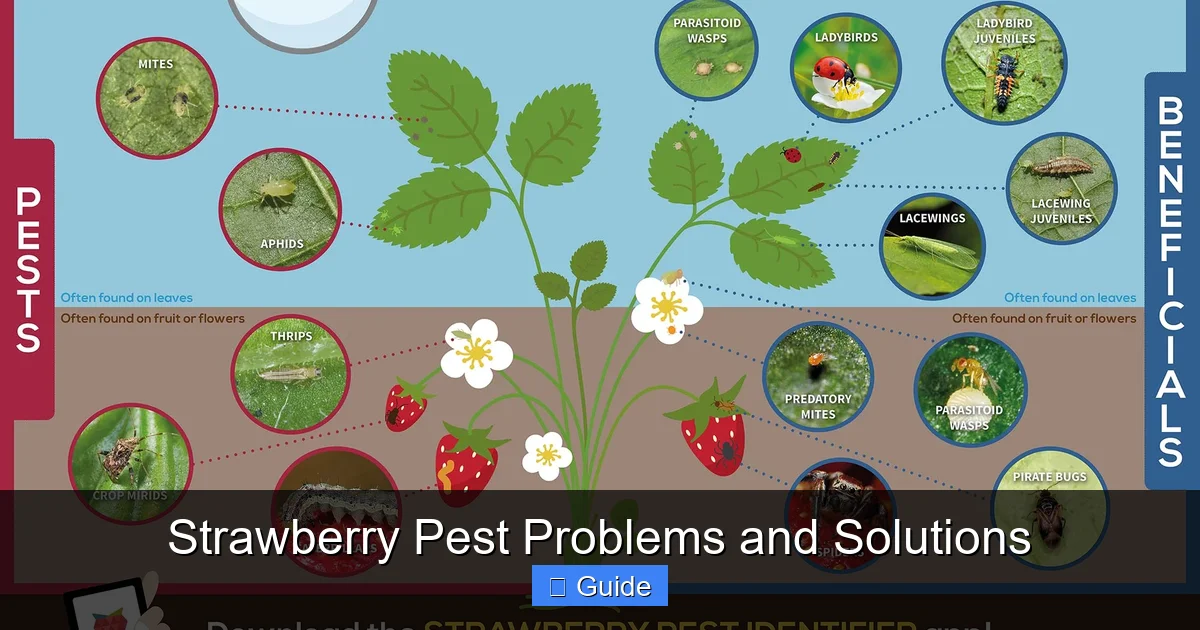
Lady beetles, both adults and larvae, devour aphids. A single larva can eat 400 aphids before pupating. Green lacewing larvae, called aphid lions, are equally voracious. They also eat spider mites, thrips, and small caterpillars. Minute pirate bugs feed on thrips, spider mites, and insect eggs. Predatory mites, like Phytoseiulus persimilis and Neoseiulus fallacis, specialize in eating spider mites.
Parasitic wasps lay eggs inside aphids. The wasp larva eats the aphid from inside, turning it into a brown, papery mummy. You have likely seen these on your plants. Ground beetles and rove beetles patrol the soil surface at night, eating slug eggs, cutworms, and root weevil larvae. Centipedes and spiders are also generalist predators.
Provide Food and Shelter
Beneficials need nectar, pollen, and alternative prey when pests are scarce. Plant flowering herbs and flowers in or near your strawberry patch. Good choices include sweet alyssum, dill, fennel, cilantro, yarrow, buckwheat, and clover. Let some herbs bolt and flower. Leave a few wild areas or beetle banks—raised strips of bunch grasses—at field edges for overwintering shelter.
Avoid Broad-Spectrum Insecticides
This is critical. Broad-spectrum sprays like pyrethroids, organophosphates, and carbamates kill beneficials along with pests. This often causes secondary pest outbreaks. For example, spraying for tarnished plant bug can wipe out predatory mites, leading to a spider mite explosion weeks later. If you must spray, choose targeted products and apply when beneficials are least active, usually early morning or late evening.
Purchase and Release Beneficials
You can buy beneficial insects from reputable suppliers. This works best in greenhouses, high tunnels, or for specific hot spots. For spider mites, release predatory mites early, at first sign of damage. For aphids, release lady beetles or lacewings. Follow supplier instructions for release rates and timing. Remember, purchased beneficials often disperse. Conservation of resident populations is more sustainable long-term.
Mechanical and Physical Controls
Sometimes the simplest tools work best. Mechanical controls physically remove or exclude pests. They are labor-intensive but very safe and often highly effective for small to medium plantings.
Hand Picking
Go out at night with a flashlight and a bucket of soapy water. Pick off slugs, snails, and adult root weevils. Drop them in the bucket. Do this regularly during wet periods. It sounds tedious, but it makes a huge dent in the population. Kids often love this job. Pay them a penny per slug.
Traps and Barriers
Beer traps are classic for slugs. Bury a shallow container so the rim is level with the soil. Fill with beer or a yeast-sugar-water mix. Slugs are attracted to the yeast, fall in, and drown. Empty and refill every few days. Copper tape or copper mesh around raised beds gives slugs a mild electric shock when they cross it. It works well but must stay clean and intact.
Diatomaceous earth, a powder made from fossilized algae, abrades the soft bodies of slugs and insects. Dust it around plants. It must stay dry to work. Reapply after rain. Row covers, fine insect netting, exclude tarnished plant bugs, SWD, and birds. Put covers on at bloom and remove for harvest or pollination. For day-neutral varieties, you may need to uncover daily for bees.
Water Sprays
A strong jet of water from a hose knocks aphids and spider mites off plants. Do this early in the day so leaves dry. Repeat every few days. This is surprisingly effective for moderate infestations. It also washes off honeydew and dust, helping predatory mites move and hunt better.
Sticky Traps
Yellow sticky cards attract and trap winged aphids, thrips, whiteflies, and fungus gnats. Blue cards work better for thrips. Hang them just above the canopy. Check weekly. They are great for monitoring. They also reduce the number of flying adults laying eggs. Replace when covered with insects or dust.
Organic and Reduced-Risk Sprays
When cultural and mechanical controls are not enough, sprays can save your crop. Many effective options are approved for organic production. They tend to have short residuals and lower toxicity to beneficials. Always read and follow the label. The label is the law.
Insecticidal Soaps
Potassium salts of fatty acids kill soft-bodied insects on contact. They work great on aphids, spider mites, whiteflies, and young nymphs. They must hit the pest directly. Spray leaf undersides thoroughly. They have no residual activity once dry. They are safe for most beneficials once dry. Do not spray in full sun or when temperatures exceed 90°F to avoid leaf burn.
Horticultural Oils
Lightweight horticultural oils smother eggs, scales, mites, and aphids. They are excellent for dormant or delayed-dormant applications to kill overwintering eggs of aphids and spider mites. Summer oils can be used during the growing season. Like soaps, they need thorough coverage and have no residual. Do not apply within 30 days of sulfur or on drought-stressed plants.
Neem Oil
Neem oil contains azadirachtin, which disrupts insect growth and feeding. It acts as an insect growth regulator, antifeedant, and repellent. It works on aphids, spider mites, whiteflies, and some caterpillars. It has some systemic activity in the plant. It is moderately toxic to bees, so apply early morning or late evening when bees are not foraging.
Pyrethrins
Pyrethrins are botanical insecticides from chrysanthemum flowers. They knock down insects fast. They are broad-spectrum and toxic to beneficials, fish, and aquatic life. Use only as a last resort for severe infestations. Choose formulations without piperonyl butoxide (PBO) if you want organic certification. Apply late in the day to reduce bee exposure.
Spinosad
Spinosad is derived from a soil bacterium. It controls caterpillars, thrips, leafminers, and fruit flies, including SWD. It has translaminar movement, meaning it penetrates the leaf and controls pests on the underside. It is toxic to bees for about three hours after application. Do not apply during bloom. It is a valuable tool for SWD in fall-bearing strawberries.
Bacillus thuringiensis (Bt)
Bt is a bacterium that produces proteins toxic to specific insect groups. Bt kurstaki controls caterpillars like leafrollers and cutworms. Bt israelensis controls fungus gnat larvae in soil. It is very safe for beneficials, humans, and pets. Caterpillars must eat treated foliage. Apply when larvae are small and actively feeding.
Iron Phosphate Slug Baits
These baits are much safer than metaldehyde baits for pets, wildlife, and children. Slugs eat the bait, stop feeding, crawl away, and die in a few days. They remain effective after rain. Scatter evenly around plants, not in piles. Apply in the evening when slugs become active. Reapply every two weeks or after heavy rain.
Managing Specific Problem Pests
Some pests need a targeted game plan. Here are integrated strategies for the toughest strawberry pests.
Slug and Snail Strategy
Combine multiple tactics. Reduce hiding places: remove boards, rocks, dense mulch. Use drip irrigation. Water in the morning. Hand-pick at night. Set beer traps along bed edges. Apply iron phosphate bait every two weeks. Encourage ground beetles with beetle banks. Ducks or chickens in the garden (supervised) are incredible slug eaters. If you have a severe problem, consider switching to plastic mulch for a season to break the cycle.
Aphid and Virus Strategy
Start with virus-free certified plants. This is non-negotiable. Scout weekly. Check leaf undersides and new growth. Blast colonies with water. Release lady beetles or lacewings if needed. Spray insecticidal soap or neem oil for heavy infestations. Control weeds that harbor aphids. Remove and destroy any plants showing virus symptoms (yellowing, stunting, crinkling). They are sources of infection for aphids to spread.
Spider Mite Strategy
Avoid dust. Wet dusty roads near the patch. Do not over-fertilize with nitrogen. High nitrogen makes plants more attractive to mites. Scout leaf undersides with a hand lens. Look for eggs, immatures, and adults. Release predatory mites Phytoseiulus persimilis at first sign. They work best above 60°F and below 90°F with humidity over 60%. For hot, dry conditions, use Neoseiulus fallacis or Neoseiulus californicus. If mites explode, spray horticultural oil or insecticidal soap. Rotate modes of action if using miticides.
Tarnished Plant Bug Strategy
Manage weeds early. Mow cover crops or weeds before they flower and before bugs move to strawberries. Do not mow adjacent fields during strawberry bloom; this drives bugs into your crop. Use white sticky traps to monitor adults. Row covers at bloom exclude them but must come off for pollination. Insecticidal soap or pyrethrin can knock down nymphs. Spinosad has some activity. Thresholds vary; consult local guidelines.
Root Weevil Strategy
Rotate crops. Do not replant strawberries in infested soil for at least three years. Use beneficial nematodes (Heterorhabditis bacteriophora or Steinernema carpocapsae) as a soil drench in late summer or early fall when larvae are small and soil is warm and moist. Apply in evening, water in well. Hand-pick adults at night on foliage. Tanglefoot on a band around the base of plants can trap climbing adults. Plow down old plantings immediately after final harvest to destroy overwintering sites.
Spotted Wing Drosophila Strategy
Harvest frequently and thoroughly. Pick every ripe berry every day or two. Do not leave culls in the field. Remove and destroy dropped fruit. Use fine mesh netting (80-gram insect netting) over hoops for fall crops. This is the most reliable control. Spray spinosad or pyrethrin on a 5-7 day schedule during harvest, rotating modes of action. Add sugar bait to sprays to increase attraction. Keep the canopy open with pruning and narrow rows. SWD loves shade and humidity.
Monitoring and Record Keeping
You cannot manage what you do not monitor. Regular scouting is the backbone of integrated pest management. It lets you catch problems early, when they are easiest and cheapest to control. It also helps you learn the patterns on your farm.
How to Scout
Walk your patch in a W or Z pattern. Stop at 10-20 locations per acre, fewer for small gardens. At each stop, examine 5-10 plants. Check leaf undersides, crowns, flowers, and fruit. Use a 10x hand lens. Look for pests, damage, beneficials, and predator signs like aphid mummies or lacewing eggs. Spend 15-30 minutes per acre. Do this weekly during the growing season. Twice a week during peak pest periods.
Keep a Pest Log
Use a notebook, spreadsheet, or phone app. Record date, location, weather, what you found, how many, and what you did. Note bloom stage, harvest timing, and spray applications. Over years, this builds a powerful database. You will see which pests appear when, which varieties have fewer issues, and which controls worked. This knowledge is gold.
Use Degree Day Models
Many pests develop based on temperature. Degree day models predict when eggs hatch, adults emerge, or generations peak. Your state extension service likely has models for key strawberry pests. These help you time scouting and sprays precisely. You save money and reduce sprays by hitting the vulnerable stage.
Putting It All Together: An IPM Plan for the Season
Integrated Pest Management (IPM) is not a single tactic. It is a decision-making process. You combine all the tools we discussed into a seasonal plan. Here is what a year might look like.
Late Winter / Early Spring
Order certified virus-free plants. Plan rotation. Apply dormant horticultural oil if aphid or mite eggs were a problem last year. Clean up debris. Prune old leaves. Set up beetle banks or flowering borders. Check and repair row covers, netting, drip tape.
Planting / Early Growth
Plant at proper spacing for air flow. Mulch with straw or lay plastic. Apply beneficial nematodes for root weevils if needed. Scout for aphids on new growth. Blast with water or spot-spray soap. Hand-pick slugs at night. Apply iron phosphate bait.
Bloom
Protect pollinators. No insecticides during bloom. Use row covers for tarnished plant bug if pressure is high, but remove daily for bees. Monitor for spider mites. Release predatory mites preventively in high tunnels. Keep weeds down.
Fruit Set and Harvest
Scout twice weekly. Check fruit for slugs, SWD, cat-facing. Harvest cleanly every 1-2 days. Remove culls. Water at base. Reapply slug bait after rain. Spot-treat aphid hotspots with soap. Use sticky traps for monitoring. Enjoy the berries!
Renovation (June-Bearers)
Mow old leaves immediately after harvest. Narrow rows. Fertilize. Cultivate between rows. This removes pest habitat and disrupts life cycles. Scout for root weevil adults at night. Apply nematodes in late summer.
Fall (Day-Neutrals / Fall Crop)
Watch for SWD buildup. Net if possible. Spray spinosad on schedule if needed. Monitor for spider mites in hot, dry spells. Continue slug control. Remove dropped fruit daily.
Post-Harvest / Winter Prep
Remove all plant debris if diseases or viruses were present. Otherwise, leave some residue for beneficial overwintering. Plant cover crop. Mulch for winter protection. Review your pest log. Plan next year’s rotation and variety choices.
Common Mistakes to Avoid
Even experienced growers slip up. Here are the pitfalls that turn small problems into disasters.
Waiting Too Long to Act
Hope is not a strategy. A few aphids become thousands in a week. One gravid female spider mite lays 100 eggs. Check daily during high-risk periods. Treat at thresholds, not when the crop is crashing.
Using the Same Spray Repeatedly
Pests evolve resistance fast. Rotate modes of action (IRAC groups). Do not use the same chemistry more than twice a season. This applies to organic sprays too. Spinosad resistance in SWD is already documented in some areas.
Spraying During Bloom
This kills bees and other pollinators. No fruit without pollination. Even “bee-safe” labels can be misleading for wild bees. Just do not spray open flowers. Period.
Ignoring Beneficials
Broad-spectrum sprays kill your free workforce. You then inherit their job. Learn to ID the top 10 beneficials in your patch. Protect them. They are the only thing working while you sleep.
Neglecting Sanitation
Cull piles are pest factories. SWD, sap beetles, slugs, and fungi breed there. Clean picking is the single most effective SWD tactic. It costs labor but saves sprays and crop loss.
Planting in the Same Spot
Soil-borne pests and pathogens build up. Verticillium, root weevils, nematodes. Three-year minimum rotation. Five is better. Plan your garden layout with rotation in mind.
When to Call an Expert
Most home gardeners and small farmers can handle strawberry pests with this guide. But sometimes you need help. Contact your county extension agent or a crop consultant if:
- You cannot identify the pest or damage.
- Multiple pests are hitting at once.
- Standard controls are not working.
- You suspect a virus or new invasive pest.
- You are scaling up and need a formal IPM plan.
- You need help with sprayer calibration or pesticide licensing.
Extension services are funded by your taxes. Use them. They offer free or low-cost diagnostics, local pest alerts, and research-based recommendations for your specific region.
Conclusion
Strawberry pest problems and solutions are a journey, not a destination. Every season teaches you something new. The pests change. The weather changes. Your knowledge grows. The most successful growers are not the ones who never have pests. They are the ones who walk their fields, notice the small things, and act thoughtfully.
Start with healthy soil and clean plants. Build habitat for beneficials. Scout religiously. Use the gentlest effective tool first. Keep records. Learn from each year. And never forget why you do this: for that perfect, sun-warmed strawberry that tastes like summer itself. Your patch can be productive and alive with diversity. It just takes attention and patience. You have got this.
Frequently Asked Questions
How do I prevent slugs in my strawberry patch?
Reduce hiding spots by removing debris and using plastic mulch instead of straw. Water in the morning with drip irrigation. Hand-pick at night. Apply iron phosphate bait every two weeks. Encourage ground beetles with perennial borders.
What is the best organic spray for aphids on strawberries?
Insecticidal soap and horticultural oil are the most effective organic sprays for aphids. They must contact the insects directly. Spray leaf undersides thoroughly. Repeat every 5-7 days as needed.
How do I get rid of spider mites naturally?
Release predatory mites like Phytoseiulus persimilis at first sign of damage. Keep plants well-watered to avoid drought stress. Avoid dust. Spray horticultural oil or insecticidal soap for heavy infestations. Rotate products.
What causes misshapen strawberries?
Tarnished plant bugs feed on flowers and young fruit, injecting a toxin that causes cat-facing and button berries. Poor pollination, frost damage, and boron deficiency can also cause misshapen fruit.
How often should I scout my strawberries for pests?
Scout weekly during the growing season. Increase to twice weekly during bloom, fruit set, and harvest when pest pressure peaks. Spend 15-30 minutes per acre walking a W-pattern and checking 5-10 plants per stop.
Is it safe to eat strawberries with small bug holes?
Yes, strawberries with slug holes or minor insect damage are safe to eat. Cut away the damaged portion and wash thoroughly. Do not eat fruit that is moldy, fermenting, or has larvae inside.