Are Coral Bell Plants Poisonous to Dogs
Coral bells (Heuchera) are not poisonous to dogs according to the ASPCA and veterinary toxicology experts. While these popular shade perennials are considered non-toxic, eating large amounts may cause mild stomach upset like vomiting or diarrhea. If your dog nibbles on coral bells, monitor for symptoms and contact your vet if concerns arise.
If you’re a dog owner who loves gardening, you’ve probably stood in your yard wondering: Is this plant safe for my pup? It’s a smart question. Dogs explore the world with their mouths, and a curious sniff can turn into a mouthful of foliage in seconds. Coral bells, with their ruffled leaves in shades of purple, caramel, lime, and near-black, are a staple in shade gardens across the country. But are coral bell plants poisonous to dogs?
The short answer brings relief: coral bells are not poisonous to dogs. The ASPCA lists Heuchera species as non-toxic to dogs, cats, and horses. But “non-toxic” doesn’t mean “edible.” Any plant material can cause tummy trouble if your dog decides to make a salad of your flower beds. Let’s dig into everything you need to know — from what happens if your dog eats coral bells to how to keep your garden both beautiful and dog-safe.
Key Takeaways
- Non-toxic status: Coral bells (Heuchera species) are classified as non-toxic to dogs by the ASPCA Animal Poison Control Center.
- Mild GI upset possible: Large ingestions may cause temporary vomiting, diarrhea, or drooling due to plant fiber and saponins.
- No life-threatening risk: Unlike true toxic plants, coral bells do not cause organ failure, seizures, or death in dogs.
- Monitor and hydrate: If your dog eats coral bells, offer water and watch for symptoms resolving within 24 hours.
- Call vet if needed: Contact your veterinarian if symptoms persist beyond 24 hours, worsen, or if your dog ate a large quantity.
- Prevention is best: Use barriers, training, and supervision to keep dogs from eating garden plants.
- Safe garden alternatives: Many dog-friendly perennials exist for shade gardens if you prefer zero-risk landscaping.
Quick Answers to Common Questions
Are coral bells poisonous to dogs?
No, coral bells (Heuchera) are classified as non-toxic to dogs by the ASPCA Animal Poison Control Center. They do not contain any known toxic compounds that cause serious illness or death in dogs.
What happens if my dog eats coral bells?
Most dogs show no symptoms. Some may experience mild, temporary vomiting, diarrhea, or drooling within a few hours. Symptoms typically resolve on their own within 24 hours without treatment.
When should I call the vet after my dog eats coral bells?
Call your vet if your dog ate a large quantity, symptoms persist beyond 24 hours, vomiting/diarrhea is severe, your dog is a puppy/senior/has health issues, or you’re unsure of the plant identification.
Can coral bells cause seizures or death in dogs?
No. Coral bells do not contain neurotoxins or cardiotoxins. Seizures or collapse after plant ingestion indicate a different toxic plant or unrelated medical emergency — seek immediate veterinary care.
Are all Heuchera varieties safe for dogs?
Yes, all Heuchera species and cultivars (including ‘Palace Purple’, ‘Caramel’, ‘Obsidian’, ‘Lime Rickey’, and hybrids like Heucherella) share the same non-toxic classification.
📑 Table of Contents
- What Are Coral Bells?
- Are Coral Bells Poisonous to Dogs? The Scientific Answer
- What Happens If a Dog Eats Coral Bells?
- What to Do If Your Dog Eats Coral Bells
- Plants That Look Like Coral Bells — And Their Toxicity
- Preventing Plant Ingestion in the Garden
- Dog-Safe Shade Garden Alternatives
- Frequently Asked Questions About Dogs and Coral Bells
- When to Worry: Red Flags That Need a Vet
- The Bottom Line on Coral Bells and Dogs
- Quick Reference Card
What Are Coral Bells?
Botanical Background
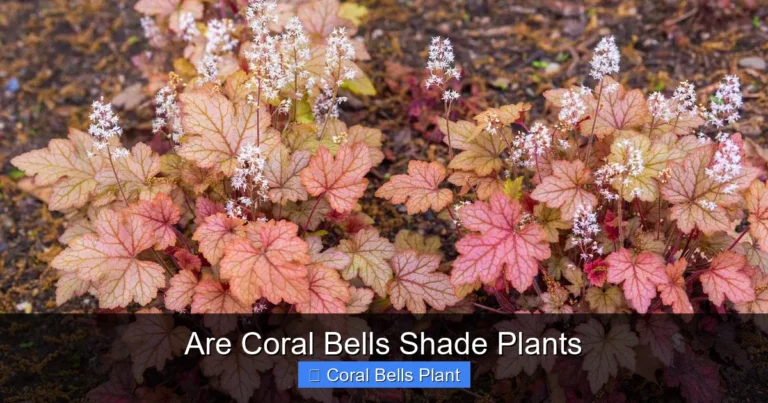
Coral bells belong to the genus Heuchera, a group of about 50 species native to North America. They’re part of the Saxifragaceae family, which includes other garden favorites like foamflower (Tiarella) and astilbe. The common name “coral bells” comes from the dainty, bell-shaped flowers that bloom on tall, wiry stems in late spring to early summer — typically in shades of pink, red, or white.
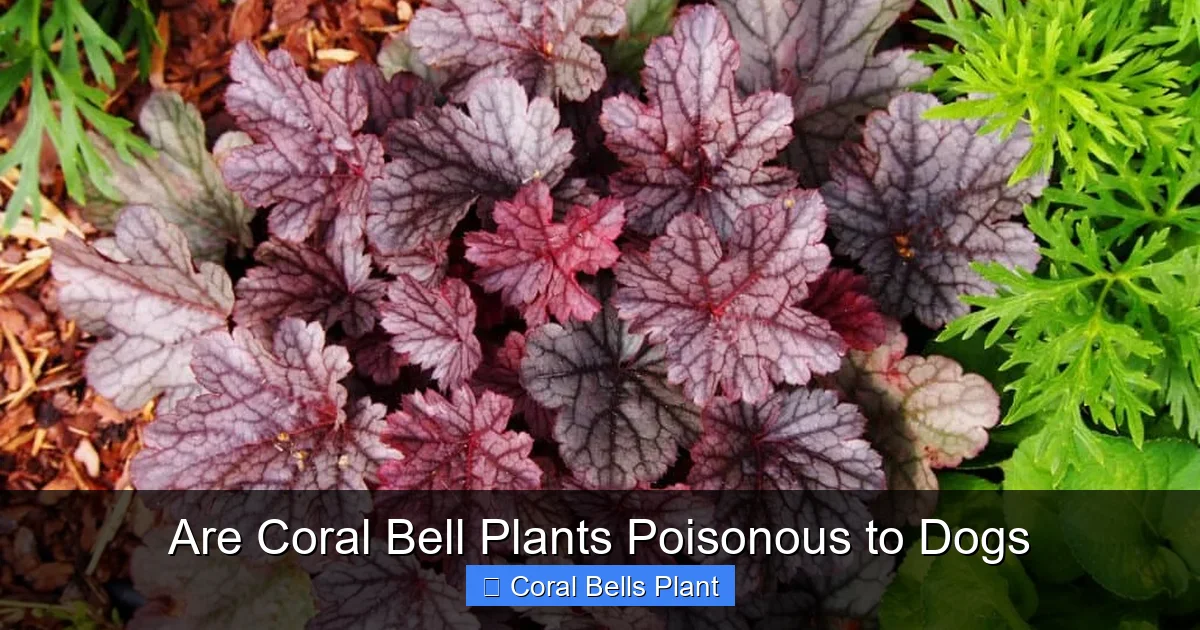
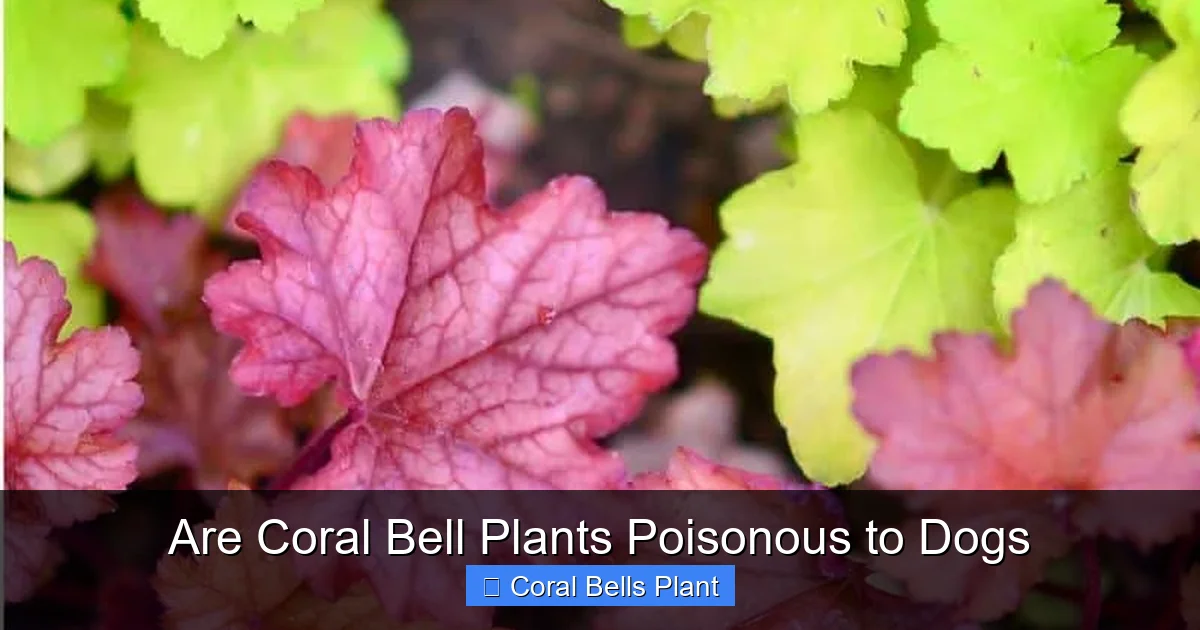
But let’s be honest: most gardeners grow coral bells for their foliage. The leaves form low, mounding clumps that provide year-round color in shades you won’t find in many other perennials: deep plum, bright chartreuse, warm caramel, silvery pewter, near-black, and variegated combinations. New cultivars hit the market every year, bred for more intense color, better heat tolerance, and stronger vigor.
Popular Cultivars You Might Have
If you’re trying to identify what’s in your yard, here are some widely grown coral bell varieties:
- ‘Palace Purple’ — The classic deep purple cultivar that started the modern Heuchera craze
- ‘Caramel’ — Warm amber-apricot leaves that hold color well in heat
- ‘Lime Rickey’ — Electric chartreuse foliage that brightens shady spots
- ‘Obsidian’ — Nearly black, glossy leaves with great sun tolerance
- ‘Berry Smoothie’ — Rose-pink leaves that deepen to purple
- ‘Fire Alarm’ — Bright red spring foliage maturing to deep red
- ‘Forever Purple’ — Ultra-saturated purple that doesn’t fade
- ‘Green Spice’ — Green leaves with silver overlay and dark veins
All Heuchera species and cultivars share the same non-toxic status. Whether you have a species type or the newest patented variety, the answer to “are coral bells poisonous to dogs” remains no.
Growing Conditions and Where Dogs Encounter Them
Coral bells thrive in partial to full shade, making them perfect for those tricky spots under trees, on north-facing foundations, or in woodland gardens. They prefer well-drained, humus-rich soil and moderate moisture. Because they’re shade plants, they’re often planted in areas where dogs like to rest on cool days — right under the same trees that shade the coral bells.
This overlap means dogs have easy access. A bored dog digging in mulch, a puppy exploring textures, or a senior dog grazing on greenery can all end up with a mouthful of Heuchera leaves.
Are Coral Bells Poisonous to Dogs? The Scientific Answer
ASPCA Classification
The American Society for the Prevention of Cruelty to Animals (ASPCA) maintains the most referenced pet plant toxicity database. Their Animal Poison Control Center (APCC) veterinarians and toxicologists evaluate plants based on reported cases, scientific literature, and chemical analysis. Heuchera species are listed as non-toxic to dogs, cats, and horses.
Visual guide about Are Coral Bell Plants Poisonous to Dogs
Image source: doghowto.com
This classification means coral bells don’t contain compounds known to cause systemic poisoning, organ damage, or death in domestic animals. They’re in the same safety category as roses, snapdragons, sunflowers, and zinnias — plants you can grow without fear of a veterinary emergency from casual ingestion.
What “Non-Toxic” Actually Means
Here’s where nuance matters. “Non-toxic” in veterinary toxicology means no known toxic principle causing serious illness at typical exposure levels. It does not mean:
- The plant is digestible or nutritious
- Eating it won’t cause any symptoms
- Unlimited consumption is safe
- Individual dogs can’t have unusual reactions
Think of it like this: cardboard is non-toxic. But if your dog eats a cardboard box, they might vomit or have diarrhea. The cardboard didn’t poison them — their digestive system just objected to the indigestible material. Coral bells work similarly.
Plant Compounds in Heuchera
Coral bells contain several naturally occurring compounds:
- Tannins — Astringent polyphenols that bind proteins; cause the dry-mouth feeling from strong tea or unripe fruit
- Saponins — Soap-like glycosides that foam in water; found in many plants including spinach, oats, and legumes
- Fiber (cellulose, lignin) — Indigestible plant structural material
- Oxalates — Present in low amounts; much lower than in true high-oxalate plants like rhubarb leaves or spinach
At the concentrations found in coral bells, these compounds are not toxic. But in large quantities, tannins and saponins can irritate the gastrointestinal lining, and fiber can cause mechanical irritation or even blockage in extreme cases.
Veterinary Toxicology Consensus
Beyond the ASPCA, veterinary toxicology textbooks and poison control resources consistently classify Heuchera as non-toxic. The Pet Poison Helpline, a 24/7 animal poison control service staffed by veterinary toxicologists, does not list coral bells as a plant of concern. University extension services (Cornell, UC Davis, Colorado State) include Heuchera in lists of pet-safe perennials for home landscapes.
No documented cases exist of dogs suffering serious toxicity or death from coral bell ingestion in veterinary literature. The few case reports involve only transient, self-limiting gastrointestinal upset.
What Happens If a Dog Eats Coral Bells?
Typical Scenario: Small to Moderate Ingestion
Most dogs who sample coral bells eat a few leaves or flowers, maybe a stem or two. In these common cases:
- No symptoms at all — Many dogs show zero ill effects
- Mild, transient GI upset — Some vomiting or soft stool within 2-6 hours
- Brief drooling — From tannins’ astringent effect on oral mucosa
- Reduced appetite for a meal — Temporary nausea
Symptoms typically resolve on their own within 12-24 hours without treatment. The plant material passes through the digestive tract like any other roughage.
Less Common: Large Ingestion
If a dog consumes a large volume — say, an entire mature plant or multiple plants — more pronounced symptoms can occur:
- Repeated vomiting — Stomach irritation from volume and plant compounds
- Diarrhea — Often watery, may contain visible plant material
- Lethargy — From feeling unwell, not systemic toxicity
- Dehydration risk — If vomiting and diarrhea persist
- Possible intestinal blockage — Rare, but theoretically possible with massive fibrous ingestion, especially in small dogs
Even in these cases, the issue is gastrointestinal irritation and mechanical effects, not poisoning. No specific antidote exists because no toxin is involved. Supportive care (fluids, anti-nausea medication, GI protectants) handles the symptoms while the material passes.
Individual Sensitivity and Special Cases
Some dogs may react more strongly:
- Dogs with sensitive stomachs — Those prone to dietary indiscretion reactions
- Dogs with IBD or chronic GI disease — Any novel material can trigger a flare
- Puppies — Smaller body size, developing digestive systems
- Small breed dogs — Higher volume-to-body-weight ratio
- Dogs on certain medications — Tannins can bind some drugs, though unlikely at dietary levels
Allergic reactions to Heuchera are theoretically possible but extremely rare. Signs would include facial swelling, hives, itching, or difficulty breathing — requiring immediate veterinary care. This would be an individual immune response, not toxicity.
Timeline of What to Expect
0-2 hours post-ingestion: Dog may seem completely normal. Plant material in stomach.
2-6 hours: If symptoms occur, they typically start now. Vomiting, drooling, or nausea signs (lip licking, swallowing).
6-12 hours: Diarrhea may develop as material reaches intestines. Peak symptom window.
12-24 hours: Symptoms improving. Appetite returning. Stool normalizing.
24-48 hours: Full recovery expected. Plant material passed in stool.
If symptoms persist beyond 24 hours or worsen at any point, veterinary evaluation is warranted — not because coral bells are toxic, but because prolonged GI symptoms need investigation regardless of cause.
What to Do If Your Dog Eats Coral Bells
Immediate Steps
- Stay calm. Coral bells are not poisonous. Panic helps no one.
- Remove access. Move your dog away from the plants to prevent further ingestion.
- Identify what was eaten. Confirm it’s coral bells (Heuchera). Take a photo or sample if unsure.
- Estimate amount. A few leaves? Half a plant? The whole bed? This guides next steps.
- Check for other plants. Did your dog also eat something nearby that is toxic?
When to Call Your Veterinarian
Contact your vet (or an emergency clinic if after hours) if:
- Your dog ate a large quantity (multiple whole plants)
- Symptoms persist beyond 24 hours
- Symptoms are severe (repeated vomiting, bloody diarrhea, inability to keep water down)
- Your dog is a puppy, senior, or has underlying health conditions
- Your dog is on medications that could be affected by vomiting/diarrhea
- You’re unsure of plant identification — some toxic plants resemble coral bells
- Your dog shows neurologic signs (tremors, seizures, incoordination) — not from coral bells, but indicating something else
When to Call Pet Poison Control
Two main 24/7 services exist (fees apply):
- ASPCA Animal Poison Control Center: (888) 426-4435
- Pet Poison Helpline: (855) 764-7661
Call them if you want expert toxicology guidance, especially if plant ID is uncertain or your vet is unavailable. They’ll ask: what plant, how much, when, dog’s weight/age/health, and current symptoms. They’ll give a risk assessment and treatment recommendations.
Home Care for Mild Cases
If your vet agrees home monitoring is appropriate (typical for small ingestions in healthy adult dogs):
- Withhold food for 12-24 hours (adult dogs only — never fast puppies)
- Offer small amounts of water frequently — ice cubes work well
- After fasting, offer a bland diet — boiled chicken and rice, or a veterinary GI diet
- Feed small, frequent meals for 2-3 days before transitioning back to normal food
- Monitor stool — should firm up within 48 hours
- Watch for dehydration — check gum moisture, skin tent, urine output
Never give human medications (Pepto-Bismol, Imodium, etc.) without veterinary direction. Some are toxic to dogs or contraindicated in certain conditions.
What the Vet Might Do
If veterinary care is needed, treatment is supportive:
- Physical exam — assess hydration, abdominal pain, temperature
- Subcutaneous or IV fluids — for dehydration
- Anti-nausea injection — maropitant (Cerenia) or ondansetron
- GI protectants — sucralfate, famotidine, or omeprazole
- Probiotics — to support gut flora recovery
- Diagnostics if indicated — bloodwork, x-rays (if blockage suspected), fecal exam
Hospitalization is rarely needed unless severe dehydration or a complication like blockage occurs.
Plants That Look Like Coral Bells — And Their Toxicity
Why Identification Matters
Before you relax completely, confirm your plant is actually Heuchera. Several shade perennials share similar growth habits or leaf shapes. Some are toxic. If your dog ate “something in the shade garden,” you need to know exactly what.
Common Look-Alikes and Confusables
Foamflower (Tiarella cordifolia and hybrids)
Appearance: Very similar to coral bells — same family, same mounding habit, similar lobed leaves, often with dark center markings. Flowers are foamier, more bottlebrush-like.
Toxicity: Non-toxic to dogs. Tiarella is also ASPCA-listed as safe. Tiarella and Heuchera even hybridize (× Heucherella), and those hybrids are non-toxic too.
Hostas (Hosta species)
Appearance: Larger, smoother leaves, distinct parallel veins, same shade tolerance. Often planted alongside coral bells.
Toxicity: Toxic to dogs. Hostas contain saponins that cause vomiting, diarrhea, and depression. Not usually life-threatening, but more consistently symptomatic than coral bells.
Lungwort (Pulmonaria species)
Appearance: Spotted or silvered leaves, rough/hairy texture, spring flowers changing from pink to blue.
Toxicity: Generally non-toxic. Not on ASPCA toxic lists. Mild GI upset possible from hairy leaves.
Bleeding Heart (Dicentra spectabilis / Lamprocapnos spectabilis)
Appearance: Ferny, divided leaves, arching stems with heart-shaped flowers. Different enough that confusion is unlikely, but shares shade habitat.
Toxicity: Toxic to dogs. Contains isoquinoline alkaloids. Causes vomiting, diarrhea, tremors, seizures in large doses.
Foxglove (Digitalis purpurea)
Appearance: Basal rosette of fuzzy leaves first year, tall flower spike second year. Leaves somewhat resemble large, fuzzy coral bell leaves.
Toxicity: Highly toxic to dogs. Cardiac glycosides. Causes vomiting, diarrhea, arrhythmias, collapse, death. Medical emergency.
Monkshood (Aconitum species)
Appearance: Deeply lobed leaves, tall spikes of hooded purple/blue flowers. Shade tolerant.
Toxicity: Highly toxic to dogs. Aconitine alkaloids. Causes numbness, vomiting, diarrhea, heart arrhythmias, respiratory paralysis, death. Extreme emergency.
Coralberry (Symphoricarpos orbiculatus)
Appearance: Shrub, not perennial. Small oval leaves, pink berries in fall. Name confusion only.
Toxicity: Mildly toxic. Saponins. Vomiting, diarrhea if berries eaten in quantity.
How to Confirm Your Plant Is Coral Bells
- Leaf shape: Rounded to kidney-shaped, lobed (typically 5-9 lobes), often ruffled or wavy margins
- Leaf texture: Smooth to slightly fuzzy, not hairy or rough
- Growth habit: Low mound (6-18″ tall), basal rosette, no woody stems
- Flowers: Late spring/early summer, thin wiry stems 1-3′ tall, small bell-shaped flowers in loose panicles
- Roots: Fibrous, shallow, woody crown at soil level
- Seasonal behavior: Evergreen to semi-evergreen in mild winters; dies back in cold climates
If uncertain, take clear photos (whole plant, leaf close-up, flower if present) and ask:
- Your local nursery or garden center
- County extension office (free plant ID service)
- Plant ID apps (iNaturalist, PictureThis, PlantNet — verify with expert)
- Gardening forums with photos
Preventing Plant Ingestion in the Garden
Why Dogs Eat Plants
Understanding the “why” helps prevention:
- Boredom — Understimulated dogs create their own entertainment
- Exploration — Puppies and young dogs mouth everything
- Dietary deficiency — Rare, but some dogs seek fiber or nutrients
- Nausea — Dogs instinctively eat grass/leaves to induce vomiting
- Attention-seeking — “Look at me, I’m eating your plants!”
- Anxiety — Displacement behavior during stress
- Taste/texture preference — Some dogs just like certain plants
Physical Barriers
- Decorative fencing — 18-24″ tall borders around beds; attractive metal or wood options exist
- Raised beds — Elevate plants out of easy reach, especially for small/medium dogs
- Plant cages — Wire cages around individual specimens or groups
- Dense planting — Fill gaps so dogs can’t easily access soil or plant bases
- Mulch choices — Large bark nuggets or river rock less inviting to dig than fine mulch
- Pathway definition — Clear paths with pavers, gravel, or stepping stones guide dogs away from beds
Training Approaches
- “Leave it” command — Essential for all dogs. Practice with low-value items, build to plants.
- “Out” or “off” for garden beds — Teach boundaries like you’d teach “off the furniture”
- Supervised garden time — Don’t give unsupervised access until reliable
- Redirect to appropriate chews — Offer safe alternatives when you see interest in plants
- Positive reinforcement — Reward ignoring plants, choosing toys, staying on paths
Environmental Enrichment
A tired, fulfilled dog is less likely to destroy your garden:
- Daily exercise — Breed-appropriate physical activity
- Mental stimulation — Puzzle toys, training sessions, sniff walks
- Designated dig pit — Sand or dirt area where digging is encouraged
- Chew rotation — Safe, long-lasting chews rotated to maintain novelty
- Interactive play — Fetch, tug, flirt pole — burns energy fast
Strategic Plant Placement
- Tough plants at dog level — Put resilient, non-toxic plants where dogs access
- Precious/toxic plants elevated or protected — Containers, raised beds, fenced areas
- Dog-free zones — Use gates or fencing for special collections
- Container gardening — Pots on patios, decks, or pedestals keep plants above dog height
Dog-Safe Deterrents (Use With Caution)
Commercial and homemade deterrents exist but have limitations:
- Bitter sprays — Apply to plants; must reapply after rain; some dogs don’t mind
- Citrus peels — Scattered in beds; temporary, messy
- Motion-activated sprinklers — Effective but soak everything (including you)
- Ultrasonic deterrents — Mixed reviews; dogs habituate
- Chicken wire laid flat — On soil surface; dogs dislike walking on it
Never use: Mothballs (toxic), cocoa mulch (toxic), essential oil concentrates (toxic), cayenne pepper (painful/irritating), ammonia (harmful fumes).
Dog-Safe Shade Garden Alternatives
If You Want Zero-Risk Planting
While coral bells are non-toxic, some owners prefer plants with zero GI upset potential — even theoretical. Here are beautiful, shade-tolerant perennials also listed as non-toxic by ASPCA:
Foliage Stars
- Japanese Forest Grass (Hakonechloa macra) — Graceful cascading mounds, gold or variegated cultivars
- Ferns (most species) — Lady fern, Japanese painted fern, autumn fern, Christmas fern — all non-toxic
- Heucherella (Foamy Bells) — Heuchera × Tiarella hybrids; same safety, different leaf shapes
- Brunnera (Siberian Bugloss) — Heart-shaped silvered leaves, blue spring flowers
- Lungwort (Pulmonaria) — Spotted foliage, early spring flowers
- Wild Ginger (Asarum canadense) — Glossy kidney leaves, groundcover habit
Flowering Perennials
- Astilbe — Feathery plumes in pink, red, white; ferny foliage
- Bleeding Heart (Dicentra eximia / formosa) — Native fringed types; non-toxic unlike common bleeding heart
- Columbine (Aquilegia) — Nodding spurred flowers; self-sows gently
- Coral Bells (Heuchera) — Yes, they’re on the safe list too!
- Foamflower (Tiarella) — Airy flower spikes, maple-like leaves
- Hellebores (Lenten Rose) — Winter/early spring flowers, leathery evergreen leaves — note: some sources list mild toxicity, use caution
- Spiderwort (Tradescantia virginiana) — Three-petaled flowers, grassy foliage
Groundcovers
- Creeping Phlox (Phlox stolonifera) — Spring carpet of flowers
- Barrenwort (Epimedium) — Heart-shaped leaves, delicate flowers, dry shade tolerant
- Sweet Woodruff (Galium odoratum) — Whorled leaves, white stars, fragrant
- Violets (Viola species) — Many native species, edible flowers
Designing a Dog-Friendly Shade Garden
You can have both: a lush shade garden and a safe dog. Principles:
- Layer plants — Tall ferns/back, mid-height astilbe/brunnera, low groundcovers front
- Define paths — Dogs follow paths; make them obvious and comfortable
- Create a dog zone — Shady spot with water bowl, bed, toys — their “place”
- Use sturdy plants at edges — Epimedium, wild ginger, ferns tolerate incidental contact
- Protect new plantings — Temporary cages until established; dogs target disturbed soil
- Avoid thorny/spiny plants — Eye and paw injuries happen fast
Frequently Asked Questions About Dogs and Coral Bells
Can puppies eat coral bells?
Puppies shouldn’t eat any garden plants. Their digestive systems are immature, they’re more prone to dehydration from vomiting/diarrhea, and they explore by mouth. Supervise puppies constantly in the garden. Use barriers or keep them on leash until trained.
Are coral bell flowers toxic to dogs?
No. The flowers, stems, leaves, and roots of Heuchera are all non-toxic. The flowers are small and not typically eaten in quantity, but they pose no toxic risk.
What if my dog eats coral bells every day?
Chronic ingestion of any non-food plant material isn’t ideal. It could cause chronic low-grade GI irritation, interfere with nutrient absorption (tannins bind minerals), or indicate a behavioral/medical issue (pica, nausea, deficiency). Address the underlying cause with your vet.
Can coral bells cause seizures in dogs?
No. Coral bells do not contain neurotoxins. Seizures after plant ingestion suggest a different plant (foxglove, monkshood, mushrooms, etc.) or an unrelated medical condition. Seek immediate veterinary care for any seizure.
Are coral bells safe for cats?
Yes. ASPCA lists Heuchera as non-toxic to cats as well. Same caveats apply — mild GI upset possible from large ingestion.
What about Heucherella (foamy bells)?
Heucherella (× Heucherella) are hybrids between Heuchera and Tiarella. Both parents are non-toxic, and the hybrids are also non-toxic to dogs.
My dog ate coral bells and is vomiting blood. Is this from the plant?
Vomiting blood (hematemesis) is not a typical effect of coral bells. This suggests either: a different toxic plant was eaten, a foreign body, a clotting disorder, or severe GI irritation from another cause. Emergency veterinary care needed immediately.
Can I use coral bells in a dog sensory garden?
Yes! Coral bells are great for sensory gardens — varied textures (ruffled, smooth, glossy), colors, and they’re non-toxic. Pair with ornamental grasses, catmint, snapdragons, and other dog-safe plants.
Do deer/rabbit resistant coral bells mean they’re toxic?
No. Deer and rabbit resistance in Heuchera comes from tannins and fuzzy leaves making them unpalatable, not from toxins. Many non-toxic plants are deer-resistant (ferns, ornamental grasses, herbs).
What if my dog rolls in coral bells?
Rolling is fine. Some dogs might get mild skin irritation from tannins or sap if they have sensitive skin, but it’s rare. Rinse with water if concerned. No systemic absorption risk.
When to Worry: Red Flags That Need a Vet
Even with non-toxic plants, certain symptoms always warrant veterinary attention. These are not caused by coral bells specifically, but if they occur after any plant ingestion, something else is going on:
- Neurologic signs: Tremors, seizures, incoordination, collapse, paralysis
- Cardiac signs: Weak pulse, irregular heartbeat, fainting, exercise intolerance
- Respiratory distress: Labored breathing, blue gums, open-mouth breathing at rest
- Severe GI bleeding: Blood in vomit (coffee-ground appearance) or stool (black/tarry or bright red)
- Inability to keep water down: Vomiting continues >24 hours or immediate vomiting after drinking
- Severe abdominal pain: Praying position, crying when touched, rigid abdomen
- Signs of shock: Pale gums, cold extremities, rapid weak pulse, collapse
- Swelling of face/muzzle/throat: Allergic reaction — emergency
- Jaundice: Yellow gums, eyes, ear flaps — liver involvement
- No urination >24 hours: Kidney concern or severe dehydration
If you see any of these, don’t wait. Go to the nearest emergency veterinary clinic. Bring a sample of what your dog ate (plant, vomit, stool) in a bag for identification.
The Bottom Line on Coral Bells and Dogs
Let’s bring it all together. Coral bells (Heuchera) are not poisonous to dogs. You can grow them confidently in a dog-friendly garden. The ASPCA, veterinary toxicologists, and poison control centers all agree: no toxic principle exists in these plants that threatens canine health.
That said, “non-toxic” isn’t a free pass for unlimited grazing. Any plant material can cause vomiting or diarrhea if eaten in enough quantity. The fiber, tannins, and saponins in coral bells are irritating to the digestive tract in large doses — but this is mechanical and chemical irritation, not poisoning. Symptoms are self-limiting and resolve with basic supportive care.
Smart dog owners do three things:
- Know their plants. Confirm every plant in your yard. Remove or securely fence truly toxic species.
- Supervise and train. Teach “leave it,” provide enrichment, use barriers where needed.
- Have a plan. Know your vet’s number, the nearest emergency clinic, and poison control hotlines. Keep a plant sample/photo for ID.
With these habits, you can enjoy your coral bells — and your dog — without worry. Those ruffled purple leaves in the shade? They’re just another beautiful part of a garden shared with your best friend.
Quick Reference Card
Plant: Coral Bells (Heuchera species and cultivars)
Toxicity to Dogs: Non-toxic (ASPCA)
Toxicity to Cats: Non-toxic (ASPCA)
Typical Symptoms if Eaten: None, or mild vomiting/diarrhea/drooling
Severity: Low — self-limiting GI upset
Treatment: Supportive care at home; vet if severe/prolonged
When to Call Vet: Large ingestion, symptoms >24 hrs, severe symptoms, puppy/senior/sick dog
Poison Control: ASPCA APCC (888) 426-4435 or Pet Poison Helpline (855) 764-7661
Safe for Sensory Garden: Yes
Deer/Rabbit Resistant: Yes (unpalatable, not toxic)
Frequently Asked Questions
Are coral bells toxic to dogs if eaten in large quantities?
Coral bells are not toxic even in large quantities, but eating a lot of plant material can cause significant gastrointestinal upset including repeated vomiting and diarrhea. This is due to fiber and plant compounds irritating the digestive tract, not poisoning. Veterinary supportive care may be needed for dehydration.
My dog ate coral bells and is vomiting. What should I do?
Remove access to the plant, offer small amounts of water, and withhold food for 12-24 hours (adult dogs only). Monitor closely. If vomiting persists beyond 24 hours, contains blood, or your dog shows lethargy or dehydration, contact your veterinarian immediately.
Can puppies safely be around coral bells?
Coral bells are non-toxic to puppies, but puppies are more vulnerable to dehydration from vomiting/diarrhea and explore the world by mouth. Supervise puppies in the garden, use barriers around plants, and redirect chewing to appropriate toys.
How do I know if my plant is actually coral bells and not a toxic look-alike?
Coral bells have rounded, lobed leaves (5-9 lobes) with ruffled edges, form low mounds, and send up thin wiry flower stems with small bell-shaped flowers in late spring. Toxic look-alikes include hostas (smooth, parallel-veined leaves), foxglove (fuzzy leaves, tall flower spike), and monkshood (deeply lobed leaves, hooded flowers). When in doubt, get expert identification.
Are coral bells safe for cats and other pets?
Yes, the ASPCA lists coral bells (Heuchera) as non-toxic to cats and horses as well as dogs. The same mild GI upset caveat applies — large ingestions may cause temporary vomiting or diarrhea in any species.
What are the best dog-safe shade plants to grow with coral bells?
Excellent non-toxic shade companions include Japanese forest grass, ferns (lady fern, Japanese painted fern), Brunnera, lungwort, astilbe, foamflower (Tiarella), barrenwort (Epimedium), and creeping phlox. Always verify each plant’s safety before adding to a dog-accessible garden.