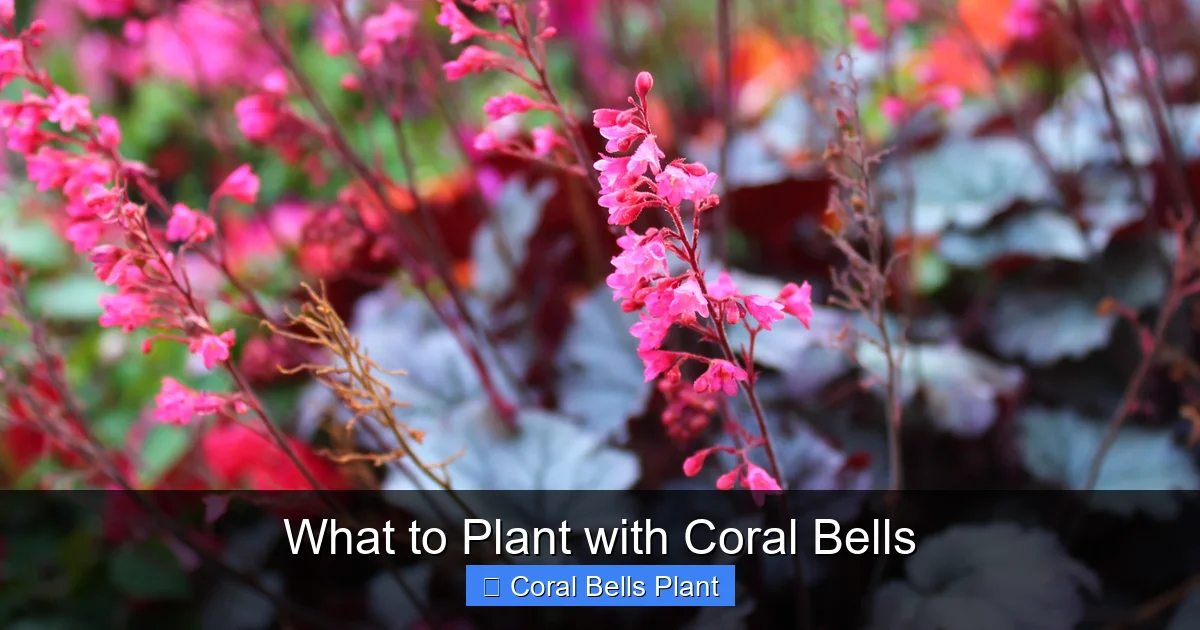
What to Plant with Coral Bells
Coral bells (Heuchera) thrive alongside shade-loving perennials like hostas, ferns, and astilbe. These companion plants share similar light and moisture needs while offering contrasting textures and colors. Smart pairings create year-round visual interest and support healthier growth for all plants involved.
If you have ever grown coral bells, you know they are garden superstars. Their ruffled leaves come in shades of purple, caramel, lime, silver, and near-black. They catch light like stained glass. But even the prettiest diva needs a supporting cast. Choosing what to plant with coral bells can transform a nice planting into a showstopper. The right neighbors highlight those fabulous leaves. They also share the same easy-care nature. Let us walk through the best partners for your Heuchera collection.
Companion planting is not just about looks. It is about matching needs. Coral bells want dappled shade. They like soil that drains well but stays evenly moist. They hate wet feet in winter. Their roots sit close to the surface. This means they play nice with other shallow-rooted shade lovers. They struggle beside deep-rooted thirsty trees. Keep that in mind as we explore options. A happy neighborhood means less work for you.
Key Takeaways
- Choose shade-tolerant companions: Coral bells prefer partial shade, so pair them with plants that thrive in similar conditions like hostas, ferns, and foamflowers.
- Match moisture needs: Select companions that enjoy consistently moist, well-draining soil to simplify watering routines.
- Play with foliage contrast: Combine coral bells’ colorful leaves with plants offering different textures, shapes, and heights for visual drama.
- Consider bloom timing: Pair early, mid, and late-season bloomers to extend garden interest from spring through fall.
- Group by hardiness zone: Ensure all companions share your USDA zone rating for reliable perennial returns.
- Use ground covers wisely: Low-growing spreaders like creeping jenny or sweet woodruff fill gaps and suppress weeds around coral bells.
- Avoid aggressive spreaders: Skip invasive plants like mint or bishop’s weed that will overtake coral bells’ shallow root systems.
Quick Answers to Common Questions
What are the best companion plants for coral bells in full shade?
Foamflower, wild ginger, sweet woodruff, and Japanese painted fern thrive in deep shade alongside coral bells. These plants share similar moisture and soil preferences while offering contrasting foliage textures.
Can I plant coral bells under trees?
Yes, but choose a spot with dappled light rather than dense shade. Avoid shallow-rooted trees like maples that compete aggressively for water. Amend soil well and provide supplemental irrigation during dry periods.
Do coral bells spread aggressively?
No, coral bells form tidy clumps that slowly widen. They do not run or self-sow aggressively. Divide clumps every 3-4 years to maintain vigor and prevent the center from becoming woody.
What annuals look good with coral bells in containers?
Trailing lobelia, fuchsia, rex begonias, and coleus make excellent container partners. Choose shade-tolerant varieties and use the thriller-filler-spiller design formula with coral bells as the filler.
Why are my coral bells dying in the center?
This is natural aging. The crown becomes woody and rises above soil level after 3-4 years. Dig the plant in spring, discard the woody center, and replant vigorous outer divisions at soil level.
📑 Table of Contents
- Understanding Coral Bells Growing Requirements
- Best Perennial Companions for Shade Gardens
- Ground Covers That Play Nice
- Seasonal Interest: Bulbs and Annuals
- Design Strategies for Stunning Combinations
- Container Combinations for Patios and Porches
- Plants to Avoid: The Bad Neighbors
- Care Tips for Mixed Plantings
- Regional Considerations Across Growing Zones
- Creating a Year-Round Coral Bells Garden
- Conclusion
Understanding Coral Bells Growing Requirements
Before we pick partners, let us get to know the host. Coral bells are native to North American woodlands. They grow on rocky slopes and forest edges. This tells you everything about what they like. They want filtered light. Morning sun is great. Harsh afternoon sun burns the leaves, especially the light-colored varieties. Dark-leaved types handle more sun. But all appreciate a break from midday heat.
Soil Preferences and Drainage
Heuchera demands excellent drainage. Heavy clay spells trouble. Amend planting holes with compost and grit. The crown sits at soil level. Bury it, and rot follows. Mulch lightly with shredded leaves. Keep mulch off the crown. Water deeply but infrequently once established. They develop some drought tolerance. But they look best with steady moisture.
Hardiness and Seasonal Behavior
Most varieties thrive in zones 4 through 9. In cold zones, they are semi-evergreen. Leaves may look tattered by spring. Simply snip off the old foliage. Fresh growth emerges fast. In warm zones, they stay evergreen year-round. Some varieties struggle in high humidity with poor air flow. Space plants for good circulation. This prevents fungal issues.
Best Perennial Companions for Shade Gardens
Perennials form the backbone of a coral bells planting. They return yearly. They grow at similar speeds. They create the tapestry effect that makes shade gardens magical. Here are the all-stars.
Hostas: The Classic Partnership
Hostas and coral bells are the peanut butter and jelly of shade gardening. Hostas offer big, bold leaves. Coral bells bring fine texture and wild color. The contrast is instant sophistication. Blue hostas like ‘Halcyon’ make purple Heuchera pop. Chartreuse hostas like ‘Sum and Substance’ glow beside dark ‘Obsidian’ or ‘Black Pearl’. Plant hostas behind or beside coral bells. Hostas get bigger. Give them room. Their leaves shade the Heuchera roots. That keeps soil cool and moist. Win-win.
Ferns: Texture Masters
Ferns add movement and softness. Their fronds sway in the slightest breeze. Coral bells stay mound-shaped. The combination feels wild and cultivated at once. Japanese painted fern (Athyrium niponicum) is a top pick. Its silver and burgundy fronds echo Heuchera colors. Maidenhair fern brings delicate lace. Ostrich fern adds height and drama. Christmas fern stays evergreen. All enjoy the same rich, moist soil. Plant ferns in drifts. Let coral bells punctuate the edges.
Astilbe: Feathery Blooms for Summer
Astilbe brings flowers to the party. Coral bells bloom too, but their wands are airy. Astilbe gives you dense plumes in pink, red, white, and lavender. They bloom early to midsummer. The foliage stays attractive after flowering. It forms a nice mound like Heuchera. ‘Visions’ series astilbes are compact. They fit small spaces. Taller types like ‘Pumila’ work behind coral bells. Both plants want consistent moisture. Mulch them together.
Foamflower (Tiarella): The Native Cousin
Foamflower is a close relative. It shares the same family (Saxifragaceae). It has similar lobed leaves, often with dark centers. The flowers are frothy white or pink spikes in spring. It spreads gently by runners. It makes a living mulch around coral bells. ‘Spring Symphony’ and ‘Sugar and Spice’ are stellar varieties. They handle deep shade better than most Heuchera. Mix them freely. They look like they grew up together.
Lungwort (Pulmonaria): Early Spring Sparkle
Lungwort wakes up early. Its silver-spotted leaves emerge while snow lingers. Pink and blue flowers often appear on the same plant. It fades a bit in summer heat. But coral bells cover the gap. The silver foliage varieties like ‘Silver Bouquet’ mirror silver Heuchera. ‘Raspberry Splash’ adds deep color. Both plants are rabbit and deer resistant. That matters in woodland gardens.
Japanese Forest Grass (Hakonechloa): Cascading Gold
This grass is shade-tolerant royalty. ‘Aureola’ arches like a golden waterfall. ‘All Gold’ is brighter. ‘Nicolas’ turns red in fall. The flowing habit contrasts perfectly with stiff coral bells mounds. Plant it where it can spill over a wall or path edge. Coral bells anchor the composition. The grass moves. The Heuchera stays put. Dynamic tension.
Ground Covers That Play Nice
Ground covers fill the floor. They suppress weeds. They keep soil moist. They knit the design together. But some are thugs. Choose well-behaved spreaders.
Creeping Jenny (Lysimachia nummularia ‘Aurea’)
Golden creeping Jenny glows in shade. It roots as it goes. It is easy to pull if it wanders too far. The chartreuse leaves light up dark corners. Beside purple coral bells, it is electric. Keep it away from lawns. It can escape. In beds, it is a gem.
Sweet Woodruff (Galium odoratum)
Sweet woodruff forms a tidy mat of whorled leaves. White star flowers appear in spring. It smells like fresh hay when crushed. It handles dry shade once established. It disappears in winter. Coral bells cover the bare spots. They take turns shining.
Barrenwort (Epimedium): The Dry Shade Hero
Epimedium is tough as nails. Heart-shaped leaves on wiry stems. Spidery flowers in spring. New leaves often emerge bronze or red. ‘Sulphureum’ has yellow blooms. ‘Rubrum’ shows pink. ‘Amber Queen’ is a stunner. They handle root competition from trees. Coral bells appreciate the company. Both have shallow roots. They share water politely.
Wild Ginger (Asarum): Glossy Green Carpets
Native wild ginger (Asarum canadense) and European (Asarum europaeum) both work. Kidney-shaped leaves stay glossy all season. Hidden brown flowers at ground level. They spread slowly. They are deer proof. The deep green makes any Heuchera color sing. Plant them at the feet of larger companions.
Seasonal Interest: Bulbs and Annuals
Perennials are the skeleton. Bulbs and annuals are the jewelry. They add sparkle at specific times. They fill gaps while perennials bulk up.
Spring Bulbs: Early Color Before Leaves Emerge
Plant bulbs between coral bells in fall. Snowdrops, crocus, and scilla bloom before Heuchera wakes up. Daffodils and tulips follow. By the time bulb foliage yellows, coral bells leaves expand to hide it. Alliums bloom later. Their purple globes hover above the mound. ‘Purple Sensation’ matches dark Heuchera. ‘Globemaster’ is huge and dramatic. Bulbs need sun to recharge. Coral bells shade comes later. Perfect timing.
Shade Annuals for Summer Punch
Impatiens, begonias, and coleus bring nonstop color. New Guinea impatiens handle more sun. ‘SunPatiens’ take half-day sun. Begonias come in wax, tuberous, and rex types. Rex begonias have leaves that rival coral bells. Coleus offers wild patterns. Pinch them to keep bushy. They die at frost. But they carry the show all summer. Plant them in pockets among perennials.
Fall Accents: Mums, Kale, and Peppers
Extend the season with cold-hardy annuals. Garden mums in bronze, rust, and gold echo autumn Heuchera tones. Ornamental kale and cabbage form rosettes that mimic coral bells shape. Ornamental peppers add bright fruit. They all tolerate light frost. Tuck them in as summer annuals fade. They bridge to winter.
Design Strategies for Stunning Combinations
Knowing plants is half the battle. Arranging them is the art. Let us talk design principles that work every time.
Color Echoes and Contrasts
Pick a color from your coral bells. Repeat it in a companion. Purple Heuchera ‘Palace Purple’? Add purple-leaf bugbane (Actaea) behind it. Lime ‘Lime Rickey’? Pair with golden hosta or hakonechloa. Silver ‘Silver Scrolls’? Echo with Japanese painted fern or brunnera ‘Jack Frost’. Contrast works too. Dark leaves beside chartreuse. Ruffled leaves beside smooth. Round leaves beside strappy. Your eye bounces happily.
Layering by Height
Think in three layers. Ground covers at ankles. Mid-height mounds at knees. Vertical accents at waist or chest. Coral bells sit in the middle layer. Use ferns, hostas, and astilbe at same height. Add tall bugbane, thalictrum, or martagon lilies behind. Let creeping jenny or sweet woodruff fill the front. This creates depth. Even a narrow bed looks lush.
Repetition and Rhythm
Don’t plant one of everything. That looks messy. Repeat key plants in groups of three or five. Use the same coral bells variety in several spots. Repeat a hosta or fern down the path. Rhythm leads the eye. It feels intentional. It calms the chaos of too many varieties.
Foliage First, Flowers Second
Shade gardens are foliage theaters. Flowers are guest stars. Build your combinations on leaf color, shape, and texture. Flowers come and go. Leaves stay the course. Coral bells shine because their leaves perform for months. Choose companions with equally good foliage. Hostas, ferns, heucherella, brunnera, and epimedium all deliver.
Container Combinations for Patios and Porches
Coral bells are container superstars. Their mounding habit fits pots perfectly. They look upscale instantly. The same companion rules apply. But containers need extra attention.
Thriller, Filler, Spiller Formula
Use coral bells as filler. They fill the middle. Add a thriller for height. Try a small Japanese maple, a dwarf conifer, or a tall fern like ‘Ostrich’. Let a spiller tumble over the edge. Creeping jenny, ivy, or trailing lobelia work. In shade, try trailing begonia or fuchsia. The formula never fails.
Container Soil and Watering
Use high-quality potting mix. Add perlite for drainage. Coral bells hate soggy pots. Water when the top inch feels dry. Fertilize lightly. Slow-release in spring. Liquid feed monthly at half strength. Repot every two years. Refresh the mix. Divide the plant if crowded.
Winter Container Care
In zones 6 and colder, pots freeze solid. Roots die. Move pots to an unheated garage. Or sink them in the ground. Or insulate with bubble wrap and leaves. In zones 7+, they often survive outdoors. Group pots together. Mulch the tops. Water monthly if dry. They wake up ready to grow.
Plants to Avoid: The Bad Neighbors
Not everyone plays nice. Some plants bully coral bells. Others create conditions Heuchera hates. Know the troublemakers.
Aggressive Spreaders and Thugs
Mint, bishop’s weed (Aegopodium), lily of the valley, and chameleon plant (Houttuynia) run underground. They choke shallow Heuchera roots. They are nearly impossible to remove once established. Just say no. Even in containers, roots escape drainage holes. Keep them far away.
Deep-Shade Heavyweights
Large hostas like ‘Empress Wu’ or ‘Sum and Substance’ cast dense shade. They also drink heavily. Coral bells nearby starve for light and water. If you love giant hostas, plant coral bells at the sunny edge. Not underneath.
Alkaline Soil Lovers
Coral bells prefer slightly acidic soil (pH 5.5-6.5). Plants that demand alkaline soil create conflict. Avoid planting beside concrete foundations or limestone paths where lime leaches. If you must, amend heavily with peat and sulfur. Test soil annually.
Wet Feet Plants
Ligularia, rodgersia, and some iris want boggy soil. Coral bells rot in those conditions. Don’t mix them. If you have a wet spot, plant the moisture lovers there. Put coral bells on the raised edge.
Care Tips for Mixed Plantings
A mixed border needs a little management. But less than you think. Good design prevents most problems.
Watering Wisdom
Water deeply once a week. Not a little daily. Soak the root zone. Use soaker hoses or drip irrigation. Keep foliage dry. Wet leaves invite fungus. Morning watering lets leaves dry fast. Mulch conserves moisture. Two inches of shredded leaves or bark. Keep it off crowns.
Dividing and Refreshing
Coral bells benefit from division every 3-4 years. The center gets woody. The plant rises out of the ground. Spring is best. Dig the clump. Pull apart vigorous outer sections. Replant at soil level. Compost the woody center. Do this when dividing hostas or daylilies. One task, many plants.
Seasonal Cleanup
In late winter, cut back tattered Heuchera leaves. Remove any mushy foliage. Rake out debris. This prevents crown rot. Leave fern fronds until new fiddleheads appear. They protect the crown. Cut astilbe stems to the ground. Mulch lightly after cleanup. The bed looks fresh. Plants breathe.
Fertilizing Lightly
Shade plants are slow eaters. Compost in spring is usually enough. If growth is weak, use balanced organic fertilizer. 5-5-5 or similar. Scratch it in around plants. Water well. Avoid high nitrogen. It makes soft leaves that burn and attract slugs.
Regional Considerations Across Growing Zones
Your zone changes the plant palette. What works in Seattle fails in Atlanta. Let us break it down.
Cool Climates (Zones 3-5)
Winter is the test. Choose ultra-hardy Heuchera like ‘Palace Purple’, ‘Plum Pudding’, or the Northern Exposure series. Pair with tough ferns (ostrich, lady fern), hostas, and Siberian bugloss (Brunnera). Snow cover protects crowns. Mulch heavily after ground freezes. Spring comes late. Be patient.
Midwest and Northeast (Zones 5-6)
Classic four-season climate. Most coral bells thrive. Humidity spikes in summer. Space plants for air flow. Watch for powdery mildew. Resistant varieties help. ‘Caramel’, ‘Citronelle’, and ‘Electric Lime’ handle heat well. Pair with native woodlanders like foamflower, wild ginger, and Solomon’s seal.
Pacific Northwest (Zones 7-8)
Mild winters, dry summers. Heuchera stays evergreen. Slugs are the enemy. Use copper tape, diatomaceous earth, or beer traps. Choose slug-resistant companions: ferns, epimedium, hellebores. Water deeply in summer drought. Mulch thick. The climate is nearly perfect for shade gardens.
South and Southeast (Zones 7-9)
Heat and humidity challenge coral bells. Select heat-tolerant villosa hybrids. ‘Autumn Bride’, ‘Brownies’, ‘Mocha’, ‘Georgia Peach’ handle the South. Afternoon shade is non-negotiable. Irrigation is essential. Pair with southern natives: Christmas fern, green-and-gold (Chrysogonum), crested iris. Avoid varieties bred only for northern gardens.
Arid West (Zones 5-8, Low Humidity)
Dry air helps prevent fungus. But low humidity stresses plants. Amend soil heavily with organic matter. Use drip irrigation. Mulch generously. Choose xeric companions: penstemon, salvia, artemisia. But give coral bells a shady, moist microclimate. North side of structures. Under deciduous trees. They can work with extra care.
Creating a Year-Round Coral Bells Garden
Let us design a calendar of interest. Every month brings something new.
Late Winter to Early Spring
Hellebores bloom first. Their nodding flowers in white, pink, purple, and green. Evergreen leaves persist. Coral bells show winter foliage. Snowdrops and winter aconite pop up. Witch hazel blooms on bare branches overhead. The garden wakes slowly.
Mid to Late Spring
Foamflower spikes bloom. Brunnera ‘Jack Frost’ shows blue flowers over silver leaves. Bleeding heart arches pink hearts. Hostas unfurl. Fern fiddleheads uncurl. Coral bells push fresh growth. Bulbs bloom between clumps. Peak foliage season begins.
Early Summer
Astilbe plumes feather. Heuchera sends up wands of tiny bells. Hummingbirds visit. Japanese forest grass arches gold. Hosta flowers rise. Goatsbeard (Aruncus) plumes white. The garden is lush and full. Water during dry spells.
Mid to Late Summer
Bugbane (Actaea) blooms fragrant white spikes. Turtlehead (Chelone) shows pink snapdragons. Toad lily (Tricyrtis) opens orchid-like flowers. Coral bells foliage stays pristine. Deadhead spent blooms. Keep watering. The show continues.
Fall
Heuchera colors intensify in cool nights. ‘Caramel’ glows amber. ‘Plum Pudding’ deepens. Japanese forest grass turns orange-red. Hostas go golden. Ferns bronze. Asters and goldenrod bloom at edges. Ornamental kale tucked in. The finale is spectacular.
Winter
In mild zones, coral bells stay colorful. In cold zones, leaves flatten but persist. Hellebores bud up. Evergreen ferns hold structure. Snow outlines the mounds. The garden rests. You plan next year’s additions.
Conclusion
Choosing what to plant with coral bells is one of gardening’s great pleasures. The options are endless. The combinations are forgiving. Start with the classics: hostas, ferns, and astilbe. Add native foamflower and wild ginger. Sprinkle in bulbs for spring. Tuck annuals for summer. Use ground covers to knit it all. Match light, water, and soil needs. Then play with color, texture, and height. Your shade garden will become a tapestry that changes with every season. And the best part? Coral bells make everyone around them look better. They are the generous stars that share the spotlight. Happy planting.
Frequently Asked Questions
Can coral bells grow in full sun?
Dark-leaved varieties like ‘Obsidian’ and ‘Palace Purple’ tolerate more sun than light-colored types. In cooler climates, they handle full sun with adequate moisture. In hot regions, afternoon shade is essential to prevent leaf scorch.
What soil pH do coral bells prefer?
Coral bells thrive in slightly acidic soil with a pH between 5.5 and 6.5. Test your soil before planting. If pH is too high, amend with elemental sulfur or peat moss. Avoid planting near concrete foundations where lime leaching raises pH.
Are coral bells deer resistant?
Yes, coral bells are generally deer resistant due to their fuzzy leaves and astringent taste. However, hungry deer may sample them in winter. Pair with other deer-resistant plants like ferns, epimedium, and hellebores for a more secure planting.
How often should I water coral bells?
Water deeply once per week during the growing season, providing about 1 inch of water. Increase frequency during hot, dry spells. Reduce watering in fall. Established plants have moderate drought tolerance but look best with consistent moisture.
When is the best time to divide coral bells?
Early spring is ideal for division, just as new growth emerges. Fall division works in mild climates (zones 7+). Avoid dividing during summer heat or winter freeze. Replant divisions immediately at the same soil depth.
What causes brown edges on coral bells leaves?
Brown edges usually indicate sun scorch, drought stress, or salt buildup from fertilizer. Move sun-stressed plants to shadier spots. Water deeply and mulch. Flush soil with water if over-fertilized. Trim damaged leaves to improve appearance.