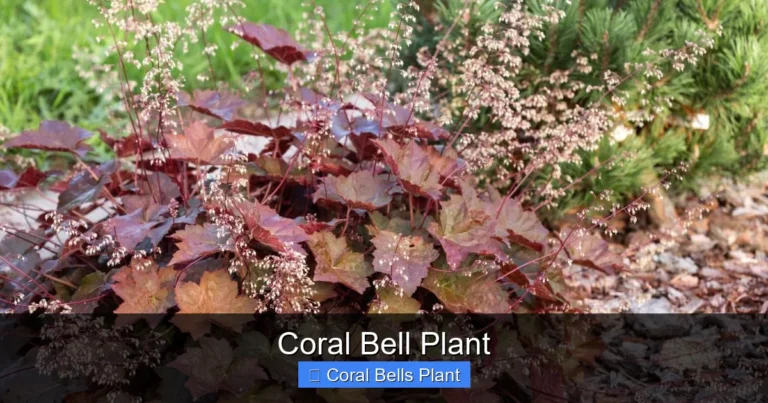
Coral Bells Plant Heuchera
Coral bells plant heuchera is a versatile perennial prized for its vibrant foliage colors and delicate bell-shaped flowers. These low-maintenance plants thrive in partial shade, offer year-round interest, and come in countless varieties to suit any garden design.
If you’ve ever walked through a garden center in spring and spotted those mounds of ruffled leaves in impossible colors — deep plum, bright lime, warm caramel, frosty silver — you’ve met coral bells plant heuchera. These perennials have exploded in popularity over the last two decades, and for good reason. They’re the rare plant that delivers knockout foliage color from early spring through late fall (and often winter), asks very little in return, and fits into almost any garden style.
I first fell for coral bells plant heuchera when I needed something to brighten a shady spot under a maple tree where grass refused to grow. A single ‘Palace Purple’ changed everything. That one plant sparked a collection that now numbers over twenty varieties. Along the way, I’ve learned what makes them thrive, which varieties perform best in different conditions, and how to use them for maximum impact. Let me share everything I know so you can skip the trial and error.
Key Takeaways
- Foliage First: Coral bells plant heuchera is grown primarily for its stunning leaves in shades of purple, chartreuse, caramel, silver, and near-black.
- Shade Tolerant: These perennials perform best in partial shade, though some newer varieties handle more sun with adequate moisture.
- Year-Round Interest: Evergreen in mild climates, coral bells plant heuchera provides color through winter when most plants are dormant.
- Easy Care: Once established, they need minimal maintenance — just occasional watering, spring cleanup, and division every few years.
- Pollinator Friendly: The airy flower spikes attract hummingbirds, bees, and butterflies from late spring through summer.
- Versatile Design: Use them in borders, containers, rock gardens, woodland settings, or as groundcover for maximum impact.
- Deer Resistant: Their slightly fuzzy, bitter-tasting foliage makes them unappealing to deer and rabbits.
Quick Answers to Common Questions
How much sun can coral bells plant heuchera tolerate?
Most varieties prefer morning sun and afternoon shade. Dark-leaved types like ‘Obsidian’ handle more sun (up to 6 hours in cool climates), while light-colored varieties scorch easily. In hot regions, all types need afternoon shade.
When should I divide my coral bells plant heuchera?
Divide every 3-4 years in early spring as new growth emerges, or in early fall (6+ weeks before frost). Signs it’s time: woody center, reduced flowering, crown heaving above soil level.
Why are the leaves on my coral bells plant heuchera turning green?
Purple varieties often green up in too much shade (plant produces more chlorophyll) or extreme heat (pigments degrade). Some cultivars like ‘Palace Purple’ naturally green up in summer. Move to brighter light or choose color-stable varieties.
Can coral bells plant heuchera grow in full shade?
Yes, but foliage color will be less intense and flowering reduced. They’ll survive in deep shade but thrive in dappled light or morning sun. For dense shade, choose vigorous villosa hybrids like ‘Autumn Bride’.
Are coral bells plant heuchera deer resistant?
Generally yes. Their slightly fuzzy, bitter-tasting foliage makes them unpalatable to deer and rabbits. However, hungry deer may sample anything. In high-pressure areas, use repellent on new plantings until established.
📑 Table of Contents
- Understanding Coral Bells Plant Heuchera Basics
- Choosing the Right Variety for Your Garden
- Planting for Success
- Ongoing Care and Maintenance
- Designing with Coral Bells Plant Heuchera
- Troubleshooting Common Problems
- Propagation Methods
- Regional Considerations
- Buying Guide: What to Look For
- Creative Uses Beyond the Garden Bed
- Seasonal Highlights Through the Year
- Conclusion
Understanding Coral Bells Plant Heuchera Basics
What Exactly Are They?
Coral bells plant heuchera belongs to the Saxifragaceae family and is native to North America. The genus includes roughly 50 species, but the plants we grow in gardens are mostly complex hybrids bred for foliage color, form, and vigor. The common name “coral bells” comes from the species Heuchera sanguinea, which produces genuine coral-red flowers. Modern hybrids often have less showy blooms in white, pink, or cream, but their leaves more than compensate.
Each plant forms a basal mound of lobed or ruffled leaves on long petioles. From late spring through summer, wiry stems rise above the foliage carrying loose panicles of tiny bell-shaped flowers. Heights range from 8 inches for compact types to 24 inches for larger varieties, with flower stems adding another 12-18 inches.
Why Gardeners Love Them
The appeal is simple: coral bells plant heuchera solves the shade garden color problem. Hostas and ferns provide texture, but heucheras bring sustained, intense color without flowers. Breeders have expanded the palette dramatically — you’ll find near-black (‘Obsidian’), electric lime (‘Lime Rickey’), metallic silver (‘Silver Scrolls’), warm peach (‘Georgia Peach’), and deep purple-black (‘Black Pearl’). Many varieties shift color through the seasons, offering a dynamic display.
They’re also incredibly adaptable. While they prefer partial shade, selections exist for full sun (in cooler climates with moisture) to deep shade. They work in containers, rock gardens, woodland edges, and formal borders. And they play well with others — their mounding habit and varied textures complement almost any neighbor.
Choosing the Right Variety for Your Garden
Color Categories and Standout Selections
With hundreds of named cultivars, choosing can feel overwhelming. Grouping by foliage color helps narrow the field:
Purple to Near-Black: ‘Palace Purple’ (the classic), ‘Obsidian’ (glossy, holds color in sun), ‘Black Pearl’ (ruffled, jet black), ‘Forever Purple’ (intense color all season). These create drama and anchor lighter plants.
Silver and Pewter: ‘Silver Scrolls’ (metallic overlay on purple), ‘Appletini’ (silver with green veins), ‘Stainless Steel’ (heavily silvered). These glow in shade and pair beautifully with blue hostas or Japanese painted ferns.
Chartreuse to Gold: ‘Lime Rickey’ (ruffled lime, sun tolerant), ‘Citronelle’ (bright yellow-green, vigorous), ‘Electric Lime’ (large leaves, glowing color). These light up dark corners like living lanterns.
Caramel, Peach, and Amber: ‘Caramel’ (the standard for this color), ‘Georgia Peach’ (large, peachy leaves with silver overlay), ‘Fire Alarm’ (bright red new growth maturing to amber). These warm tones bridge cool and hot color schemes.
Red and Rose: ‘Fire Chief’ (bubblegum pink new growth), ‘Cherry Cola’ (red-brown with silver), ‘Red Lightning’ (dark veins on gold). Bold choices for focal points.
Species Background Matters
Modern coral bells plant heuchera hybrids trace back to several species, and knowing the parentage hints at performance:
- H. villosa hybrids: Heat and humidity tolerant, larger leaves, later bloom. ‘Caramel’, ‘Citronelle’, ‘Mocha’ — excellent for Southern gardens.
- H. americana hybrids: Cold hardy, compact, great foliage. ‘Dale’s Strain’, ‘Green Spice’.
- H. sanguinea hybrids: Showier flowers, tighter mounds. ‘Snow Angel’, ‘Firefly’.
- H. micrantha hybrids: Ruffled leaves, vigorous. ‘Palace Purple’, ‘Obsidian’.
Many current introductions are complex crosses combining the best traits. The “Primo” series from Proven Winners (like ‘Black Pearl’ and ‘Wild Rose’) represents this breeding — large, ruffled leaves, strong vigor, and multi-season color.
Matching Variety to Conditions
Not every coral bells plant heuchera handles the same conditions. Dark-leaved types generally tolerate more sun because their pigments protect against UV damage. Light-colored varieties (silvers, chartreuse) often scorch in afternoon sun, especially in hot climates. Villosa hybrids handle heat and humidity better than americana types. Read labels carefully and when in doubt, give them morning sun and afternoon shade — the universal sweet spot.
Planting for Success
When to Plant
Spring and early fall are ideal planting times for coral bells plant heuchera. Spring planting gives roots time to establish before summer heat. Fall planting (at least 6 weeks before ground freeze) lets roots grow in cool soil without top-growth stress. Avoid planting in summer’s peak heat or winter’s deep freeze. Container-grown plants can technically go in any time the ground isn’t frozen, but you’ll water more in summer.
Site Selection and Soil Prep
Choose a spot with morning sun and afternoon shade, or dappled light all day. Full shade works but reduces foliage intensity and flower production. Soil should be well-draining — coral bells plant heuchera hates wet feet, especially in winter. Heavy clay? Amend generously with compost, leaf mold, or aged bark. Sandy soil? Add organic matter to improve moisture retention. Aim for slightly acidic to neutral pH (6.0-7.0).
Work the soil 12-18 inches deep. These plants have shallow, fibrous root systems that spread horizontally more than vertically. A wide planting hole beats a deep one. Mix in a handful of slow-release fertilizer or a few shovelfuls of compost at planting time.
Planting Technique
This is where many gardeners go wrong. Coral bells plant heuchera has a woody crown that sits at soil level. Plant too deep, and the crown rots. Plant too high, and roots dry out. Here’s the method:
- Water the plant thoroughly in its pot an hour before planting.
- Dig a hole twice as wide as the root ball, same depth.
- Gently loosen circling roots.
- Set the plant so the crown (where leaves emerge) sits exactly at soil level.
- Backfill with amended soil, firming gently.
- Water deeply to settle soil and eliminate air pockets.
- Apply 1-2 inches of mulch, keeping it away from the crown.
Space plants 12-18 inches apart for quick fill-in, or 18-24 inches for specimen display. They’ll spread slowly by short rhizomes but aren’t aggressive spreaders.
Container Planting
Coral bells plant heuchera excels in containers. Choose a pot at least 12 inches wide with drainage holes. Use high-quality potting mix amended with perlite or coarse sand for drainage. Plant at the same crown level as in-ground. Water more frequently — containers dry faster. In cold zones (USDA 5 and below), move pots to an unheated garage or sink them in the ground for winter. Or treat as annuals and replace each spring.
Ongoing Care and Maintenance
Watering Wisdom
Newly planted coral bells plant heuchera needs consistent moisture for the first growing season. Water deeply twice a week (more in heat) until established. After that, they’re moderately drought tolerant but look best with regular water during dry spells. The rule: water when the top inch of soil feels dry. Avoid overhead watering late in the day — wet foliage overnight invites fungal issues. Soaker hoses or drip irrigation are ideal.
In containers, check daily in summer. The shallow root system means they dry out fast. A moisture meter helps if you’re unsure.
Fertilizing: Less Is More
These aren’t heavy feeders. Too much nitrogen produces lush leaves at the expense of color intensity and winter hardiness. In spring, apply a balanced slow-release fertilizer (like 10-10-10 or 14-14-14) at half the recommended rate. Or top-dress with an inch of compost. That’s it for the year. Container plants benefit from a diluted liquid fertilizer monthly during the growing season.
Seasonal Cleanup
Coral bells plant heuchera is evergreen to semi-evergreen depending on climate. In late winter or early spring, before new growth emerges, remove any tattered, brown, or damaged leaves. Grab the leaf stem near the base and pull sideways — it should detach cleanly. Don’t cut the crown back to the ground like hostas; the woody crown needs those leaf bases for protection.
After flowering, you can remove spent flower stems to tidy up, or leave them for seed (birds eat them) and winter interest. Some varieties rebloom lightly if deadheaded.
Division: The Rejuvenation Secret
Every 3-4 years, coral bells plant heuchera centers get woody, flower less, and may heave out of the ground. Division fixes this. Best done in early spring as new growth starts, or early fall. Dig the whole clump, shake off soil, and pull or cut apart into sections, each with healthy roots and several growth points. Discard the woody center. Replant divisions at proper depth, water well, and mulch. They’ll recover fast and reward you with vigorous growth.
Winter Protection
In zones 4-5, a light mulch of shredded leaves or straw after the ground freezes prevents frost heaving (roots pushed up by freeze-thaw cycles). Don’t mulch too early — wait for frozen ground to avoid creating rodent habitat. In zones 6+, winter mulch isn’t usually needed unless snow cover is unreliable. Container plants need protection everywhere — the roots are exposed to killing cold.
Designing with Coral Bells Plant Heuchera
Color Echoes and Contrasts
The foliage range of coral bells plant heuchera makes them design powerhouses. Use color theory intentionally:
Monochromatic harmony: Plant three shades of purple — ‘Obsidian’, ‘Forever Purple’, ‘Plum Pudding’ — for depth without conflict.
Complementary pop: Pair chartreuse ‘Lime Rickey’ with purple ‘Palace Purple’. The opposition on the color wheel makes both sing.
Analogous flow: Blend caramel (‘Caramel’), peach (‘Georgia Peach’), and amber (‘Fire Alarm’) for a warm, sunset gradient.
Silver thread: Repeat a silver variety (‘Silver Scrolls’, ‘Stainless Steel’) throughout a shade bed to unify disparate plants.
Texture Play
Heuchera leaves range from smooth and shiny to deeply ruffled and fuzzy. Mix textures for sophistication. Smooth ‘Obsidian’ next to ruffled ‘Caramel’ creates subtle tension. Pair with bold hosta leaves, feathery ferns, strappy carex, or glossy hellebores. The mounded habit of coral bells plant heuchera contrasts beautifully with vertical elements like Japanese forest grass or upright sedges.
Garden Roles
Edging and Borders: Compact varieties (‘Petite Pearl Fairy’, ‘Delta Dawn’) make tidy edging along paths. Their evergreen presence defines beds year-round.
Groundcover: Plant villosa hybrids 12 inches apart in a triangle pattern. In 2-3 years, they’ll knit into a weed-suppressing carpet. ‘Autumn Bride’ (a villosa species) is especially good for this — large, fuzzy leaves, white flowers in late summer.
Container Thrillers/Fillers: In shade pots, heuchera is the perfect filler — mounding, colorful, long-lasting. Pair with a thriller (fern, upright grass) and spiller (creeping jenny, ivy).
Woodland Integration: Scatter among native wild-type varieties along a woodland path. They naturalize politely and bloom when spring ephemerals fade.
Rock Gardens: Smaller species and hybrids (H. pulchella, H. cylindrica) thrive in gritty, well-drained rock garden conditions with more sun.
Companion Planting Ideas
Great partners for coral bells plant heuchera share similar cultural needs:
- Hostas: Bold leaves contrast with ruffled heuchera foliage. Blue hostas + silver heuchera = classic.
- Ferns: Japanese painted fern, autumn fern, maidenhair fern — all love the same conditions.
- Hellebores: Winter/early spring bloomers, then handsome foliage all year. Same deer resistance.
- Astilbe: Feathery plumes in early summer complement heuchera’s airy spikes.
- Pulmonaria: Silver-spotted leaves echo silver heucheras; early flowers feed pollinators.
- Carex and Hakonechloa: Grasses add movement and fine texture.
- Tiarella and Heucherella: Close relatives with similar needs, foamier flowers.
Troubleshooting Common Problems
Frost Heaving
The number one killer of coral bells plant heuchera in cold climates. Shallow roots get pushed up by freeze-thaw cycles, exposing the crown to killing cold. Prevention: plant at correct depth, mulch after ground freezes, choose villosa hybrids (more fibrous roots). Fix: if you see plants heaved in early spring, gently press them back down and mulch.
Crown Rot
Caused by planting too deep, heavy soil, or excessive moisture around the crown. Symptoms: center leaves yellow, pull away easily, foul smell. Prevention is everything — proper planting depth, good drainage, no mulch against crown. If caught early, dig up, trim rotted tissue, dust with sulfur, replant higher in amended soil. Often fatal once advanced.
Leaf Scorch
Brown, crispy leaf edges from too much sun, wind, or drought. Light-colored varieties are most susceptible. Fix: move to shadier spot, increase water, provide windbreak. Some varieties simply can’t handle your conditions — replace with sun-tolerant types like ‘Obsidian’, ‘Lime Rickey’, or villosa hybrids.
Pests: Generally Minor
Coral bells plant heuchera has few serious pests. Vine weevil larvae eat roots (notched leaf edges indicate adults). Nematodes can weaken plants. Foliar nematodes cause angular brown spots between veins — remove affected leaves, avoid overhead watering. Slugs and snails occasionally sample new growth. Deer and rabbits typically avoid them.
Diseases: Mostly Fungal
Powdery mildew appears as white dust on leaves in humid, crowded conditions. Improve air circulation, avoid overhead watering. Rust shows as orange pustules on leaf undersides — remove affected leaves. Botrytis (gray mold) attacks in cool, wet weather — clean up debris, space plants properly. Good cultural practices prevent most issues.
Color Fading
If your purple heuchera turns green, it’s usually too much shade (plant produces more chlorophyll) or high heat (pigments break down). Some varieties naturally green up in summer (‘Palace Purple’ does this). Move to brighter light or choose color-stable varieties like ‘Obsidian’ or ‘Forever Purple’.
Propagation Methods
Division (Easiest, Most Reliable)
As described in the care section, division in spring or fall yields mature plants fast. Each division should have 3-5 growth points and healthy roots. This is the only way to guarantee identical plants — coral bells plant heuchera hybrids don’t come true from seed.
Leaf Cuttings (Fun Experiment)
In late spring, take a healthy leaf with a short piece of petiole. Dip in rooting hormone, stick in moist perlite/peat mix, cover with a plastic bag, place in bright indirect light. Roots and a tiny plantlet form at the base in 4-6 weeks. Low success rate but satisfying when it works.
Seed (For Species, Not Hybrids)
Species like H. sanguinea, H. americana, H. villosa grow true from seed. Hybrids produce variable offspring — sometimes interesting, rarely superior. Sow fresh seed on the surface of moist seed-starting mix (needs light to germinate). Keep at 65-70°F. Germination in 2-4 weeks. Transplant seedlings when they have true leaves.
Regional Considerations
Hot, Humid South (Zones 7-9)
Heat and humidity challenge many coral bells plant heuchera varieties. Villosa hybrids are your best bet — ‘Caramel’, ‘Citronelle’, ‘Mocha’, ‘Brownies’, ‘Electric Lime’. Provide afternoon shade, excellent drainage, and good air circulation. Mulch to keep roots cool. Expect some summer dormancy (reduced growth) — it’s normal.
Cold North (Zones 3-5)
Winter hardiness is the concern. Choose americana and micrantha hybrids — ‘Palace Purple’, ‘Obsidian’, ‘Plum Pudding’, ‘Green Spice’. Plant in spring to maximize establishment time. Mulch after ground freezes. Snow cover is your friend. Container growing is risky — either sink pots or treat as annuals.
Arid West (Zones 5-8)
Low humidity and intense sun require careful siting. Morning sun only, consistent irrigation, organic-rich soil. Villosa hybrids handle dry heat better than most. Mulch heavily to conserve moisture. Watch for leaf scorch.
Pacific Northwest (Zones 7-9)
Heuchera paradise! Cool, moist, mild winters. Almost any variety thrives. The main issue is winter wet — ensure sharp drainage. Slugs can be problematic. This region produces many of the best selections (Terra Nova Nurseries is in Oregon).
Buying Guide: What to Look For
At the Nursery
Inspect before you buy. Healthy coral bells plant heuchera shows:
- Firm, turgid leaves — no wilting, yellowing, or brown edges
- Multiple growth points (crowns) — indicates vigor
- White, healthy roots visible at drainage holes — not circling or brown
- No signs of pests (check leaf undersides)
- Label with full cultivar name — not just “Heuchera mix”
Avoid plants with moss or liverwort on the soil surface (overwatered/old stock) or those bursting from pots (rootbound). A smaller, well-rooted plant establishes faster than a large, rootbound one.
Mail Order Tips
Reputable online nurseries ship bare-root or in plugs. Order for spring or fall delivery. Bare-root plants should have firm, light-colored roots and a solid crown. Pot up immediately on arrival, water well, and shade for a week before planting. Plugs (small rooted cuttings) need growing on in 4-inch pots for a month before garden planting.
Price vs. Value
New introductions with plant patents cost $15-25. Older varieties run $8-15. Both perform well — patents just mean you can’t legally propagate them for sale. For mass planting, buy smaller plugs or divide existing plants. For specimens, invest in the exact variety you want.
Creative Uses Beyond the Garden Bed
Cut Foliage for Arrangements
Coral bells plant heuchera leaves last 2-3 weeks in water. Cut stems at an angle, strip lower leaves, place in cool water. The ruffled, colored leaves add texture and hue to bouquets that flowers alone can’t provide. Dark varieties are especially dramatic with white lilies or green hydrangeas.
Living Mulch Under Trees
Plant a carpet of heuchera under deciduous trees where grass struggles. They tolerate root competition better than most perennials, especially villosa types. The spring flowers bloom before the tree leafs out fully. Come fall, just let leaves decompose in place — they’ll feed the heucheras.
Fairy and Miniature Gardens
Dwarf varieties (‘Petite Pearl Fairy’, ‘Little Cutie’ series) scale perfectly for fairy gardens. Their tidy mounds look like miniature shrubs. Pair with tiny sedums, thyme, and miniature accessories.
Green Roof and Wall Candidates
Shallow roots, drought tolerance, and evergreen nature make certain heucheras candidates for extensive green roofs and living walls in moderate climates. H. villosa and H. americana species types perform best in these harsh conditions.
Seasonal Highlights Through the Year
Spring: Fresh Growth and Flowers
New leaves emerge in intense, clean colors — often brighter than mature foliage. This is peak foliage season. Flower spikes begin rising in late spring, continuing into early summer. The combination of fresh leaves and airy blooms is the plant’s showiest moment.
Summer: Steady Performance
Foliage color may deepen or shift. Villosa hybrids hit their stride in heat. Water during drought. Deadhead if desired. Watch for pests. This is low-maintenance season.
Fall: Color Transformation
Many varieties intensify with cooler nights. ‘Caramel’ deepens to burnished copper. ‘Georgia Peach’ develops rose tones. ‘Silver Scrolls’ gains purple undertones. Fall is often the most beautiful foliage season. Plant now for next year.
Winter: Quiet Structure
In zones 6+, foliage persists all winter, providing rare color. Snow dusts the ruffles beautifully. In colder zones, leaves may flatten but crown survives. Don’t cut back — the leaves protect the crown. Late winter cleanup reveals fresh growth points already forming.
Conclusion
After years of growing coral bells plant heuchera, I’m still discovering new varieties and combinations that delight me. These plants have earned their place as shade garden superstars through sheer versatility. Whether you need a pop of chartreuse to wake up a dark corner, a river of purple to edge a path, or a container centerpiece that looks good in January, there’s a heuchera for that.
The keys to success are simple: plant at the right depth (crown at soil level), give them drainage, provide morning sun and afternoon shade, and divide every few years. Do that, and they’ll reward you with decades of color. Start with one or two varieties that catch your eye. Watch how they perform in your specific conditions. Then expand. Before you know it, you’ll be the one recommending coral bells plant heuchera to every gardener you meet.
Your shade garden is waiting. Go give it some color.
Frequently Asked Questions
How often should I water coral bells plant heuchera?
Water newly planted heucheras deeply twice a week for the first season. Established plants need water when the top inch of soil feels dry — typically once a week during dry spells. Container plants may need daily watering in summer heat.
What is the best fertilizer for coral bells plant heuchera?
Apply a balanced slow-release fertilizer (10-10-10) at half strength in early spring, or top-dress with an inch of compost. Avoid high-nitrogen fertilizers which reduce color intensity and winter hardiness. Container plants benefit from monthly diluted liquid feed.
Should I cut back coral bells plant heuchera in fall?
No. Leave foliage intact through winter — it protects the crown. In late winter or early spring, remove only tattered or brown leaves by pulling sideways at the base. Never cut the woody crown to the ground.
Why is my coral bells plant heuchera dying in the center?
The center naturally becomes woody and less productive after 3-4 years. This signals it’s time to divide. Dig the plant, discard the woody center, and replant the vigorous outer sections with healthy roots and growth points.
Can I grow coral bells plant heuchera indoors as a houseplant?
Not long-term. They need a winter dormancy period triggered by cold temperatures and short days. You can overwinter pots in an unheated garage (zones 5+) or enjoy them as temporary indoor displays for a few weeks, but they’ll decline without seasonal cycles.
What’s the difference between heuchera, tiarella, and heucherella?
Heuchera (coral bells) has ruffled foliage and airy flower spikes. Tiarella (foamflower) has lobed leaves with dark centers and foamier flower spikes. Heucherella (foamy bells) is a hybrid cross combining traits of both — often with deeply cut, patterned leaves and abundant flowers.