What Are Coral Bell Plants
Coral bell plants (Heuchera) are versatile perennial foliage plants prized for their colorful leaves and delicate bell-shaped flowers. Native to North America, these low-maintenance perennials thrive in shade gardens and offer year-round visual interest with foliage colors ranging from deep purple to bright lime green.
If you have ever wandered through a shade garden and noticed mounds of ruffled leaves in shades of purple, caramel, or electric lime, you have likely met coral bell plants. These charming perennials have become garden superstars over the past few decades, and for good reason. They bring color to dark corners, ask for very little in return, and look good from early spring until the snow flies.
I remember the first time I planted coral bells in my own yard. I had a stubborn spot under a maple tree where grass refused to grow. A friend handed me a pot of ‘Palace Purple’ and said, just stick it in the ground. That plant is still there fifteen years later, looking better every season. That is the magic of Heuchera — they are tough, adaptable, and endlessly collectible.
Key Takeaways
- Versatile shade perennials: Coral bells thrive in partial to full shade, making them perfect for woodland gardens and shaded borders.
- Stunning foliage variety: Leaves come in purple, bronze, silver, chartreuse, peach, and near-black shades with unique veining patterns.
- Low maintenance: Once established, Heuchera requires minimal care — just occasional watering and division every few years.
- Year-round interest: Evergreen in mild climates, coral bells provide winter color when other plants go dormant.
- Pollinator friendly: The delicate flower spikes attract hummingbirds, bees, and butterflies in late spring to early summer.
- Deer and rabbit resistant: The fuzzy leaves deter browsing animals, making them reliable for rural gardens.
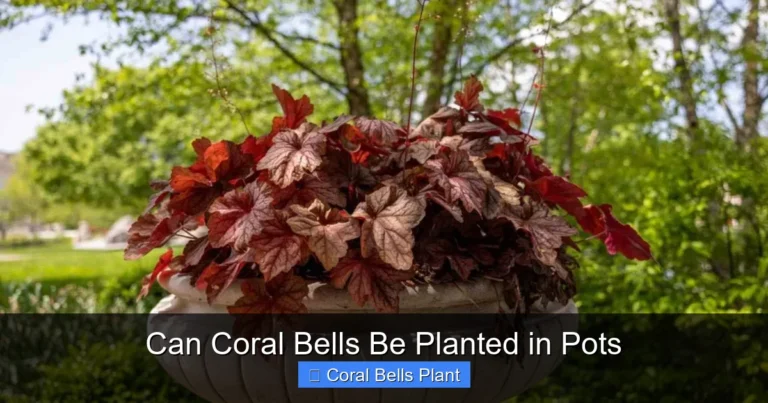
- Great container plants: Compact growth habit makes coral bells excellent for pots, window boxes, and mixed planters.
Quick Answers to Common Questions
What are coral bell plants?
Coral bell plants (Heuchera) are North American native perennials grown primarily for their colorful, ruffled foliage that forms neat mounds. They produce delicate bell-shaped flowers on wiry stems in late spring.
Do coral bells need sun or shade?
Coral bells prefer partial to full shade, especially protection from hot afternoon sun. Some varieties tolerate more sun in cooler climates or with consistent moisture, but most perform best in dappled or morning light.
Are coral bells perennial?
Yes, coral bells are hardy perennials that return year after year in USDA zones 4-9 (some varieties to zone 3). They are evergreen in mild winters and herbaceous in colder zones.
How often should I water coral bells?
Water newly planted coral bells two to three times weekly for the first month. Established plants need deep watering once a week during dry spells. Container plants need more frequent watering.
When should I divide coral bells?
Divide coral bells every three to four years in early spring or early fall when the center becomes woody and vigor declines. Discard the woody center and replant the vigorous outer sections.
📑 Table of Contents
- What Exactly Are Coral Bell Plants
- Why Gardeners Love Coral Bell Plants
- Choosing the Right Coral Bell Varieties
- How to Plant and Establish Coral Bells
- Ongoing Care for Healthy Coral Bells
- Designing with Coral Bell Plants
- Common Problems and Solutions
- Propagating Coral Bells
- Coral Bells Through the Seasons
- Buying Guide: What to Look For
- Conclusion
What Exactly Are Coral Bell Plants
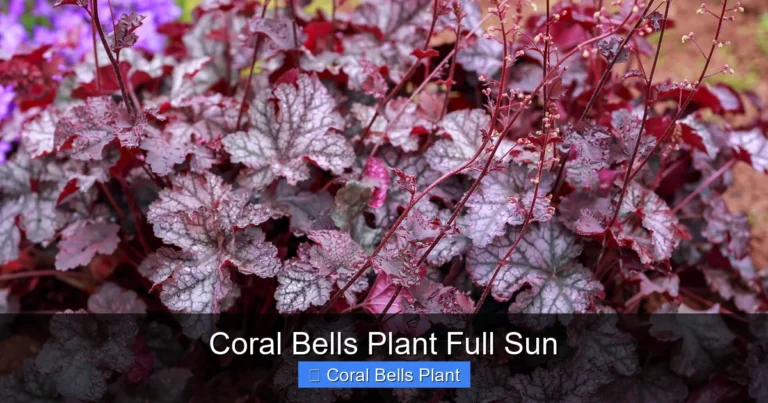
Coral bells belong to the genus Heuchera, a group of about fifty species native to North America. They are part of the Saxifragaceae family, which also includes foamflower (Tiarella) and alumroot. The common name comes from the tiny bell-shaped flowers that dangle from wiry stems above the foliage in late spring and early summer.
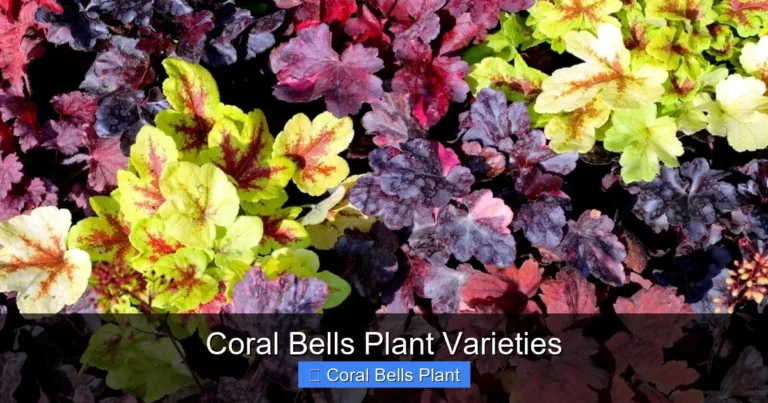
But let us be honest — most gardeners grow coral bells for the leaves, not the blooms. The foliage forms neat, rounded mounds that stay attractive all season. Leaf colors run the gamut from deep burgundy and chocolate brown to amber, peach, silver, chartreuse, and nearly black. Many varieties have contrasting veins, ruffled edges, or a metallic sheen that catches the light.
Botanical Background
The genus Heuchera was named after Johann Heinrich von Heucher, an eighteenth-century German physician and botanist. Native species grow in diverse habitats across the continent — from rocky cliffs in the Appalachians to woodland floors in the Pacific Northwest. This wide native range explains why coral bells are so adaptable in gardens today.
Plant breeders have been busy. Modern hybrids combine the best traits of different species: the heat tolerance of Heuchera villosa from the Southeast, the cold hardiness of Heuchera americana from the Midwest, and the showy flowers of Heuchera sanguinea from the Southwest. The result is a staggering array of cultivars — hundreds at last count — with new introductions every year.
Coral Bells vs. Foamflower vs. Foamy Bells
You will often see coral bells sold alongside foamflower (Tiarella) and foamy bells (Heucherella). They are cousins. Foamflower has more deeply lobed leaves and foamy white flower spikes. Foamy bells are hybrids between Heuchera and Tiarella, blending the colorful foliage of coral bells with the flower power of foamflower. All three play well together in shade gardens.
Why Gardeners Love Coral Bell Plants
Ask any shade gardener what they cannot live without, and coral bells will be near the top of the list. Here is why these perennials have earned a permanent spot in so many landscapes.
Foliage That Steals the Show
Most perennials bloom for two or three weeks. Coral bells look good for eight months or more. The leaves emerge fresh in spring, hold their color through summer heat, and often intensify in fall. In mild winters, they stay evergreen. Even when dusted with frost, the ruffled mounds add texture to the dormant garden.
Color options are nearly endless. Want dramatic contrast? Plant ‘Obsidian’ with its glossy near-black leaves next to ‘Lime Rickey’ in electric chartreuse. Prefer warm tones? ‘Caramel’ offers amber leaves with pink undersides. ‘Peach Flambe’ lives up to its name with bright peach foliage that deepens to plum in fall. Silver lovers gravitate toward ‘Silver Scrolls’ or ‘Looking Glass’ with their frosted, veined leaves.
Shade Garden Problem Solvers
Every gardener has that spot. Deep shade under mature trees. The north side of a fence. The narrow bed between the house and the driveway where nothing thrives. Coral bells handle these challenges with grace. They tolerate root competition from trees better than most perennials. They accept morning sun but prefer afternoon shade, especially in hot climates.
I have a row of ‘Berry Smoothie’ growing under a line of arborvitae. The soil is dry, root-filled, and gets maybe two hours of dappled light. Those plants have formed a continuous ribbon of rose-purple foliage for five years without missing a beat.
Low Maintenance, High Reward
Once established, coral bells ask for little. Water during dry spells. Remove tattered leaves in early spring. Divide every three to four years to keep centers from getting woody. That is basically it. No staking, no deadheading required, no complicated pruning regime.
They are also notably pest and disease resistant. Deer and rabbits usually leave them alone — the leaves have a slightly fuzzy, astringent quality that browsers dislike. Slugs may nibble young leaves in wet springs, but mature plants are rarely bothered.
Pollinator Magnets
Those delicate flower wands serve a purpose beyond beauty. Hummingbirds love the nectar-rich blooms. Native bees and butterflies visit regularly. The flowers last for weeks, providing a steady food source when many spring bulbs have finished and summer perennials have not yet started.
If you want maximum pollinator action, choose varieties with showier flowers like ‘Firefly’ or ‘Ruby Bells’ (Heuchera sanguinea hybrids). The species Heuchera sanguinea itself has the brightest red flowers of the genus and is a hummingbird favorite.
Choosing the Right Coral Bell Varieties
With hundreds of cultivars on the market, picking coral bells can feel overwhelming. Here is a practical framework for narrowing the field.
Match the Plant to Your Climate
This is the single most important factor. Some coral bells melt in Southern humidity. Others sulk in Northern winters. Check the hardiness zone rating, but also look at the parentage.
For hot, humid climates (Zones 7-9): Choose varieties with Heuchera villosa bloodlines. ‘Caramel’, ‘Citronelle’, ‘Mocha’, ‘Brownies’, and the entire Villosa series handle heat and humidity like champs. They have larger, hairier leaves that resist fungal issues.
For cold climates (Zones 3-5): Look for Heuchera americana and Heuchera richardsonii hybrids. ‘Palace Purple’, ‘Dale’s Strain’, ‘Green Spice’, and the Northern Exposure series are bred for winter survival. They may not be as flashy, but they come back reliably.
For the transition zones (Zones 5-7): You can grow almost anything. This is where the widest selection thrives.
Consider Sun Tolerance
Despite their shade-loving reputation, many coral bells handle more sun than you might think — especially in cooler climates or with consistent moisture. Generally, lighter-colored foliage (chartreuse, yellow, peach) burns more easily in hot afternoon sun. Darker leaves (purple, bronze, near-black) tolerate more light.
If you have a spot with four to six hours of morning sun, try ‘Electric Lime’, ‘Lime Marmalade’, ‘Southern Comfort’, or ‘Georgia Peach’. In full shade, the silvery and purple varieties really shine — ‘Silver Scrolls’, ‘Plum Pudding’, ‘Black Pearl’, ‘Midnight Rose’.
Think About Garden Role
Are you planting a specimen container? A groundcover swath? An edging plant? Different varieties suit different jobs.
Specimen plants: Large, dramatic varieties like ‘Big Top Caramel Apple’, ‘Mega Caramel’, or ‘Forever Purple’ make stunning focal points in pots or at pathway turns.
Groundcovers: Spreading types like ‘Caramel’, ‘Citronelle’, ‘Lime Rickey’, and ‘Appalachian Trail’ form dense mats that suppress weeds.
Edging and borders: Compact, uniform varieties like ‘Cherry Cola’, ‘Delta Dawn’, ‘Fire Alarm’, and the Dolce series line paths neatly.
Mixed containers: Choose trailing or mounding types that play well with others. ‘Peach Flambe’, ‘Berry Smoothie’, ‘Red Lightning’, and ‘Zipper’ combine beautifully with annuals, ferns, and carex.
Flower Power vs. Foliage Focus
Most modern breeding prioritizes foliage. Flowers are often small, pale pink or white, on tall wiry stems. If you want showy blooms, look for Heuchera sanguinea cultivars (‘Firefly’, ‘Snow Angel’, ‘Ruby Bells’) or the new ‘Coral Forest’ series with larger, more colorful flower spikes.
Pro tip: If you grow coral bells primarily for foliage, you can snip off the flower stems as they appear. This redirects energy into leaf production and keeps the mound tidy. But leave a few for the hummingbirds!
How to Plant and Establish Coral Bells
Success with coral bells starts at planting time. Get the basics right, and your plants will reward you for years.
When to Plant
Spring and fall are both excellent. Spring planting gives roots time to establish before summer heat. Fall planting (six weeks before ground freeze) lets roots grow in cool soil while tops go dormant. Avoid planting in the heat of midsummer unless you can water diligently.
I prefer fall planting in my Zone 6 garden. The soil is warm, rainfall is reliable, and the plants hit the ground running next spring. But spring works fine too — just mulch well and watch watering during the first summer.
Site Selection and Soil Prep
Coral bells want well-drained soil rich in organic matter. They hate wet feet, especially in winter. Heavy clay is a death sentence unless amended. Sandy soil works if you add compost and irrigate.
Dig a hole twice as wide as the pot but no deeper. Mix the excavated soil with compost or leaf mold at a 50-50 ratio. If your soil is acidic (below 6.0), add a handful of garden lime — coral bells prefer neutral to slightly alkaline conditions (pH 6.0-7.0).
Test drainage by filling the hole with water. If it does not drain within an hour, either choose a different spot or create a raised bed. I learned this the hard way after losing three ‘Plum Pudding’ plants to a soggy spring.
Planting Technique
This is critical: plant high. The crown (where stems meet roots) should sit slightly above soil level — about half an inch. Burying the crown leads to rot. Backfill with your amended soil, firm gently, and water thoroughly to settle air pockets.
Space plants according to mature width. Most varieties spread twelve to eighteen inches. For quick groundcover, plant twelve inches apart. For specimen spacing, allow eighteen to twenty-four inches.
After-Planting Care
Water deeply two to three times per week for the first month, then weekly unless rain provides an inch. Mulch with shredded leaves, pine fines, or compost — keep mulch away from the crown. Do not fertilize at planting time. Wait until spring growth emerges, then apply a light feeding of balanced organic fertilizer.
Ongoing Care for Healthy Coral Bells
Established coral bells are low maintenance, but a few timely tasks keep them looking their best.
Watering Wisdom
Consistent moisture produces the lushest foliage. Water deeply once a week during dry spells, more often in containers or sandy soil. Avoid overhead watering late in the day — wet leaves overnight invite fungal issues. Soaker hoses or drip irrigation are ideal.
Mature plants in good soil with mulch are surprisingly drought tolerant. They may look a bit tired in August heat but bounce back with fall rains. The villosa hybrids are especially tough once established.
Fertilizing: Less Is More
Coral bells are light feeders. Too much nitrogen produces soft, floppy growth and dulls leaf color. Apply a slow-release organic fertilizer (like 5-5-5) in early spring when new growth appears. Alternatively, top-dress with an inch of compost. That is all they need for the year.
Container plants need more frequent feeding — a diluted liquid fertilizer monthly during the growing season. Stop fertilizing by late July to let plants harden off for winter.
Spring Cleanup
In early spring, before new growth emerges, remove any tattered, brown, or damaged leaves from the previous season. Use clean scissors or pinch by hand. This improves air circulation and removes overwintering disease spores.
If the plant has heaved out of the ground (common in freeze-thaw cycles), gently press it back down and add soil around the crown. Do not step on it — the roots are shallow.
Division: The Fountain of Youth
Every three to four years, coral bells develop woody centers with reduced vigor. Division rejuvenates them and gives you free plants. Best done in early spring or early fall.
Dig the entire clump. Shake off excess soil. Pull or cut apart into sections, each with several healthy leaves and roots. Discard the woody center. Replant divisions at the same high crown level. Water well. They may look sad for a week but recover quickly.
Managing Flowers
As mentioned, you can remove flower stems for a tidier foliage mound. Cut at the base when stems first appear. Or let them bloom for pollinators, then cut back after flowering to prevent self-seeding (seedlings rarely come true to type).
Designing with Coral Bell Plants
This is where coral bells really shine. Their color range and mounding habit make them incredibly versatile design tools.
Color Echoes and Contrasts
Use foliage color to create rhythm through a shade garden. Repeat a hue — say, the burgundy of ‘Palace Purple’ — in three or four spots to lead the eye. Contrast complementary colors: chartreuse ‘Electra’ next to purple ‘Black Pearl’, or peach ‘Georgia Peach’ beside blue hosta ‘Halcyon’.
Silver-leaved varieties like ‘Silver Scrolls’, ‘Looking Glass’, and ‘Appalachian Trail’ act as neutral bridges between warm and cool colors. They also glow in evening light, making them perfect for gardens viewed at dusk.
Texture Play
Coral bells have ruffled, scalloped, or smooth leaves depending on variety. Pair them with contrasting textures: the bold, smooth leaves of hostas; the feathery fronds of ferns (Japanese painted fern, autumn fern, maidenhair fern); the grassy blades of carex or hakonechloa; the glossy leaves of hellebores or epimedium.
One of my favorite combos: ‘Caramel’ coral bells with Japanese painted fern (Athyrium niponicum ‘Pictum’) and ‘Aureola’ hakonechloa. The amber, silver, and gold play off each other all season.
Container Recipes
Coral bells are container superstars. They provide the “filler” element in thriller-filler-spiller designs, and their evergreen foliage carries pots through winter in mild zones.
Spring container: ‘Peach Flambe’ coral bells + ‘Obsidian’ coral bells + white tulips + blue muscari + ivy trailing.
Summer container: ‘Lime Rickey’ coral bells + ‘Black Pearl’ coral bells + purple calibrachoa + silver dichondra + purple fountain grass.
Fall/winter container: ‘Caramel’ coral bells + ‘Midnight Rose’ coral bells + ornamental kale + red-twig dogwood branches + pinecones.
Use a high-quality potting mix with added perlite for drainage. Water containers more frequently than in-ground plants. In Zones 6 and colder, move pots to an unheated garage for winter or sink them in the ground.
Groundcover Tapestries
Plant spreading varieties in drifts to create a living tapestry. Mix three to five varieties with complementary colors. Space twelve inches apart. In two to three years, you will have a weed-suppressing carpet that looks intentional and designed.
Good tapestry combos: ‘Caramel’ + ‘Citronelle’ + ‘Appalachian Trail’ (warm neutrals); ‘Black Pearl’ + ‘Plum Pudding’ + ‘Berry Smoothie’ (cool purples); ‘Lime Rickey’ + ‘Electra’ + ‘Fire Alarm’ (high contrast).
Companion Planting
Coral bells play well with almost any shade-tolerant plant. Classic partners include:
- Hostas: Bold leaves contrast with ruffled coral bell foliage
- Ferns: Feathery texture softens the mounded habit
- Hellebores: Early blooms, evergreen leaves, same cultural needs
- Epimedium: Delicate flowers, heart-shaped leaves, dry shade tolerance
- Carex and Hakonechloa: Grass-like movement and golden color
- Pulmonaria: Silver-spotted leaves, early spring flowers
- Tiarella and Heucherella: Cousins with similar habits, extended bloom
- Spring bulbs: Snowdrops, crocus, scilla bloom before coral bells leaf out fully
Common Problems and Solutions
Even easy plants have issues. Here is how to diagnose and fix the most frequent coral bell complaints.
Crown Rot
Symptoms: Plant collapses at soil line, crown turns brown and mushy, leaves yellow and wilt.
Cause: Poor drainage, planting too deep, excessive mulch against crown, overwatering.
Fix: Improve drainage before replanting. Plant high. Pull mulch away from crown. Water at soil level, not over foliage. Once crown rot sets in, the plant is usually a loss — but you can sometimes save divisions from healthy outer portions.
Heaving
Symptoms: Plant pushes up out of ground in winter, exposing roots.
Cause: Freeze-thaw cycles in poorly drained or heavy soil.
Fix: Mulch heavily after ground freezes (pine boughs, straw, shredded leaves). In spring, gently replant at correct depth. Adding compost to planting hole improves soil structure and reduces heaving long-term.
Leaf Scorch
Symptoms: Brown, crispy leaf edges or patches, especially on light-colored varieties.
Cause: Too much afternoon sun, insufficient water, wind exposure.
Fix: Move to shadier spot (fall or early spring). Increase watering. Provide windbreak. Choose more sun-tolerant varieties for that location next time.
Rust
Symptoms: Orange-brown pustules on leaf undersides, yellow spots on top.
Cause: Fungal disease favored by humid, wet conditions.
Fix: Remove affected leaves. Improve air circulation (divide crowded plants). Water at soil level. Apply copper fungicide if severe. Choose rust-resistant varieties (many villosa hybrids show good resistance).
Vine Weevil Damage
Symptoms: Notched leaf edges (adults), wilting plants with severed roots (larvae).
Cause: Black vine weevil beetles and their soil-dwelling grubs.
Fix: Apply beneficial nematodes (Steinernema kraussei) to soil in spring and fall. Hand-pick adults at night with flashlight. Use sticky barriers on pot rims. Encourage ground beetles and birds.
Poor Vigor / Center Die-Out
Symptoms: Woody, bare center with growth only at outer edges.
Cause: Age — coral bells naturally become woody after three to four years.
Fix: Divide in spring or fall. Discard woody center. Replant vigorous outer sections. This is normal maintenance, not a failure.
Propagating Coral Bells
Want more plants? You have three main options.
Division (Easiest, Most Reliable)
As described in the care section, division yields mature plants quickly. Do it in early spring or early fall. Each division should have three to five healthy leaves and a good root system. Replant immediately.
Seed (For Species, Not Cultivars)
Species Heuchera (like H. americana, H. villosa, H. sanguinea) come true from seed. Hybrids and named cultivars do not — seedlings will be variable. If you want to experiment, collect seed when capsules turn brown and split. Sow fresh on moist seed-starting mix. Light aids germination. Transplant seedlings when they have two true leaves.
Leaf Cuttings (Advanced)
Some growers propagate from leaf cuttings with a bit of petiole attached. Dip in rooting hormone, place in moist perlite-vermiculite mix, cover with humidity dome. Roots form in four to six weeks. This works best with species and some hybrids. It is slower than division but produces many plants from one leaf.
Coral Bells Through the Seasons
One of the joys of growing coral bells is watching them transform. Here is what to expect month by month in a typical Zone 6 garden.
Early Spring (March-April)
New leaves emerge from the crown, often brighter than mature color. Remove winter-damaged foliage. Apply light fertilizer. Watch for heaving — replant if needed.
Late Spring (May-June)
Peak foliage season. Leaves reach full size and color intensity. Flower stems elongate. Hummingbirds arrive. This is the showiest time for most varieties.
Summer (July-August)
Flowers fade. Foliage may dull slightly in heat. Keep watered. Remove spent flower stems. In humid climates, watch for rust. Villosa hybrids shine now.
Fall (September-October)
Second flush of fresh growth often appears. Colors deepen — purples get richer, ambers glow brighter. This is prime planting and division time. Stop fertilizing.
Winter (November-February)
In Zones 6 and warmer, foliage persists. In colder zones, leaves may flatten but crown survives. Mulch after ground freezes. Enjoy the ruffled silhouettes against snow. Plan next year’s additions.
Buying Guide: What to Look For
Shopping for coral bells can be addictive. Here is how to choose healthy plants and avoid disappointment.
At the Garden Center
Look for plants with multiple crowns (growing points) — they establish faster. Avoid plants with yellowing lower leaves, which may indicate root issues or overwatering. Check the crown: it should be firm, not mushy. Gently lift the pot — roots should be white and fill the container but not be a solid mat.
Read the label carefully. Note the mature size, sun tolerance, and hardiness zone. A plant labeled “full sun” in Oregon may fry in Georgia. When in doubt, ask staff or check the breeder’s website.
Online and Mail Order
Reputable online nurseries ship bare-root or in plugs. Bare-root plants should have firm, light-colored roots and a visible crown with dormant buds. Plugs should be well-rooted but not root-bound. Order early spring or fall for best selection and planting conditions.
Upon arrival, unpack immediately. Soak bare roots in water for an hour. Pot up plugs if not planting right away. Plant within a few days.
Price vs. Value
New introductions command premium prices ($15-25 for a quart pot). Older, proven varieties cost less ($8-12). Both are fine. Newer varieties may have better disease resistance or color stability. Older varieties have a track record. I mix both in my garden.
Conclusion
Coral bell plants have earned their place in the shade garden hall of fame. They solve problems, delight the eye, support wildlife, and ask for so little in return. Whether you tuck a single ‘Caramel’ into a container, line a woodland path with ‘Palace Purple’, or create a kaleidoscopic tapestry of ten varieties, Heuchera delivers.
Start with one or two that match your conditions. Watch them. Learn their rhythms. Then add more. Before you know it, you will be the gardener pressing pots into friends’ hands, saying, just stick it in the ground. Trust me — it works.
Your shade garden is waiting. Go find your coral bells.
Frequently Asked Questions
Can coral bells grow in full sun?
Some coral bell varieties tolerate full sun in cooler climates (zones 4-6) with consistent moisture, but most prefer afternoon shade. Dark-leaved varieties handle more sun than chartreuse or yellow types, which scorch easily.
Why are my coral bells dying in the middle?
Center die-out is natural aging — coral bells become woody after three to four years. Divide the plant in spring or fall, discard the woody center, and replant the healthy outer sections to rejuvenate it.
Do coral bells spread?
Most coral bells form clumps that slowly widen but do not run aggressively. Some villosa hybrids like ‘Caramel’ and ‘Citronelle’ spread more readily and work well as groundcovers. They do not invade lawns or beds.
Should I cut back coral bells for winter?
Do not cut back coral bells in fall. The foliage protects the crown through winter. Remove only tattered leaves in early spring before new growth emerges. In very cold zones, add a light mulch after the ground freezes.
Are coral bells deer resistant?
Yes, coral bells are generally deer and rabbit resistant. The leaves have a slightly fuzzy, astringent texture that browsers dislike. However, hungry deer may sample anything in severe winters.
Can I grow coral bells in containers?
Absolutely. Coral bells thrive in containers with well-draining potting mix. They provide year-round foliage interest and combine beautifully with annuals, grasses, and trailing plants. In zones 6 and colder, protect pots in an unheated garage or sink them in the ground for winter.