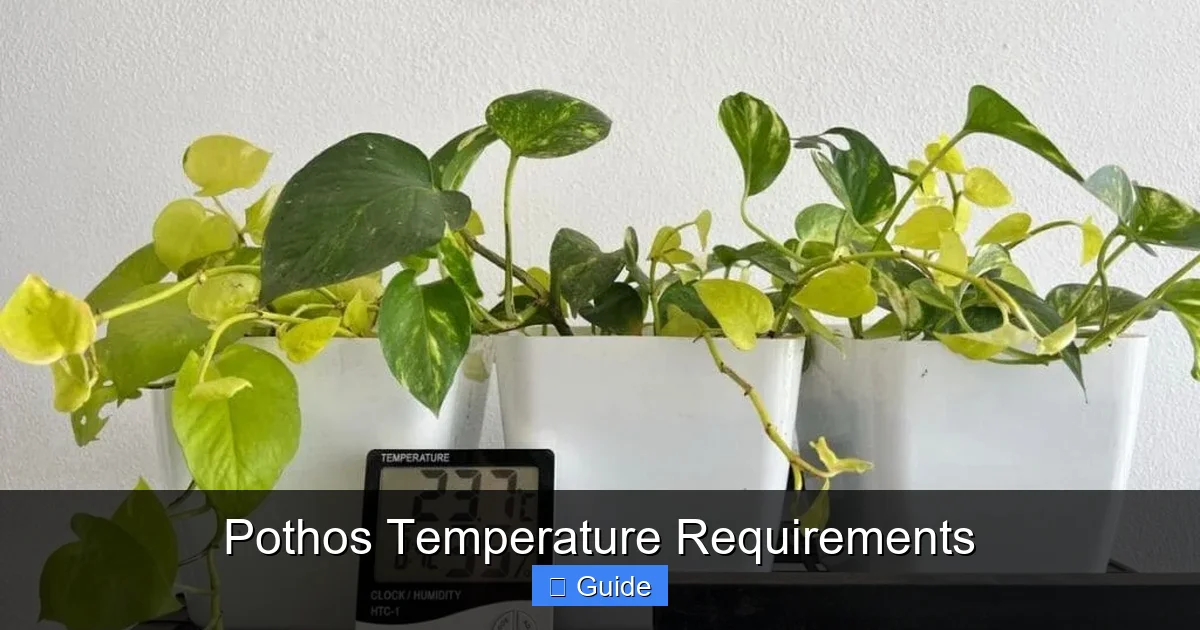
Pothos Temperature Requirements
Pothos plants thrive in temperatures between 65°F and 85°F (18°C to 29°C). They can tolerate brief dips to 50°F but suffer below that. Keep your pothos away from cold drafts, heating vents, and sudden temperature swings for lush, healthy growth year-round.
If you have ever brought home a pothos plant, you already know why it is one of the most popular houseplants around. It trails beautifully from a shelf. It climbs a moss pole with ease. It forgives you when you forget to water it for a week. But there is one thing this tough plant will not forgive: the wrong temperature.
Temperature is the silent factor that decides whether your pothos merely survives or truly thrives. Get it right, and you will see rapid growth, glossy leaves, and long trailing vines. Get it wrong, and you will watch leaves turn yellow, edges crisp up, or growth grind to a halt. The good news? Pothos temperature requirements are simple once you understand the basics. Let us walk through everything you need to know to keep your plant happy in every season.
Key Takeaways
- Ideal range is 65°F to 85°F: This mimics the tropical understory where pothos naturally grows.
- Minimum survival temperature is 50°F: Below this, growth stops and cold damage begins.
- Avoid sudden temperature changes: Drafts and vents cause leaf yellowing and drop.
- Humidity matters too: Warm temperatures with low humidity can crisp leaf edges.
- Seasonal adjustments help: Move plants away from cold windows in winter and hot windows in summer.
- Watch for stress signs: Curling, yellowing, or blackened leaves signal temperature problems.
- Consistent temps encourage faster growth: Stable warmth produces longer vines and larger leaves.
Quick Answers to Common Questions
What is the ideal temperature range for pothos?
The ideal temperature range for pothos is 65°F to 85°F (18°C to 29°C). This mimics their native tropical habitat and supports active growth.
Can pothos survive in 50°F temperatures?
Pothos can survive brief exposure to 50°F (10°C) but growth stops and cold damage risk increases. Extended exposure below 50°F can kill the plant.
Why are my pothos leaves turning yellow in winter?
Yellow leaves in winter usually indicate cold drafts from windows or doors, or nighttime temperatures dropping below 60°F. Move the plant to a warmer, draft-free spot.
Should I use a heat mat for my pothos in winter?
A heat mat set to 70°F to 75°F can help if your room stays cool. It warms the root zone and encourages growth. Always use a thermostat and never place the mat directly on wood surfaces.
Can pothos tolerate air conditioning?
Pothos dislikes cold, dry air from AC vents. Direct airflow causes leaf curling and brown edges. Redirect vents or move the plant out of the airflow path.
📑 Table of Contents
- Understanding the Natural Habitat of Pothos
- The Ideal Temperature Range for Pothos
- Common Temperature Mistakes and How to Avoid Them
- Seasonal Temperature Care Guide
- Signs Your Pothos Is Too Hot or Too Cold
- Temperature and Humidity: The Dynamic Duo
- Special Considerations for Different Pothos Varieties
- Using Technology to Monitor and Control Temperature
- Troubleshooting Temperature-Related Problems
- Creating the Perfect Microclimate for Your Pothos
- Frequently Asked Questions About Pothos Temperature
- Conclusion: Warmth Equals Growth
Understanding the Natural Habitat of Pothos
To understand what your pothos wants, it helps to picture where it comes from. Pothos, also known as Epipremnum aureum, is native to the tropical forests of Southeast Asia and the western Pacific. Think of places like the Solomon Islands, French Polynesia, and parts of Malaysia.
In these forests, pothos grows as an understory vine. It climbs tree trunks using aerial roots. It spreads across the forest floor. The canopy above filters harsh sunlight. The air stays warm and humid year-round. Temperatures rarely dip below 65°F (18°C) and often sit comfortably in the 70s and low 80s Fahrenheit (low to mid 20s Celsius).
What This Means for Your Home
Your living room does not need to be a rainforest. But it does need to stay within a range that feels familiar to the plant. The closer you match those tropical conditions, the better your pothos will grow. This is the foundation of all pothos temperature requirements. Everything else builds on this basic truth.
Why Temperature Consistency Matters
In nature, temperatures shift slowly. Days warm up gradually. Nights cool down gently. There are no sudden blasts of hot air from a furnace. No icy drafts from a leaky window. Your pothos evolved for stability. When you provide consistent warmth, the plant can focus energy on making new leaves and longer vines instead of repairing damage.
The Ideal Temperature Range for Pothos
The sweet spot for pothos is between 65°F and 85°F. That is 18°C to 29°C. Within this range, photosynthesis runs efficiently. Roots absorb water and nutrients at a steady pace. New leaves unfurl regularly. The plant looks lush and vibrant.
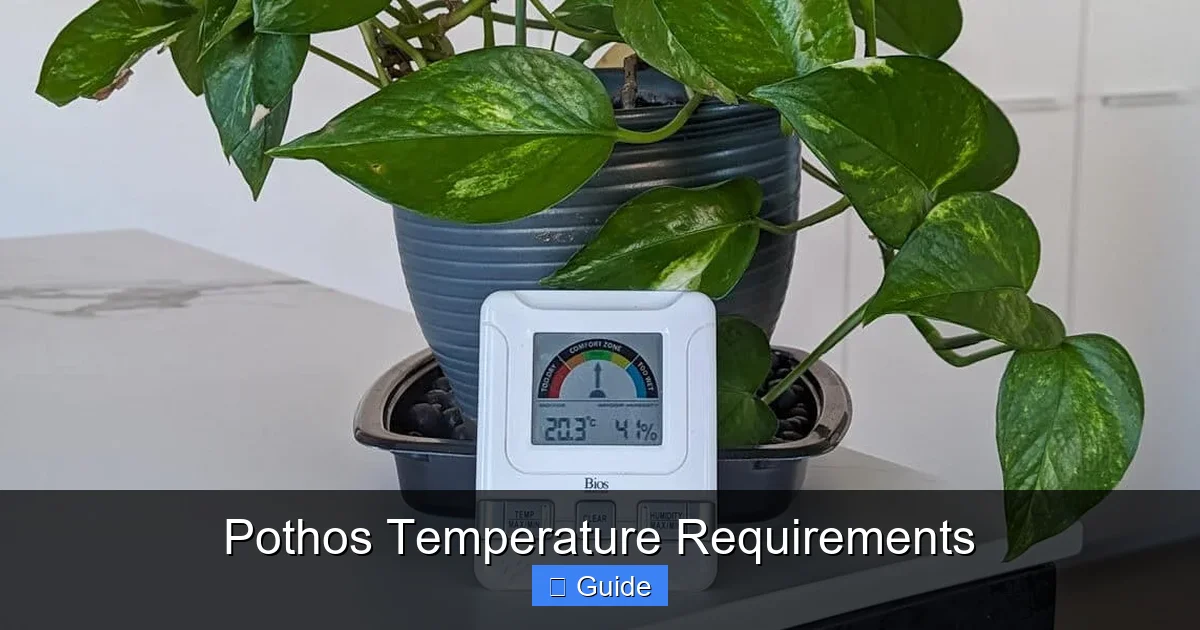
Visual guide about Pothos Temperature Requirements
Image source: gardenitnow.com
Daytime vs. Nighttime Temperatures
Pothos handles a slight drop at night just fine. A difference of 5 to 10 degrees mimics the natural cycle. So if your home is 75°F during the day and 68°F at night, your plant will be perfectly happy. What it dislikes is a sudden plunge. A drop from 75°F to 55°F in an hour causes shock.
The Upper Limit: How Hot Is Too Hot?
Above 85°F (29°C), pothos starts to struggle. Heat stress shows up as curled leaves, brown crispy edges, and wilting even when the soil is moist. The plant loses water faster than roots can replace it. If temperatures climb above 90°F (32°C) for extended periods, you may see leaf drop and stunted growth.
In very hot weather, increase humidity and water slightly more often. Move the plant away from direct sun. A sheer curtain can drop the temperature near the leaves by several degrees. Fans help circulate air but avoid pointing them directly at the plant.
The Lower Limit: How Cold Is Too Cold?
This is where most people run into trouble. Pothos can survive brief dips to 50°F (10°C). But growth stops completely below 60°F (15°C). At 50°F, you are in the danger zone. Leaves may develop dark, water-soaked patches. This is cold damage. The tissue dies and will not recover.
Below 50°F, the plant can die. Frost kills pothos instantly. Even a few minutes of freezing air on the leaves causes irreversible damage. If you live in a climate with cold winters, never leave pothos on an unheated porch, in a garage, or near a single-pane window that gets icy at night.
Common Temperature Mistakes and How to Avoid Them
Most temperature problems come from well-meaning placement choices. A sunny windowsill seems perfect until a cold front hits. A spot above the radiator feels cozy until the heat kicks on. Let us look at the most common mistakes and simple fixes.
Cold Drafts From Windows and Doors
This is the number one killer of indoor pothos in winter. You place the plant near a window for light. At night, the glass radiates cold. A tiny gap in the frame lets in a stream of freezing air. The leaves closest to the draft turn yellow, then brown, then fall off.
Fix: Move the plant back 2 to 3 feet from the window. Use a draft stopper on the windowsill. Or place a piece of cardboard between the plant and the glass at night. Better yet, use a grow light and keep the plant in a stable spot away from exterior walls.
Hot Blasts From Heating Vents
In winter, we crank the heat. Vents blow hot, dry air. If your pothos sits in that stream, the leaves lose moisture fast. The edges crisp. The plant looks thirsty even when watered. Spider mites love this environment and often move in.
Fix: Redirect the vent with a magnetic deflector. Move the plant to a different wall. Use a humidifier nearby. Group plants together to create a humid microclimate. A pebble tray with water under the pot helps too.
Air Conditioning Vents in Summer
Cold air from AC vents feels good to us. To a tropical plant, it is a shock. The sudden chill causes leaves to curl and develop pale patches. The dry air compounds the problem.
Fix: Same as heating vents. Redirect the airflow. Move the plant. Do not place pothos directly under or in front of any vent, hot or cold.
Radiators and Space Heaters
Placing a plant on top of a radiator or near a space heater seems like a good way to keep it warm. It is not. The heat is too intense and too dry. The soil bakes. Roots cook. Leaves scorch.
Fix: Keep at least 3 feet of distance. Use a thermometer to check the actual temperature at plant level. You might be surprised how hot it gets.
Leaving Plants in Cars or Unheated Rooms
Moving house? Bringing a plant home from the nursery? Never leave pothos in a car. In summer, a car hits 120°F in minutes. In winter, it drops to outdoor temperatures fast. Both kill the plant.
Fix: Transport plants in the passenger cabin with you. Wrap the pot in a towel for insulation. In winter, warm the car first. In summer, cool it first.
Seasonal Temperature Care Guide
Your pothos care routine should shift with the seasons. What works in July fails in January. Here is a season-by-season breakdown.
Spring: The Wake-Up Season
As days lengthen and temperatures rise, pothos exits its semi-dormant winter state. New growth appears. This is the time to repot if needed. Fertilize with a balanced liquid fertilizer at half strength. Check that nighttime temperatures stay above 60°F before moving any plants outdoors.
If you summer your pothos outside, wait until nights are consistently 60°F or above. Harden off gradually. Start with one hour of shade. Increase by an hour each day. Bring it in if a cold snap threatens.
Summer: Peak Growth Season
This is when pothos grows fastest. Warm temperatures, long days, and high humidity fuel rapid vine production. Water more frequently. Fertilize every 4 to 6 weeks. Watch for heat waves. If temperatures exceed 90°F, move the plant to a cooler room. Increase humidity with a humidifier or daily misting.
Outdoor pothos needs dappled shade. Direct afternoon sun burns leaves. Morning sun is fine. Check soil daily. Pots dry out fast in summer heat.
Fall: The Transition Season
As nights cool, bring outdoor pothos inside before temperatures drop below 60°F. Inspect for pests. Hose off leaves. Quarantine for two weeks if you have other plants. Indoors, reduce fertilizing. Water less often as growth slows. Move plants away from windows that will get cold at night.
Winter: The Resting Season
Growth slows or stops. This is normal. Do not force it with heavy fertilizer. Keep temperatures above 65°F if possible. At minimum, stay above 60°F. Humidity drops with heating systems. Run a humidifier. Group plants. Use pebble trays. Water only when the top inch of soil is dry.
Watch for cold damage on leaves touching window glass. Rotate the plant weekly so all sides get light. Clean leaves with a damp cloth to maximize photosynthesis in low winter light.
Signs Your Pothos Is Too Hot or Too Cold
Your plant will tell you if the temperature is wrong. You just need to know the language. Here are the clearest signals.
Signs of Cold Stress
- Leaves turn yellow, starting at the bottom or on the side facing a cold window
- Dark, water-soaked patches on leaves that turn brown or black
- Leaves feel mushy or limp
- Sudden leaf drop
- Stunted growth that does not resume when warmed
- New leaves emerge small, deformed, or with brown edges
If you see these signs, check the temperature immediately. Move the plant to a warmer spot. Prune off damaged leaves. They will not recover. Increase humidity to help the plant bounce back.
Signs of Heat Stress
- Leaves curl inward or cup upward
- Brown, crispy edges and tips
- Wilting even when soil is moist
- Leaves feel thin and papery
- Yellowing between veins (chlorosis)
- Slow growth during what should be peak season
- Spider mite infestations (they love hot, dry conditions)
If you see these signs, move the plant to a cooler spot. Increase humidity. Water thoroughly if soil is dry. Mist leaves in the morning so they dry by evening. Check for pests and treat if needed.
Signs of Happy Temperature
- Steady new growth every week or two
- Leaves are firm, glossy, and fully expanded
- Variegation is bright and clear (on variegated varieties)
- Vines lengthen noticeably each month
- No yellowing, browning, or curling
- Plant perks up quickly after watering
Temperature and Humidity: The Dynamic Duo
You cannot talk about temperature without talking about humidity. They work together. Warm air holds more moisture. Cold air holds less. When you heat your home in winter, the temperature goes up but the relative humidity plummets. This creates a hidden stressor for your pothos.
Why Humidity Matters at Different Temperatures
At 75°F and 60% humidity, your pothos is in paradise. At 75°F and 20% humidity, the leaves lose water fast. The plant cannot replace it fast enough. Edges crisp. Tips brown. Growth slows.
At 65°F and 60% humidity, the plant is fine. Growth is slower but healthy. At 65°F and 20% humidity, you still get crispy edges, just more slowly.
Target Humidity Levels
Aim for 50% to 70% relative humidity. Most homes sit at 30% to 40% in winter. Summer can reach 50% to 60% naturally. Use a hygrometer to know your actual numbers. They are inexpensive and widely available.
Simple Ways to Boost Humidity
- Run a humidifier near your plants
- Group plants together (they release moisture through transpiration)
- Place pots on pebble trays with water (pot sits on pebbles, not in water)
- Mist leaves in the morning (not evening, to avoid fungal issues)
- Place plants in naturally humid rooms like bathrooms or kitchens
- Use a terrarium or cloche for small plants
Special Considerations for Different Pothos Varieties
All pothos varieties share the same basic temperature requirements. But some show stress faster than others. Here is a quick rundown.
Golden Pothos (Epipremnum aureum)
The classic green and gold variety. Toughest of the bunch. Handles brief temperature swings better than most. Great for beginners.
Marble Queen and Snow Queen
Highly variegated. Less chlorophyll means less energy production. These grow slower and are more sensitive to cold. Keep them firmly above 65°F. They also need brighter light to maintain variegation, which can mean warmer spots near windows. Balance carefully.
Neon Pothos
Bright chartreuse leaves. Stunning but dramatic. Shows cold damage fast. Leaves turn dark and mushy quickly. Keep warm and humid.
Jade Pothos
Solid dark green. Very similar to Golden in toughness. Handles lower light and slightly cooler temps better than variegated types.
Manjula, Pearls and Jade, N’Joy
These patented varieties have heavy white variegation. They are the divas of the pothos world. Keep temperatures stable between 70°F and 80°F. Avoid drafts completely. They reward you with stunning foliage.
Cebu Blue (Epipremnum pinnatum ‘Cebu Blue’)
Technically a different species but same care. Blue-green leaves. Develops fenestrations (splits) in mature growth with warmth, humidity, and a climbing support. Keep above 70°F for best mature leaf development.
Using Technology to Monitor and Control Temperature
You do not need fancy gear. But a few simple tools make a big difference.
Digital Thermometer with Min/Max Memory
Place one near your plants. Check the minimum and maximum each day. This tells you if a cold night or hot afternoon is happening when you are not watching. Some models have remote probes. Put the probe at plant level. Keep the display where you can see it.
Smart Thermostat
If you have central heat and air, a smart thermostat lets you set schedules. Program a nighttime minimum of 65°F. Avoid drastic setbacks. Some models have remote sensors you can place in the plant room.
Hygrometer
Often combined with a thermometer. Shows humidity. Essential for winter care.
Space Heater with Thermostat (Emergency Use Only)
If a cold snap threatens and your main heat fails, a small ceramic heater with a thermostat can save your plants. Use only as backup. Keep far from plants. Never leave unattended. Plug into a timer for extra safety.
Grow Lights with Timers
LED grow lights let you keep plants away from cold windows. They add a small amount of warmth. Run 12 to 14 hours a day. Use a timer for consistency.
Troubleshooting Temperature-Related Problems
Even with good care, things go wrong. Here are common scenarios and solutions.
Problem: Leaves Yellowing in Winter
Likely cause: Cold draft from window or door. Or temperature dropping below 60°F at night.
Solution: Move plant. Check nighttime temps. Add a heat mat under the pot (set to 70°F) if the room is cool. Remove yellow leaves.
Problem: Brown Crispy Edges in Summer
Likely cause: Heat stress combined with low humidity. Or AC vent blowing on plant.
Solution: Move away from vent. Increase humidity. Water more frequently. Trim crispy edges with clean scissors.
Problem: Sudden Leaf Drop After Moving Plant
Likely cause: Temperature shock. Moving from a warm greenhouse to a cool house. Or from indoors to outdoors too fast.
Solution: Acclimate gradually. Keep warm and humid. Do not fertilize. Wait for new growth.
Problem: Small, Deformed New Leaves
Likely cause: Chronic cool temperatures (below 65°F) or nutrient deficiency exacerbated by cold.
Solution: Warm the root zone with a heat mat. Ensure daytime temps reach 70°F+. Fertilize weakly once growth resumes.
Problem: Wilting Despite Wet Soil
Likely cause: Heat stress. Roots cannot uptake water fast enough. Or root rot from cold, wet soil.
Solution: Check soil temperature. If hot, move to shade and increase humidity. If cold and wet, repot in fresh dry mix and warm the plant.
Creating the Perfect Microclimate for Your Pothos
You do not need a greenhouse. A few smart choices create a stable, tropical pocket in any room.
Choose the Right Room
Bathrooms and kitchens often have higher humidity and stable temperatures. A bright bathroom is a pothos paradise. Laundry rooms work too. Avoid entryways, hallways, and rooms with exterior doors that open often.
Group Your Plants
Place pothos with other tropical plants. Calathea, philodendron, monstera, ferns. They create a shared humid microclimate. The combined transpiration raises humidity 5% to 10% around the group.
Use Shelves and Stands
Elevate plants off cold floors. Cold air sinks. A plant on the floor can be 5°F cooler than one on a shelf. Metal shelves conduct cold. Wood or plastic is better. Add a shelf liner for insulation.
Insulate Pots
Ceramic and terracotta pots lose heat fast. In winter, wrap pots in bubble wrap or burlap. Or slip the nursery pot into a decorative cache pot with an air gap. This buffers root temperature.
Consider a Plant Cabinet
IKEA greenhouse cabinets (like the Milsbo or Detolf) with grow lights and a small fan create a controlled environment. You can maintain 75°F and 70% humidity easily. This is the ultimate setup for collectors.
Frequently Asked Questions About Pothos Temperature
Here are answers to the questions I hear most often.
Can pothos live outside year-round?
Only in USDA zones 10 to 12. That means places like South Florida, Hawaii, coastal Southern California, and the tropics. Anywhere that freezes, pothos must come inside for winter. In marginal zones, a protected courtyard might work but it is risky.
What temperature kills pothos instantly?
Freezing (32°F / 0°C) kills leaves instantly. Prolonged exposure kills the whole plant. Even 40°F can cause severe damage if the plant is wet or the cold lasts hours.
Can I put my pothos near a fireplace?
No. The heat is too intense and too dry. The air temperature several feet away can exceed 100°F. Smoke and particulates also harm leaves. Keep at least 6 feet away.
Does pothos need a winter rest period?
Not a forced one. Growth naturally slows in lower light. You do not need to cool the plant down. Keep it warm. It will grow slowly but steadily. Forcing a cold rest weakens the plant.
Can I use a heat mat for my pothos?
Yes. A seedling heat mat set to 70°F to 75°F under the pot warms the root zone. This is great for winter or cool rooms. Do not exceed 80°F. Use a thermostat. Never place the mat directly on wood; use a tray.
Why are my pothos leaves curling in winter?
Usually cold drafts or low humidity. Check for vents, leaky windows, and radiator proximity. Increase humidity. Move the plant. Curling is a defense mechanism to reduce surface area and water loss.
Conclusion: Warmth Equals Growth
Pothos temperature requirements are not complicated. Keep it between 65°F and 85°F. Avoid drafts. Watch for stress signs. Adjust with the seasons. That is the whole formula.
When you get temperature right, everything else gets easier. Watering becomes more predictable. Fertilizing works better. Pests are less likely. The plant grows the way it wants to: fast, full, and fabulous.
Your pothos wants to be a jungle vine. Give it the warmth it evolved for, and it will reward you with trails that reach across the room, leaves the size of your hand, and a presence that makes any space feel alive. Start with a thermometer. Check your spots. Make one change this week. Your plant will notice. And so will you.
Frequently Asked Questions
What is the minimum temperature a pothos can tolerate?
Pothos can tolerate a minimum of 50°F (10°C) for short periods. Below this, cold damage occurs rapidly. For healthy growth, keep temperatures above 60°F (15°C) at all times.
Can pothos be kept outside in summer?
Yes, pothos thrives outdoors in summer when nights stay above 60°F. Place in dappled shade, not direct sun. Bring inside before fall temperatures drop below 60°F. Harden off gradually over 7 to 10 days.
How do I know if my pothos is too cold?
Signs of cold stress include yellowing leaves, dark water-soaked patches that turn brown or black, mushy leaves, sudden leaf drop, and stunted growth. Check for drafts and move to a warmer location immediately.
Does pothos need high humidity with warm temperatures?
Yes, pothos prefers 50% to 70% humidity. Warm temperatures with low humidity cause crispy leaf edges and spider mite issues. Use a humidifier, pebble tray, or group plants to increase humidity.
Can I put pothos near a heater or radiator?
No. Heaters and radiators create hot, dry air that scorches leaves and bakes roots. Keep pothos at least 3 feet away from heat sources. Use a humidifier if the room air is dry from heating.
What temperature helps pothos grow fastest?
Pothos grows fastest at 75°F to 80°F (24°C to 27°C) with high humidity and bright indirect light. Consistent warmth in this range produces the longest vines and largest leaves.