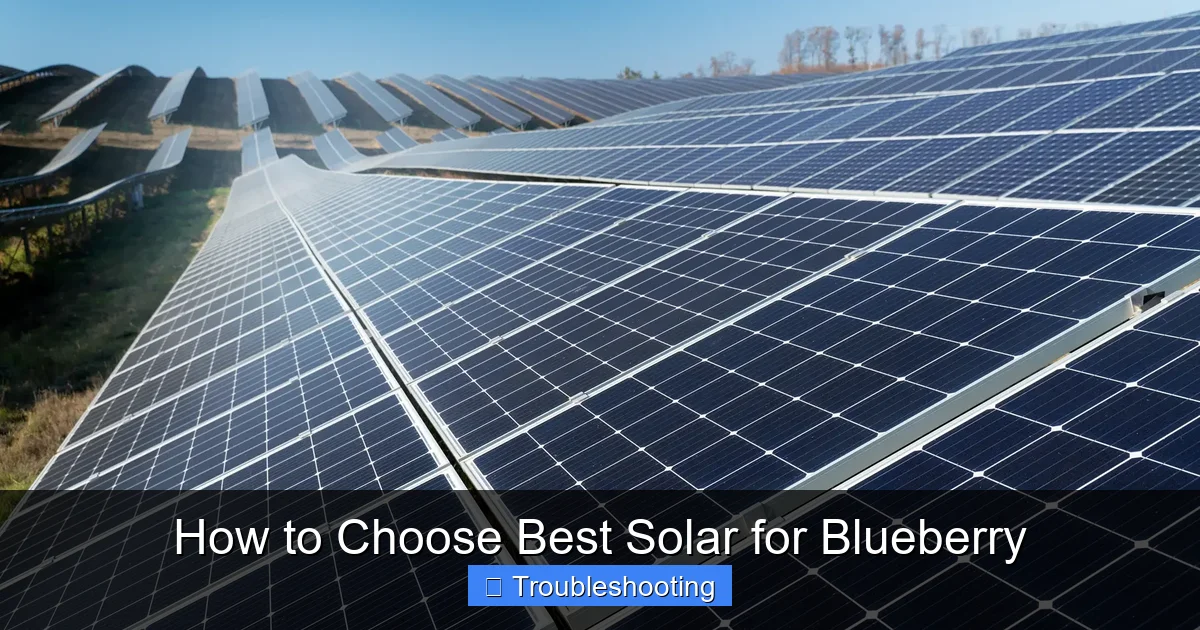
How to Choose Best Solar for Blueberry
Choosing the right solar setup for your blueberry operation means matching panel capacity, battery storage, and water delivery to your crop’s unique needs. This guide walks you through sizing, placement, and maintenance so your berries thrive off-grid.
Growing blueberries off the grid feels like a puzzle. You need water, you need power, and you need both to show up exactly when the plants ask for them. Miss a watering cycle during fruit set, and your yield drops. Lose power during a spring frost, and the whole crop vanishes overnight. That is why figuring out how to choose best solar for blueberry operations matters more than most growers realize. The right system runs quietly in the background, keeping soil moist, sensors talking, and frost sprinklers ready. The wrong one leaves you hauling hoses at midnight.
I have watched farmers piece together arrays from big-box stores, only to watch batteries die in July heat or pumps choke on sediment. I have also seen clean, modular setups that paid for themselves in two seasons. The difference comes down to planning. Blueberries are picky. They want acidic soil, steady moisture, and protection from birds and freezes. Your solar job is to make all that happen without a grid connection. This guide breaks down every piece: sizing, components, placement, automation, and long-term care. By the end, you will know exactly what to buy, where to mount it, and how to keep it running for a decade.
Key Takeaways
- Match system size to irrigation demand: Calculate daily water needs before buying panels or pumps.
- Prioritize battery storage for cloudy days: Blueberries need consistent moisture; backup power prevents crop stress.
- Choose corrosion-resistant components: Acidic soil and fertilizers demand marine-grade hardware.
- Optimize panel angle for seasonal sun: Adjust tilt twice yearly to maximize winter and summer harvest.
- Automate with smart controllers: Soil moisture sensors cut waste and boost yields.
- Plan for expansion from day one: Modular designs let you scale as your berry patch grows.
- Factor in frost protection power: Overhead sprinklers for freeze events need serious surge capacity.
Quick Answers to Common Questions
What size solar array do I need for a one-acre blueberry block?
A typical one-acre highbush blueberry block with drip irrigation and frost protection needs 4-6 kW of solar panels, depending on your location’s peak sun hours and irrigation schedule.
Can I run a frost protection sprinkler system on solar batteries?
Yes, but you need a large battery bank (400+ Ah at 48V) and a 5-10 kW inverter to handle the high surge current of sprinkler pumps during freeze events.
Are lithium batteries worth the extra cost for blueberry farms?
Absolutely. Lithium iron phosphate batteries last 3-4 times longer than lead-acid, handle daily deep cycling, require no maintenance, and perform better in temperature extremes common in berry fields.
How often should I clean solar panels in a blueberry field?
Clean panels monthly during pollen season and after dust storms. In most regions, quarterly cleaning is sufficient. Use deionized water and a soft brush — never pressure washers or harsh chemicals.
What grants are available for solar-powered blueberry irrigation?
USDA REAP grants cover 25% of costs, the federal ITC returns 30% as a tax credit, and many states offer additional rebates. Check the DSIRE database for your zip code to find all stackable incentives.
📑 Table of Contents
- Understand Your Blueberry Water Budget First
- Size Your Solar Array to the Real Load
- Choose Batteries That Survive the Abuse
- Pick Pumps and Controllers That Play Nice
- Mount Panels for Maximum Harvest, Minimum Hassle
- Automate and Monitor So You Can Sleep
- Maintain the System Like Your Crop Depends On It
- Plan for Growth Before You Pour Concrete
- Budget Realistically and Find the Incentives
- Troubleshoot Common Field Failures Fast
- Conclusion
Understand Your Blueberry Water Budget First
Before you look at a single panel, you need numbers. Blueberries drink differently than tomatoes or corn. Their roots sit shallow, usually in the top twelve inches. They hate drying out, but they also rot in standing water. A mature highbush plant in peak summer can pull two to three gallons per day. Multiply that by your plant count, add twenty percent for evaporation and system losses, and you have your daily water target. Write that number down. It drives every other decision.
Calculate Daily Gallons Per Zone
Break your field into zones. A zone might be one row, one variety, or one soil type. Sandy soil drains fast. Clay holds water longer. Each zone gets its own valve and its own flow rate. Add up the emitters in a zone. If you run half-gallon-per-hour drippers on two-hour cycles, that zone uses one gallon per plant per cycle. Two cycles a day means two gallons. Thirty plants equals sixty gallons. Do this for every zone. Sum them. That is your baseline daily demand.
Account for Establishment Years
First-year plants need less water but more frequent pulses. Their root balls are tiny. You might run ten-minute cycles six times a day. That changes pump run time and battery draw. Year two ramps up. Year three hits full stride. Size your system for year three, but program your controller for year one. Oversizing slightly now saves a rewrite later.
Factor in Frost Protection Spikes
This is the hidden killer. Overhead sprinklers for frost control can demand fifty gallons per minute per acre. A two-acre block needs one hundred gallons per minute. At sixty psi, that pump draws serious amps. If your battery bank cannot deliver that surge for thirty minutes at 3 a.m., buds freeze. Size the inverter and battery for this peak, not just daily irrigation. It is the difference between a crop and a total loss.
Size Your Solar Array to the Real Load
Panel wattage on the box is a lab number. Real world gives you heat, dust, low sun angles, and wiring losses. A three-hundred-watt panel in July at noon might give you two-hundred-fifty watts. In January at ten a.m., maybe eighty. You need to plan for the worst month, not the best. That worst month usually coincides with frost season. Coincidence? No. Physics.
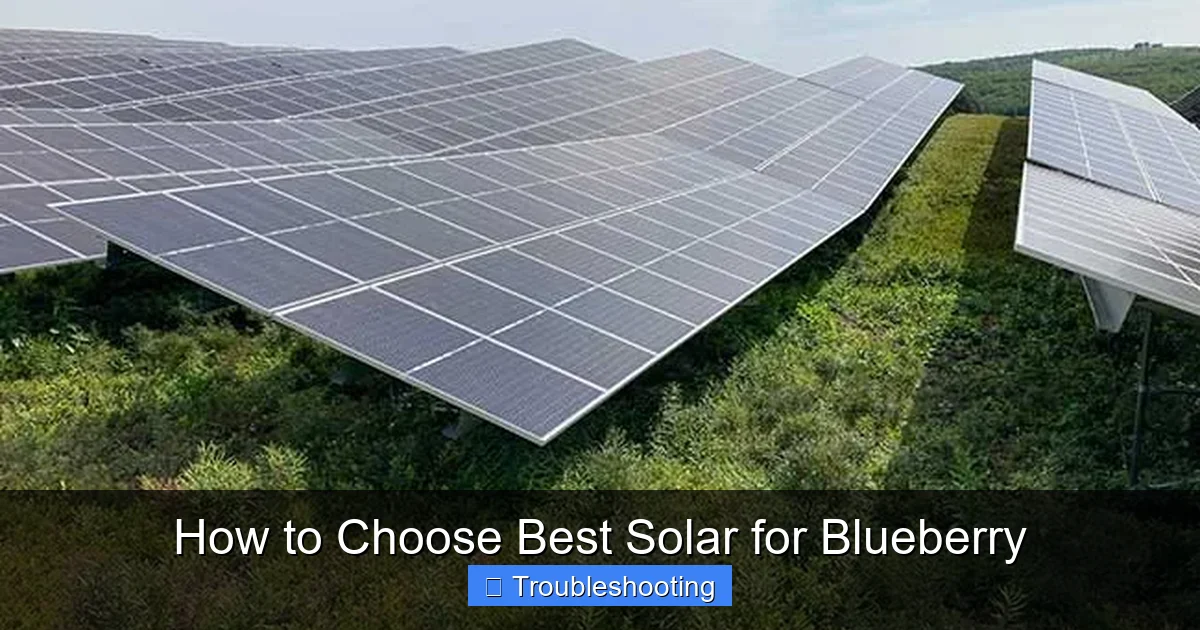
Visual guide about How to Choose Best Solar for Blueberry
Image source: extension.umaine.edu
Use Peak Sun Hours for Your Zip Code
Look up your location’s peak sun hours by month. The National Renewable Energy Laboratory publishes these. Find the lowest month. In many northern blueberry regions, December delivers one-point-five peak sun hours. Your array must generate the full daily load in that window. If your load is five kilowatt-hours per day including frost standby, you need three-point-three kilowatts of nameplate capacity. Round up. Clouds happen.
Add a Margin for Degradation and Dirt
Panels lose half a percent per year. Dust, pollen, and bird droppings can cut another five to fifteen percent between cleanings. Multiply your calculated kilowatts by one-point-two-five. That three-point-three becomes four-point-one. Buy four-point-two kilowatts. Fourteen three-hundred-watt panels. The extra cost is small. The peace of mind is large.
String Voltage Matters for Charge Controllers
MPPT charge controllers have voltage windows. Too low and they won’t start. Too high and they fry. Check the spec sheet. Most one-hundred-amp controllers want array Vmp between one-hundred-fifty and four-hundred volts. Fourteen panels in two strings of seven gives you roughly three-hundred volts Vmp. Safe. Efficient. Always verify before you order.
Choose Batteries That Survive the Abuse
Blueberry farms cycle batteries daily. Deep discharge. High heat. Cold snaps. Cheap lead-acid dies in two years. Lithium iron phosphate (LiFePO4) lasts ten. The math is brutal but clear. A four-hundred-amp-hour lead bank at fifty percent depth of discharge gives two-hundred usable amp-hours. A two-hundred-amp-hour lithium bank at ninety percent gives one-hundred-eighty. Similar usable. But the lithium weighs one-third, charges faster, and handles partial state of charge without sulfation. For a remote berry field, lithium wins.
Size for Three Days Autonomy Minimum
Three cloudy days in a row happen. Your battery must carry the full load for seventy-two hours without solar input. Take your daily watt-hours. Multiply by three. Divide by battery voltage (usually forty-eight volts for efficiency). That gives amp-hours. Add twenty percent for inverter losses and temperature derating. A five-kilowatt-hour daily load needs three-hundred-twelve amp-hours at forty-eight volts. Buy a four-hundred-amp-hour bank. Sleep easy.
Enclose and Ventilate Properly
Batteries hate heat. Every fifteen degrees Fahrenheit above seventy-seven cuts life in half. Build an insulated, ventilated box. Passive vents low and high. A small DC fan on a thermostat. Keep the box shaded. Mount it on a concrete pad, not dirt. Rodents chew cables. Seal every entry with steel wool and expanding foam. Label every cable. Future you will thank present you.
Pick Pumps and Controllers That Play Nice
The pump is the heart. The controller is the brain. Mismatch them and you get burned motors, dry plants, or fried electronics. Solar pumps come in two flavors: DC direct-drive and AC via inverter. DC pumps skip the inverter loss but need matched voltage. AC pumps let you use standard irrigation hardware but add twenty percent inverter overhead. For blueberries, I lean AC with a variable frequency drive (VFD). Here is why.
VFDs Give You Pressure Control
Blueberries want steady pressure. Drip tape specs say ten psi. Run fifteen and you burst emitters. Run five and the end of the row gets nothing. A VFD lets the pump speed up and down to hold exact pressure as valves open and close. It also soft-starts the motor, saving your inverter from surge currents. Size the VFD for the pump’s full-load amps plus twenty percent. Program the PID loop. Test it. Walk the rows with a pressure gauge. Tune until every emitter drips the same.
Match Pump Curve to System Curve
Every pump has a curve: flow versus head. Every irrigation system has a curve: head required versus flow. Where they cross is your operating point. Pick a pump that crosses at your design flow and head, in the middle of its best efficiency range. Oversized pumps cavitate. Undersized pumps overheat. Use the manufacturer’s selection software. Input your pipe sizes, lengths, elevation changes, and emitter specs. Let it spit out the model number. Order that one.
Smart Controllers Save Water and Power
Soil moisture sensors. Weather stations. Flow meters. A good controller reads them all. It skips irrigation when rain falls. It pulses short cycles on sandy soil. It alarms when flow drops, telling you a line broke. It logs everything to the cloud. You check your phone at breakfast. Zone three shows low flow. You drive out, find the gopher chew, fix it. Crop saved. Battery saved. Time saved. Controllers like this cost three-hundred dollars. They pay for themselves in one season.
Mount Panels for Maximum Harvest, Minimum Hassle
Panel placement feels simple. Face south. Tilt at latitude. Done. But blueberry fields have rows. Rows run north-south for even light. Your array might sit at the field edge, on a shed, or on a ground mount in the headland. Each choice changes production. Each choice changes maintenance. Think like a farmer, not an electrician.
Ground Mounts Beat Roof Mounts for Access
Roof mounts look clean. Until you need to clean pollen off thirty panels in April. Or replace a microinverter in August. Or brush snow off in January. Ground mounts let you walk up with a hose, a brush, a multimeter. Set the bottom edge three feet high. Deer walk under. Mowers pass between rows. Use galvanized steel or aluminum. Stainless bolts. Concrete piers or driven piles. Engineer it for your wind zone. A flattened array produces zero watts.
Seasonal Tilt Adjustment Pays Off
Fixed tilt at latitude is a compromise. In winter, the sun is low. Steeper tilt catches more. In summer, the sun is high. Flatter tilt wins. Adjustable mounts with four pins per rack let you change angle in five minutes. Four positions: winter (latitude plus fifteen), spring/fall (latitude), summer (latitude minus fifteen), and flat for snow shedding. Mark the pins with paint. Do it on the equinoxes and solstices. Gain ten to fifteen percent annual yield. Free energy.
Wire Management Prevents Failures
UV eats zip ties in two years. Rodents chew exposed PV wire. Use UV-rated cable trays or conduit. Run homeruns from each string to the combiner box. Label both ends. Leave service loops at every connection. Ground the frames. Ground the racking. Ground the combiner. Lightning loves tall metal in open fields. A proper ground rod and surge protector cost fifty dollars. A fried charge controller costs five hundred. Do the math.
Automate and Monitor So You Can Sleep
The best solar system is the one you forget exists. Automation makes that happen. Sensors, relays, and a little code turn a pile of hardware into a managed asset. You get alerts. You get data. You get trends. You make better decisions. And you take weekends off.
Soil Moisture Drives Irrigation Decisions
Capacitance sensors at six and twelve inches. One per zone, placed mid-row, halfway down the line. They talk to the controller via LoRa or wired RS485. Set thresholds: irrigate when six-inch sensor hits thirty percent volumetric water content. Stop when twelve-inch hits forty-five percent. This keeps water in the root zone, not below it. Blueberries thank you with bigger berries. Sensors cost forty dollars each. Install them at planting. Never dig them up.
Remote Monitoring Catches Problems Early
A cellular gateway pushes data to a dashboard. Voltage, current, state of charge, flow rate, pressure, soil moisture, temperature. Set alerts: battery below sixty percent at noon. Flow zero when valve open. Pressure drop > fifteen percent. You get a text. You check the camera. You see the broken pipe. You fix it before the plants stress. Camera? Yes. A ten-dollar trail camera on the pump house. Night vision. Motion trigger. Best diagnostic tool you never thought of.
Data Logs Guide Long-Term Improvements
Export the CSV at harvest. Plot yield versus irrigation hours. Versus soil moisture variance. Versus frost events. You will see patterns. Zone four always yields less. Its soil moisture swings wider. The emitter spacing is wrong. Fix it next winter. Year over year, the data builds a playbook. Your playbook. For your farm. That is the real value of monitoring.
Maintain the System Like Your Crop Depends On It
Because it does. Solar is not install-and-forget. Dust, heat, vibration, water, and time degrade everything. A maintenance calendar keeps the watts flowing. Put it on the wall. Put it in your phone. Do the work.
Monthly Walk-Through Checklist
First of every month. Check array for shading, debris, bird nests. Clean panels with deionized water and soft brush. No soap. No pressure washer. Inspect wire insulation. Tighten any loose lugs. Check combiner box fuses. Verify charge controller readings match expectations. Listen to the pump. Feel the motor. Smell for ozone. Check pressure gauge at the header. Walk one row, spot-check emitters. Log it all. Ten minutes. Priceless.
Quarterly Deep Dive
Every three months. Torque every bolt on the racking. Thermal scan the battery terminals (infrared gun, twenty dollars). Check battery voltage balance. Top off water in flooded lead-acid (if you ignored my lithium advice). Test the frost sprinkler solenoid. Cycle the VFD through full range. Verify backup generator auto-start. Update controller firmware. Backup the config file. Review alarm history. Fix the root cause of every alarm.
Annual Professional Review
Once a year, pay an electrician. They megger the array insulation resistance. They torque the inverter DC and AC connections to spec. They load-test the battery bank. They verify ground resistance. They sign the paperwork. Insurance likes paperwork. So do lenders. So does the buyer when you sell the farm. This is not optional. It is asset management.
Plan for Growth Before You Pour Concrete
Your blueberry patch will expand. New varieties. New acres. New markets. Your solar should stretch with it. Design for modularity from day one. The extra conduit, the oversized combiner, the spare breaker spaces — they cost pennies now and dollars later.
Oversize Conduit and Wire Runs
Run two-inch conduit where one-inch works today. Pull a pull string. Leave it. When you add the next array, you fish new wires in an hour. No trenching. No sawing. No swearing. Upsize the main DC feeder from the array to the charge controller. Four-aught aluminum is cheap. Two-aught copper is not. Run the big stuff. Future you will kiss present you.
Choose a Charge Controller with Expansion Ports
Some MPPT controllers parallel. Others don’t. Buy the kind that does. Two one-hundred-amp units in parallel give you two-hundred amps at forty-eight volts. That is nine-point-six kilowatts of charging. Enough for a ten-acre block. The communication cable between them costs ten dollars. The second controller costs six hundred. Buy the first one with parallel capability. Decide later.
Leave Space for Battery Racks
Build the battery room twice as big as you need. Frame the walls for future racks. Run the ventilation for double the heat load. Install a second DC disconnect. Label it “Future Expansion.” When the grant money hits or the crop price spikes, you drop in another rack, connect two cables, update the BMS config, and walk away. Done in a day.
Budget Realistically and Find the Incentives
Good solar costs money. Bad solar costs more. A proper blueberry system — array, batteries, pump, VFD, controller, sensors, mounting, wire, labor — runs fifteen to thirty thousand dollars per irrigated acre. The number scares people. Then they calculate the alternative: diesel generator, fuel delivery, maintenance, noise, emissions, risk. Solar wins on a ten-year cash flow. But you still need to pay for it.
USDA REAP Grants Cover Twenty-Five Percent
Rural Energy for America Program. Farmers and rural small businesses. Twenty-five percent of eligible costs, up to five-hundred-thousand dollars. Competitive but winnable. You need an energy audit. You need quotes. You need a business plan. The deadline is usually March and September. Start the paperwork in January. Hire a grant writer if you hate forms. Their fee comes from the grant.
Federal Investment Tax Credit Returns Thirty Percent
ITC. Thirty percent of total system cost. No cap. Carries forward. You claim it the year the system goes operational. That includes batteries, if charged by solar more than seventy-five percent of the time. Your accountant knows the form. Make sure they file it. Thirty thousand dollar system. Nine thousand dollar tax credit. Real money.
State and Utility Rebates Stack On Top
Many states add rebates. California SGIP. New York NY-Sun. Massachusetts SMART. Your utility may offer demand response payments for letting them curtail your pump during peak hours. Blueberries don’t mind a two-hour delay at 4 p.m. Sign up. Free money. Check DSIRE database. Search your zip code. Apply for everything. Stack them. The math gets beautiful.
Troubleshoot Common Field Failures Fast
Things break. Knowing the usual suspects gets you back online in hours, not days. Keep spare parts. Know the symptoms. Act fast.
Pump Runs But No Pressure
Air lock. Suction leak. Clogged foot valve. Worn impeller. Check the suction gauge. Vacuum means air leak. Prime the pump. Tighten the fittings. Pull the foot valve. Clean the screen. If impeller is worn, swap the spare. You did buy a spare impeller, right? Twenty dollars. Keep it in the pump house.
Batteries Won’t Charge Fully
Sulfation (lead-acid). BMS imbalance (lithium). Charge controller settings wrong. Loose connection. High resistance. Check specific gravity or cell voltages. Equalize lead-acid. Balance lithium. Verify absorb voltage and float voltage match battery spec. Torque every lug. Clean every terminal. Coat with dielectric grease.
Controller Shows Fault Codes
Read the manual. Most codes are: overvoltage, undervoltage, overcurrent, overtemperature, ground fault. Overvoltage = array too big or battery disconnected. Undervoltage = load too big or battery dead. Overcurrent = short circuit or pump stall. Overtemperature = fan failed or ventilation blocked. Ground fault = insulation damage. Isolate. Test. Repair. Reset.
Irrigation Uneven Across Zones
Pressure loss in long laterals. Emitter clogging. Slope not compensated. Valve not fully open. Flush the lines. Check pressure at the tail. Install pressure-compensating emitters. Use flow control valves. Size laterals for velocity under five feet per second. The math is in the drip tape catalog. Follow it.
Conclusion
Choosing solar for blueberries is not about buying panels. It is about designing a water delivery system that runs on sunlight. Every component serves the crop. The array feeds the battery. The battery runs the pump. The pump pushes water. The controller decides when. The sensors tell the truth. The data teaches you. The maintenance keeps it alive. The incentives pay for it. The expansion plan grows with you.
Start with the water budget. Size the array for the worst month. Buy lithium batteries. Use a VFD pump. Mount panels on adjustable ground racks. Automate with soil moisture. Monitor remotely. Maintain religiously. Plan for double the acreage. Apply for every grant. Keep spare parts. Walk the rows weekly. Taste the berries. That is the system. That is the harvest. That is the farm you built.
Now go order the conduit. The sun is not waiting.
Frequently Asked Questions
How do I calculate the exact water needs for my blueberry plants?
Multiply your plant count by 2-3 gallons per day per mature plant, add 20% for system losses, then divide by your irrigation efficiency. Adjust for soil type, plant age, and local evapotranspiration rates using your local extension service data.
Can I use a DC solar pump directly without batteries for daytime irrigation only?
Yes, DC direct-drive pumps work for daytime-only irrigation, but you lose frost protection, cloudy-day watering, and automation flexibility. Most blueberry operations need battery backup for reliable crop protection.
What is the best panel tilt angle for blueberry farms in northern climates?
Use latitude tilt for fixed mounts, or adjust seasonally: latitude +15° in winter, latitude in spring/fall, latitude -15° in summer. Adjustable ground mounts add 10-15% annual energy harvest over fixed installations.
How do I protect my solar system from lightning strikes in open fields?
Install a proper grounding system with ground rods at each array corner, surge protectors on DC and AC lines, and bond all metal racking. Consider a lightning dissipation array for high-risk areas. Insurance often requires this.
Should I oversize my charge controller for future expansion?
Yes. Buy a controller with parallel capability (like MidNite Classic or Outback FM series) even if you only need one unit now. Adding a second controller later doubles charging capacity without rewiring the entire system.
What maintenance tasks are critical for solar-powered blueberry irrigation?
Monthly: clean panels, check wiring, verify pump operation, walk drip lines. Quarterly: torque racking bolts, thermal scan connections, test frost system, update firmware. Annually: professional electrical inspection, battery load test, ground resistance verification.