How to Fertilize Zz Plant
ZZ plants need minimal fertilizer — just a balanced liquid feed diluted to half strength during spring and summer. Over-fertilizing causes more harm than under-fertilizing, leading to brown tips and root damage. Feed monthly in growing season, skip winter entirely.
If you own a ZZ plant, you already know it’s one of the toughest houseplants around. It handles low light. It survives missed waterings. It bounces back from neglect that would kill most other plants. But when it comes to feeding, many plant parents get nervous. How much is too much? When should you feed? What kind of fertilizer works best? These questions are normal. The good news is that learning how to fertilize ZZ plant properly is simpler than you might think. These plants have evolved to survive in harsh conditions with very little nutrients. They store energy in their thick rhizomes underground. This means they need far less fertilizer than most tropical houseplants.
In this complete guide, we’ll walk through everything you need to know about feeding your ZZ plant. We’ll cover the right timing, the best fertilizer types, proper dilution rates, and common mistakes to avoid. You’ll learn to read your plant’s signals. You’ll understand when it’s hungry and when it’s full. By the end, you’ll feel confident giving your ZZ plant exactly what it needs — nothing more, nothing less. Let’s dig in and help your ZZ plant thrive.
Key Takeaways
- Fertilize only during active growth: Apply fertilizer from spring through early fall when your ZZ plant is actively growing.
- Use half-strength balanced fertilizer: A 10-10-10 or 20-20-20 liquid fertilizer diluted to half strength prevents root burn.
- Skip winter feeding completely: ZZ plants enter dormancy in winter and cannot use nutrients, leading to salt buildup.
- Water before fertilizing: Always moisten the soil first to protect roots from fertilizer concentration shock.
- Watch for over-fertilizing signs: Brown leaf tips, white crust on soil, and stunted growth indicate too much fertilizer.
- Flush soil periodically: Run water through the pot every few months to remove accumulated salts.
- Less is more with ZZ plants: These slow-growing succulents store nutrients in rhizomes and need minimal supplemental feeding.
Quick Answers to Common Questions
How often should I fertilize my ZZ plant?
Fertilize once a month during spring and summer only. Stop completely in fall and winter when the plant is dormant.
What is the best fertilizer for ZZ plants?
A balanced liquid fertilizer like 10-10-10 or 20-20-20 diluted to half strength works best for ZZ plants.
Can I use coffee grounds on my ZZ plant?
No, coffee grounds are too acidic and can compact the soil. Use a proper balanced fertilizer instead.
Why are my ZZ plant leaf tips turning brown?
Brown tips usually mean over-fertilizing or salt buildup. Flush the soil with water and stop fertilizing for a few months.
Should I fertilize my ZZ plant after repotting?
Wait 8-12 weeks after repotting before fertilizing. Fresh potting mix already contains nutrients.
📑 Table of Contents
- Understanding Your ZZ Plant’s Nutritional Needs
- Choosing the Right Fertilizer for Your ZZ Plant
- When to Fertilize Your ZZ Plant
- How to Apply Fertilizer Correctly
- Troubleshooting Fertilizer Problems
- Special Situations and Advanced Tips
- Common Myths About Fertilizing ZZ Plants
- Creating Your Personalized Fertilizing Plan
Understanding Your ZZ Plant’s Nutritional Needs
Why ZZ Plants Need Less Fertilizer Than Most Houseplants
ZZ plants come from eastern Africa. They grow in dry, rocky areas with poor soil. Rain comes rarely. Nutrients are scarce. To survive, ZZ plants developed thick underground stems called rhizomes. These rhizomes store water and nutrients like a battery. The plant draws from these reserves during tough times. This adaptation makes ZZ plants incredibly drought-tolerant. It also means they don’t need frequent feeding. In fact, too much fertilizer harms them more than too little. Their roots are sensitive to salt buildup. Their slow growth rate means they simply can’t use large amounts of nutrients. Think of a ZZ plant like a camel — it stores what it needs and uses it slowly.
The Role of Rhizomes in Nutrient Storage
Those potato-like structures under the soil? They’re the secret to your ZZ plant’s survival. Rhizomes store carbohydrates, water, and minerals. When you fertilize, some nutrients go to immediate growth. The rest gets packed away in rhizomes for later. This is why a ZZ plant can go months without fertilizer and still look great. It’s living off its savings account. But this also means fertilizer effects show up slowly. You won’t see a sudden growth spurt after feeding. The plant takes what it needs and banks the rest. Understanding this helps you avoid the urge to over-feed when you don’t see instant results.
Signs Your ZZ Plant Actually Needs Fertilizer
How do you know when your ZZ plant is hungry? Look for these subtle clues. New leaves emerging smaller than usual. Pale or yellowish new growth. Very slow growth even in prime growing season. Stems that seem thin or weak. Leaves that drop prematurely. But be careful — these same symptoms can mean other problems. Low light causes pale growth. Overwatering causes yellow leaves. Root bound conditions cause stunted growth. Before you fertilize, rule out other issues. Check light levels. Check watering habits. Check if roots are circling the pot. Only fertilize if everything else checks out and growth is still lackluster.
Choosing the Right Fertilizer for Your ZZ Plant
Liquid vs. Granular vs. Slow-Release: Which Works Best
You have three main fertilizer forms to choose from. Liquid fertilizers give you the most control. You mix them with water and apply during regular watering. You can adjust strength easily. You can skip a feeding if the plant looks stressed. Granular fertilizers sprinkle on soil surface. They release nutrients when you water. They’re convenient but harder to control. Slow-release pellets or spikes feed for months. They’re set-and-forget but risky for ZZ plants. If the release rate is too high, you can’t stop it. For ZZ plants, liquid fertilizer is the best choice. It lets you feed at half strength. It lets you flush the soil if needed. It matches the plant’s slow, steady nutrient uptake.
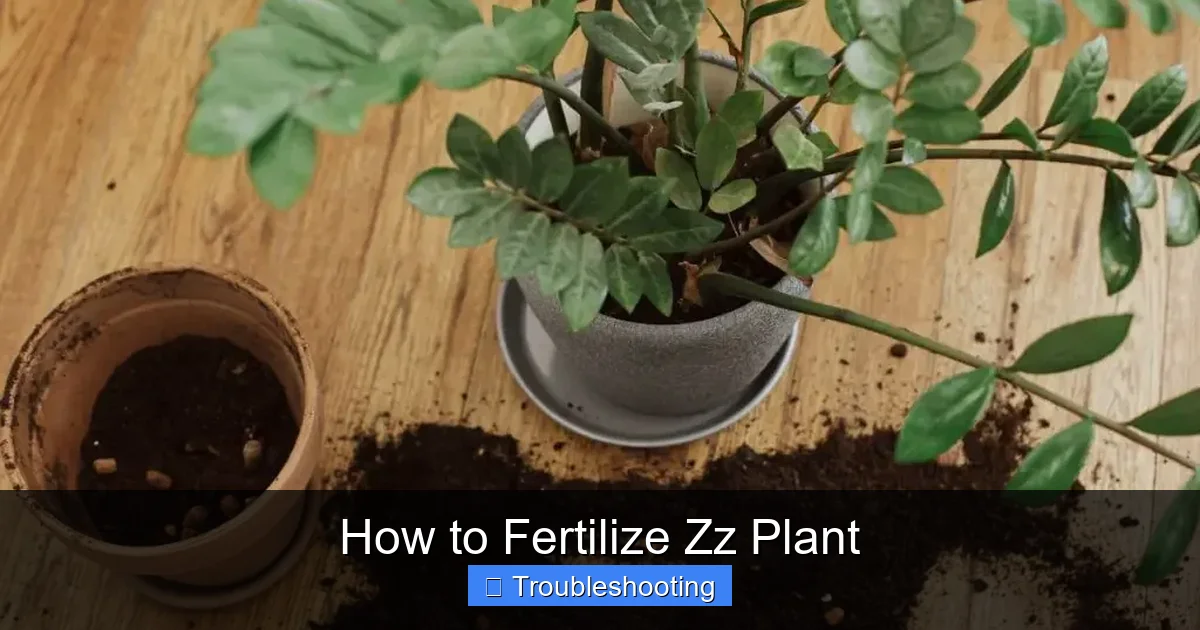
Visual guide about How to Fertilize Zz Plant
Image source: plantsheaven.com
Understanding NPK Ratios for ZZ Plants
Every fertilizer shows three numbers like 10-10-10 or 20-20-20. These represent nitrogen (N), phosphorus (P), and potassium (K). Nitrogen drives leaf growth. Phosphorus supports roots and flowers. Potassium boosts overall health and disease resistance. For ZZ plants, a balanced ratio works best. Look for 10-10-10, 20-20-20, or similar even numbers. Avoid high-nitrogen formulas like 30-10-10. These push weak, leggy growth. Avoid bloom boosters with high phosphorus. ZZ plants rarely flower indoors anyway. Balanced nutrition supports the whole plant — rhizomes, roots, and leaves equally.
Organic vs. Synthetic Fertilizers
Both organic and synthetic fertilizers work for ZZ plants. Synthetic liquids like Miracle-Gro or Dyna-Gro give precise, immediate nutrition. They’re consistent and easy to measure. Organic options like fish emulsion, seaweed extract, or worm tea provide gentler feeding. They also add beneficial microbes. But organics can smell strong indoors. They’re less predictable in nutrient content. They may attract fungus gnats if overused. For most indoor growers, a synthetic balanced liquid at half strength is easiest. If you prefer organic, use a mild option like diluted fish emulsion monthly. Either way, the key is dilution and moderation.
Specialty Fertilizers: Are They Worth It
You’ll see fertilizers marketed for succulents, cacti, or foliage plants. Some claim to be perfect for ZZ plants. Do you need them? Usually not. A standard balanced liquid fertilizer works fine. Specialty products often just cost more for similar ingredients. Succulent fertilizers tend to be lower nitrogen. That’s okay but not necessary. Foliage fertilizers may be higher nitrogen. That’s risky for ZZ plants. Save your money. Buy a quality all-purpose 20-20-20 or 10-10-10. Use it at half strength. Your ZZ plant won’t know the difference — but your wallet will.
When to Fertilize Your ZZ Plant
The Growing Season Schedule
ZZ plants follow a clear seasonal rhythm. Active growth happens spring through early fall. This is your fertilizing window. Start feeding when you see new shoots emerging in spring. This usually means March or April in most climates. Feed once a month through summer. Make your last feeding in September or early October. Then stop completely. This schedule matches the plant’s natural cycle. It gives nutrients when the plant can use them. It avoids buildup when the plant is resting. Mark your calendar. Set a phone reminder. Consistency matters more than exact dates.
Why Winter Feeding Is a Mistake
Winter is rest time for ZZ plants. Light levels drop. Temperatures cool. Growth slows to a crawl or stops entirely. The plant isn’t taking up nutrients. Fertilizer applied now just sits in the soil. Salts accumulate. Roots get damaged. When spring growth resumes, the plant faces toxic soil conditions. This is one of the most common mistakes. Well-meaning plant parents keep feeding year-round. They think more food equals more growth. But plants don’t work that way. They only use nutrients during active growth. Never fertilize a dormant ZZ plant. It’s not being neglected — it’s being respected.
Adjusting for Your Climate and Indoor Conditions
Your specific growing conditions affect the schedule. In warm climates with bright indoor light, the growing season runs longer. You might feed March through October. In cooler, darker homes, growth may only happen May through August. Feed only during those months. Under grow lights year-round? Your plant may not fully go dormant. You can feed lightly every 6-8 weeks even in winter. But use quarter strength. Watch the plant. If it’s pushing new growth, it can use a little food. If it’s static, hold off. Let the plant’s behavior guide you more than the calendar.
Fertilizing After Repotting: Wait or Feed?
Just repotted your ZZ plant? Hold the fertilizer. Fresh potting mix contains nutrients. Most commercial mixes have starter fertilizer that lasts 2-3 months. Adding more now risks root burn. The plant is also recovering from root disturbance. It needs to settle in, not process nutrients. Wait at least 8 weeks after repotting before resuming your feeding schedule. If you repotted in spring, skip the first one or two scheduled feedings. If you repotted in fall, don’t feed at all until spring. The plant will thank you with stronger root establishment.
How to Apply Fertilizer Correctly
The Half-Strength Rule: Why It Matters
This is the golden rule for ZZ plants: always use half the recommended strength. If the label says 1 teaspoon per gallon, use ½ teaspoon. If it says 10 ml per liter, use 5 ml. ZZ plant roots are sensitive. Full-strength fertilizer burns them. Salt buildup happens fast. Half strength delivers steady nutrition without risk. It’s better to feed more often at half strength than less often at full strength. Some growers even use quarter strength every two weeks. That works too. The key is low concentration, consistent application. Think of it like sipping water all day vs. chugging a gallon once a week.
Step-by-Step Application Process
Here’s exactly how to fertilize your ZZ plant right. First, check that the soil is dry enough to need water. Don’t fertilize bone-dry soil — that concentrates salts around roots. Water lightly first if needed. Wait 15 minutes. Now mix your fertilizer at half strength in room-temperature water. Pour slowly around the base of the plant. Avoid splashing leaves. Stop when water drains from the bottom. Empty the saucer after 10 minutes. Don’t let the pot sit in fertilizer runoff. That re-absorbs salts. Done. Your plant just got a perfect meal.
Watering Before vs. After Fertilizing
Should you water before fertilizing? Yes, ideally. Moist soil distributes fertilizer evenly. Dry soil creates channels where fertilizer rushes past roots. Wet soil holds fertilizer against roots too long. Aim for evenly moist — like a wrung-out sponge. If your plant needs water anyway, perfect. Water with the fertilizer solution. If it doesn’t need water yet, wait. Fertilize on the next watering day. Never fertilize a thirsty, crispy-dry plant. The shock can damage roots. Never fertilize a soaking-wet plant. You’ll drown the roots and waste fertilizer. Timing it with a normal watering is the sweet spot.
Foliar Feeding: Does It Work for ZZ Plants
Some gardeners spray fertilizer on leaves. This is called foliar feeding. Nutrients absorb through leaf surfaces. It works for some plants. For ZZ plants? Not recommended. Those thick, waxy leaves are designed to repel water. They have a heavy cuticle that blocks absorption. Spray just beads up and rolls off. It can also leave mineral deposits on leaves. These look unsightly and block light. Worse, wet leaves in low airflow invite fungal issues. Stick to soil application. The roots are built for nutrient uptake. The leaves are built for photosynthesis. Let each part do its job.
Troubleshooting Fertilizer Problems
Signs of Over-Fertilizing
Too much fertilizer shows clear warning signs. Brown, crispy leaf tips are the classic symptom. This is fertilizer burn. White or yellowish crust on the soil surface means salt buildup. Stunted or deformed new growth. Leaves that curl or cup downward. Roots that look brown or black instead of white. The plant may stop growing entirely. If you see these, stop fertilizing immediately. Flush the soil thoroughly. Run water through the pot for several minutes. Let it drain completely. Repeat in a few days. Remove any visible crust from the soil surface. Hold off on fertilizer for 2-3 months. The plant needs time to recover.
Signs of Under-Fertilizing
Under-fertilizing is subtler. The plant survives but doesn’t thrive. New leaves stay small. Growth is painfully slow even in summer. Leaves may be pale green rather than deep glossy green. Stems look thin. The plant just sits there, alive but static. This is rare with ZZ plants because of their rhizome reserves. It usually only happens after years in the same pot with no feeding. If you suspect under-feeding, resume half-strength monthly feeding. Don’t double up to “catch up.” That causes over-feeding. Just restart the normal schedule. Improvement takes weeks to show.
Flushing the Soil: When and How
Flushing removes excess salts. Do it every 3-4 months during growing season. Do it immediately if you see salt crust. Do it before winter dormancy. Here’s how: take the plant to a sink or tub. Run lukewarm water through the soil. Use 3-4 times the pot volume. Let it drain fully between rounds. Don’t use cold water — it shocks roots. Don’t use hot water — it cooks roots. After flushing, let the pot drain completely. Don’t water again until the top inch of soil is dry. Flushing resets the soil. It prevents toxic buildup. It’s like hitting a refresh button for the root zone.
Recovering from Fertilizer Burn
If you’ve overdone it, don’t panic. ZZ plants are resilient. First, flush the soil as described above. Remove any badly damaged leaves — they won’t recover. Move the plant to bright indirect light. Don’t fertilize for at least 3 months. Water only when soil is dry. Watch for new growth. It may take a month or two. When you see healthy new shoots, you can resume half-strength feeding. But go even lighter — quarter strength for the first few feedings. The rhizomes likely have stored nutrients anyway. The plant will bounce back. Learn from it. Adjust your approach. Your ZZ plant forgives you.
Special Situations and Advanced Tips
Fertilizing ZZ Plant Propagations
Got leaf cuttings or division babies? They have different needs. Fresh cuttings have no roots. They can’t absorb fertilizer. Wait until roots are 1-2 inches long. Then use quarter-strength fertilizer. Monthly is fine. For divided plants with established roots, wait 4-6 weeks after potting. Then start half-strength monthly. Young plants are more sensitive than mature ones. Their root systems are smaller. Salt damage happens faster. Err on the side of less. A propagation doesn’t need much food — it’s focused on root establishment, not leaf production.
Variegated ZZ Plants: Different Needs?
Variegated ZZ plants like ‘Raven’ or ‘Variegata’ grow slower. They have less chlorophyll. They photosynthesize less. This means they need even less fertilizer. Use quarter-strength instead of half. Feed every 6-8 weeks instead of monthly. Watch for reverting — green leaves taking over. High nitrogen can encourage reversion. Balanced, dilute feeding keeps variegation stable. These plants are investment pieces. Treat them gently. The extra care pays off in stunning foliage.
Growing Under Artificial Lights
Grow lights change the game. Your ZZ plant may grow year-round. No distinct dormancy. You can fertilize year-round too. But adjust the schedule. Feed every 6-8 weeks at half strength. Or monthly at quarter strength. Watch the plant. If growth slows under lights, reduce feeding. If it’s pushing steady new shoots, maintain the schedule. Light intensity matters too. Low-output LEDs need less fertilizer than high-output full-spectrum lights. Match fertilizer to actual growth rate, not the calendar.
Combining Fertilizer with Other Care Routines
Fertilizing doesn’t happen in isolation. It works with watering, light, and potting mix. A plant in bright light uses more fertilizer. A plant in low light uses less. A plant in fast-draining mix needs more frequent feeding. A plant in moisture-retentive mix needs less. Terracotta pots dry faster — more flushing needed. Plastic pots hold moisture — less flushing needed. Observe the whole picture. Adjust one variable at a time. Keep a simple log. Note feeding dates, watering dates, growth observations. Patterns emerge. You’ll become an expert on your specific plant.
Common Myths About Fertilizing ZZ Plants
Myth: “ZZ Plants Don’t Need Any Fertilizer”
You’ll hear this often. “ZZ plants survive on neglect! Never fertilize!” It’s half true. They survive without fertilizer. But they don’t thrive. Without any nutrients, they slowly decline. Leaves get smaller. Stems get thinner. The rhizomes deplete. After a few years, you have a weak, sparse plant. A little fertilizer keeps them looking lush and strong. It replaces what watering leaches out. It supports new growth. Think of it like vitamins for humans. You survive without them. But you feel better with them. Minimal fertilizer, not zero fertilizer.
Myth: “More Fertilizer Means Faster Growth”
This is dangerous thinking. ZZ plants are genetically slow growers. No amount of fertilizer changes that. Extra fertilizer doesn’t speed them up. It burns roots. It kills beneficial soil microbes. It creates toxic salt levels. The plant shuts down to protect itself. You get zero growth plus damage. Accept the ZZ plant’s natural pace. It’s part of their charm. They’re not race cars. They’re tanks. Steady, reliable, unstoppable. Feed them appropriately and enjoy the journey.
Myth: “Coffee Grounds Are Great Fertilizer”
Coffee grounds are popular DIY fertilizer. But for ZZ plants? Skip them. Coffee grounds are acidic. ZZ plants prefer neutral to slightly alkaline soil. Wet coffee grounds compact and block airflow. They attract fungus gnats. They mold in potting mix. The nitrogen content is low and unpredictable. If you compost coffee grounds first, the finished compost is fine. But straight grounds? No. Use a proper fertilizer. It’s measured. It’s balanced. It’s safe. Save coffee grounds for acid-loving outdoor plants.
Myth: “Epsom Salt Fixes Everything”
Epsom salt (magnesium sulfate) gets recommended for everything. Yellow leaves? Epsom salt. Slow growth? Epsom salt. Brown tips? Epsom salt. For ZZ plants, it’s usually unnecessary. Most potting mixes have enough magnesium. Tap water often contains magnesium. Adding more risks nutrient imbalance. Too much magnesium blocks calcium uptake. Only use Epsom salt if a soil test shows magnesium deficiency. Which almost never happens for indoor ZZ plants. Stick to balanced fertilizer. It has magnesium in the right proportion.
Creating Your Personalized Fertilizing Plan
Assessing Your Specific Growing Conditions
Every home is different. Your ZZ plant’s needs depend on your exact setup. Take a quick inventory. Light level: bright indirect, medium, or low? Temperature: steady 70°F or fluctuating? Humidity: dry winter air or humid summer? Pot type: terracotta, plastic, ceramic? Soil mix: fast-draining cactus mix or moisture-retentive tropical mix? Plant size: small starter or large specimen? Write it down. A plant in bright light, terracotta, cactus mix needs more feeding. A plant in low light, plastic, tropical mix needs less. Your conditions dictate the plan.
Setting Reminders and Tracking Results
Consistency beats intensity. Set a recurring calendar reminder for feeding days. Monthly during growing season. Note the date, fertilizer used, dilution rate. Observe the plant a week later. Two weeks later. Take photos. Compare month to month. Are new leaves larger? Darker? More numerous? Is the plant pushing multiple shoots? Good — keep going. Are tips browning? Growth stalling? Cut back. Data beats guesswork. A simple notebook or phone note works fine. After a year, you’ll have a custom guide for your plant.
Adjusting Through the Seasons
Your plan isn’t set in stone. Seasons change. Light changes. Growth changes. Spring ramp-up: start with quarter strength first feeding. Then half strength. Summer peak: maintain half strength monthly. Fall wind-down: quarter strength for last feeding. Winter rest: zero fertilizer. But stay flexible. A warm, bright fall might extend feeding. A cloudy, cool summer might reduce it. The plant tells the truth. Read the leaves. Read the growth. Read the soil. Adjust accordingly. This responsiveness makes you a great plant parent.
When to Seek Expert Help
Sometimes problems persist despite good care. If you’ve adjusted fertilizing, watering, and light but the plant still struggles, consider other factors. Root rot from past overwatering. Pest infestation like spider mites or mealybugs. Pot-bound roots needing division. Mineral toxicity from tap water. Disease. A local nursery or extension office can help. Bring photos. Describe your care routine. Sometimes a fresh perspective spots what you missed. Don’t struggle alone. The plant community loves to help.
Learning how to fertilize ZZ plant properly transforms your relationship with this amazing plant. You move from guessing to knowing. From worrying to watching. The principles are simple: feed lightly, feed seasonally, watch closely. Half-strength balanced fertilizer. Monthly in growing season. Nothing in winter. Water first. Flush occasionally. That’s the entire formula. But within that simplicity lies nuance. Your plant, your home, your conditions create a unique dance. Pay attention. Take notes. Adjust gently. Your ZZ plant will reward you with glossy, architectural foliage that lasts for decades. These plants become family heirlooms with basic good care. Fertilizing right is a key piece of that care. Now you have the knowledge. Go grow something beautiful.
Frequently Asked Questions
Can I fertilize my ZZ plant in winter?
No, do not fertilize ZZ plants in winter. They enter dormancy and cannot use the nutrients, which leads to harmful salt buildup in the soil.
What happens if I over-fertilize my ZZ plant?
Over-fertilizing causes brown leaf tips, white salt crust on soil, root burn, and stunted growth. Flush the soil thoroughly and stop fertilizing for several months to recover.
Is it okay to use succulent fertilizer on ZZ plants?
Yes, succulent fertilizer works fine for ZZ plants since both prefer dilute feeding. Just ensure it’s balanced and apply at half strength.
How do I know if my ZZ plant needs fertilizer?
Look for pale new leaves, very slow growth in summer, and smaller-than-normal leaves. Rule out light and water issues first before fertilizing.
Can I use slow-release fertilizer pellets for my ZZ plant?
Slow-release pellets are not recommended for ZZ plants. You cannot control the release rate, which risks over-fertilizing these sensitive plants.
Should I water my ZZ plant before or after applying fertilizer?
Water lightly before fertilizing if the soil is dry. Ideally, apply fertilizer during a regular watering session using the diluted solution as the water source.