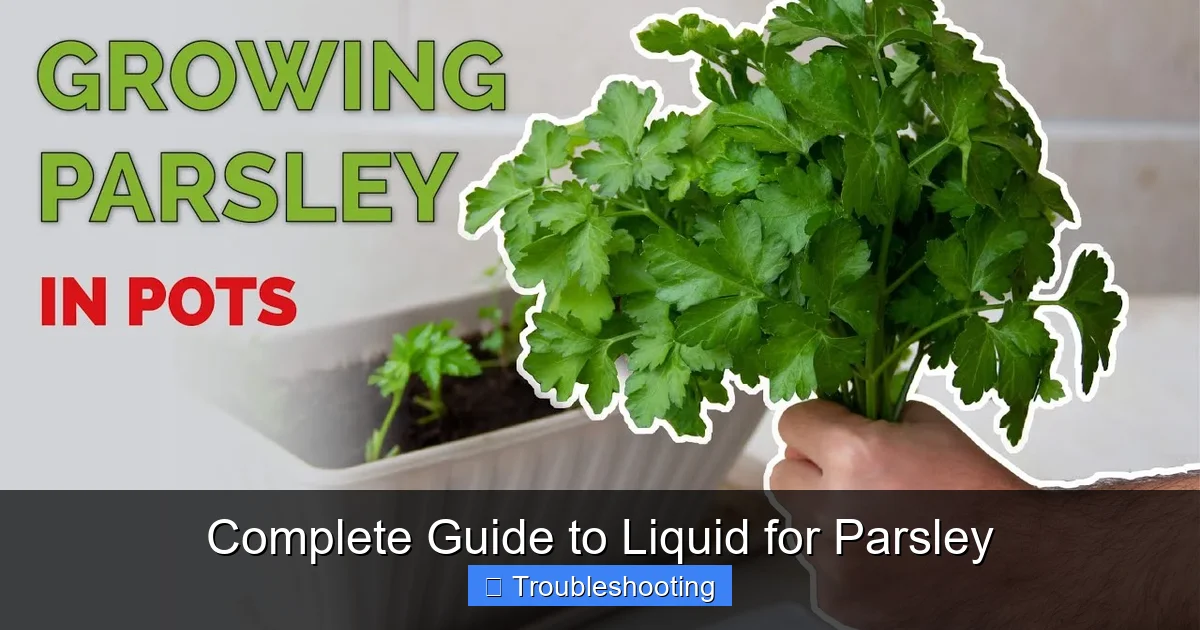
Complete Guide to Liquid for Parsley
Liquid for parsley is the key to strong growth and bright flavor. This guide explains how to water, fertilize, and fix common issues so your parsley thrives all season.
Key Takeaways
- Consistent moisture: Parsley prefers evenly moist soil, not soggy conditions.
- Balanced liquid fertilizer: Use a nitrogen‑rich formula every two weeks during active growth.
- Water quality matters: Filtered or rain water reduces salt buildup.
- Watch for yellow leaves: They often signal over‑watering or nutrient deficiency.
- Adjust with the seasons: Reduce feeding in winter and increase in spring.
- Use a spray bottle for seedlings: Gentle mist prevents soil compaction.
- Test soil regularly: A simple moisture meter keeps liquid for parsley on target.
Quick Answers to Common Questions
How often should I water parsley?
Water when the top inch of soil feels dry, usually every 2‑3 days in warm weather.
What type of liquid fertilizer is best for parsley?
A nitrogen‑rich liquid fertilizer with an N‑P‑K ratio around 10‑5‑5 works well.
Can I use tap water for parsley?
Yes, but let it sit overnight to remove chlorine, or use filtered water for best results.
Why are my parsley leaves turning yellow?
Yellow leaves often mean over‑watering or a nitrogen deficiency; check moisture and feed if needed.
When should I stop fertilizing parsley in winter?
Stop fertilizing completely during winter dormancy; resume in early spring.
📑 Table of Contents
Understanding Liquid for Parsley
Parsley is a biennial herb that loves steady moisture. The term liquid for parsley covers both water and liquid nutrients. When you give the right amount, the plant develops deep green leaves and a strong aroma. Too little liquid leads to wilting. Too much causes root rot. The goal is a sweet spot where the soil feels damp a few inches down.
Start by checking the soil daily. Stick your finger about an inch into the pot. If it feels dry, it is time to add liquid for parsley. If it feels wet, wait a day. This simple habit prevents most problems before they start.
Why Consistency Matters
Consistent liquid for parsley keeps the root zone stable. Fluctuating moisture stresses the plant. Stress shows as yellow tips or bolting. A regular schedule builds a resilient herb that can handle heat waves and cool snaps.
Signs of Proper Hydration
Healthy parsley shows firm, upright stems. Leaves are bright green and glossy. The soil surface may look slightly dark but never waterlogged. When you lift the pot, it should feel heavy but not dripping.
Choosing the Right Water
Not all water is equal for liquid for parsley. Tap water often contains chlorine and minerals that build up over time. Filtered water or collected rain water is gentler. If you must use tap water, let it sit overnight. This allows chlorine to evaporate.
Hard water adds calcium and magnesium. These can raise soil pH. Parsley prefers a slightly acidic to neutral pH, around 6.0 to 7.0. A simple pH test kit helps you monitor changes.
Rain Water Benefits
Rain water is naturally soft and free of additives. It also contains trace nutrients. Collect it in a clean barrel. Use it within a week to avoid algae growth.
Filtered Water Options
Pitcher filters remove most chlorine. Reverse osmosis systems strip minerals, so you may need to add a bit of calcium back. A balanced approach works best for liquid for parsley.
Feeding with Liquid Fertilizers
Liquid fertilizer delivers nutrients fast. For parsley, a nitrogen‑heavy formula encourages leaf growth. Look for an N‑P‑K ratio like 10‑5‑5 or 12‑4‑8. Apply every two weeks during the growing season.
Mix the fertilizer at half the label strength. Strong solutions can burn tender roots. Water the plant first, then apply the diluted feed. This prevents shock.
Organic vs Synthetic
Organic liquid feeds, such as fish emulsion or seaweed extract, release nutrients slowly. They also improve soil biology. Synthetic feeds give a quick boost but can cause salt buildup. Rotate between the two for balanced nutrition.
Timing the Feed
Feed in the morning when temperatures are cool. This reduces evaporation and lets the plant absorb nutrients before the heat of the day. Avoid feeding during extreme heat or frost.
Common Problems and Fixes
Even with perfect liquid for parsley, issues arise. Yellow leaves, stunted growth, and pests are the most frequent. Identifying the cause early saves the crop.
Yellow Leaves
Yellowing often means too much water or not enough nitrogen. Check soil moisture first. If soggy, cut back on watering. If dry, increase liquid for parsley and add a nitrogen feed.
Root Rot
Root rot shows as black, mushy roots and a foul smell. It happens when soil stays wet for days. Repot in fresh, well‑draining mix. Reduce watering frequency and improve airflow.
Pests: Aphids and Spider Mites
Aphids cluster on new growth. Spray a strong jet of water to dislodge them. Follow with neem oil if they return. Spider mites thrive in dry air. Increase humidity around the plant and mist regularly.
Bolting
Bolting is premature flowering. It makes leaves bitter. High heat and irregular liquid for parsley trigger it. Provide shade cloth in midsummer and keep moisture steady.
Seasonal Adjustments
Parsley’s needs shift with the seasons. Spring and fall are peak growth times. Summer brings heat stress. Winter slows growth dramatically.
Spring Boost
As days lengthen, increase liquid for parsley frequency. Start feeding weekly with a balanced liquid fertilizer. Keep soil evenly moist.
Summer Care
Heat raises evaporation. Water early morning and late evening. Mulch the surface with straw or shredded leaves to retain moisture. Reduce fertilizer strength to half.
Fall Transition
Growth slows. Cut feeding to every three weeks. Maintain moisture but allow the top inch to dry between waterings. This prepares the plant for dormancy.
Winter Rest
Indoor parsley needs minimal liquid for parsley. Water only when the top two inches are dry. Stop fertilizing completely. Provide bright, indirect light.
Pro Tips for Long‑Term Success
Small habits make a big difference over months. These tips keep your parsley productive year after year.
Use a Moisture Meter
A cheap probe tells you exactly when to add liquid for parsley. No guesswork. Insert it near the root zone for accurate readings.
Rotate Pots
Turn the pot a quarter turn each week. This ensures even light exposure and prevents the plant from leaning.
Harvest Wisely
Snip outer leaves first. Leave the central rosette intact. This encourages new growth and extends the harvest window.
Companion Planting
Grow parsley near tomatoes or peppers. It repels certain pests and benefits from the same watering schedule.
Refresh Soil Annually
After a year, the potting mix loses structure. Repot with fresh compost and perlite. This restores drainage and nutrient capacity.
Keep a Garden Journal
Record watering dates, fertilizer amounts, and observations. Patterns emerge that guide future liquid for parsley decisions.
Conclusion
Mastering liquid for parsley is about balance. Consistent moisture, quality water, and timely feeding create a thriving herb. Watch the plant, adjust with the seasons, and use simple tools like a moisture meter. With these practices, you will enjoy fresh, flavorful parsley from garden to kitchen all year long.
Frequently Asked Questions
What is the ideal soil moisture level for parsley?
Parsley thrives when the soil stays evenly moist but not soggy; aim for a damp feel about an inch below the surface.
Can I use rain water exclusively for my parsley?
Yes, rain water is excellent because it is soft and free of chlorine, just ensure it is collected cleanly and used within a week.
How do I prevent salt buildup from liquid fertilizers?
Flush the pot with plain water once a month to leach excess salts, and alternate between organic and synthetic feeds.
Is misting beneficial for parsley seedlings?
Misting keeps the surface moist without compacting soil, which helps delicate seedlings establish strong roots.
What pH range should I maintain for parsley soil?
Maintain a slightly acidic to neutral pH between 6.0 and 7.0 for optimal nutrient uptake.
How can I tell if my parsley is bolting?
Bolting appears as a rapid upward shoot with flower buds; leaves become bitter, so provide shade and steady moisture to delay it.