How to Encourage Pitcher Plant to Flower
Getting your pitcher plant to flower requires mimicking its natural habitat with bright light, seasonal temperature drops, proper watering, and careful feeding. Most pitcher plants need a distinct dormancy period and mature growth before they’ll produce their fascinating blooms.
So you’ve been growing pitcher plants for a while now. Your traps look great. The pitchers are full. The plant seems happy. But there’s one thing missing — those weird, alien-looking flowers that make carnivorous plant lovers weak in the knees. You’re not alone. Figuring out how to encourage pitcher plant to flower is one of the most common questions in the carnivorous plant community. The good news? It’s totally doable. The bad news? It takes patience, the right conditions, and a bit of plant psychology.
Pitcher plants don’t flower on command. They flower when they feel safe, mature, and properly cued by the seasons. Think of it like a teenager finally deciding to clean their room — the conditions have to be just right. In this guide, we’ll walk through everything you need to know about triggering those spectacular blooms, whether you’re growing North American Sarracenia, tropical Nepenthes, or the cobra lily Darlingtonia. Let’s dig in.
Key Takeaways
- Mature plants only: Pitcher plants typically need 3-5 years to reach flowering maturity
- Bright light is essential: 12-16 hours of strong light daily triggers bloom development
- Seasonal temperature changes: A cool dormancy period (40-50°F) signals the plant to flower in spring
- Pure water matters: Only use distilled, rain, or reverse osmosis water to prevent mineral buildup
- Don’t overfeed: Excess nutrients from insects or fertilizer can actually prevent flowering
- Patience is key: Even with perfect conditions, some species flower irregularly or biennially
- Species-specific needs: Sarracenia, Nepenthes, and Darlingtonia each have unique flowering triggers
Quick Answers to Common Questions
How long does it take for a pitcher plant to flower from seed?
3-7 years depending on species. Sarracenia typically 3-5 years, Nepenthes 5-7 years, Darlingtonia 4-6 years. Tissue culture plants may flower 1-2 years sooner.
Can I force my pitcher plant to flower with fertilizer?
No. Fertilizer (especially nitrogen) promotes vegetative growth at the expense of flowers. Overfeeding actually prevents flowering. These plants need nutrient stress to trigger reproduction.
Why did my pitcher plant’s flower stalk turn brown and die?
Common causes: sudden heat wave, drought stress, root rot, pest damage, or the plant simply aborted the bud due to insufficient energy reserves. Check roots and growing conditions.
Do all pitcher plants need winter dormancy to flower?
No. Only temperate species (Sarracenia, Darlingtonia, some Heliamphora) require cold dormancy. Tropical Nepenthes flower based on maturity, temperature differentials, and seasonal cues instead.
Can I grow flowering pitcher plants indoors under lights?
Yes, but you need high-intensity full-spectrum lights (400-600+ PPFD), proper photoperiod simulation (seasonal day length changes), and for temperate species, a way to provide cold dormancy (refrigerator method works).
📑 Table of Contents
- Understanding Pitcher Plant Flowering Basics
- Light Requirements for Blooming
- Temperature and Seasonal Cues
- Water and Humidity Management
- Feeding and Nutrient Balance
- Species-Specific Flowering Triggers
- Common Mistakes That Prevent Flowering
- Advanced Techniques for Reluctant Bloomers
- Troubleshooting Flower Problems
- Creating a Flower-Friendly Year-Round Calendar
- Conclusion
Understanding Pitcher Plant Flowering Basics
Before we get into the nitty-gritty of how to encourage pitcher plant to flower, you need to understand what you’re working with. Pitcher plant flowers are genuinely bizarre. They look like upside-down umbrellas, alien spacecraft, or something from a Dr. Seuss book. But they serve a serious purpose — reproduction.
Why Pitcher Plants Flower Differently
Unlike your average houseplant, pitcher plants evolved in nutrient-poor environments. They catch insects because the soil can’t feed them. This survival strategy affects everything, including flowering. The plant has to “decide” whether to put energy into traps (for food) or flowers (for seeds). It’s an energy budget decision.
Most pitcher plants are perennials. They live for decades. But they don’t flower every year. Some species flower annually once mature. Others are biennial bloomers. Some only flower after a fire, a flood, or a particularly good growing season. Understanding your specific species is step one.
Maturity Matters More Than Anything
Here’s the hard truth: a seedling Sarracenia won’t flower for 3-5 years. A Nepenthes grown from seed might take 5-7 years. Tissue culture plants can flower sooner — sometimes in 2-3 years — but they still need to reach a critical size. If your plant has only 3-4 small pitchers, it’s not ready. It’s still building its energy reserves.
Look for these maturity signs:
- Multiple large, mature pitchers per growth point
- Rhizome (underground stem) thickness of at least pencil-width for Sarracenia
- Vining or basal shoot production in Nepenthes
- Previous season’s growth died back and regrew strongly
Flower Anatomy 101
Pitcher plant flowers emerge on tall stalks well above the traps. This isn’t accidental — it prevents the plant from eating its own pollinators. The flowers typically have 5 petals, numerous stamens, and a distinctive umbrella-shaped style that catches pollen. Colors range from yellow and red to purple, pink, and near-black.
Most species flower in spring. The bloom stalk emerges first, often before new pitchers. The flower opens, gets pollinated (usually by bees), then the petals drop. The ovary swells into a seed pod that ripens by late summer or fall. Knowing this timeline helps you spot the early signs of success.
Light Requirements for Blooming
If there’s one non-negotiable factor in how to encourage pitcher plant to flower, it’s light. Full stop. No amount of fertilizer, special water, or wishful thinking compensates for insufficient light. These are sun-loving plants. Period.
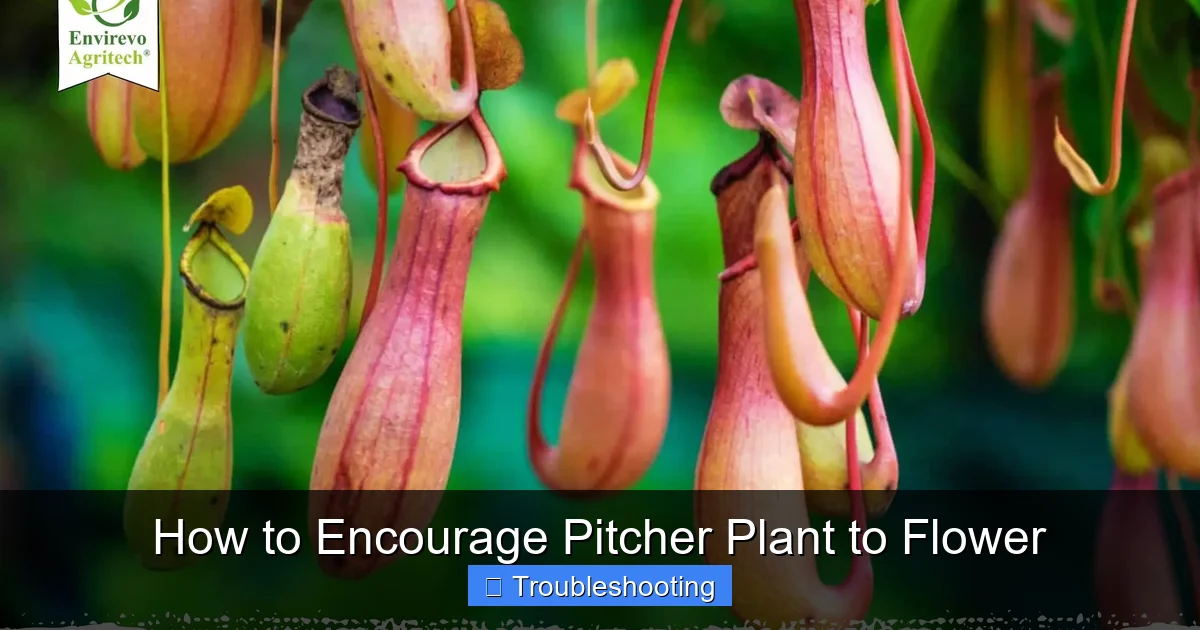
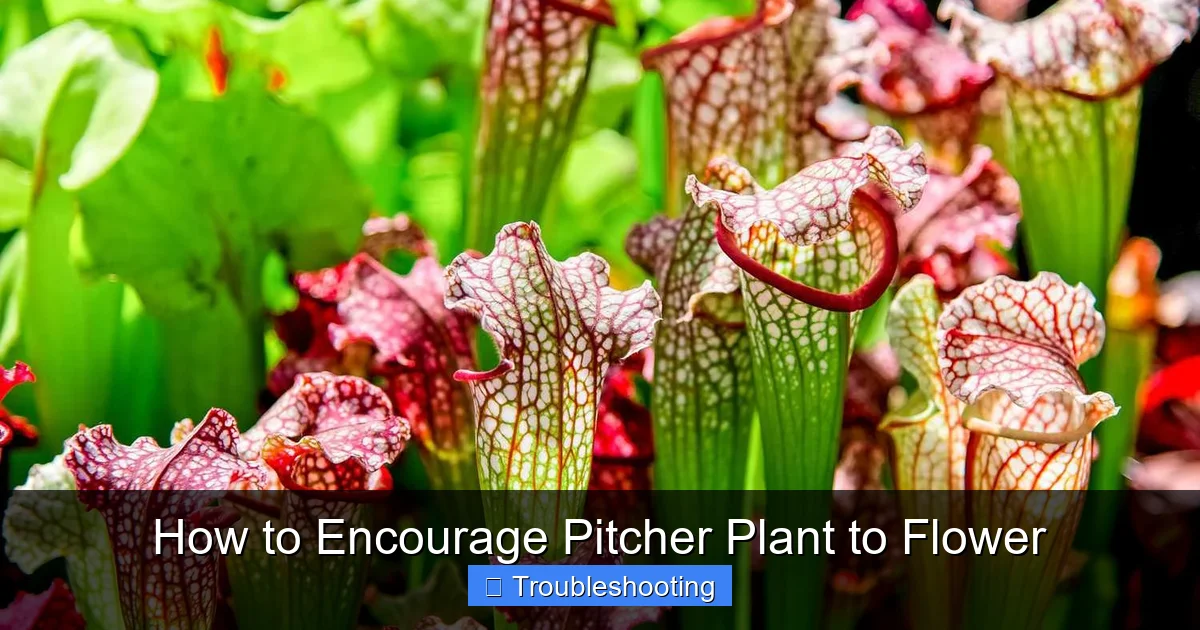
Visual guide about How to Encourage Pitcher Plant to Flower
Image source: envirevoagritech.com
How Much Light Is Enough?
For North American pitcher plants (Sarracenia, Darlingtonia), you need full sun. That means 6+ hours of direct, unfiltered sunlight daily. More is better. 8-12 hours is ideal. If you’re growing indoors, you need serious grow lights — we’re talking 400-600+ PPFD (photosynthetic photon flux density) at canopy level for 14-16 hours daily.
Tropical pitcher plants (Nepenthes) are more nuanced. Highland species want bright, indirect light or dappled sun. Lowland species tolerate more direct light. But “bright shade” for a Nepenthes is still brighter than most people realize. Think 50-70% shade cloth intensity, not your north-facing windowsill.
Signs of Light Starvation
Your plant will tell you if it’s light-starved. Watch for:
- Pitchers that are green, floppy, and lack coloration
- Extremely elongated, weak growth (etiolation)
- Small, deformed traps
- No flower stalk initiation by early spring
- Rhizome rot from staying too wet in low light
If you see these signs, increase light immediately. But do it gradually over 1-2 weeks to avoid sunburn. Yes, pitcher plants can sunburn if moved from shade to full sun too fast.
Seasonal Light Changes
The changing day length is a major flowering trigger. As days lengthen in spring, the plant receives hormonal signals to initiate bloom stalks. This is why indoor growers under constant 14-hour light cycles sometimes struggle with flowering — the plant never gets the “spring is coming” signal.
If growing indoors, consider gradually increasing photoperiod from 10 hours (winter) to 16 hours (summer) over 8-12 weeks. This mimics natural seasonal progression and can trigger flowering in reluctant plants.
Light Quality Matters Too
Not all light is equal. Full-spectrum light with good red and blue peaks drives both vegetative growth and flowering. Cheap “blurple” LED grow lights often lack the far-red wavelengths that influence flowering responses. Invest in quality full-spectrum LEDs (3500K-5000K) or ceramic metal halide for best results.
Temperature and Seasonal Cues
Temperature is the second pillar of how to encourage pitcher plant to flower. Most temperate pitcher plants require a genuine winter dormancy with cold temperatures. Tropical species need day/night temperature differentials. Getting this wrong is the #1 reason mature plants refuse to bloom.
The Dormancy Requirement for Temperate Species
Sarracenia, Darlingtonia, and some Nepenthes (like N. rajah) need winter dormancy. This isn’t optional. The plant must experience 3-4 months of temperatures between 35-50°F (2-10°C) with reduced light. During this time, growth stops. Old pitchers die back. The rhizome rests.
Without this cold period, the plant’s internal clock gets confused. It may survive for years but will rarely flower. The cold exposure vernalizes the plant — essentially telling its genes “winter happened, now prepare for spring reproduction.”
How to Provide Proper Dormancy
Depending on your climate, you have options:
- Outdoors in zones 6-9: Leave plants outside year-round. Mulch pots heavily.
- Outdoors in zones 3-5: Bury pots in ground, mulch 6-12 inches deep.
- Indoors/warmer zones: Use an unheated garage, cold frame, or refrigerator method.
- Refrigerator method: Bare-root plants, wrap in damp sphagnum, bag loosely, store at 35-40°F for 12-16 weeks.
Check monthly for mold. Don’t let them dry out completely. They don’t need light during deep dormancy, but some ambient light helps prevent etiolation if they wake early.
Spring Wake-Up Protocol
How you bring plants out of dormancy affects flowering. Don’t shock them. Gradually increase temperature and light over 2-3 weeks. Start at 50°F days/40°F nights, then slowly warm. Water sparingly at first — the rhizome has no pitchers to transpire moisture yet.
Watch for the flower bud. It emerges as a tight, fist-like structure on a thick stalk, distinct from the pointed pitcher buds. Once you see it, you’ve succeeded in the vernalization step.
Temperature Differentials for Tropical Species
Nepenthes don’t need winter dormancy (most of them). But they do need a day/night temperature drop. Highland species want 70-80°F days and 50-60°F nights. Lowland species want 80-90°F days and 70-75°F nights. That 10-20°F drop triggers metabolic processes that support flowering.
Constant temperatures (like a terrarium stuck at 75°F 24/7) often result in lush growth but zero flowers. If you’re growing highlanders indoors, you need a way to cool nights — a chiller, a basement setup, or moving plants to a cooler room nightly.
Heat Stress and Flower Abortion
Excessive heat can cause flower buds to abort. Sarracenia flower stalks emerging during a heat wave (90°F+) may wither. Nepenthes spikes may yellow and drop. If a heat wave hits during bloom initiation, provide shade cloth, increase humidity, and ensure ample water. Don’t let pots overheat — dark pots in sun can cook roots.
Water and Humidity Management
Water quality and consistency form the foundation of how to encourage pitcher plant to flower. These plants evolved in mineral-free environments. Their roots have zero tolerance for dissolved solids. Get water wrong, and the plant spends all its energy just surviving — no surplus for flowers.
The Pure Water Rule
This is non-negotiable. Use only:
- Distilled water
- Rainwater (collected cleanly)
- Reverse osmosis (RO) water
- Deionized water
Tap water, well water, spring water, filtered water (Brita-style), and bottled drinking water all contain minerals that accumulate in the soil. Over time, this burns roots, alters soil pH, and stresses the plant. A TDS meter is a $15 investment that saves years of heartache. Aim for <50 ppm TDS. Under 20 ppm is ideal.
Watering Methods by Species
Sarracenia and Darlingtonia: Keep pots sitting in 1-2 inches of water during growing season. The soil should stay saturated but not stagnant. In winter dormancy, keep barely moist — not wet, not dry.
Nepenthes: Water overhead when the top of the medium feels barely damp. Don’t let them sit in water. They need drainage and air at the roots. But never let them dry out completely. Consistency is key.
Heliamphora: Similar to Nepenthes but even more sensitive. High humidity, constant moisture, perfect drainage.
Humidity’s Role in Flowering
High humidity (60-80%+) helps pitcher development, but flowering is less humidity-dependent than you’d think. Sarracenia flower in open bogs with 40-60% humidity. Nepenthes flowers tolerate lower humidity if the plant is well-hydrated.
However, extremely low humidity (<30%) during flower stalk elongation can cause the stalk to desiccate and abort. If you're in a dry climate, a humidity tray or occasional misting during bloom initiation helps. Just don't create fungal conditions.
Seasonal Water Adjustments
Reduce watering as dormancy approaches. This helps signal the plant to shut down. In spring, increase watering gradually as growth resumes. The transition from “barely moist” to “sitting in water” should take 2-3 weeks. Sudden saturation of a dry rhizome can cause rot.
Feeding and Nutrient Balance
Here’s where how to encourage pitcher plant to flower gets counterintuitive. You might think more food = more energy = more flowers. Wrong. Overfeeding is a classic flowering killer. These plants are adapted to nutrient poverty. Too much nitrogen tells the plant “conditions are good, just grow vegetatively.”
The Nitrogen Paradox
In nature, pitcher plants get nitrogen from insects. In cultivation, people feed them fish food, fertilizer, meat, you name it. This backfires. High nitrogen promotes leaf and pitcher growth at the expense of flowers. The plant thinks “why make seeds when I’m living large?”
Studies show Sarracenia in high-nitrogen conditions produce fewer, smaller flowers. The same holds for Nepenthes. If you want flowers, restrict feeding.
How Much Feeding Is Right?
Outdoor plants: Zero supplemental feeding. They catch plenty. Let nature do its thing.
Indoor Sarracenia: 1-2 insects per pitcher per month during active growth. Max. Use flightless fruit flies, small crickets, or freeze-dried bloodworms rehydrated. Never raw meat — it rots.
Indoor Nepenthes: 1 insect per pitcher every 2-3 weeks. Or a very dilute orchid fertilizer (1/4 strength) applied to pitchers only, monthly. Never soil fertilizer.
Seedlings: They benefit from more frequent, tiny feedings. But once they approach flowering size, cut back.
Fertilizer: Handle With Extreme Care
Some advanced growers use foliar fertilizer on Nepenthes. Maxsea 16-16-16 at 1/4 teaspoon per gallon, sprayed on leaves (not soil) monthly. This can boost growth. But it delays flowering. If your goal is blooms, skip it.
Never, ever put fertilizer in the soil. The roots will die. The plant will die. I’ve seen 20-year collections wiped out by one Miracle-Gro mistake.
Pre-Flowering Nutrient Strategy
About 6-8 weeks before expected bloom initiation (late winter for temperate, anytime for tropical), stop all feeding. Let the plant use stored reserves. This mild nutrient stress can actually trigger the reproductive response — “times are getting lean, better make seeds now.”
Species-Specific Flowering Triggers
General advice only gets you so far. To truly master how to encourage pitcher plant to flower, you need species-specific knowledge. The three main groups have very different requirements.
Sarracenia (North American Pitcher Plants)
Flowering season: Early spring (March-May depending on latitude)
Key triggers: Full sun, cold dormancy (35-45°F for 3+ months), mature rhizome, wet spring conditions
Species nuances:
- S. purpurea and S. psittacina flower earliest, sometimes before pitchers emerge
- S. flava and S. oreophila flower mid-season with tall, showy yellow blooms
- S. leucophylla flowers later, often with second flush of pitchers
- S. minor and S. rubra complex flower latest
Pro tip: Don’t divide rhizomes the year you want flowers. Division sets flowering back 1-2 years. Let clumps get crowded.
Nepenthes (Tropical Pitcher Plants)
Flowering season: Variable. Often triggered by seasonal cues (dry season, temperature drop) rather than calendar.
Key triggers: Maturity (vining size), day/night temp differential, photoperiod change, slight drought stress
Sex matters: Nepenthes are dioecious — male and female flowers on separate plants. You need both for seed. But a single plant will flower regardless.
Species nuances:
- Highlanders (N. rajah, N. villosa, N. macrophylla): Need significant night cooling (50-55°F). Flower after reaching 3-4 foot vine length.
- Intermediates (N. ventricosa, N. x ‘Miranda’): Easier to flower. Often bloom at 2-3 foot vine length with 10-15°F day/night drop.
- Lowlanders (N. ampullaria, N. bicalcarata, N. rafflesiana): Need consistent warmth but respond to dry season simulation. Reduce watering slightly for 4-6 weeks, then resume heavily.
Pro tip: Nepenthes flower spikes emerge from the leaf axil (where leaf meets stem), not the growing tip. Don’t confuse them with basal shoots.
Darlingtonia (Cobra Lily)
Flowering season: Late spring (May-June)
Key triggers: Cool roots (critical!), full sun, cold dormancy, mature clump
Unique requirement: Darlingtonia roots must stay cool (50-60°F) even in summer. Warm roots = no flowers, often death. Use light-colored pots, shade the pot sides, or use a water-cooling system.
Pro tip: They flower reluctantly in cultivation. Large, undisturbed colonies in running water setups flower best.
Heliamphora (Sun Pitchers)
Flowering season: Spring to summer
Key triggers: Intense light, high humidity, cool nights, maturity (5+ years from seed)
Challenge: Rarely flower in cultivation. Need near-perfect conditions. Focus on growth first.
Cephalotus (Albany Pitcher Plant)
Flowering season: Late summer to fall
Key triggers: Mediterranean climate simulation — wet cool winter, hot dry summer
Unique: Flowers on 2-3 foot stalks. Plant must be 4+ years old. Reduce summer watering to trigger.
Common Mistakes That Prevent Flowering
Even experienced growers mess up how to encourage pitcher plant to flower. Here are the most frequent errors, so you can avoid them.
Mistake 1: Impatience With Young Plants
Buying a small plant and expecting flowers next spring. It doesn’t work that way. That $15 Sarracenia from the garden center? It’s 1-2 years old. You’re looking at 2-3 more years minimum. Nepenthes from tissue culture? 3-4 years. Seed-grown? 5-7 years. Accept the timeline.
Mistake 2: Skipping Dormancy
“My garage only gets to 55°F, that’s close enough.” Nope. 55°F isn’t dormancy. The plant stays metabolically active, burns reserves, and enters spring exhausted. No flower buds form. You need 40°F or colder for true vernalization.
Mistake 3: Windowsill Growing
A south-facing window provides maybe 25-30% of outdoor light intensity. Glass filters UV. The photoperiod is wrong in winter. Sarracenia on a windowsill will survive but rarely flower. If you must grow indoors, invest in proper lighting.
Mistake 4: Repotting at the Wrong Time
Repotting in spring right before flowering shocks the plant. The energy goes to root recovery, not bloom. Repot in late winter (during dormancy) or after flowering. Sarracenia: repot every 2-3 years. Nepenthes: every 1-2 years.
Mistake 5: Using Terracotta or Fertilized Pots
Terracotta wicks minerals into the soil. Pre-fertilized potting soil kills. Use only plastic, glazed ceramic, or styrofoam pots. Media: peat/perlite or peat/sand for temperate. Sphagnum/perlite/orchid bark for tropical. No exceptions.
Mistake 6: Letting Pests Go Unchecked
Spider mites, aphids, thrips, and scale love pitcher plants. A heavy infestation during bud formation causes abortion. Inspect weekly. Treat early with neem oil, insecticidal soap, or predatory mites. But don’t spray open flowers — you’ll kill pollinators.
Mistake 7: Dividing Too Aggressively
Dividing a clump into single growth points sets flowering back years. Each division needs 3-5 growth points minimum to have enough stored energy for blooms. If you want flowers, divide less often and keep larger divisions.
Mistake 8: Ignoring Root Health
Root rot from anaerobic conditions, mineral buildup, or overheated pots prevents flowering. Healthy roots = white, crisp, actively growing tips. Brown, mushy, or black roots = trouble. Check annually during repotting.
Advanced Techniques for Reluctant Bloomers
You’ve done everything right. Mature plant. Perfect light. Proper dormancy. Pure water. Restrained feeding. And still — no flowers. Here are advanced tactics for stubborn plants.
Gibberellic Acid (GA3) Treatment
GA3 is a plant hormone that can induce flowering in some species. Used by professional breeders. For Sarracenia: 100-500 ppm spray on emerging growth points in late winter. For Nepenthes: 50-100 ppm on apical meristem. Results vary. Can cause deformed flowers. Use as last resort only. Research thoroughly before attempting.
Controlled Drought Stress
For Nepenthes and Cephalotus, a carefully timed dry period can trigger flowering. Let the medium become nearly dry (not bone dry) for 2-3 weeks, then resume heavy watering. This mimics dry-to-wet seasonal transition. Risky — don’t try on valuable or weak plants.
Photoperiod Manipulation
For indoor growers: simulate equatorial photoperiod changes. 12 hours year-round for lowland Nepenthes. Gradual 10→14 hour shift for temperate species. Use a timer. Consistency matters — even one night of light pollution (streetlight through window) can disrupt the signal.
Temperature Shock
Some highland Nepenthes respond to a brief (1-2 week) period of cooler nights than usual. If you normally run 55°F nights, drop to 45-50°F for two weeks in early spring. Then return to normal. This can mimic the “cold snap” that triggers flowering in habitat.
Pollination Assistance
If you get flowers but no seeds, you may need to hand-pollinate. Sarracenia: collect pollen from mature anthers (they turn yellow and powdery), transfer to the stigma (center of umbrella style) with a small brush. Best done mid-morning on day 2-3 of flower opening. Nepenthes: male flowers release pollen 1-2 days after opening. Collect and transfer to female flowers (on a different plant).
Troubleshooting Flower Problems
Sometimes you get a flower stalk but things go wrong. Here’s how to diagnose and fix common issues.
Flower Stalk Emerges Then Withers
Causes: Sudden heat wave, drought stress, root rot, pest damage to stalk, nutrient deficiency (rare).
Fix: Identify stressor. Shade during heat. Ensure consistent moisture. Check roots. Treat pests. The plant may try again next year.
Flower Opens But Petals Drop Immediately
Causes: Lack of pollination (normal), extreme heat, botrytis fungus, thrips damage.
Fix: If petals drop after 3-5 days, that’s normal — flower was pollinated or not viable. If they drop same day, check for thrips (tiny insects in flower) or fungal spores (gray fuzz). Treat accordingly.
Flower Forms But No Seed Pod Develops
Causes: No pollinator access (indoors), self-incompatibility (some Sarracenia), male/female mismatch (Nepenthes), genetic sterility (hybrids).
Fix: Hand-pollinate. For Sarracenia, try cross-pollinating with a different clone. For Nepenthes, you need opposite-sex plants. Some hybrids are sterile — enjoy the flower, don’t expect seeds.
Deformed or Partial Flowers
Causes: Genetic mutation, GA3 overdose, physical damage during development, viral infection.
Fix: Usually nothing to do. Enjoy the weirdness. If it happens repeatedly, check for virus (mosaic patterns on leaves) and destroy infected plants.
Creating a Flower-Friendly Year-Round Calendar
Success with how to encourage pitcher plant to flower comes from consistent, year-round care. Here’s a monthly framework for temperate species (adjust for your hemisphere):
January-February: Deep Dormancy
- Plants at 35-45°F, barely moist, no light needed
- Check monthly for mold, rodents, dryness
- Plan spring repotting if needed
- Order seeds, new plants for spring
March: Wake-Up Begins
- Move to 50°F days, 40°F nights, bright light
- Water sparingly — rhizome only
- Watch for flower buds (thick, fist-like)
- Repot if necessary (before bud elongates)
April: Flower Season
- Flower stalks elongate rapidly
- Increase water to full growing season level
- Hand-pollinate if desired
- Protect from late freezes (cover if <28°F)
- No feeding yet
May: Peak Bloom & New Growth
- Flowers fade, seed pods form
- New pitchers emerge
- Resume light feeding (outdoor: none needed)
- Full sun, full water
June-August: Growing Season
- Maximum light, water, humidity
- Monthly light feeding if indoors
- Monitor for pests, disease
- Collect ripe seeds (late summer)
- Enjoy the show
September: Slowing Down
- Reduce feeding
- Water normally
- Last flush of pitchers in some species
- Prepare winter protection
October: Pre-Dormancy
- Reduce watering gradually
- Stop all feeding
- Clean up dead pitchers
- Apply fungicide preventative if history of rot
November-December: Dormancy Established
- Plants in winter quarters
- Barely moist
- Cold temperatures
- Dream of spring flowers
Conclusion
Learning how to encourage pitcher plant to flower is really about learning how to listen to your plant. These ancient, fascinating organisms have survived for millions of years by being exquisitely tuned to their environment. When we cultivate them, we’re asking them to trust us with their reproductive future.
The formula isn’t secret: mature plant + intense light + proper dormancy (for temperate) or temperature differential (for tropical) + pure water + restrained feeding + patience. That’s it. But each element must be right. A chain breaks at its weakest link.
Don’t get discouraged if your first attempt doesn’t yield flowers. I’ve grown Sarracenia for 15 years and still have plants that sulk. Some years everything blooms. Other years, nothing. The plants have their own wisdom. Your job is to provide the stage — they decide when to perform.
Start with one species. Master its needs. Watch it through a full seasonal cycle. Keep notes. Take photos. Celebrate the first flower stalk like the victory it is. Because it is. You’ve successfully communicated with a carnivorous plant across millions of years of evolution. That’s pretty cool.
And when that first alien bloom opens — whether it’s a nodding yellow Sarracenia flower, a curious Nepenthes raceme, or a cobra lily’s strange green-and-red blossom — you’ll understand why people become obsessed. It’s not just a flower. It’s a conversation. And you finally speak the language.
Frequently Asked Questions
What is the best time of year to see pitcher plant flowers?
Most temperate pitcher plants (Sarracenia, Darlingtonia) flower in early to mid-spring, typically March through May depending on your climate. Tropical Nepenthes can flower year-round when mature, but often bloom in response to seasonal changes like dry-to-wet transitions.
How do I know if my pitcher plant is mature enough to flower?
Look for a thick rhizome (pencil-width or larger for Sarracenia), multiple large mature pitchers per growth point, and at least 3-5 years of growth from seed. Nepenthes need to reach vining size (2-4 feet of stem) before flowering.
Should I cut off the flower stalk to save energy for pitchers?
No. Flowering is a natural part of the plant’s life cycle. Cutting the stalk doesn’t significantly increase pitcher production and deprive the plant of energy. Let it flower — the blooms are spectacular and you might get seeds.
Why are my pitcher plant flowers deformed or missing petals?
Deformed flowers can result from physical damage during development, thrips or mite infestation, fungal infection (botrytis), genetic mutations, or improper use of plant hormones like GA3. Most minor deformities are harmless.
Can I cross-pollinate different Sarracenia species?
Yes. Most Sarracenia species readily hybridize. The resulting seeds produce hybrid plants with mixed characteristics. This is how many popular cultivars originated. Just label your crosses carefully.
My Nepenthes flowered but I only have one plant. Will I get seeds?
No. Nepenthes are dioecious — male and female flowers grow on separate plants. You need both a flowering male and a flowering female (different plants) to produce viable seed. A single plant will flower beautifully but won’t set seed alone.