Bonsai Humidity Requirements
Proper humidity is critical for bonsai health, with most species thriving between 40-60% relative humidity. Indoor environments often fall short, requiring humidifiers, pebble trays, or regular misting to prevent leaf damage and root stress.
If you have ever watched a bonsai tree struggle with crispy leaf edges or sudden leaf drop, you know the frustration. The culprit is often invisible. It is not pests. It is not disease. It is dry air. Understanding bonsai humidity requirements changes everything. It turns a guessing game into a clear care routine. Your trees will thank you with vibrant growth and resilience.
Most bonsai enthusiasts focus on watering schedules and soil mixes. They prune with precision. They wire with patience. But humidity sits quietly in the background. It dictates how leaves breathe. It controls how roots absorb water. It determines whether your tree thrives or merely survives. This guide walks you through everything you need to know. You will learn the science, the tools, and the practical tricks. By the end, you will manage moisture like a pro.
Key Takeaways
- Most bonsai need 40-60% humidity: Tropical species prefer 60-80%, while temperate trees tolerate 30-50%.
- Indoor air is often too dry: Heating and cooling systems can drop humidity below 20%, stressing your trees.
- Use a hygrometer for accuracy: Guessing leads to problems; a digital hygrometer gives reliable readings.
- Pebble trays work well: Water-filled trays with stones create localized humidity without root rot risk.
- Misting helps but isn’t enough alone: Daily misting supplements other methods but evaporates quickly.
- Group plants together: Clustering bonsai creates a shared microclimate with higher moisture levels.
- Adjust for seasons: Winter heating demands extra humidity; summer may need less intervention.
Quick Answers to Common Questions
What is the ideal humidity range for most bonsai trees?
Most bonsai thrive between 40-60% relative humidity, though tropical species prefer 60-80% and desert species tolerate 20-40%.
Can I just mist my bonsai instead of using a humidifier?
Misting alone is insufficient because the humidity spike lasts only minutes; it should supplement pebble trays or humidifiers for sustained moisture.
How do I know if my bonsai needs more humidity?
Look for crispy brown leaf tips, curling edges, premature leaf drop, and spider mite infestations — all classic signs of air that is too dry.
Should I increase humidity for my bonsai in winter?
Yes, indoor heating can drop humidity to 10-20%, so run humidifiers, fill pebble trays frequently, and group trees to create a protective microclimate.
Is high humidity ever bad for bonsai?
Excess humidity without airflow causes fungal diseases, root rot, and weak growth; always pair humidity with good air circulation using a gentle fan.
📑 Table of Contents
Why Humidity Matters for Your Bonsai
The Science of Transpiration
Plants lose water through tiny pores on their leaves called stomata. This process is transpiration. It pulls water up from the roots. It cools the leaf surface. It enables nutrient transport. Humidity directly controls the speed of this process. When air is dry, water evaporates faster. The tree loses moisture rapidly. When air is humid, evaporation slows. The tree conserves water. It is a delicate balance.
Think of it like hanging laundry. On a dry, windy day, clothes dry in hours. On a muggy day, they stay damp. Your bonsai leaves work the same way. Dry air pulls moisture out of the foliage. The roots cannot always keep up. This leads to stress. The tree sacrifices leaves to survive. Understanding this mechanism helps you see why bonsai humidity requirements are not optional. They are physiological necessities.
Signs of Low Humidity Stress
Your tree communicates through its leaves. Learn to read the signals. Crispy brown leaf tips are a classic sign. The edges curl inward. New growth may emerge deformed or stunted. Leaves drop prematurely. The soil dries out unusually fast between waterings. You might see spider mites appear. These pests love dry conditions. They multiply rapidly when humidity drops.
Conifers show stress differently. Needle tips turn brown. The foliage loses its glossy sheen. The tree looks dull. Deciduous trees show margin burn. The tissue between veins yellows then browns. Tropical species are the most dramatic. They shed leaves rapidly. A ficus can go from full canopy to bare branches in days. Recognizing these signs early lets you act before permanent damage occurs.
Signs of Excessive Humidity
Too much moisture brings its own problems. Fungal diseases thrive. Powdery mildew coats leaves in white dust. Root rot develops in soggy soil. Moss and algae grow on the trunk and soil surface. Leaves may become soft and limp. New growth stretches weakly. This is etiolation. The tree reaches for light in stagnant air.
Air circulation prevents these issues. A small fan on low setting keeps air moving. It mimics natural breezes. It strengthens stems. It discourages fungal spores from settling. Balance is the goal. You want humid air, not stagnant swamp conditions. Most bonsai humidity requirements fall in a sweet spot. We will explore that range next.
Understanding Your Bonsai’s Natural Habitat
Tropical and Subtropical Species
Trees like ficus, jade, serissa, and bougainvillea originate in humid jungles. They evolved in 70-90% humidity. Their leaves are often thin and broad. They lack thick waxy cuticles. They expect constant moisture in the air. Indoors, they suffer most from dry heating systems. These species need the highest humidity you can provide. Aim for 60-80% if possible. A humidifier is almost essential for these trees in temperate climates.
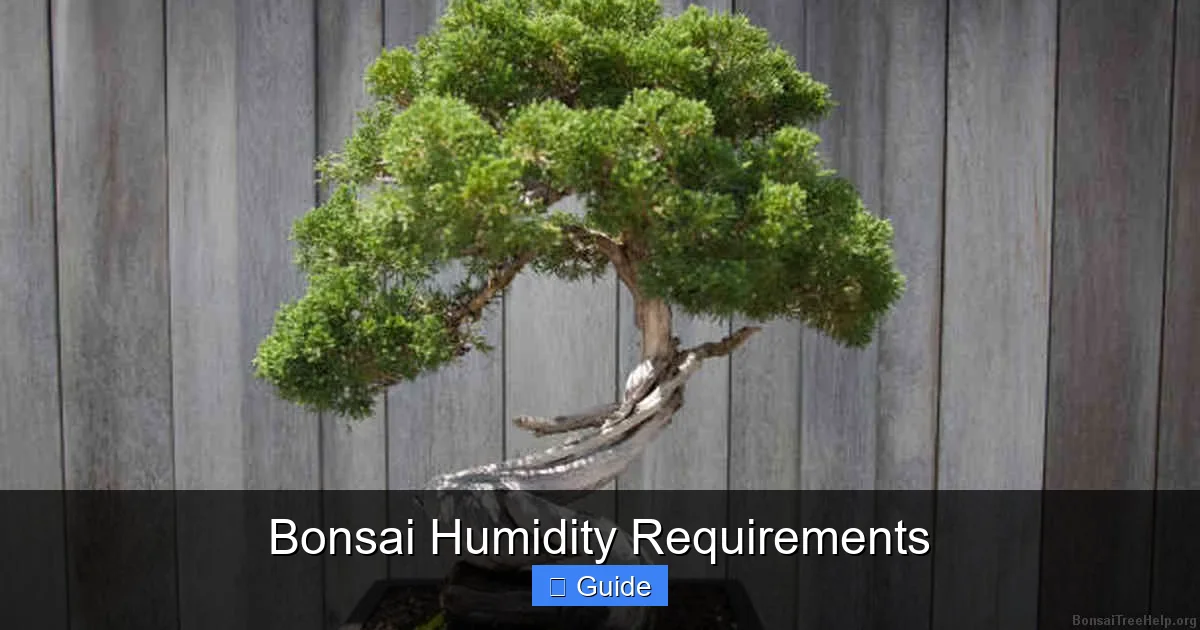
Visual guide about Bonsai Humidity Requirements
Image source: bonsaitreehelp.org
Consider a greenhouse cabinet for tropical collections. It creates a controlled microclimate. You can maintain 75% humidity easily. The trees reward you with constant growth. They flower more readily. Their leaves stay glossy and intact. If a cabinet is not feasible, group them together. Use large pebble trays. Run a room humidifier nearby. Monitor daily. These trees have zero tolerance for desert-dry air.
Temperate Deciduous Species
Maples, elms, hornbeams, and beeches come from regions with distinct seasons. They experience humid summers and drier winters. Their natural range is 40-70% humidity. They adapt well to indoor conditions if you respect their dormancy. In summer, they appreciate 50-60%. In winter, during dormancy, they tolerate 30-40%. This matches typical indoor winter air. Do not force high humidity on dormant trees. It encourages weak growth and fungal issues.
The key is seasonal adjustment. Increase humidity as buds swell in spring. Maintain moderate levels through summer. Reduce gradually in autumn. Allow the tree to feel the seasonal shift. This triggers proper dormancy. It sets up strong spring growth. Many beginners keep humidity high year-round. This confuses the tree. It weakens the annual cycle. Respect the natural rhythm.
Coniferous and Alpine Species
Pines, junipers, spruces, and cedars often grow in mountainous or coastal areas. They handle wide humidity swings. Their needles have thick cuticles. They conserve water efficiently. They prefer 30-60% humidity. High humidity with poor airflow causes needle cast diseases. These trees want fresh moving air. They thrive outdoors. If kept indoors temporarily, keep humidity moderate. Ensure excellent ventilation.
Coastal species like shore pine tolerate salt spray and fog. They enjoy higher humidity. Alpine species like mugo pine prefer drier air. Research your specific species. The genus gives clues. The species gives precision. A Japanese black pine differs from a white pine. Both are pines. Their bonsai humidity requirements differ. Know your tree.
Mediterranean and Arid Species
Olives, pomegranates, and some acacias come from dry summer climates. They handle 20-50% humidity easily. Their leaves are small, thick, or silver-haired. These adaptations reduce water loss. They actually suffer in high humidity. Fungal problems explode. Root rot risks increase. Keep these on the drier side. Good airflow is more important than humidity for these trees.
If you grow mixed collections, zoning helps. Place tropicals together in a humid zone. Keep mediterraneans in a drier, airier spot. Temperates go in between. This mimics nature. It simplifies care. You manage three microclimates instead of twenty individual needs. Smart placement reduces work and improves results.
Measuring and Monitoring Humidity Levels
Choosing the Right Hygrometer
Guessing humidity is like guessing temperature without a thermometer. You will be wrong. A digital hygrometer costs $10-20. It gives accurate readings. Look for one with a remote probe. Place the probe at canopy level. The main unit stays visible. Calibrate it using the salt test. Seal it in a bag with a saturated salt solution. It should read 75% after 24 hours. Adjust if needed.
Avoid analog dial hygrometers. They drift badly. They rarely stay accurate. Digital models with min/max memory track daily fluctuations. This reveals patterns. You see the night spike. You see the afternoon drop. You learn your environment. Some advanced models connect to phone apps. They alert you when levels drift. This is valuable for valuable collections.
Where to Place Your Sensor
Placement changes the reading. Do not put it on the soil surface. Soil moisture inflates the number. Do not put it near the humidifier output. That reads artificially high. Place it at leaf level. Center of the canopy. This is what the tree experiences. If you have multiple shelves, measure each. Top shelves are often drier. Heat rises. Air stratifies.
Measure near the trunk too. The microclimate inside the foliage mass differs from the edge. Dense canopies trap humidity. Open structures leak it. Knowing both helps you adjust. Move the probe weekly. Check different trees. Build a map of your growing space. You will discover dry corners you never suspected.
Reading Daily Fluctuations
Humidity follows a daily rhythm. It peaks at dawn. Temperature drops. Relative humidity rises. It bottoms out mid-afternoon. Temperature peaks. Relative humidity plummets. Indoor heating flattens this curve. It creates a low plateau. Air conditioning does similar. Your hygrometer shows this cycle. Watch it for a week. Note the range. Note the timing.
This data guides your interventions. If humidity crashes at 2 PM, run the humidifier at 1 PM. Preempt the drop. If it spikes at night, ensure airflow prevents fungus. The min/max function captures extremes while you sleep. Review it each morning. Adjust your routine. Data-driven care beats hope-based care every time.
Understanding VPD (Vapor Pressure Deficit)
Serious growers track VPD. It combines temperature and humidity into one number. It measures the drying power of the air. Low VPD means air is saturated. High VPD means air is thirsty. Most bonsai prefer VPD between 0.8-1.2 kPa. Tropicals like lower VPD. Conifers tolerate higher. You need a thermometer and hygrometer to calculate it. Or use a VPD chart. Many phone apps calculate it automatically.
VPD explains why 60% humidity at 70°F differs from 60% at 85°F. The warmer air holds more water. The deficit is larger. The tree loses water faster. This is why summer afternoons stress trees even at “okay” humidity. Temperature matters. Bonsai humidity requirements are temperature-dependent. VPD captures this relationship. Learn it. Use it. Your trees will show the difference.
Practical Ways to Increase Humidity
Pebble Trays: The Classic Method
Pebble trays are simple, cheap, and effective. Take a tray larger than your pot. Fill with pebbles, gravel, or lava rock. Add water to just below the stone tops. Set the pot on the stones. The pot must not touch water. Roots stay dry. Water evaporates upward. It humidifies the immediate air around the tree. Refill as needed. Clean monthly to prevent algae.
Use large trays for more surface area. More surface means more evaporation. Group several pots on one big tray. The combined effect is stronger. Decorative trays look nice. Plastic boot trays work great and cost less. Black absorbs heat, increasing evaporation slightly. White reflects light onto lower leaves. Choose based on your setup. This method raises humidity 5-15% locally. It is a baseline tool. Every bonsai shelf should have them.
Room Humidifiers: Power and Precision
For serious collections, a room humidifier is the gold standard. Ultrasonic models are quiet and efficient. They produce cool mist. Evaporative models use a wick and fan. They self-regulate. They cannot over-humidify. Warm mist models boil water. They kill bacteria but use more electricity. Choose based on room size. A 1-gallon tank runs 12-24 hours. Look for built-in humidistat. Set it and forget it.
Place the humidifier several feet from trees. Do not aim mist directly at foliage. Wet leaves invite fungus. Let the mist disperse into the room air. Run it on a timer. Night operation raises humidity when temperatures drop. This mimics nature. Morning dew forms naturally. Daytime operation combats heating systems. Clean weekly with vinegar. Mineral buildup clogs nozzles. White dust settles on leaves. Distilled water prevents this but costs more. Tap water works with regular cleaning.
Misting: Supplement, Not Solution
Hand misting feels nurturing. It connects you to your trees. But it is temporary. Water evaporates in minutes. Humidity spikes then crashes. This fluctuation stresses trees more than steady low humidity. Use misting as a supplement. Mist in morning so leaves dry by night. Use a fine spray bottle. Coat both leaf surfaces. Do not soak the soil. Misting also cleans dust. It discourages spider mites. It helps newly collected or repotted trees with reduced root function.
Automated misting systems exist. They run on timers. They provide consistent pulses. Greenhouses use them. Indoor setups can too. They need drainage. They need airflow. They are overkill for a few trees. For a collection, they save time. Just ensure the cycle allows drying. Constant wetness breeds problems. Misting supports bonsai humidity requirements but cannot carry the load alone.
Grouping Plants: The Community Effect
Plants release water vapor. Transpiration humidifies their surroundings. Group trees together. They create a shared microclimate. The center of the group stays more humid. The edge trees buffer the interior. This is why forests feel damp. A cluster of five trees raises humidity more than five scattered trees. Arrange by humidity needs. Tropicals in the center. Temperates around them. Arid-lovers on the outside.
Leave space for airflow. Crowding causes fungus. Touching leaves spread pests. A finger-width gap between can pass between pots. This is enough. Rotate trees monthly. Edge trees get more light. Center trees get more humidity. Rotation equalizes benefits. It also lets you inspect every tree closely. Grouping is free. It requires only thought and arrangement. It is one of the highest leverage techniques.
Humidity Domes and Propagation Chambers
For recovering trees, cuttings, or sensitive species, clear domes work wonders. A simple plastic tote with a lid creates a mini greenhouse. Vent it daily. Open the lid for an hour. This prevents stagnation. Add a small computer fan for active airflow. These chambers maintain 80-90% humidity easily. They accelerate recovery. They root cuttings faster. They protect new grafts.
Use clear storage bins. Drill a few ventilation holes. Cover with mesh tape. Place a hygrometer inside. Monitor temperature. Sunlight cooks enclosed spaces. Keep in bright indirect light only. Gradually acclimate trees to lower humidity. Open the lid longer each day over two weeks. Sudden exposure shocks them. This tool is temporary. It bridges the gap until the tree establishes.
Water Features and Passive Evaporation
Indoor fountains, water bowls, or wet towels on radiators add ambient moisture. A small tabletop fountain circulates water. It evaporates continuously. It adds pleasant sound. Bowls of water near heat sources evaporate steadily. Wet towels on radiators work in winter. They use waste heat. Refill daily. These methods raise room humidity 5-10%. They benefit all plants in the room. They also help your skin and sinuses. Win-win.
An aquarium near your bonsai shelf works beautifully. The large water surface evaporates steadily. The light helps plants. The humidity stays stable. If you keep fish, the water changes fertilize your trees. Diluted aquarium water is mild nitrogen. It is a symbiotic setup. Consider it if you have space. Passive methods require zero electricity. They run silently. They are the easiest baseline humidity boost.
Seasonal Humidity Adjustments
Winter: The Dry Season Challenge
Winter is the danger zone for indoor bonsai. Heating systems strip moisture from air. Indoor humidity plummets to 10-20%. This is desert territory. Tropicals suffer immediately. Temperates enter dormancy but still need some humidity. Conifers handle it best but still prefer 30%+. Your hygrometer will scream. This is when you deploy every tool.
Run humidifiers daily. Fill pebble trays twice daily. Group trees tightly. Move tropicals to the bathroom or kitchen temporarily. These rooms have higher humidity. Shower steam helps. Cooking steam helps. Reduce watering frequency but increase humidity. The tree loses less through leaves. Roots need less uptake. This prevents root rot in cool conditions. Winter is when bonsai humidity requirements demand the most attention. Neglect here causes spring dieback.
Spring: The Growth Surge
Spring brings active growth. New leaves are tender. They lack thick cuticles. They desiccate fast. Humidity needs rise with growth rate. Maintain 50-70% for most species. Tropicals want 70%+. Temperates enjoy 50-60%. Increase humidifier runtime. Check pebble trays daily. Morning misting helps new foliage expand fully. Crispy new leaves never recover. They harden off deformed.
Watch for fungal issues. Rising humidity plus rising temperatures equals spore paradise. Increase airflow. Run fans. Space trees slightly wider. Remove dead leaves promptly. They host spores. Spring is also repotting season. Freshly repotted trees have compromised roots. They need higher humidity for 2-3 weeks. A humidity dome or bag helps. Gradually remove it as new roots form.
Summer: Heat and Humidity Balance
Summer varies by climate. Humid summers need less intervention. Dry summers need more. Air conditioning dries air like heating does. If you run AC, you create winter conditions in July. Monitor closely. Outdoor trees handle humidity naturally. Indoor trees under AC need help. Move trees outdoors if possible. They prefer real seasons. If indoors, treat AC season like winter. Humidify. Group. Tray. Mist.
High heat increases transpiration. Even at good humidity, trees lose water fast. VPD rises. Leaves may scorch at edges. This is heat stress, not humidity stress. Shade cloth helps. Midday shade reduces leaf temperature. Lower temperature lowers VPD. The tree conserves water. Morning sun, afternoon shade is ideal for most. Water deeply in morning. Hydrated roots support transpiration cooling.
Autumn: Preparing for Dormancy
Autumn signals change. Days shorten. Temperatures drop. Growth slows. Humidity needs decrease. Reduce humidifier runtime. Let pebble trays dry between refills. Stop misting deciduous trees. They need to harden off. Wet leaves in cooling weather invite fungus. Conifers appreciate steady moderate humidity. Tropicals still want humidity but tolerate gradual reduction.
This is the transition period. Match your care to the tree’s signals. Yellowing leaves mean reduce water and humidity. Green active growth means maintain. Each species transitions on its own schedule. Maples drop early. Oaks hold late. Tropicals never fully stop. Observe. Adjust. The hygrometer guides you. The tree confirms.
Common Mistakes and How to Avoid Them
Confusing Soil Moisture with Air Humidity
Wet soil does not equal humid air. You can have soggy soil and 15% humidity. The tree drowns at the roots and desiccates at the leaves. This kills fast. Roots rot without oxygen. Leaves crisp without vapor. Check both independently. Finger test soil. Hygrometer reads air. They are separate parameters. Manage both. Do not assume one covers the other.
Overwatering to compensate for dry air is a classic error. The soil stays wet. The air stays dry. The tree declines. You water more. The cycle accelerates. Break it. Fix the air. Let the soil dry appropriately. The tree will drink when the air allows. Healthy roots in humid air need less water. This is counterintuitive but true. Transpiration drives water uptake. Low transpiration means low uptake. Wet soil sits. Rot starts.
Misting at Night
Evening misting seems convenient. You are home. The trees are there. But wet leaves at night are fungus invitations. Temperatures drop. Dew forms. Spores germinate. By morning, you have powdery mildew or leaf spot. Always mist in morning. Leaves dry by noon. Stomata are open. The tree uses the moisture. Night misting wastes water and grows fungus. Set a morning alarm if needed. Your trees will stay cleaner.
Ignoring Airflow
Humidity without airflow is a petri dish. Stagnant humid air grows mold on soil. It grows algae on trunks. It weakens stems. It invites scale and mealybugs. They love still air. A small clip-on fan on low solves this. Run it a few hours daily. Oscillating is best. It mimics wind. It strengthens trunks. It thickens cuticles. It dries leaf surfaces. It keeps humidity even. No dead zones.
Point the fan above the canopy. Not directly at trees. You want gentle air movement. Not a wind tunnel. Leaves should flutter slightly. Not flap violently. Adjust distance and speed. This simple addition transforms a humid shelf from a problem zone to a growth zone. Many beginners skip fans. They fight fungus forever. Add the fan. Win the war.
Using the Wrong Water
Tap water in ultrasonic humidifiers creates white dust. Minerals aerosolize. They coat leaves. They clog stomata. They look unsightly. They reduce photosynthesis. Use distilled or RO water. Or use an evaporative humidifier. It traps minerals in the wick. No dust. If you must use tap water, clean leaves weekly. Wipe with damp cloth. Rinse in shower. Do not let mineral film build up. It is not just cosmetic. It blocks light and gas exchange.
For pebble trays and misting, tap water is fine. Minerals stay in the tray. They stay in the spray bottle. They do not aerosolize. But clean trays monthly. Mineral crust reduces evaporation. Algae blooms in mineral-rich water. A vinegar soak dissolves deposits. Scrub with a brush. Rinse well. Clean equipment works better. It lasts longer. It looks professional.
One-Size-Fits-All Approach
Treating every tree the same ignores their origins. A juniper and a ficus have opposite needs. The juniper rots in ficus conditions. The ficus crisps in juniper conditions. Zone your collection. Create microclimates. Use different trays. Different humidifier settings. Different misting schedules. It takes more thought. It takes less work long-term. Healthy trees need less intervention. Sick trees demand constant rescue.
Label your zones. “Tropical – High Humidity.” “Temperate – Moderate.” “Arid – Low Humidity.” Move trees as seasons change. A temperate tree moves from moderate to low in winter. A tropical stays high year-round. This zoning system scales. It works for five trees. It works for fifty. It prevents the heartbreak of losing a prized tree to wrong conditions. Bonsai humidity requirements are species-specific. Honor that.
Neglecting to Acclimate
Moving a tree from high to low humidity shocks it. Moving from low to high can cause edema. Edema is water blisters on leaves. Cells burst from excess pressure. It looks like rusty bumps. It is cosmetic but indicates stress. Always transition gradually. Two weeks minimum. Increase or decrease humidity 5-10% per day. Watch the tree. New growth adapts. Old growth tolerates. The transition protects both.
This applies to new purchases. Nursery conditions differ from yours. Ask the seller their humidity. Match it initially. Then shift to your target. It applies to outdoor-to-indoor moves. Autumn transition is critical. Do it before heating starts. The tree adjusts to your baseline. Then winter is easier. Patience during transition prevents months of recovery. Slow is smooth. Smooth is fast.
Creating Your Personal Humidity Plan
Assess Your Starting Point
Before buying equipment, measure. Place hygrometers on each shelf. Record morning and evening readings for a week. Note the range. Note the average. Note the difference between shelves. This is your baseline. You cannot improve what you do not measure. You might discover your “dry” room is actually 45%. That is workable for many trees. You might find 15%. That demands action. Data prevents overspending and undersolving.
Map your heat sources. Radiators, vents, sunny windows, appliances. They create dry microclimates. Map your cool spots. North walls, corners away from heat. They hold humidity better. Place humidity-loving trees in cool spots. Place drought-tolerant trees near heat. Work with your space. Do not fight it. A tree in the right spot needs less help. This is smart design. It saves money and effort.
Select Your Toolkit
Match tools to your gap. Small gap (5-10%)? Pebble trays and grouping may suffice. Medium gap (15-25%)? Add a room humidifier. Large gap (30%+)? You need multiple humidifiers, maybe a greenhouse cabinet. Consider your budget. Consider your time. Automated systems cost more, save time. Manual methods cost less, need daily attention. Choose what you will actually maintain. An unused $200 humidifier helps less than a used $15 pebble tray.
Start simple. Add complexity as needed. Buy one good hygrometer. Buy pebble trays for every tree. Group them. Run this for two weeks. Measure again. If still short, add a humidifier. If good, stop. You have solved it. Incremental approach prevents overwhelm. It teaches you what each tool contributes. You learn your system. Knowledge compounds.
Build Daily and Weekly Routines
Consistency beats intensity. A daily 2-minute check beats a monthly 2-hour rescue. Morning: check hygrometers. Refill pebble trays. Run humidifier if needed. Mist tropicals. Check soil moisture. Evening: verify humidifier running. Check for wet leaves. Adjust fan timer. Weekly: clean trays. Clean humidifier. Calibrate hygrometer. Rotate trees. Inspect for pests. Deep water as needed. Monthly: review trends. Adjust for season. Replace wicks. Deep clean.
Write it down. A checklist on the shelf keeps you honest. Habit formation takes 30 days. After that, it is automatic. Your trees get steady care. You get peace of mind. The routine becomes meditation. You notice subtle changes. You catch problems early. You enjoy the process. This is the bonsai way. Attention creates beauty.
Track and Adjust
Keep a simple log. Date. Humidity min/max. Temperature. Actions taken. Tree responses. New growth? Leaf drop? Pest sightings? Patterns emerge. You learn your specific bonsai humidity requirements for your trees in your space. No book knows your microclimate. Your log does. After a year, you have a custom manual. You anticipate problems. You prepare solutions. You become the expert on your collection.
Share your data. Online forums love real numbers. “My ficus drops leaves below 50%.” “My maple handles 30% fine in winter.” This helps others. Their data helps you. Community knowledge accelerates everyone. You are not alone. Thousands of growers track humidity. Together, we map the territory. Your contribution matters.
Conclusion
Humidity is the invisible architect of bonsai health. It shapes every leaf. It drives every root. It determines whether your careful wiring and pruning result in a masterpiece or a memorial. You now understand the science. You know the signs. You have the tools. You have the seasonal map. You know the mistakes to avoid. You have a plan template.
Start today. Buy a hygrometer. Set up pebble trays. Group your trees. Watch the numbers. Feel the difference in the air. Your trees will respond within weeks. New growth will be larger. Color will deepen. Pests will diminish. The crispy edges will stop. You will see the connection between your actions and their vitality. This is the reward of informed care.
Remember that bonsai humidity requirements are not a fixed rule. They are a conversation with your trees. Listen to their leaves. Read your hygrometer. Adjust with the seasons. Enjoy the process. The humidity you provide returns to you as beauty, patience, and the quiet satisfaction of nurturing life in miniature. Your bonsai journey just got a powerful new ally. Use it well.
Frequently Asked Questions
How often should I check humidity levels for my bonsai?
Check your hygrometer at least twice daily — morning and evening — to catch daily fluctuations. Weekly review of min/max readings helps you spot trends and adjust your care routine before problems develop.
Can I use a bathroom or kitchen to provide humidity for my bonsai?
Yes, bathrooms and kitchens naturally maintain higher humidity from showers and cooking. These rooms work well for tropical species, but ensure they also receive adequate light and airflow for healthy growth.
What type of water should I use in my humidifier and pebble trays?
Use distilled or reverse osmosis water in ultrasonic humidifiers to prevent white mineral dust on leaves. Tap water is fine for pebble trays and evaporative humidifiers since minerals don’t become airborne.
Do outdoor bonsai need humidity management?
Outdoor bonsai generally regulate naturally with ambient conditions. However, in extremely dry climates or during heat waves, misting and grouping can help. Focus on soil moisture and shade during peak heat instead.
How long does it take for a bonsai to recover from low humidity damage?
Recovery depends on severity and species. Minor leaf tip burn resolves in weeks with corrected humidity. Severe defoliation may take a full growing season. Consistent proper humidity prevents recurrence and supports new healthy growth.
Can I create a humidity tray without pebbles?
Yes, use any elevated platform — plastic grid, bamboo mat, or inverted saucer — that keeps the pot above the water line. The key is maximizing water surface area for evaporation while preventing root contact with standing water.