How to Treat Whitefly on Indoor Plants
Whiteflies are tiny, sap-sucking insects that can quickly damage your indoor plants. This guide covers everything from identification to natural treatments like neem oil and insecticidal soap, plus prevention tips to keep your plants healthy and pest-free.
You walk over to your favorite houseplant and notice something odd. Tiny white insects flutter up when you brush the leaves. The undersides of leaves look dusty. There is a sticky residue on the surface. Your plant looks sad and yellow. You have whiteflies.
Do not panic. Whiteflies are common. They are annoying. But they are treatable. You can get rid of them. You can save your plant. This guide will show you exactly how to treat whitefly on indoor plants step by step. We will cover identification. We will cover immediate action. We will cover natural treatments. We will cover prevention. Let us get your plants back to health.
Key Takeaways
- Identify early: Look for tiny white moths, sticky honeydew, and yellowing leaves to catch infestations quickly.
- Isolate immediately: Separate affected plants to prevent whiteflies from spreading to healthy ones.
- Use sticky traps: Yellow sticky cards catch adult whiteflies and help monitor population levels.
- Apply insecticidal soap: This safe, effective treatment kills whiteflies on contact without harming most plants.
- Try neem oil: Neem disrupts the whitefly life cycle and acts as both a treatment and preventive measure.
- Consider beneficial insects: Ladybugs and parasitic wasps naturally control whitefly populations indoors.
- Prevent future problems: Quarantine new plants, inspect regularly, and maintain proper plant health to deter pests.
Quick Answers to Common Questions
How do I know if my plant has whiteflies?
Look for tiny white moth-like insects on leaf undersides, clouds of insects that fly up when disturbed, sticky honeydew on leaves, yellowing foliage, and tiny oval eggs in rings on leaf undersides.
What is the fastest way to get rid of whiteflies indoors?
Combine physical removal (water spray, vacuuming), yellow sticky traps, and insecticidal soap applied every 5-7 days for at least three weeks to break the life cycle.
Can I use neem oil on all my houseplants?
Neem oil is safe for most plants but can damage sensitive species like ferns, orchids, and some succulents. Always test on a few leaves first and wait 24 hours to check for damage.
Do whiteflies bite humans or pets?
No, whiteflies do not bite humans or pets. They only feed on plant sap. They are a nuisance and plant pest but pose no direct health risk to people or animals.
How long does it take to eliminate a whitefly infestation?
With consistent treatment, expect 3-4 weeks to break the life cycle. Heavy infestations may take 6-8 weeks. Continue monitoring for 2 weeks after the last sighting before considering the plant clear.
📑 Table of Contents
What Are Whiteflies and Why Are They a Problem
Whiteflies are not actually flies. They are small winged insects. They belong to the Aleyrodidae family. They are related to aphids and mealybugs. They measure about one to two millimeters long. They have powdery white wings. They hold their wings tent-like over their bodies when at rest.
Identifying Whiteflies
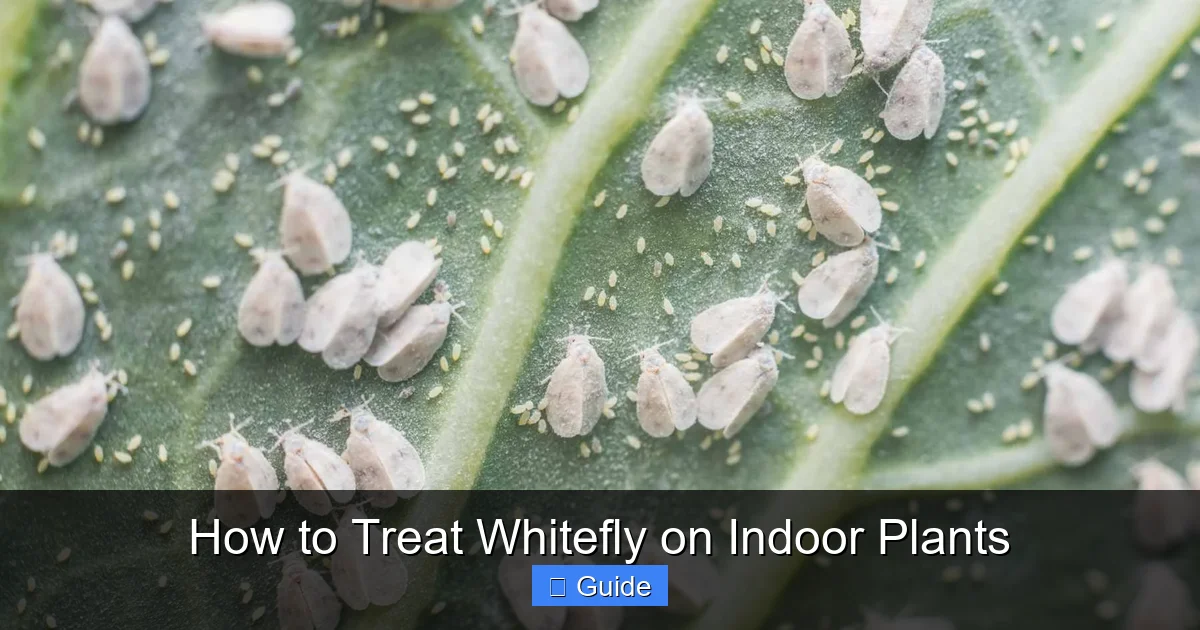
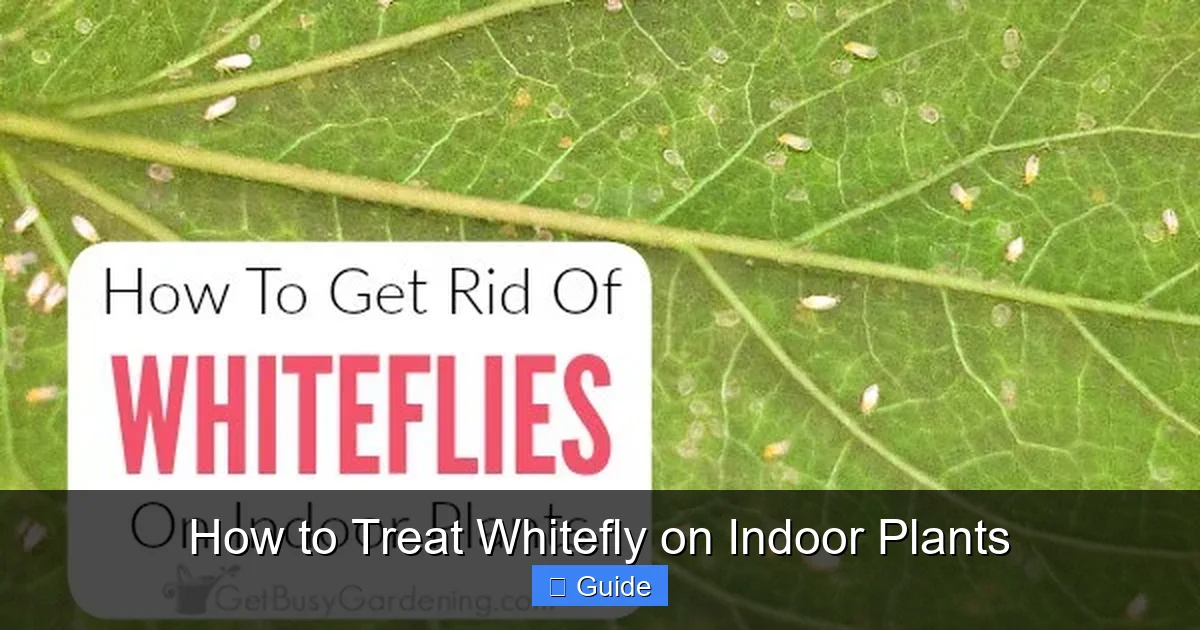
You will usually find whiteflies on the undersides of leaves. They cluster there in groups. They lay their eggs in circular or crescent patterns. The eggs are tiny. They start pale yellow. They turn darker before hatching. When you disturb the plant, a cloud of white rises up. This is a classic sign. The adults fly weakly. They settle back down quickly.
Look for these visual clues:
- Tiny white moth-like insects on leaf undersides
- Clouds of insects flying up when you water or move the plant
- Tiny oval eggs in rings or arcs on leaf undersides
- Flat, scale-like nymphs that do not move
- Sticky clear substance on leaves (honeydew)
- Black sooty mold growing on the honeydew
- Yellowing, wilting, or dropping leaves
- Stunted new growth
Whitefly Life Cycle
Understanding the life cycle helps you treat whitefly on indoor plants more effectively. The cycle has four stages. Egg. Nymph (crawler). Pupa. Adult. The whole cycle takes about three to four weeks in warm indoor conditions. Temperature speeds it up. Cooler temps slow it down.
Adult females lay eggs on leaf undersides. Each female lays 200 to 400 eggs in her lifetime. Eggs hatch in five to ten days. The first instar nymphs are called crawlers. They move briefly. Then they settle down. They insert their mouthparts into the leaf. They stay there. They molt three times. The fourth instar is the pupal stage. Adults emerge. They mate. The cycle repeats.
This overlapping generations problem is key. You will see all stages at once. Sprays that kill adults may miss eggs and pupae. You must repeat treatments. You must break the cycle.
Signs of Infestation
Early detection makes treatment easier. Check your plants weekly. Turn leaves over. Look at the undersides. Use a magnifying glass if needed. Watch for these progressive signs:
- Light infestation: A few adults. Occasional egg rings. Minimal leaf damage.
- Moderate infestation: Clouds of adults when disturbed. Many egg rings. Visible nymphs. Honeydew present. Some yellowing.
- Heavy infestation: Constant flying adults. Leaves covered in all stages. Heavy honeydew. Sooty mold. Severe yellowing. Leaf drop. Plant decline.
Whiteflies damage plants in three ways. They suck sap. This weakens the plant. They excrete honeydew. This attracts sooty mold. Sooty mold blocks light. Photosynthesis drops. They transmit viruses. Some whitefly species carry plant diseases. Infected plants show mottling, curling, and stunting.
Immediate Steps When You Spot Whiteflies
Act fast. The sooner you start, the easier the control. Do not wait to see if they go away. They will not. They will multiply.
Visual guide about How to Treat Whitefly on Indoor Plants
Image source: getbusygardening.com
Isolate the Plant
Move the infested plant away from others. Put it in a separate room if possible. At minimum, move it several feet away. Whiteflies fly short distances. They drift on air currents. They crawl. Isolation stops the spread. Keep it isolated until you are sure the infestation is gone. This means no signs for at least two weeks after your last treatment.
Physical Removal
Before you spray anything, remove as many whiteflies as you can physically. This reduces the population instantly. It makes treatments more effective.
Take the plant outside or to a bathtub. Use a strong spray of water. Hit the undersides of leaves. Blast off adults, eggs, and nymphs. Do this in the morning so leaves dry before night. Wet leaves at night invite fungal problems. Repeat every few days.
You can also vacuum them. Use a handheld vacuum on low suction. Hold the nozzle near leaf undersides. Suck up the flying adults. Empty the vacuum into a sealed bag. Freeze the bag to kill them. Dispose of it outside.
Prune heavily infested leaves. If a leaf is covered in nymphs and eggs, cut it off. Bag it immediately. Seal the bag. Throw it in outdoor trash. Do not compost infested material. Clean your pruners with alcohol after.
Sticky Traps
Yellow sticky traps are essential. Whiteflies are attracted to yellow. They fly to the traps. They get stuck. This catches adults. It reduces egg-laying. It lets you monitor the population.
Hang traps at plant level. Place them just above the canopy. Use one trap per plant or per few square feet. Replace traps when they are covered in insects or dust. Check traps weekly. Count the catches. Fewer catches means treatment is working.
Make your own traps if needed. Use yellow index cards or paint stir sticks. Coat them with petroleum jelly or sticky insect barrier. Hang with string or clip to stakes.
Natural and Organic Treatment Methods
Natural treatments work well for indoor whitefly control. They are safer for you, pets, and beneficial insects. They leave no harmful residues. Start with these before considering chemicals.
Insecticidal Soap
Insecticidal soap is a top choice. It kills on contact. It works by breaking down the insect’s outer layer. The insect dehydrates and dies. It is effective on soft-bodied pests like whitefly nymphs and adults. It does not harm most plants when used correctly.
Buy a ready-to-use spray or concentrate. Follow label directions exactly. Mix concentrate with water if needed. Use soft water if possible. Hard water reduces effectiveness. Test on a few leaves first. Wait 24 hours. Check for damage.
Spray thoroughly. Cover all leaf surfaces. Focus on undersides. Whiteflies hide there. Spray until it drips. Do this in early morning or evening. Avoid direct sun. Wet leaves in sun can burn. Repeat every five to seven days. Continue for three to four weeks. This catches each new generation.
Insecticidal soap has no residual effect. It only kills what it touches. Once dry, it is harmless. This is good for safety. It means you must hit the pests directly. Good coverage is everything.
Neem Oil
Neem oil comes from the neem tree. It contains azadirachtin. This compound disrupts insect hormones. It stops feeding. It stops molting. It stops egg-laying. It repels adults. It works on all life stages. It also has some fungicidal properties. It helps with sooty mold.
Use cold-pressed neem oil. It has the most active compounds. Mix with water and a little mild liquid soap. The soap helps it emulsify. Typical ratio is one to two teaspoons neem oil per quart of water. Add half teaspoon soap. Shake well. Spray immediately. Do not let it sit.
Cover all surfaces. Undersides especially. Apply in evening. Neem degrades in sunlight. Morning works too if not too bright. Repeat every seven days. Use for at least three weeks. Neem works slower than soap. It stops the next generation. Be patient.
Test on sensitive plants first. Some ferns, orchids, and succulents react badly. Dilute more for sensitive plants. Avoid using on new transplants or stressed plants.
Horticultural Oil
Horticultural oil smothers insects. It blocks their breathing holes (spiracles). It kills eggs, nymphs, and adults. It is refined petroleum oil or plant-based oil. Modern versions are lightweight. They are safe for most plants year-round.
Mix according to label. Usually one to two percent solution. Spray thoroughly. Cover everything. The oil must contact the pest. Apply in cool part of day. Do not apply if temps exceed 85°F. Do not apply if rain expected within 24 hours (not an issue indoors). Do not use on drought-stressed plants.
Oil can damage some plants. Avoid on ferns, maples, junipers, and spruces. Test first. Wait 48 hours. Check for leaf burn.
Homemade Remedies
You can make effective sprays at home. They cost less. You control the ingredients. Test all homemade sprays on a few leaves first.
Dish soap spray: Mix one teaspoon mild liquid dish soap per quart of water. Use pure soap, not detergent. No degreasers. No antibacterial additives. Castile soap works well. Spray thoroughly. Rinse leaves after a few hours if concerned about residue. Repeat every three to four days.
Rubbing alcohol spray: Mix one part isopropyl alcohol (70%) with seven parts water. Add a drop of dish soap. Spot treat with cotton swab for small areas. Spray for larger areas. Alcohol evaporates fast. It kills on contact. Test first. Some plants are sensitive.
Garlic pepper spray: Blend one bulb garlic and one hot pepper with two cups water. Strain. Add one tablespoon dish soap. Dilute to one quart. Spray weekly. The smell repels whiteflies. The compounds irritate them.
Vinegar spray: Mix one tablespoon apple cider vinegar per quart water. Add drop of soap. Spray lightly. Vinegar changes leaf pH. Whiteflies dislike it. Do not overuse. Vinegar can burn leaves.
Biological Control Options
Beneficial insects eat whiteflies. They work well indoors. They are safe. They are natural. They provide ongoing control. You buy them online or at garden centers. Release them on infested plants.
Beneficial Insects
Encarsia formosa: This tiny parasitic wasp is the gold standard for whitefly control. It lays eggs inside whitefly nymphs and pupae. The wasp larva eats the whitefly from inside. The whitefly turns black. A new wasp emerges. Each female parasitizes hundreds of whiteflies. They work best above 65°F. They need some humidity. Release weekly for three weeks.
Eretmocerus eremicus: Another parasitic wasp. Similar to Encarsia. Tolerates higher temperatures better. Good for warm grow rooms. Parasitizes nymphs. Also host-feeds on them. Kills directly and through parasitism.
Delphastus catalinae: A tiny black lady beetle. Adults and larvae eat whitefly eggs and nymphs. One beetle eats hundreds of eggs daily. They fly well. They find infestations fast. Good for hot spots. Need a food source to stay.
Chrysoperla rufilabris (Green Lacewings): Larvae are called aphid lions. They eat whitefly eggs, nymphs, and adults. They are generalist predators. Release eggs or larvae. Larvae start eating immediately. They need pollen or nectar as adults to lay eggs.
Amblyseius swirskii: A predatory mite. Eats whitefly eggs and young nymphs. Also eats thrips. Works well in warm, humid conditions. Comes in sachets. Hang sachets on plants. Mites emerge over weeks.
When to Use Biological Controls
Biologicals work best at low to moderate infestations. They take time to establish. They do not knock down heavy populations fast. Combine with soap or oil for quick knockdown. Then release beneficials for cleanup ands for long-term control.
Do not use broad-spectrum insecticides with beneficials. They will kill your helpers. Soap and oil are okay if dry before release. Wait 24 hours after spraying. Check compatibility charts from suppliers.
Provide habitat. Some beneficials need pollen or nectar. Plant flowering herbs nearby. Alyssum, dill, fennel, cilantro work well. Or buy supplemental food like wheast (yeast and honey mix).
Chemical Treatments as a Last Resort
Sometimes natural methods fail. Heavy infestations. Valuable plants. Time constraints. Chemical insecticides exist. Use them carefully. Follow every label instruction. The label is the law.
Systemic Insecticides
Systemics absorb into the plant. They move through the vascular tissue. Whiteflies die when they feed on sap. They provide long protection. Weeks to months. Common active ingredients include imidacloprid, dinotefuran, and acephate.
Apply as soil drench or granules. Water in well. The plant takes it up. New growth is protected. Older leaves may still have pests. Combine with contact spray for immediate relief.
Warning: Systemics can harm pollinators if plants flower. Do not use on flowering plants that bees visit. Indoors this is less concern. But be aware. Some systemics are restricted in certain states. Check local regulations.
Contact Insecticides
Contact sprays kill on contact. They include pyrethrins, pyrethroids, and insect growth regulators (IGRs). Pyrethrins are natural from chrysanthemums. Pyrethroids are synthetic versions. Both knock down adults fast. IGRs like pyriproxyfen and buprofezin disrupt molting. They stop nymphs from becoming adults. They do not kill adults. Combine IGR with adulticide for full control.
Spray thoroughly. Cover undersides. Repeat per label. Usually every seven to fourteen days. Rotate chemical classes. Whiteflies develop resistance fast. Do not use the same mode of action repeatedly.
Safety Precautions
Wear gloves. Wear long sleeves. Wear eye protection. Wear a mask. Ventilate the area. Open windows. Use fans. Keep pets and children away until dry. Store chemicals locked up. Dispose of containers properly. Never pour down drain.
Read the entire label before buying. Make sure it lists whiteflies. Make sure it is labeled for indoor use. Make sure it is safe for your plant type. Some chemicals damage certain plants. Test on a few leaves first.
Preventing Future Whitefly Infestations
Prevention is easier than treatment. A few habits keep whiteflies away. Make these part of your routine.
Quarantine New Plants
This is the single most important step. Most whiteflies come in on new plants. Inspect every new plant before buying. Check leaf undersides. Check stems. Check soil surface. Reject any plant with signs.
When you bring a plant home, isolate it. Keep it separate for two to three weeks. Inspect it daily. Treat preventively with neem oil or soap if you want. Only introduce it to your collection after the quarantine passes clean.
Regular Inspection
Check your plants weekly. Make it a habit. Sunday morning plant check. Turn leaves over. Look at stems. Check soil. Use a magnifying glass. Look for early signs. Catch it at one or two adults. Not a cloud.
Keep a plant journal. Note inspection dates. Note any findings. Note treatments applied. Track what works. This helps you spot patterns. It helps you act fast.
Proper Plant Care
Healthy plants resist pests better. Stressed plants attract pests. Whiteflies love weak plants. Give your plants what they need.
- Right light for each species
- Proper watering (not too much, not too little)
- Good drainage
- Appropriate humidity
- Regular fertilizing during growth
- Repotting when rootbound
- Cleaning dust off leaves
Over-fertilizing with nitrogen makes soft, lush growth. Whiteflies love this. Use balanced fertilizer. Follow rates. Do not overdo it.
Environmental Controls
Whiteflies prefer warm, still, dry air. Change the environment. Make it less hospitable.
- Increase air circulation with fans
- Lower temperature slightly if possible
- Increase humidity (whiteflies hate high humidity)
- Use reflective mulch (aluminum foil or silver plastic) on soil surface – confuses whiteflies
- Remove weeds and debris near plants
Companion planting helps too. Some plants repel whiteflies. Marigolds. Nasturtiums. Basil. Mint. Catnip. Plant these near susceptible plants. Or keep pots of them nearby.
Sanitation
Clean up. Remove dead leaves. Remove fallen flowers. Remove plant debris. These harbor pests. They harbor eggs. They harbor diseases. Wipe down pots. Wipe down shelves. Disinfect tools between plants. Use rubbing alcohol or ten percent bleach solution.
At season end, clean the whole area. If you move plants outdoors in summer, inspect and treat before bringing them back in. This is a major entry point.
Conclusion
Whiteflies are frustrating. They are persistent. But you can beat them. You have the knowledge now. You know how to identify them. You know their life cycle. You know the immediate steps. You know the natural treatments. You know the biological options. You know the chemical last resorts. You know prevention.
Start with the least toxic method. Insecticidal soap. Neem oil. Sticky traps. Physical removal. Combine them. Be consistent. Repeat treatments. Break the cycle. Monitor with traps. Watch for reinfestation.
If natural methods fail, escalate carefully. Beneficial insects. Horticultural oil. Then, only if needed, targeted chemicals. Always read labels. Always test first. Always protect yourself.
Prevention is your best long-term strategy. Quarantine every new plant. Inspect weekly. Keep plants healthy. Clean your space. These habits pay off. You will have fewer problems. Your plants will thrive.
Your indoor garden can be whitefly-free. It takes vigilance. It takes action. But the reward is worth it. Healthy, beautiful plants. Clean air. Peace of mind. You have got this. Go check your plants today. Start the habit. Stop the pests before they start.
Frequently Asked Questions
What causes whiteflies on indoor plants?
Whiteflies typically enter homes on newly purchased plants, through open windows, or on plants moved indoors from outside. They thrive in warm, dry, still indoor environments with stressed or over-fertilized plants.
Will whiteflies go away on their own?
No, whiteflies will not go away on their own. They reproduce rapidly indoors with overlapping generations. Without intervention, the population will grow until the plant is severely damaged or dies.
Can I use dish soap to kill whiteflies?
Yes, a solution of 1 teaspoon mild liquid dish soap (like Castile soap) per quart of water works as a contact spray. It must hit the insects directly. Test on a few leaves first and rinse after a few hours to prevent leaf damage.
Are whiteflies the same as fungus gnats?
No, they are different pests. Whiteflies are white, moth-like insects that fly from leaf undersides. Fungus gnats are tiny black flies that hover around wet soil. They require different treatments.
Is it safe to use systemic insecticides on edible indoor plants?
Most systemic insecticides are not labeled for use on edible plants. Check the label carefully. For herbs and vegetables, stick to insecticidal soap, neem oil, or physical removal methods only.
How do I prevent whiteflies when bringing plants inside for winter?
Inspect thoroughly before moving plants indoors. Spray with insecticidal soap or neem oil as a preventive. Quarantine for 2-3 weeks away from other plants. Monitor daily with yellow sticky traps before integrating into your collection.