How to Choose Best Corner for String of Pearls Easily
Finding the perfect spot for your string of pearls makes all the difference between a thriving cascade and a struggling plant. This guide walks you through evaluating light levels, humidity, temperature, and airflow in every corner of your home so you can pick the ideal location with confidence.
Quick Answers to Common Questions
How do I know if my corner gets enough light?
Do the shadow test at 9 AM, 1 PM, and 5 PM. A soft, fuzzy shadow means bright indirect light. A crisp shadow means direct sun. No shadow means too dark.
Can I put my string of pearls in a bathroom corner?
Yes, if the bathroom has a window that provides bright indirect light for six hours. The extra humidity is a bonus. Just ensure good airflow to prevent crown rot.
Should I rotate my string of pearls every week?
Absolutely. A quarter turn each week keeps growth even and prevents the plant from leaning toward the light source. Set a phone reminder so you do not forget.
What if no corner in my house is bright enough?
Add a full-spectrum LED grow light. Mount it twelve to eighteen inches above the plant and run it on a timer for twelve to fourteen hours daily. This works in any corner.
How far from a south window should I place my string of pearls?
Two to three feet back from the glass, or right at the window with a sheer curtain. This gives bright indirect light without the risk of sunburn or heat stress.
Introduction
Welcome to your complete guide on how to choose the best corner for string of pearls plants. If you have ever brought home this gorgeous trailing succulent only to watch it stretch thin or lose its plump beads, you are not alone. The secret to a lush, cascading string of pearls almost always comes down to one thing: location.
In this article, you will learn exactly how to evaluate every corner of your home. We will cover light requirements, temperature stability, humidity levels, airflow, and practical placement tips. By the end, you will feel confident picking a spot where your string of pearls will thrive for years to come.
Let us dive in and find that perfect corner together.
Understanding Your String of Pearls Needs
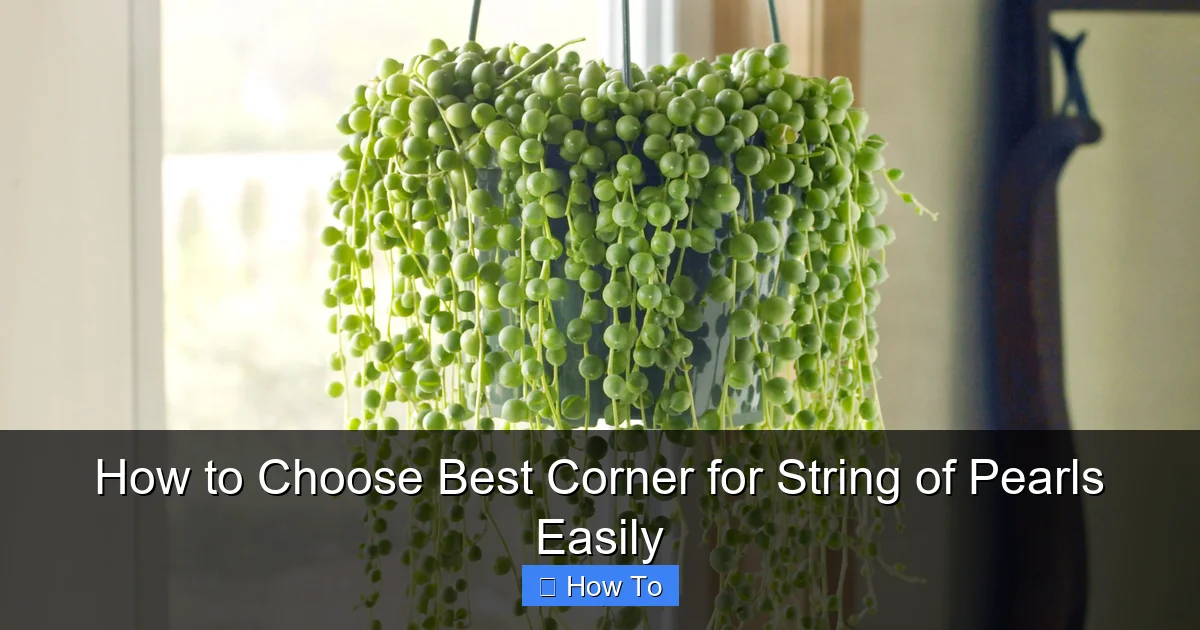
Before we scout corners, we need to understand what makes a string of pearls happy. This plant, known botanically as Senecio rowleyanus, hails from the dry regions of Southwest Africa. In its native habitat, it grows as a ground cover beneath shrubs, receiving bright but filtered light.
Visual guide about How to Choose Best Corner for String of Pearls Easily
Image source: thespruce.com
That tells us three critical things. First, it wants lots of light but not scorching direct sun. Second, it prefers warm, stable temperatures. Third, it hates sitting in wet soil. Keep these preferences in mind as we evaluate each potential corner.
Light Requirements in Detail
A string of pearls needs six to eight hours of bright indirect light every day. “Bright indirect” means the plant sees the sky but not the sun disk itself. Think of the light you get a few feet back from a sunny window or behind a sheer curtain.
If light is too low, the stems stretch out between beads. This is called etiolation. The plant becomes leggy, weak, and loses its charming pearl shape. If light is too intense, the beads can sunburn, turning brown and shriveled.
Temperature Preferences
Ideal temperatures range from 70 to 80 degrees Fahrenheit during the day and no lower than 55 degrees at night. Sudden drops or spikes cause stress. A corner near a drafty door or a blasting heater is a recipe for leaf drop.
Humidity and Airflow
Average home humidity of 40 to 50 percent works well. Higher humidity is fine if airflow is good. Stagnant, humid air encourages fungal issues. A corner with a gentle breeze from a fan or an open window (when weather permits) keeps the crown dry and healthy.
Step 1: Map the Light in Your Home
The first step in choosing the best corner for string of pearls is mapping your light. Do not guess. Light changes with seasons, weather, and time of day. Spend a few days observing.
Visual guide about How to Choose Best Corner for String of Pearls Easily
Image source: planetnatural.com
Use the Shadow Test
On a sunny day, hold your hand about twelve inches above the floor in a potential corner. Look at the shadow.
- Sharp, crisp shadow: Direct sun. Too intense for all-day exposure.
- Soft, fuzzy shadow: Bright indirect light. This is the sweet spot.
- Barely visible shadow: Low light. Not enough for a string of pearls.
Repeat this test at 9 AM, 1 PM, and 5 PM. Note how the shadow changes. A corner that passes at 9 AM might fail at 1 PM.
Use a Light Meter App
For more precision, download a free light meter app on your phone. Measure in foot-candles or lux. Aim for 1,000 to 2,000 foot-candles (10,000 to 20,000 lux) for at least six hours. Write down readings for each corner at different times. This data makes comparison easy.
Consider Window Orientation
Window direction gives a helpful baseline.
- South-facing: Strongest light. Great if the corner is a few feet back or filtered by a sheer curtain.
- West-facing: Intense afternoon sun. Works well with a sheer curtain or if the corner sits to the side of the window.
- East-facing: Gentle morning sun. Often perfect without any filtering.
- North-facing: Weakest light. Usually too dim unless you supplement with a grow light.
Step 2: Evaluate Temperature Stability
Once you have a shortlist of bright corners, check temperature stability. A string of pearls dislikes drama.
Check for Drafts
Light a candle or incense stick and hold it near the corner. Watch the flame or smoke. If it flickers or drifts sideways, you have a draft. Common draft sources include exterior doors, leaky windows, and air conditioning vents.
Monitor Temperature Over 24 Hours
Place a simple digital thermometer in the corner. Check it morning, noon, evening, and night. You want a range within 10 degrees. If it swings from 65 to 85, that corner is out.
Avoid Heat Sources
Radiators, space heaters, refrigerator tops, and electronics create hot microclimates. These dry out the plant and cook the roots. Keep at least three feet away.
Step 3: Assess Humidity and Airflow
Humidity and airflow go hand in hand. A string of pearls stores water in its beads. High humidity slows evaporation, which can lead to rot if air is stagnant.
Natural Humidity Zones
Bathrooms and kitchens often run 5 to 10 percent higher humidity than living rooms. If your bright corner happens to be in a bathroom with a frosted window, that can be a winning combo. Just ensure the light is still sufficient.
Improve Airflow If Needed
If your chosen corner feels stuffy, add a small clip-on fan on the lowest setting. Aim it near the plant, not directly at it. Run it for a few hours daily. This mimics the gentle breezes of its native habitat and keeps the crown dry.
Use a Hygrometer
A cheap digital hygrometer tells you exact humidity. Aim for 40 to 60 percent. If your corner reads 30 percent in winter, consider a pebble tray or a humidifier nearby. If it reads 80 percent, increase airflow or pick a drier corner.
Step 4: Consider Practical Placement Factors
Light, temperature, and humidity are the big three. But practical details determine long-term success.
Height and Trailing Space
A string of pearls can trail three feet or more. Choose a corner with vertical clearance. Hanging planters from ceiling hooks, high shelves, or the top of a tall bookcase work beautifully. Ensure the trails will not touch the floor, get stepped on, or be knocked by pets.
Access for Watering and Care
You will need to water, inspect, and rotate the plant. If the corner requires a ladder every time, you will neglect it. Pick a spot you can reach comfortably. A hanging planter with a pulley system or a shelf at eye level makes care easy.
Pot and Drainage Visibility
Choose a corner where you can see the pot’s drainage holes or at least lift the pot to check moisture. Cache pots without drainage are risky. If you use a decorative outer pot, ensure you can remove the inner nursery pot to water properly.
Safety for Kids and Pets
String of pearls is toxic if ingested. If you have curious cats, dogs, or toddlers, the corner must be truly out of reach. High shelves or hanging planters in rooms with doors you can close are safest.
Step 5: Test Your Top Corner Candidates
You now have data on light, temperature, humidity, and practicality for several corners. Pick your top two or three and run a two-week trial.
The Trial Method
Place your string of pearls in the first candidate corner. Keep care exactly the same: same watering schedule, same fertilizer routine. Take a photo on day one. Take another on day fourteen. Compare.
- Are the beads plump and glossy?
- Is new growth compact and pearl-shaped?
- Any yellowing, shriveling, or stretching?
Repeat for each candidate. The winner will show the healthiest growth.
Seasonal Adjustments
Remember that a corner perfect in June may fail in December. The sun angle drops. Heating systems run. Drafts appear. If you live in a climate with strong seasons, you may need a summer corner and a winter corner. Plan for this now so you are not scrambling later.
Step 6: Set Up the Winning Corner
Once you have chosen the best corner for your string of pearls, set it up for success.
Choose the Right Planter
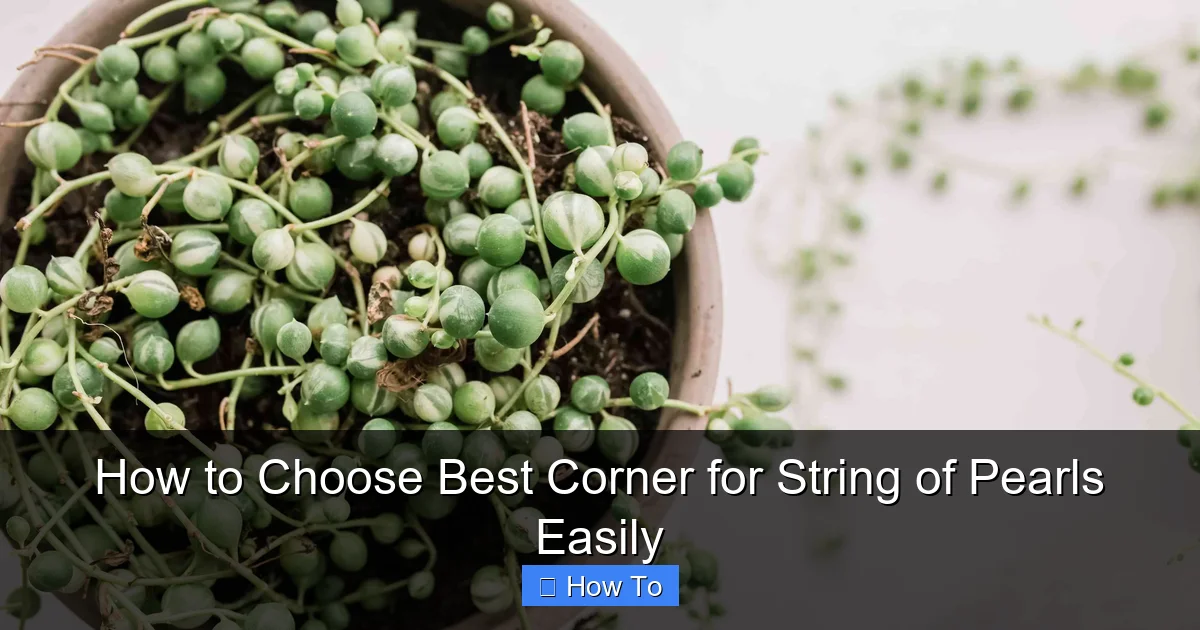
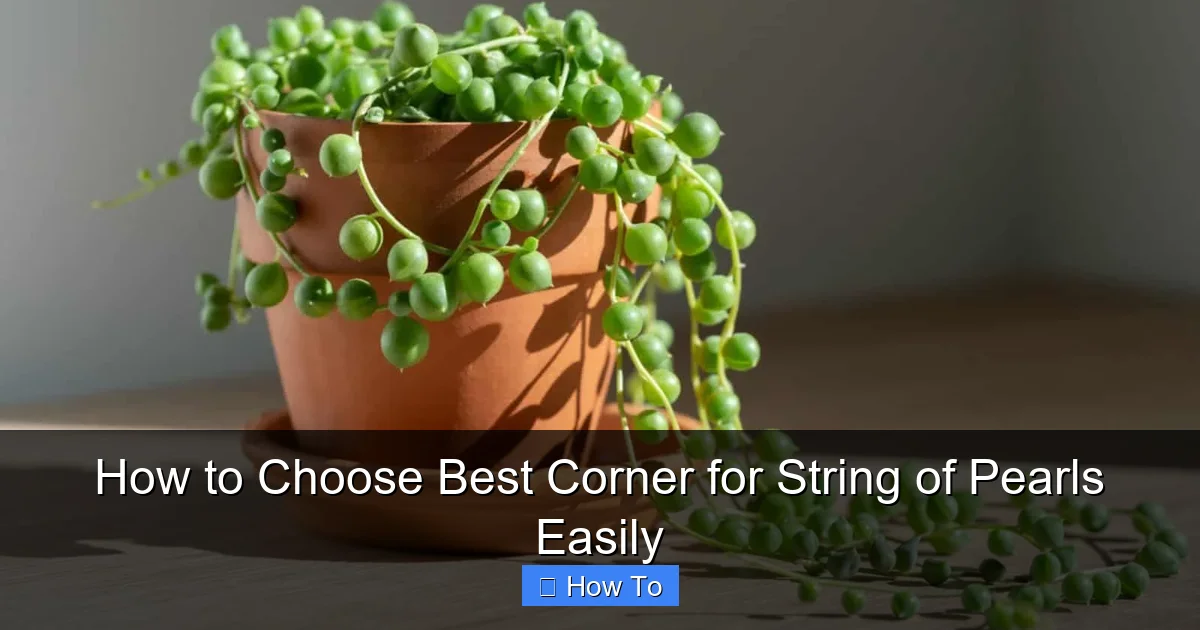
Shallow, wide pots work better than deep ones. The roots are shallow. A wide pot lets the crown spread and the trails spill over the edges evenly. Terracotta is ideal because it wicks moisture and breathes. Ensure multiple drainage holes.
Use the Correct Soil Mix
Standard potting soil holds too much water. Mix two parts cactus or succulent soil with one part perlite or pumice. This gives the fast drainage a string of pearls demands. Top dress with small gravel to keep the crown dry.
Install a Rotation Reminder
Set a weekly calendar alert to rotate the pot a quarter turn. This prevents the plant from leaning toward the light and ensures even, full growth on all sides. A symmetrical string of pearls is a happy string of pearls.
Add a Grow Light If Needed
If no natural corner provides six hours of bright indirect light year-round, supplement with a full-spectrum LED grow light. Mount it twelve to eighteen inches above the plant. Run it on a timer for twelve to fourteen hours daily. This guarantees consistent light regardless of season.
Common Corner Mistakes to Avoid
Even experienced plant parents make these errors. Learn them now so you do not repeat them.
Placing Directly on a Windowsill
It seems logical. The light is right there. But glass amplifies heat and cold. In summer, the beads can cook. In winter, they can freeze. Plus, the crown gets wet from condensation. Keep the plant a few inches back.
Choosing a Dark Corner and Hoping for the Best
Wishful thinking does not grow pearls. A string of pearls in low light will stretch, weaken, and eventually die. If your home lacks bright corners, invest in a grow light instead of forcing a dark spot.
Ignoring the Crown
The crown, where stems meet soil, is the most rot-prone part. Corners with poor airflow or where water splashes the crown during watering spell trouble. Always water at the soil level, not over the beads, and ensure air moves around the base.
Forgetting to Rotate
A string of pearls grows toward the light. Without rotation, one side becomes dense and the other bare. The plant looks lopsided and the shaded side may weaken. Weekly rotation takes ten seconds and makes a huge difference.
Using a Pot Without Drainage
Decorative pots without holes are tempting. But a string of pearls will rot in standing water. Always use a nursery pot with holes inside a decorative cache pot, and empty the cache pot after watering.
Troubleshooting Corner-Related Issues
Even in a good corner, problems can arise. Here is how to diagnose and fix the most common issues.
Leggy, Stretched Growth
Cause: Insufficient light. The plant reaches for more.
Fix: Move to a brighter corner or add a grow light. Prune leggy stems and propagate them to restart a fuller plant.
Shriveled, Flat Beads
Cause: Underwatering or too much direct sun.
Fix: Check soil moisture. If bone dry, water thoroughly. If the corner gets harsh afternoon sun, add a sheer curtain or move back a foot.
Yellow, Mushy Beads
Cause: Overwatering or poor airflow around the crown.
Fix: Let soil dry completely. Increase airflow with a fan. Ensure the pot drains fast. Remove any rotten stems.
Brown, Crispy Tips
Cause: Low humidity, fertilizer burn, or cold draft.
Fix: Raise humidity with a pebble tray. Flush soil with water to remove salt buildup. Move away from drafty areas.
Pests: Mealybugs or Aphids
Cause: Stressed plants attract pests. Often linked to wrong light or watering.
Fix: Isolate the plant. Treat with neem oil or insecticidal soap weekly for three weeks. Correct the underlying care issue so it does not recur.
Seasonal Corner Strategy
Your string of pearls corner may need to shift with the seasons. Here is a simple plan.
Spring and Summer
Light is abundant. A corner near an east or south window with a sheer curtain is perfect. Watch for intense heat waves. If temps exceed 90 degrees, move the plant back a few feet or to a slightly shadier corner temporarily.
Fall and Winter
Light drops. Heating runs. The best winter corner is often closer to the window (but not touching glass) to capture every photon. Add a grow light on a timer. Keep away from heating vents. Monitor humidity; winter air is dry.
Transition Gradually
When moving between seasonal corners, do it over a week. Move the plant a foot closer to the new spot each day. Sudden changes shock the plant.
Advanced Tips for a Show-Stopping Display
Once you have the basics down, try these pro moves to make your string of pearls a focal point.
Group with Complementary Plants
Place your string of pearls near other succulents with similar needs: string of hearts, string of bananas, or burro’s tail. They create a stunning “string garden” and share the same corner conditions.
Use Macrame Hangers at Varied Heights
Hang two or three planters at staggered heights in the same bright corner. The cascading trails create a living curtain effect. Ensure each gets equal light by spacing them horizontally.
Incorporate a Mirror
A mirror on the adjacent wall reflects light back onto the plant, effectively boosting intensity without extra electricity. It also doubles the visual impact of the trails.
Rotate the Pot, Not Just the Plant
If your planter is decorative on all sides, rotate the entire pot. If it has a “front,” rotate the inner nursery pot only. This keeps the display looking intentional while the plant grows evenly.
Conclusion
Choosing the best corner for string of pearls is not about luck. It is about observing your home, understanding the plant’s needs, and matching them with intention. You now have a step-by-step framework: map the light, check temperature stability, assess humidity and airflow, consider practical access, test your top candidates, and set up the winner for long-term success.
Remember that the perfect corner provides six to eight hours of bright indirect light, stays between 70 and 80 degrees, offers moderate humidity with good airflow, and lets you care for the plant easily. Avoid drafts, direct sun on the crown, and dark corners.
Your string of pearls will reward you with lush, plump trails that cascade like green jewelry. Take the time to find its happy place. A little effort now means years of beauty ahead. Happy planting!