How to Choose Best Coir-Based for Jade Plant Success
Choosing the right coir-based mix is essential for healthy jade plants because it balances moisture retention with excellent drainage. This guide walks you through every factor from fiber quality to nutrient content so you can create the perfect growing medium for long-term succulent success.
Quick Answers to Common Questions
How do I know if my coir is buffered?
Check the packaging for terms like “buffered,” “pre-charged with calcium,” or “low EC.” If it doesn’t say, assume it’s unbuffered and buffer it yourself with calcium nitrate solution before use.
Can I use straight coir without perlite for jade plants?
Not recommended. Straight coir holds too much moisture for jade plants. Always amend with at least 40-50% perlite, pumice, or coarse sand to ensure rapid drainage and prevent root rot.
Why does my coir turn hydrophobic?
Coir becomes hydrophobic when it dries out completely. The lignins in the fibers repel water. Fix it by bottom-watering or adding a drop of mild soap to your watering can to break surface tension.
How often should I repot my jade plant in coir mix?
Repot young jade plants every 2 years and mature ones every 3 years. Refresh the top inch annually. Coir breaks down slowly but fines eventually clog air spaces, reducing drainage.
What’s the ideal pH for jade plants in coir?
Jade plants thrive in slightly acidic to neutral pH (6.0-7.0). Coir naturally sits in this range, but test periodically. If pH drifts, adjust with dolomite lime (to raise) or elemental sulfur (to lower).
Introduction
Jade plants are beloved for their thick glossy leaves and easy going nature. But even the toughest succulent struggles in the wrong soil. If you have ever watched a jade plant turn mushy or drop leaves you know the pain of root rot. The secret to success often lies in the growing medium. A high quality coir-based mix can be a game changer. It holds just enough water for the roots to drink but drains fast enough to keep them breathing. This guide will teach you exactly how to choose the best coir-based product for your jade plant. You will learn what to look for on the label how to amend it for perfection and how to avoid common mistakes. By the end you will feel confident picking up any bag or brick and knowing if it is right for your plant.
Understand Why Coir Works for Jade Plants
Coir comes from the fibrous husk of coconuts. It is a renewable byproduct of the coconut industry. Unlike peat moss which is harvested from fragile bogs coir is sustainable. But sustainability is not the only reason gardeners love it. Coir has a unique structure. The fibers create tiny air pockets even when wet. This means oxygen reaches the roots. Jade plants have shallow root systems that rot easily in soggy soil. Coir resists compaction. It stays loose and friable for a long time. It also has a near neutral pH which jade plants prefer. Peat moss tends to be acidic and requires lime to balance. Coir often needs less adjustment. It rewets easily if it dries out completely. Peat can become hydrophobic and repel water. For a succulent that likes to dry between waterings this is a huge advantage.
Visual guide about How to Choose Best Coir-Based for Jade Plant Success
Image source: cococoirglobal.com
The Science Behind Coir Structure
Coir fibers are made of lignin and cellulose. Lignin breaks down slowly. This gives coir its longevity. The high lignin content means it does not decompose fast. It maintains its structure for years. The pith or dust portion holds water like a sponge. The fiber portion creates drainage channels. A good coir product balances both. Too much dust holds too much water. Too much fiber drains too fast. You want a mix that feels moist but not wet when squeezed.
Compare Coir to Other Media
Traditional cactus mix often uses peat sand and perlite. Peat breaks down into fine particles that clog air spaces. Coir stays open. Pure perlite or pumice drains instantly but holds almost no water. Your jade would need constant watering. Coir sits in the sweet spot. It buffers moisture. It gives you a wider margin for error. If you forget to water for an extra week coir still has reserves. If you water a day early coir forgives you.
Know the Types of Coir Products
Not all coir is created equal. You will see bricks blocks loose bags and pre-mixed blends. Each has pros and cons. Understanding the forms helps you shop smarter.
Visual guide about How to Choose Best Coir-Based for Jade Plant Success
Image source: cdn.shopify.com
Compressed Bricks and Blocks
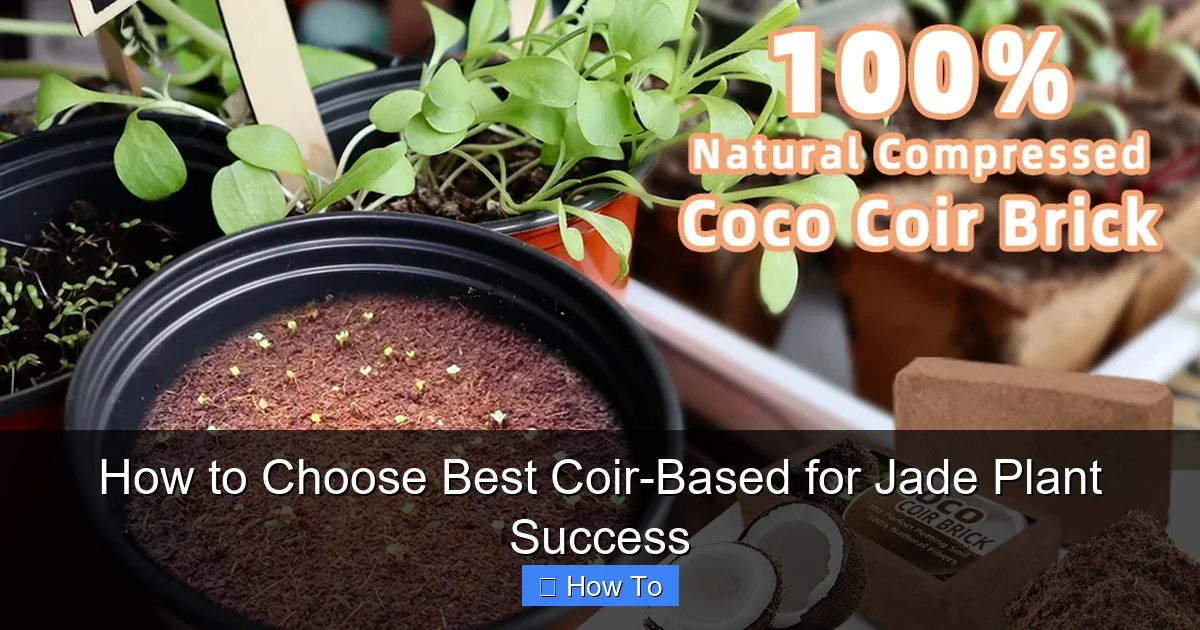
These are the most common and economical. A small brick expands to many times its volume. You add water and it fluffs up. Bricks are easy to store and ship. They are usually just the raw medium. You must amend them yourself. This gives you total control. But it requires extra work. You need a large container to hydrate them. A five kilogram brick can yield sixty liters of coir. Make sure you have space.
Loose Bagged Coir
This is ready to use right out of the bag. It saves time. It is often pre-buffered and washed. The downside is cost and storage. Bags are bulky. You pay for water weight and packaging. Check the label for added fertilizers. Some brands add synthetic nutrients. These can burn succulent roots. Look for organic or unamended labels.
Pre-Mixed Succulent Blends
These combine coir with perlite pumice or sand. They are convenient. You open the bag and pot up. But you lose control over ratios. Some mixes are too water retentive. Others use fine sand that compacts. Read the ingredient list. A good mix lists percentages. It should be at least forty percent inorganic material. If the label just says “coir based blend” be cautious.
Coir Chips and Husks
These are larger chunks. They are great for orchids and epiphytes. They are too coarse for jade plants alone. They create too much air space. Roots cannot make good contact. You can mix a small amount into a blend for extra drainage. But do not use them as the base.
Check for Quality Indicators
Quality determines success. Cheap coir can kill your plant. High salt levels are the number one killer. Coconuts grow near the ocean. The fibers absorb sodium and potassium. If not washed properly these salts stay in the coir. They burn roots and block nutrient uptake. Always look for these quality markers.
Low EC (Electrical Conductivity)
EC measures salt content. Good coir for succulents has an EC below 0.5 mS/cm. Some premium brands go below 0.2. Ask the seller for a spec sheet. Reputable companies publish this data. If they do not have it assume it is high. High EC coir requires heavy leaching. You would need to flush it many times. That wastes water and time.
Buffered with Calcium
Coir naturally holds potassium and sodium. It releases them and grabs calcium and magnesium. This is called cation exchange. If you use unbuffered coir it steals calcium from your plant. The result is deficiency. Buffered coir is pre-treated with calcium nitrate or calcium chloride. It swaps the bad ions for good ones before you buy it. Always choose buffered coir for jade plants. It saves you from mysterious yellowing leaves.
Washed and Aged
Fresh coir can have high tannins. These stain water brown. They are not toxic but indicate immaturity. Aged coir is darker and more stable. It has been composted slightly. Washing removes dust and fine particles. Fines clog pores. A washed product feels uniform. You should not see clouds of dust when you fluff it.
Certifications and Standards
Look for RHP certification or OMRI listing. RHP is a Dutch quality standard for growing media. It guarantees low salts clean materials and consistent structure. OMRI means it is approved for organic gardening. These logos give you confidence. They cost the manufacturer money to obtain. Cheap brands rarely have them.
Evaluate Physical Properties
You can judge coir by touch and sight. Before you buy a large amount get a sample. Many garden centers have open bags. Or buy a small brick first. Run these simple tests.
The Squeeze Test
Take a handful of moist coir. Squeeze it hard. Open your hand. It should hold its shape for a second then crumble. If it stays in a tight ball it is too fine. It will hold too much water. If it falls apart instantly it is too coarse. It will not hold enough moisture. The ideal texture is like a wrung out sponge. Springy and light.
The Water Absorption Test
Place a cup of dry coir in a bowl. Add two cups of water. Time how long it takes to absorb. Good coir drinks fast. Within a minute it should be evenly moist. If water pools on top the coir is hydrophobic. This happens with very dry or low quality dust. It means the fibers are coated in resins. Avoid it.
The Drainage Test
Fill a clear cup with moist coir. Poke holes in the bottom. Pour water through. Watch the flow. It should stream out steadily. Not trickle. Not gush. The water coming out should be clear. Yellow or brown runoff means tannins or fines. Clear water means clean coir.
Check Fiber Length
Pull a few strands. Long fibers are better. They create structure. Short fibers break down to mush. A mix of lengths is ideal. But the average should be over two centimeters. If it looks like peat moss it is over-processed.
Master the Perfect Coir Mix Ratio
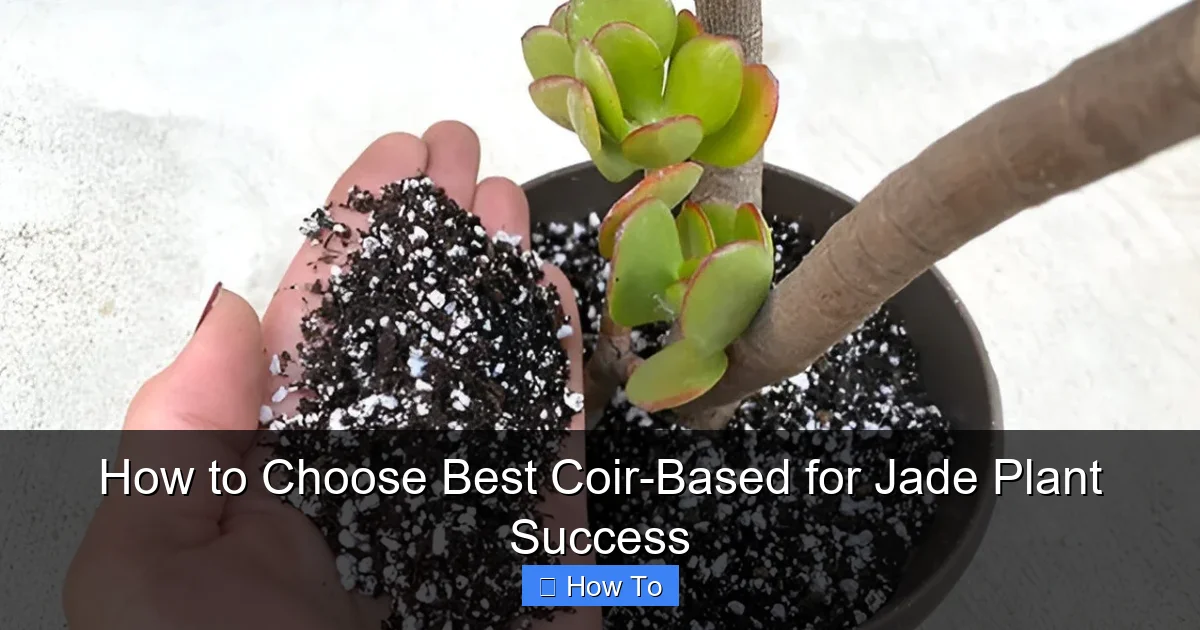
Straight coir is rarely perfect for jade plants. It holds a bit too much water. You must amend it. The golden rule is one part coir to one part inorganic amendment. This fifty fifty blend mimics the gritty soils jade plants love in nature.
Choose Your Amendment
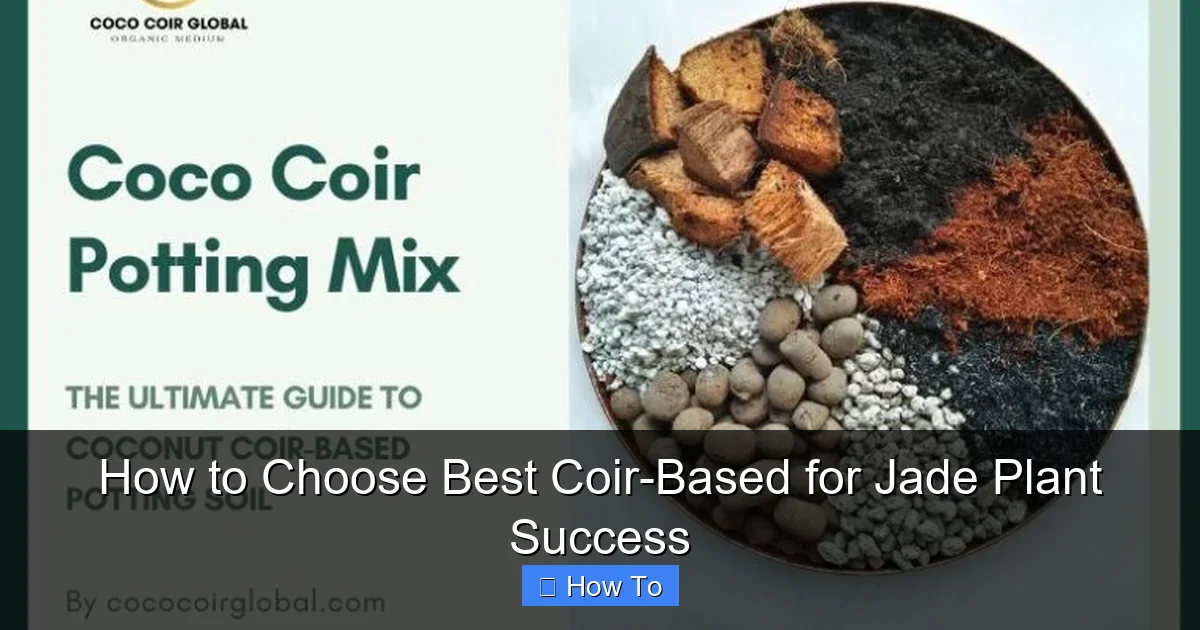
Perlite is the classic choice. It is white volcanic glass. It is lightweight sterile and cheap. It creates large air pores. Pumice is heavier. It adds mineral content. It does not float to the top when watering. Coarse sand works but must be sharp sand. Not play sand. Play sand is rounded and compacts. Horticultural grit or chicken grit (insoluble granite) is excellent. It adds weight and stability. Avoid vermiculite. It holds water. That defeats the purpose.
Mix by Volume Not Weight
Always measure with a bucket or pot. Not a scale. Coir is light. Perlite is lighter. Sand is heavy. Weight ratios mislead. A one to one volume ratio is easy. Fill a pot half with coir half with perlite. Dump into a tub. Mix with your hands. It takes two minutes.
Adjust for Your Climate
Humid climates need more drainage. Go sixty percent perlite forty percent coir. Arid climates can use sixty percent coir forty percent perlite. Indoor growers with low light should increase drainage. Low light means slow evaporation. Wet soil plus low light equals rot. Outdoor full sun plants can handle more coir. They dry fast.
Add a Touch of Organic Matter
Some growers add ten percent worm castings or compost. This feeds the plant slowly. But be careful. Too much organic matter breaks down into fines. It reduces aeration. If you fertilize regularly you do not need this. Jade plants are light feeders. They prefer lean soil.
Rehydrate and Prepare Coir Properly
If you buy bricks you must expand them. This step is critical. Rushing it leads to dry pockets and salt buildup.
Use the Right Container
A five gallon bucket works for small bricks. A wheelbarrow or large tote for big blocks. You need room to stir. Coir expands violently. A tight container can burst.
Add Warm Water
Cold water works but warm water speeds expansion. Do not use boiling water. It can damage fibers. Fill the container one third with water. Drop in the brick. Walk away for fifteen minutes.
Break It Up
Return and pull the brick apart. It should crumble easily. If hard spots remain add more water. Use a trowel or your hands. Wear gloves. Coir can be dusty.
Rinse Thoroughly (Critical Step)
Even buffered coir benefits from rinsing. Place coir in a mesh bag or colander. Run water through until it runs clear. This removes residual salts dust and tannins. If you skip this you risk root burn. Let it drain until it stops dripping. It should be moist not sopping.
Fluff and Aerate
Spread the coir on a tarp. Toss it with a pitchfork. Let air penetrate. This restores pore space lost during compression. It also helps you spot any foreign debris. Stones plastic twine sometimes sneak in.
Pot Your Jade Plant in the Coir Mix
Now you have perfect mix. Potting technique matters just as much.
Choose the Right Pot
Terracotta is king. It wicks moisture from the sides. This creates a dry zone around the root ball. Plastic pots trap water. If you use plastic add extra perlite. Ensure the pot has a drainage hole. No hole no exceptions. Cache pots are fine if you remove the inner pot to water.
Skip the Drainage Layer
Old advice says put gravel at the bottom. Science says this creates a perched water table. Water sits above the gravel. Roots rot. Just use your coir mix from top to bottom. It drains perfectly on its own.
Plant at the Correct Depth
Jade plants have a thick trunk. Keep the soil line where it was in the old pot. Burying the trunk causes stem rot. Leave half an inch of space at the top for watering.
Do Not Water Immediately
Wait three to five days after repotting. Any damaged roots need to callous. Watering too soon invites fungus. The coir holds enough moisture to sustain the plant during this rest.
Water and Fertilize Correctly in Coir
Coir changes your care routine. Learn the new rhythm.
The Finger Test
Stick your finger two inches deep. If it feels cool and damp wait. If it feels dry and warm water. Coir turns lighter in color when dry. Learn the visual cue. The surface can look dry while the bottom is wet. Always check deep.
Water Thoroughly
When you water soak the entire root ball. Water should flow out the bottom. This flushes salts. It encourages deep roots. Light sips create shallow roots. Shallow roots die in heat.
Fertilize Weakly Weekly
Coir has no nutrients. Use a balanced liquid fertilizer at quarter strength. Apply every watering during growing season. Stop in winter. Jade plants rest. Excess fertilizer builds salts. Coir holds them. Flush the pot monthly with plain water.
Watch for Calcium and Magnesium
Coir can bind these. Use a cal-mag supplement once a month. Or choose a fertilizer that includes them. Signs of deficiency are yellow edges on older leaves. New growth looks distorted. Fix it fast.
Troubleshoot Common Coir Problems
Even with the best mix issues arise. Here is how to fix them.
Problem: Coir Stays Wet Too Long
Cause: Too much coir dust or not enough perlite. Fix: Repot with more amendment. Or poke holes in the root ball with a chopstick to increase air flow. Move to a brighter spot. Increase air circulation with a fan.
Problem: White Crust on Surface
Cause: Salt buildup from fertilizer or tap water. Fix: Flush heavily. Run water through for five minutes. Let drain. Repeat next week. Switch to rainwater or distilled water if possible.
Problem: Fungus Gnats
Cause: Constantly moist surface. Fix: Top dress with half inch of perlite or grit. This dries fast. Gnats cannot lay eggs. Yellow sticky traps catch adults. Let the top inch dry completely between waterings.
Problem: Hydrophobic Coir
Cause: Coir dried out completely. Fix: Bottom water. Set pot in a tray of water. Let it wick up for thirty minutes. Or add a drop of dish soap to watering can. It breaks surface tension. Do not do this often.
Problem: Slow Growth Pale Leaves
Cause: Nutrient deficiency. Fix: Check pH. Coir should be 6.0 to 7.0. Test with a meter. If pH is off nutrients lock out. Adjust with dolomite lime (raises) or sulfur (lowers). Then fertilize.
Maintain and Refresh the Mix
Coir lasts two to three years. Then it breaks down. Fines accumulate. Drainage slows. Plan to repot.
Annual Top Dress
Each spring remove the top inch of mix. Replace with fresh coir blend. This removes salts and adds structure. It extends the life of the full repot.
Full Repot Schedule
Every two years for young plants. Every three years for mature specimens. Spring is best. The plant recovers fast. Use the same quality mix. Inspect roots. Trim any black mushy ones. Healthy roots are white and firm.
Reuse Old Coir?
You can compost it. Or pasteurize it in the oven at 180°F for thirty minutes. Then re-amend with fresh perlite. But honestly fresh coir is cheap. The risk of pathogens is not worth saving five dollars. Start fresh.
Choose the Best Brands
Brand matters. Here are trusted names in the coir world. Availability varies by region.
Canna Coco
Professional grade. RHP certified. Pre-buffered. Consistent. Expensive but worth it. Sold in fifty liter bags.
Mother Earth Coco Bale
Washed buffered aged. Good EC. Comes in compressed bales. Widely available in hydroponic stores.
FoxFarm Coco Loco
Pre-mixed with perlite and amendments. Convenient. Check the perlite ratio. Sometimes light on drainage. Add more perlite for jade.
Botanicare Cocogro
Clean low salt. Buffered. Good for DIY mixing. Sold in bricks and loose.
Generic Garden Center Brands
Read labels carefully. Many are unbuffered. High salt. For houseplants they may work. For succulents they are risky. If the price seems too good it probably is.
Consider Environmental Impact
Coir is sustainable but not impact free. Processing uses water. Shipping uses fuel. Buy local when possible. Some regions produce coir domestically. Support them. Look for brands that invest in worker welfare. Fair trade certification exists for coir. Your purchase votes for better practices.
Reuse and Recycle
Used coir makes great mulch for garden beds. It breaks down slowly. It suppresses weeds. It feeds soil life. Do not throw it in the trash. Close the loop.
Peat Free Pledge
Many gardeners now pledge peat free. Coir is the best alternative. By choosing it you protect peatlands. Peatlands store massive carbon. They are biodiversity hotspots. Every bag of coir helps.
Conclusion
Choosing the best coir-based mix for your jade plant is not magic. It is knowledge applied. You now know to seek low EC buffered coir. You know to mix it fifty fifty with perlite or pumice. You know to rinse rehydrate and fluff. You know to pot in terracotta water deeply but infrequently and fertilize weakly. You can troubleshoot gnats salt crust and hydrophobic patches. You have a repotting schedule. You have brand recommendations. Most importantly you understand why each step matters. Your jade plant will reward you with plump glossy leaves and steady growth. It may even flower. That is the power of the right foundation. Go forth and mix with confidence. Your succulent journey just got a serious upgrade.