Ultimate Guide How to Choose Best Digital for Aloe Vera
Choosing the right digital tools transforms aloe vera care from guesswork into precision gardening. This comprehensive guide walks you through selecting moisture meters, pH testers, digital scales, and smart grow lights tailored to aloe vera’s unique needs as a succulent.
Quick Answers to Common Questions
How often should I calibrate my pH meter for aloe vera?
Calibrate before each testing session using fresh pH 4.01 and 7.00 buffer solutions. Aloe vera’s preferred 6.0-7.0 range sits between these standards, ensuring accurate interpolation. Replace buffer solutions every 6 months as they degrade with air exposure.
Can I use a cheap moisture meter for aloe vera?
Basic analog meters ($10-15) work for rough guidance but lack precision for succulents. Aloe vera’s narrow safe zone between “dry enough” and “too dry” demands digital accuracy. Invest $25-40 in a digital meter with 7+ inch probe for reliable root-zone readings.
What PPFD does aloe vera actually need?
Target 400-800 µmol/m²/s at canopy level for 12-14 hours daily (DLI 17-40 mol/m²/day). Juvenile plants tolerate lower light (200-400). Measure with a PAR meter or Photone app – manufacturer specs often overstate real-world output by 30-50%.
Do I need both EC and pH meters?
Yes, they measure different things. pH indicates nutrient availability; EC measures total fertilizer concentration. Aloe vera needs low EC (0.5-1.0 mS/cm) at correct pH (6.0-7.0). Both meters together prevent the two most common nutritional problems: lockout and burn.
How do I know if my grow light is too close?
Use an infrared thermometer to measure leaf temperature. If leaves exceed air temperature by >5°F (3°C), raise the light. Also watch for bleaching (white patches) or tight, compact growth with reddish margins – both indicate excessive intensity for current acclimation level.
Introduction: Why Digital Tools Transform Aloe Vera Care
Growing aloe vera successfully requires understanding its desert origins. These succulents thrive in arid conditions with intense sunlight, minimal water, and well-draining soil. Yet many plant parents struggle because they treat aloe vera like tropical houseplants. The result? Root rot, etiolation, and nutrient deficiencies.
Digital tools eliminate the guesswork. A quality moisture meter tells you exactly when to water. A precise pH meter ensures your soil chemistry supports nutrient absorption. Digital scales prevent fertilizer burn. Smart grow lights deliver consistent desert-strength illumination year-round.
This guide covers everything you need to know about selecting the best digital tools for aloe vera cultivation. Whether you’re a beginner with a single windowsill plant or a serious grower managing dozens of specimens, you’ll learn which features matter, which are marketing fluff, and how to match tools to your specific growing situation.
Step 1: Assess Your Growing Environment and Goals
Before purchasing any digital tool, evaluate your setup. The right device for a single indoor aloe differs dramatically from equipment needed for a greenhouse operation.

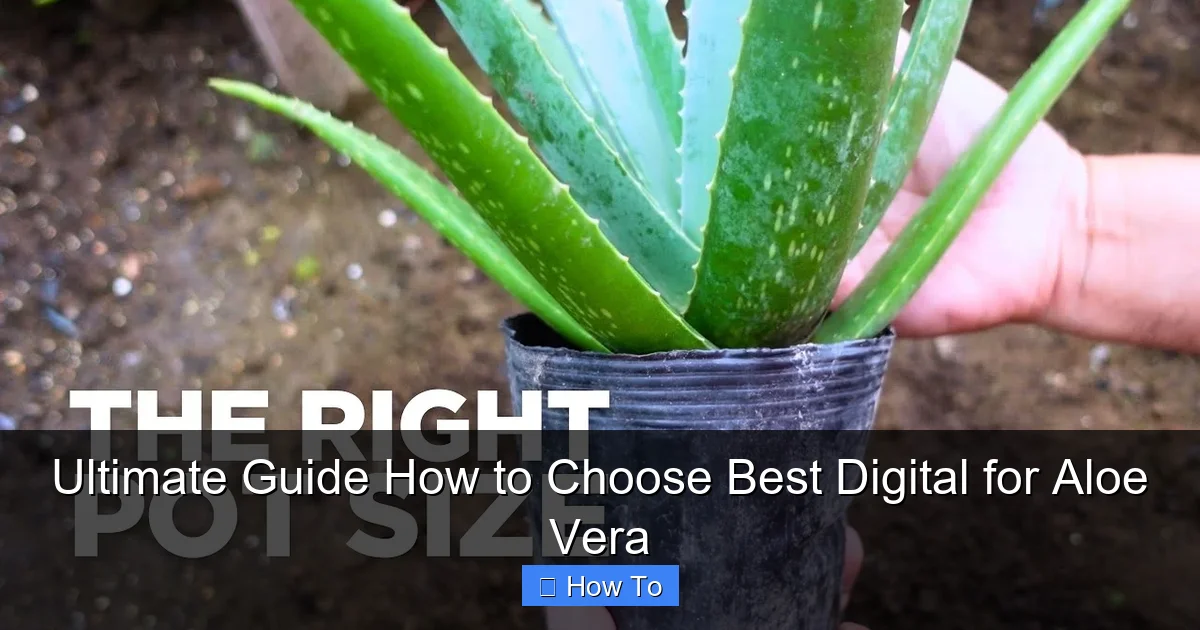
Visual guide about Ultimate Guide How to Choose Best Digital for Aloe Vera
Image source: cdn.outrank.so
Indoor vs. Outdoor Considerations
Indoor growers prioritize compact, quiet tools with app connectivity for remote monitoring. Outdoor gardeners need rugged, weather-resistant devices with long battery life. If you move plants seasonally, choose tools that transition easily between environments.
Scale of Operation
A hobbyist with 1-3 plants needs basic but reliable tools. Serious collectors with 10+ specimens benefit from multi-probe systems and data logging. Commercial growers require industrial-grade accuracy, calibration certificates, and integration with environmental control systems.
Budget Realities
Entry-level digital moisture meters start around $15. Professional-grade multi-parameter meters exceed $300. Set a realistic budget, but remember: a $20 meter that fails after one season costs more than a $60 meter lasting five years. Factor in calibration solutions, replacement probes, and battery costs.
Step 2: Choose the Right Digital Moisture Meter
Moisture meters are the single most important digital tool for aloe vera. Overwatering kills more aloe plants than any other cause. A quality meter prevents this.
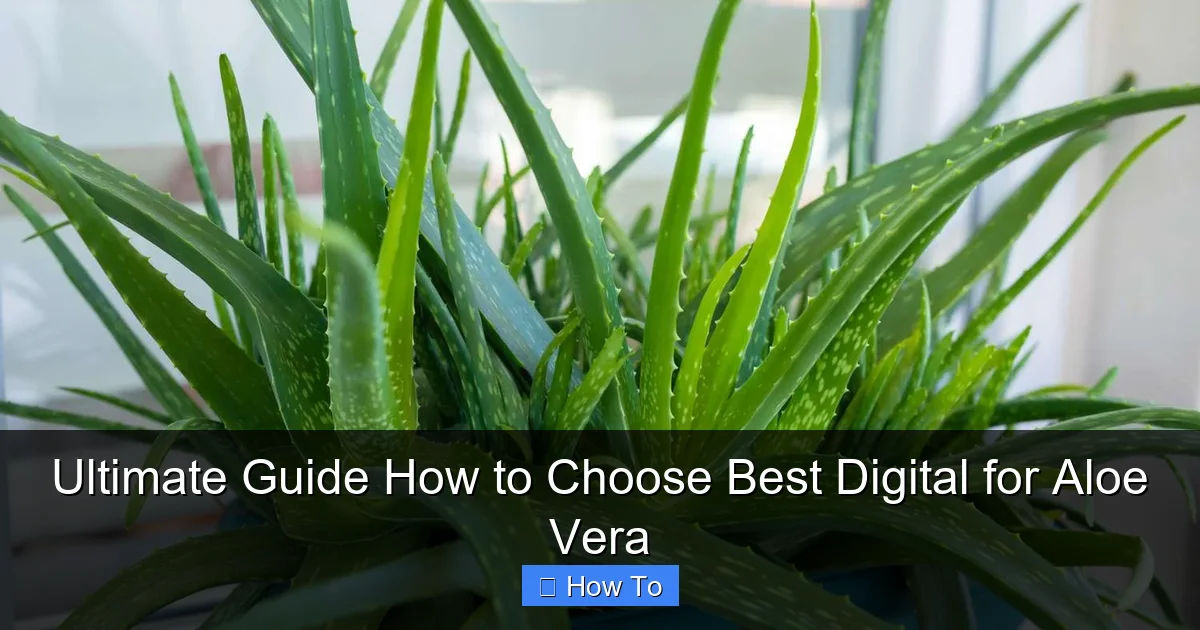
Visual guide about Ultimate Guide How to Choose Best Digital for Aloe Vera
Image source: health.com
Probe Type: Single vs. Dual vs. Multi-Probe
Single-probe meters measure moisture only. Dual-probe models add pH or light measurement. Multi-probe systems (3-in-1, 4-in-1) combine moisture, pH, light, and sometimes temperature or conductivity. For aloe vera, a dedicated moisture probe often outperforms combo units because specialized sensors yield better accuracy.
Analog Display vs. Digital Readout
Analog needle meters cost less but suffer from parallax error and subjective interpretation. Digital LCD displays show precise percentages (0-100%) or volumetric water content. Backlit screens help in dim conditions. Some premium models offer color-coded indicators: red for dry, green for optimal, blue for wet.
Probe Length and Material
Aloe vera develops deep root systems. Choose probes at least 7 inches long for mature plants in deep pots. Stainless steel resists corrosion better than copper or bare metal. Some premium probes feature ceramic tips for faster response in sandy, fast-draining succulent mixes.
Key Features to Prioritize
- Auto power-off preserves battery life
- Low battery indicator prevents false readings
- Hold function freezes reading for easy recording
- Calibration capability maintains accuracy over time
- Water-resistant housing survives accidental splashes
Top Moisture Meter Recommendations by Category
Budget Pick ($15-25): XLUX Soil Moisture Meter – Simple, reliable, no batteries needed. Analog but accurate enough for basic needs.
Best Value ($30-50): Sonkir MS02 3-in-1 – Digital display, measures moisture/pH/light, 7.9-inch probe, auto-off.
Premium Choice ($60-100): Ecowitt WH0291 – Wireless, app-connected, data logging, multiple probe support, solar-powered.
Professional Grade ($150+): Spectrum Technologies FieldScout TDR 350 – Research-grade accuracy, volumetric water content, GPS logging, calibration certificate.
Step 3: Select a Precision Digital pH Meter
Soil pH controls nutrient availability. Aloe vera prefers slightly acidic to neutral soil (6.0-7.0). Outside this range, essential nutrients lock up even if present in abundance. A digital pH meter is non-negotiable for serious growers.
Pen-Style vs. Benchtop vs. Soil-Direct Meters
Pen-style meters are portable, affordable, and ideal for most home growers. Benchtop models offer laboratory accuracy but require soil slurry preparation. Soil-direct probes insert into the pot but suffer from electrode fouling in organic mixes. For aloe vera’s gritty, mineral-heavy soil, pen-style with slurry method or dedicated soil probes work best.
Electrode Type: Glass vs. ISFET vs. Spear-Tip
Glass bulb electrodes are standard but fragile. ISFET (Ion-Sensitive Field-Effect Transistor) sensors are virtually unbreakable and respond faster. Spear-tip electrodes penetrate soil directly without slurry but clog in peat-heavy mixes. Given aloe vera’s coarse soil, spear-tip or ISFET pens offer the best durability.
Automatic Temperature Compensation (ATC)
pH readings shift with temperature. ATC adjusts automatically, critical if you test soil at different times of day or seasons. Never buy a pH meter without ATC for horticultural use.
Calibration: Points and Solutions
Two-point calibration (pH 4.01 and 7.00) is minimum. Three-point (adding 10.01) improves accuracy across the full range. Buffer solutions expire. Buy fresh solutions with your meter and replace every 6 months. Some meters auto-recognize buffer values; others require manual entry.
Top pH Meter Recommendations
Budget Pen ($20-35): Apera Instruments AI209 – ATC, 2-point calibration, replaceable probe, includes buffers.
Mid-Range ISFET ($50-80): Bluelab pH Pen – Unbreakable sensor, backlit display, 1-year probe warranty, simple calibration.
Soil-Direct Premium ($100-180): Hanna Instruments HI981030 – GroLine spear tip, built-in temperature sensor, gel-filled reference, waterproof.
Benchtop Lab Grade ($250+): Oakton pH 700 – 0.001 resolution, GLP compliance, USB data export, 5-point calibration.
Step 4: Invest in a High-Accuracy Digital Scale
Fertilizer burn destroys aloe vera roots faster than neglect. These succulents need minimal nutrients – typically 1/4 to 1/2 strength fertilizer. Eyeballing measurements guarantees problems. A 0.1g resolution digital scale is essential.
Resolution vs. Capacity Trade-offs
Scales with 0.01g resolution typically max out at 100-200g capacity. 0.1g resolution scales handle 1-5kg. For aloe vera, you need both: 0.01g for measuring micronutrient powders and concentrated liquids, 0.1g for weighing larger amendment quantities. Consider two scales or one with dual-range capability.
Weighing Modes and Units
Essential modes: grams, ounces, troy ounces, pennyweight. Tare function is mandatory for zeroing containers. Counting mode helps with uniform pellets. Percentage mode useful for mixing custom soil blends by weight.
Power and Calibration
AC adapter with battery backup prevents mid-measurement shutdowns. Auto-calibration using included weights maintains accuracy. Overload protection prevents sensor damage. Stainless steel platforms resist corrosion from fertilizers.
Top Scale Recommendations
Micro-Dosing Scale ($25-40): American Weigh Scales Gemini-20 – 0.001g readability, 20g capacity, flip cover doubles as weigh boat, includes calibration weights.
General Purpose ($30-50): Smart Weigh SWS100 – 0.01g readability, 100g capacity, AC/battery, backlit LCD, 10-year warranty.
Dual-Range Workhorse ($60-100): Ohaus Scout SPX – 0.01g/0.1g auto-range, 220g/2200g capacity, touchless tare, stackable, NTEP certified.
Large Batch ($80-150): My Weigh KD-8000 – 0.1g readability, 8kg capacity, baker’s percentage, removable platform, stainless steel.
Step 5: Choose Smart Grow Lights for Indoor Cultivation
Aloe vera demands intense light – 6+ hours of direct sun equivalent. Most indoor locations fall short. Digital grow lights with programmable spectrum, intensity, and photoperiod solve this.
LED Technology: Full Spectrum vs. Targeted
Full-spectrum white LEDs (3000K-5000K) mimic sunlight and render plant colors naturally. Targeted red/blue arrays maximize photosynthetic efficiency but create harsh purple light. For living spaces, full-spectrum is preferable. For dedicated grow tents, targeted spectra boost growth rates.
PPFD and DLI: The Metrics That Matter
Photosynthetic Photon Flux Density (PPFD) measures light intensity at canopy level. Aloe vera needs 400-800 µmol/m²/s. Daily Light Integral (DLI) accumulates PPFD over the photoperiod. Target 15-25 mol/m²/day. Quality lights publish PPFD maps at various hanging heights.
Digital Controls Worth Having
- Programmable timers with sunrise/sunset ramping
- Dimmable output (0-100% in 1% increments)
- Spectrum tuning for vegetative vs. flowering phases
- App control with scheduling and monitoring
- Daisy-chain capability for multi-light setups
- Thermal protection with automatic dimming
Form Factor: Panels vs. Bars vs. Bulbs
Panel lights cover 2×2 to 4×4 foot areas evenly. Bar lights suit shelving systems. Bulbs retrofit existing fixtures but create hotspots. For aloe vera’s compact rosette form, panels or bars provide the most uniform coverage.
Top Grow Light Recommendations
Single Plant ($40-80): Sansi 36W Full Spectrum Bulb – E26 base, 4000K, high PPFD, passive cooling, 5-year warranty.
Shelf System ($100-200): Mars Hydro VG80 – 2ft bar, dimmable, daisy-chain, Samsung LM301H diodes, 50,000hr rating.
Tent/Closet ($200-400): Spider Farmer SF-2000 – 2x4ft coverage, dimmable knob, Mean Well driver, Samsung diodes, 5-year warranty.
Smart Ecosystem ($300-600): Grower’s Choice ROI-E720 – App-controlled, spectrum tuning, sunrise/sunset, environmental sensor integration, commercial grade.
Step 6: Environmental Monitors for Complete Climate Control
Temperature, humidity, and VPD (Vapor Pressure Deficit) interact with light and water to determine aloe vera health. All-in-one environmental monitors track these parameters continuously.
Key Parameters for Aloe Vera
Ideal range: 65-80°F (18-27°C) day, 50-65°F (10-18°C) night. Humidity: 30-50%. VPD: 0.8-1.2 kPa. Frost tolerance: brief exposure to 25°F (-4°C) if dry. Heat tolerance: 100°F+ (38°C+) with good airflow.
Sensor Accuracy and Placement
Temperature accuracy: ±0.5°F. Humidity accuracy: ±3% RH. Place sensors at canopy level, not on the floor or near lights. Aspirated (fan-ventilated) sensors outperform passive ones in still air. Radiation shields prevent false highs from direct light.
Data Logging and Alerts
Minimum 30-day onboard storage. Cloud backup preferred. Customizable alerts via app/email for temperature spikes, humidity drops, or power loss. Exportable CSV data for trend analysis. Some integrate with smart home systems (HomeKit, Alexa, Google Home).
Top Environmental Monitor Recommendations
Basic ($25-40): Govee H5075 – Bluetooth, 20-day memory, app alerts, ±0.54°F/±3%RH, affordable multi-pack options.
WiFi Connected ($50-80): SensorPush HT1 – WiFi gateway, unlimited cloud storage, calibration certificate option, API access.
Pro with VPD ($100-180): Pulse One – VPD calculation, CO2 optional, 1-minute logging, cellular backup option, commercial horticulture focus.
Multi-Zone System ($200+): TrolMaster Hydro-X – Modular sensors, controls lights/fans/CO2/irrigation, 100+ sensor support, professional automation.
Step 7: Specialty Tools for Advanced Growers
Beyond basics, several digital tools address specific aloe vera challenges.
EC/TDS Meters for Nutrient Management
Electrical Conductivity (EC) or Total Dissolved Solids (TDS) meters measure fertilizer concentration in solution. Aloe vera needs very low EC: 0.5-1.0 mS/cm (250-500 ppm). Pen-style meters with ATC and replaceable probes work well. Calibrate with 1413 µS/cm standard solution monthly.
PAR Meters for Light Verification
Photosynthetically Active Radiation (PAR) meters measure actual photosynthetic light reaching leaves. Manufacturer PPFD claims often overstate real-world values. A quantum PAR meter validates your setup. Apogee MQ-500 is the gold standard ($300+). Budget option: Photone app with diffuser on recent iPhones (surprisingly accurate).
Leaf Temperature Infrared Thermometers
Leaf temperature differs from air temperature under intense lights. Infrared thermometers spot-check canopy temperature to prevent heat stress. Target: leaf temp within 2-3°F of air temp. >5°F difference indicates insufficient airflow or excessive light intensity.
Time-Lapse Cameras for Growth Tracking
Digital time-lapse cameras document growth patterns, etiolation onset, and treatment responses. Look for: interval scheduling (15min-24hr), weatherproof housing, power-over-ethernet or solar, cloud upload, 1080p minimum resolution. Brinno and Wingscapes make reliable horticultural models.
Step 8: Build Your Digital Toolkit by Grower Level
Match tools to your commitment level. Start simple, upgrade strategically.
Beginner Essentials ($50-100 Total)
- Digital moisture meter with probe ($20)
- Pen-style pH meter with buffers ($30)
- 0.1g resolution pocket scale ($25)
- Basic thermometer/hygrometer ($15)
This covers 90% of aloe vera care decisions. Master these before expanding.
Intermediate Upgrade ($200-400 Additional)
- Wireless moisture monitoring system ($80)
- ISFET pH pen with replaceable sensor ($70)
- Dual-range scale 0.01g/0.1g ($80)
- Dimmable full-spectrum grow light ($150)
- WiFi environmental monitor ($60)
Add tools as specific problems arise: etiolation triggers light purchase, mysterious yellowing prompts EC meter acquisition.
Advanced/Commercial Setup ($800-2000+)
- Multi-probe wireless sensor network ($300)
- Benchtop pH/EC meter with data logging ($400)
- PAR meter for light validation ($350)
- Programmable multi-channel LED system ($500)
- Environmental controller with equipment integration ($600)
- Time-lapse documentation system ($200)
At this level, tools pay for themselves through optimized yields, reduced losses, and data-driven decisions.
Step 9: Calibration, Maintenance, and Longevity
Digital tools only remain accurate with proper care. Establish routines from day one.
Calibration Schedules
Moisture meters: Check monthly against known dry/wet references. pH meters: Calibrate before each use session minimum. Scales: Verify with calibration weights weekly. Light meters: Compare against reference annually. Environmental sensors: Cross-reference with calibrated instruments quarterly.
Cleaning and Storage
Moisture probes: Wipe with distilled water after each use. Never store wet. pH electrodes: Store in KCl storage solution, never distilled water. Clean protein deposits with pepsin/HCl solution monthly. Scales: Brush platform, avoid liquids. Light sensors: Clean diffuser with lens cloth. All tools: Remove batteries for long-term storage.
Probe Replacement Timelines
pH electrodes: 12-18 months typical lifespan. Moisture probes: 2-3 years unless physically damaged. EC probes: 18-24 months. Light sensors: 5+ years. Budget for replacements as consumables, not failures.
Firmware and App Updates
Smart tools receive accuracy improvements via firmware. Enable auto-updates or check monthly. App updates add features and fix bugs. Join manufacturer newsletters for calibration procedure changes.
Step 10: Troubleshooting Common Digital Tool Issues
Even quality tools misbehave. Know the symptoms and fixes.
Moisture Meter Reading Errors
Symptom: Reads wet in dry soil. Cause: Fertilizer salt buildup on probe creates false conductivity. Fix: Clean probe with distilled water and soft brush. Recalibrate if possible.
Symptom: Erratic jumping readings. Cause: Low battery or loose probe connection. Fix: Replace battery. Check probe cable for breaks.
Symptom: Always reads same value. Cause: Damaged sensor or circuit failure. Fix: Test in known wet/dry media. Replace if confirmed faulty.
pH Meter Drift and Instability
Symptom: Slow settling, won’t stabilize. Cause: Dry or contaminated reference junction. Fix: Soak in storage solution 1+ hours. Clean junction with manufacturer’s cleaning solution.
Symptom: Calibration fails or won’t accept buffers. Cause: Expired buffers or aged electrode. Fix: Use fresh buffers. If electrode >18 months old, replace.
Symptom: Temperature readings obviously wrong. Cause: Faulty ATC sensor. Fix: Compare with known thermometer. Many pens allow manual temp entry as workaround.
Scale Inaccuracy
Symptom: Weights drift over minutes. Cause: Air currents, vibration, or temperature change. Fix: Use draft shield. Place on stable surface. Allow 30-minute warm-up.
Symptom: Corner loading errors (different weights at different positions). Cause: Load cell damage or calibration loss. Fix: Recalibrate. If persistent, load cell replacement needed.
Grow Light Control Failures
Symptom: Timer not executing schedule. Cause: Power interruption cleared memory. Fix: Models with battery backup retain schedules. Reprogram and verify.
Symptom: App disconnects frequently. Cause: 2.4GHz WiFi congestion or weak signal. Fix: Dedicated 2.4GHz IoT network. Mesh node near grow area. Wired Ethernet on supported models.
Step 11: Integrating Tools into a Care Routine
Tools only help if used consistently. Build a weekly and monthly protocol.
Weekly Quick Checks (5 Minutes)
- Moisture reading at 3 depths (top, middle, bottom)
- pH spot check (slurry method)
- Environmental monitor review (min/max/avg)
- Grow light timer verification
- Visual plant inspection correlated with data
Monthly Deep Dive (30 Minutes)
- Full calibration of all meters
- EC measurement of fertilizer solution
- PAR spot checks at canopy level
- Scale verification with calibration weights
- Data export and trend review
- Probe cleaning and inspection
- Battery level check on all devices
Seasonal Adjustments
Winter: Reduce watering threshold on moisture meter. Lower light duration. Monitor for cold drafts. Summer: Increase airflow monitoring. Watch for heat stress. Adjust fertilizer EC down. Spring/Fall: Transition periods – increase monitoring frequency.
Step 12: Making the Final Purchase Decision
Use this decision framework to choose confidently.
Define Your Non-Negotiables
List 3-5 features you absolutely need. Example: “Must have app alerts for moisture below 20%”, “Must calibrate with standard buffers”, “Must run on AA batteries for off-grid use”.
Read Reviews Strategically
Filter for reviewers with similar use cases. Ignore 1-star “arrived broken” reviews unless pattern exists. Prioritize 3-4 star detailed reviews mentioning longevity. Check manufacturer response to negative reviews.
Consider Ecosystem Lock-In
Some brands (Bluelab, Pulse, TrolMaster) build proprietary ecosystems. Great for integration, painful if you want to mix brands. Open platforms (Ecowitt, SensorPush, generic Tuya devices) offer flexibility but less seamless automation.
Warranty and Support Reality
1-year standard. 2-3 years on premium brands. 5+ years on professional gear. Check: Is support email-only? Phone? Chat? Are replacement parts available separately? Is calibration service offered?
Return Policy Safety Net
Buy from retailers with 30-day no-questions returns (Amazon, Home Depot, specialized hydroponic shops). Test thoroughly week one. Return if accuracy or usability disappoints.
Conclusion: Precision Cultivation Rewards Patience
Choosing the best digital tools for aloe vera isn’t about buying the most expensive gadgets. It’s about matching reliable, appropriate instruments to your specific growing conditions and goals. A $20 moisture meter used consistently outperforms a $200 multi-sensor system gathering dust.
Start with the fundamentals: moisture, pH, weight, light, environment. Master reading and acting on their data. Upgrade when you hit a specific limitation that a better tool solves. The aloe vera on your windowsill doesn’t care about your budget – it cares about getting the right water, light, and nutrients at the right time.
Digital tools give you the feedback loop to provide exactly that. They transform “I think it needs water” into “Soil moisture at 18% at root zone – time to water.” That precision, repeated over months and years, is the difference between a struggling plant and a magnificent specimen producing offsets, flowers, and medicinal gel for decades.
Invest in quality where it counts: pH electrode durability, moisture probe corrosion resistance, scale calibration stability, light spectrum accuracy. Save on features you’ll rarely use: excessive data logging, social sharing, voice control. Your aloe vera will thank you with plump, upright leaves and vigorous growth.
Now you have the knowledge to build your digital toolkit strategically. Start simple. Stay consistent. Watch your aloe vera thrive.