How Big Do Coral Bell Plants Get
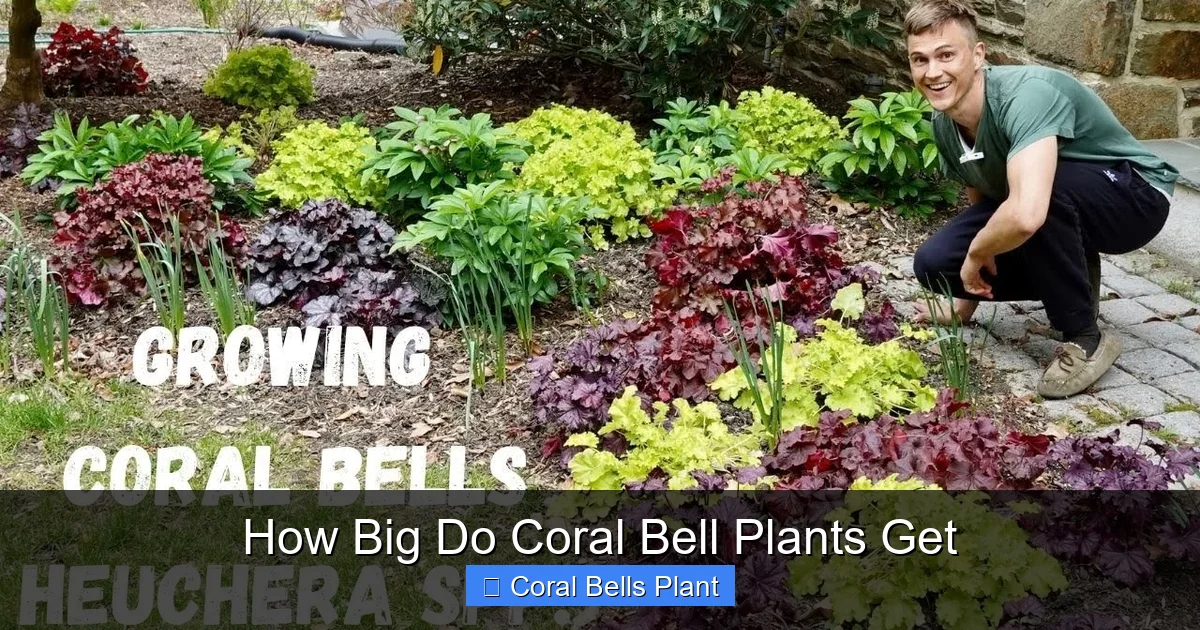
Coral bells (Heuchera) typically reach 8-18 inches tall and 12-24 inches wide, depending on the variety and growing conditions. Most varieties form neat mounds of foliage with flower spikes rising above, making them perfect for borders, containers, and shade gardens.
If you have ever wandered through a garden center and spotted those gorgeous ruffled leaves in shades of purple, caramel, lime, or silver, you have likely met coral bells. These charming perennials have exploded in popularity over the last decade. Plant breeders have introduced hundreds of new varieties. Gardeners love them for their foliage color that lasts all season. But before you tuck them into your garden beds, you probably want to know how big do coral bell plants get. The answer helps you plan spacing. It helps you choose the right spot. It helps you pick companions that will not get swallowed up.
I have grown coral bells for years. I have watched tiny plugs turn into impressive mounds. I have also seen some varieties stay surprisingly compact. The truth is that size varies quite a bit. It depends on the specific cultivar you choose. It depends on your growing conditions. It depends on how you care for them. In this guide, we will walk through everything you need to know about coral bell dimensions. You will learn typical height and spread ranges. You will discover what influences their growth. You will get practical tips for managing their size in your landscape.
Key Takeaways
- Average height: Most coral bell varieties grow 8 to 18 inches tall at maturity.
- Average spread: Plants typically spread 12 to 24 inches wide, forming tidy mounds.
- Flower spikes add height: Blooming stems can reach 24 to 36 inches above the foliage.
- Variety matters: Miniature types stay under 6 inches while large cultivars exceed 24 inches wide.
- Growing conditions affect size: Light, soil, water, and climate all influence final dimensions.
- Slow to moderate growth: Plants take 2-3 years to reach full size after planting.
- Easy size management: Division every 3-4 years keeps plants vigorous and contained.
Quick Answers to Common Questions
How tall do coral bells typically grow?
Most coral bell varieties reach 8 to 18 inches tall at maturity, with miniature types staying under 6 inches and large cultivars reaching up to 24 inches.
What is the average spread of a coral bell plant?
The typical spread ranges from 12 to 24 inches wide, though miniature varieties may only spread 6 to 10 inches while vigorous types can exceed 30 inches.
Do flower spikes count toward the plant’s height?
Flower spikes rise 12 to 36 inches above the foliage mound but don’t increase the plant’s footprint; they’re seasonal and can be deadheaded after blooming.
How long does it take coral bells to reach full size?
Most varieties take 2 to 3 years to reach their mature dimensions after planting, following a sleep-creep-leap establishment pattern.
Can I control the size of my coral bells?
Yes, choose compact varieties for small spaces, grow in containers to restrict roots, divide every 3-4 years to reset size, and provide optimal growing conditions for predictable growth.
📑 Table of Contents
- Understanding Coral Bell Plant Dimensions
- Popular Varieties and Their Specific Sizes
- Factors That Influence Final Plant Size
- Growth Rate and Timeline to Maturity
- Managing Coral Bell Size in Your Garden
- Designing with Coral Bell Dimensions in Mind
- Common Size-Related Problems and Solutions
- Coral Bells vs. Similar Plants: Size Comparison
- Frequently Asked Questions About Coral Bell Size
- Conclusion
Understanding Coral Bell Plant Dimensions
When gardeners ask how big do coral bell plants get, they usually want two measurements. They want to know the height of the foliage mound. They want to know the width or spread of that mound. These are the numbers that determine spacing. The foliage mound is the main show. It sits low and neat. Most varieties form a basal rosette. This means leaves emerge from a central crown at ground level. They arch outward in a fountain shape. This creates that classic mound form.
Then there are the flowers. Coral bells send up wiry stems in late spring to early summer. These stems hold tiny bell-shaped blooms. The flowers are lovely. They attract hummingbirds and pollinators. But they rise well above the foliage. Flower spike height is a separate measurement. It does not affect the plant’s footprint in the garden. However, it does affect the vertical profile. Some gardeners love the airy see-through effect of tall flower wands. Others prefer varieties bred for shorter, sturdier stems.
Typical Height Range for Foliage Mounds
Most coral bell varieties reach a mature foliage height between 8 and 18 inches. This is measured from soil level to the top of the leaf mound. The center of the plant tends to be slightly higher. The outer leaves arch lower. Miniature or dwarf varieties stay smaller. These compact types often max out at 4 to 6 inches tall. They are perfect for rock gardens, fairy gardens, or the very front of a border. On the other end of the spectrum, some large-leaved cultivars push 20 to 24 inches tall. These make a bolder statement. They work well as specimen plants or in the middle of a mixed border.
Here is a quick breakdown by category:
- Miniature varieties: 4 to 6 inches tall
- Standard varieties: 8 to 14 inches tall
- Large varieties: 16 to 24 inches tall
Typical Spread or Width Range
The spread of coral bells is often greater than their height. Most varieties form mounds 12 to 24 inches wide at maturity. This means a single plant can cover a fair amount of ground. The plant expands slowly outward from the center. New leaves emerge from the crown each season. The mound gets wider year by year. Miniature types may only spread 6 to 10 inches. Large vigorous cultivars can reach 28 to 36 inches across after several years. When spacing plants, use the mature spread as your guide. Plant them so the edges of their mature mounds will just touch. This creates a continuous carpet of foliage without overcrowding.
Flower Spike Height Details
Flower stems add a vertical element. They typically rise 12 to 24 inches above the foliage mound. Some varieties send up spikes to 30 or even 36 inches. The flowers themselves are small. They are shaped like tiny bells. Colors range from white and pink to coral red and greenish-white. The stems are wiry and often reddish. They sway beautifully in a breeze. This adds movement to the garden. If you prefer a tidier look, you can deadhead the spent flower stems. Cut them back to the base of the foliage. This redirects energy into leaf production. It also keeps the plant looking neat.
Popular Varieties and Their Specific Sizes
With hundreds of named cultivars on the market, you have endless choices. Breeders have developed plants for every size need. Let us look at some popular varieties grouped by their mature dimensions. This will help you visualize how big do coral bell plants get in real garden settings.
Compact and Miniature Varieties (Under 8 Inches Tall)
These little gems are perfect for tight spaces. They work well in containers, rock gardens, and along pathway edges. Heuchera ‘Petite Pearl Fairy’ forms a tiny mound just 4 inches tall and 6 inches wide. Its leaves are silver with dark veins. Heuchera ‘Little Cutie’ series includes ‘Blondie,’ ‘Coco,’ and ‘Peppermint.’ These stay around 6 inches tall and 10 inches wide. Heuchera ‘Caramel’ is technically a medium variety but stays compact at 8 to 10 inches tall in many gardens. Its amber-gold foliage glows in partial shade.
Medium Standard Varieties (8 to 14 Inches Tall)
This is the largest group. Most classic coral bells fall here. Heuchera ‘Palace Purple’ is an old favorite. It reaches 12 inches tall and 18 inches wide. Its maple-shaped leaves are deep bronze-purple. Heuchera ‘Obsidian’ has nearly black glossy leaves. It grows 10 inches tall and 16 inches wide. Heuchera ‘Lime Rickey’ sports ruffled chartreuse foliage. It forms a mound 10 inches tall and 14 inches wide. Heuchera ‘Berry Smoothie’ offers large rose-pink leaves. It reaches 12 inches tall and 18 inches wide. These are reliable workhorses for shade borders.
Large and Vigorous Varieties (16 to 24+ Inches Tall)
These make a bold presence. They need more room to shine. Heuchera ‘Big Top’ series varieties like ‘Bronze Wave’ can hit 20 inches tall and 26 inches wide. Heuchera ‘Mega Caramel’ is a supersized version of the popular ‘Caramel.’ It reaches 18 inches tall and 24 inches wide. Heuchera villosa cultivars like ‘Autumn Bride’ and ‘Bronze Wave’ are naturally large. They can form mounds 24 inches tall and 30 inches wide. These species types are also more heat and humidity tolerant. They thrive in southern gardens where other coral bells struggle.
Factors That Influence Final Plant Size
You buy a plant labeled 12 inches tall and 18 inches wide. Three years later, yours is 8 inches tall and 12 inches wide. Or maybe it is 16 inches tall and 24 inches wide. What happened? Several environmental and cultural factors affect how big do coral bell plants get. Understanding these helps you manage expectations. It also helps you optimize growth.
Light Exposure Effects
Light is a major driver of size. Coral bells are often sold as shade plants. But most varieties grow larger and more vigorous with some morning sun. In deep shade, plants may stay smaller. They may become leggy as they stretch for light. Leaf color can also be less intense. In full sun (especially in hot climates), plants may scorch. They may stay stunted from stress. The sweet spot for maximum size is usually part shade. Think 4 to 6 hours of morning sun. Or dappled light all day. In cooler northern zones, many varieties tolerate more sun. In hot southern zones, they need more shade.
Soil Quality and Composition
Coral bells want well-drained, humus-rich soil. Heavy clay holds too much water. This leads to crown rot. Plants in wet soil stay small or die. Sandy soil drains too fast. Plants may struggle to get enough moisture and nutrients. They stay smaller. The ideal soil is loose, fertile, and moisture-retentive but well-drained. Amend planting holes with compost. Add leaf mold or aged manure. This creates the perfect environment for steady expansion. Soil pH should be slightly acidic to neutral (6.0 to 7.0). Extreme pH locks up nutrients. This limits growth.
Water Availability and Consistency
Consistent moisture promotes larger plants. Coral bells have shallow root systems. They dry out quickly. Drought stress causes leaves to crisp at the edges. The plant goes into survival mode. It stops expanding. Regular watering during dry spells keeps growth on track. Aim for about 1 inch of water per week. This includes rainfall. Mulch helps conserve moisture. Apply 2 inches of shredded bark or leaf mulch. Keep mulch away from the crown. Wet mulch against the crown invites rot.
Climate and Hardiness Zone
Your USDA hardiness zone affects mature size. Coral bells are generally hardy in zones 4 through 9. In cooler zones (4 to 6), the growing season is shorter. Plants may take longer to reach full size. But they often live longer. In warmer zones (7 to 9), growth is faster. Plants reach maturity quicker. However, heat and humidity can stress certain varieties. Heuchera villosa hybrids handle southern heat best. In zone 9 and warmer, coral bells may act as cool-season annuals. They decline in summer heat. Size potential is reduced.
Age and Establishment Timeline
Patience is key. A coral bell in a 4-inch nursery pot is a baby. It will not reach mature dimensions in year one. Most varieties take 2 to 3 years to hit their stride. Year one: the plant focuses on root establishment. Foliage may only be 4 to 6 inches tall. Year two: noticeable increase in mound size. Year three: close to labeled dimensions. After year three, the plant may continue to widen slowly. Division every 3 to 4 years rejuvenates the center. It keeps the plant vigorous and at peak size.
Fertility and Nutrition
Coral bells are not heavy feeders. Too much nitrogen produces soft, floppy growth. It reduces winter hardiness. A light application of balanced slow-release fertilizer in spring is plenty. Or top-dress with compost annually. This provides steady, gentle nutrition. Plants in rich soil may not need any fertilizer. Container plants need more frequent feeding. Nutrients leach out with watering. Use a dilute liquid fertilizer monthly during the growing season.
Growth Rate and Timeline to Maturity
Gardeners often want instant impact. Coral bells do not work that way. They are perennials with a “sleep, creep, leap” pattern. Understanding the timeline helps you plan. It prevents disappointment. It also helps you space plants correctly from the start.
Year One: The Establishment Phase
When you plant a young coral bell, it looks small. That is normal. The plant is putting energy into roots. You might see a foliage mound 4 to 8 inches tall and 6 to 10 inches wide. It may bloom lightly. Or it may skip blooming entirely. Do not judge the plant by its first-year performance. Water consistently. Mulch well. Remove any flower spikes if you want maximum foliage growth. This directs energy to the crown and roots.
Year Two: Visible Expansion
In the second growing season, the plant wakes up. The crown is established. Energy goes into top growth. The mound expands noticeably. You might see 8 to 12 inches in height and 12 to 18 inches in width. Flower spikes are more numerous. The plant starts to look like the catalog photo. This is a good time to assess spacing. If plants are too close, plan to divide or move them in early fall.
Year Three: Mature Dimensions Reached
By year three, most varieties hit their labeled size. The mound is full and lush. Height and spread match the variety description. Flower display is at its peak. The plant is a confident presence in the garden. From here on, growth slows. The plant maintains its size with minor seasonal fluctuations. The center may become woody after 4 to 5 years. This signals it is time to divide.
Long-Term: Division and Renewal
Coral bells are relatively short-lived perennials. The center crown gets woody and dies out after 4 to 6 years. The plant becomes a ring of foliage with a dead middle. Division solves this. Dig the plant in early spring or early fall. Tease apart the rooted sections. Replant the vigorous outer pieces. Discard the woody center. Each division becomes a new plant. They establish quickly because they already have roots. This renews vigor. It also gives you free plants to expand your garden or share.
Managing Coral Bell Size in Your Garden
Sometimes you need to control size. Maybe a variety turned out larger than expected. Maybe you want to keep a plant in a container. Maybe you are designing a tight space. Here are practical strategies for managing how big do coral bell plants get in your specific situation.
Choosing the Right Variety for the Space
The easiest size management is selection. Read plant tags carefully. Look for mature height and spread. Match the plant to the space. Do not buy a 24-inch spread variety for a 12-inch gap. Compact varieties exist for a reason. Use them in containers, narrow beds, and rock gardens. Reserve large varieties for spacious borders and specimen spots. If you inherit a garden with oversized plants, you can still manage them. But starting with the right plant saves work.
Container Culture for Size Control
Growing coral bells in pots naturally restricts their size. The root zone is limited. This limits top growth. A variety that reaches 18 inches wide in the ground may stay 10 inches wide in a container. This is great for patios and small spaces. Choose a pot at least 12 inches wide and deep. Use high-quality potting mix. Ensure drainage holes. Water more frequently than in-ground plants. Fertilize lightly. Repot or divide every 2 to 3 years to prevent root-binding.
Strategic Pruning and Deadheading
You cannot prune coral bells like shrubs. They grow from a basal crown. Cutting leaves back to the ground weakens the plant. But you can remove individual damaged or ugly leaves. Snip them at the base. This keeps the plant tidy. Deadheading spent flower stems is the main pruning task. Cut flower stalks down to the foliage mound after blooms fade. This prevents seeding. It encourages a potential light rebloom. It keeps energy in the leaves.
Division as Size Management
Division is the primary way to control spread. A clump that has grown too wide can be lifted. Cut it into smaller sections. Replant one section in the original spot. The plant resets to a smaller size. The other sections go elsewhere. Do this every 3 to 4 years. Early spring is ideal. The plant has the whole season to recover. Fall division works too in mild climates. Water well after dividing. Mulch to protect roots.
Root Barriers for Aggressive Spreaders
Most coral bells are clump-formers. They do not run underground. But a few species types can spread more aggressively. Heuchera villosa and some Heuchera americana types may slowly expand beyond their allotted space. If this is a concern, install a root barrier. Use a plastic pot with the bottom cut out. Sink it into the ground. Plant the coral bell inside. The barrier directs roots downward. It prevents lateral creep. This is rarely needed but useful in tight perennial beds.
Designing with Coral Bell Dimensions in Mind
Knowing how big do coral bell plants get lets you design beautiful combinations. You can create layers. You can plan for succession of interest. You can avoid the common mistake of planting too close. Let us explore design strategies using their size profile.
Front-of-Border Placement
Standard coral bells (12 to 18 inches tall) are classic front-of-border plants. Their low mounds hide the bare legs of taller perennials behind them. Plant them in drifts of 3, 5, or 7 for impact. Space them at their mature spread measurement. For a 16-inch spread variety, plant centers 16 inches apart. The mounds will knit together into a continuous edge. This suppresses weeds. It creates a professional look. Miniature varieties (under 8 inches) go at the very front. They edge pathways beautifully.
Container Combinations
In pots, coral bells are often the “filler” in the thriller-filler-spiller formula. Their mounded habit fills the middle layer. Pair a 12-inch tall coral bell with a taller thriller like a fern or ornamental grass (18 to 24 inches). Add a spiller like creeping jenny or sweet potato vine over the edge. The coral bell’s foliage color anchors the combination. Choose pot size based on the mature spread. A 14-inch pot holds one standard coral bell plus companions. A larger trough holds several.
Woodland and Shade Garden Layers
In a shade garden, coral bells occupy the ground layer. They sit below small shrubs (3 to 5 feet) and taller perennials (2 to 3 feet). Their evergreen or semi-evergreen foliage provides winter interest. In mild climates, leaves persist all year. In cold climates, they flatten but often survive under snow. Plant them under deciduous trees. They get spring sun before leaves emerge. Then they enjoy summer shade. Their mounded form contrasts nicely with vertical ferns and spreading groundcovers.
Rock Garden and Alpine Settings
Miniature coral bells shine in rock gardens. Their small scale fits between stones. They tolerate the sharp drainage rocks provide. Plant them in crevices or pockets of soil. Their roots follow cool, moist cracks. The foliage softens hard edges. Varieties like ‘Petite Pearl Fairy’ or the ‘Little Cutie’ series are perfect. They stay in scale with dwarf conifers, sedums, and tiny bulbs. They do not overwhelm their neighbors.
Mass Planting for Groundcover Effect
Large varieties spaced at their mature spread create a living mulch. The foliage mounds touch and interlock. This shades out weed seeds. It conserves soil moisture. It creates a tapestry of color. Choose varieties with contrasting leaf colors for a quilt effect. ‘Palace Purple’ next to ‘Lime Rickey’ next to ‘Caramel’ is stunning. Mass planting works best with varieties of similar height and vigor. Avoid mixing miniatures with giants. The large ones will swallow the small ones.
Common Size-Related Problems and Solutions
Even with good planning, size issues arise. Plants outgrow their spot. They get leggy. They decline in the center. Here are fixes for the most common problems.
Plant Is Smaller Than Expected
If your coral bell stays stubbornly small, check the basics. Is it getting enough light? Deep shade stunts growth. Is the soil draining well? Wet feet stop expansion. Is it competing with tree roots? Large trees steal water and nutrients. Is it a slow-growing variety? Some miniatures are just naturally tiny. Fertilize lightly with compost. Water during dry spells. Mulch to reduce competition. If it is in a terrible spot, move it in early fall.
Plant Is Larger Than Expected
Happy plants sometimes exceed label dimensions. This is a good problem! But it can crowd neighbors. Divide the plant. Remove outer sections. Replant a smaller piece. Or move the whole plant to a roomier location. Do this in early spring or fall. Water well after transplanting. The plant will recover quickly.
Leggy or Floppy Growth
Leggy plants have long stems with leaves only at the tips. This happens in too much shade. The plant stretches for light. It also happens with too much nitrogen fertilizer. The fix: move to a brighter spot. Or prune nearby branches to increase light. Stop fertilizing. The plant will not shorten existing stems. But new growth will be more compact. You can also mound soil or mulch around the crown. This encourages fresh basal growth.
Center Die-Out (The Donut Effect)
After 4 to 6 years, the center of the crown becomes woody and dies. The plant becomes a ring. This is natural. The solution is division. Dig the plant. Pull or cut apart the living outer sections. Each piece with roots and leaves is a new plant. Replant them. Discard the dead center. The divisions will form fresh, full mounds. This renews the plant indefinitely.
Frost Heaving Exposes Crown
In cold climates, freeze-thaw cycles push plants up. The crown and roots become exposed. This dries them out. The plant shrinks or dies. Prevent this with a winter mulch. Apply 3 to 4 inches of straw or shredded leaves after the ground freezes. Remove gradually in spring. If heaving occurs, gently press the plant back down. Or lift and replant at the correct depth in spring.
Coral Bells vs. Similar Plants: Size Comparison
Gardeners sometimes confuse coral bells with look-alikes. Knowing the size differences helps with identification and placement. Let us compare.
Coral Bells (Heuchera) vs. Foamflower (Tiarella)
Foamflower is a close cousin. Both are in the Saxifrage family. Foamflower tends to be smaller. Most varieties are 6 to 12 inches tall and 12 to 18 inches wide. Foamflower leaves are more deeply lobed. They often have dark center markings. Foamflower spreads by runners (stolons). It forms a loose colony. Coral bells are clumpers. Foamflower flowers are foamier, on shorter stems. Both love shade. Foamflower is a great companion for coral bells. It fills in around the clumps.
Coral Bells (Heuchera) vs. Foamy Bells (Heucherella)
Heucherella is a hybrid between Heuchera and Tiarella. It combines traits. Size is usually similar to coral bells. Most are 8 to 16 inches tall and 12 to 20 inches wide. Foliage often has the lobed shape of Tiarella with the color range of Heuchera. Some varieties spread slowly by short stolons. They are intermediate in habit. Care is the same. They are excellent alternatives if you want something slightly different.
Coral Bells (Heuchera) vs. Hostas
Hostas are the kings of shade foliage. But their size range is massive. Miniature hostas are 4 inches tall. Giant hostas hit 4 feet tall and 6 feet wide. Coral bells are much more consistent in size. They never get huge. Hostas go dormant in winter. Coral bells are evergreen to semi-evergreen. Hostas have broader leaves. Coral bells have ruffled, lobed leaves. Both are shade staples. They pair beautifully. Use coral bells at the feet of hostas.
Coral Bells (Heuchera) vs. Coralberry (Symphoricarpos)
Despite the similar name, these are totally different. Coralberry is a deciduous shrub. It grows 2 to 5 feet tall and wide. It has small pink berries in fall. Coral bells are herbaceous perennials. They are 8 to 18 inches tall. The name “coral bells” refers to the flower shape. “Coralberry” refers to the fruit. No confusion in the garden. But sometimes at the nursery!
Frequently Asked Questions About Coral Bell Size
Let us address some specific questions gardeners often ask about dimensions.
Do coral bells get bigger every year?
Yes, for the first 3 to 4 years. The mound expands each season. After reaching maturity, the spread stabilizes. The plant maintains its size unless divided. The center may become woody and die out after 5 to 6 years. Division restarts the growth cycle.
How far apart should I plant coral bells?
Space plants at their mature spread distance. For a variety that spreads 18 inches, plant centers 18 inches apart. For a quick fill-in, you can plant slightly closer (75% of mature spread). But do not plant closer than that. Overcrowding causes poor air flow. This leads to fungal diseases.
Can I keep coral bells small by pruning?
Not really. You cannot shear them like boxwood. They grow from a central crown. Removing leaves reduces the plant’s energy. The best way to keep them small is choosing a miniature variety. Or grow them in containers. Division also resets the size temporarily.
Do coral bells spread aggressively?
No. Most are clump-forming perennials. They expand slowly from the center. They do not run by rhizomes or stolons. A few species types may self-seed modestly. But they are not invasive. Division every few years keeps them exactly where you want them.
How big do coral bells get in containers?
Container-grown plants stay smaller than in-ground plants. The restricted root zone limits top growth. Expect about 50 to 75% of the labeled mature size. A 16-inch spread variety may only reach 10 to 12 inches wide in a pot. This is actually a benefit for patio gardening.
When is the best time to divide overgrown coral bells?
Early spring is ideal. The plant is breaking dormancy. Cool weather reduces transplant stress. The divisions have the whole season to establish. Early fall (September in most zones) is the second-best time. Roots grow in warm soil before winter. Avoid dividing in summer heat or winter freeze.
Conclusion
So, how big do coral bell plants get? The short answer: most form neat mounds 8 to 18 inches tall and 12 to 24 inches wide. Flower spikes add another 12 to 24 inches of airy height in early summer. But the real answer is wonderfully variable. Miniature varieties stay under 6 inches. Giant cultivars push past 2 feet across. Your growing conditions — light, soil, water, climate — nudge the plant larger or smaller. The variety you choose sets the genetic potential. Your care helps it reach that potential.
Understanding these dimensions lets you design with confidence. You can space plants correctly from day one. You can choose the right variety for a container, a rock garden, or a sweeping woodland border. You can anticipate when division will be needed. You can troubleshoot size issues with targeted fixes.
Coral bells are one of the most versatile foliage perennials available. Their size range means there is a heuchera for almost every garden situation. Whether you need a tiny accent for a trough garden or a bold mound for a shade border, you will find it. Take time to read labels. Match the plant to the space. Provide good soil, consistent moisture, and appropriate light. Then watch your coral bells grow into the perfect colorful mounds you envisioned. They reward patience with years of low-maintenance beauty.
Frequently Asked Questions
How big do coral bell plants get in full shade versus part sun?
In deep shade, coral bells often stay smaller and may become leggy as they stretch for light. In part sun (4-6 hours morning sun), they typically reach their maximum labeled dimensions with better foliage color and denser growth.
Do different coral bell varieties have significantly different mature sizes?
Yes, size varies dramatically by cultivar. Miniature varieties like ‘Petite Pearl Fairy’ stay 4-6 inches tall, standard types like ‘Palace Purple’ reach 12-18 inches, and large villosa hybrids like ‘Autumn Bride’ can exceed 24 inches in height and 30 inches in spread.
Will coral bells spread and take over my garden bed?
No, coral bells are clump-forming perennials that expand slowly from the center. They do not run by rhizomes or stolons. Most varieties maintain a tidy mound and only need division every 3-4 years to prevent center die-out.
How does container growing affect coral bell size?
Container-grown coral bells typically reach only 50-75% of their in-ground mature size because the restricted root zone limits top growth. This makes them ideal for patios and small spaces where you want controlled dimensions.
What causes coral bells to stay smaller than their labeled size?
Common causes include too much shade, poor drainage, competition from tree roots, drought stress, or simply being a slow-growing variety. Improving light, soil, and water consistency usually helps them reach their potential.
When should I divide coral bells that have gotten too large?
Divide overgrown coral bells in early spring as new growth emerges, or in early fall (September in most zones). Dig the plant, separate vigorous outer sections with roots attached, discard the woody center, and replant divisions at the same depth.