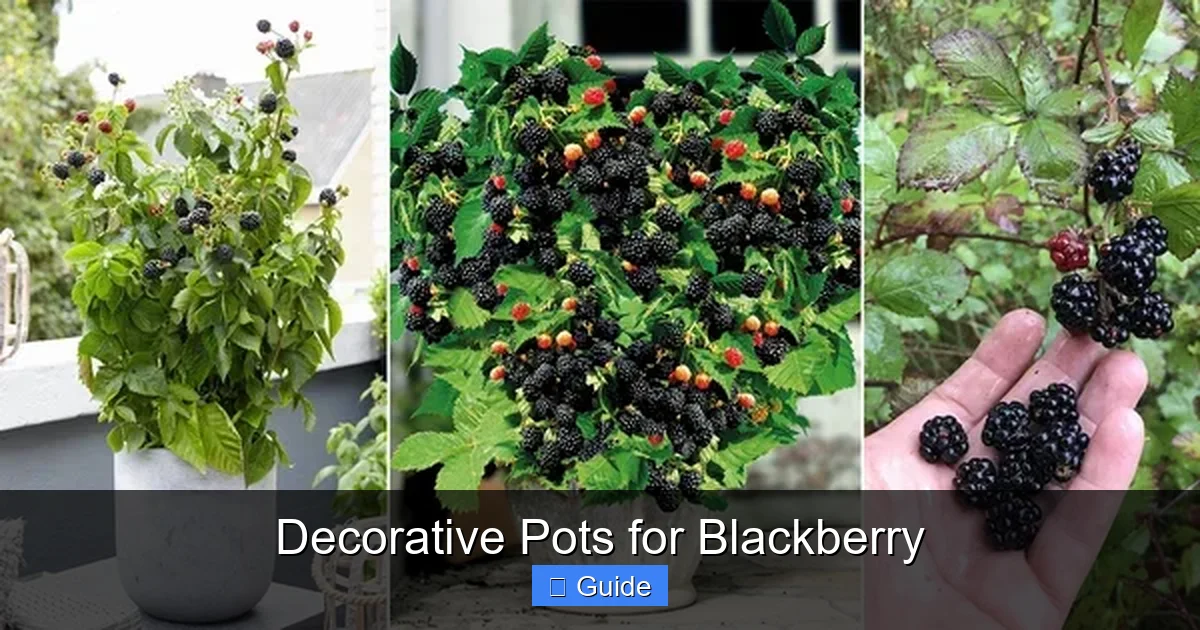
Decorative Pots for Blackberry
Growing blackberries in decorative pots lets you enjoy fresh berries even with limited space. This guide covers everything from choosing the right container size and material to proper drainage, soil mixes, and stylish design ideas that keep your plants healthy and productive all season long.
There is something deeply satisfying about stepping onto your patio and plucking sun-warmed blackberries straight from the cane. But what if you don’t have a sprawling backyard? What if your growing space is a balcony, a modest deck, or a sunny corner of a driveway? That is where decorative pots for blackberry plants come in. Container growing lets you cultivate these delicious berries almost anywhere, and with the right setup, your harvest can be just as abundant as any in-ground patch.
I have spent years experimenting with different containers, soil mixes, and varieties. Some attempts were glorious. Others taught me hard lessons about drainage and root space. In this guide, I will share everything I have learned so you can skip the trial and error. We will cover pot selection, the best varieties for containers, soil recipes, support systems, watering strategies, and how to keep your plants thriving through winter. Whether you are a first-time berry grower or a seasoned gardener looking to expand your container collection, you will find practical, actionable advice here.
Key Takeaways
- Container size matters: Choose pots at least 18-24 inches wide and deep to accommodate blackberry root systems and support cane growth.
- Drainage is critical: Ensure multiple drainage holes and use well-draining soil to prevent root rot in decorative pots for blackberry plants.
- Material affects temperature: Light-colored fabric pots or thick ceramic keep roots cooler than dark plastic or metal containers in summer heat.
- Support systems are essential: Install trellises or stakes at planting time to manage vigorous canes and maximize fruit production.
- Dwarf varieties thrive in containers: Compact cultivars like ‘Baby Cakes’ and ‘Black Cascade’ are bred specifically for pot culture and smaller spaces.
- Winter protection needed: Insulate pots or move them to sheltered locations in cold climates to protect roots from freezing.
- Regular feeding boosts yields: Container-grown blackberries need consistent fertilization since nutrients leach faster than in-ground plantings.
Quick Answers to Common Questions
What size pot do I need for a blackberry plant?
Choose a container at least 18-24 inches wide and deep (15-25 gallon capacity) to give blackberry roots adequate room to grow and to provide insulation against temperature extremes.
Can I grow blackberries in a fabric grow bag?
Yes, fabric grow bags are excellent for blackberries because they air-prune roots, prevent circling, stay cooler in summer, and are lightweight and portable.
Do container blackberries need a trellis?
Absolutely. Blackberry canes grow 4-8 feet per season and must be supported to keep fruit clean, maximize air flow, and make harvesting manageable. Install supports at planting time.
How often should I water potted blackberries?
Check soil moisture daily by feeling 2-3 inches deep. Water thoroughly when the top inch feels dry. In hot summer weather, this may mean daily watering; in cool periods, weekly may suffice.
Can I leave my potted blackberries outside in winter?
In zones 7 and warmer, yes with heavy mulch. In zones 5-6, insulate pots heavily or move to an unheated garage. In zone 4 and colder, heel pots into the ground or store in a cold (30-40°F) dark space.
📑 Table of Contents
- Why Choose Decorative Pots for Blackberry Growing
- Selecting the Right Container Size and Shape
- Best Materials for Decorative Blackberry Pots
- Essential Drainage and Soil Preparation
- Best Blackberry Varieties for Container Growing
- Support Systems and Trellising in Pots
- Watering, Feeding, and Ongoing Care
- Overwintering Decorative Pots for Blackberry Plants
- Design Ideas and Aesthetic Integration
- Troubleshooting Common Container Blackberry Problems
- Conclusion
Why Choose Decorative Pots for Blackberry Growing
Space Flexibility and Portability
The most obvious benefit of growing in decorative pots for blackberry plants is flexibility. You are no longer tied to a permanent garden bed. Renters can take their berry patch with them when they move. Homeowners with poor native soil—heavy clay, sandy fill, or contaminated urban ground—can create perfect growing conditions in a pot. You can chase the sun throughout the seasons, moving containers to capture optimal light as angles change. This portability is a game-changer for gardeners working with challenging sites.
Control Over Soil Quality
Blackberries prefer slightly acidic, well-draining soil rich in organic matter. In the ground, you are largely stuck with what you have. Amending native soil takes years. In a container, you control the mix from day one. You can craft a custom blend that drains perfectly yet holds moisture, with the exact pH your plants crave. This control translates directly to healthier roots, stronger canes, and sweeter fruit. It also means you avoid soil-borne diseases that might linger in garden beds for decades.
Aesthetic Appeal and Design Integration
Let us not overlook the decorative part of decorative pots for blackberry cultivation. A beautiful ceramic urn overflowing with arching canes and glossy fruit becomes a living sculpture. Sleek fiberglass troughs frame a modern patio. Rustic half-barrels add cottage charm. You can match containers to your outdoor furniture, your home’s architecture, or your personal style. The plants themselves offer seasonal interest—white spring blossoms, deep green summer foliage, purple-black autumn fruit, and reddish winter canes. They earn their keep visually as well as culinarily.
Pest and Disease Management
Container growing creates a physical barrier against many ground-dwelling pests. Nematodes, wireworms, and cutworms rarely colonize pots. Soil-borne fungi like verticillium wilt and phytophthora root rot are less likely to establish in fresh, sterile potting mix. You can also isolate a diseased plant instantly by moving its pot away from others. This containment protects your entire collection. For organic gardeners especially, this reduced pest pressure means fewer interventions and cleaner fruit.
Selecting the Right Container Size and Shape
Minimum Dimensions for Healthy Roots
Blackberries are vigorous perennials with extensive root systems. Cramping them in undersized pots leads to stunted growth, reduced yields, and winter kill. The absolute minimum for a single plant is 18 inches in diameter and 18 inches deep. Better yet, aim for 24 inches across and 18-24 inches deep. This volume—roughly 15-25 gallons—gives roots room to expand and provides insulation against temperature extremes. Remember, the pot must accommodate not just the current root ball but two to three years of growth before repotting becomes necessary.
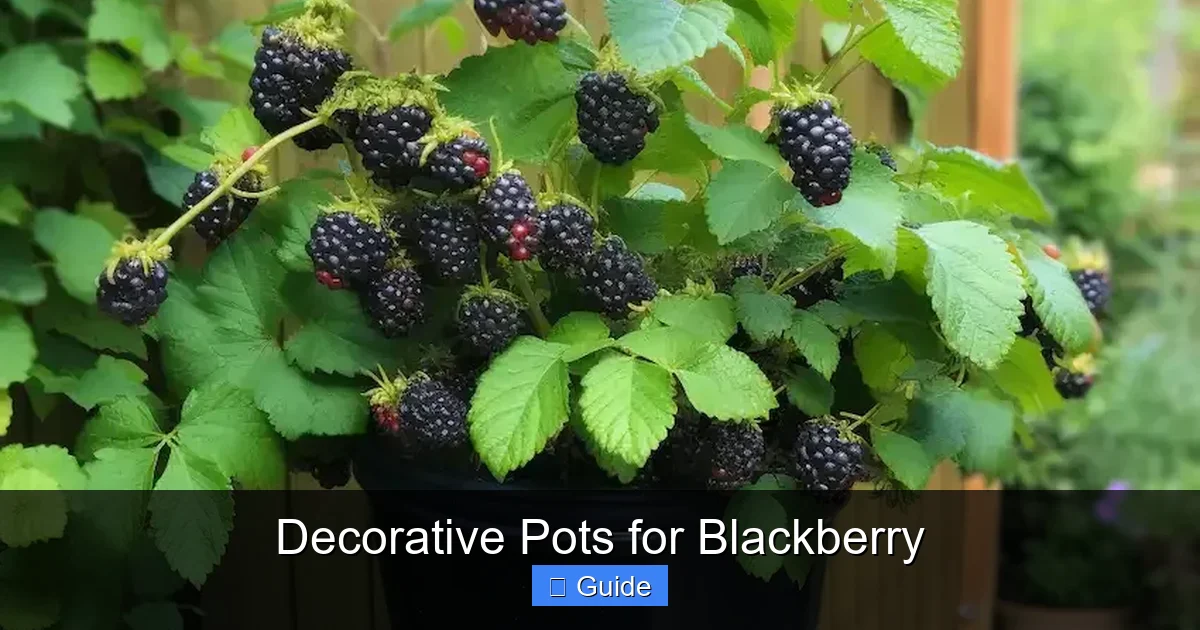
Visual guide about Decorative Pots for Blackberry
Image source: sharingideas.me
Width Versus Depth Considerations
Blackberry roots spread laterally more than they dive deep. A wide, moderately deep container outperforms a narrow, deep one. Look for pots with a broad base for stability—tall, top-heavy containers tipped by wind and heavy canes are a common disaster. Tapered shapes (wider at the top) make repotting easier when the time comes. Straight-sided pots can trap root balls, turning a simple transplant into a pot-destroying wrestling match. If you love a straight-sided design, ensure the interior has no inward lip that would catch the root mass.
Single Plant Versus Multiple Plants Per Pot
Resist the urge to crowd multiple plants into one large container. Blackberries are competitive. Two plants in a 30-gallon pot will produce less than one plant in a 20-gallon pot because they battle for water, nutrients, and root space. Each plant deserves its own container. If you want a dense berry display, group several individual pots closely together. This approach also lets you rotate varieties, replace underperformers, and manage diseases plant by plant without disturbing neighbors.
Weight and Mobility Planning
A 24-inch ceramic pot filled with wet soil and a mature plant can weigh 200 pounds or more. Before placing heavy decorative pots for blackberry plants on a balcony or rooftop, verify weight limits. Consider lightweight alternatives like fabric grow bags, fiberglass, or resin composites. If you must use heavy materials, position pots on rolling plant caddies before filling them. Locking casters let you chase sun or shelter plants from storms without back strain. Plan for mobility from the start—moving a planted, watered container later is a recipe for injury or broken pots.
Best Materials for Decorative Blackberry Pots
Glazed Ceramic and Stoneware
Glazed ceramic pots are the gold standard for looks. They come in endless colors, patterns, and forms. The glaze seals the clay, reducing moisture loss through pot walls—a real advantage in hot, windy conditions. Thick walls provide excellent root insulation against both summer heat and winter cold. However, they are heavy, expensive, and can crack if water trapped in the clay freezes. Choose high-fired, frost-rated pieces if you garden in freeze-thaw zones. Always use pot feet to elevate the base and prevent freeze-thaw damage to the bottom.
Terracotta and Unglazed Clay
Classic terracotta breathes. Its porous walls allow air exchange and moisture evaporation, creating a healthy root zone that resists soggy conditions. This breathability is a double-edged sword. In hot weather, terracotta pots dry out alarmingly fast, sometimes requiring twice-daily watering. The pots themselves are fragile—one bump, one hard freeze, and they shatter. They also develop white mineral deposits (efflorescence) that some gardeners love and others hate. If you choose terracotta, soak the pot thoroughly before planting to saturate the clay, and mulch heavily to slow evaporation.
Fabric Grow Bags and Smart Pots
Fabric containers have revolutionized container growing. Made from breathable geotextile, they air-prune roots—when root tips hit the fabric, they dehydrate and branch rather than circling. This creates a dense, fibrous root system that absorbs water and nutrients efficiently. Fabric pots are lightweight, inexpensive, fold flat for storage, and virtually unbreakable. They stay cooler in summer because evaporation cools the root zone. For decorative pots for blackberry use, look for heavy-duty handles and neutral colors (tan, gray, black) that blend into the landscape. The downside? They dry out fast and lack the visual weight of rigid containers.
Fiberglass, Resin, and Composite Materials
Modern composites mimic stone, concrete, or metal at a fraction of the weight. High-quality fiberglass pots are UV-stable, frost-proof, and incredibly durable. They retain moisture well and insulate roots effectively. Many feature built-in drainage reservoirs or self-watering inserts. Resin troughs and rectangular planters work beautifully for row-planting multiple blackberry varieties. The best ones are indistinguishable from natural materials until you lift them. Budget versions can fade, warp, or become brittle over time—invest in reputable brands with multi-year warranties.
Wooden Half-Barrels and Custom Boxes
Whiskey barrels and wine barrels bring rustic authenticity. Their 25-30 gallon capacity is ideal for blackberries. Wood insulates superbly and ages beautifully. Drill ample drainage holes in the bottom—factory holes are often insufficient. Line the interior with landscape fabric to slow soil loss while maintaining drainage. Elevate barrels on bricks or pot feet to prevent bottom rot. With proper care, a quality oak barrel lasts 5-10 years. Custom cedar or redwood boxes let you tailor dimensions exactly, but use naturally rot-resistant lumber and avoid pressure-treated wood for edible crops.
Metal and Galvanized Containers
Galvanized steel stock tanks and decorative metal planters are trendy, durable, and rodent-proof. They conduct heat, which can be problematic. In full sun, metal walls can cook roots. The solution: line the interior with bubble wrap, cardboard, or landscape fabric before adding soil. Paint the exterior a light color to reflect heat. Ensure drainage holes are drilled (many stock tanks come without them). Metal works best in partial shade or cooler climates. In hot regions, reserve metal for shade-tolerant companions and give your blackberries a cooler home.
Essential Drainage and Soil Preparation
Why Drainage Makes or Breaks Container Blackberries
Blackberries hate wet feet. Their roots need oxygen as much as they need water. Saturated soil displaces air, leading to root rot, fungal diseases, and plant death. Decorative pots for blackberry plants must have multiple drainage holes—at least four to six half-inch holes for a 20-gallon container. Cover holes with landscape fabric, coffee filters, or a layer of coarse bark to prevent soil washout while maintaining flow. Avoid the old advice of adding gravel at the bottom. This creates a perched water table that actually worsens drainage. The soil column should be uniform from top to bottom.
Crafting the Perfect Potting Mix
Garden soil is too dense for containers. It compacts, drains poorly, and may harbor pathogens. You need a light, moisture-retentive, well-draining mix. My go-to recipe: 50% high-quality peat-based potting soil, 25% composted pine bark fines (not mulch—fines), 15% perlite, and 10% worm castings or well-rotted compost. The bark fines create air pockets and decompose slowly, maintaining structure for years. Perlite ensures drainage. Worm castings provide gentle, sustained nutrition and beneficial microbes. Adjust pH to 5.5-6.5 with elemental sulfur if needed—blackberries prefer slightly acidic conditions.
Pre-Moistening and Filling Technique
Dry peat-based mixes repel water initially. Before filling, dump the mix into a wheelbarrow or tarp and add water gradually, mixing until it feels like a wrung-out sponge—damp but not dripping. Fill the pot in layers, tamping gently every 6 inches to eliminate large air pockets. Leave 2-3 inches of headspace at the top for watering and mulch. Plant at the same depth the blackberry grew in its nursery container. The crown (where canes emerge) should sit at soil level, not buried. Water thoroughly after planting until water runs freely from drainage holes.
Mulching for Moisture Conservation
A 2-3 inch mulch layer is non-negotiable for container blackberries. It reduces evaporation, moderates soil temperature, suppresses weeds, and slowly feeds the soil as it breaks down. Pine straw, shredded bark, wood chips, or straw all work well. Keep mulch an inch away from the crown to prevent rot. Refresh annually in spring. In hot climates, a top dressing of white pebbles or light-colored mulch reflects heat and keeps roots cooler. This simple step can cut watering frequency by 30% and dramatically improve plant vigor.
Best Blackberry Varieties for Container Growing
Dwarf and Compact Cultivars
Plant breeders have developed blackberries specifically for containers. ‘Baby Cakes’ is a breakthrough—a dwarf, thornless, erect variety reaching just 3-4 feet tall. It produces full-sized, sweet berries on first-year canes (primocane fruiting), meaning you get a crop the first summer. ‘Black Cascade’ is a trailing thornless type bred for hanging baskets and tall pots, cascading 3-5 feet with heavy yields. ‘Prime-Ark Freedom’ and ‘Prime-Ark Traveler’ are primocane-fruiting erect varieties that stay manageable at 4-5 feet. These compact genetics make container success almost guaranteed.
Standard Varieties That Adapt Well
If you have larger pots (25+ gallons) and strong trellising, some standard varieties thrive in containers. ‘Ouachita’ and ‘Osage’ are thornless, erect, heat-tolerant cultivars with excellent flavor and firm fruit. ‘Natchez’ produces enormous berries on thornless, semi-erect canes—give it a sturdy 6-foot trellis. ‘Triple Crown’ is a gardener favorite for its exceptional flavor, thornless canes, and semi-erect habit. These varieties need more space and support but reward you with heavier crops and longer harvest windows. Match the variety to your container size and support system.
Primocane Versus Floricane Fruiting Types
Understanding fruiting habit changes how you manage decorative pots for blackberry plants. Floricane (summer-bearing) varieties fruit on second-year canes. You must overwinter canes, protect them from winter kill, and prune selectively. Primocane (fall-bearing or everbearing) varieties fruit on first-year canes. You can cut all canes to the ground in late winter—simple, clean, and winter-hardy. Some varieties like ‘Prime-Ark Freedom’ do both: a summer crop on overwintered canes and a fall crop on new primocanes. For beginners, primocane types are far easier in containers because winter protection is minimal.
Thornless Versus Thorny Considerations
Thornless varieties are a joy to harvest and prune. They are safer around children and pets. Modern thornless cultivars match or exceed thorny types in flavor and yield. The only advantage of thorny varieties? They tend to be slightly more vigorous and cold-hardy. In containers, where you control the environment, thornless wins every time. ‘Chester’, ‘Triple Crown’, ‘Ouachita’, ‘Navaho’, and ‘Apache’ are all excellent thornless choices. Your hands and arms will thank you at harvest time.
Support Systems and Trellising in Pots
Why Support Is Non-Negotiable
Blackberry canes grow fast—4 to 8 feet in a season. Without support, they arch to the ground, root where they touch soil, create a tangled mess, and invite disease from poor air circulation. Fruit rests on the ground, rotting or getting eaten by slugs. Harvesting becomes a thorny nightmare. A proper support system keeps canes upright, exposes fruit to sun for ripening, maximizes air flow, and makes picking a pleasure. Install supports at planting time. Adding them later damages roots.
Teepee and Obelisk Trellises
For single plants in round decorative pots for blackberry growing, a teepee or obelisk is elegant and effective. Three to five bamboo stakes, metal rods, or wooden poles driven into the pot edges and tied at the top create a cone shape. Canes are trained up and around the structure. Obelisks—decorative metal or wood pyramids—add vertical architecture even before plants leaf out. Choose a height of 5-6 feet for dwarf varieties, 6-7 feet for standard types. Ensure the base is wide enough for stability; narrow teepees topple in wind.
Fan and Trellis Panel Systems
Rectangular pots or grouped round pots work beautifully with flat trellis panels. Mount a 4×6 foot panel behind the containers, secured to a wall, fence, or posts. Train canes in a fan pattern—spread them horizontally and tie them to the panel. This maximizes light exposure to every leaf and fruit cluster. It also simplifies pruning: old canes are obvious, new canes are trained in their place. Wire cattle panels, wooden lattice, or custom metal grids all work. Leave 4-6 inches between the panel and pot back for air circulation.
Wire and Post Systems for Multiple Pots
If you line up several pots in a row, a post-and-wire system mimics commercial trellising. Set sturdy posts (metal T-posts or 4×4 wood) at each end and every 8 feet. Run 12-gauge galvanized wire at 3 feet and 5 feet heights. Train primocanes along the bottom wire, floricanes along the top. This system handles heavy crops and high winds beautifully. It also lets you drape bird netting or row cover over the wires for protection. For decorative pots for blackberry rows, this is the most professional and productive approach.
Training Techniques for Maximum Yield
Training is not just tying canes up. It is directing growth for optimal fruiting. For erect varieties, tip primocanes at 3-4 feet in summer to encourage lateral branching—these laterals bear the fruit. For trailing types, train primocanes horizontally along wires or around teepees; fruit forms on laterals along the horizontal cane. Always use soft ties—velcro plant tape, twine, or fabric strips. Wire or zip ties girdle canes as they thicken. Check ties monthly and loosen as needed. Good training turns a chaotic thicket into a productive, manageable, beautiful plant.
Watering, Feeding, and Ongoing Care
Mastering Container Watering
Watering is the single most critical skill for container blackberries. Pots dry from the edges inward and from the top down. The surface may look dry while the root zone is soggy, or vice versa. Check moisture by inserting your finger 2-3 inches deep. Water when the top inch feels dry. Apply water slowly until it exits drainage holes—this ensures the entire soil column is saturated. In peak summer, large plants in full sun may need daily watering. In cool, cloudy weather, once a week may suffice. Never water on a fixed schedule. Respond to the plant and the weather.
Self-Watering and Irrigation Options
If daily watering is impractical, consider self-watering inserts or drip irrigation. Self-watering pots have a reservoir at the bottom connected to the soil by wicking chambers. They extend watering intervals to 3-7 days. Drip irrigation with a timer delivers precise amounts on schedule. Run 1/4-inch tubing to each pot with adjustable emitters. A moisture sensor or rain sensor prevents overwatering. For decorative pots for blackberry collections, a simple drip system with a battery timer is a weekend project that pays off all season. It also enables worry-free vacations.
Fertilization Strategy for Container Plants
Nutrients leach from containers with every watering. You must replenish them. Start with a slow-release organic fertilizer mixed into the potting soil at planting—something like 5-5-5 or 4-6-4 with micronutrients. This feeds for 3-4 months. Supplement with liquid fertilizer every 2-3 weeks during active growth. Fish emulsion, kelp extract, or a balanced liquid feed (10-10-10 or 20-20-20) at half strength works well. Stop fertilizing 6-8 weeks before your first frost to let plants harden off. Resume in spring when new growth emerges.
Pruning for Health and Productivity
Pruning confuses many gardeners, but container blackberries simplify it. For primocane varieties: cut all canes to 2-3 inches above soil in late winter. Done. For floricane varieties: in late winter, remove all dead, damaged, and weak canes at ground level. Keep 4-6 of the strongest canes per plant. Shorten lateral branches on these canes to 12-18 inches. After summer harvest, remove spent floricanes at ground level. Thin new primocanes to 4-6 per plant. Tip primocanes at 3-4 feet to encourage laterals. Clean, sharp bypass pruners prevent disease spread.
Pest and Disease Monitoring
Container growing reduces but does not eliminate problems. Watch for spider mites (fine webbing, stippled leaves) in hot, dry conditions—blast with water or spray neem oil. Japanese beetles skeletonize leaves; hand-pick into soapy water. Spotted wing drosophila lays eggs in ripening fruit; harvest daily and use fine netting. Cane blight and anthracnose cause lesions on canes; prune out infected wood, improve air flow. Root rot shows as wilting despite moist soil; improve drainage, reduce watering. Inspect weekly. Early action saves plants.
Overwintering Decorative Pots for Blackberry Plants
Understanding Root Hardiness Versus Cane Hardiness
Blackberry canes may be hardy to -10°F or -20°F, but roots in containers are far more vulnerable. Soil in the ground stays near 32°F even when air temps plummet. In a pot, soil temperature matches air temperature within hours. Roots of most blackberries die around 20°F. This mismatch is why container plants often die in winters that in-ground plants shrug off. Your overwintering strategy must protect roots first. Canes are secondary—if roots survive, the plant regenerates.
In-Ground Heeling In
The gold standard for overwintering decorative pots for blackberry plants in cold climates (zones 5 and below) is heeling in. Dig a trench in a vegetable bed or empty garden space deep enough to bury pots to their rims. Group pots together, backfill with soil, and mulch heavily with straw or leaves. The ground insulates roots just like in-ground plants. In spring, lift pots, rinse off soil, and return to display positions. This requires space and effort but virtually guarantees survival. Mark pot locations before snow covers them.
Insulated Grouping Above Ground
If heeling in is impossible, create an insulated huddle. Group pots tightly together in a sheltered corner—against a south-facing wall, under an overhang, or inside an unheated garage. Surround the group with straw bales, bags of leaves, or bubble wrap. Mulch pot surfaces heavily. Wrap pots individually in burlap or bubble wrap for extra protection. Water thoroughly before hard freeze—moist soil freezes slower and releases latent heat. Check monthly; water if soil is dry and not frozen. This method works well in zones 6-7.
Garage and Basement Storage
An unheated attached garage or cold basement (30-40°F) is ideal for dormant container blackberries. Plants need darkness and cold to satisfy chilling requirements (200-500 hours below 45°F for most varieties). Do not store in heated spaces—warmth breaks dormancy prematurely, leading to weak, etiolated growth. Water sparingly, just enough to keep roots from desiccating. Check for rodents; they love dormant canes. In spring, move pots outside gradually—harden them off over 7-10 days to prevent sunburn and shock.
Zone-Specific Strategies
Zone 7 and warmer: Most decorative pots for blackberry plants survive outdoors with heavy mulch and a sheltered spot. Zone 6: Use insulated grouping or garage storage. Zone 5 and colder: Heel in or garage storage is essential. Know your variety’s hardiness—some tolerate colder roots than others. ‘Illini Hardy’ and ‘Chester’ are notably cold-tolerant. Primocane types are safer because you can cut canes to the ground, reducing top growth to protect. When in doubt, over-protect. A plant that survives but fruits late is better than a dead plant.
Design Ideas and Aesthetic Integration
Creating a Berry Patio Garden
Turn your container blackberry collection into a designed space. Arrange three to five matching pots in a geometric pattern—line, triangle, or semicircle. Use identical containers for cohesion, or vary heights for dynamic composition. Underplant with shallow-rooted companions: strawberries spill over edges, thyme or oregano form fragrant carpets, nasturtiums add edible flowers and color. Add a small bistro table and chairs. Now you have a destination—a place to sit among the canes, picking berries into your morning yogurt. This is gardening as lifestyle.
Vertical Accents and Privacy Screens
Blackberries on trellises create living walls. A row of tall rectangular planters along a property line, each with a fan-trained plant on a wire panel, becomes a seasonal privacy screen. In spring, white flowers froth along the wires. Summer brings dense green foliage. Autumn offers brilliant red-orange fall color on some varieties. Winter reveals architectural cane structure. Choose evergreen companions like boxwood or holly at the base for year-round screening. This approach turns a functional crop into a landscape element.
Mixed Berry Containers
Why stop at blackberries? A large half-barrel can host a blackberry in the center (on a teepee), ringed by strawberries at the edge, with a blueberry in its own adjacent pot sharing the same acidic soil mix. Raspberries, currants, and gooseberries also thrive in containers with similar care. Create a “berry patch in pots” on a sunny deck. Stagger harvest times: strawberries in June, raspberries in July, blackberries in August, blueberries into September. The diversity protects against total crop failure and extends fresh eating for months.
Seasonal Decor Transitions
Decorative pots for blackberry plants are stage sets for seasonal decor. Spring: tuck tulip or daffodil bulbs around the base in fall for early color before canes leaf out. Summer: let the berries be the ornament. Autumn: add ornamental kale, pumpkins, or gourds at the base. Winter: wrap teepees with fairy lights, hang birdseed ornaments, drape weatherproof garland. The structure remains; the dressing changes. This year-round visual interest justifies the space and expense of large decorative containers.
Troubleshooting Common Container Blackberry Problems
Yellowing Leaves and Nutrient Deficiencies
Yellow leaves (chlorosis) usually signal nitrogen deficiency or pH imbalance. In containers, nitrogen leaches fast. Apply liquid fish emulsion or blood meal for a quick green-up. If veins stay green but tissue yellows, suspect iron chlorosis from high pH. Test soil pH; if above 6.5, apply chelated iron and elemental sulfur. Magnesium deficiency shows as yellowing between veins on older leaves—Epsom salts (1 tablespoon per gallon) corrects it. Regular feeding with a complete fertilizer prevents most deficiencies.
Small, Crumbly, or Few Berries
Disappointing fruit usually traces to water stress, nutrient shortage, or inadequate pollination. Blackberries are aggregate fruits—each drupelet must be pollinated. Poor pollination yields misshapen, crumbly berries. Attract pollinators with companion flowers. Hand-pollinate with a small brush if bees are scarce. Consistent moisture during fruit swell is critical; drought-stressed plants abort drupelets. Potassium drives fruit size and sweetness—use a high-potassium feed (tomato fertilizer) once fruit sets. Thin excessive fruit clusters to 6-8 berries each for larger individual fruit.
Cane Dieback and Winter Injury
Blackened, brittle cane tips in spring indicate winter kill. Cut back to live wood (green inside). If entire canes die but crown survives, new primocanes will emerge—you lose one crop but not the plant. Prevent future dieback with better root insulation. Sunscald on southwest-facing canes in late winter looks like cracked, sunken bark. Wrap vulnerable canes with tree wrap or paint with diluted white latex paint. Avoid late-season nitrogen fertilization, which promotes tender growth that cannot harden off.
Root Bound and Declining Vigor
After 3-4 years, even large pots become root-bound. Signs: water runs straight through, growth slows, leaves yellow despite feeding, plant needs daily watering. The fix is root pruning and repotting. In late winter, remove plant from pot. Saw off the bottom third of the root ball. Shave 1-2 inches off the sides. Replant in fresh mix in the same or larger pot. Top-prune canes proportionally. The plant will sulk for a few weeks then explode with fresh vigor. This renewal extends container life indefinitely.
Conclusion
Growing blackberries in decorative pots is one of the most rewarding container gardening projects you can undertake. The combination of architectural beauty, seasonal interest, and genuine food production—often in spaces where traditional gardening is impossible—makes it uniquely satisfying. You now have a complete roadmap: choose spacious, well-draining containers in materials that suit your climate and aesthetic. Fill them with a custom, acidic, moisture-retentive mix. Select compact, thornless, primocane-fruiting varieties for easiest success. Install sturdy supports at planting. Water attentively, feed regularly, prune correctly, and protect roots in winter.
Your first season may bring a modest harvest as plants establish. By year two, you will likely be giving berries away. By year three, you will be the neighbor with the legendary patio blackberries. The learning curve is gentle, the failures are few, and the rewards—warm, sweet, sun-ripened fruit picked steps from your kitchen—are immeasurable. So pick your pots, order your plants, and claim your spot in the container blackberry revolution. Your future self, stained purple-fingered and smiling, will thank you.
Frequently Asked Questions
What is the best potting mix for blackberries in containers?
Use a well-draining, slightly acidic mix: 50% peat-based potting soil, 25% composted pine bark fines, 15% perlite, and 10% worm castings or compost. Adjust pH to 5.5-6.5 with elemental sulfur if needed.
Which blackberry varieties are best for pots?
Dwarf thornless primocane varieties like ‘Baby Cakes’, ‘Black Cascade’, and ‘Prime-Ark Freedom’ are ideal for containers. They stay compact, fruit on first-year canes, and simplify pruning and winter care.
How do I fertilize blackberries in decorative pots?
Mix slow-release organic fertilizer (5-5-5) into the soil at planting. Supplement with liquid fertilizer (fish emulsion or balanced feed at half strength) every 2-3 weeks during active growth. Stop fertilizing 6-8 weeks before first frost.
Why are my container blackberry leaves turning yellow?
Yellow leaves usually indicate nitrogen deficiency (common in containers due to leaching) or high soil pH causing iron chlorosis. Apply liquid nitrogen fertilizer and test pH; correct with chelated iron and sulfur if pH exceeds 6.5.
Can I grow more than one blackberry plant in a large pot?
It is not recommended. Blackberries are competitive; multiple plants in one container reduce yields for all. Give each plant its own 15-25 gallon pot for best results.
How do I prune blackberries in containers?
For primocane varieties: cut all canes to 2-3 inches in late winter. For floricane varieties: remove dead/weak canes, keep 4-6 strong canes, shorten laterals to 12-18 inches. After harvest, remove spent floricanes and thin new primocanes to 4-6.