Coral Bells Palace Purple Plant
The Coral Bells Palace Purple plant is a beloved perennial prized for its dramatic deep purple foliage and delicate bell-shaped flowers. This low-maintenance beauty thrives in partial shade and adds year-round color to gardens, borders, and containers with minimal effort.
If you have ever walked through a shade garden and spotted a plant with leaves so deeply purple they almost look painted, chances are you were looking at the Coral Bells Palace Purple plant. This remarkable perennial has been a garden favorite for decades, and for good reason. It brings bold color to the shadiest corners of your yard without demanding much in return.
I first discovered this plant when I was struggling to find something — anything — that would grow under a massive maple tree in my backyard. Grass would not grow. Hostas got eaten by slugs. Ferns looked nice but lacked that pop of color I craved. Then a friend handed me a division of Palace Purple coral bells, and my shade garden was never the same. That was fifteen years ago, and those original plants are still going strong, having been divided and shared with neighbors many times over.
Key Takeaways
- Stunning Foliage: Deep purple to bronze leaves provide dramatic color from spring through fall and often persist into winter in milder climates.
- Shade Tolerant: Thrives in partial to full shade, making it perfect for woodland gardens, north-facing beds, and under trees where other plants struggle.
- Low Maintenance: Once established, this perennial requires minimal care — just occasional watering, annual dividing, and removal of spent flower stalks.
- Versatile Design Element: Works beautifully in borders, rock gardens, containers, and as ground cover when planted in masses.
- Pollinator Friendly: Delicate pinkish-white flowers attract hummingbirds, bees, and butterflies during late spring to early summer.
- Deer Resistant: Generally avoided by deer and rabbits, making it an excellent choice for areas with wildlife browsing pressure.
- Year-Round Interest: Evergreen to semi-evergreen foliage provides winter structure and color when most perennials have died back.
Quick Answers to Common Questions
How much sun does Palace Purple coral bells need?
Palace Purple coral bells prefer partial shade with morning sun and afternoon shade. In cooler climates, they can tolerate more sun with adequate moisture. In hot regions, they need protection from intense afternoon sun to prevent leaf scorch.
When should I divide my Palace Purple coral bells?
Divide Palace Purple coral bells every three to four years in early spring as new growth emerges or in early fall. This rejuvenates the plant, prevents the center from dying out, and gives you free plants for other garden areas.
Is Palace Purple coral bells deer resistant?
Yes, Palace Purple coral bells are generally deer and rabbit resistant. The leaves contain astringent compounds that make them unpalatable to browsing animals, making them an excellent choice for gardens with wildlife pressure.
Why are the leaves on my Palace Purple turning green?
Leaves may turn green due to too much shade, excessive nitrogen fertilizer, or natural variation in seed-grown plants. For the deepest purple color, provide morning sun, avoid high-nitrogen fertilizers, and ensure you have a true vegetatively propagated Palace Purple plant.
Can Palace Purple coral bells grow in containers?
Absolutely! Palace Purple coral bells thrive in containers with good drainage. Use a quality potting mix amended with perlite, water regularly, and fertilize lightly in spring. In cold climates, protect containers in winter by moving to an unheated garage or insulating the pot.
📑 Table of Contents
- Getting to Know the Palace Purple Coral Bells
- Ideal Growing Conditions
- Planting Your Palace Purple Coral Bells
- Ongoing Care and Maintenance
- Design Ideas and Companion Plants
- Common Problems and Solutions
- Propagation Methods
- Varieties and Relatives Worth Knowing
- The Palace Purple Coral Bells in Different Garden Styles
- Buying Guide: Selecting Healthy Plants
- Frequently Asked Questions
- Conclusion
Getting to Know the Palace Purple Coral Bells
What Makes This Plant Special
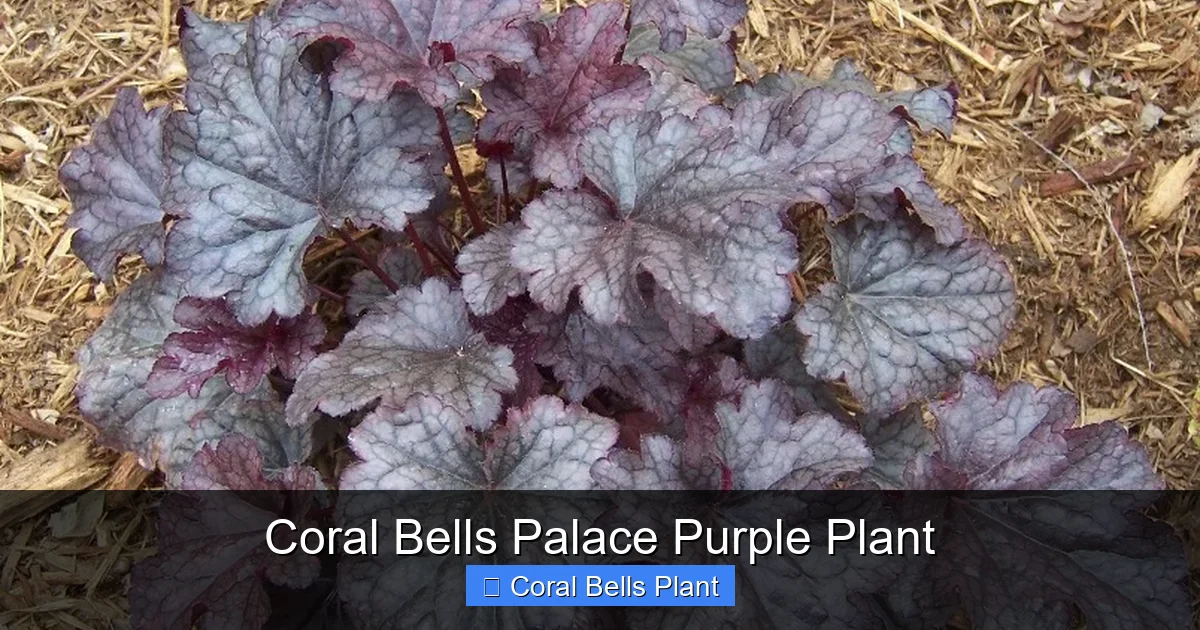
The Coral Bells Palace Purple plant belongs to the genus Heuchera, a group of North American natives commonly called coral bells or alumroot. Palace Purple is a cultivar of Heuchera micrantha, selected for its exceptionally dark foliage. The leaves emerge in spring with a rich, glossy purple-bronze hue that deepens to a dramatic near-black purple as the season progresses. In cooler weather, the color intensifies even further, often taking on reddish undertones.
Each leaf is somewhat maple-shaped with gently lobed edges and a slightly ruffled texture. The foliage forms a neat, mounded clump that typically reaches twelve to eighteen inches tall and wide. But the leaves are only half the show. In late spring to early summer, slender wiry stems rise above the foliage, reaching up to two feet tall. These stems carry loose panicles of tiny, bell-shaped flowers in a soft pinkish-white shade. The blooms are delicate and airy, dancing in the slightest breeze.
A Brief History
Palace Purple has quite the origin story. It was discovered in the 1980s at the Royal Botanic Gardens, Kew — specifically at Kew Palace, hence the name. The plant was a spontaneous seedling of Heuchera micrantha that caught the eye of botanists for its unusually dark foliage. It was introduced to the horticultural trade and quickly gained popularity. In 1991, the Perennial Plant Association named it Perennial Plant of the Year, cementing its status as a garden classic.
Before Palace Purple came along, most coral bells were grown primarily for their flowers, with foliage that was green or lightly variegated. This cultivar helped spark a revolution in Heuchera breeding. Today, there are hundreds of coral bells varieties in colors ranging from lime green to caramel to deepest black. But Palace Purple remains a benchmark — the variety against which all other purple-leaved coral bells are measured.
Ideal Growing Conditions
Light Requirements
One of the biggest misconceptions about the Coral Bells Palace Purple plant is that it needs full shade. In reality, it is quite adaptable. In cooler northern climates, it can handle full sun provided it gets adequate moisture. The foliage color is often most intense with some morning sun. In hot southern regions, afternoon shade is essential to prevent leaf scorch. The sweet spot for most gardeners is dappled shade or morning sun with afternoon protection — think under a high-canopy tree or on the east side of a structure.
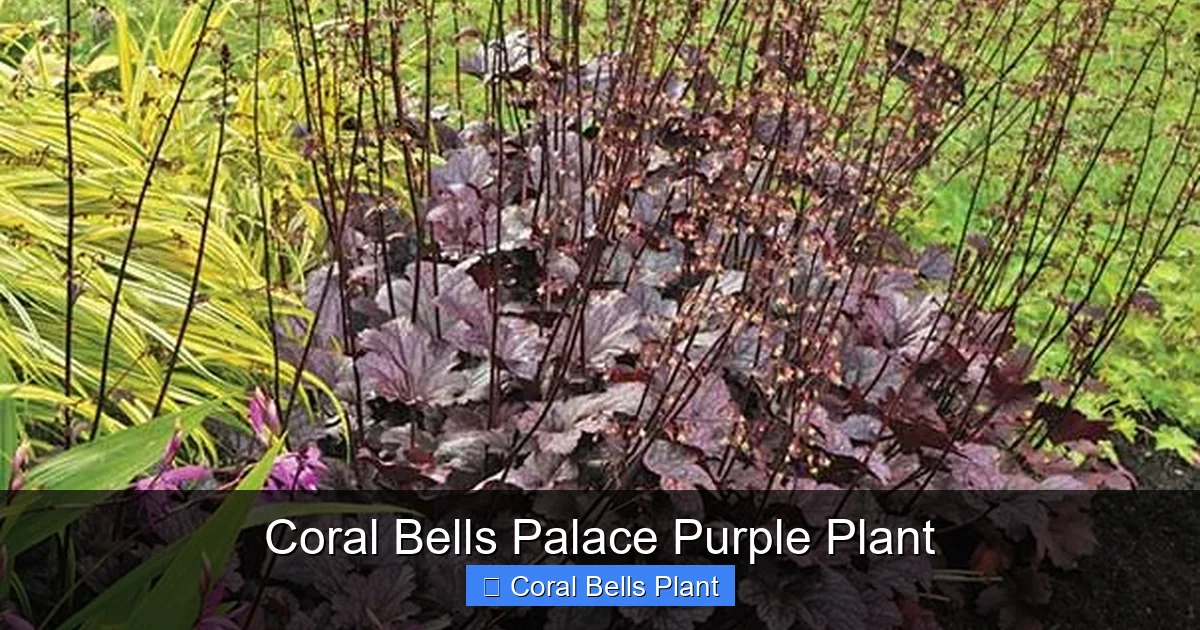
Visual guide about Coral Bells Palace Purple Plant
Image source: thetutuguru.com.au
I have grown Palace Purple in everything from deep shade to nearly full sun in my Zone 6 garden. The plants in deeper shade have larger leaves but slightly less intense color. The ones with morning sun are more compact and vividly colored. Both perform beautifully. If you are unsure, start with a spot that gets filtered light or morning sun only. You can always move it later — coral bells transplant easily.
Soil Preferences
Good drainage is non-negotiable for Palace Purple coral bells. These plants hate wet feet, especially in winter. Heavy clay soil can be problematic unless amended. The ideal soil is rich in organic matter, slightly acidic to neutral (pH 6.0 to 7.0), and well-draining. If your soil is heavy, work in plenty of compost, leaf mold, or aged manure before planting. Raised beds or berms are excellent solutions for poorly drained areas.
I learned this lesson the hard way. My first Palace Purple plants went into a low spot that stayed soggy after rain. They survived but never thrived. The following year, I moved them to a raised bed amended with compost, and they doubled in size within a season. The difference was remarkable.
Water Needs
Consistent moisture is key, especially during the first growing season as the plant establishes its root system. Water deeply once or twice a week rather than frequent shallow watering. Once established, Palace Purple is moderately drought tolerant but performs best with regular moisture. Mulch around the base with shredded leaves, bark, or straw to conserve moisture and keep roots cool. Avoid piling mulch against the crown — this can lead to rot.
Hardiness and Climate Adaptability
The Coral Bells Palace Purple plant is reliably hardy in USDA zones 4 through 9. In zone 4, it benefits from a protective layer of mulch or snow cover in winter. In zones 8 and 9, it may remain evergreen year-round. In hot, humid climates, good air circulation is crucial to prevent fungal issues. This plant does not love the extreme heat and humidity of the deep South, but with afternoon shade and good drainage, it can still succeed.
Planting Your Palace Purple Coral Bells
When to Plant
Spring and fall are the ideal planting times. Spring planting gives the roots a full growing season to establish before winter. Fall planting works well too, provided you plant at least six weeks before the ground freezes. Summer planting is possible but requires diligent watering. Avoid planting during heat waves.
Step-by-Step Planting Guide
Start by choosing your location based on the light and soil requirements discussed above. Dig a hole twice as wide as the root ball and just as deep. If your soil needs improvement, mix compost into the excavated soil at a ratio of about one part compost to three parts native soil. Gently remove the plant from its pot. If the roots are tightly circling, tease them apart with your fingers or make a few vertical cuts with a knife — this encourages outward growth.
Place the plant in the hole so the crown — where stems meet roots — sits at or slightly above soil level. This is critical. Planting too deep is the number one reason coral bells fail. Backfill with your amended soil, firming gently to eliminate air pockets. Water thoroughly to settle the soil. Apply a two-inch layer of mulch, keeping it away from the crown. Space plants twelve to eighteen inches apart if planting in groups.
Container Planting
Palace Purple coral bells make spectacular container plants. Their mounded habit and dramatic foliage look stunning in pots, either alone or as the “thriller” in a mixed planting. Choose a container at least twelve inches wide with drainage holes. Use a high-quality potting mix amended with perlite or coarse sand for extra drainage. Container plants need more frequent watering and fertilizing than in-ground plants. In cold climates, move pots to a protected location or bury them in the ground for winter.
Ongoing Care and Maintenance
Watering Routine
Established Coral Bells Palace Purple plant specimens need about an inch of water per week, either from rainfall or irrigation. During hot, dry spells, increase frequency. Water at the base of the plant to keep foliage dry — wet leaves invite fungal diseases. A soaker hose or drip irrigation is ideal. In winter, reduce watering but do not let the soil become bone dry, especially for container plants.
Fertilizing
These are not heavy feeders. A light application of balanced, slow-release fertilizer in early spring is plenty. Alternatively, top-dress with an inch of compost around the base each spring. Avoid high-nitrogen fertilizers — they promote lush foliage at the expense of flowers and can make the plant more susceptible to disease. If your soil is rich in organic matter, you may not need to fertilize at all.
Pruning and Deadheading
Maintenance is minimal. Remove spent flower stems after blooming to tidy the appearance and prevent unwanted self-seeding (though seedlings rarely come true to the parent’s color). In late winter or early spring, before new growth emerges, cut back any tattered or winter-damaged leaves to the base. This makes room for fresh growth and improves air circulation. Do not cut into the woody crown.
Dividing — The Secret to Longevity
This is the most important maintenance task for the Coral Bells Palace Purple plant. Over time, the crown becomes woody and the center of the plant may die out, leaving a ring of growth around a dead middle. Division every three to four years rejuvenates the plant and gives you free plants to share or spread around your garden.
Divide in early spring as new growth appears, or in early fall. Dig up the entire clump. Using a sharp knife or spade, cut the crown into sections, each with several healthy leaves and roots. Discard the woody, unproductive center. Replant divisions at the same depth as the original plant, water well, and mulch. They may look a bit sad for a week or two but will bounce back quickly.
Winter Care
In most climates, no special winter care is needed beyond a light mulch after the ground freezes. In zone 4 and exposed sites, apply a thicker mulch of straw or evergreen boughs after the soil freezes to prevent frost heaving. Do not cut back foliage in fall — the leaves protect the crown. Wait until spring. Container plants in zones 6 and colder should be moved to an unheated garage, buried in the ground, or insulated with bubble wrap and burlap.
Design Ideas and Companion Plants
Where to Use Palace Purple in the Garden
The versatility of the Coral Bells Palace Purple plant is one of its greatest assets. Its mounded form and intense color make it a natural for the front of a shady border. Plant it in drifts of three, five, or seven for maximum impact. It works beautifully along woodland paths, where its foliage catches dappled light. In rock gardens, its texture contrasts nicely with stones and finer-textured plants.
Container combinations are where this plant truly shines. Pair it with chartreuse creeping jenny, silver-leaved lamium, or variegated ivy for a stunning foliage-only pot. Add white impatiens or pink begonias for seasonal color. In mixed borders, use Palace Purple as a repeating accent to tie the design together.
Perfect Plant Partners
Companion planting with Palace Purple is all about contrast. Its dark foliage makes neighboring plants pop. Some classic combinations:
- Hostas: Blue or gold hostas create beautiful contrast. Try ‘Sum and Substance’ (chartreuse) or ‘Halcyon’ (blue).
- Ferns: Japanese painted fern with its silver and burgundy fronds echoes the purple tones. Maidenhair fern adds delicate texture.
- Heucherellas: These Heuchera-Tiarella hybrids come in amazing colors. ‘Sweet Tea’ (cinnamon) or ‘Gold Zebra’ (yellow with red centers) are stunning nearby.
- Astilbes: Feathery plumes in pink, red, or white rise above the mounded coral bells in early summer.
- Hakonechloa (Japanese Forest Grass): The cascading gold or green blades of ‘Aureola’ or ‘All Gold’ soften the edges.
- Pulmonaria (Lungwort): Silver-spotted leaves and early spring flowers in blue and pink.
- Hellebores: Late winter to early spring bloomers that take over the show when coral bells are dormant.
Seasonal Interest Timeline
One reason gardeners love the Coral Bells Palace Purple plant is its long season of interest. Here is what to expect through the year:
- Early Spring: Fresh new leaves emerge, often with a brighter, more reddish tone than mature foliage. Remove any winter-damaged leaves.
- Late Spring: Foliage reaches full size and deepens to characteristic purple. Flower stems begin to elongate.
- Early Summer: Peak bloom time. Airy sprays of pinkish-white bells hover above the mound. Hummingbirds visit regularly.
- Mid to Late Summer: Flowers fade. Remove spent stems. Foliage remains handsome and may darken further in heat.
- Fall: Color often intensifies with cooler nights, developing rich bronzy-red undertones. This is a great time to divide if needed.
- Winter: In zones 6 and warmer, foliage persists and provides structure. In colder zones, leaves may flatten but often remain attractive until heavy snow or extreme cold.
Common Problems and Solutions
Pests
The Coral Bells Palace Purple plant is remarkably pest-resistant. Deer and rabbits typically avoid it due to the astringent compounds in the leaves. However, a few pests can occasionally cause trouble:
- Vine Weevils: The adults notch leaf edges at night. The larvae, which are more damaging, feed on roots and can kill plants. Check for C-shaped white grubs in the soil if plants decline suddenly. Beneficial nematodes applied in spring or fall control larvae effectively.
- Slugs and Snails: Less of a problem than on hostas, but they may feed on young leaves in wet weather. Use beer traps, diatomaceous earth, or iron phosphate baits.
- Foliar Nematodes: Microscopic worms that cause angular brown spots between leaf veins. Remove and destroy affected leaves. Avoid overhead watering.
Diseases
Fungal diseases are the main concern, almost always related to poor drainage or poor air circulation.
- Crown Rot: The number one killer. Caused by soil-borne fungi in wet conditions. The crown turns mushy and black, leaves yellow and collapse. Prevention is everything: plant high, ensure drainage, do not overwater, do not mulch over the crown. Once established, crown rot is usually fatal.
- Powdery Mildew: White powdery coating on leaves, usually in humid conditions with poor air flow. Improve spacing, avoid overhead watering, remove affected leaves. Fungicides can help but cultural fixes are better.
- Rust: Orange-brown pustules on leaf undersides. Remove affected leaves, improve air circulation.
- Leaf Spot: Various fungi cause brown or black spots. Usually cosmetic. Remove badly affected leaves, clean up debris in fall.
Cultural Issues
- Frost Heaving: Freeze-thaw cycles push the shallow crown out of the ground, exposing roots. Mulch after ground freezes. If it happens, gently press the plant back into soil in spring.
- Sun Scorch: Bleached, crispy patches on leaves from too much intense sun. Move to a shadier spot or provide afternoon shade.
- Woody Center / Die-Out: Natural aging process. The fix is division every few years.
- Poor Color: Usually too much shade or too much nitrogen fertilizer. Increase light slightly, reduce feeding.
Propagation Methods
Division — The Easiest and Most Reliable
As described in the maintenance section, division is the primary way to propagate the Coral Bells Palace Purple plant. It produces clones identical to the parent plant and is best done in spring or early fall. Water the plant well the day before dividing. Dig the entire clump, shake off excess soil, and cut the crown into sections with a clean, sharp knife. Each division needs at least two to three healthy shoots with roots attached. Replant immediately.
Seed Propagation — For the Patient Experimenter
Palace Purple can be grown from seed, but there is a catch. Seedlings will not be identical to the parent. They will show variation in leaf color, shape, and size. Some may be greener, some darker, some with different markings. This can be fun if you enjoy experimentation, but if you want more true Palace Purple plants, stick with division.
If you want to try seeds, collect them when the seed capsules turn brown and split open in late summer. Sow fresh seeds on the surface of moist seed-starting mix — they need light to germinate. Keep at sixty-five to seventy degrees Fahrenheit. Germination takes two to four weeks. Grow seedlings under lights or in a bright window until they have several true leaves, then harden off and transplant. It takes a year or two to reach flowering size.
Leaf Cuttings — Advanced Technique
Some growers propagate Heuchera from leaf cuttings. Take a healthy leaf with a short piece of petiole (leaf stem) attached. Dip the cut end in rooting hormone and insert into moist perlite or sand. Cover with a plastic bag to maintain humidity. Place in bright, indirect light. Roots may form in four to six weeks. This method is less reliable than division but can produce many plants from a single specimen.
Varieties and Relatives Worth Knowing
Other Purple Coral Bells
While Palace Purple is the classic, breeders have developed many other purple-leaved coral bells. Some notable ones:
- ‘Obsidian’: Jet black, glossy leaves that hold color exceptionally well in sun. More heat tolerant.
- ‘Black Pearl’: Ruffled, near-black leaves with a pearlescent sheen. Vigorous and sun tolerant.
- ‘Plum Pudding’: Silvery plum leaves with dark veins. A longtime favorite.
- ‘Forever Purple’: Ultra-glossy purple leaves that do not fade. Compact habit.
- ‘Berry Smoothie’: Bright rose-pink new growth maturing to deep purple. Stunning in spring.
Heucherella (Foamy Bells)
These are hybrids between Heuchera and Tiarella (foamflower). They combine the colorful foliage of coral bells with the more showy, foamy flower spikes of foamflower. Many have deeply lobed leaves with dramatic center coloring. ‘Sweet Tea’, ‘Redstone Falls’, and ‘Gold Zebra’ are excellent choices that pair beautifully with Palace Purple.
Tiarella (Foamflower)
The other parent of heucherellas. Native woodland plants with maple-shaped leaves often marked with dark centers. Flowers are showier than coral bells — dense, foamy spikes in white or pink. ‘Spring Symphony’, ‘Sugar and Spice’, and ‘Cutting Edge’ are standouts. They prefer more consistent moisture than Heuchera.
The Palace Purple Coral Bells in Different Garden Styles
Woodland Garden
This is the natural habitat for the Coral Bells Palace Purple plant. Under deciduous trees, among native ferns, wild ginger, trilliums, and bloodroot, it looks completely at home. The purple foliage bridges the gap between early spring ephemerals and summer perennials. Let it self-sow gently (though seedlings will vary) to form naturalistic drifts over time.
Modern Minimalist
In contemporary designs, Palace Purple’s bold color and clean mounded form work beautifully. Mass it in geometric blocks along a pathway. Pair with architectural plants like Japanese forest grass, boxwood spheres, or upright grasses. Use steel or concrete planters for a striking industrial contrast.
Cottage Garden
Tuck it among roses, peonies, foxgloves, and delphiniums in a part-shade cottage border. Its foliage provides a dark foil for pastel flowers and hides the bare legs of taller plants. The airy flower spikes fit right in with the informal, romantic aesthetic.
Rock Garden
Plant in crevices between stones or at the edge of a rock wall. The ruffled leaves soften hard edges. Ensure excellent drainage — mix grit into the planting hole. Combine with sedums, sempervivums, and dwarf conifers.
Container Gardens
We have touched on this, but it bears repeating: Palace Purple is a container superstar. Use it as a solo specimen in a beautiful pot, or as the anchor in a mixed planting. It plays well with almost anything — trailing plants, upright accents, seasonal annuals. And you can move it to follow the light or to feature it at its peak.
Buying Guide: Selecting Healthy Plants
What to Look For
When shopping for Coral Bells Palace Purple plant specimens, whether at a local nursery or a big-box store, keep these points in mind:
- Foliage Color: Look for deep, rich purple leaves. Avoid plants with lots of green leaves (may be mislabeled or grown in too much shade) or yellowing leaves (stress, overwatering, or nutrient deficiency).
- Crown Health: Gently brush away soil at the base. The crown should be firm, not mushy. No foul odor.
- Root System: If possible, slip the plant partially out of the pot. Roots should be white or light tan, firm, and fill the pot without being a solid mass circling the bottom.
- Pests: Check leaf undersides and crown for aphids, mealybugs, or vine weevil notches.
- Size: A quart or gallon pot is a good value. Larger plants establish faster but cost more. Small plugs are economical for mass planting but need a season to bulk up.
Where to Buy
Local independent nurseries often carry the best selection and healthiest plants, plus knowledgeable staff. Specialty perennial nurseries and mail-order sources offer the widest variety, including newer introductions. Big-box stores can be hit or miss — plants may be stressed from inconsistent care but are often cheaper. Online retailers ship bare-root or in pots; buy from reputable companies with good guarantees.
When to Buy
Spring offers the best selection. Fall is a great time to plant and often features sales. Avoid buying in the heat of summer unless you can plant immediately and water diligently. Bare-root plants are typically only available in early spring.
Frequently Asked Questions
Is Palace Purple Coral Bells Evergreen?
In zones 7 and warmer, Palace Purple is typically evergreen, holding its foliage year-round. In zones 5 and 6, it is semi-evergreen — leaves may persist but often look tattered by late winter. In zone 4, it is usually deciduous, dying back to the crown. Even when evergreen, the old leaves should be removed in spring to make way for fresh growth.
Can Palace Purple Grow in Full Sun?
In northern zones (4 to 6), yes, with consistent moisture. The foliage color is often most intense with some direct sun. In zones 7 and up, afternoon shade is essential to prevent scorching. If you only have full sun, consider ‘Obsidian’ or ‘Black Pearl’ which are bred for better sun tolerance.
Why Is My Palace Purple Turning Green?
Several reasons: too much shade (move to brighter spot), too much nitrogen fertilizer (cut back on feeding), or it could be a seedling that reverted (if you grew from seed). Mature plants in optimal light should hold deep purple color. Some seasonal variation is normal — spring leaves are often brighter, summer leaves deeper.
How Fast Does Palace Purple Spread?
It is a clump-former, not a runner. The clump slowly expands outward, reaching mature width of twelve to eighteen inches in two to three years. It does not spread aggressively. Division every three to four years keeps it vigorous and gives you more plants.
Are the Flowers Showy?
The flowers are delicate and airy rather than bold. They are charming up close and attract hummingbirds, but from a distance, the foliage is the main show. Many gardeners remove the flower stems to keep the focus on the leaves. If you love the blooms, leave them — they last several weeks and make nice cut flowers for small arrangements.
Can I Grow Palace Purple Indoors?
It is possible but challenging. Coral bells need a winter dormancy period triggered by cold temperatures. Without it, they decline over time. If you want to try, give it the brightest indirect light possible, cool temperatures (fifty to sixty degrees Fahrenheit in winter), and excellent drainage. Better to enjoy it outdoors and bring cut foliage inside for arrangements.
Conclusion
The Coral Bells Palace Purple plant has earned its place as a garden classic through decades of reliable performance and undeniable beauty. Few perennials offer so much — dramatic foliage color, delicate flowers, shade tolerance, deer resistance, and year-round interest — with so little demand on the gardener’s time.
Whether you are a novice gardener looking for a foolproof shade plant or an experienced designer seeking a versatile color accent, Palace Purple delivers. It bridges styles from woodland to modern, works in the ground or in pots, and plays well with a vast array of companions. And perhaps best of all, it is a plant you can share. Every division is an opportunity to pass along a piece of your garden to a friend, neighbor, or the next generation of gardeners.
If you have a shady spot that needs life, a container that needs drama, or a border that needs a recurring rhythm of deep purple — give Palace Purple coral bells a try. Plant it high, water it well, divide it occasionally, and it will reward you for years to come. My original plants have outlasted three dogs, two fences, and countless garden trends. They will likely outlast me, too, continuing their quiet show of purple splendor for whoever tends this garden next.
Start with one. See how it transforms the shade. Then plant three more. And maybe a few in pots. Before you know it, you will be the one digging divisions for the neighbors, telling the story of the plant that changed your shade garden forever.
Frequently Asked Questions
How tall does the Coral Bells Palace Purple plant grow?
The foliage mound typically reaches 12 to 18 inches tall and wide. Flower stems can extend up to 24 inches above the foliage in early summer, creating an airy vertical accent.
What zones are best for growing Palace Purple coral bells?
Palace Purple coral bells are hardy in USDA zones 4 through 9. They perform best in zones 5 to 7 where summers are not extremely hot and humid. In zone 4, provide winter mulch protection. In zones 8 to 9, ensure afternoon shade and good air circulation.
Does Palace Purple coral bells bloom all summer?
No, Palace Purple coral bells bloom for about 3 to 4 weeks in late spring to early summer (typically May to June). The flowers are delicate pinkish-white bells on wiry stems. Deadheading spent stems keeps the plant tidy but does not promote reblooming.
What soil amendments does Palace Purple coral bells need?
Palace Purple coral bells need well-draining soil rich in organic matter. Amend heavy clay or sandy soils with compost, leaf mold, or aged manure before planting. The ideal soil pH is slightly acidic to neutral (6.0 to 7.0). Good drainage is essential to prevent crown rot.
Can I grow Palace Purple coral bells from seed?
You can grow coral bells from seed, but seedlings will not be identical to the parent Palace Purple plant. They will vary in leaf color and form. For true-to-type plants, propagate by division in spring or fall. Seed propagation is best for breeders or gardeners who enjoy experimentation.
What are the best companion plants for Palace Purple coral bells?
Excellent companions include chartreuse or blue hostas, Japanese painted ferns, Hakonechloa (Japanese forest grass), astilbes, heucherellas, pulmonarias, and hellebores. The key is contrast — light or silver foliage against the deep purple leaves creates stunning combinations.