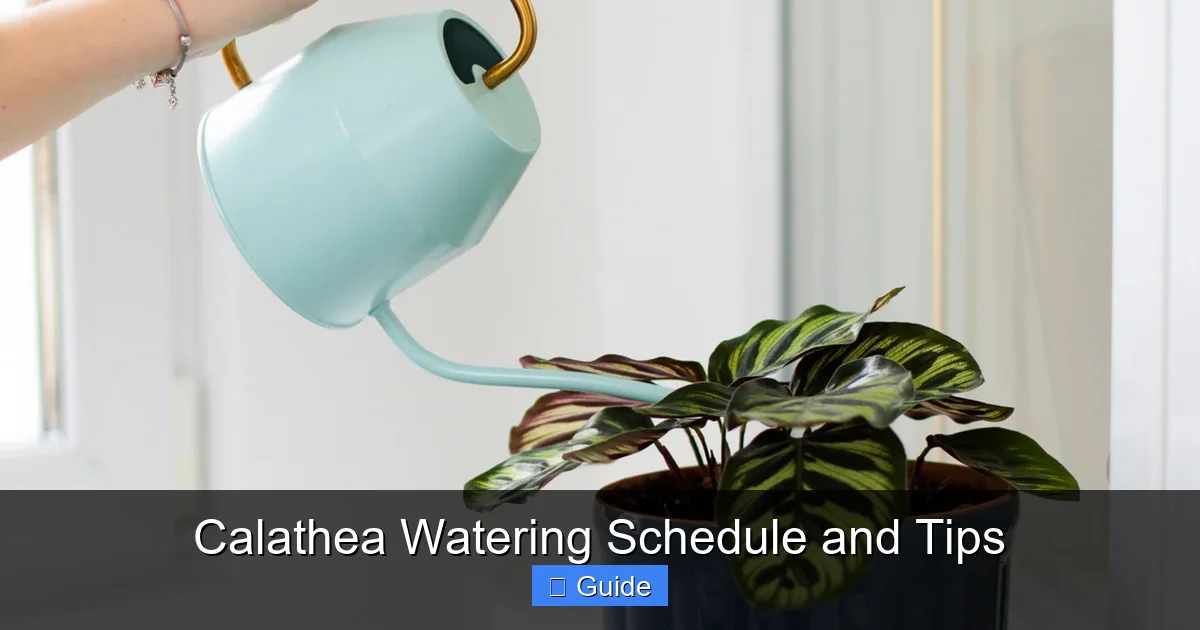
Calathea Watering Schedule and Tips
Mastering a calathea watering schedule and tips ensures your plant gets consistent moisture without soggy roots. Water when the top inch of soil feels dry, use filtered water, and maintain high humidity for vibrant, healthy leaves.
Welcome to this calathea watering schedule and tips guide. If you love the striking patterns of calathea leaves, you know they can be a bit fussy about water. This article breaks down everything you need to keep your plant happy and healthy. We will cover soil checks, water quality, timing, humidity, common mistakes, and troubleshooting.
Calathea plants come from tropical forests where the air is moist and the soil stays evenly damp. Recreating those conditions at home is the secret to success. Follow the steps below and you will see brighter colors and fewer crispy edges.
Key Takeaways
- Check soil moisture first: Feel the top inch before watering to avoid overwatering.
- Use filtered or distilled water: Tap water can contain salts that harm calathea leaves.
- Water in the morning: Morning watering lets excess moisture evaporate during the day.
- Keep humidity high: A pebble tray or humidifier mimics the plant’s tropical home.
- Adjust with seasons: Reduce frequency in winter when growth slows.
- Watch leaf signals: Curling or browning edges often mean water issues.
Quick Answers to Common Questions
How often should I water my calathea?
Water when the top inch of soil feels dry, typically every 5‑7 days in summer and every 10‑14 days in winter.
Can I use tap water for calathea?
Tap water works if you let it sit overnight to dissipate chlorine, but filtered or distilled water is better.
What humidity level does calathea need?
Aim for 50‑60% relative humidity; use a pebble tray, grouping, or a humidifier to achieve it.
Why are my calathea leaf edges turning brown?
Brown edges usually mean low humidity, hard water, or inconsistent watering.
Should I mist my calathea leaves?
Misting gives a brief humidity boost but a humidifier or tray provides steadier moisture.
📑 Table of Contents
- Calathea Watering Schedule and Tips: Know Your Plant’s Needs
- Calathea Watering Schedule and Tips: Choosing the Right Water
- Calathea Watering Schedule and Tips: Timing and Frequency
- Calathea Watering Schedule and Tips: Humidity and Environment
- Calathea Watering Schedule and Tips: Common Mistakes to Avoid
- Calathea Watering Schedule and Tips: Troubleshooting and Adjustments
Calathea Watering Schedule and Tips: Know Your Plant’s Needs
Calathea Watering Schedule and Tips: Identify Light Conditions
Light affects how fast the soil dries. Bright indirect light speeds up evaporation, while low light keeps soil wet longer. Place your calathea near a north‑facing window or behind a sheer curtain. Observe the soil daily for the first week to learn its drying rhythm. This calathea watering schedule and tips step helps you set a reliable baseline for future care.
Calathea Watering Schedule and Tips: Check Soil Type
A well‑draining mix with peat, perlite, and orchid bark works best. Heavy garden soil holds too much water and leads to root rot. When you repot, choose a pot with drainage holes. Feel the mix; it should be light and airy. This calathea watering schedule and tips detail prevents soggy roots and promotes healthy growth.
Calathea Watering Schedule and Tips: Observe Leaf Signals
Leaves talk. Curling inward often means the plant is thirsty. Brown tips can signal both over‑ and underwatering. Yellowing lower leaves may indicate the soil stayed wet too long. Use these cues together with the finger test for a reliable calathea watering schedule and tips routine that adapts to your plant’s needs.
Calathea Watering Schedule and Tips: Choosing the Right Water
Calathea Watering Schedule and Tips: Use Filtered or Distilled Water
Tap water often contains chlorine, fluoride, and minerals that build up in the soil. Filtered or distilled water removes those chemicals. If you must use tap water, let it sit overnight so chlorine evaporates. This calathea watering schedule and tips practice protects delicate leaf edges and keeps the root zone clean.
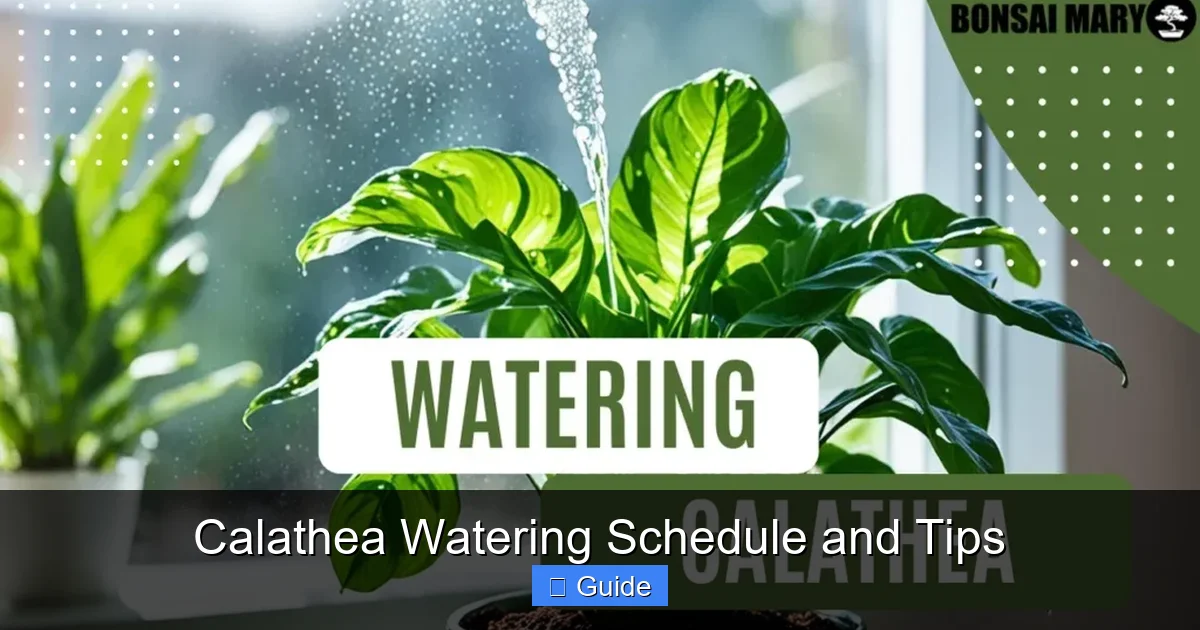
Visual guide about Calathea Watering Schedule and Tips
Image source: bonsaimary.com
Calathea Watering Schedule and Tips: Avoid Hard Water
Hard water leaves white crust on the soil surface and on leaves. That crust blocks moisture uptake and can cause tip burn. A simple test: boil a cup of water and see if a white residue remains. If it does, switch to filtered water for your calathea watering schedule and tips plan to avoid long‑term damage.
Calathea Watering Schedule and Tips: Temperature Matters
Cold water shocks tropical roots. Use room‑temperature water, around 68‑72°F (20‑22°C). Warm water encourages steady uptake and reduces stress. This small calathea watering schedule and tips tweak makes a big difference over time and helps maintain vibrant foliage.
Calathea Watering Schedule and Tips: Timing and Frequency
Calathea Watering Schedule and Tips: Water When Top Inch Is Dry
Insert your finger about an inch into the soil. If it feels dry, water thoroughly until it drains out the bottom. If it feels moist, wait a day and check again. This calathea watering schedule and tips rule prevents both drought and drowning, giving roots the oxygen they need.
Calathea Watering Schedule and Tips: Seasonal Adjustments
During spring and summer the plant grows fast and uses more water. Water every 5‑7 days. In fall and winter growth slows; stretch the interval to 10‑14 days. Adjusting frequency with the seasons is a core calathea watering schedule and tips principle that matches the plant’s natural cycle.
Calathea Watering Schedule and Tips: Morning vs Evening Watering
Morning watering gives leaves time to dry before night, lowering fungal risk. Evening watering can leave moisture on foliage overnight. Stick to mornings for a safer calathea watering schedule and tips habit that supports healthy leaf movement.
Calathea Watering Schedule and Tips: Humidity and Environment
Calathea Watering Schedule and Tips: Boost Humidity with a Tray
Place a shallow tray filled with pebbles and water under the pot. As water evaporates, humidity rises around the plant. Refill the tray when the water level drops. This calathea watering schedule and tips trick mimics a rainforest floor and keeps leaf edges from crisping.
Calathea Watering Schedule and Tips: Group Plants Together
Clustering several tropical plants creates a microclimate with higher humidity. The collective transpiration raises moisture for each member. This calathea watering schedule and tips method works well on a shelf or plant stand and reduces the need for extra devices.
Calathea Watering Schedule and Tips: Use a Humidifier
A small room humidifier set to 50‑60% relative humidity gives consistent results. Run it a few hours each day, especially in dry winter months. This calathea watering schedule and tips tool is the most reliable way to meet humidity needs and keep leaves supple.
Calathea Watering Schedule and Tips: Common Mistakes to Avoid
Calathea Watering Schedule and Tips: Overwatering Signs
Soggy soil, mushy stems, and a foul smell mean too much water. Leaves may turn yellow and drop. If you see these signs, let the soil dry out completely before the next watering. This calathea watering schedule and tips warning saves roots from rot and restores balance.
Calathea Watering Schedule and Tips: Underwatering Signs
Crispy leaf edges, dramatic curling, and slow growth indicate thirst. The soil will pull away from the pot sides. Give a deep soak and resume the regular calathea watering schedule and tips check to bring the plant back to vigor.
Calathea Watering Schedule and Tips: Salt Buildup
White crust on the soil surface signals mineral accumulation. Flush the pot with plenty of filtered water once a month. This calathea watering schedule and tips flush keeps the root zone clean and prevents nutrient lockout.
Calathea Watering Schedule and Tips: Troubleshooting and Adjustments
Calathea Watering Schedule and Tips: Adjusting After Repotting
After repotting, the plant may need a week to settle. Water lightly the first time, then follow the normal calathea watering schedule and tips routine. Avoid fertilizing for two weeks to reduce stress and allow new roots to establish.
Calathea Watering Schedule and Tips: Dealing with Pests
Spider mites and mealybugs love dry conditions. Raising humidity and wiping leaves with a damp cloth helps. If infestation persists, treat with neem oil following label directions. This calathea watering schedule and tips step protects foliage and maintains plant health.
Calathea Watering Schedule and Tips: Long‑Term Care Routine
Set a weekly reminder to check soil moisture. Clean leaves monthly to remove dust. Rotate the pot for even light exposure. Consistency is the heart of any successful calathea watering schedule and tips plan and leads to steady, beautiful growth.
By following this calathea watering schedule and tips guide you give your plant the steady moisture, clean water, and humid air it craves. Small daily habits add up to big, beautiful growth. Enjoy the dance of those patterned leaves as they respond to your care.
Frequently Asked Questions
What is the best soil mix for calathea?
A blend of peat, perlite, and orchid bark offers good drainage while retaining enough moisture for calathea roots.
How do I know if I am overwatering?
Signs include soggy soil, yellowing lower leaves, mushy stems, and a sour smell from the pot.
Can calathea tolerate low light?
Calathea prefers bright indirect light; low light slows growth and can cause leggy stems.
When should I fertilize my calathea?
Feed with a balanced liquid fertilizer at half strength once a month during the growing season.
Is it normal for calathea leaves to move during the day?
Yes, calathea leaves fold up at night and open in daylight; this nyctinastic movement is healthy.
How do I increase humidity without a humidifier?
Place a pebble tray with water under the pot, group plants together, or set the pot on a tray of wet moss.