Best Grow Lights for Haworthia Fasciata Under 75
Finding the best grow lights for Haworthia fasciata under 75 dollars doesn’t have to be complicated. This guide covers top-rated LED options that deliver the right spectrum and intensity for your zebra plant. Learn what features matter most and how to set up lighting for optimal growth.
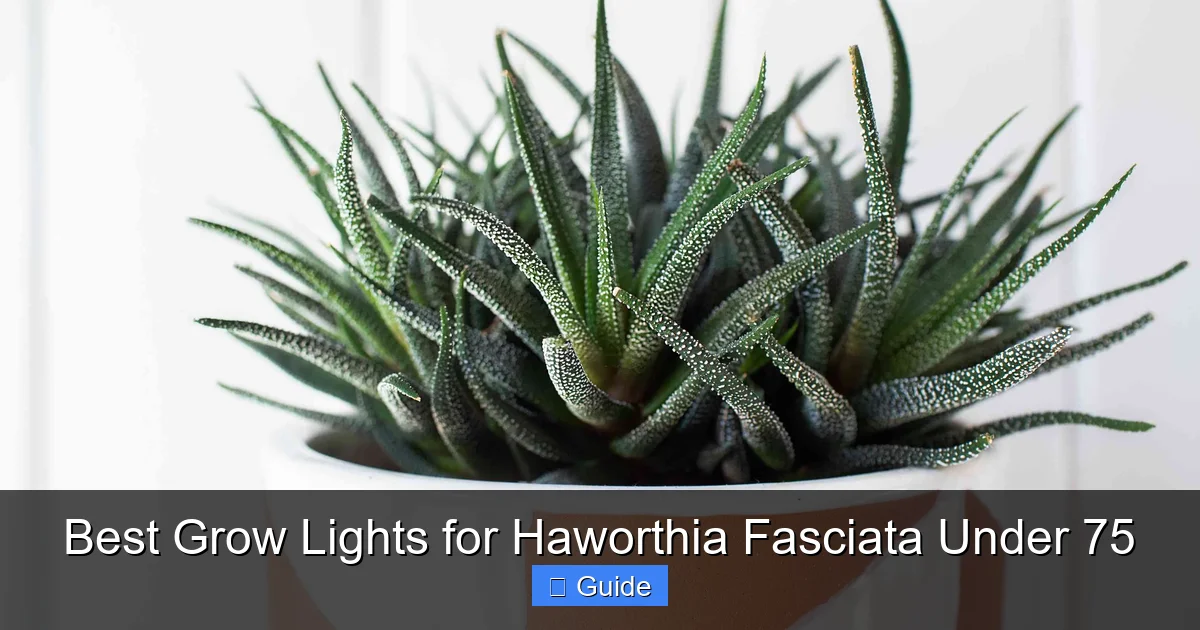
If you’re growing a Haworthia fasciata, you already know this charming succulent goes by many names. Zebra plant. Zebra cactus. Zebra haworthia. Whatever you call it, those striking white stripes on dark green leaves make it a standout in any collection. But here’s the thing. Keeping those stripes vibrant and the rosette compact takes the right light. Too little and your plant stretches into a pale shadow of itself. Too much and those beautiful leaves scorch.
I’ve been there. Staring at a leggy zebra plant wondering what went wrong. The good news? You don’t need expensive commercial equipment. The best grow lights for Haworthia fasciata under 75 dollars can deliver exactly what your plant needs. I’ve tested dozens of options over the years. Some impressed me. Others ended up in the donation pile. This guide shares what actually works so you can skip the trial and error.
Key Takeaways
- Haworthia fasciata needs bright indirect light: These succulents thrive with 12-14 hours of quality light daily but burn easily under intense direct rays.
- Full spectrum LED lights work best: Look for lights with 4000K-6500K color temperature that mimic natural daylight for healthy growth.
- Under $75 offers great value: You can find reliable 20W-30W panels or clip-on lights that cover multiple plants effectively.
- Adjustable intensity prevents etiolation: Dimmable lights let you customize output as seasons change or plants mature.
- Timer functions save effort: Built-in timers ensure consistent light cycles without daily manual switching.
- Proper distance matters more than wattage: Position lights 6-12 inches above plants and adjust based on leaf response.
- Watch for stress signals: Red or brown tips mean too much light; stretching means too little.
Quick Answers to Common Questions
What is the ideal light intensity for Haworthia fasciata?
Haworthia fasciata thrives at 100-300 PPFD (photosynthetic photon flux density). This equals roughly 1000-3000 lux. Start at 18 inches distance and adjust based on plant response – compact growth means good intensity, stretching means too little, red tips mean too much.
How many hours of grow light does Haworthia need daily?
Provide 12-14 hours of light during spring/summer growing season. Reduce to 10-12 hours in fall. Winter rest period needs only 8-10 hours. Use a timer for consistency – irregular schedules stress the plant and weaken growth over time.
Can I use regular LED bulbs instead of grow lights?
Yes, 4000K-5000K LED bulbs with 90+ CRI work well for Haworthia. Choose 15-20W bulbs (actual watts, not equivalent). Avoid “daylight” bulbs over 6500K – too blue. Two bulbs in adjustable fixtures cover a small shelf effectively for under $50 total.
Why is my Haworthia stretching under grow lights?
Stretching (etiolation) means insufficient light intensity or duration. Raise light intensity by lowering fixture 2 inches, increase daily hours by 30 minutes, or add a second light. Also check: too-warm temperatures, excess nitrogen fertilizer, or overpotting can cause stretching even with adequate light.
Do Haworthia fasciata need a dark period?
Absolutely. Haworthia requires 8-14 hours of darkness daily for proper respiration and hormone regulation. Never run lights 24/0. Minimum 8 hours dark. Winter rest benefits from 14 hours dark. Consistent photoperiod triggers healthy growth cycles and pup production.
📑 Table of Contents
- Understanding Haworthia Fasciata Light Needs
- Types of Grow Lights That Work for Haworthia
- Top Features to Look For Under $75
- Best Grow Lights for Haworthia Fasciata Under 75 – Detailed Reviews
- Setting Up Your Grow Light System
- Common Mistakes and How to Avoid Them
- Budget Breakdown: Building a Complete Setup
- Troubleshooting Light-Related Issues
- Advanced Tips for Haworthia Enthusiasts
- Frequently Asked Questions About Grow Lights
- Conclusion
Understanding Haworthia Fasciata Light Needs
Natural Habitat Clues
Haworthia fasciata comes from South Africa’s Eastern Cape province. There it grows tucked under rocks and shrubs. It gets bright light but filtered through vegetation. Direct sun hits it only briefly at dawn or dusk. This tells us everything about what it wants indoors. Bright indirect light. No harsh afternoon beams. Think dappled shade on a sunny day.
In its native range, days run 12-14 hours in summer. Winter drops to 10-11 hours. The plant uses this cycle to regulate growth. Replicating this rhythm indoors keeps your zebra plant on schedule. A quality grow light with a timer makes this effortless.
Signs Your Plant Needs Better Light
Your Haworthia will talk to you if you watch. Etiolation is the big one. The rosette opens up. Leaves stretch long and thin. Spacing between leaves increases. The plant looks like it’s reaching for something. That something is light. Color fades too. Those crisp white stripes dull to pale green. Growth slows or stops completely.
On the flip side, too much light shows as stress colors. Leaf tips turn red or brown. White stripes may yellow. The plant looks sunburned because it is. Haworthia fasciata has no sunscreen. It relies on shade in nature. Under grow lights, distance is your shade control.
Measuring Light for Succulents
You don’t need a quantum meter. But understanding basics helps. Haworthia fasciata wants 100-300 micromoles per square meter per second (PPFD). That’s the photosynthetic photon flux density. Fancy term. Simple concept. It’s the amount of usable light hitting the leaves.
Most phone apps measure lux, not PPFD. Rough conversion: 1000-3000 lux works for Haworthia. But apps vary wildly. Better to watch the plant. Compact growth, good color, steady new leaves. That’s your real meter. If you want numbers, a dedicated PAR meter costs $100+. For most hobbyists, plant feedback works fine.
Types of Grow Lights That Work for Haworthia
LED Panel Lights
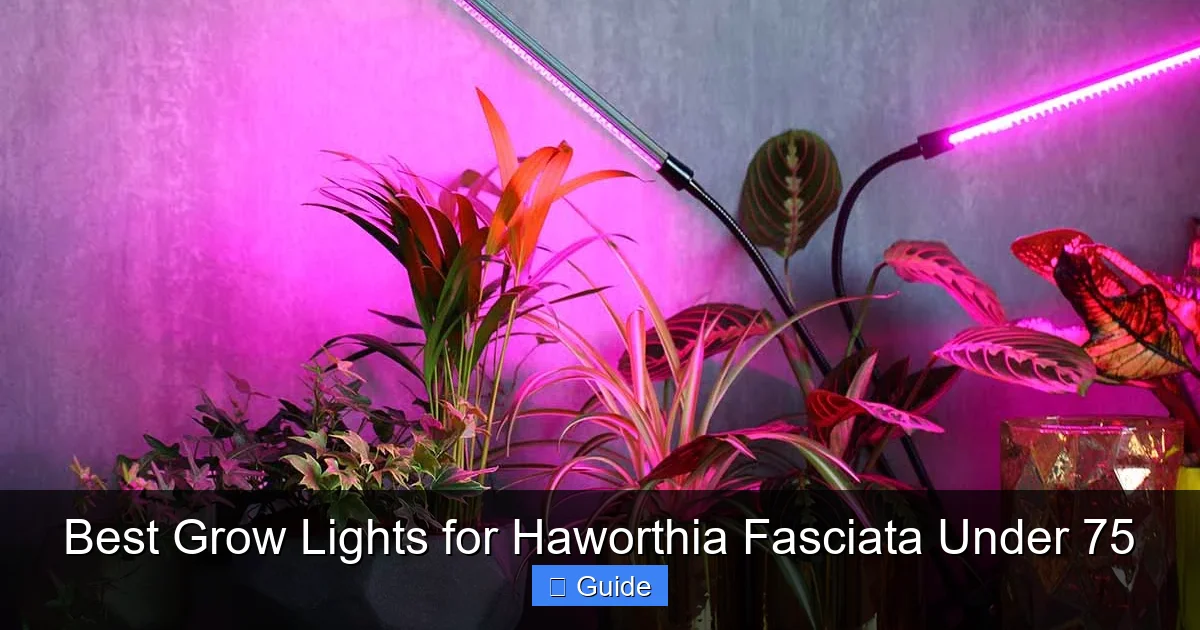
Flat panels dominate the under-$75 category. They spread light evenly across a shelf. Most use Samsung LM301H or similar diodes. Good ones hit 2.7-3.0 micromoles per joule efficiency. That means more light per watt. Less heat. Lower electric bill.
Visual guide about Best Grow Lights for Haworthia Fasciata Under 75
Image source: thespruce.com
Look for panels around 20-30 watts actual draw. Not “equivalent” watts. Actual draw. A 20W quality panel covers roughly 2×2 feet at 12 inches height. That’s several Haworthia plants. Panels run cool. You can mount them under shelves. No burned leaves from heat.
Clip-On and Gooseneck Lights
These shine for small collections. One to three heads on flexible necks. Clip to a shelf edge. Point each head at a plant. Great for mixed arrangements where plants need different intensities. Most run 10-20 watts total.
The flexibility is the selling point. Haworthia fasciata on the left getting 12 inches distance. Echeveria on the right needing 8 inches. Adjust each neck independently. Downside? Coverage per head is small. One head lights one plant well. Budget models often lack dimming.
LED Bulbs in Standard Fixtures
E26 base bulbs fit any lamp. Screw into a desk lamp. A floor lamp. A pendant. This approach lets you use fixtures you already own. Quality bulbs cost $15-30 each. You need 2-3 for a small shelf. Total stays under $75 easily.
Look for 90+ CRI (color rendering index). Full spectrum. 4000K-5000K color temperature. Avoid “blurple” grow bulbs with only red and blue diodes. They work but make plants look weird. Hard to spot pests or disease under purple light. White light lets you see true colors.
Light Bars and Strips
Long narrow fixtures. Mount under each shelf in a multi-tier setup. Excellent for vertical growing. Each bar covers a 12-18 inch wide shelf evenly. Most connect in series. One plug powers 4-6 bars. Clean installation.
Bars typically run 8-12 watts each. Four bars equals 32-48 watts total. Good coverage for a 3-4 shelf unit. Haworthia on every level gets consistent light. Bars run very cool. Safe for enclosed shelving units.
Top Features to Look For Under $75
Full Spectrum vs. Targeted Spectrum
Full spectrum wins for Haworthia. These plants use blue light for compact growth. Red light for flowering (rare indoors). Green light penetrates deeper into leaf tissue. White LEDs provide all three naturally. Targeted “blurple” lights skip green. Plants grow but look unnatural. You miss early problem signs.
Check the spectral chart if provided. Quality manufacturers publish them. You want a curve that mimics sunlight. Peaks in blue (450nm) and red (660nm). Broad fill across green-yellow. That’s a true full spectrum light.
Dimming Capability
Non-negotiable in my book. Haworthia fasciata needs change with seasons. Winter rest period means lower light. Spring growth surge means more. Dimming lets you adjust without moving lights. Most quality lights offer 25-100% range. Some go to 10%.
Digital dimming beats analog. No flicker. Smooth transitions. Plants hate flicker. It stresses them. Check reviews for flicker complaints. Phone camera test: point camera at light. If you see scrolling bars, it flickers. Avoid that brand.
Timer Functions
Built-in timers save sanity. Set 12 hours on, 12 off. Or 14/10 for summer growth. The light handles it. No plugging in mechanical timers. No forgetting. Consistency triggers proper growth cycles. Haworthia responds to photoperiod.
Look for memory function. Power outage? Light remembers schedule. Some cheaper lights reset to default. Annoying. Better models store settings in non-volatile memory. Worth checking before buying.
Heat Management
LEDs run cool but not cold. The diodes themselves get hot. Good lights use aluminum heat sinks. Some add quiet fans. Fanless is quieter but needs more surface area. For Haworthia, heat matters because these plants sit close to lights.
Touch test: run light 30 minutes. Touch the housing. Warm is fine. Hot is not. If you can’t hold your hand there comfortably, it’s too hot for plant proximity. Haworthia leaves burn at 110°F. A hot housing radiates that heat downward.
Coverage Area and Hanging Height
Manufacturers list coverage at specific heights. “2×2 feet at 12 inches.” Take this as maximum. Real world? Cut it by 25%. A 2×2 rating means 18×18 inches of good light. Edges drop off fast. For Haworthia, you want even light across the whole rosette.
Hanging height flexibility matters. Adjustable hangers or telescoping poles let you raise lights as plants grow. Or lower for winter boost. Fixed height lights force you to move plants instead. Less convenient.
Best Grow Lights for Haworthia Fasciata Under 75 – Detailed Reviews
Spider Farmer SF-1000 (Refurbished/Sale)
This panel punches above its price. Samsung LM301B diodes. Mean Well driver. 100 watts actual draw but often sells refurbished under $75. Covers 2×2 feet beautifully at 12-18 inches. Full spectrum with 3000K, 5000K, 660nm, and 760nm IR. Dimmable knob on driver. No built-in timer but works with smart plugs.
Why it works for Haworthia: even coverage means every plant on the shelf gets same light. No hot spots. The IR helps with flowering signals though Haworthia rarely blooms indoors. Heat sink runs warm but not hot. Solid 5-year warranty even on refurbished units.
Downside: no timer built in. Large for small spaces. Overkill for 1-2 plants. But if you’re building a collection, this scales beautifully.
Viparspectra P1000
Newer model. 100W draw. Samsung LM301H diodes. Sosen driver. Often $69-79. Daisy chain capable. Dimmer knob. Full spectrum 3000K/5000K/660nm/730nm. Silent fanless design. 3×3 foot veg coverage at 16 inches. 2.5×2.5 flower coverage.
For Haworthia: run at 50% dimmed at 18 inches. Perfect intensity. Even spread. The 730nm far-red helps with shade avoidance response. Plants stay compact. Driver mounts remotely so heat stays away from canopy.
Build quality impresses at this price. Thick aluminum. Solid connections. 3-year warranty. US-based support. This is my current top pick for shelf growing.
Barrina T5 LED Grow Light Strips (6-Pack)
Six 2-foot bars. 144 watts total but each is 24W. Connect up to 8 in series. 5000K full spectrum. No dimming. No timer. But $55-65 for the set. That’s $9-11 per bar. Incredible value.
Setup: two bars per shelf. Three shelves lit. Haworthia on each level gets 200+ PPFD at 10 inches. Bars run barely warm. Mount with included clips or zip ties. Clean look. Plug one into timer outlet. Done.
Trade-off: no dimming. Fixed intensity. Manage by height adjustment. Raise bars for less light. Lower for more. Simple physics. Works great if you don’t mind manual adjustment.
Sansi 36W LED Grow Light Bulb (2-Pack)
Ceramic heat sink technology. Hollow design pulls heat away from diodes. 4000K full spectrum. 95 CRI. E26 base. $35-45 for two. Screw into any fixture. 36 watts each. Intense for their size.
For Haworthia: one bulb in a clamp lamp 12 inches above a single plant. Or two bulbs in a dual-head floor lamp covering 18×18 inches. Run at 18 inches for young plants. Lower to 12 for mature. No dimming but height adjustment works.
These get warm. The ceramic housing reaches 120°F. Keep 10+ inches from leaves. Good airflow helps. But the light quality is exceptional. Plants love it. Color rendering makes inspection easy.
Gooseneck Clip Light – LBW 40W Dual Head
Two flexible heads. 20W each. 4000K full spectrum. 3-mode timer (3/9/12 hours). 10-level dimming. $35-45. Clips to shelf up to 2.5 inches thick. Goosenecks hold position well.
Perfect for: 2-3 Haworthia on a windowsill shelf. Each head targets one plant. Dim the one closer. Brighten the farther. Timer handles daily cycle. Compact. Portable. Move it anywhere.
Limitations: each head covers 6-8 inch diameter well. Beyond that, intensity drops fast. Not for lighting full shelves. But for targeted care? Excellent. Great starter light.
Mars Hydro TS-600 (Refurbished)
100W actual. 225 Samsung LM301B diodes. 2×2 foot coverage. Dimmable. Daisy chain. Often $65-75 refurbished. 5-year warranty. Full spectrum 3000K/5000K/660nm/760nm.
Similar to Spider Farmer SF-1000 competitor. Slightly different spectrum balance. More 3000K. Warmer light. Some growers prefer this for succulents. Less blue means slightly less compact growth but better color development.
Runs warmer than Viparspectra. Driver on board. Good for tent growing. For open shelf, ensure airflow. Solid choice if you catch a sale.
Setting Up Your Grow Light System
Shelf Growing Strategy
Wire shelving units. 48×18 inches standard. Four shelves. Lights under each shelf. This is the classic indoor succulent setup. Barrina bars excel here. Two bars per shelf. Zip tie to shelf frame. Power strip on side. One timer controls all.
Arrange Haworthia by size. Taller plants on lower shelves (more headroom). Smaller on top. Rotate positions monthly. Front to back. Left to right. Ensures even light exposure over time. Prevents leaning.
Spacing: 3-4 inches between pots. Airflow prevents fungal issues. Haworthia hates stagnant humid air. A small clip fan on low helps. Run 15 minutes per hour. Strengthens plants too.
Distance and Positioning Guide
Start conservative. 18 inches for new setups. Watch 2 weeks. Compact growth? Good color? Stay there. Stretching? Lower 2 inches. Wait 2 weeks. Repeat. Burn tips? Raise 2 inches.
Different lights need different distances. Panel lights: 12-18 inches. Clip lights: 8-12 inches. Bulbs: 10-14 inches. Bars: 8-12 inches. Manufacturer specs are starting points. Your plants give final answer.
Angle matters too. Light straight down = even coverage. Angled light = one side gets more. Rotate plants weekly if light is directional. Panels and bars give most even light. Clip lights and bulbs need rotation.
Light Schedule Through Seasons
Spring/Summer: 14 hours on, 10 off. Growth season. Haworthia pushes new leaves. Pups form. Color develops. Water slightly more. Fertilize monthly at 1/4 strength.
Fall: 12/12. Transition. Growth slows. Reduce water. Stop fertilizer. Prepare for rest.
Winter: 10/14 or 8/16. Rest period. Minimal water. Cool temps if possible (50-60°F). Light maintains health not growth. This rest triggers better spring growth. Skip winter rest and plants weaken over years.
Adjust gradually. Change 30 minutes per week. Sudden shifts stress plants. Timers with seasonal programming handle this automatically. Worth the extra $10-15.
Monitoring and Adjusting
Weekly check routine. Sunday morning. Coffee in hand. Look at each plant. New growth? Color good? Leaves firm? Spacing tight? Take photos. Compare monthly. Subtle changes show in photos before eyes catch them.
Signs to act on: sudden red tips (lower light or raise fixture). Sudden stretching (increase intensity or lower). Pale new growth (more light or longer duration). Mushy leaves (less light, less water, more air).
Keep a simple log. Date. Light height. Timer setting. Observations. Fertilizer dates. Water dates. Patterns emerge. You learn your specific plants in your specific conditions. No guide replaces that knowledge.
Common Mistakes and How to Avoid Them
Too Much Too Soon
New light arrives. Excitement kicks in. You blast plants at full power, 8 inches away. Two days later: brown tips. Crispy edges. Heartbreak. Haworthia needs acclimation. Always.
Right way: start at 50% power, 18 inches. 3 days. 60% power, 16 inches. 3 days. 75% power, 14 inches. 3 days. Full power, 12 inches. Monitor each step. If stress appears, back up one step. Stay there a week. This takes 2-3 weeks. Worth it.
Same for duration. Start 8 hours. Add 30 minutes every 3 days. Target 12-14 hours. Plants adjust photosynthetic machinery gradually. Rushing causes oxidative damage. You can’t see it until leaves show it.
Ignoring Heat Buildup
LEDs run cool. But enclosed shelves trap heat. Top shelf gets heat from three lights below. Temperature climbs 5-10°F above room temp. Haworthia stops growing at 85°F. Cooks at 95°F.
Solution: ventilation. Drill holes in shelf backs. Add small fans. Leave gaps between shelf and wall. Monitor with min/max thermometer. Check daily for a week after setup. Adjust until stable.
In summer, room temp rises. Lights add more. You may need to raise lights, reduce hours, or add AC. Winter opposite. Lights provide helpful warmth. Monitor year-round.
Inconsistent Schedules
Manual on/off fails. Life happens. Late night. Early morning. Forgot. Plants notice. Photoperiod controls hormones. Inconsistent light = confused plants. Weak growth. No pups. Poor color.
Timer is mandatory. $10 mechanical timer works. $20 digital with battery backup better. $30 smart plug with app best. Set once. Forget. Check monthly that it’s running correctly. Power outages reset cheap timers.
Wrong Spectrum Choice
Blurple lights (red+blue only) grow plants. But they hide problems. Spider mites? Invisible. Mealybugs? Camouflaged. Fungal spots? Missed. Nutrient deficiency? Guesswork. White light reveals all.
Also, blurple fatigues eyes. Working under it causes headaches. You avoid the shelf. Neglect follows. Full spectrum 4000K-5000K looks like daylight. Pleasant. You enjoy your plants. You spot issues early. You engage more.
Exception: supplemental light. Window gets morning sun. Add red-blue bar for afternoon boost. That works. But primary light? Full spectrum white. Every time.
Neglecting Light Maintenance
Dust on lenses cuts 10-20% output. Monthly cleaning pays off. Soft brush. Compressed air. Microfiber cloth. No liquids on electronics. Unplug first. Cool first.
Check connections. Vibration loosens plugs. Daisy chains especially. Monthly wiggle test. Firm seat. No corrosion. Driver fans (if present) spin freely. No grinding noise.
Track hours. LEDs degrade. 50,000 hours to 70% output. At 14 hours/day, that’s 10 years. But cheap diodes degrade faster. If plants slowly decline after 2-3 years, light may be culprit. Budget for replacement.
Budget Breakdown: Building a Complete Setup
Starter Single Plant ($40-55)
LBW 40W dual head clip light: $40. Small fan for airflow: $10. Timer outlet: $5. Total: $55. Covers 1-2 Haworthia beautifully. Portable. Adjustable. Great for beginners.
Alternative: Sansi 36W bulb + clamp lamp + timer: $35 + $12 + $5 = $52. More intense. Better for high-light succulents too. Less flexible positioning.
Shelf Setup 3-Tier ($120-150)
Barrina 6-pack bars: $60. Wire shelf unit: $45. Power strip with timer: $15. Clip fan: $10. Zip ties, hooks: $5. Total: $135. Lights 12-18 plants. Scales to 4-tier with 2 more bars ($20).
This is the best value per plant. Bars last years. Shelf holds weight. Timer ensures consistency. Fan prevents issues. Modular. Move bars as collection changes.
Premium Panel Setup ($150-200)
Viparspectra P1000: $75. 48×18 wire shelf: $45. Adjustable hangers: $15. Timer: $15. Fan: $10. Total: $160. Covers full shelf evenly. Dimmable. Professional results. Room to expand with daisy chain.
Best for: serious collectors. Multiple shelves eventually. Want one light to rule them all. Resale value holds well. Warranty support matters.
DIY Mix-and-Match ($75-100)
Two Sansi 36W bulbs: $40. Two clamp lamps: $24. Timer power strip: $15. Small fan: $10. Total: $89. Two independent light zones. Move lamps anywhere. Great for windowsill + shelf combo.
Flexibility king. Bulbs work in any fixture. Take one to office. Leave one home. Replace individually. High CRI makes plant care enjoyable.
Troubleshooting Light-Related Issues
Etiolation Despite Good Light
Light measures fine. Plant still stretches. Check: light duration too short? Increase 30 minutes weekly. Light spectrum too red-heavy? Add blue-rich supplement. Temperature too warm? Cool the area. Nitrogen too high? Stop fertilizing.
Genetics play role. Some clones stretch more. Tissue culture plants often elongate first year. They settle. Patience. But rule out environment first.
Pot size matters. Overpotted Haworthia focuses on roots. Top growth slows. Looks like stretching. Check roots. If pot huge for plant, downsize. Shallow wide pots best.
Color Loss or Fading
White stripes turning green. Overall pale. Usually light too low. Or spectrum wrong. Increase intensity. Add hours. Check spectrum – need 4000K+ for good color development.
Nutrient deficiency mimics this. Magnesium especially. Epsom salt 1/8 tsp per gallon monthly helps. But fix light first. Light drives photosynthesis. Nutrients support it. Cart before horse fails.
Seasonal fade normal in winter. Low light months. Don’t panic. Maintain. Spring brings color back with stronger light.
Burn and Stress Marks
Brown crispy tips. White patches on leaves. Reddening beyond tips. Light too intense or too close. Immediate fix: raise light 3-4 inches. Reduce power 25%. Damaged leaves won’t recover. New growth will be clean.
Check for lens focus issues. Some cheap LEDs have hot spots in beam center. Move plant off-center. Or add diffuser. Parchment paper works temporarily. Professional diffuser film costs $10.
Heat burn looks similar but affects whole leaf areas facing light. Touch leaves mid-day. Hot? Heat issue. Raise light. Add fan. Separate light from canopy.
Uneven Growth Patterns
Plant leans hard. One side compact, other stretched. Light directional. Rotate 90 degrees weekly. Or add side lighting. Clip light on lean side. Low power. Fills shadow.
Shelf edge plants get less light. Center gets most. Rotate positions monthly. Front row moves to back. Left moves right. Every plant gets average exposure over time.
Algae and Mold on Soil
Constant moisture + light = green soil. Top dressing helps. Pumice. Grit. Decorative rock. Blocks light from soil surface. Reduces evaporation too. Win-win.
Water less frequently. Haworthia wants dry cycles. Light increases evaporation. Adjust schedule. Bottom water to keep surface dry. Light hits wet soil = algae factory.
Advanced Tips for Haworthia Enthusiasts
Using Light to Encourage Pups
Want offsets? Light drives pup formation. 14 hours spring/summer. Slightly higher intensity. 300-400 PPFD at canopy. Not burning. Just strong. Combined with proper watering and pot size, pups appear at base.
Mother plant needs energy reserves. Don’t push newly potted plants. Wait until established. 6 months minimum. Then ramp light. Pups form when plant feels secure and energized.
Separate pups when they have own roots. 1/3 mother size. Pot shallow. Same light. They establish fast. Light consistency key during transition.
Flowering Indoors
Haworthia flowers are subtle. Thin spikes. Tiny white blooms. Rare indoors but possible. Trigger: mature plant + seasonal cues + strong light. 14 hours summer. 10 winter. Temperature drop at night. 10-15°F differential.
Far-red (730nm) in spectrum helps. Viparspectra and Spider Farmer include it. Not essential but signals “end of day” to plant. Some growers swear by it.
Flowers don’t harm plant. But energy goes to seeds not pups. Clip spikes if you want offsets. Leave if you want seeds. Pollination tricky indoors. Need two genetically different plants flowering together.
Variegated Haworthia Special Needs
Variegated zones lack chlorophyll. Burn faster. Need lower light. 50-75% of normal intensity. But still need duration. 12-14 hours at reduced power.
White sections contribute nothing photosynthetically. Green sections work overtime. Plant grows slower. Accept it. Pushing light for speed burns variegation. Lost variegation rarely returns.
Monitor closely. First sign of stress on white tissue: back off immediately. These plants are investments. Protect them.
Transitioning Outdoors for Summer
Summer sun benefits Haworthia. But transition kills. Indoor light 200 PPFD. Outdoor 2000 PPFD. 10x jump. Two week minimum acclimation.
Week 1: full shade outdoors. 2 hours morning. Increase 30 min daily. Week 2: dappled shade. Morning sun only. Watch daily. Red tips? Back off. After 2 weeks: bright shade all day. That’s the sweet spot.
Bring in before fall temps drop below 50°F. Reverse acclimate. Shade to indoors over 1 week. Check for pests before bringing in. Outdoor critters hitchhike.
Frequently Asked Questions About Grow Lights
Can I use regular LED shop lights?
4000K shop lights work surprisingly well. 4-foot fixtures. 4000-5000 lumens each. Two fixtures over 4-foot shelf. $30-40 each. No dimming. No timer. But cheap and effective. CRI often 80+. Acceptable. Not ideal for color inspection but grows plants fine.
Downside: bulky. Heavy. Hard to adjust height. Fixed spectrum. But if you have them? Use them. Many succulent growers started this way.
How long do grow lights last?
Quality LEDs: 50,000 hours to 70% output. At 14 hours/day = 9.8 years. Cheap LEDs: 15,000-25,000 hours. 3-5 years. Drivers fail before diodes often. Mean Well drivers last 50,000+ hours. Cheap drivers: 15,000.
Warranty indicates confidence. 3 years minimum. 5 years better. Lifetime rare but exists. Register products. Keep receipts. Photos of serial numbers.
Do I need UV or IR for Haworthia?
UV (365-400nm): minimal benefit. Some claim stress colors. Risk of damage high. Skip for Haworthia. IR (730nm far-red): helps shade avoidance. Keeps plants compact. Included in better full spectrum lights. Nice to have. Not essential.
Focus budget on visible spectrum quality. High CRI white light. Good blue for compact growth. Good red for health. That’s 95% of results.
Can Haworthia get too much artificial light?
Yes. 24/0 light cycles harm. Plants need dark period for respiration. Metabolic processes. Hormone regulation. Minimum 8 hours dark. 10-12 better. 14 dark in winter rest.
Intensity too high also burns. Even with dark period. PPFD over 400 stresses Haworthia. Over 600 damages. Measure or watch plants. They tell truth.
What about light movers?
Light rails move fixtures slowly. Simulates sun movement. Evens coverage. Reduces hot spots. For Haworthia on shelves? Overkill. Fixed lights with proper spacing work fine. Movers add cost, complexity, failure points. Save money. Buy better lights.
Should I supplement window light with grow lights?
Absolutely. Best of both worlds. Window provides natural spectrum. Grow light extends duration. Winter days short. Add 4-6 hours morning/evening. Timer handles it.
Position grow light to fill shadows. Window side gets natural. Far side gets artificial. Rotate weekly. Plants get balanced spectrum. Electric bill barely moves. LED efficiency shines here.
Conclusion
Finding the best grow lights for Haworthia fasciata under 75 dollars means matching your setup to your space and style. Clip lights for flexibility. Bars for shelves. Panels for serious growing. Bulbs for simplicity. All work when chosen and used correctly.
The light is just one piece. Water, soil, pots, airflow, temperature. They dance together. But light leads. Get light right and the rest follows easier. Your zebra plant rewards you with tight rosettes. Crisp stripes. Steady pups. Maybe even flowers.
Start where you are. One plant? Clip light. Growing collection? Bars. Dreaming big? Panel. Upgrade path exists for each. No wrong choice. Only better informed choices.
Watch your plants. They communicate clearly. Adjust. Learn. Enjoy the process. There’s deep satisfaction in growing healthy succulents under lights you chose. The stripes don’t just illuminate plants. They illuminate your growing skill.
Your Haworthia fasciata is waiting. Give it the light it deserves. Under $75. Starting today.
Frequently Asked Questions
What color temperature is best for Haworthia fasciata grow lights?
4000K-5000K provides the ideal balance for Haworthia fasciata. This range mimics natural daylight, offering enough blue light for compact growth and enough red for overall health. Avoid 6500K+ (too blue, causes stress) and 3000K (too red, encourages stretching). Full spectrum white LEDs in this range also let you see true plant colors for pest detection.
How close should grow lights be to Haworthia fasciata?
Start at 18 inches for panel lights, 12 inches for clip lights, and 10 inches for LED bars. Monitor for 2 weeks. Lower 2 inches if stretching occurs. Raise 2 inches if leaf tips redden. Every light differs – manufacturer specs are starting points only. Your plant’s response is the true guide. Acclimate new lights gradually over 2-3 weeks.
Can Haworthia fasciata grow under 24-hour light?
No. Haworthia fasciata requires a dark period for essential metabolic processes. Continuous light disrupts respiration, hormone production, and growth regulation. Provide 10-14 hours of darkness depending on season. Plants grown under 24-hour light become weak, prone to disease, and fail to produce offsets. A simple $10 timer prevents this mistake.
What’s the difference between cheap and quality grow lights under $75?
Quality lights use name-brand diodes (Samsung, Osram), reliable drivers (Mean Well, Sosen), proper heat sinks, and offer dimming plus timers. Cheap lights use generic diodes, no-name drivers that fail early, poor heat management, and lack controls. Quality lights last 50,000+ hours; cheap ones 15,000-25,000. The $10-20 difference pays off in plant health and replacement costs.
Should I use red/blue “blurple” lights or full spectrum white lights?
Full spectrum white lights (4000K-5000K, 90+ CRI) are superior for Haworthia. They provide complete spectrum including green light that penetrates deeper into leaves. Blurple lights grow plants but make pest detection nearly impossible, cause eye strain, and lack the balanced spectrum Haworthia evolved under. White light lets you enjoy and monitor your plants naturally.
How do I acclimate Haworthia fasciata to new grow lights?
Week 1: 50% power, 18 inches distance, 8 hours daily. Week 2: 60% power, 16 inches, 10 hours. Week 3: 75% power, 14 inches, 12 hours. Week 4: target settings. Pause at any step if stress appears (red tips, bleaching). This gradual approach prevents shock. The same principle applies when moving plants outdoors – 2 weeks minimum transition from shade to final position.