Usb-powered for Hoya Under $75
Finding the right USB-powered grow light for your hoya doesn’t have to break the bank. This guide covers everything you need to know about selecting, setting up, and troubleshooting affordable USB lighting solutions under $75. Learn how to keep your wax plants thriving with proper light spectrum, intensity, and placement strategies.
Key Takeaways
- USB-powered lights offer flexibility: You can plug them into power banks, laptops, or wall adapters for versatile placement anywhere in your home.
- Full spectrum is essential for hoyas: Look for lights that provide both blue and red wavelengths to support both vegetative growth and flowering.
- Distance matters more than you think: Most USB lights need to be 6-12 inches from your hoya for effective photosynthesis without burning leaves.
- Timer functions prevent human error: Built-in timers or smart plugs ensure consistent 12-14 hour light cycles that hoyas need.
- Heat management protects delicate leaves: Even low-wattage USB lights can generate heat; ensure airflow around your plants.
- Monitor for light stress signs: Reddening leaves, curling, or bleaching indicate your light is too intense or too close.
- Budget options can rival expensive setups: Many under-$75 USB lights deliver PAR values sufficient for hoya growth when used correctly.
Quick Answers to Common Questions
Can USB grow lights really provide enough light for hoya flowering?
Yes, quality USB lights 15W+ at proper distance (6-12 inches) deliver 300-500 µmol/m²/s sufficient for flowering many hoya species when run 12-14 hours daily.
Do I need a special USB-C charger for higher wattage grow lights?
Most lights over 15W require USB-C Power Delivery (PD) or Quick Charge (QC) adapters. Standard 5V/2.4A phone chargers max out at 12W and will limit brightness or cause flickering.
How close should USB grow lights be to my hoya plants?
Clip lights: 6-8 inches. Light bars: 10-12 inches. Panels: 8-10 inches. Use a lux meter app to verify 200-500 µmol/m²/s at leaf level for your specific setup.
Why are my hoya leaves turning red under USB grow lights?
Reddening usually indicates light stress — the light is too intense or too close. Raise lights 2-3 inches, reduce daily hours by 2, and increase humidity. Some varieties naturally redden in high light.
Can I run USB grow lights from a power bank for a portable setup?
Yes, but check the power bank’s output rating. Most only provide 5V/3A (15W max). For 20W+ lights, you need a PD power bank supporting 12V or 20V output at sufficient amperage.
📑 Table of Contents
- Why USB-Powered Lights Make Sense for Hoya Collectors
- Understanding What Hoyas Actually Need From Light
- Top USB-Powered Grow Lights for Hoyas Under $75
- Setting Up Your USB Light System for Success
- Troubleshooting Common USB Light Problems
- Advanced Tips for Getting Flowers With Budget Lights
- Maintaining Your USB Light Investment
- Building a Complete Under-$75 Setup: Real Examples
- Conclusion
Why USB-Powered Lights Make Sense for Hoya Collectors
If you’re growing hoyas, you already know these beautiful wax plants can be picky about their light. Too little and they stretch toward the window, becoming leggy and weak. Too much direct sun and those gorgeous thick leaves scorch. This is where USB-powered grow lights enter the picture, and honestly, they’ve been a game changer for my own collection.
The beauty of USB-powered options lies in their versatility. You’re not tied to outlet placement. Running a shelf of hoyas in a bookshelf? Plug the light into a power bank tucked behind the books. Have a desk setup with limited outlets? Your laptop or a multi-port charger handles it. For under $75, you can light up multiple shelves or create a dedicated propagation station without calling an electrician.
But here’s the thing — not all USB lights are created equal. The market is flooded with options that look great in photos but fail in practice. Some lack the spectrum hoyas need. Others overheat. A few have timers that reset every time you bump the power strip. I’ve tested dozens across my collection of over thirty hoya varieties, from the common Hoya carnosa to finicky Hoya macgillivrayi. Let me walk you through what actually works.
Understanding What Hoyas Actually Need From Light
The Natural Habitat Clue
Most hoyas grow as epiphytes in tropical and subtropical forests. They climb trees, receiving bright but filtered light through the canopy. This tells us two critical things: they want intensity, but they want it diffused. Direct, harsh light burns them. Deep shade makes them etiolate — that’s the technical term for stretching weakly toward light sources.
Visual guide about Usb-powered for Hoya Under $75
Image source: m.media-amazon.com
Photosynthetic Photon Flux Density Basics
Don’t let the fancy term scare you. PPFD measures how many photosynthetically active photons hit a square meter per second. For hoyas, you’re targeting 100-300 µmol/m²/s for maintenance growth, and 300-500 µmol/m²/s if you want flowers. Most USB lights in our price range deliver 50-200 µmol/m²/s at 12 inches. That means placement is everything.
Spectrum Requirements for Wax Plants
Hoyas need full spectrum light — think 4000K-6500K color temperature with peaks in blue (400-500nm) for compact growth and red (600-700nm) for flowering triggers. Many cheap USB lights are “blurple” — heavy on blue and red, missing the green and yellow wavelengths that penetrate leaf tissue deeper. Full spectrum white LEDs with added red diodes give the best results.
Top USB-Powered Grow Lights for Hoyas Under $75
Clip-On Gooseneck Models — Maximum Flexibility
The clip-on gooseneck design remains my top recommendation for most hoya growers. Models like the GHodec 5500K dual-head or the Mosthink 20W dual-arm typically run $25-45. You get two adjustable arms, each with 10-15 watts of actual draw. The clips attach to shelves, desk edges, or pot rims. Goosenecks let you position each head independently — crucial when you have a Hoya linearis trailing down and a compact Hoya kerrii sitting upright on the same shelf.
Look for models with 3-5 brightness levels and 3/6/12 hour timer cycles. The timer memory feature matters — some cheaper units forget their settings after power loss. Test this before committing to a full shelf setup.
Light Bars for Shelf Systems
If you’re running IKEA greenhouse cabinets (Milsbo, Detolf, Fabrikor) or wire shelving units, light bars make more sense. The Barrina T5 2ft or 4ft tubes, sold in 4-6 packs for $40-65, connect end-to-end with included cords. Each bar pulls 10-20 watts. Mount them under each shelf with zip ties or the included clips. You’ll need a USB-C PD trigger cable or a USB-A to barrel jack adapter for power — about $8 extra.
These bars deliver more even coverage than clip lights. My Hoya pubicalyx ‘Splash’ puts out consistent growth across the whole vine under Barrinas, whereas clip lights create hot spots.
Panel Lights for Propagation Stations
Small square panels (6×6 or 8×8 inches) work beautifully for propagation boxes and seedling trays. The GooingTop 20W or Juhefa 30W panels run $30-50. They often include suction cups for terrarium mounting or stands for tabletop use. These concentrate light in a smaller footprint — perfect for rooting Hoya wayetii cuttings or starting Hoya carnosa ‘Krimson Queen’ from leaf cuttings.
Watch the heat on these. Panels with passive cooling (aluminum backs) run warmer than bar lights. Keep a small USB fan circulating air if you’re running 14-hour cycles in an enclosed prop box.
Setting Up Your USB Light System for Success
Power Delivery Considerations
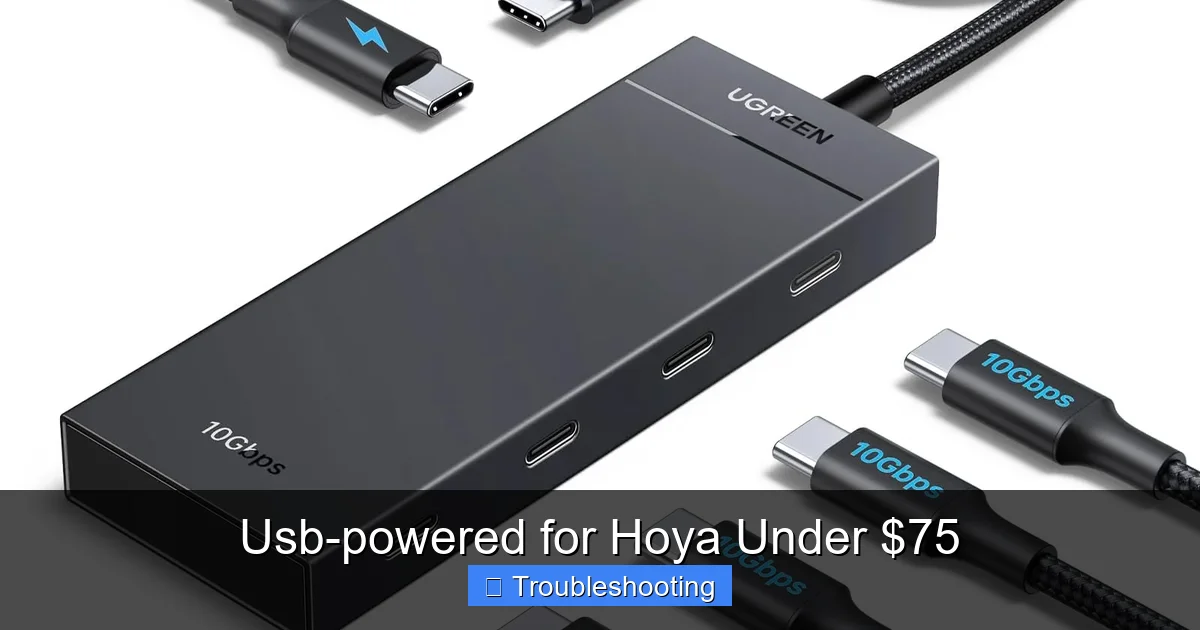
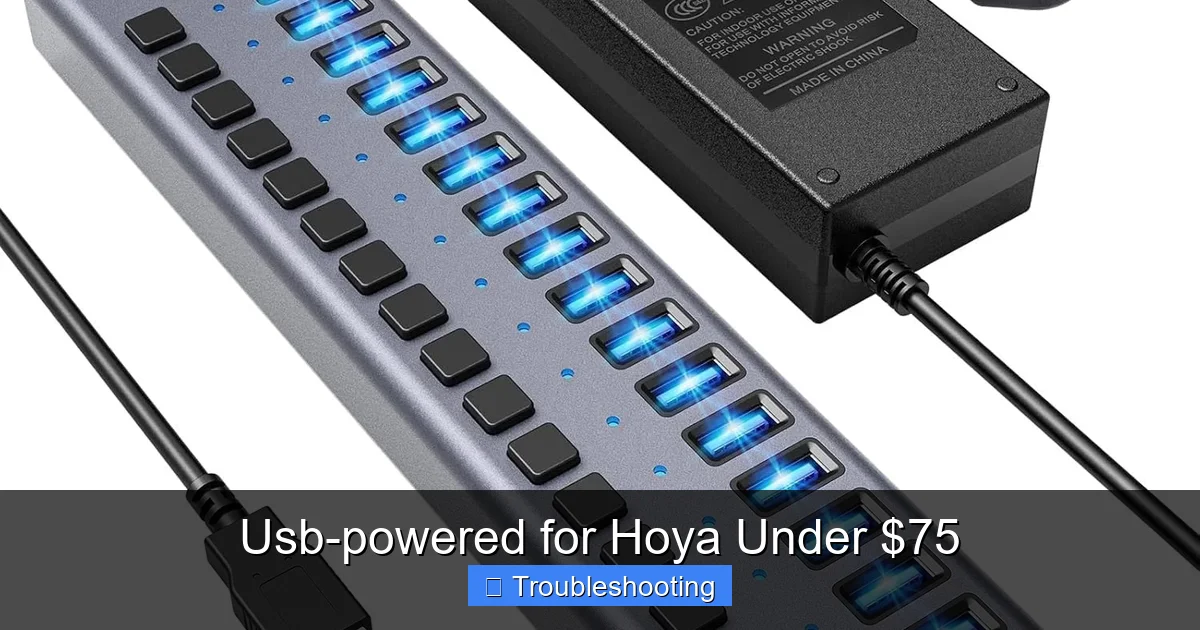
This trips up more people than anything else. USB lights draw 5V, 9V, 12V, or 20V depending on the model and brightness. A standard 5V/2.4A phone charger (12W) won’t run a 20W light at full brightness. You need USB-C Power Delivery (PD) or Quick Charge (QC) adapters for higher wattages. Check your light’s spec sheet — it’ll list required input like “5V/4A” or “12V/2A.” Match or exceed that with your power source.
Power banks work great for portability but check their output specs. Many only do 5V/3A max (15W). For 20W+ lights, you need a PD power bank rated for 20V/2.25A or similar. Anker and Baseus make reliable options in the $25-40 range.
Distance and Coverage Calculations
Here’s a practical rule: measure PPFD at your hoya’s leaf level with a cheap lux meter app (Photone, PPFD Meter) calibrated for LED. Multiply lux by 0.0185 for white LEDs to estimate µmol/m²/s. Adjust height until you hit your target range. Most USB clip lights need 6-8 inches for 200 µmol/m²/s. Bars at 10-12 inches. Panels at 8-10 inches.
Coverage area shrinks with distance. A 20W clip light covers roughly 12×12 inches at 8 inches height. Two heads cover 24×12 inches if spaced apart. Plan your shelf layout accordingly — don’t crowd five hoyas under one 10W head.
Timer Strategies That Actually Work
Hoyas want 12-14 hours of light, 10-12 hours dark. Consistency triggers flowering in many species. Built-in timers on USB lights are convenient but unreliable long-term. My solution: a $12 smart plug (Kasa, Tapo, Meross) on each light or power strip. Set schedules in the app. They survive power outages, adjust for daylight saving, and let you override remotely when you’re away.
If you use power banks for portability, get a USB timer switch ($8-15) that sits between the bank and light. Mechanical dial timers work too but add bulk.
Troubleshooting Common USB Light Problems
Light Isn’t Bright Enough / Plants Stretching
First, verify your power source delivers rated wattage. Use a USB-C power meter ($10-15) — it shows real-time voltage, amperage, and watts. I’ve caught “60W” chargers only delivering 18W because the cable didn’t support PD negotiation. Swap cables. Swap chargers. Test each combination.
If power checks out, lower the light. Every inch closer roughly doubles intensity (inverse square law). But watch for heat. Add a second light bar instead of going closer if leaves show stress.
Reflective surfaces help. Mylar emergency blankets ($3) behind shelves bounce 90%+ light back. White foam board works too. I line the back of my Detolf cabinets with mylar — gain 30-40% more PPFD at leaf level for pennies.
Leaves Reddening, Curling, or Bleaching
Classic light stress. Red anthocyanin pigment = sunscreen response. Curling = heat or intensity defense. Bleaching (white/yellow patches) = chlorophyll destruction. Immediate fix: raise lights 2-3 inches. Reduce daily hours by 2. Increase humidity — stressed hoyas lose water faster.
Some hoyas naturally redden in high light (Hoya sunrise, Hoya sp. aff. burtoniae). Know your species. But sudden changes mean trouble. New growth adapting is fine. Old growth changing = problem.
Timer Resets or Light Flickers
Power fluctuation kills cheap timers. Smart plugs solve this. If you must use built-in timers, plug the light into a UPS battery backup ($50-80) for critical setups. Flickering usually means voltage drop — undersized cable, weak power bank, or too many devices on one hub. Test the light direct on a known-good charger. If flickering stops, your power chain is the issue.
Overheating Fixtures or Plant Tissue
USB lights run cool compared to old T5 fluorescents, but enclosed spaces trap heat. Aluminum-housed bars hit 100-120°F at the surface. That radiates to leaves inches away. Solution: airflow. A 120mm USB fan ($8) moving air across lights and plants drops leaf temp 5-8°F. Mount fans to blow parallel to light bars, not directly on plants (causes wind burn).
Check power adapters too. Cheap PD chargers get dangerously hot. Stick with UL-listed brands. Anker, UGREEN, Baseus, Spigen — pay the extra $5.
Advanced Tips for Getting Flowers With Budget Lights
Seasonal Light Manipulation
Many hoyas flower in response to day length changes. Simulate seasons: 14 hours light spring/summer, drop to 10-11 hours fall/winter for 6-8 weeks, then ramp back up. This mimics the dry season rest period that triggers buds in species like Hoya carnosa, Hoya pubicalyx, and Hoya australis. Smart plugs make this effortless — just update the schedule quarterly.
Red Light Boost for Flowering
If your full spectrum light lacks deep red (660nm), add a $15 USB red LED strip along the shelf front. Run it the last 2 hours of the light cycle. This mimics end-of-day far-red enrichment that signals flowering in many plants. I’ve seen Hoya krohniana ‘Silver’ bloom within 3 weeks of adding this.
Stress-Free Propagation Under USB Lights
Cuttings need lower light than mature plants — 50-100 µmol/m²/s. High light dehydrates unrooted cuttings. Use a dimmed panel light (25-50% brightness) or raise bars to 18-24 inches. Cover with clear dome or bag for humidity. Vent daily. Roots appear in 2-6 weeks depending on species. Hoya linearis roots fast. Hoya macgillivrayi tests patience.
Maintaining Your USB Light Investment
Cleaning for Maximum Output
Dust on LEDs cuts 10-20% output in months. Monthly: unplug, wipe lenses with microfiber cloth slightly damp with isopropyl alcohol. Compressed air for heatsink fins. Don’t spray directly on electronics. Clean reflective mylar too — it loses reflectivity fast when dusty.
Monitoring LED Degradation
Quality LEDs last 50,000 hours (17 years at 8 hrs/day). Cheap ones degrade faster — 30% loss in 2-3 years. Track with your lux meter app. Same distance, same plant, same time of day, monthly readings. When output drops 25%, replace. Barrina and major brands honor warranties. No-name Amazon brands? Consider them consumable.
Cable Management Prevents Accidents
USB-C cables are fragile at the connector. One tug from a curious cat or trailing vine snaps the port. Use magnetic breakaway USB-C tips ($8 for 4-pack). Route cables with adhesive clips. Label each end with masking tape — “shelf 2 left,” “prop box.” Future you will thank present you.
Building a Complete Under-$75 Setup: Real Examples
Desktop Two-Plant Station ($42 Total)
- Mosthink 20W dual gooseneck clip light — $28
- Anker 30W USB-C charger — $14 (existing or new)
- Kasa smart plug — $12 (optional, use phone control)
Covers two 6-inch pots at 8 inches height. Good for Hoya carnosa and Hoya kerrii on a desk.
Three-Shelf Wire Rack ($73 Total)
- Barrina T5 2ft 4-pack — $45
- USB-C PD trigger cable 12V — $8
- 65W GaN charger — $20
One bar per shelf, daisy-chained. Covers 36×18 inches per shelf. Runs Hoya pubicalyx, Hoya wayetii, Hoya mathilde simultaneously.
IKEA Milsbo Greenhouse Cabinet ($68 Total)
- Barrina T5 1ft 6-pack — $50
- USB-C to DC splitter cable — $6
- 65W PD charger — $12 (sale)
Two bars per shelf (top, middle, bottom). Mylar-lined back. Smart plug controlled. Full cabinet coverage for 15+ small hoyas.
Conclusion
USB-powered grow lights under $75 can absolutely grow spectacular hoyas — I’ve seen it happen across dozens of species in my own home. The key isn’t spending more. It’s understanding your plants’ needs, matching the right light format to your space, powering it correctly, and monitoring results. Start with one clip light or bar set. Measure. Adjust. Expand when you see success.
Your hoyas will tell you everything you need to know. Compact growth, deep green leaves (unless variety-specific coloration), and eventually those incredible waxy flower umbels — that’s your report card. And when the first bud cluster appears on a plant lit by a $30 USB bar, you’ll understand why this hobby hooks people for life.
Happy growing. Your next hoya addiction is probably already in your cart.
Frequently Asked Questions
What color temperature is best for hoya plants under USB lights?
Hoyas thrive under 4000K-6500K full spectrum white light with enhanced red (660nm) for flowering. Avoid “blurple” lights lacking green/yellow wavelengths, as these penetrate foliage poorly and make pest detection difficult.
How many hours of USB light do hoyas need daily?
Hoyas need 12-14 hours of light followed by 10-12 hours of darkness. Consistency matters — use smart plugs or USB timer switches to maintain exact schedules, as irregular cycles can prevent flowering.
Can I use USB grow lights for hoya propagation?
Yes, but cuttings need lower intensity (50-100 µmol/m²/s). Use dimmed panel lights at 25-50% brightness or raise bars to 18-24 inches. Maintain high humidity with domes and vent daily until roots establish.
Do USB grow lights produce enough heat to damage hoya leaves?
Quality USB lights run cool, but enclosed spaces trap heat. Aluminum housings can reach 100-120°F. Add a small USB fan for airflow across lights and plants. Monitor leaf temperature — it should stay within 5°F of ambient.
How do I know if my USB charger supports my grow light’s wattage?
Check the light’s input requirements (e.g., “12V/2A” or “20V/2.25A”). Your charger must match or exceed both voltage and amperage. Use a USB-C power meter ($10-15) to verify actual delivery — many chargers and cables underdeliver.
What’s the lifespan of budget USB grow lights for hoyas?
Quality branded lights (Barrina, major manufacturers) last 50,000+ hours with <20% degradation. Cheaper unbranded options may lose 30% output in 2-3 years. Track output monthly with a lux meter app; replace when intensity drops 25% at same distance.