Complete Guide to Peat-based for Bromeliad
Peat-based for bromeliad mixes offer excellent moisture retention and acidity, but they require careful management to prevent compaction and root rot. This guide covers everything from selecting the right peat blend to troubleshooting common issues like salt buildup and poor drainage, ensuring your bromeliads thrive in their ideal growing medium.
If you have ever grown bromeliads, you know they are not your average houseplants. They come from rainforests, cloud forests, and even deserts. Some grow on trees. Others grow on rocks. A few grow in the ground. What they all share is a need for excellent drainage and good air flow around their roots. That is where the right growing medium makes all the difference. Many growers turn to a peat-based for bromeliad mix because it holds moisture well and stays slightly acidic. But peat alone can cause trouble. It compacts. It stays too wet. It breaks down fast. This guide will walk you through everything you need to know. You will learn how to choose, mix, use, and troubleshoot peat-based media so your bromeliads stay healthy and vibrant for years.
We will cover the science behind peat, the best additives, species-specific recipes, and the most common mistakes. You will also get practical tips for watering, fertilizing, and repotting. Whether you are a beginner with your first Guzmania or a seasoned collector with rare Tillandsia species, this guide has something for you. Let us dig in.
Key Takeaways
- Peat provides ideal acidity: Most bromeliads prefer a pH between 5.0 and 6.0, which peat naturally delivers.
- Drainage is critical: Pure peat compacts over time, so always amend with coarse materials like bark or perlite.
- Watch for salt buildup: Peat holds onto fertilizer salts, which can burn sensitive bromeliad roots if not flushed regularly.
- Repot annually: Peat breaks down faster than other media, so yearly repotting keeps roots healthy and aerated.
- Match the mix to the species: Epiphytic bromeliads need chunkier mixes than terrestrial varieties.
- Pre-moisten before use: Dry peat repels water; always wet it thoroughly before potting to ensure even moisture distribution.
- Monitor moisture levels: Use a moisture meter or finger test — peat can feel dry on top but stay soggy at the bottom.
Quick Answers to Common Questions
Can I use pure peat moss for bromeliads?
No, pure peat compacts too quickly and suffocates roots. Always amend it with coarse bark and perlite for drainage and aeration.
How often should I repot bromeliads in peat-based mix?
Repot every 12 to 18 months. Peat breaks down faster than other media, so annual repotting keeps roots healthy.
Why does my peat mix repel water?
Peat becomes hydrophobic when completely dry. Submerge the pot in water until bubbles stop, or use a wetting agent to restore absorption.
What is the best pH for bromeliads in peat-based media?
Most bromeliads thrive at pH 5.0–6.0. Peat naturally falls in this range, but monitor over time as decomposition can lower pH further.
Can I reuse old peat-based mix?
Do not reuse old mix. It is compacted, depleted, and may harbor salts or pathogens. Always use fresh media when repotting.
📑 Table of Contents
Understanding Peat-Based Mixes for Bromeliads
What Is Peat Moss?
Peat moss comes from sphagnum moss that has decomposed in bogs over thousands of years. It is harvested, dried, and compressed into bales. It is lightweight, acidic, and holds up to 20 times its weight in water. That sounds perfect for tropical plants. But there is a catch. Peat has no nutrients. It breaks down into fine particles that pack tight. When dry, it becomes hydrophobic — it repels water. When wet, it can suffocate roots. For bromeliads, which often grow in airy, fast-draining conditions in nature, pure peat is a risk.
Why Use Peat at All?
Despite its flaws, peat remains popular. It is consistent. It is widely available. It provides a stable, low pH that most bromeliads love. Many commercial bromeliad mixes use peat as a base. The key is not to use it straight. You must amend it. A good peat-based for bromeliad mix balances moisture retention with aeration. It mimics the loose, organic debris found in tree crotches or forest floors. When done right, peat gives you control. You can adjust the ratio of ingredients to match your climate, your watering habits, and your plant’s needs.
Peat vs. Other Media
Coconut coir is the main alternative. It is renewable, resists compaction, and rewets easily. But it often has high salt levels unless washed well. It also holds more water than peat, which can be risky for epiphytes. Bark-based mixes are excellent for air flow but dry out fast. They need frequent watering. Some growers use pure sphagnum moss. It works for mounting or for very humid environments. But it breaks down quickly and can harbor pests. A well-made peat-based for bromeliad mix often outperforms all of these because you can tune it. You get the acidity of peat, the drainage of bark, and the structure of perlite — all in one pot.
Why Peat Matters: Benefits and Drawbacks
The Benefits
Peat brings several advantages to the table. First, pH stability. Most bromeliads prefer a pH of 5.0 to 6.0. Peat naturally sits in that range. It buffers against sudden shifts from tap water or fertilizer. Second, moisture consistency. Peat releases water slowly. This helps prevent the feast-or-famine cycle that stresses roots. Third, cation exchange capacity. Peat holds onto nutrients and releases them gradually. This reduces the risk of fertilizer burn. Fourth, it is lightweight. Large pots stay manageable. Fifth, it is sterile when fresh. No weeds, no pathogens, no surprises.
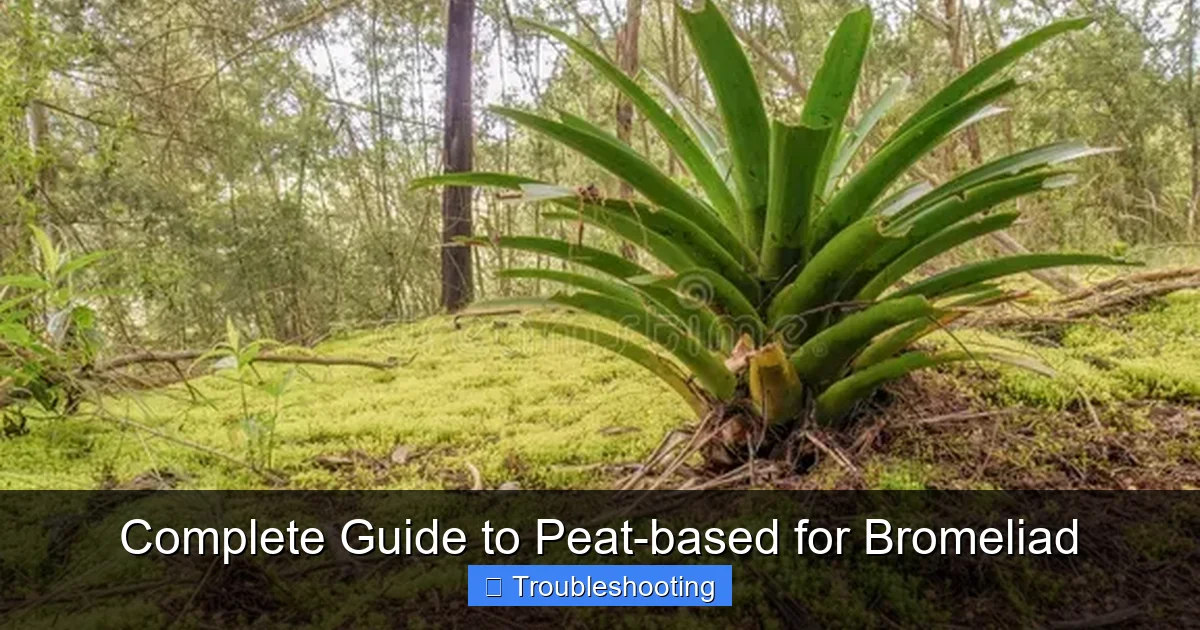
Visual guide about Complete Guide to Peat-based for Bromeliad
Image source: thumbs.dreamstime.com
The Drawbacks
Now the downsides. Peat compacts. As it decomposes, particles get smaller. Pore space disappears. Roots suffocate. This happens faster in warm, wet conditions — exactly where bromeliads thrive. Peat becomes hydrophobic when dry. You water, and it runs straight down the sides. The root ball stays bone dry. This is a top killer of potted bromeliads. Peat also breaks down in 12 to 18 months. It turns to mush. You must repot often. And peat harvesting damages fragile bog ecosystems. Some growers avoid it for this reason. If you use peat, choose responsibly sourced brands. Look for certifications like RPP (Responsibly Produced Peat).
Balancing the Trade-Offs
The solution is simple: never use peat alone. Always mix it. A standard starting ratio is 50% peat, 30% coarse bark, 20% perlite. This gives you the benefits without the suffocation. Adjust based on your conditions. In humid climates, increase bark and perlite. In dry climates, keep more peat. The goal is a mix that stays moist but never soggy, and that still drains freely after a year in the pot. That is the hallmark of a successful peat-based for bromeliad medium.
Choosing the Right Peat-Based Mix
Commercial vs. Homemade
You can buy ready-made bromeliad mixes. Many are peat-based. Check the label. Avoid any with “moisture control” polymers or added fertilizers. You want control. Some brands list ingredients vaguely — “forest products, peat, perlite.” That is a red flag. Good mixes specify particle size and ratios. If you cannot find a transparent commercial mix, make your own. It is cheaper, customizable, and you know exactly what is in it. A basic DIY recipe: 2 parts peat moss, 1 part medium orchid bark, 1 part coarse perlite. Sift the peat to remove dust. Rinse the bark if dusty. Mix dry, then moisten slowly.
Matching Mix to Species
Not all bromeliads are the same. Epiphytes like Tillandsia, Vriesea, and Guzmania need maximum aeration. Use 40% peat, 40% bark, 20% perlite. Add charcoal for freshness. Terrestrial types like Cryptanthus, Dyckia, and Hechtia tolerate more moisture. They do well with 60% peat, 20% bark, 20% perlite. Some even handle a bit of compost. Tank bromeliads — those that hold water in their centers — still need fast-draining roots. Do not let the pot stay wet just because the tank is full. The peat-based for bromeliad mix serves the roots, not the cup.
Specialty Additives
Consider these extras. Horticultural charcoal absorbs toxins and sweetens the mix. Use 5–10%. Coconut husk chips add structure and decay slowly. Replace half the bark with chips for longer life. Lava rock or pumice improves drainage and adds weight. Good for top-heavy plants. Sphagnum moss strands (not peat) can be layered on top to reduce evaporation. Do not mix it in — it compacts too. Slow-release fertilizer pellets can be buried at the bottom. But only if you repot yearly. Otherwise, salts accumulate. Every additive changes the balance. Test small batches first.
Common Problems with Peat-Based Media
Compaction and Poor Aeration
This is the number one issue. Over time, peat particles break down. Bark decomposes. Perlite rises to the top. The mix turns into a dense sponge. Roots turn brown, mushy, and smell sour. You may see algae or liverwort on the surface. The fix: repot. Do not wait for the schedule. If the mix feels heavy or stays wet more than three days after watering, it is compacted. Gently remove old media. Trim dead roots. Repot in fresh peat-based for bromeliad mix. Use a pot just big enough. Oversized pots hold too much water.
Hydrophobic Peat
You water, and it runs out instantly. The center is dry. This happens when peat dries completely. It is common in summer or with infrequent watering. The fix: submerge the pot. Place it in a bucket of water up to the rim. Wait until bubbles stop. That can take 20 minutes. Or use a wetting agent. A drop of dish soap per gallon helps water penetrate. Better yet, never let it dry out. Keep the mix evenly moist. A moisture meter helps. Aim for a reading of 4–6 on a 1–10 scale. Consistency prevents hydrophobia.
Salt Buildup
Peat holds fertilizer salts. Tap water adds more. Over months, salts concentrate. Leaf tips turn brown. Roots burn. Growth stalls. You may see a white crust on the pot or media surface. The fix: leach. Once a month, water heavily — 3 to 4 times the pot volume. Let it drain fully. Use rainwater, distilled, or RO water if possible. If your tap water is hard (over 150 ppm), this is critical. Also, fertilize weakly. Use 1/4 strength, balanced formula, every other watering. A peat-based for bromeliad mix amplifies both nutrients and toxins. Be gentle.
pH Drift
Peat starts acidic. But as it decomposes, it can become more acidic — sometimes below 4.5. That locks out nutrients. Or, if you use alkaline water, pH creeps up. Either way, the plant suffers. Test occasionally. Use a soil pH meter or send a sample to a lab. If pH drops too low, add a pinch of dolomite lime per gallon of mix at repotting. If too high, use an acidic fertilizer or add a bit more peat. Most bromeliads are forgiving within 4.5–6.5. But extremes cause silent decline.
Pests and Pathogens
Fresh peat is sterile. But once in use, it can host fungus gnats, springtails, or root rot fungi. Fungus gnats love wet, organic media. Their larvae chew roots. Springtails are usually harmless but signal overwatering. Root rot (Phytophthora, Pythium) spreads fast in soggy peat. Prevention: avoid standing water. Use pots with lots of holes. Add a layer of coarse bark at the bottom. Let the top inch dry between waterings. If infested, repot immediately. Drench with hydrogen peroxide (1 part 3% to 4 parts water) or use beneficial nematodes. A healthy peat-based for bromeliad mix stays pest-free with good habits.
Troubleshooting Peat-Related Issues
Diagnosing Root Health
Healthy bromeliad roots are white, firm, and crisp. They have tiny root hairs. Unhealthy roots are brown, black, mushy, or hollow. They pull away easily. Smell the root ball. Sweet, earthy is good. Sour, rotten is bad. Check during repotting or if the plant looks off — wilting despite wet media, yellowing lower leaves, no new growth. Gently unpot. Rinse roots with lukewarm water. Inspect. Trim anything dead with sterile scissors. Dust cuts with cinnamon or sulfur. Repot in fresh peat-based for bromeliad mix. Do not water for 2–3 days. Let cuts callous.
Fixing Watering Mistakes
Overwatering is the top killer. Signs: yellow leaves, soft base, fungus gnats, sour smell. Underwatering shows as curled leaves, crispy tips, slow growth, and hydrophobic media. The fix for both is consistency. Water when the top 1–2 inches feel dry. Use a chopstick — insert, wait 10 seconds, pull out. If cool and damp, wait. If dry, water thoroughly. Always water until it drains freely. Never let pots sit in saucers. In winter, cut frequency by half. In summer, check daily. A peat-based for bromeliad mix responds fast to good habits.
Reviving a Declining Plant
Sometimes a plant looks done. Leaves brown. Center rots. No roots. But bromeliads are tough. If the crown is firm, you can save it. Remove all dead tissue. Cut back to healthy green. Dust with cinnamon. Let dry 24 hours. Then place on top of moist sphagnum moss in a clear bag. High humidity. Bright indirect light. No direct sun. In 2–6 weeks, new roots may form. Then pot into fresh peat-based for bromeliad mix. This works for many genera. Neoregelia and Aechmea are especially resilient. Tillandsia is harder — they hate wet feet. For them, mount instead.
Adjusting for Environment
Your mix must match your space. Indoors with low light and low airflow? Use more perlite, less peat. Greenhouse with fans and humidity? You can use more peat. Outdoors in rain? Maximize drainage — 50% bark, 30% perlite, 20% peat. In arid climates, add a top dressing of moss to slow evaporation. In cold winters, keep plants drier. Peat stays cold and wet longer. That invites rot. Move pots to a protected spot. Reduce watering. A peat-based for bromeliad mix is a tool. You are the craftsman. Tune it.
Best Practices for Long-Term Success
Repotting Routine
Repot every 12–18 months. Spring is ideal — active growth follows. Signs it is time: roots circling, media broken down, plant top-heavy, water runs through instantly. Choose a pot 1 inch wider. Not deeper. Bromeliads have shallow roots. Use tall pots only for species with long stolons. Always use fresh mix. Never reuse old media. Sterilize pots with 10% bleach. Rinse well. Position the plant at the same depth. Do not bury the base. Firm gently. Water lightly. Place in shade for a week. A fresh peat-based for bromeliad mix resets the clock.
Fertilizing Wisely
Bromeliads are light feeders. In nature, they catch debris and bird droppings. In pots, they need help. Use a balanced fertilizer (20-20-20 or 17-8-22) at 1/4 strength. Apply to the soil, not the tank — unless the species absorbs through leaves. Once a month in growing season. Stop in winter. Flush monthly. Organic options like fish emulsion work but smell and can clog peat pores. Slow-release pellets are risky in peat — they dump nutrients unpredictably. Liquid is better. A peat-based for bromeliad mix holds nutrients well. Less is more.
Water Quality Matters
Rainwater is gold. Distilled or RO works. Tap water varies. If yours is soft (under 50 ppm) and neutral pH, it is fine. Hard water leaves calcium deposits. High pH raises media pH over time. Chlorine dissipates if left overnight. Chloramine does not. Use a filter if unsure. Test your water. Know your EC (electrical conductivity). Aim for under 0.5 mS/cm for watering. A peat-based for bromeliad mix amplifies water quality effects. Clean water = clean roots.
Monitoring and Record Keeping
Keep a simple log. Date repotted. Mix ratio. Water source. Fertilizer schedule. Observations. Photos help. Track how long the mix lasts. Note when compaction starts. When salt crust appears. When roots look best. Over years, you will dial in your perfect peat-based for bromeliad recipe. You will know exactly when to act. That is how you go from guessing to growing.
Sustainability Considerations
Peat is a finite resource. Bogs store carbon. Harvesting releases it. Consider alternatives. Coconut coir is renewable but has transport footprint. Composted bark is local in many areas. Some growers use rice hulls, wood fiber, or peat-free certified blends. If you use peat, buy from certified sustainable sources. Use less. Make it last longer with coarse additives. Repot less often by choosing durable mixes. Every small choice adds up. A responsible peat-based for bromeliad practice respects the planet as much as the plants.
Conclusion
Growing bromeliads in a peat-based for bromeliad mix is both an art and a science. Peat gives you acidity, moisture control, and nutrient buffering — all things these plants love. But it demands respect. It compacts. It repels water when dry. It breaks down. It holds salts. The secret is not avoiding peat. It is mastering the mix. Blend it with bark and perlite. Match it to your species. Water with consistency. Fertilize with restraint. Repot on schedule. Watch. Learn. Adjust.
You now have the full picture. From understanding what peat is, to choosing the right recipe, to fixing problems before they kill. You know how to read your roots, test your water, and tune your environment. You have a framework for long-term success. And you have the mindset of a grower who observes, adapts, and improves. Your bromeliads will thank you with brilliant colors, strong pups, and years of beauty. Now go mix a batch. Pot a plant. And enjoy the journey.
Frequently Asked Questions
What is the ideal ratio for a peat-based bromeliad mix?
A good starting ratio is 50% peat moss, 30% coarse orchid bark, and 20% perlite. Adjust based on species and climate — epiphytes need more bark, terrestrials tolerate more peat.
How do I prevent salt buildup in peat-based media?
Leach the pot monthly by watering with 3–4 times the pot volume of pure water. Use rainwater or distilled water, and fertilize at 1/4 strength to minimize accumulation.
Why are my bromeliad roots turning brown and mushy?
This indicates root rot from poor aeration or overwatering. The peat mix has likely compacted. Repot immediately in fresh, well-draining mix and trim all dead roots.
Can I use coconut coir instead of peat for bromeliads?
Yes, coir is a sustainable alternative. It resists compaction and rewets easily, but must be thoroughly rinsed to remove salts. It holds more water, so increase drainage amendments.
Should I put peat-based mix in the bromeliad’s central tank?
No. The tank holds water for the plant’s natural absorption. The peat-based mix is for the roots only. Keep the tank filled with clean water, but ensure the potting medium drains freely.
How do I know when my peat-based mix needs replacing?
Signs include: water runs through instantly, the pot feels heavy, media looks like mud, roots are brown, or it has been 12–18 months since repotting. Fresh mix should be springy and drain well.