Best Plant Moisture Meter
Finding the best plant moisture meter takes the guesswork out of watering and helps prevent root rot or dehydration. This guide covers top-rated models, essential features to consider, and pro tips so you can choose the right tool for thriving indoor and outdoor gardens.
Key Takeaways
- Accuracy matters most: Look for a meter with a reliable probe and clear readings to avoid overwatering or underwatering your plants.
- Analog vs. digital: Analog meters need no batteries and are simple to use, while digital models offer extra features like pH and light readings.
- Probe length is key: Choose a longer probe for deep pots or outdoor beds and a shorter one for small indoor planters.
- Durability saves money: A sturdy, corrosion-resistant probe lasts longer, especially if you test soil often or use it outside.
- Multi-function tools add value: 3-in-1 meters that measure moisture, pH, and light give you a complete picture of plant health.
- Calibration ensures precision: Some high-end models let you calibrate for different soil types, boosting accuracy across your garden.
- Price does not always equal quality: Many affordable meters perform just as well as premium ones for basic home gardening needs.
Quick Answers to Common Questions
What is the most accurate type of plant moisture meter?
Professional grade analog meters with stainless steel probes and calibration screws offer the highest accuracy for moisture only, while quality 3-in-1 digital meters provide reliable multi-parameter readings for home use.
How deep should I insert the moisture meter probe?
Insert the probe to root level, typically halfway down the pot depth for small containers and 8-12 inches for large pots or garden beds, avoiding the very bottom where water pools.
Can I leave a moisture meter in the soil permanently?
No, leaving a meter in soil causes probe corrosion, salt buildup, and false readings; always remove, clean, and store the meter dry after each use.
Do moisture meters work in all soil types?
They work in most soils but can give skewed readings in very sandy soil (reads drier), hydrophobic peat (reads dry when wet), or heavily fertilized soil (reads wet from salts).
Are expensive moisture meters worth the extra cost?
For most home gardeners, a $15-20 analog or 3-in-1 digital meter performs excellently; expensive models add durability, calibration, smart features, or longer probes for specific needs.
📑 Table of Contents
Introduction
Watering plants seems simple. You pour water. The plant drinks. But anyone who has loved a fiddle leaf fig to death knows the truth. It is easy to give too much or too little. The soil looks dry on top but stays soggy at the bottom. Or it looks damp but is bone dry near the roots. This is where the best plant moisture meter becomes your new best friend. It is a small tool that makes a huge difference. It tells you exactly what is happening below the surface. No more guessing. No more yellow leaves from root rot. No more crispy edges from drought.
I remember my first year of serious plant parenting. I had a beautiful monstera. I watered it on a strict schedule. Every Sunday. Rain or shine. It dropped leaves. It turned yellow. I was heartbroken. A friend handed me a simple metal probe. Stick it in. Read the dial. Water only when it says dry. That monstera is now six feet tall. That little tool changed everything. In this guide, we will walk through everything you need to know. We will cover how they work. We will compare analog and digital. We will look at the top models on the market. And we will share tips to get the most accurate reading every time.
Why You Need a Plant Moisture Meter
The Problem with Guesswork
Most plant problems come from water. Too much water causes root rot. Fungus gnats move in. The plant collapses. Too little water causes stress. Growth stops. Leaves curl. The plant dies slowly. The finger test is popular. You stick your finger in the soil. But your finger only reaches the top two inches. Roots often go much deeper. The surface dries fast. The bottom stays wet. You water again. The roots drown. A moisture meter reaches the root zone. It gives you data. Data beats guesswork every time.
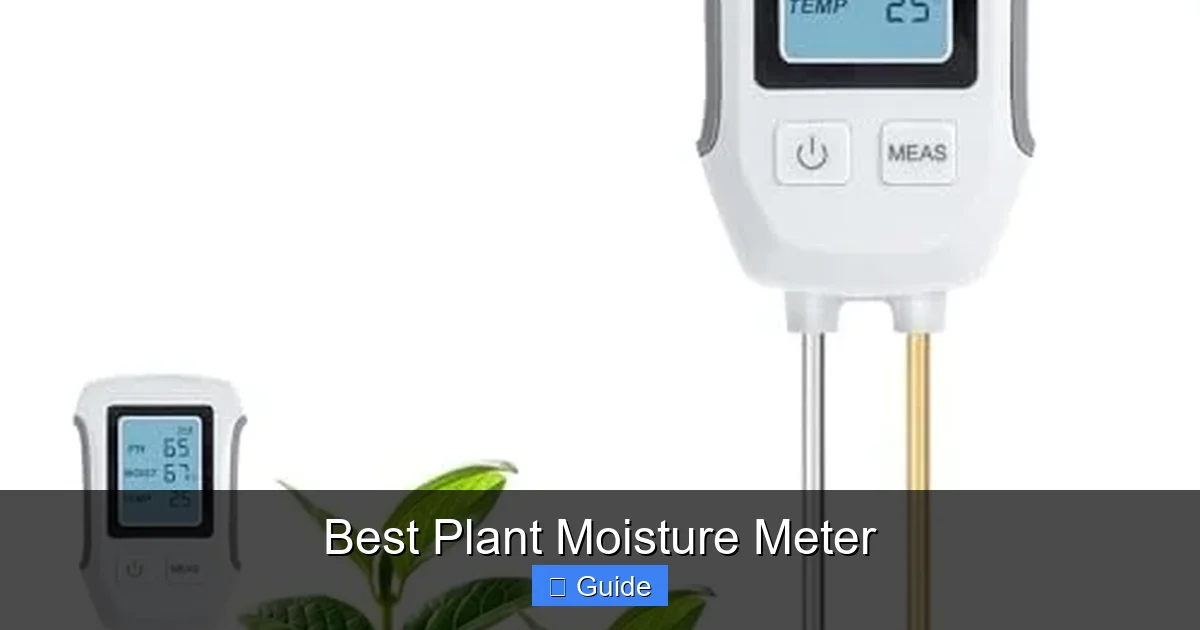
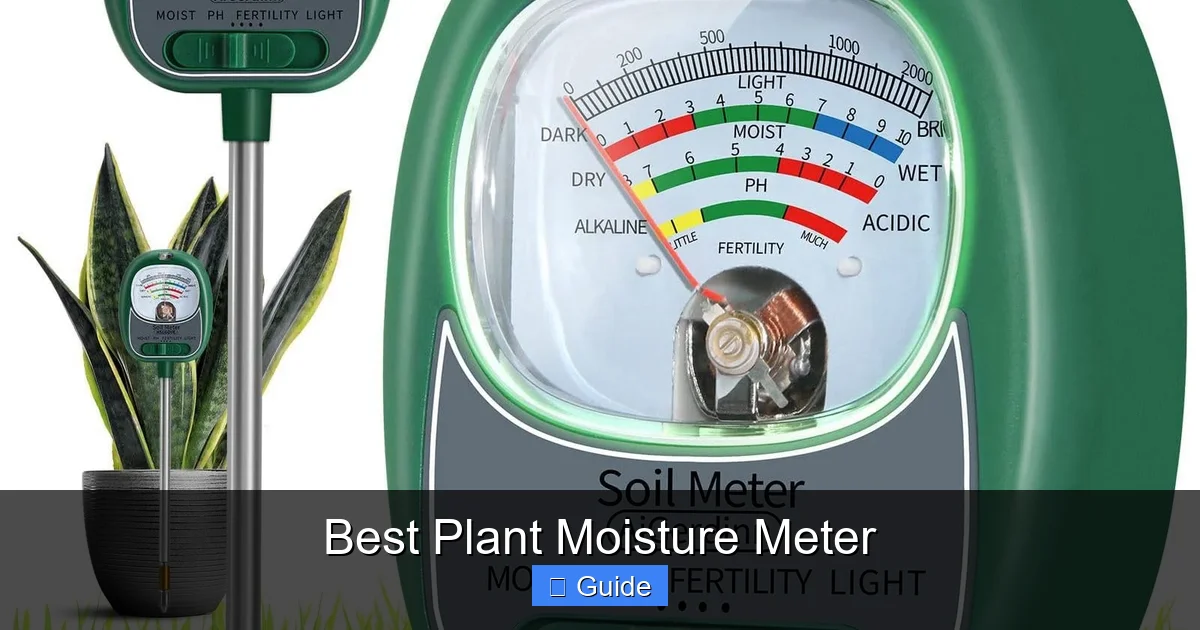
Visual guide about Best Plant Moisture Meter
Image source: m.media-amazon.com
Saving Money and Time
Plants cost money. Fancy pots cost money. Soil costs money. A meter costs ten to twenty dollars. It pays for itself the first time it saves a fifty-dollar plant. It also saves time. You stop watering plants that do not need it. You stop checking every day out of worry. You check. You read. You move on. It makes plant care faster and more relaxing.
Learning Your Plants’ Language
Every plant is different. A cactus wants bone dry soil. A fern wants constant moisture. A meter helps you learn these preferences. You start to see patterns. You know exactly when your calathea gets cranky. You know when your snake plant is ready for a drink. You become a better grower. You stop following generic schedules. You start responding to actual needs.
Types of Plant Moisture Meters
Analog Meters
Analog meters are the classic choice. They have a metal probe. They have a dial with a needle. The scale usually reads from 1 to 10. Dry to wet. No batteries needed. Ever. You stick it in. The needle moves. You read it. That is it. They are rugged. They last for years. They are usually the most affordable option. The downside? The dial can be hard to read in low light. They only measure moisture. No pH. No light. But for pure moisture reading, they are hard to beat.
Digital Meters
Digital meters run on batteries. They have an LCD screen. They show a number or a bar graph. Many are 3-in-1 tools. They measure moisture. They measure pH. They measure light intensity. The screen is easy to read. Some have backlights. Some hold the reading after you pull the probe out. The downside? Batteries die. Electronics can fail if they get wet. They cost a bit more. But the extra data is valuable for serious growers.
Smart Meters with Apps
Smart meters connect to your phone via Bluetooth. You leave the probe in the pot. It sends data to an app. You get alerts when it is time to water. The app tracks history. It learns your plant’s cycle. Some even adjust for plant type and local weather. These are great for busy people. Or for people with many plants. They are the most expensive. They need charging. They rely on an app working. But the convenience is unmatched.
Wicking Strips and Indicators
These are not meters in the traditional sense. They are strips you leave in the soil. They change color when wet. Or they have a window that shows blue when moist. They are passive. No probing needed. Good for a quick visual check. But they are less precise. They can get clogged with minerals. They are best as a backup, not a primary tool.
Key Features to Consider
Probe Length and Material
Probe length is critical. Short probes are six to eight inches. Good for small pots. Shallow roots. Long probes are twelve to eighteen inches. Essential for large floor plants. Outdoor beds. Deep containers. The material matters too. Stainless steel resists corrosion. It slides in easy. It cleans easy. Cheap metal probes rust. Rust gives false readings. Rust breaks off in soil. Spend a few extra dollars for stainless steel. Your plants will thank you.
Display Readability
Can you read it? Analog dials should have large numbers. High contrast colors. A clear dry/moist/wet zone. Digital screens need good size. Backlight is a huge plus for dim corners. Some digital meters show words like “DRY” or “WET” instead of numbers. That is faster to process. Test the display in your actual lighting conditions if you can.
Multi-Function Capability
Do you want just moisture? Or the full picture? A 3-in-1 meter gives pH and light. pH tells you if soil is too acidic or alkaline. Nutrient uptake depends on pH. Light tells you if that “bright indirect” spot is actually bright enough. These extras cost little more. They teach you more. But if you only care about water, a dedicated moisture meter is often more accurate at that one job.
Power Source and Battery Life
Analog needs zero power. Digital needs batteries. Usually button cells. Some use AAA. Check battery life claims. Some last a year. Some last a month. Auto-off features save power. Low battery indicators prevent surprise deaths. Smart meters need USB charging. Check charge duration. A dead meter is useless.
Durability and Build Quality
You will drop it. You will leave it in the rain. You will stab it into hard soil. The housing should be tough plastic or metal. The probe-to-body joint is the weak point. Look for reinforced connections. Water resistance is a must for the body. The probe is meant to get wet. The electronics are not. Read reviews about longevity. A meter that lasts five years is better than one that lasts five months.
Calibration Options
Most basic meters are factory set. You trust them or you don’t. Advanced meters let you calibrate. You test in known dry soil. You test in known wet soil. You adjust the reading. This accounts for soil density. Salt buildup. Probe aging. Calibration is a pro feature. But it makes a cheap meter act like a pro tool. Worth it if you are picky.
Top Picks for Best Plant Moisture Meter
Best Overall: XLUX Soil Moisture Meter
The XLUX is a legend for a reason. It is analog. No batteries. The probe is 7.7 inches of stainless steel. The dial is large. Color coded. Red for dry. Green for moist. Blue for wet. It reads instantly. It costs under fifteen dollars. It feels solid in hand. The probe goes deep enough for most houseplants. It is not fancy. It just works. Every. Single. Time. I have three of these. One upstairs. One downstairs. One in the garden shed. They are my daily drivers.
Best Digital: Sonkir Soil pH Meter MS02
This is the king of 3-in-1 digital meters. It measures moisture. pH. And light. The screen is clear. It has a backlight. It uses a single AAA battery. The probe is 7.9 inches. Stainless steel. The switch on the side selects the mode. Moisture reads 1 to 10. pH reads 3.5 to 8. Light reads 0 to 2000 lux. It is fast. Accurate enough for home use. The pH function helps diagnose yellowing leaves. The light function helps place new plants. It costs around twenty dollars. Incredible value.
Best Smart Meter: Wanfei Plant Monitor
If you want set it and forget it, this is it. The probe stays in the pot. It connects to the “Flower Care” app. You select your plant from a huge database. The app tells you exactly when to water. It tracks fertilizer needs. It tracks light history. It alerts your phone. The battery lasts months. It charges via USB. It is beautiful. Small. White. Minimalist. It costs around thirty dollars. Worth it if you travel. Or have twenty plants. Or just love data.
Best for Deep Pots: REOTEMP Garden Moisture Meter
This is a pro tool. The probe is fifteen inches long. All stainless steel. The dial is sealed and fog proof. It is calibrated for different soil types. You turn a screw to adjust. It reads 0 to 100 percent. Not a vague 1 to 10. It is built like a tank. Used by landscapers. Nurseries. Serious gardeners. It costs forty dollars. But it will outlive you. If you have large floor plants or raised beds, this is the only one that reaches the bottom.
Best Budget: Gouevn Soil Moisture Meter
Under ten dollars. Analog. 7.7 inch probe. Color coded dial. It feels lighter than the XLUX. The plastic is thinner. But it reads accurately. It does the job. If you have a few plants. If you want to try a meter without commitment. Buy this. It is the gateway drug. You will upgrade later. But this will serve you well for a year or two.
Best for Outdoors: Atree Soil Moisture Sensor Meter
Designed for abuse. The housing is thick ABS plastic. The probe is 8.3 inches. Reinforced joint. It handles rocky soil. Clay. Mud. The dial is huge. Glow in the dark markings. Seriously. You can read it at dusk. It is 3-in-1. Moisture. pH. Light. It costs eighteen dollars. Keep one in your garden bag. It laughs at dirt.
How to Use a Plant Moisture Meter Correctly
Step by Step Guide
Using a meter is easy. But doing it right matters. First, clean the probe. Wipe it with a cloth. Old soil or salts skew readings. Second, insert the probe. Push it vertically down. Go halfway between the stem and the pot edge. Push deep. Root level. Not just the top inch. For a six inch pot, go three to four inches deep. For a large pot, go eight to ten inches. Third, wait. Analog is instant. Digital takes a few seconds. Smart takes a minute to sync. Fourth, read the value. Note it. Fifth, remove the probe. Wipe it clean again. Do not leave it in the soil. It corrodes. It breaks. It gives false constant readings.
When to Check
Check before you water. Not after. Not on a schedule. Check every two to three days for thirsty plants. Every week for succulents. Check more in summer. Less in winter. Check in the morning. Soil temp is stable. Readings are consistent. Avoid checking right after watering. The soil is saturated. The meter will just say wet. That tells you nothing.
Interpreting the Numbers
Most meters use a 1 to 10 scale. 1 to 3 is dry. 4 to 7 is moist. 8 to 10 is wet. But plants have different targets. Succulents and cacti: water at 1 to 2. Most tropicals: water at 3 to 4. Ferns and calatheas: water at 4 to 5. Never let them hit 1. Bog plants: keep at 8 to 10. Learn your plant’s number. Write it on the pot. Or in a notebook. Or in the app.
Common Mistakes to Avoid
Do not wiggle the probe. It creates air gaps. Air reads as dry. Push straight in. Pull straight out. Do not force it in hard soil. You bend the probe. You break roots. Water lightly first to soften. Or use a chopstick to make a pilot hole. Do not test in the same spot every time. You compact the soil. Move around. Do not leave the meter in the pot. Ever. It is a tool. Not a decoration. Do not get the head wet. Unless it is rated waterproof. Water kills digital meters fast.
Maintenance and Care for Longevity
Cleaning the Probe
This is the number one maintenance task. Wipe the probe after every use. Use a dry cloth. Or a slightly damp cloth. Dry it immediately. Do not use soap. Do not use abrasive pads. They scratch the metal. Scratches trap salts. Salts cause corrosion. Corruption kills accuracy. If you see white crust on the probe, that is mineral buildup. Soak the probe tip in vinegar for five minutes. Wipe clean. Rinse with distilled water. Dry thoroughly. Do this monthly if you have hard water.
Storing Your Meter
Store it dry. Store it clean. Hang it on a hook. Or keep it in a drawer. Do not leave it in a humid greenhouse. Do not leave it in a wet potting shed. Moisture seeps into the housing. It condenses on electronics. It rusts the spring inside an analog dial. A ziplock bag with a silica packet is perfect for long storage.
Battery Management
For digital meters, remove the battery if storing over a month. Button cells leak. Leakage destroys the circuit board. Check the battery every six months. Replace annually as preventive maintenance. For smart meters, charge to fifty percent before long storage. Do not store fully charged. Do not store dead. Both kill lithium batteries.
Checking Accuracy
Test your meter occasionally. Use the “oven dry” method. Take a soil sample. Weigh it. Bake at 200F until weight stops dropping. That is zero percent moisture. Test the meter in it. Should read 1 or 0. Then saturate soil. Let drain until dripping stops. That is field capacity. Test again. Should read 8 to 10. If it is off, calibrate if possible. Or replace. A lying meter is worse than no meter.
Troubleshooting Common Issues
Needle Sticks or Moves Erratically
Analog meter acting up? The spring may be bent. Or dirt is in the mechanism. Tap the body gently. Flick the wrist. Sometimes that frees it. If not, open the back if screws allow. Blow compressed air inside. Do not oil it. Oil attracts dirt. If the probe is loose at the base, tighten the nut. If the probe is bent, straighten gently with pliers. Or replace. They are cheap.
Digital Screen Shows Dashes or Errors
Low battery. Replace it. Even if the screen lights up. The sensor needs voltage. Probe not deep enough. Push deeper. Soil too loose. Pack soil gently around probe. Probe dirty. Clean it. Salt buildup acts as insulator. If none of that works, the sensor is dead. Time for a new meter.
Readings Seem Wrong
You know the plant is dry. Meter says wet. Or vice versa. Check the probe tip. Is it corroded? Clean with vinegar. Check the soil. Is it hydrophobic? Peat moss repels water when dry. Water runs down sides. Center stays dry. Probe hits dry center. Reads dry. But wet soil is at edges. Mix soil. Or bottom water. Is the soil very salty? Fertilizer buildup conducts electricity. Reads wet falsely. Flush soil heavily. Retest.
Smart Meter Won’t Connect
Bluetooth range is short. Ten to fifteen feet max. Walls block it. Move phone closer. Restart phone Bluetooth. Restart meter. Remove and re-add in app. Check for app updates. Check for firmware updates in app. If it still fails, contact support. Most have good warranties.
Advanced Tips for Plant Pros
Mapping Your Pots
Large pots have moisture gradients. Top is dry. Middle is moist. Bottom is wet. Take three readings. Top third. Middle. Bottom. Average them. Or target the middle reading. That is the root zone. Write the three numbers down. Track them over weeks. You will see the drying curve. You can predict watering day before the plant asks.
Using pH Readings
If your meter has pH, use it. Most houseplants want 6.0 to 7.0. Succulents like 5.5 to 6.5. Acid lovers like 4.5 to 5.5. If pH is off, nutrients lock up. Plant starves with full belly. Test monthly. Or when you see weird symptoms. Yellow between veins. Stunted growth. Brown tips. Adjust with soil amendments. Or repot with fresh mix.
Light Metering for Placement
The light sensor on 3-in-1 meters is basic. But useful. Measure at plant level. At noon. On a sunny day. Read the lux. Low light plants want 500 to 1000 lux. Medium want 1000 to 3000. High want 3000 plus. Move plants until numbers match. Measure in corners. Near windows. Under grow lights. You will be surprised how dark “bright” spots really are.
Seasonal Adjustments
Winter changes everything. Light drops. Growth slows. Water needs drop by half. Or more. Your meter will show moist longer. Trust it. Do not force the old schedule. Summer ramps up. Heat. Light. Active growth. Meter drops fast. Check daily. Adjust fertilizer too. Less in winter. More in summer. The meter is your anchor through seasons.
Conclusion
Choosing the best plant moisture meter is a small decision with big returns. It turns watering from a gamble into a science. It saves plants. It saves money. It builds confidence. Whether you pick a ten dollar analog probe or a thirty dollar smart sensor, the principle is the same. Measure. Know. Act. No more Sunday watering rituals. No more guilt over crispy leaves. No more mystery mush at the bottom of the pot.
Start simple. Get an analog meter. Use it for a month. Learn your plants’ rhythms. Watch them perk up. Watch them grow. Then decide if you want more data. More convenience. More depth. The tool serves you. Not the other way around. Your plants are waiting. They have been trying to tell you what they need. Now you finally have a way to listen. Happy growing.
Frequently Asked Questions
How often should I check my plants with a moisture meter?
Check thirsty plants every 2-3 days and drought-tolerant plants weekly. Increase frequency in hot weather and decrease in winter. Always check before watering, not on a fixed schedule.
Why does my moisture meter give different readings in the same pot?
Soil moisture varies by depth and location. The top dries fastest, the bottom stays wettest, and soil near the pot edge differs from the center. Take multiple readings and average them for accuracy.
Can a moisture meter measure pH accurately?
Built-in pH sensors on 3-in-1 meters give a useful ballpark figure but are less precise than dedicated pH meters or lab tests. Use them for trend monitoring, not exact calibration.
What do the numbers 1-10 mean on an analog moisture meter?
Typically 1-3 means dry (water needed), 4-7 means moist (ideal for most plants), and 8-10 means wet (hold off watering). Specific target numbers vary by plant type.
How do I clean a corroded moisture meter probe?
Soak the metal probe tip in white vinegar for 5-10 minutes to dissolve mineral deposits, then scrub gently with a soft brush, rinse with distilled water, and dry thoroughly before use.
Do smart plant moisture meters require WiFi?
Most consumer smart meters use Bluetooth to connect to a phone app, not WiFi. You must be within range (10-15 feet) to read data, though some hubs allow remote monitoring via internet.