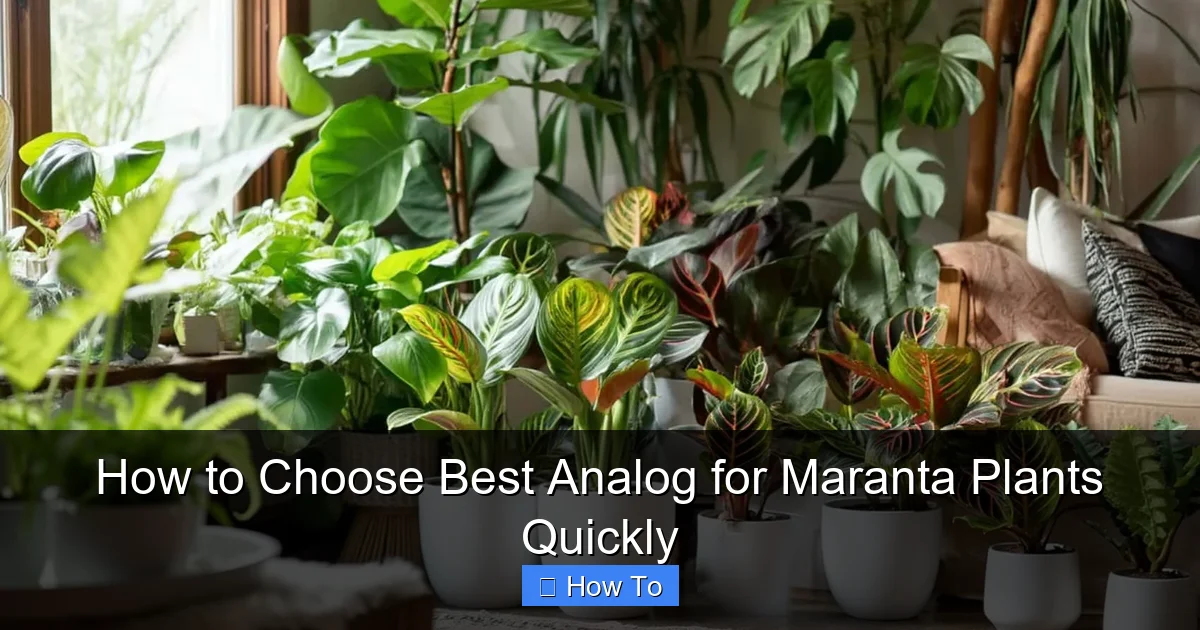
How to Choose Best Analog for Maranta Plants Quickly
Choosing the best analog for Maranta means matching light, humidity, and growth habits to find perfect prayer plant alternatives. This guide helps you identify top substitutes like Calathea, Stromanthe, and Ctenanthe based on your home conditions and care style.
Quick Answers to Common Questions
How do I know if my home has enough humidity for a Maranta analog?
Buy a $10 digital hygrometer. Place it at plant level for 24 hours. If average reads below 40%, stick with Ctenanthe burle-marxii or get a humidifier. Most analogs for Maranta need 50%+ to look their best.
Can I use tap water if I let it sit overnight?
Sitting removes chlorine but not fluoride or dissolved minerals. Many analogs for Maranta are fluoride-sensitive. Use filtered, distilled, or rainwater for best results. A ZeroWater pitcher costs $30 and lasts months.
Why does my analog for Maranta have brown tips despite good care?
Brown tips usually mean one of three things: humidity still too low, water quality issues, or fertilizer salt buildup. Flush soil thoroughly with distilled water, increase humidity 10%, switch to pure water. Trim tips at natural leaf angle.
Should I mist my analog for Maranta daily?
No. Misting raises humidity for minutes, promotes fungal spots, and wastes time. Invest in a humidifier running 12+ hours daily. Group plants together. Use pebble trays as supplement only. Consistent ambient humidity matters.
Can I keep my analog for Maranta in a bathroom with no window?
Only with a grow light. Bathrooms offer great humidity but rarely enough light. Add a 20W full-spectrum LED bar 12 inches above plant, 12 hours daily. Without light, plants stretch, fade, and decline regardless of humidity.
Introduction: Why You Need an Analog for Maranta
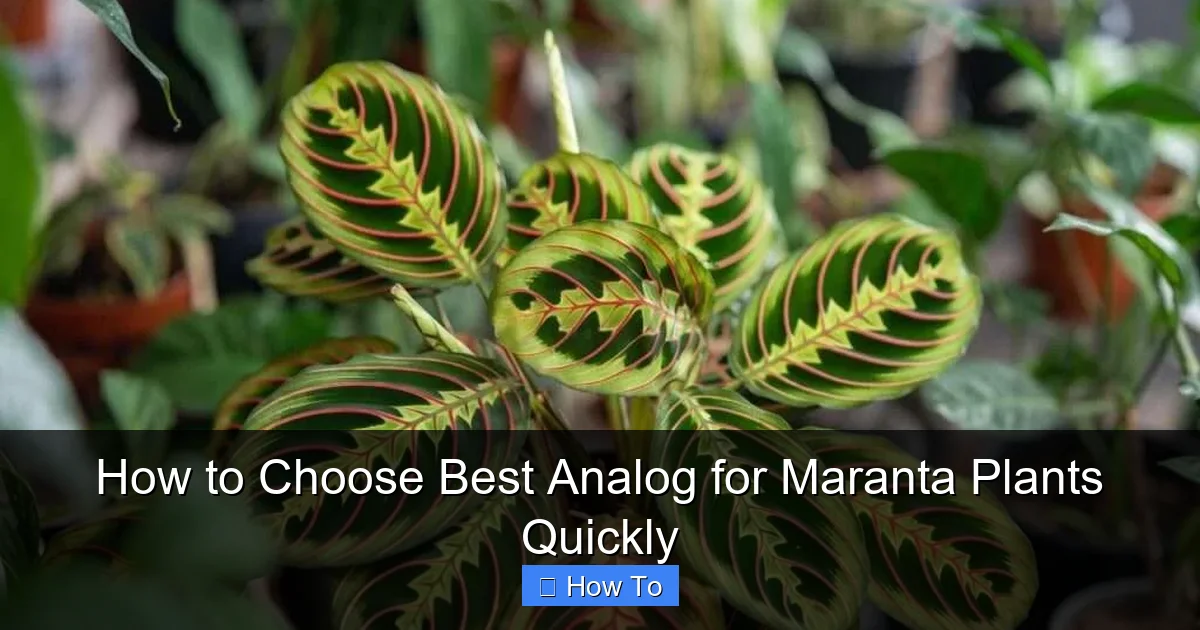
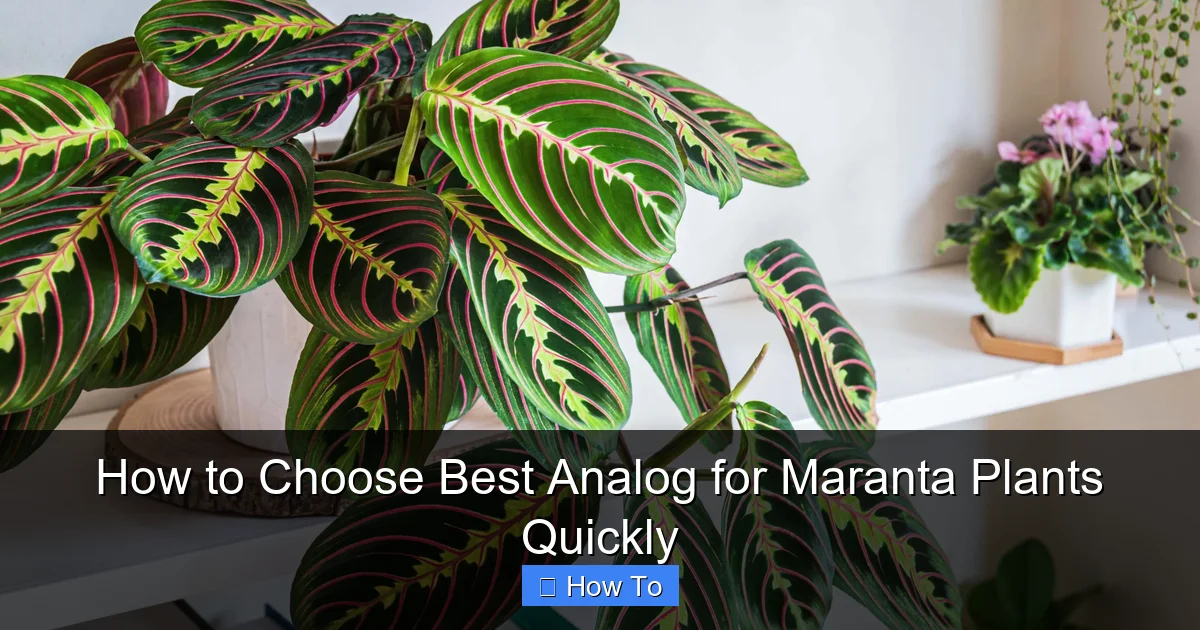
Maranta plants, commonly called prayer plants, captivate plant lovers with their striking foliage and unique leaf movements. Their leaves fold upward at night like praying hands, then flatten during the day. This daily dance, combined with intricate vein patterns in shades of green, red, and cream, makes them a favorite for indoor gardens.
But Maranta can be demanding. They crave high humidity, consistent moisture, and filtered light. Brown leaf tips, crispy edges, and spider mite infestations plague many growers. If you’ve struggled to keep a Maranta happy, or simply want more variety with similar aesthetics, finding the right analog for Maranta solves the problem.
An analog for Maranta is a plant that mimics its look, behavior, or care needs — sometimes all three. The best choice depends on your specific conditions: light levels, humidity, watering habits, and space. This guide walks you through every factor so you can choose confidently and quickly.
By the end, you’ll know exactly which analog for Maranta fits your home, your schedule, and your style. We’ll cover top candidates, comparison criteria, common mistakes, and pro tips from experienced growers.
Step 1: Define What You Want in an Analog for Maranta
Before comparing plants, clarify your priorities. Not every analog for Maranta checks every box. Rank these factors by importance to you.
Visual guide about How to Choose Best Analog for Maranta Plants Quickly
Image source: trees.com
Visual Similarity
Do you want the iconic herringbone pattern of Maranta leuconeura ‘Erythroneura’? The soft green-on-green of ‘Kerchoveana’? The bold red veins? Some analogs for Maranta replicate these patterns closely. Others offer different but equally stunning foliage.
Calathea ornata ‘Sanderiana’ (pinstripe plant) mimics the precise line work. Stromanthe sanguinea ‘Triostar’ delivers cream, green, and pink variegation. Ctenanthe setosa ‘Grey Star’ shows silvery leaves with dark veins. Decide which visual traits matter most.
Leaf Movement
The prayer motion — nyctinasty — defines Maranta. Many Marantaceae family members share this trait. Calathea, Stromanthe, Ctenanthe, and Goeppertia all move leaves daily. If the movement delights you, stick within this family. If you only want the look, broader options open up.
Care Difficulty
Maranta rates moderate to difficult. They punish inconsistency. Some analogs for Maranta are more forgiving. Ctenanthe burle-marxii handles lower humidity. Calathea makoyana tolerates slightly drier air. Goeppertia roseopicta ‘Dottie’ demands high humidity like Maranta. Match the plant to your realistic care capacity.
Size and Growth Habit
Maranta stays low and spreading, typically 12-18 inches tall and wide. Some analogs for Maranta grow taller. Calathea orbifolia reaches 2-3 feet. Stromanthe triostar can hit 3 feet. Ctenanthe oppenheimiana ‘Tricolor’ spreads wide but stays under 18 inches. Measure your space.
Pet Safety
Maranta is non-toxic to cats and dogs. Most Marantaceae family members share this safety. But always verify. Some lookalikes outside the family — like certain Dieffenbachia or Alocasia — are toxic. If pets roam your plants, confirm safety before buying.
Step 2: Assess Your Growing Conditions
The best analog for Maranta thrives in your environment, not a greenhouse. Audit your space honestly.
Visual guide about How to Choose Best Analog for Maranta Plants Quickly
Image source: gardeningchores.com
Light Levels
Maranta prefers bright, indirect light. Direct sun scorches leaves. Low light slows growth and fades patterns. Use a light meter or phone app. Measure foot-candles at plant level during midday.
- Low light: 50-250 fc — few analogs for Maranta thrive here
- Medium light: 250-1000 fc — ideal for most Marantaceae
- Bright indirect: 1000-2000 fc — excellent for color development
- Direct sun: 2000+ fc — avoid for all prayer plant analogs
North-facing windows often provide 200-500 fc. East-facing gives gentle morning sun. South and west need sheer curtains. If your space falls below 200 fc, consider supplemental grow lights or choose low-light tolerant analogs for Maranta like Ctenanthe burle-marxii.
Humidity
This is the make-or-break factor. Maranta wants 60-80% humidity. Average homes run 30-50%. Use a hygrometer. Check daily averages, not just peak readings.
- Below 40%: Only toughest analogs for Maranta survive — Ctenanthe burle-marxii, Calathea makoyana
- 40-55%: Most Calathea, Stromanthe, Ctenanthe work with humidifier or pebble tray
- 55-70%: Ideal range — all Marantaceae thrive
- Above 70%: Paradise for any analog for Maranta, but watch for fungal issues
If your humidity sits below 40% and you won’t run a humidifier, skip Stromanthe triostar and Goeppertia. Focus on Ctenanthe or consider non-Marantaceae analogs for Maranta like Peperomia or Begonia.
Temperature Stability
Maranta hates drafts and temperature swings. Ideal range: 65-80°F (18-27°C). Below 60°F causes damage. Above 85°F stresses plants. Check for cold drafts from windows, AC vents, exterior doors. Heat vents create dry, hot microclimates. Place your analog for Maranta away from all these.
Water Quality
Maranta and most analogs for Maranta are sensitive to tap water chemicals. Chlorine, fluoride, and dissolved salts cause brown tips. Test your water or assume it needs treatment. Options:
- Filtered water (Brita, ZeroWater, RO)
- Distilled water
- Rainwater collected in clean containers
- Tap water left out 24+ hours (removes chlorine only, not fluoride)
If you cannot provide treated water consistently, choose more tolerant analogs for Maranta. Ctenanthe handles tap water better than Calathea or Stromanthe.
Step 3: Explore Top Analog for Maranta Candidates
Here are the best substitutes, organized by how closely they match Maranta traits.
Closest Family Members: Calathea (Now Goeppertia)
Taxonomy update: Many “Calathea” are now classified as Goeppertia. Nurseries still use Calathea. We’ll use both names.
Calathea / Goeppertia orbifolia
Large, round leaves with silver-green stripes. Grows 2-3 feet tall and wide. Strong prayer movement. Needs high humidity (60%+), consistent moisture, bright indirect light. Stunning specimen plant. Less forgiving than Maranta.
Calathea / Goeppertia medallion (roseopicta ‘Medallion’)
Round leaves, dark green top with feathered patterns, deep purple underside. Classic prayer plant look. 1-2 feet tall. High humidity essential. Sensitive to water quality. Rewards care with dramatic foliage.
Calathea / Goeppertia lancifolia (Rattlesnake Plant)
Long, wavy leaves with dark green spots on light green, purple underside. Upright growth to 30 inches. More tolerant of lower humidity than other Calathea. Strong nyctinasty. Excellent analog for Maranta if you want vertical presence.
Calathea / Goeppertia makoyana (Peacock Plant)
Oval leaves with intricate feather patterns, translucent quality. Purple undersides. 1-2 feet. Slightly more humidity-tolerant. Beautiful backlit. Good middle-ground analog for Maranta.
Calathea / Goeppertia ornata ‘Sanderiana’ (Pinstripe Plant)
Dark green leaves with precise pink-white pinstripes. Purple underside. Upright, 2 feet. Demands high humidity and pure water. Striking pattern mimic for Maranta ‘Erythroneura’ fans.
Calathea / Goeppertia zebrina (Zebra Plant)
Velvety leaves with bold zebra stripes. Purple underside. 2-3 feet. Very humidity-needy. Spectacular but unforgiving. Choose only if you can maintain 70%+ humidity.
Colorful Contenders: Stromanthe
Stromanthe sanguinea ‘Triostar’ (Tricolor)
Cream, green, and pink variegation. Magenta undersides. Strong prayer movement. 2-3 feet tall. High humidity (60%+) non-negotiable. Sensitive to tap water. Showstopper analog for Maranta when happy. Crispy edges signal distress fast.
Stromanthe sanguinea ‘Magic Star’
Similar to Triostar but more white, less pink. Slightly more compact. Same care demands. Rare but stunning analog for Maranta collectors.
Forgiving Favorites: Ctenanthe
Ctenanthe burle-marxii (Fishbone Prayer Plant)
Elongated leaves with fishbone pattern, silvery-green. Purple underside. Low, spreading habit like Maranta. 12-18 inches. Tolerates 40-50% humidity better than most. Handles tap water decently. Best analog for Maranta for beginners or drier homes.
Ctenanthe oppenheimiana ‘Tricolor’ (Never Never Plant)
Cream, green, pink variegation. Lance-shaped leaves. Spreading, 18 inches. More humidity-tolerant than Stromanthe triostar. Strong nyctinasty. Excellent colorful analog for Maranta with easier care.
Ctenanthe setosa ‘Grey Star’
Silvery-grey leaves with dark green veins. Purple underside. Upright to 3-4 feet. Architectural form. Moderate humidity needs. Unique look, still moves leaves. Good analog for Maranta if you want height and texture.
Lesser-Known Gems
Goeppertia (Calathea) roseopicta ‘Dottie’
Near-black leaves with bright pink geometric outline. Purple underside. Compact, 12-18 inches. High humidity, pure water. Dramatic analog for Maranta lovers who want dark foliage.
Goeppertia (Calathea) warscewiczii (Velvet Calathea)
Velvety dark green leaves with light green feathering, maroon underside. 2-3 feet. Luxurious texture. High humidity. Rare but worth seeking as premium analog for Maranta.
Maranta leuconeura varieties (Other Prayer Plants)
Don’t overlook other Maranta cultivars. ‘Kerchoveana’ (rabbit tracks), ‘Lemon Lime’, ‘Black’, ‘Silver Band’ — all true Maranta with slightly different looks and similar care. Sometimes the best analog for Maranta is another Maranta.
Step 4: Compare Candidates Side-by-Side
Use this comparison framework to narrow your list. Score each analog for Maranta 1-5 on your priority factors.
Comparison Table: Key Metrics
Create a simple spreadsheet or paper chart with these columns:
- Plant name
- Visual match (1-5)
- Leaf movement (yes/no, strength 1-5)
- Humidity need (low/med/high)
- Water sensitivity (low/med/high)
- Light flexibility (low/med/high)
- Mature size (height x width)
- Growth rate (slow/med/fast)
- Pest resistance (1-5)
- Availability (easy/moderate/hard)
- Price range
- Pet safe (yes/no)
- Overall fit score
Fill in data from research. Weight columns by your priorities. The highest weighted score wins.
Decision Scenarios
Scenario A: Low Humidity Home (35-45%), No Humidifier
Top analog for Maranta: Ctenanthe burle-marxii. Runner-up: Calathea makoyana. Avoid: Stromanthe, Goeppertia orbifolia, zebrina, warscewiczii.
Scenario B: Bright Indirect Light, Will Run Humidifier
Top analog for Maranta: Stromanthe triostar (for color), Calathea orbifolia (for drama), Goeppertia roseopicta ‘Dottie’ (for darkness). All thrive with 60%+ humidity.
Scenario C: Medium Light, Moderate Humidity (50%), Tap Water Only
Top analog for Maranta: Ctenanthe oppenheimiana ‘Tricolor’, Ctenanthe setosa ‘Grey Star’, Calathea lancifolia. These tolerate compromises best.
Scenario D: Small Space, Want Compact Spreader
Top analog for Maranta: Maranta ‘Kerchoveana’, Maranta ‘Lemon Lime’, Ctenanthe burle-marxii, Goeppertia roseopicta ‘Dottie’. All stay under 18 inches.
Scenario E: Large Floor Specimen Wanted
Top analog for Maranta: Calathea orbifolia, Goeppertia warscewiczii, Ctenanthe setosa ‘Grey Star’, Stromanthe triostar. All reach 2-4 feet.
Scenario F: Pet Household, Non-Negotiable Safety
All Marantaceae listed are pet-safe. Verify any non-family analogs for Maranta individually. Avoid Dieffenbachia, Alocasia, Philodendron, Aglaonema if pets chew plants.
Step 5: Source Your Chosen Analog for Maranta
Where you buy affects plant health and your success. Choose wisely.
Local Independent Nurseries
Best for seeing plants in person. Check leaf quality, pest signs, soil condition. Staff often know care specifics. Plants acclimated to local climate. Higher prices but lower risk. Ask when shipment arrived — newer stock is fresher.
Big Box Garden Centers
Lower prices, but plants may be stressed from shipping, poor light, inconsistent watering. Inspect thoroughly. Check for spider mites (fine webbing, stippled leaves), mealybugs (white cottony masses), fungus gnats (flying from soil). Quarantine 2 weeks minimum.
Online Specialty Retailers
Wider selection, including rare analogs for Maranta. Reputable sellers: Steve’s Leaves, Gabriella Plants, NSE Tropicals, Ecuagenera (imports), Pistils Nursery, The Sill. Read reviews. Check shipping policies — heat packs in winter, fast shipping. Expect acclimation period.
Plant Swaps and Local Groups
Facebook groups, Reddit (r/TakeaPlantLeaveaPlant), local plant clubs. Free or cheap. Get cuttings or divisions. Verify ID — common names confuse. Ask for parent plant photos. High trust but variable quality.
Etsy and eBay
Many small growers. Filter for high ratings (98%+), many sales, recent reviews with photos. Message seller with questions — responsive sellers are better. Avoid imports without phytosanitary certificates (illegal, high pest risk).
Step 6: Acclimate and Establish Your New Analog for Maranta
The first 4-6 weeks determine long-term success. Follow this protocol.
Week 1: Quarantine and Observe
Isolate from other plants. Check daily for pests. Do not repot yet. Place in intended spot. Water only if soil dry top inch. No fertilizer. Document baseline photos.
Week 2-3: Gradual Adjustment
If light differs from nursery, adjust slowly. Move 1 foot closer to window every 3 days. Monitor humidity with hygrometer at plant level. Start pebble tray or humidifier if needed. Check soil moisture daily.
Week 4: Repot If Needed
Only repot if rootbound (roots circling, exiting drainage holes, soil dries in 1 day). Use appropriate mix (see Step 7). Go up 1-2 inches pot diameter max. Water thoroughly after. Return to spot.
Week 5-6: Begin Care Routine
Start weak fertilizer (1/4 strength balanced). Establish watering schedule based on your conditions. Note leaf movement patterns — they indicate happiness. Adjust as needed.
Step 7: Optimize Soil and Potting for Your Analog for Maranta
Right soil prevents 80% of problems. Marantaceae need moisture retention with aeration.
Ideal Mix Recipe
Mix thoroughly:
- 2 parts high-quality peat-based potting soil (FoxFarm Ocean Forest, Pro-Mix HP)
- 1 part perlite (horticultural grade)
- 1 part orchid bark (small-medium chunks)
- 1/2 part worm castings or compost
- 1/4 part horticultural charcoal
- Optional: 1/4 part coco coir for extra moisture buffer
This drains well but holds even moisture. pH 6.0-6.5 ideal.
Pot Selection
- Material: Plastic or glazed ceramic (retains moisture). Avoid unglazed terracotta — wicks water too fast.
- Drainage: Multiple holes essential. Add holes if needed.
- Size: 1-2 inches larger than root ball. Marantaceae like snug roots.
- Saucer: Use but empty after watering. Never let sit in water.
Repotting Signs
- Roots circling densely
- Roots exiting drainage holes
- Soil dries in less than 2 days
- Plant pushes up out of pot
- Growth stalls despite good care
Best time: Spring. Avoid winter repotting unless emergency.
Step 8: Master Ongoing Care for Your Analog for Maranta
Consistency beats perfection. Build these habits.
Watering Protocol
Check soil daily. Water when top 1 inch feels dry. Use finger, not schedule. Water thoroughly until drains out. Empty saucer. Use room-temp treated water. Never let bone dry. Never let soggy.
Signs of underwatering: Leaves curl inward, crispy edges, dramatic droop that perks after watering. Signs of overwatering: Yellow lower leaves, mushy stems, fungus gnats, sour soil smell.
Humidity Maintenance
Run humidifier 12-16 hours daily. Target 60%+. Group plants — creates microclimate. Pebble trays help marginally. Misting is ineffective and promotes fungal issues. Bathroom or kitchen placement works if light suffices.
Fertilizing Schedule
- Spring-Summer: Every 2 weeks at 1/4 strength balanced (10-10-10 or 20-20-20)
- Fall: Monthly at 1/4 strength
- Winter: Stop or monthly at 1/8 strength if growing
- Flush soil monthly with plain water to prevent salt buildup
Organic options: Fish emulsion (smelly), seaweed extract, worm casting tea. Synthetic: Dyna-Gro Foliage-Pro, Jack’s Classic.
Light Management
Rotate weekly for even growth. Clean leaves monthly with damp cloth — dust blocks light. Supplement with grow lights in winter (12-14 hours, 200-400 fc at canopy). LED full-spectrum bars work well.
Pruning and Grooming
- Remove yellow/brown leaves at base with clean scissors
- Trim brown tips at natural leaf shape — don’t cut into green
- Thin crowded centers for airflow
- Divide during repotting if clump large
Step 9: Troubleshoot Common Analog for Maranta Problems
Even with good care, issues arise. Diagnose fast.
Brown Leaf Tips and Edges
Causes (most to least common): Low humidity, tap water chemicals, inconsistent watering, fertilizer salt buildup, rootbound, cold draft. Fix: Increase humidity, switch water, stabilize watering, flush soil, repot, move from draft.
Yellowing Leaves
Bottom leaves only: Natural aging. Widespread: Overwatering, poor drainage, root rot, nutrient deficiency, cold stress, spider mites. Check roots — white/firm = good, brown/mushy = rot.
Curling Leaves
Inward curl (taco shape): Underwatering, low humidity, root issues. Outward/downward curl: Overwatering, heat stress, pest damage. Check soil first.
Faded or Lost Variegation
Too little light: Move brighter. Too much direct sun: Move back. Nutrient imbalance: Adjust fertilizer. Reversion (green shoots on variegated plant): Cut green stems at base.
Spider Mites
Tiny red/brown dots, fine webbing, stippled leaves. Love dry air. Treatment: Shower plant thoroughly, spray neem oil or insecticidal soap weekly x 3 weeks, increase humidity to 60%+, isolate. Preventive: Monthly neem, high humidity.
Mealybugs
White cottony clusters in leaf axils, undersides. Treatment: Dab with alcohol on cotton swab, spray neem/soap weekly x 3 weeks, check roots for root mealies (repot if found).
Fungus Gnats
Small black flies from soil. Larvae eat roots. Treatment: Yellow sticky traps, mosquito bits (BTi) in water, dry top soil inch, beneficial nematodes. Prevent: Don’t overwater, use sand top dressing.
Root Rot
Mushy brown roots, foul smell, wilting despite wet soil. Emergency: Unpot, rinse roots, cut all rot, hydrogen peroxide dip (3% diluted 1:4), repot in fresh dry mix, withhold water 3-5 days, then water sparingly.
Step 10: Propagate and Expand Your Collection
Once your analog for Maranta thrives, multiply it.
Division (Best Method)
During spring repotting, gently separate root ball into sections with 3+ stems and healthy roots each. Pot separately. Keep extra humid 2 weeks. High success rate.
Stem Cuttings (Some Species)
Calathea/Goeppertia rarely root from stems. Ctenanthe and Stromanthe sometimes do. Cut below node, 3-4 inches, 2+ leaves. Root in water or moist perlite/sphagnum. High humidity essential. 4-8 weeks.
Rhizome Cuttings
Marantaceae grow from rhizomes. Cut rhizome sections with growth bud. Lay horizontally on moist mix, barely cover. High humidity. Slow but works for all family members.
Seed (Not Practical)
Rarely flower indoors. Seeds short viability. Not viable for home growers.
Advanced Tips for Analog for Maranta Success
Create a Marantaceae Corner
Group 3+ analogs for Maranta together. Shared humidity, easier care routine, stunning visual impact. Use varying heights — tall Calathea orbifolia back, medium Stromanthe middle, spreading Ctenanthe front.
Use a Humidity Controller
Inkbird or similar controller + humidifier maintains exact range. Set 65% day, 75% night. Automates the hardest part.
Try Semi-Hydroponics (LECA/Pon)
Many analogs for Maranta adapt well to passive hydroponics. Constant moisture, no soil pests, easy water monitoring. Transition gradually. Not for beginners but powerful.
Seasonal Adjustments
Winter: Reduce water, stop fertilizer, add grow light, watch for drafts. Spring: Resume fertilizing, repot if needed, increase water. Summer: Peak growth, max water/fertilizer, watch for pests. Fall: Taper fertilizer, reduce water, prepare for winter.
Document Your Journey
Photo journal monthly. Note care changes and results. Builds personal knowledge base. Helps troubleshoot. Satisfying progress record.
Common Mistakes When Choosing an Analog for Maranta
Mistake 1: Buying on Looks Alone
That stunning Stromanthe triostar will crisp in your 35% humidity living room. Match plant to conditions, not wishful thinking.
Mistake 2: Ignoring Water Quality
Tap water kills sensitive analogs for Maranta slowly. Brown tips appear weeks later. Invest in filter or distiller from day one.
Mistake 3: Repotting Immediately
New plants need acclimation, not root disturbance. Wait 4+ weeks unless emergency.
Mistake 4: Misting Instead of Humidifying
Misting wets leaves briefly, promotes fungus, doesn’t raise ambient humidity. Use a humidifier.
Mistake 5: Overwatering from Fear of Underwatering
Soggy soil causes root rot faster than slight dryness causes crispy tips. Check soil, don’t schedule.
Mistake 6: Placing Near Vents or Drafts
AC/heat vents create desert microclimates. Cold drafts shock tropicals. Position carefully.
Mistake 7: Expecting Perfection
Even happy analogs for Maranta get occasional brown tips. Older leaves yellow and die. Aim for healthy new growth, not flawless foliage.
Budget Considerations for Your Analog for Maranta
Starter Budget ($15-30)
Ctenanthe burle-marxii, Maranta ‘Kerchoveana’, Calathea lancifolia (small), Calathea makoyana (small). Widely available, forgiving.
Mid-Range ($30-75)
Calathea orbifolia (medium), Stromanthe triostar (medium), Ctenanthe oppenheimiana ‘Tricolor’, Goeppertia roseopicta ‘Medallion’, Calathea ornata.
Collector Budget ($75-200+)
Goeppertia warscewiczii, large specimen Calathea orbifolia, rare Stromanthe ‘Magic Star’, variegated Ctenanthe setosa, imported specimens.
Cost-Saving Strategies
- Buy small, grow up — 4-inch pots cost 1/3 of 10-inch
- Join plant groups for trades/cuttings
- Watch for nursery clearance (inspect carefully)
- Propagate your own — free plants forever
- Split large pots with friends
Seasonal Buying Guide for Analog for Maranta
Spring (Best Overall)
Nurseries fully stocked. Plants entering active growth. Acclimate easily. Best selection and prices.
Summer (Good)
Good availability. Heat shipping risk. Ensure seller uses heat packs/cool packs appropriately.
Fall (Moderate)
Selection narrows. Plants slowing growth. Acclimation slower. Good for hardy types like Ctenanthe.
Winter (Challenging)
Limited stock. High shipping stress. Cold damage risk. Only buy from sellers with guaranteed live arrival and heat packs. Avoid rare/expensive plants.
When to Choose a Non-Marantaceae Analog for Maranta
Sometimes the best analog for Maranta isn’t in the family. Consider these if Marantaceae keep failing:
Peperomia Species
Peperomia caperata (ripple), P. rosso, P. ‘Napoli Nights’ — textured leaves, compact, pet-safe, lower humidity tolerance (40%+), easier water. No leaf movement.
Begonia Rex Hybrids
Incredible foliage patterns/colors. Rhizomatous like Maranta. Need 50%+ humidity but tolerate brighter light. Some leaf movement. Toxic to pets.
Fittonia (Nerve Plant)
Striking vein patterns. Low, spreading. High humidity needed but stays small. Dramatic wilt when dry — clear signal. Pet-safe. No prayer movement.
Pilea Species
Pilea involucrata ‘Moon Valley’, P. cadierei — textured leaves, easy care, lower humidity. Upright not spreading. Pet-safe. No movement.
Hemigraphis alternata (Waffle Plant)
Purple-green corrugated leaves. Low spreader. Moderate humidity. Pet-safe. No movement. Very easy.
Building a Complete Prayer Plant Collection
If you fall for one analog for Maranta, you’ll want more. Plan a cohesive collection.
Theme Ideas
- Pattern Play: Pinstripes (Calathea ornata), fishbones (Ctenanthe burle-marxii), feathers (Calathea makoyana), zebra (Calathea zebrina)
- Color Spectrum: Green (Calathea lancifolia), silver (Ctenanthe ‘Grey Star’), pink (Stromanthe triostar), dark (Goeppertia ‘Dottie’), lime (Maranta ‘Lemon Lime’)
- Size Gradient: Floor (Calathea orbifolia), table (Stromanthe), shelf (Ctenanthe burle-marxii), terrarium (Maranta microphylla)
- Texture Focus: Velvet (Goeppertia warscewiczii), glossy (Calathea orbifolia), matte (Ctenanthe setosa), corrugated (Hemigraphis)
Care Station Setup
Dedicate a shelf or corner with: Humidifier on timer, grow light on timer, water station (filtered water reservoir), fertilizer mix bottle, pruning shears, neem oil spray, hygrometer, moisture meter. Routine becomes 5 minutes daily.
Travel and Vacation Care for Your Analog for Maranta
Marantaceae don’t tolerate neglect. Plan ahead.
Short Trips (3-5 Days)
- Water thoroughly before leaving
- Group plants, add humidifier on timer
- Move from bright light to medium (slows water use)
- Self-watering spikes (test first — some clog)
- Bathtub method: 1 inch water, pots on towels (max 5 days)
Long Trips (1-2 Weeks)
- Plant sitter with written instructions + photos
- Video call check-in
- Automated watering system (Blumat, DIY drip)
- Move to bathroom with natural light + humidifier
- Consider semi-hydro for consistent moisture
Extended Absence (2+ Weeks)
Hire plant care service. Or rehome temporarily with plant friend. Marantaceae rarely survive 3+ weeks unattended.
Conclusion: Your Perfect Analog for Maranta Awaits
Choosing the best analog for Maranta doesn’t require botanical expertise — just honest assessment and informed matching. You now have the complete framework: define priorities, audit conditions, compare candidates, source wisely, acclimate carefully, and maintain consistently.
Remember the golden rule: the best analog for Maranta is the one that thrives in your care, not the most Instagrammable. A happy Ctenanthe burle-marxii beats a crispy Stromanthe triostar every time.
Start with one. Master its rhythm. Then expand. Before long, you’ll curate a living gallery of prayer plant relatives, each folding and unfolding in daily rhythm, transforming your space with motion and pattern.
Your perfect analog for Maranta is out there. Maybe it’s waiting at a local nursery. Maybe it’s a cutting from a friend. Maybe it’s another Maranta variety you haven’t met. Wherever it is, you now know exactly how to find it, choose it, and help it flourish.
Happy growing. May your leaves always pray at sunset and dance at dawn.