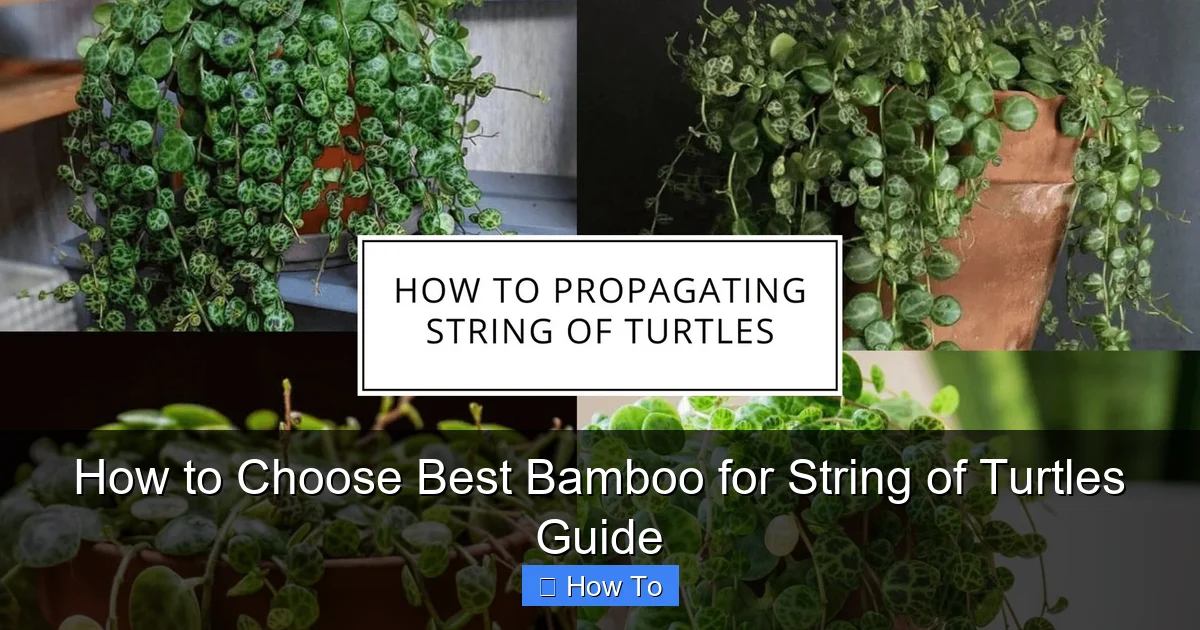
How to Choose Best Bamboo for String of Turtles Guide
String of turtles (Peperomia prostrata) thrives with proper support and drainage. This guide covers everything you need to know about selecting bamboo stakes, trellises, and containers that match this plant’s unique needs. Discover the right bamboo products to help your trailing beauty flourish.
Quick Answers to Common Questions
How do I know if my bamboo stake is too thick for my string of turtles?
If the stake diameter exceeds 6mm for a young plant, it can shade lower leaves and look disproportionate. Thin stakes (4mm) blend into foliage and provide gentle guidance without visual bulk.
Can I use bamboo skewers from the kitchen as plant stakes?
Kitchen skewers are typically too short, may have food-grade oils, and lack the durability of horticultural bamboo. Invest in proper 12-inch horticultural stakes — they cost pennies each and last much longer.
Why is my string of turtles not attaching to the bamboo trellis?
String of turtles attaches via tiny adventitious roots that need humidity to activate. Mist the trellis area daily, ensure bright indirect light reaches the nodes, and be patient — attachment can take 3-6 weeks.
How often should I replace bamboo stakes?
Replace stakes every 2-3 years or when you see cracking, mold that returns after cleaning, or splintering. Quality kiln-dried Moso bamboo lasts longer than generic stakes.
Can I make my own bamboo trellis?
Absolutely! Use 10mm Moso bamboo uprights and 6mm crosspieces. Lash joints with natural jute twine (not wire). Space horizontals 2-3 inches apart. Sand all nodes smooth. Seal with food-grade mineral oil.
Introduction: Why Bamboo Matters for Your String of Turtles
If you have fallen in love with the adorable turtle-shell patterned leaves of Peperomia prostrata, commonly called string of turtles, you are not alone. This charming trailing plant has taken the houseplant world by storm. But here is the thing many new owners miss: the right support system makes all the difference between a struggling plant and a showstopper.
You might wonder why a guide about bamboo for string of turtles exists. After all, these are two completely different plants. The answer is simple. Bamboo products — stakes, trellises, poles, pots, and humidity trays — are among the best tools for growing healthy string of turtles. Bamboo is lightweight, sustainable, naturally antimicrobial, and gentle on delicate stems.
In this comprehensive guide, you will learn exactly how to choose the best bamboo products for every stage of your string of turtles journey. We will cover stakes for young plants, trellises for mature specimens, pots that prevent root rot, humidity trays that mimic tropical conditions, and how to spot quality bamboo that lasts. Whether you are a first-time plant parent or a seasoned collector, this guide will help you make confident choices.
Understanding String of Turtles Needs
Before we dive into bamboo selection, let us quickly review what makes string of turtles unique. This knowledge drives every bamboo choice you will make.
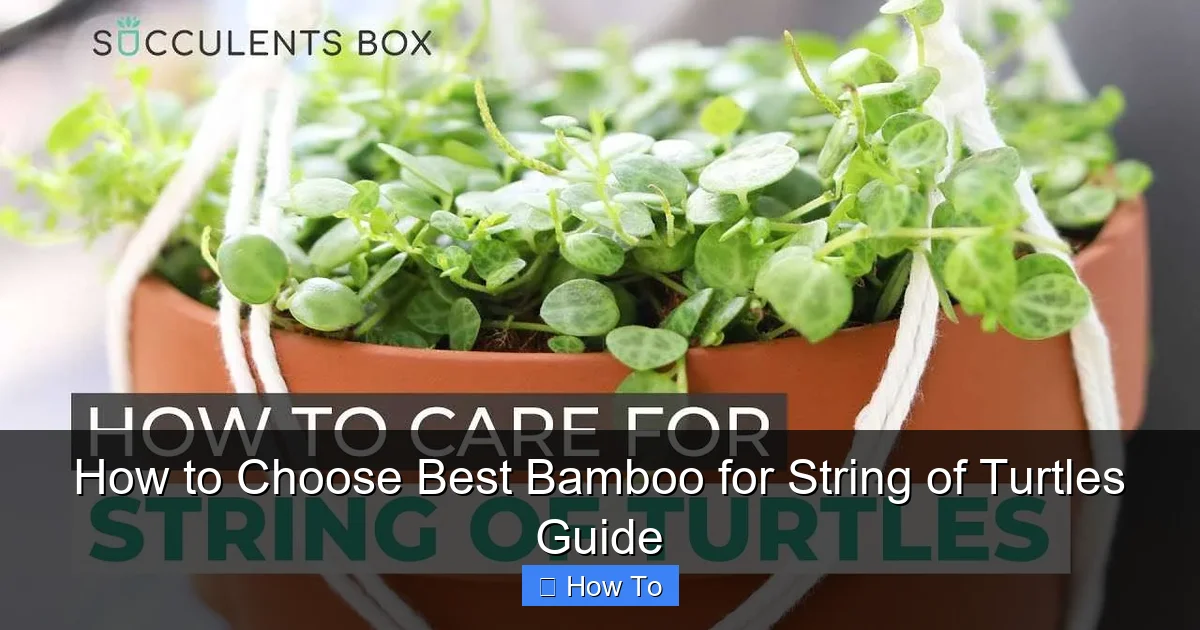
Visual guide about How to Choose Best Bamboo for String of Turtles Guide
Image source: styves.co.za
Growth Habit and Structure
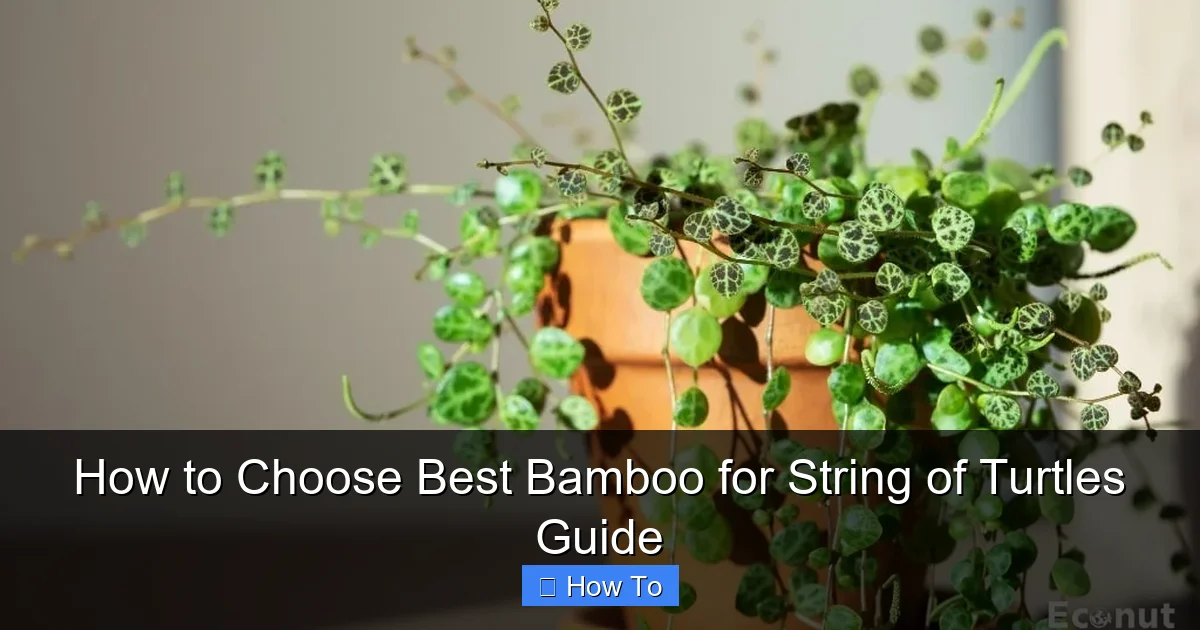
String of turtles is a semi-succulent trailing plant. Its stems are thin, delicate, and easily damaged. The leaves are small, button-like, and feature the distinctive turtle-shell pattern that gives the plant its name. In nature, this plant grows as an epiphyte in Brazilian rainforests, creeping along tree branches and rock crevices.
This growth habit tells us three important things about support needs:
- Stems cannot support heavy climbing — they need gentle guidance
- The plant prefers to trail or climb shallow angles, not vertical walls
- Roots are shallow and prone to rot in soggy conditions
Environmental Preferences
String of turtles thrives in bright indirect light, temperatures between 65-75°F (18-24°C), and humidity around 50-60%. It hates wet feet. The potting mix must drain rapidly. These preferences directly influence which bamboo products work best.
Common Problems Bamboo Can Solve
Many string of turtles issues stem from improper support or containers:
- Leggy growth from insufficient light reaching lower leaves
- Stem breakage from heavy or rough supports
- Root rot from poor drainage in non-porous pots
- Crispy leaf edges from low humidity
- Tangled, unmanageable vines
Quality bamboo products address every single one of these problems. Now let us explore each category in detail.
Step 1: Choosing Bamboo Stakes for Young Plants
When your string of turtles is young — typically under six months old or with vines shorter than eight inches — simple bamboo stakes are all you need. They provide gentle guidance without overwhelming the plant.
Visual guide about How to Choose Best Bamboo for String of Turtles Guide
Image source: econutplants.com
Ideal Stake Dimensions
For young string of turtles, look for these specifications:
- Diameter: 4-6 millimeters (about 3/16 to 1/4 inch)
- Length: 8-12 inches total, with 3-4 inches buried in soil
- Quantity: 3-5 stakes per 4-inch pot
Thin stakes blend into the foliage. They disappear visually while doing their job. Thick stakes look clunky and can shade the lower leaves.
Material Quality Checklist
Not all bamboo stakes are created equal. Run through this checklist before buying:
- Untreated and chemical-free: No pesticides, fungicides, or preservatives. These can leach into soil and harm sensitive roots.
- Naturally dried: Kiln-dried or air-dried for at least six months. Green bamboo molds quickly in humid conditions.
- Smooth nodes: The joint rings should be sanded smooth. Rough nodes can cut into tender stems.
- Straight with minimal taper: Consistent diameter along the length ensures even support.
- Light tan to golden color: Dark brown or gray indicates age or improper storage.
How to Install Stakes Properly
Installation matters as much as selection. Follow these steps:
- Insert stakes at a 45-degree angle, leaning toward the center of the pot
- Space them evenly around the perimeter — think compass points
- Push them deep enough to be stable (3-4 inches)
- Use soft plant ties, twine, or clips to gently attach stems
- Check ties weekly and loosen as stems thicken
Pro tip: Soak new bamboo stakes in water for 30 minutes before installation. This prevents them from wicking moisture away from the root zone initially.
When to Upgrade from Stakes
Your plant will tell you when stakes are no longer enough. Watch for these signs:
- Vines exceed 12-18 inches in length
- Stems start trailing over the pot edge instead of climbing
- Lower leaves yellow from lack of light
- The plant looks top-heavy or unstable
At this stage, usually around the 8-12 month mark, it is time for a trellis.
Step 2: Selecting the Right Bamboo Trellis
A bamboo trellis transforms your string of turtles from a hanging plant into a living wall art piece. The right trellis displays those gorgeous turtle-shell leaves at perfect viewing angles.
Trellis Styles Compared
Not every trellis design suits string of turtles. Here is how the main styles perform:
Fan-Shaped Trellis (Best Overall)
This classic design spreads from a narrow base at the soil line to a wide top. It mimics the natural fanning growth habit.
- Pros: Excellent light distribution, showcases leaf pattern, stable base
- Cons: Takes up horizontal space, can be tricky to repot around
- Best for: Mature plants on shelves or tabletops
Grid or Lattice Trellis (Best for Walls)
Square or diamond-patterned grids attach to walls or stand freely.
- Pros: Maximum leaf display, easy to train vines, space-efficient
- Cons: Can look institutional, requires wall mounting or heavy base
- Best for: Feature walls, plant shelves, vertical gardens
Arch or Hoop Trellis (Best for Pots)
U-shaped or circular arches insert directly into the potting mix.
- Pros: Self-supporting, portable, creates a living sculpture
- Cons: Limited training surface, can tip in lightweight pots
- Best for: Tabletop displays, rotating for even light
Ladder Trellis (Good Alternative)
Two parallel poles with horizontal rungs — like a tiny ladder.
- Pros: Very stable, easy to weave vines through, clean look
- Cons: Less dramatic display, rungs can be too widely spaced
- Best for: Minimalist aesthetics, narrow spaces
Sizing Your Trellis
Match trellis size to your plant’s current and near-future dimensions:
- Small (12-18 inches tall, 8-12 inches wide): Plants with 12-24 inch vines
- Medium (24-30 inches tall, 14-18 inches wide): Plants with 2-3 foot vines
- Large (36+ inches tall, 20+ inches wide): Specimen plants, multiple vines
Always choose slightly larger than you think you need. String of turtles grows faster than expected in ideal conditions.
Bamboo Trellis Construction Quality
Examine these details before purchasing:
- Joint construction: Look for lashed joints (natural fiber twine) or wooden dowels. Avoid metal screws or staples — they rust and damage stems.
- Pole diameter: Main uprights should be 10-15mm. Crosspieces can be 6-8mm.
- Spacing: Horizontal elements spaced 2-3 inches apart. This matches string of turtles leaf node spacing.
- Finish: Natural, untreated, or food-grade mineral oil only. No varnish, paint, or sealant.
- Base stability: Freestanding trellis needs a wide foot or weighted base.
Training Vines on a Trellis
Once you have the right trellis, training is straightforward:
- Position trellis in pot before adding plant (or carefully insert beside established plant)
- Gently guide the longest vines toward the lowest horizontal elements
- Use soft plant clips or twine — never wire or twist ties
- Space attachment points every 3-4 inches
- Allow some slack for growth — do not pull tight
- Rotate the pot weekly for even light exposure
Within a few weeks, the plant will naturally grip the bamboo with its tiny adventitious roots.
Step 3: Choosing Bamboo Pots and Containers
This is where bamboo truly shines for string of turtles. The porous nature of bamboo solves the number one killer of this plant: root rot.
Why Bamboo Pots Work So Well
String of turtles has shallow, fine roots that demand oxygen. Traditional plastic or glazed ceramic pots trap moisture. Terracotta helps but can wick too much water in dry climates. Bamboo hits the sweet spot:
- Naturally porous — allows air exchange through walls
- Moderate water wicking — not too aggressive
- Lightweight — easy to move for light optimization
- Antimicrobial properties — resists fungal growth
- Biodegradable — eco-friendly at end of life
Types of Bamboo Containers
Solid Bamboo Pots (Best for Most Growers)
Made from compressed bamboo fibers or hollowed bamboo sections.
- Compressed fiber pots: Look like regular pots but lighter. Durable for 3-5 years.
- Hollow section pots: Actual bamboo culms cut to length with bottoms sealed. Very natural look.
- Drainage: Must have multiple holes (5-7) not just one central hole.
Bamboo Baskets with Liners (Best for Hanging)
Woven bamboo baskets lined with coconut coir or felt.
- Excellent drainage and airflow
- Perfect for trailing display
- Liner prevents soil loss while allowing drainage
- Check liner quality — coconut coir lasts longer than felt
Bamboo Cachepots (Decorative Only)
Outer decorative sleeves for nursery pots.
- Do not plant directly in these
- Use to hide plastic nursery pots
- Must remove inner pot for watering
- Great for aesthetic flexibility
Pot Size Guidelines
String of turtles prefers being slightly root-bound. Oversized pots hold too much moisture.
- Starter plants (2-3 inch nursery pot): 4-inch bamboo pot
- Established plants (4 inch nursery pot): 5-6 inch bamboo pot
- Mature specimens (6 inch nursery pot): 7-8 inch bamboo pot
- General rule: Only 1 inch larger diameter than current root ball
Quality Indicators for Bamboo Pots
Inspect these details carefully:
- Bottom construction: Multiple drainage holes, slightly elevated feet or base design
- Wall thickness: 5-8mm for durability without excessive weight
- Interior finish: Smooth, no splinters or rough fibers that damage roots
- Rim quality: Rounded, sanded smooth — sharp rims cut stems during watering
- Joinery: If assembled, look for food-safe adhesives or mechanical joints only
Preparing a New Bamboo Pot
Before first use, take these steps:
- Soak the pot in clean water for 2-3 hours
- This pre-saturates the bamboo so it does not pull moisture from the initial watering
- Allow to drain completely
- Add a layer of orchid bark or perlite at the bottom for extra drainage
- Use a well-draining mix: 2 parts succulent soil, 1 part perlite, 1 part orchid bark
Step 4: Bamboo Humidity Trays and Accessories
String of turtles comes from humid Brazilian rainforests. Indoor air, especially in winter, is often too dry. Bamboo humidity trays provide a beautiful, functional solution.
How Bamboo Humidity Trays Work
A shallow bamboo tray filled with pebbles and water creates a localized humidity zone. As water evaporates, it raises humidity immediately around the plant. Bamboo is ideal because it:
- Resists mold and warping better than wood
- Looks natural and attractive
- Does not leach chemicals into the evaporation zone
- Provides a stable, flat surface for pots
Choosing the Right Tray
- Size: At least 2-3 inches wider than pot diameter on all sides
- Depth: 1-1.5 inches — holds enough water for 2-3 days
- Construction: Solid bamboo bottom with raised edges, waterproof seal on interior
- Feet: Small rubber or bamboo feet protect furniture
- Pebble compatibility: Flat bottom works best with decorative pebbles
Setting Up Your Humidity Tray
- Fill tray with clean pebbles, LECA, or lava rock
- Add water to just below the top of the pebbles
- Place pot on pebbles — bottom of pot must NOT touch water
- Refill when water level drops below halfway
- Clean monthly with diluted vinegar to prevent mineral buildup
Other Useful Bamboo Accessories
- Bamboo plant labels: Track varieties, watering dates, fertilization
- Bamboo scoops: Perfect for adding soil without damaging leaves
- Bamboo misters: Decorative pump sprayers for foliar feeding
- Bamboo pruning shears: Small, precise tools for delicate stems
Step 5: Evaluating Bamboo Quality — A Deep Dive
Quality varies enormously in bamboo products. Since these touch your plant’s roots and stems, you need to know how to spot the good stuff.
Bamboo Species Matters
Not all bamboo is equal for horticultural use:
- Moso bamboo (Phyllostachys edulis): Gold standard. Dense, straight, naturally pest-resistant. Most quality stakes and trellis use this.
- Tonkin cane (Pseudosasa amabilis): Excellent for thin stakes. Very straight, smooth nodes.
- Guadua bamboo: Thick-walled, very strong. Good for heavy trellis uprights.
- Generic “bamboo”: Often mixed species, lower density, more variable quality.
Look for species identification on packaging. Reputable brands proudly state “Moso bamboo” or “Tonkin cane.”
Harvest and Processing Indicators
Quality bamboo is harvested at the right age (3-5 years) and properly cured:
- Color: Consistent pale gold to honey color. Green = too young. Dark brown = overaged or poorly stored.
- Sound: Tap two pieces together. Quality bamboo rings clearly. Dull thud indicates internal cracks or moisture.
- Weight: Should feel dense for its size. Lightweight = low density = weak.
- Surface: Smooth, waxy feel. Rough or fuzzy surface indicates poor processing.
Red Flags to Avoid
Walk away if you see any of these:
- Visible mold, mildew, or white powdery residue
- Insect holes or frass (sawdust-like material)
- Cracks running lengthwise (checking)
- Strong chemical odor
- Splintering at cut ends
- Warped or bent pieces sold as straight
- Metal hardware on trellis joints
- Plastic coatings or unknown sealants
Where to Buy Quality Bamboo
Source matters as much as selection:
- Specialty horticultural suppliers: Best selection, knowledgeable staff
- Bonsai nurseries: Often carry premium Tonkin cane stakes
- Reputable online plant shops: Read reviews specifically about bamboo quality
- Bamboo specialty stores: May need to explain your use case
- Avoid: Dollar stores, big-box garden centers (often low-grade), craft stores (treated for crafts, not plants)
Step 6: Seasonal Bamboo Care and Maintenance
Bamboo products last years with proper care. Neglect them, and they become hazards.
Monthly Inspection Routine
Set a calendar reminder for the first weekend of each month:
- Check all stakes and trellis for stability — tighten or reposition as needed
- Inspect ties and clips — loosen any that are cutting into stems
- Examine bamboo surfaces for mold, algae, or pest activity
- Verify pot drainage holes are clear
- Clean humidity tray and refresh pebbles if needed
Deep Cleaning (Quarterly)
Every three months, give bamboo a thorough cleaning:
- Remove plant from pot (great time to check roots anyway)
- Scrub bamboo pot inside and out with soft brush and mild soap
- Rinse thoroughly — no soap residue
- Soak in 10% hydrogen peroxide solution for 15 minutes (sanitizes)
- Rinse again and air dry completely in shade before reuse
- For trellis and stakes: wipe down with damp cloth, same peroxide treatment if needed
Seasonal Adjustments
Spring
- Repot if needed — upgrade bamboo pot size
- Add new stakes for spring growth flush
- Clean humidity tray thoroughly after winter
Summer
- Monitor bamboo for drying/cracking in heat
- Increase humidity tray refills
- Check ties weekly during rapid growth
Fall
- Reduce watering — bamboo pots dry faster than plastic
- Bring outdoor bamboo items inside before frost
- Inspect for pests before bringing indoors
Winter
- Humidity tray is essential — run constantly
- Keep bamboo away from heating vents (causes cracking)
- Minimal handling — bamboo more brittle in cold/dry conditions
When to Replace Bamboo
Even quality bamboo eventually degrades. Replace when you see:
- Structural cracks compromising strength
- Persistent mold that returns after cleaning
- Soft spots indicating internal rot
- Rough splintering that cannot be sanded smooth
- Metal hardware corrosion (on older trellis)
- Pot bottom sagging or drainage failure
Expect 3-5 years for pots, 5+ years for stakes and trellis with good care.
Step 7: Creative Bamboo Display Ideas
Beyond function, bamboo lets you create stunning displays. Here are inspiring ways to show off your string of turtles.
Living Wall Panel
Mount a large bamboo grid trellis on a wall. Plant 3-5 string of turtles at the base. Train vines upward and outward. The turtle-shell leaves create a living texture panel. Add small LED grow lights for evening drama.
Bamboo Ladder Shelf
Use a decorative bamboo ladder as a plant stand. Place string of turtles in bamboo pots on each rung. The trailing vines cascade between levels. Rotate plants weekly for even growth.
Hanging Bamboo Garden
Suspend 3-5 bamboo baskets at staggered heights from a ceiling-mounted bamboo pole. Each basket holds a string of turtles. Creates a floating green cloud effect. Perfect for bright corners.
Terrarium Topper
Place a small bamboo arch trellis in a large open terrarium. Plant string of turtles at base. The high humidity is perfect. The arch creates structure in the miniature landscape.
Bamboo and Stone Composition
Combine a bamboo pot with decorative stones and a small bamboo stake. Position on a slate or bamboo tray. Minimal, zen aesthetic that highlights the plant’s unique leaves.
Step 8: Troubleshooting Common Bamboo-Related Issues
Even with the best choices, problems can arise. Here is how to fix them.
Problem: Bamboo Stake Mold
Symptoms: White, green, or black fuzzy growth on stakes, especially at soil line.
Causes: Excess moisture, poor air circulation, low-quality bamboo.
Solutions:
- Remove affected stakes immediately
- Treat plant with cinnamon powder on soil surface (natural antifungal)
- Improve air circulation with a small fan
- Replace with kiln-dried, high-quality stakes
- Reduce watering frequency
Problem: Stems Damaged by Rough Bamboo
Symptoms: Brown scars, cuts, or crushed sections on stems where they contact bamboo.
Causes: Unsanded nodes, rough surfaces, ties too tight.
Solutions:
- Sand rough areas with fine sandpaper (220 grit)
- Switch to softer ties — velcro plant tape is ideal
- Add protective sleeves (split drinking straws) over contact points
- Replace severely rough pieces
Problem: Bamboo Pot Drying Too Fast
Symptoms: Soil bone dry within 24 hours, leaves wrinkling.
Causes: Very porous bamboo, low humidity, small pot size.
Solutions:
- Line pot interior with coconut coir or sphagnum moss
- Use cachepot method — bamboo pot inside decorative outer pot
- Increase humidity tray usage
- Adjust soil mix to hold more moisture (add more coco coir)
- Water from bottom by soaking pot for 10 minutes
Problem: Trellis Tipping Over
Symptoms: Trellis leans or falls, disturbing roots.
Causes: Top-heavy growth, lightweight pot, narrow base.
Solutions:
- Add weight to pot base — layer of river rocks before soil
- Use wider, heavier bamboo pot
- Anchor trellis to wall with discreet hooks
- Prune top growth to reduce leverage
- Switch to arch trellis inserted deeper into soil
Problem: Bamboo Splitting or Cracking
Symptoms: Lengthwise cracks developing on stakes or trellis poles.
Causes: Rapid humidity changes, direct heat, old bamboo.
Solutions:
- Move away from heating vents, radiators, direct sun
- Apply food-grade mineral oil annually to seal surface
- Replace cracked pieces — they will not heal
- Maintain consistent humidity with tray
Step 9: Budget Considerations and Value Assessment
Quality bamboo costs more upfront but saves money long-term. Here is how to think about the investment.
Price Ranges (USD, 2024)
- Stakes (pack of 25, 4mm x 12in): $8-15 budget, $18-30 premium
- Fan trellis (24in): $12-20 budget, $35-60 premium
- Grid trellis (24x18in): $15-25 budget, $40-75 premium
- Bamboo pot (6in): $10-18 budget, $25-45 premium
- Humidity tray (12in): $15-25 budget, $35-55 premium
Where to Splurge vs. Save
Splurge on:
- Pots — directly contact roots, affect drainage most
- Trellis joints — failure damages plant
- Humidity tray waterproofing — leaks ruin furniture
Save on:
- Stakes — replaced often anyway, simple geometry
- Accessories (labels, scoops) — low risk
- Cachepots — purely decorative
Cost Per Year Analysis
A premium bamboo pot at $35 lasting 5 years = $7/year. A budget pot at $12 lasting 1 year = $12/year. Quality wins. Same math applies across categories.
Step 10: Sustainable and Ethical Bamboo Sourcing
As plant lovers, we care about the planet. Bamboo can be highly sustainable — or not. Here is how to choose responsibly.
Certifications to Look For
- FSC (Forest Stewardship Council): Gold standard for responsible forest management
- OEKO-TEX: Confirms no harmful substances in processing
- USDA Organic: For bamboo grown without synthetic pesticides
- ISO 14001: Manufacturer environmental management system
Questions to Ask Suppliers
- What bamboo species is this?
- Where was it grown and harvested?
- What processing chemicals were used?
- Is the harvest from managed plantations or wild stands?
- What is the expected lifespan of this product?
- Can it be composted at end of life?
Red Flags for Sustainability
- No origin information
- “Bamboo” without species name
- Unusually low prices (suggests unsustainable harvest)
- Plastic packaging on “eco” products
- Vague or missing environmental claims
End-of-Life Planning
When bamboo products finally retire:
- Pots and stakes: Chop up and compost (remove any metal first)
- Trellis: Disassemble, compost bamboo, recycle metal
- Humidity trays: Compost bamboo, recycle any plastic liner
- Or repurpose: Stakes become garden markers, trellis becomes wall art
Conclusion: Your String of Turtles Deserves the Best Bamboo
Choosing the right bamboo for your string of turtles is not about finding a single perfect product. It is about building a system that supports this unique plant through every growth stage. From the delicate 4mm stakes that guide a baby plant, to the stunning fan trellis that displays a mature specimen’s full glory, each bamboo piece plays a role.
Remember the key principles:
- Natural, untreated, chemical-free bamboo only
- Match dimensions to plant size — not too big, not too small
- Prioritize drainage and airflow — the roots will thank you
- Inspect quality before buying — your plant touches this daily
- Maintain your bamboo — it maintains your plant
- Invest in quality where it matters most — pots and trellis joints
Your string of turtles came from the Brazilian rainforest. With the right bamboo support system, you can give it a slice of that paradise in your home. Those tiny turtle-shell leaves will unfurl with confidence, the vines will trail or climb with grace, and you will have the satisfaction of knowing you chose wisely.
Start with one quality bamboo stake today. Watch how your plant responds. Then build from there. Before you know it, you will have a thriving string of turtles displayed on beautiful, sustainable bamboo — exactly as nature intended.
Quick Reference Card
Save this summary for your next shopping trip:
- Young plant (0-6 months): 4-6mm stakes, 3-5 per pot
- Growing plant (6-18 months): Fan trellis 18-24in, 5-6in bamboo pot
- Mature plant (18+ months): Grid trellis 24+in, 7-8in pot, humidity tray
- Always: Moso or Tonkin bamboo, untreated, kiln-dried
- Never: Treated, painted, metal hardware, unknown sealants
- Maintain: Monthly check, quarterly deep clean, annual oil
- Replace: Pots 3-5 years, stakes 2-3 years, trellis 5+ years
Happy growing! Your string of turtles is counting on you.