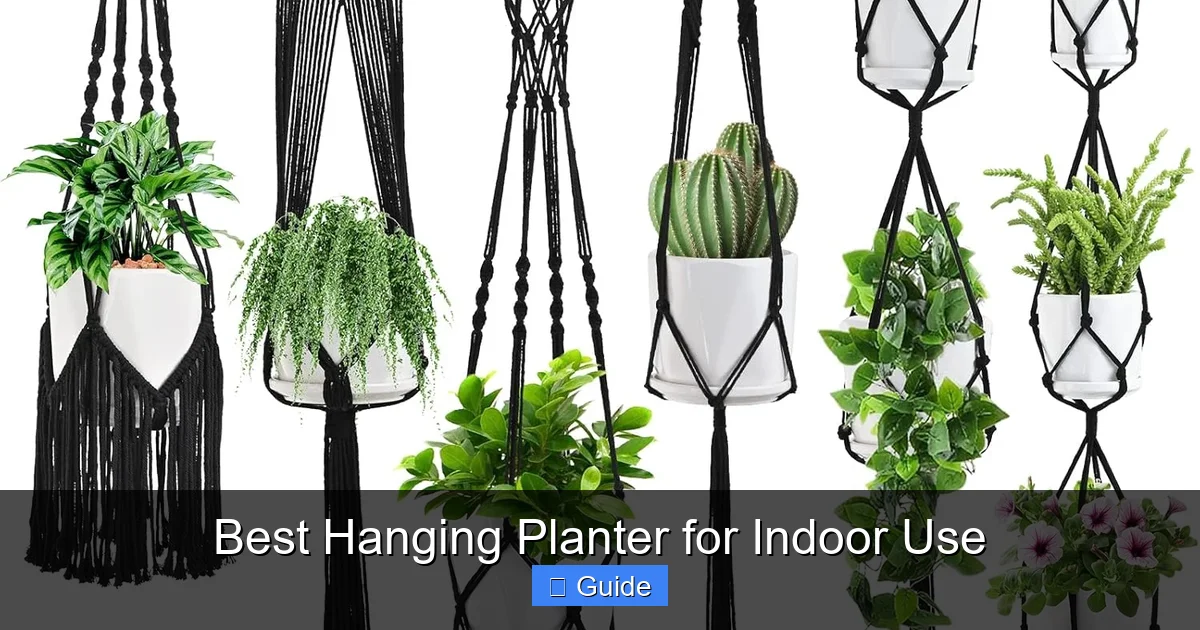
Best Hanging Planter for Indoor Use
Finding the best hanging planter for indoor use transforms your living space with vertical greenery while saving precious floor space. This guide covers everything from materials and drainage to installation tips and plant pairings so you can choose the perfect planter for your home.
Adding greenery to your home does not mean giving up floor space. A well-chosen hanging planter brings life to empty corners, brightens windows, and adds visual interest at eye level. The best hanging planter for indoor use combines good drainage, sturdy construction, and a design that fits your style. Whether you live in a small apartment or a spacious house, hanging planters let you grow more plants without clutter.
I have spent years testing different planters in my own home and helping friends set up their indoor gardens. Some planters look great but fail at drainage. Others drain well but are a pain to water. The sweet spot is a planter that balances form and function. In this guide, I share what I have learned so you can skip the trial and error.
We will cover the main types of hanging planters, the materials they are made from, key features to check before you buy, and how to install and care for them. You will also get plant suggestions that thrive in hanging setups. By the end, you will know exactly what to look for and feel confident picking the right one for your space.
Key Takeaways
- Material matters: Ceramic, plastic, macrame, and metal each offer unique benefits for weight, drainage, and style.
- Drainage is critical: Look for built-in reservoirs or removable trays to protect floors and prevent root rot.
- Weight capacity counts: Ensure your ceiling hook and planter can support wet soil and mature plants safely.
- Light needs vary: Match your planter location to plants that thrive in that light level.
- Easy maintenance wins: Self-watering designs and removable liners make care simpler for busy plant parents.
- Style fits your decor: From modern geometric to boho macrame, there is a look for every aesthetic.
- Installation is straightforward: Most hanging planters need just a hook, anchor, and a few minutes to hang securely.
Quick Answers to Common Questions
What is the best material for an indoor hanging planter?
Glazed ceramic and high-quality resin offer the best balance of durability, drainage, and style for most indoor spaces.
How do I prevent water from dripping on my floor?
Use a planter with a built-in saucer, a self-watering reservoir, or take the planter down to water in a sink and let it drain fully before rehanging.
Can I hang a planter from drywall without a stud?
Only with a heavy-duty toggle bolt rated for the full wet weight of the planter. For anything over 20 pounds, find a ceiling joist.
Which plants are easiest for beginners in hanging planters?
Pothos, spider plant, heartleaf philodendron, and string of pearls tolerate a range of light and watering schedules.
How often should I fertilize plants in hanging planters?
Monthly at half strength during spring and summer. Stop in fall and winter unless the plant grows actively year-round.
📑 Table of Contents
- Why Choose a Hanging Planter for Your Indoor Space
- Types of Hanging Planters That Work Well Indoors
- Key Features to Look for in the Best Hanging Planter for Indoor Use
- Top Materials for Indoor Hanging Planters
- How to Install and Style Your Hanging Planter
- Caring for Plants in Hanging Planters
- Best Plants for Hanging Planters Indoors
- Common Mistakes to Avoid
- Budget-Friendly vs. Premium Options
- Sustainability Considerations
- Conclusion
Why Choose a Hanging Planter for Your Indoor Space
Maximize Vertical Space
Floor space is limited in most homes. Shelves fill up fast. Window sills get crowded. Hanging planters use the empty air above your furniture. This vertical approach lets you grow a surprising number of plants in a small footprint. A single ceiling hook can hold a trailing pothos, a spider plant, and a string of pearls all in one cluster.
Vertical gardening also creates layers. You can hang planters at different heights to add depth to a room. This works especially well in rooms with high ceilings. The greenery draws the eye upward and makes the space feel larger. Even in rooms with standard ceilings, a few well-placed hangers add dimension.
Keep Plants Away from Pets and Kids
Curious cats love to dig in soil. Toddlers love to pull leaves. Hanging planters put your greenery out of reach. This protects both the plants and your little ones. Many common houseplants are toxic if eaten. Elevating them removes the risk. You get peace of mind and healthy plants.
Hanging planters also protect plants from accidental kicks or bumps. A trailing plant on a shelf can get knocked over. A hanging planter swings gently but stays put. This is a big plus in busy households.
Improve Air Circulation and Light Exposure
Plants on the floor or crowded shelves often get poor air flow. Stagnant air encourages pests and fungal issues. Hanging planters sit in open air. Breezes from fans or open windows move around the leaves. This keeps foliage dry and healthy.
Light exposure improves too. A planter hung near a window gets light from the side and top. Trailing plants can position their leaves to catch every ray. This is great for light-loving succulents and herbs. You can even rotate the planter easily for even growth.
Add Style and Personality
A hanging planter is decor as much as function. Macrame hangers bring boho warmth. Sleek ceramic pots with leather straps fit modern minimalism. Geometric metal frames suit industrial lofts. The planter itself becomes a design element. You can swap plants seasonally to refresh the look.
Grouping three to five planters creates a living art installation. Mix pot sizes, hanger lengths, and plant textures. The result is a focal point that changes as plants grow. It is an easy way to personalize a rental without permanent changes.
Types of Hanging Planters That Work Well Indoors
Classic Pot with Hanger
This is the most common type. A standard pot — ceramic, plastic, or terracotta — sits inside a separate hanger. The hanger might be macrame, rope, chain, or wire. The pot usually has a drainage hole. A saucer catches excess water. You can swap pots without changing the hanger.
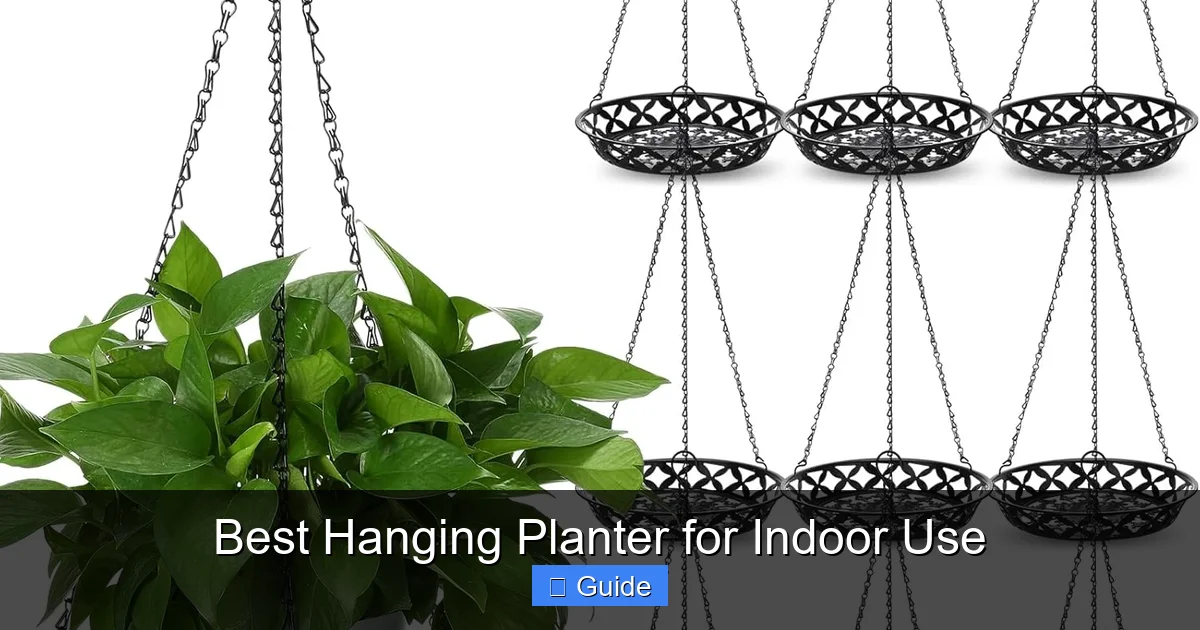
Visual guide about Best Hanging Planter for Indoor Use
Image source: m.media-amazon.com
This style is versatile. You likely already own pots that fit. It works for almost any plant. The separate saucer means you can water in place without drips. Just check that the hanger supports the weight of a wet pot. Some macrame hangers stretch over time.
Self-Watering Hanging Planters
These planters have a built-in reservoir at the bottom. A wick or capillary mat pulls water up into the soil. You fill the reservoir through a spout or tube. The plant drinks as needed. This is ideal for busy people or frequent travelers.
Self-watering planters reduce the risk of overwatering and underwatering. They are especially good for thirsty plants like ferns and peace lilies. Most have a water level indicator. You know exactly when to refill. The reservoir also adds weight, so check your hook rating.
Wall-Mounted Pocket Planters
These are fabric or rigid pockets that attach to the wall. They create a living wall effect. Each pocket holds a small plant. You can arrange them in grids or organic clusters. They are great for herbs, succulents, and small tropicals.
Pocket planters save ceiling space. They mount with screws or heavy-duty adhesive. Fabric pockets breathe well, promoting healthy roots. Rigid plastic pockets hold more soil. Both types need a waterproof backing to protect your wall.
Geometric and Frame Planters
Metal frames — circles, triangles, hexagons — hold air plants or small pots. They look like sculpture. Some have glass vessels for water propagation. Others have minimalist wire cradles for nursery pots. These are statement pieces.
Frame planters work best with lightweight plants. Air plants need no soil. Small succulents need little water. The open design shows off roots and structure. They are less suited for large, heavy plants. But they add instant modern style.
Macrame and Fiber Hangers
Macrame hangers are knotted cotton, jute, or polyester cords. They cradle a pot in a net of knots. They come in endless patterns — simple, fringed, beaded, dyed. They add texture and softness to a room. They are affordable and widely available.
Fiber hangers stretch when wet. Choose a slightly larger pot so the hanger stays snug. Cotton rots if it stays damp. Polyester resists mold better. Macrame works well with trailing plants that hide the knots. It is a classic choice for a reason.
Kokedama and Moss Ball Planters
Kokedama is a Japanese technique. The plant root ball is wrapped in moss and bound with string. It hangs from a single cord. No pot needed. It looks organic and sculptural. You water by soaking the whole ball in a bowl.
Kokedama suits small to medium plants. Ferns, pothos, and small orchids work well. The moss holds moisture but dries faster than a pot. You must water more often. It is a conversation starter and a rewarding craft project.
Key Features to Look for in the Best Hanging Planter for Indoor Use
Drainage System
Drainage is the single most important feature. Without it, water pools at the bottom. Roots suffocate and rot. The best hanging planter for indoor use has a clear drainage path. This can be a hole in the pot with a saucer, a raised inner pot, or a reservoir that separates water from soil.
Check if the saucer is attached or removable. Removable saucers let you empty water easily. Attached saucers can overflow if you are not careful. Some planters have a plug you pull to drain. Others have a hidden reservoir with a fill tube. Think about how you will water and where the water goes.
Weight and Load Capacity
Wet soil is heavy. A 10-inch ceramic pot with wet soil can weigh 15 pounds or more. Add the plant, the hanger, and the hardware. Your ceiling hook must handle the total load. Drywall alone cannot hold it. You need a joist or a heavy-duty toggle bolt rated for the weight.
Lightweight planters — plastic, fiber, thin metal — reduce the load. They are safer for ceilings with unknown structure. If you love heavy ceramic, use a stud finder and screw into a beam. Always err on the side of a stronger hook.
Material Durability
Indoor planters face less weather than outdoor ones, but they still deal with moisture, UV from windows, and temperature swings. Ceramic glazes can craze over time. Cheap plastic becomes brittle. Macrame can fray. Metal can rust if the coating fails.
Choose materials rated for indoor use. Powder-coated steel resists rust. High-density polyethylene (HDPE) plastic lasts years. Glazed ceramic with a quality finish holds up. Natural fibers like jute degrade faster than synthetics. Match the material to your maintenance style.
Ease of Watering
Watering a hanging planter can be awkward. You either take it down, use a long-spout can, or install a pulley system. Self-watering planters solve this. So do planters with removable inner pots. You lift the inner pot to the sink, water, drain, and replace it.
Consider the height. A planter hung 7 feet up is hard to reach. A pulley lets you lower it. Some hangers have a quick-release clip. If you have many hanging plants, a watering wand with a shut-off valve saves trips. Plan for the routine before you hang.
Aesthetic Versatility
Your taste may change. A planter that works in a boho bedroom might clash in a modern living room. Neutral colors — white, black, terracotta, gray — adapt easily. Swappable hangers let you change the look without buying new pots.
Some brands sell pot-and-hanger systems in coordinating colors. You can mix and match. A simple ceramic pot looks different with a leather strap versus a macrame cord. Versatility extends the life of your purchase.
Price and Value
Hanging planters range from $10 for a basic plastic pot with a cord to $150 for a designer ceramic with a leather hanger. Higher price often means better materials, design, and warranty. But a $20 plastic self-watering planter can outperform a $80 ceramic without drainage.
Set a budget per planter. Multiply by the number you want. Factor in hooks, anchors, and plants. A set of three matching planters often costs less per unit. Sales happen in spring and fall. Quality planters last years, so cost per year is low.
Top Materials for Indoor Hanging Planters
Ceramic and Stoneware
Ceramic is a favorite for good reason. It is heavy, stable, and comes in endless glazes. Glazed ceramic is non-porous. It holds moisture evenly. The weight keeps tall plants from tipping. It looks premium and feels substantial.
Downsides: it chips if dropped. It is heavy to hang. Drainage holes can clog. Unglazed terracotta breathes but dries fast and leaves mineral stains. Choose glazed ceramic with a drainage hole and matching saucer. Look for a footed base so the pot does not sit in water.
Plastic and Resin
Modern plastic planters are not the flimsy nursery pots of the past. High-quality resin mimics stone, concrete, or ceramic. It is lightweight, shatterproof, and UV-resistant. Many have built-in reservoirs. They are affordable and easy to clean.
Plastic can look cheap if the finish is thin. Dark colors absorb heat in sunny windows. This can cook roots. Choose light colors for bright spots. Double-walled resin insulates roots. Recycled plastic options are eco-friendly.
Metal: Steel, Aluminum, Iron
Metal planters bring industrial chic. Powder-coated steel resists rust. Aluminum is lightweight and corrosion-proof. Raw iron develops patina but can stain surfaces. Metal conducts heat. In direct sun, the soil can overheat. Line with coconut coir or use a cachepot.
Wire frames and geometric shapes are almost always metal. They are strong and thin, maximizing plant visibility. Check that edges are smooth. Sharp wires can cut hanger cords. Metal hangers — chains, rods, brackets — pair well with metal pots.
Natural Fibers: Macrame, Jute, Hemp, Cotton
Fiber hangers add warmth. Macrame is the most popular. Cotton is soft but rots if wet. Jute and hemp are stronger but rougher. Polyester blends mimic nature but resist mold. Dyed fibers can bleed when damp. Test a hidden spot first.
Fiber pots exist too — felt, coir, woven grass. They breathe well. Roots air-prune at the edges. This prevents circling roots. They dry fast, so water often. They are biodegradable. Great for seasonal displays or eco-conscious gardeners.
Glass and Terrarium Styles
Glass vessels — orbs, teardrops, geometric shapes — hold air plants, moss, or water-rooted cuttings. They are decorative and let you see roots. No drainage means careful watering. Use activated charcoal layer management. They are light but fragile.
Glass works for propagation stations. Watch roots grow. Change water weekly. For soil plants, use a glass cachepot with a plastic nursery pot inside. Remove to water. Glass shows water level clearly. It adds sparkle near windows.
Wood and Bamboo
Wooden planters — cedar, teak, bamboo — bring organic texture. They are often boxes or troughs hung with ropes. Wood breathes and insulates roots. It ages beautifully. But it rots if constantly wet. Seal with food-safe oil or use a liner.
Bamboo is lightweight and strong. It is a grass, not wood, so it resists moisture better. Wooden planters suit herbs, lettuce, and trailing flowers. They are less common for tropical houseplants. Check for splinters and smooth hardware.
How to Install and Style Your Hanging Planter
Find the Right Spot
Light comes first. South-facing windows give bright light. East and west give medium. North gives low. Match the plant to the light. Also consider traffic flow. Do not hang where people walk into it. Avoid heating vents and drafty doors.
Height matters. Hang so the bottom of the pot is at eye level or slightly above. This makes watering easy and shows off the plant. For trailing plants, hang higher so vines cascade. For upright plants, hang lower. Use a step stool to test heights before drilling.
Choose and Install Hardware
Ceiling hooks come in many styles. Swivel hooks let the planter rotate. Screw hooks go into wood joists. Toggle bolts anchor in drywall. Molly bolts work for heavier loads. Choose a hook rated for at least double the planter weight.
Use a stud finder to locate joists. Mark the spot. Drill a pilot hole. Screw in the hook until the threads are fully engaged. For drywall, drill the toggle bolt hole, insert the bolt, and tighten. Hang the planter and test with a gentle tug.
Group for Impact
One planter is nice. Three is a vignette. Five is a feature. Vary heights by 12 to 18 inches. Use odd numbers. Mix pot sizes but keep a common element — color, material, or hanger style. Cluster near a window for a greenhouse feel.
Create a “plant corner” with a floor plant, a shelf plant, and two hanging planters at different heights. The layers fill the vertical plane. Add a mirror behind to reflect light and double the visual impact. Grouping also creates a microclimate of higher humidity.
Rotate for Even Growth
Plants lean toward light. A hanging planter rotates naturally with air currents, but not enough. Turn the planter a quarter turn each week. This keeps growth balanced. It also lets you inspect all sides for pests.
Swivel hooks make rotation effortless. If your hanger is fixed, unhook, turn, and rehook. Mark the pot with a small dot to track orientation. Consistent rotation prevents lopsided plants and bare stems on the dark side.
Seasonal Swaps
Change plants with the seasons. Spring: flowering bulbs, herbs. Summer: tropicals, succulents. Fall: ornamental kale, mums. Winter: evergreens, forced branches. The hanger stays. Only the pot or plant changes.
This keeps your decor fresh. It also lets you rest plants. Move tired plants to a recovery spot. Bring in fresh ones. Seasonal swaps are easier with a pot-and-hanger system. You buy one good hanger and many inexpensive pots.
Caring for Plants in Hanging Planters
Watering Techniques
Watering hanging planters takes practice. The goal: thorough soak without floor drips. Method one: take the planter down. Water in the sink or tub. Let drain fully. Rehang. Best for heavy pots. Method two: use a long-spout can with a narrow rose. Water slowly. Stop when water hits the saucer.
Method three: bottom water. Place the pot in a basin of water for 20 minutes. Soil wicks moisture up. Roots grow downward. This reduces fungus gnats. Method four: self-watering reservoir. Fill the tube. Check the indicator. Refill when empty. Choose the method that fits your routine.
Fertilizing Schedule
Hanging planters have limited soil. Nutrients deplete faster. Fertilize monthly in spring and summer with half-strength liquid fertilizer. Skip fall and winter for most plants. Slow-release pellets work too. Mix into top inch of soil in spring.
Watch for salt buildup — white crust on soil or pot rim. Flush with clear water every few months. Run water through until it drains clear. This prevents root burn. Organic fertilizers like fish emulsion smell but feed gently. Synthetic is odorless and precise.
Pruning and Grooming
Trailing plants get leggy. Pinch back stems to encourage branching. Cut just above a node. New growth emerges there. Remove yellow or dead leaves promptly. They attract pests and look untidy. Wipe dusty leaves with a damp cloth.
Rotate while you groom. Check undersides for spider mites, mealybugs, scale. Early catch means easy treatment. A shower rinse knocks off many pests. Insecticidal soap works for persistent ones. Healthy plants resist bugs better.
Repotting When Needed
Roots circle the pot bottom. Water runs straight through. Plant dries out in a day. These signal repotting time. Spring is best. Go up one pot size — 2 inches wider. Use fresh potting mix. Loosen the root ball gently.
Repotting a hanging planter is easier on the ground. Take it down. Work on a tarp. Rehang when done. If the planter is too heavy to move, top-dress: remove top 2 inches of soil, replace with fresh mix. This buys a year.
Pest Prevention
Hanging planters get good air flow, which helps. But pests still arrive. Inspect new plants before hanging. Quarantine two weeks. Yellow sticky traps catch fungus gnats. Neem oil spray prevents mites and aphids. Apply monthly as insurance.
Keep the area clean. Fallen leaves harbor pests. Wipe the hanger and hook occasionally. Dust on leaves blocks light. A clean plant is a healthy plant. If one plant gets infested, isolate it. Treat before returning to the group.
Best Plants for Hanging Planters Indoors
Trailing Classics: Pothos, Philodendron, Spider Plant
These are the workhorses. Pothos (Epipremnum) tolerates low light, irregular water, and neglect. Golden, marble queen, and neon varieties add color. Heartleaf philodendron is similar but softer. Spider plant (Chlorophytum) produces babies on long stems. All three purify air.
They grow fast. You get dramatic cascades in months. Trim to keep full. Propagate cuttings in water. They are cheap and everywhere. Perfect for beginners. A single pot fills a large hanger in a year.
String Succulents: Pearls, Hearts, Bananas, Dolphins
String of pearls (Senecio rowleyanus) has bead-like leaves. String of hearts (Ceropegia) has tiny heart leaves. String of bananas (Senecio radicans) has curved leaves. String of dolphins (Senecio peregrinus) looks like leaping dolphins. All need bright light and dry soil.
They are conversation pieces. The shapes are unique. They stay compact. Water sparingly. They rot easily. A shallow, wide pot works best. Hang in a south or west window. They reward neglect with weird beauty.
Flowering Options: Lipstick Plant, Goldfish Plant, Orchid
Lipstick plant (Aeschynanthus) has tubular red flowers. Goldfish plant (Nematanthus) has orange pouch flowers. Both bloom on and off year-round with bright light. Hanging orchids — phalaenopsis in baskets — bloom for months. They need humidity and air flow.
Flowering plants need more light. Fertilize regularly. Deadhead spent blooms. They are showier than foliage plants. A blooming hanging planter is a living bouquet. Worth the extra care for the color payoff.
Ferns: Boston, Maidenhair, Bird’s Nest
Ferns love humidity. Hanging puts them in the humid layer near the ceiling. Boston fern (Nephrolepis) is the classic Victorian parlor fern. Maidenhair (Adiantum) has delicate black stems and fan leaves. Bird’s nest (Asplenium) has a rosette form, less trailing.
Keep soil evenly moist. Mist daily or use a humidifier. Brown tips mean dry air. They shed leaves, so hang where cleanup is easy. They are dramatic and lush. A healthy fern is a status symbol.
Herbs and Edibles: Mint, Thyme, Oregano, Strawberries
Kitchen herbs in hanging planters save counter space. Mint spreads aggressively — a hanging pot contains it. Thyme and oregano trail nicely. Strawberries produce fruit at eye level. Cherry tomatoes work in large hangers with support.
Edibles need 6+ hours of sun. A south window or grow light is essential. Fertilize more often. Harvest regularly to promote growth. Wash before eating. The convenience of snipping fresh herbs while cooking is unmatched.
Air Plants: Tillandsia Varieties
Air plants need no soil. They absorb water through leaves. Soak weekly for 30 minutes. Shake dry. Hang in glass orbs, on wire frames, or tied to driftwood. They need bright indirect light and air circulation.
They are the ultimate low-maintenance hanger. No soil mess. No pot weight. Endless display options. They bloom once, then produce pups. Collect the pups. They are addictive and affordable.
Common Mistakes to Avoid
Skipping Drainage
No holes means dead plants. Period. Even “self-watering” planters need an overflow. Decorative pots without holes are cachepots. Use a nursery pot inside. Never plant directly in a non-draining container. Root rot is fast and fatal.
If you fall in love with a pot without holes, drill them. A masonry bit for ceramic. A standard bit for plastic. Wear safety glasses. Go slow. Two to four holes depending on size. Add a saucer. Problem solved.
Underestimating Weight
Wet soil is heavier than you think. A 12-inch pot holds 5 gallons of soil. Water adds 40 pounds. The pot, plant, and hanger add more. A drywall anchor rated for 50 pounds may fail at 60. Use a joist. Or a heavy-duty toggle rated for 100+ pounds.
Test the hook before trusting it. Hang the empty planter. Add weight gradually. Listen for creaking. Check the ceiling for cracks. If anything feels wrong, reinforce. A fallen planter damages floors, furniture, and the plant.
Wrong Plant for the Light
A succulent in a north window stretches and dies. A fern in a south window scorches. Read the plant tag. Research light needs. Use a light meter app. Match plant to spot. It saves money and heartbreak.
If you only have low light, choose pothos, ZZ plant, snake plant, cast iron plant. If you have bright light, the world opens up. Grow lights expand options. A simple LED strip lets you grow herbs anywhere.
Watering on a Schedule Instead of Need
“Water every Friday” kills plants. Soil dries at different rates. Heat, humidity, pot size, plant type all matter. Check soil with your finger. Top inch dry? Water. Still damp? Wait. A moisture meter helps.
Self-watering planters buffer this. But you still check the reservoir. Overwatering is the number one killer. More plants die from too much love than neglect. When in doubt, wait a day. Plants recover from dry faster than rot.
Ignoring Humidity Needs
Tropical plants want 50-60% humidity. Most homes are 30-40%. Hanging near the ceiling helps — heat rises, humidity rises. But it may not be enough. Group plants. Use a humidifier. Pebble trays work for floor plants, not hangers.
Misting helps briefly. It is not a substitute for ambient humidity. Ferns, calatheas, orchids suffer in dry air. Choose plants that match your home’s humidity. Or invest in a humidifier. Your skin will thank you too.
Forgetting to Rotate
One-sided growth looks weird. The plant leans. Stems get long and weak on the dark side. Leaves get small. Rotate weekly. Set a phone reminder. It takes 10 seconds. The difference in six months is dramatic.
Swivel hooks make it a joy. Give it a spin when you walk by. The plant gets even light. You get a full, balanced specimen. It is the easiest care step with the biggest visual payoff.
Budget-Friendly vs. Premium Options
Under $25: Functional Basics
Plastic pots with macrame cords. Simple wire hangers with terracotta pots. Basic self-watering globes. These work. They hold plants. They drain. They hang. The macrame may stretch. The plastic may fade. But they do the job.
Look for sets. Three-packs lower the per-unit cost. Home improvement stores have seasonal deals. Online marketplaces have budget brands. Read reviews for durability. A $15 planter that lasts two years is good value.
$25 to $75: Sweet Spot for Quality
This range gets you glazed ceramic with leather or chain hangers. Well-designed self-watering planters with indicators. Powder-coated metal frames with coconut liners. Quality macrame with brass rings. These last 5-10 years.
Brands like Mkono, La Jolie Muse, and H Potter live here. You pay for design, materials, and warranty. The planters look intentional, not accidental. They elevate the room. This is where most happy buyers land.
Over $75: Investment Pieces
Designer ceramics from brands like Bergs Potter, Elho, or local artisans. Hand-blown glass. Custom metalwork. Leather hangers from heritage brands. These are heirlooms. You buy once. They age beautifully.
If you move often, these go with you. They become part of your home’s story. The cost per year drops over a decade. But only buy if you love the design. A $200 planter you tolerate is a bad deal. A $200 planter you love is art.
Sustainability Considerations
Recycled and Recyclable Materials
Many plastic planters now use recycled ocean plastic or post-consumer resin. Look for “rPET” or “recycled content” labels. HDPE (#2) and PP (#5) plastics are widely recyclable. Avoid PVC (#3) and mixed materials.
Metal planters are infinitely recyclable. Aluminum and steel can be melted down. Ceramic is not recyclable in most curbside programs. But it is inert and lasts decades. Longevity is its own sustainability.
Natural and Biodegradable Options
Coir, jute, hemp, and felt planters compost at end of life. They return to soil. No microplastics. They breathe, reducing root rot. They insulate roots from temperature swings. They are often made by small artisans.
Trade-off: they degrade faster. A coir liner lasts 2-3 years. A felt pot lasts 3-5. Factor replacement into cost. But the environmental footprint is tiny. Great for renters who move and leave planters behind.
Local and Artisan Made
Buying from a local potter or macrame artist cuts shipping emissions. Supports your community. You get a unique piece. Often higher quality than mass market. You can request custom sizes or colors.
Farmers markets, craft fairs, Etsy local filters. Search “ceramic planter [your city]” or “macrame hanger near me.” The connection to the maker adds meaning. You know the story of your planter.
Longevity Over Trends
Trendy planters date fast. That geometric gold frame looks dated in two years. A simple white ceramic pot lasts decades. Choose classic shapes. Neutral colors. Quality materials. The most sustainable planter is the one you never replace.
If you want trendy, buy a cheap hanger for a classic pot. Swap the hanger when tastes change. The pot stays. This modular approach saves money and waste. It also lets you experiment without commitment.
Conclusion
Finding the best hanging planter for indoor use comes down to matching your space, your plants, and your habits. A beautiful planter that drips on your rug fails. A practical planter you hate looking at fails. The winner balances drainage, weight, material, style, and ease of care.
Start with one. Pick a spot with the right light. Choose a plant you love. Get a planter with drainage and a secure hook. Hang it. Water it. Watch it grow. The satisfaction of a thriving hanging plant is disproportionate to the effort. It changes the energy of a room.
Add more as you learn. Group them. Rotate them. Swap plants with seasons. Your indoor garden becomes a living gallery. It purifies air. It boosts mood. It connects you to nature daily. All from a hook in the ceiling and a pot in the air.
You now have the knowledge to choose wisely. Trust your eye. Trust your instincts. The best hanging planter for indoor use is the one that makes you smile when you walk into the room. Happy planting.
Frequently Asked Questions
Do hanging planters need drainage holes?
Yes, drainage holes are essential to prevent root rot. If your decorative pot lacks holes, use it as a cachepot with a nursery pot inside, or drill holes yourself using a masonry bit for ceramic or a standard bit for plastic.
How high should I hang my indoor planter?
Hang the planter so the bottom of the pot sits at eye level or slightly above, typically 5 to 6 feet from the floor. For trailing plants, hang higher so vines can cascade without touching furniture or heads.
Can I use outdoor hanging planters inside?
You can, but outdoor planters often lack saucers and may have large drainage holes that leak on floors. Add a saucer or use a cachepot system. Also check that materials won’t off-gas or rust in indoor humidity.
What is the best way to water a high hanging planter?
Use a long-spout watering can with a narrow rose, install a pulley system to lower the planter, or choose a self-watering planter with a fill tube. Bottom watering in a basin also works if you can safely remove the planter.
How do I keep my hanging planter from spinning?
Use a swivel hook if you want rotation for even light. If you want it stationary, choose a hook with a fixed eye or add a small wall anchor point with a second short tether to stabilize the planter.
Are self-watering hanging planters worth it?
Yes, especially for busy people or thirsty plants like ferns. They reduce watering frequency, prevent overwatering, and include water level indicators. Just ensure the reservoir does not make the planter too heavy for your hardware.