How to Care for String of Turtles Indoors
String of Turtles (Peperomia prostrata) is a charming trailing plant with tiny turtle-shell patterned leaves that thrives indoors with bright indirect light, well-draining soil, and careful watering. Let the soil dry between waterings, provide moderate humidity, and fertilize lightly during growing season for a lush, cascading display.
Key Takeaways
- Bright indirect light is essential: Place near east or north-facing windows; avoid harsh direct sun that scorches delicate leaves.
- Water only when soil is dry: Check the top 1-2 inches of soil; overwatering causes root rot, the number one killer of this plant.
- Use chunky, well-draining soil mix: Combine succulent soil with perlite, orchid bark, and worm castings for optimal aeration and drainage.
- Moderate humidity boosts growth: Aim for 40-60% humidity; use a pebble tray or humidifier if your home is very dry.
- Fertilize sparingly during growing season: Apply diluted liquid fertilizer monthly in spring and summer; skip fall and winter.
- Propagate easily from stem cuttings: Root cuttings in water or sphagnum moss for new plants in just a few weeks.
- Watch for common pests: Mealybugs and spider mites love the dense foliage; inspect regularly and treat early with neem oil.
Quick Answers to Common Questions
How often should I water my String of Turtles?
Water when the top 1-2 inches of soil feel completely dry. This typically means every 7-10 days in summer and every 2-3 weeks in winter, but always check the soil first rather than following a strict schedule.
Can String of Turtles tolerate low light?
It will survive in low light but becomes leggy and loses its distinctive turtle-shell patterning. Bright indirect light is needed for compact growth and vivid leaf markings.
What type of soil is best for String of Turtles?
A chunky, fast-draining mix works best. Combine 2 parts succulent soil with 1 part perlite and 1 part orchid bark, plus a handful of worm castings for nutrients.
How do I propagate String of Turtles?
Take 3-4 inch stem cuttings with several nodes. Root in water or damp sphagnum moss in bright indirect light. Roots appear in 2-4 weeks, then pot up in well-draining soil.
Why are my String of Turtles leaves turning yellow and mushy?
This usually indicates overwatering and possible root rot. Let the soil dry completely, check roots for black mushy sections, trim affected roots, and repot in fresh dry mix.
📑 Table of Contents
Getting to Know Your String of Turtles
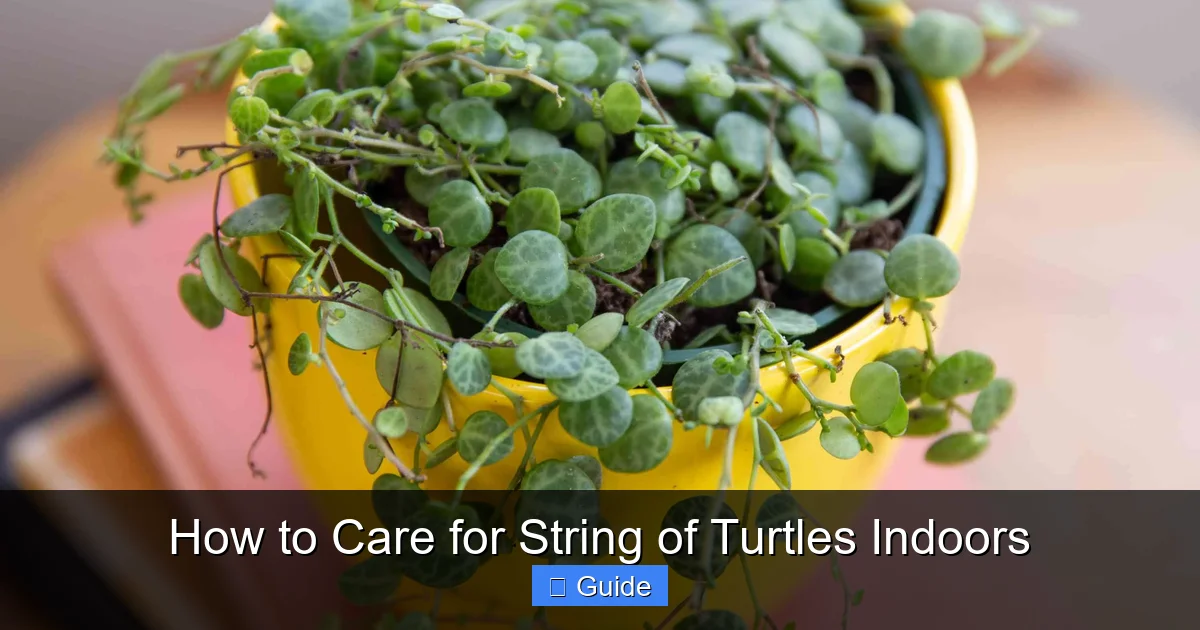
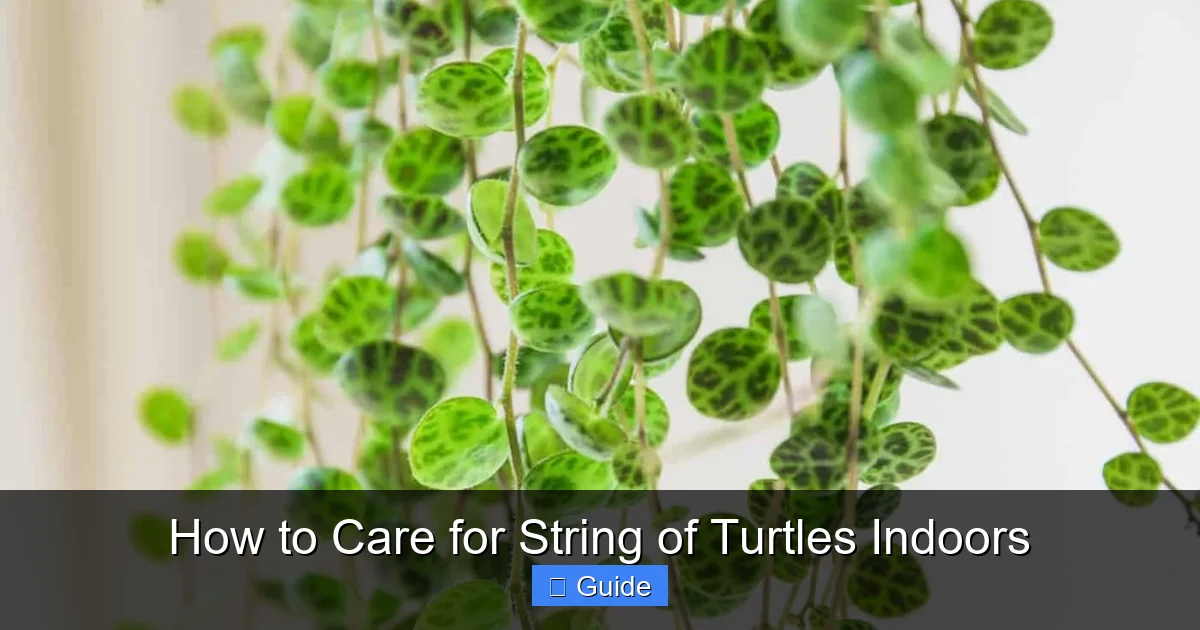
If you have ever seen a String of Turtles in person, you know exactly why plant lovers obsess over it. Those tiny, round leaves feature intricate patterns that look just like miniature turtle shells. The scientific name is Peperomia prostrata, and it belongs to the Piperaceae family. Native to Brazilian rainforests, this semi-succulent trailer grows as an epiphyte in nature, creeping along tree branches and soaking up dappled light.
Understanding its natural habitat gives you the biggest clue for success indoors. This plant wants bright filtered light, excellent airflow around its roots, and moisture that comes in bursts followed by dry periods. It stores water in those thick little leaves, making it more forgiving than many tropicals. But it still hates soggy feet. When you learn how to care for string of turtles indoors, you are essentially mimicking a rainforest canopy in a pot.
The growth habit is trailing and somewhat slow at first. Mature vines can reach 12 inches or longer, creating a beautiful curtain effect from hanging baskets or high shelves. The leaves stay small, usually under half an inch wide. Colors range from deep green with silvery veins to darker, almost purple tones under higher light. New growth often emerges reddish before maturing. It is a collector’s dream plant that rewards patience with stunning texture.
Light Requirements for String of Turtles Indoors
Finding the Sweet Spot
Light is the single most important factor when you learn how to care for string of turtles indoors. These plants need bright, indirect light to maintain their compact growth and vivid patterning. Too little light leads to leggy, stretched stems with wide gaps between leaves. The turtle shell markings fade. Too much direct sun, especially harsh afternoon rays, burns the delicate foliage and causes crispy brown edges.
Visual guide about How to Care for String of Turtles Indoors
Image source: planetnatural.com
An east-facing window is ideal. Morning sun is gentle and energizing. A north-facing window works too, though growth may slow in winter. If you only have south or west windows, pull the plant back a few feet or hang a sheer curtain. The curtain diffuses intense light into the bright indirect conditions this plant loves. You can also use a grow light. A full-spectrum LED panel on a 12-hour timer works beautifully, especially in darker months.
Signs Your Light Is Off
Watch your plant. It will tell you what it needs. Leggy growth with long internodes means not enough light. Leaves losing their contrast and turning solid green also signal low light. On the flip side, bleached or white patches on leaves indicate sunburn. Reddish stress coloring on the upper surfaces can mean too much light, though some growers like this look. Adjust gradually. Move the plant a foot at a time over a week to avoid shock.
Seasonal Light Adjustments
Winter light levels drop dramatically indoors. Your String of Turtles may need to move closer to the window in December and January. Rotate the pot weekly so all sides get equal exposure. This prevents lopsided growth. If you use grow lights, keep the schedule consistent year-round. The plant does not need a dormancy period, but it will naturally slow down in lower light. Do not compensate by fertilizing more. Just wait for spring.
Watering and Humidity Needs
The Soak and Dry Method
Watering mistakes kill more String of Turtles than anything else. The golden rule: let the soil dry out almost completely between waterings. Those fleshy leaves store water. The plant prefers a good drink, then a dry spell. Stick your finger into the soil up to the second knuckle. If it feels dry at your fingertip, water thoroughly. If there is any moisture, wait another day or two. In summer, this might mean watering every 7-10 days. In winter, every 2-3 weeks.
When you water, do it properly. Take the plant to the sink. Run lukewarm water through the soil until it flows freely from the drainage holes. Let it drain completely. Never let the pot sit in a saucer of water. That is a fast track to root rot. Bottom watering works too. Place the pot in a bowl of water for 15-20 minutes until the top soil feels damp. Then drain well. This method keeps the leaves dry, which helps prevent fungal issues.
Humidity Helps But Isn’t Mandatory
String of Turtles comes from humid rainforests. It appreciates 40-60% humidity. Average home humidity often sits around 30-40%, especially in winter with heating on. Your plant will survive average humidity, but it will thrive with a boost. Group plants together to create a microclimate. Set the pot on a pebble tray filled with water, ensuring the pot bottom sits above the water line. A small humidifier nearby works wonders. Misting is not effective for raising humidity and can encourage leaf spotting if water sits in the leaf crevices.
Water Quality Matters
Tap water is usually fine, but if yours is heavily chlorinated or very hard, consider filtered or rainwater. Room temperature water is best. Cold water shocks the roots. If you see white crust on the soil surface or pot edges, that is mineral buildup. Flush the soil monthly by running extra water through for a minute. This prevents salt accumulation from fertilizer and tap water.
Soil, Potting, and Repotting
The Perfect Mix
Standard potting soil holds too much water for String of Turtles. You need a chunky, fast-draining mix that mimics the airy conditions of an epiphyte’s natural home. A great DIY recipe: 2 parts succulent or cactus soil, 1 part perlite, 1 part orchid bark, and a handful of worm castings or compost for gentle nutrition. The perlite and bark create air pockets. Roots need oxygen as much as they need water. This mix drains in seconds but holds enough moisture for the plant to drink.
Pre-made mixes labeled for aroids or epiphytes also work well. Look for ingredients like coco coir, pumice, charcoal, and bark. Avoid mixes with peat moss as the main ingredient. Peat compacts over time and becomes hydrophobic, repelling water when dry. If you buy a plant in dense nursery soil, plan to repot soon. But give it a week or two to acclimate to your home first.
Choosing the Right Pot
Terracotta pots are the gold standard. They are porous, wicking moisture away from the soil and allowing air exchange through the walls. This dramatically reduces rot risk. Plastic pots work too, especially if you tend to underwater. Just ensure ample drainage holes. Shallow pots are better than deep ones. String of Turtles has a shallow root system. A deep pot holds excess wet soil at the bottom where roots cannot reach. Hanging baskets with coco liners are beautiful and functional, providing excellent drainage and airflow.
When and How to Repot
Repot every 2-3 years in spring, or when you see roots circling the drainage holes. The plant likes being slightly root-bound. Only go up one pot size, maybe an inch wider. Gently remove the plant. Shake off loose old soil. Trim any black, mushy roots with clean scissors. Place a layer of fresh mix in the new pot. Position the plant so the crown sits at the same level as before. Fill around with mix, tapping the pot to settle. Do not pack it down. Water lightly to settle, then wait a week before normal watering. This gives any damaged roots time to callous.
Fertilizing and Growth Support
Less Is More
String of Turtles is a light feeder. In nature, it gets nutrients from decaying leaf litter and rainwater. Indoors, a little fertilizer during active growth keeps it lush. Use a balanced liquid fertilizer diluted to half or quarter strength. An NPK ratio like 10-10-10 or 20-20-20 works. Apply once a month from March through September. Stop completely in fall and winter. The plant cannot use nutrients in low light, and salts will build up in the soil.
Organic options include worm casting tea, fish emulsion (smelly but effective), or seaweed extract. These provide micronutrients and beneficial microbes. Top-dressing with a thin layer of worm castings in spring is a gentle slow-release method. Whatever you use, err on the side of less. Over-fertilizing causes fertilizer burn, showing as brown leaf tips and edges. If this happens, flush the soil thoroughly with water and skip feeding for a few months.
Supporting the Trailing Habit
As vines lengthen, they can get heavy. The stems are somewhat brittle. If you want a full, cascading look, let them hang freely from a basket or high shelf. Ensure the pot is secure. A heavy ceramic cache pot over a plastic nursery pot adds stability. If vines grow along a surface, they may root at nodes where they touch soil. You can encourage this by pinning a vine to the soil surface with a bent paperclip or floral pin. This creates a bushier plant over time.
Pruning for Shape
Pruning is not necessary but can improve appearance. Trim leggy stems back to a node in spring. This encourages branching from that point. Always use clean, sharp scissors. Save the cuttings for propagation. Remove any yellow, damaged, or shriveled leaves regularly. This keeps the plant looking tidy and prevents fungal issues. Dense mats of foliage can trap moisture. Thin out the center occasionally to improve airflow.
Propagation and Common Problems
Easy Propagation Methods
Propagating String of Turtles is satisfying and straightforward. The two most reliable methods are water propagation and sphagnum moss propagation. For water propagation, take 3-4 inch stem cuttings with at least 2-3 nodes. Remove the bottom leaves. Place the cuttings in a small glass of water, nodes submerged, leaves above. Change water weekly. Roots appear in 2-4 weeks. Once roots are an inch long, pot up in your chunky mix.
Sphagnum moss often yields stronger roots. Soak moss, squeeze out excess water. Place in a clear container with a lid. Lay cuttings on top, nodes touching moss. Close the lid to create humidity. Open daily for air exchange. Keep in bright indirect light. Roots form in 2-3 weeks. Transfer to soil when roots are established. You can also propagate directly in soil. Plant cuttings in moist mix, cover with a plastic bag for humidity, and keep warm. This method has a lower success rate but skips the transition step.
Common Pests
Mealybugs are the most frequent pest. They look like tiny white cotton bits in leaf axils and along stems. They suck sap and excrete sticky honeydew. Check weekly. Treat with a cotton swab dipped in 70% isopropyl alcohol, touching each bug. For larger infestations, spray neem oil or insecticidal soap weekly for three weeks. Spider mites appear in dry conditions. Look for fine webbing and stippled leaves. Increase humidity and spray with water to dislodge them. Neem oil works here too. Fungus gnats indicate overwatering. Let soil dry more, and use yellow sticky traps for adults.
Diseases and Physiological Issues
Root rot is the big disease threat. It comes from overwatering or poor drainage. Signs include yellowing leaves, mushy stems, and a foul smell from the soil. If caught early, unpot, trim rotten roots, and repot in fresh dry mix. Hold off watering for a week. Leaf spot diseases appear as brown or black spots with yellow halos. They thrive in wet, stagnant conditions. Remove affected leaves. Improve airflow. Avoid getting water on leaves.
Edema shows as small, corky bumps on leaf undersides. It happens when roots take up water faster than leaves can transpire, usually in cool, damp conditions. It is cosmetic and harmless. Reduce watering and increase light and airflow. Oedema often resolves on its own. Shriveled, limp leaves usually mean underwatering or root damage. Check the soil. If bone dry, water thoroughly. If wet, check roots for rot.
Seasonal Care Calendar
Spring: Wake Up and Grow
Spring is the start of the active growing season. As days lengthen, your String of Turtles will push new growth. Resume monthly fertilizing. Check if it needs repotting. This is the best time to take cuttings for propagation. Increase watering frequency as the soil dries faster. Watch for pests emerging with warmer temps. Give the plant a gentle shower to dust off leaves and dislodge any early bugs.
Summer: Peak Performance
Summer brings the fastest growth. Keep up with watering checks. The plant may need water every 5-7 days in heat. Ensure it is not getting scorched by intense summer sun through windows. Move it back if needed. Continue monthly feeding. This is a great time to share cuttings with friends. High humidity outdoors can benefit the plant if you have a shaded porch, but acclimate slowly and watch for pests.
Fall: Slowing Down
As light decreases, growth slows. Reduce fertilizing by late September. Stop entirely by October. Water less frequently as soil stays moist longer. This is a good time to do a thorough pest inspection before winter. Clean leaves with a damp cloth. Check the root ball if you haven’t repotted recently. Prepare for lower indoor humidity as heating systems kick on.
Winter: Maintenance Mode
Winter is rest time. Water sparingly, maybe every 3-4 weeks. No fertilizer. Keep away from cold drafts and hot radiators. Provide the brightest light possible. A grow light prevents etiolation. Humidity drops indoors; run a humidifier if you can. Do not repot or prune heavily now. Just maintain. The plant may look a bit static. That is normal. Spring will bring fresh energy.
Conclusion
Learning how to care for string of turtles indoors is a journey of observation and small adjustments. This plant asks for bright indirect light, a chunky well-draining mix, and a watering rhythm that respects its semi-succulent nature. It rewards you with one of the most unique foliage displays in the plant world. Those tiny turtle shells trailing from a shelf or basket bring a touch of rainforest magic to any room.
Remember that every home is different. Your light, humidity, and habits will shape how this plant grows for you. Start with the guidelines here, then watch your plant. It will teach you what it needs. A slightly wrinkled leaf says drink me. A stretched stem says more light please. A yellowing leaf says check my roots. The conversation between plant and caretaker is the real joy of this hobby.
Whether you are a beginner with your first hanging basket or a collector adding to a Peperomia menagerie, String of Turtles delivers outsized charm for its modest demands. Give it the right foundation, and it will cascade happily for years. Share cuttings. Trade tips. Enjoy the slow, steady beauty of a plant that looks like nature’s own jewelry. Happy growing.
Frequently Asked Questions
Is String of Turtles toxic to cats and dogs?
String of Turtles (Peperomia prostrata) is considered non-toxic to cats and dogs according to the ASPCA. However, ingesting any plant material may cause mild digestive upset in sensitive pets.
Why are the leaves on my String of Turtles falling off?
Leaf drop usually signals watering issues. Overwatering causes yellow leaves to drop, while underwatering causes shriveled leaves to fall. Check soil moisture and adjust your watering routine accordingly.
Can I grow String of Turtles under grow lights only?
Yes, String of Turtles grows well under full-spectrum LED grow lights. Provide 12-14 hours of light daily, keeping the light 12-18 inches above the plant for optimal growth and coloration.
How fast does String of Turtles grow?
String of Turtles is a slow to moderate grower. Expect a few inches of vine growth per year under ideal conditions. Growth speeds up with bright light, proper watering, and regular fertilizing during the growing season.
Should I mist my String of Turtles?
Misting is not recommended as it can trap water in the dense foliage and lead to fungal issues. Instead, increase humidity with a pebble tray, humidifier, or by grouping plants together.
When should I repot my String of Turtles?
Repot every 2-3 years in spring when roots circle the drainage holes or growth slows significantly. Choose a pot only 1 inch larger and use fresh well-draining mix. The plant prefers being slightly root-bound.