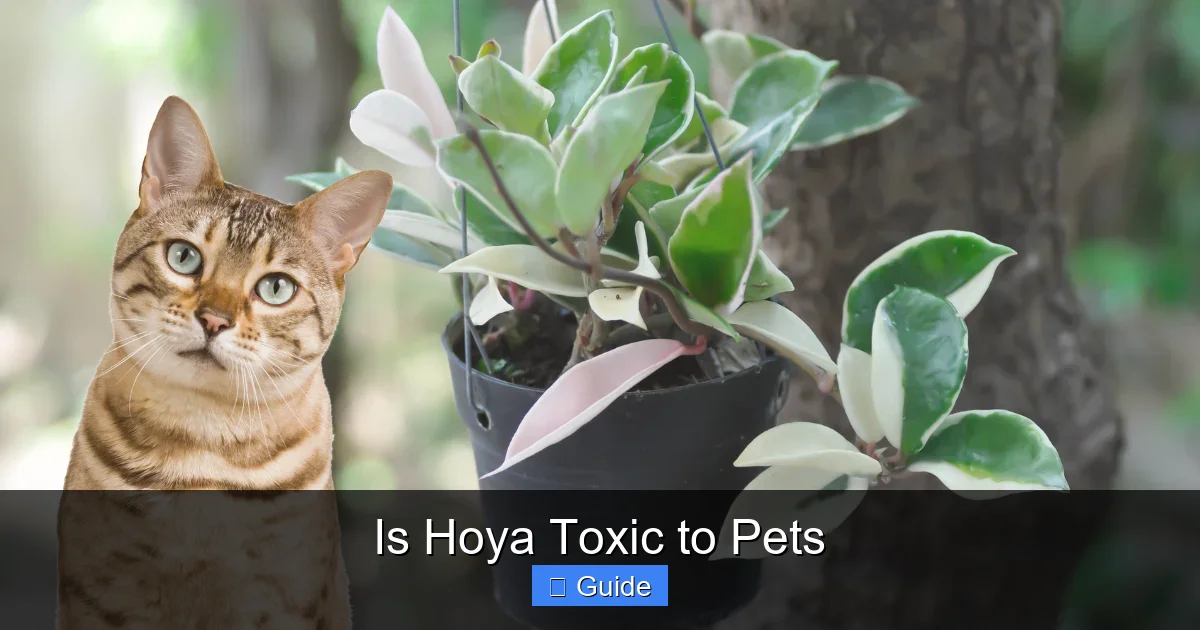
Is Hoya Toxic to Pets
Hoya plants are generally considered non-toxic to cats and dogs according to the ASPCA. While not poisonous, eating large amounts may cause mild stomach upset. Keep plants out of reach to prevent digestive issues and protect your hoya from damage.
You love your hoya collection. Those thick waxy leaves. The sweet-smelling star-shaped flowers. But you also love your cat who thinks every dangling vine is a personal toy. Or your dog who samples the salad bar that is your plant shelf. The question keeps you up at night: is hoya toxic to pets?
Good news. You can breathe easy. Hoya plants are not toxic to cats or dogs. The ASPCA confirms this. But there is more to the story. Non-toxic does not mean risk-free. Let us walk through everything you need to know. From sap irritation to pesticide residue. From prevention tips to what happens if your pet makes a snack of your hoya carnosa.
Key Takeaways
- Hoyas are non-toxic: The ASPCA lists hoya plants as safe for both cats and dogs with no known toxic compounds.
- Mild upset possible: Eating large quantities may cause vomiting or diarrhea due to plant fiber, not toxicity.
- Sap can irritate: The milky latex sap may cause skin irritation in sensitive pets or people.
- All varieties safe: Common types like Hoya carnosa, kerrii, pubicalyx, and linearis share the same safety profile.
- Prevention is best: Use hanging baskets, shelves, or deterrents to keep curious pets away from foliage.
- Watch for pesticides: Chemical treatments on store-bought plants pose more risk than the plant itself.
- Know emergency signs: Persistent vomiting, lethargy, or breathing issues warrant a vet visit regardless of plant type.
Quick Answers to Common Questions
Is hoya toxic to cats?
No, hoya plants are not toxic to cats according to the ASPCA. They are listed as non-toxic for both cats and dogs.
What happens if my dog eats hoya leaves?
Your dog may experience mild vomiting or diarrhea from the fibrous plant material, but no toxic effects will occur. Monitor for persistent symptoms and contact your vet if they last more than 24 hours.
Can hoya sap hurt my pet?
The milky latex sap can cause mild skin irritation or mouth discomfort in sensitive pets. Rinse the area with soap and water if contact occurs.
Are all hoya varieties safe for pets?
Yes, all common hoya varieties including carnosa, kerrii, pubicalyx, linearis, and australis share the same non-toxic classification.
Should I still keep hoyas away from my pets?
Yes, prevention is best. Large amounts can cause digestive upset, and nursery pesticides pose a greater risk than the plant itself. Use hanging baskets or high shelves.
📑 Table of Contents
- Understanding Hoya Plant Safety
- Common Hoya Varieties and Pet Safety
- What Happens If Your Pet Eats Hoya
- Keeping Pets Away From Your Hoyas
- Creating a Pet-Safe Indoor Jungle
- Special Situations and Edge Cases
- Common Myths About Hoya Toxicity
- Emergency Preparedness
- Hoya Care in Pet Households
- Conclusion
Understanding Hoya Plant Safety
What the ASPCA Says
The American Society for the Prevention of Cruelty to Animals maintains a comprehensive database of toxic and non-toxic plants. Hoya species appear on the non-toxic list for both cats and dogs. This means no known poisonous compounds exist in the leaves stems or flowers. Your pet will not suffer organ failure or neurological damage from a nibble.
This classification applies across the genus. Hoya carnosa. Hoya kerrii. Hoya pubicalyx. Hoya linearis. Hoya australis. Hoya obovata. All share the same safety profile. The wax plant family gets a green light.
Non-Toxic Does Not Mean Edible
Here is the catch. Non-toxic means no poison. It does not mean digestible. Hoyas are succulent-like. Thick leaves. Fibrous stems. Milky latex sap. A cat or dog eating a large amount will likely vomit. Not because of toxins. Because plant matter sits heavy in a carnivore stomach. Think of it like a human eating a handful of dry leaves. Uncomfortable. Not deadly.
The sap deserves special mention. Hoyas belong to the Apocynaceae family. Milkweed family. They produce a white latex when cut or broken. This sap can irritate skin. It can irritate mouths. Some pets drool or paw at their face after chewing. Sensitive individuals may develop a rash. Wash the area with soap and water. Monitor for swelling. Most reactions resolve quickly.
Pesticide Risk Outweighs Plant Risk
This surprises many owners. The biggest danger is not the hoya. It is what the nursery sprayed on it. Commercial growers use systemic insecticides. Fungicides. Leaf shine products. These chemicals absorb into plant tissue. They linger for weeks or months. Your pet eating a treated leaf gets a dose of chemicals designed to kill insects. Always ask about treatments. Quarantine new plants. Rinse foliage thoroughly before placing in pet-accessible areas.
Common Hoya Varieties and Pet Safety
Hoya Carnosa – The Classic Wax Plant
Hoya carnosa is the most common variety. Thick green leaves. Sometimes variegated with cream or pink edges. Clusters of pink star flowers. Completely non-toxic. The variegated cultivars like ‘Krimson Queen’ and ‘Krimson Princess’ share the same safety profile. Their trailing habit makes them tempting for cats. Hang them high.
Visual guide about Is Hoya Toxic to Pets
Image source: petshun.com
Hoya Kerrii – The Heart Leaf Hoya
Single heart-shaped leaves sold in tiny pots for Valentine’s Day. Slow growing. Thick succulent leaves. Non-toxic. The single-leaf cuttings rarely root into full plants. But they still attract curious pets. The thick leaf takes serious chewing. Choking hazard for small dogs. Keep on high shelves.
Hoya Pubicalyx – The Fast Grower
Long narrow leaves. Often splashed with silver. Fast trailing growth. ‘Pink Silver’ and ‘Royal Hawaiian Purple’ are popular cultivars. Non-toxic. The rapid growth means frequent pruning. Dispose of cuttings immediately. Do not leave them on the floor where pets find them.
Hoya Linearis – The Needle Leaf Hoya
Thin fuzzy leaves resembling pine needles. Delicate trailing stems. Non-toxic. The fine texture may appeal to cats who like grass-like plants. But the fuzzy surface can irritate throats. Most pets lose interest after a few bites.
Hoya Australis – The Waxy Giant
Large thick leaves. Vigorous climber. Fragrant white flowers with red centers. Non-toxic. The size makes it harder to place out of reach. Use a tall plant stand. Train it up a moss pole against a wall. Keep the base protected.
What Happens If Your Pet Eats Hoya
Typical Symptoms
Most pets show no symptoms after a small taste. A leaf or two passes uneventfully. Larger consumption may cause vomiting within a few hours. You may see leaf fragments in the vomit. Diarrhea can follow. Drooling occurs if sap irritates the mouth. Pawing at the face signals discomfort. These signs usually resolve within twenty-four hours.
When to Call the Vet
Call your veterinarian if vomiting persists beyond twenty-four hours. If your pet cannot keep water down. If lethargy develops. If you see blood in vomit or stool. If breathing becomes labored. If the face or throat swells. These suggest either an allergic reaction or a separate issue. Better safe than sorry.
What to Tell the Vet
Bring a piece of the plant. Or a photo. Tell them the variety if you know it. Mention any recent pesticide applications. Note how much was eaten and when. Describe all symptoms. The vet may induce vomiting if ingestion was recent. They may give fluids for dehydration. They may prescribe anti-nausea medication. Most cases need only supportive care.
Sap Exposure Without Ingestion
Sometimes pets just brush against a broken stem. Sap gets on fur. They lick it off. Or it contacts skin directly. Rinse the area with cool water. Use mild dish soap if needed. Prevent licking with an e-collar if irritation appears. Watch for redness swelling or hives. Contact dermatitis usually clears in a day or two.
Keeping Pets Away From Your Hoyas
Strategic Placement
Hanging baskets are the gold standard. Macrame hangers from ceiling hooks. High shelves near windows. Wall-mounted planters. Tall plant stands with narrow tops. The goal: paws cannot reach. Tails cannot knock over. Cats are climbers. Test your placement. If your cat can launch from the couch to the shelf it is not high enough.
Physical Barriers
Plant cages work for floor specimens. Wire mesh around the base. Decorative fencing. Terrariums for small hoyas. Glass cloches. These protect both plant and pet. Ensure airflow. Hoyas hate stagnant humid air. Fungal issues follow poor ventilation.
Deterrent Sprays
Bitter apple spray. Citrus spray. Commercial pet deterrents. Apply to pot edges. Not the foliage. Residue on leaves blocks stomata. Test a leaf first. Some sprays damage waxy coatings. Reapply weekly. Rotate products. Pets adapt to smells.
Alternative Chewing Options
Cats crave greens. Provide cat grass. Wheatgrass. Oat grass. Catnip. Spider plants are non-toxic and satisfying to chew. Dogs need chew toys. Bully sticks. Frozen carrots. A tired pet with appropriate outlets ignores your hoyas.
Training Techniques
Consistent redirection. “Leave it” command. Reward compliance. Motion-activated compressed air cans near plants. Double-sided tape on pot rims. Aluminum foil around bases. Cats dislike the texture. These teach boundaries without fear.
Creating a Pet-Safe Indoor Jungle
Safe Plant Companions for Hoyas
Build a collection without worry. Spider plants. Boston ferns. Areca palms. Calatheas. Peperomias. African violets. Orchids. Fittonias. Marantas. Pileas. All non-toxic. Mix textures. Heights. Light needs. Your hoya fits right in.
Plants to Avoid Completely
Know the dangerous ones. Lilies kill cats. Sago palms kill dogs. Pothos causes oral irritation. Philodendrons same. Dieffenbachia same. Monstera same. ZZ plants. Snake plants. Aloe vera. Jade plants. Euphorbias. Oleanders. Research every new addition. The ASPCA database is your friend.
Quarantine Protocol for New Plants
Two weeks minimum. Separate room. Inspect daily for pests. Rinse leaves with lukewarm water. Wipe with diluted neem oil if needed. Check soil for fungus gnats. This protects your pets from chemicals. It protects your collection from hitchhikers.
Soil and Fertilizer Considerations
Organic potting mixes. No chemical fertilizers. No systemic granules. Worm castings. Fish emulsion diluted. Compost tea. Pets dig. They taste soil. Keep it clean. Top-dress with decorative stones. Large river rocks. Not small pebbles. Choking hazard.
Special Situations and Edge Cases
Puppies and Kittens
Babies explore with mouths. Everything goes in. Teething increases chewing. Supervision is non-negotiable. Playpens. Closed doors. High shelves only. Assume they will reach the unreachable. They will. Puppy-proof like you baby-proof.
Senior Pets
Older pets may have compromised kidneys or liver. Even mild vomiting causes dehydration faster. Medications may interact oddly with plant compounds. Cognitive decline means forgotten training. Extra barriers needed. Extra vet vigilance.
Multi-Pet Households
Cats knock plants down. Dogs eat the fallen pieces. Teamwork. Secure pots with museum putty. Heavy ceramic bases. Wall brackets screwed into studs. Assume the worst-case scenario. Plan for it.
Outdoor Hoyas in Pet Yards
Summer placement on patios. Hanging from pergolas. Ground-planted in zones 10-11. Same non-toxic status. But outdoor risks increase. Fertilizers. Herbicides. Mulch cocoa bean hulls toxic to dogs. Slug bait. Mushrooms. Supervise outdoor time. Fence off plantings.
Hoya Flowers and Nectar
Hoya blooms produce abundant nectar. Sticky sweet. Ants love it. Pets may too. The nectar is non-toxic. But fermenting nectar grows yeast. Alcohol forms. Tiny amounts. Unlikely to intoxicate. Still. Remove spent blooms. Wipe nectar drips. Prevents stickiness and pests.
Common Myths About Hoya Toxicity
Myth: All Apocynaceae Are Toxic
Family includes oleander. Milkweed. Periwinkle. Highly toxic. Hoya is the exception. Genus matters. Species matters. Do not generalize by family. Research the specific plant.
Myth: Variegated Varieties Are More Toxic
Color changes come from chlorophyll mutation. Not chemical changes. ‘Krimson Queen’ is as safe as plain green carnosa. The pink cream white sectors lack chlorophyll. That is all.
Myth: Dried Leaves Are Safe
Dried leaves concentrate compounds. They also splinter. Sharp edges cut mouths. Choking risk increases. Clean up fallen leaves promptly. Do not leave them as “safe” chew toys.
Myth: Cats Know What Is Poisonous
Instinct is not perfect. Cats eat lilies. Dogs eat sago palms. Curiosity overrides instinct. Boredom overrides instinct. Never rely on pet wisdom. You are the guardian.
Myth: Small Amounts Build Immunity
No immunity develops to plant toxins. Either a compound damages tissue or it does not. Repeated exposure to irritants worsens sensitivity. Allergies develop over time. Prevent exposure entirely.
Emergency Preparedness
Pet Poison Helpline Numbers
ASPCA Animal Poison Control: 888-426-4435. Pet Poison Helpline: 855-764-7661. Both operate twenty-four seven. Fees apply. Save numbers in your phone. Post on fridge. Give to pet sitters.
Plant Identification Photos
Photograph every plant in your home. Label with common and scientific names. Store in a phone album. Share with household members. In an emergency you show the vet exactly what was eaten. No guessing.
First Aid Kit Essentials
Hydrogen peroxide three percent for induced vomiting only if vet directs. Syringe for dosing. Activated charcoal only if vet directs. Saline eye wash. Mild dish soap. Towels. Gloves. Carrier ready. Vet clinic address and hours posted.
Pet Insurance Considerations
Plant ingestion claims are common. Coverage varies. Some policies exclude “preventable” incidents. Read fine print. Wellness add-ons may cover poison control fees. Worth the peace of mind.
Hoya Care in Pet Households
Watering Without Spills
Bottom watering prevents wet paws. Soggy paws track soil. Wet soil grows bacteria. Use cache pots. Remove inner pot. Soak. Drain. Replace. No saucers for pets to drink from. Fertilizer residue in runoff water.
Pruning Safely
Prune over a bag. Catch every piece. Sap drips. Wipe immediately. Dispose of cuttings in outdoor trash. Not kitchen compost. Not floor pile. Wash tools after. Wash hands after. Change clothes if sap soaks through.
Repotting Protocol
Outdoor repotting ideal. Garage. Patio. Balcony. If inside use a tarp. Contain soil. Keep pets in another room until cleaned. Vacuum thoroughly. Mop. Soil contains perlite vermiculite. Not digestible. Fertilizer pellets. Not safe.
Pest Treatment Safety
Neem oil. Insecticidal soap. Horticultural oil. Apply at dusk. Dry before pet access. Systemic granules never. Chemical sprays never. Isolate treated plants two weeks. Rinse before return. Your pets walk on floors. They lick paws. Residue transfers.
Propagation Around Pets
Water propagation jars. Cats drink from them. Knock them over. Use narrow vases. High shelves. Sphagnum moss boxes. Closed containers. Soil propagation pots. Same rules as mature plants. Cuttings are just as tempting.
Conclusion
Your hoya collection and your furry family can coexist beautifully. The science is clear. Hoyas are non-toxic to cats and dogs. No deadly compounds lurk in those waxy leaves. But responsible ownership means going beyond the label. It means securing plants against gravity and curiosity. It means vetting every nursery purchase for hidden chemicals. It means knowing your pet’s habits and planning for their mistakes.
Hang your hoyas high. Train your pets well. Keep the poison control number handy anyway. Enjoy the starshaped blooms. Enjoy the purrs and tail wags. A home full of plants and pets is a home full of life. You do not have to choose. You just have to prepare.
Next time someone asks is hoya toxic to pets you can answer with confidence. No. But. And that but makes all the difference. Happy growing. Happy pet parenting. You have got this.
Frequently Asked Questions
Is hoya toxic to pets if they eat the flowers?
Hoya flowers are also non-toxic to cats and dogs. However, the nectar can ferment and may cause mild stomach upset if consumed in large quantities. Remove spent blooms to prevent this.
What should I do if my cat chews on my hoya?
Remove the plant from reach, rinse your cat’s mouth with water, and monitor for drooling or vomiting. Most cats show no ill effects. Contact your vet if symptoms persist beyond 24 hours or if swelling occurs.
Can hoya cause allergic reactions in pets?
While rare, some pets may develop contact dermatitis from the latex sap. Signs include redness, itching, or hives at the contact site. Wash the area and prevent licking. Consult your vet if symptoms worsen.
Are hoya plants safe for puppies and kittens?
Hoyas are non-toxic for young pets, but puppies and kittens are more vulnerable to dehydration from vomiting. They also chew more aggressively. Keep plants completely inaccessible during teething phases.
How do I know if my hoya was treated with pesticides?
Ask the retailer before purchasing. Many nurseries use systemic treatments. Quarantine new plants for two weeks, rinse foliage thoroughly, and wipe leaves with a damp cloth before placing in pet-accessible areas.
Can I use fertilizer on hoyas in a pet household?
Use only organic, pet-safe fertilizers like worm castings or diluted fish emulsion. Avoid chemical fertilizers, systemic granules, and foliar sprays. Top-dress soil with large decorative stones to prevent digging and ingestion.