Wild Ginger Plant Wikipedia
Wild ginger plant refers to several species of low-growing woodland perennials in the Aristolochiaceae family, prized for their heart-shaped leaves and unique jug-shaped flowers. Despite the common name, these plants are not related to culinary ginger but earned their name from the spicy, ginger-like aroma of their rhizomes when crushed.
If you’ve ever wandered through a moist, shady woodland in eastern or western North America, you’ve likely stepped right past wild ginger without noticing it. This unassuming groundcover hides its most interesting feature—strange, jug-shaped flowers—right at soil level beneath a canopy of heart-shaped leaves. Many hikers and gardeners first encounter this plant when searching for information on wild ginger plant wikipedia pages, only to discover there’s much more to these woodland natives than a simple encyclopedia entry can convey.
Despite sharing a common name with the spicy root in your kitchen, wild ginger has no botanical relationship to true ginger whatsoever. The similarity ends at the aromatic rhizomes, which release a warm, ginger-like scent when crushed. This characteristic led early European settlers to adopt the plant as a ginger substitute, and the name stuck. Today, foragers, native plant enthusiasts, and shade gardeners alike appreciate wild ginger for its ecological value, historical significance, and ability to transform difficult shady spots into lush green carpets.
Key Takeaways
- Not true ginger: Wild ginger belongs to the Aristolochiaceae family, completely unrelated to culinary ginger (Zingiber officinale) from the Zingiberaceae family
- Two main North American species: Asarum canadense (Canadian wild ginger) and Asarum caudatum (Western wild ginger) are the most commonly encountered varieties
- Unique pollination strategy: Flowers hide at ground level and are pollinated by beetles, flies, and ants rather than bees or butterflies
- Historical medicinal use: Indigenous peoples used root preparations for digestive issues, colds, and as a contraceptive, though modern science warns of potential toxicity
- Excellent shade groundcover: Forms dense colonies via rhizomes, making it ideal for woodland gardens and erosion control on shaded slopes
- Contains aristolochic acid: This compound can cause kidney damage and cancer with prolonged use, so internal consumption is not recommended
- Easy to propagate: Divides readily in spring or fall, and fresh seeds germinate well with cold stratification
Quick Answers to Common Questions
Is wild ginger related to the ginger I buy at the grocery store?
No, wild ginger (Asarum species) belongs to the Aristolochiaceae family, while culinary ginger (Zingiber officinale) is in the Zingiberaceae family. They are completely unrelated botanically, sharing only a similar aromatic compound in their rhizomes.
Can I eat wild ginger from my garden?
It’s not recommended. All wild ginger species contain aristolochic acid, which causes kidney damage and cancer with prolonged use. While Indigenous peoples and early settlers used it medicinally and as a flavoring, modern science has identified serious health risks.
How fast does wild ginger spread in the garden?
Under ideal conditions (shade, moisture, rich soil), wild ginger spreads 6 to 12 inches per year via rhizomes. A single division can form a 3-foot colony in 3 to 5 years. Growth is slower in dry, sunny, or poor soil conditions.
When is the best time to divide and transplant wild ginger?
Early spring (as new growth emerges) or early fall (4 to 6 weeks before ground freeze) are both excellent. Spring divisions establish quickly with the growing season ahead; fall divisions benefit from cool, moist conditions and less transplant shock.
Why are wild ginger flowers so hard to find?
The flowers grow at ground level, often partially buried in leaf litter or soil. This positioning attracts their specific pollinators—small flies, beetles, and ants that are drawn to decaying matter on the forest floor. You need to gently move leaves aside to see them.
📑 Table of Contents
- Understanding Wild Ginger Taxonomy and Classification
- Identification Features and Growth Habits
- Natural Habitat and Ecological Role
- Historical Uses and Cultural Significance
- Growing Wild Ginger in Your Garden
- Propagation Methods for Gardeners and Conservationists
- Common Problems and Solutions
- Wild Ginger in Modern Context: Research and Applications
- Conclusion
Understanding Wild Ginger Taxonomy and Classification
The Aristolochiaceae Family Connection
Wild ginger belongs to the birthwort family, Aristolochiaceae, a group of flowering plants known for their unusual flower structures and, in some cases, toxic compounds. The genus Asarum contains roughly 60 to 70 species worldwide, with the highest diversity in East Asia. North America hosts about 10 native species, though only a few are widely distributed and commonly encountered.
The family name Aristolochiaceae comes from the Greek words “aristos” (best) and “lochia” (childbirth), referencing the historical use of European birthwort (Aristolochia clematitis) in childbirth. This etymology hints at the medicinal—and sometimes dangerous—properties found throughout the family. When researching wild ginger plant wikipedia entries, you’ll often see warnings about aristolochic acid, a compound present in varying amounts across family members.
Major North American Species
Asarum canadense (Canadian wild ginger, eastern wild ginger) dominates the eastern half of the continent, ranging from Manitoba to Nova Scotia, south to Georgia and Louisiana. This species features kidney-shaped to heart-shaped leaves 4 to 8 inches wide, with a distinctive deep notch at the base. The flowers, appearing April through June, are bell-shaped with three pointed lobes, typically brownish-purple outside and paler inside.
Asarum caudatum (Western wild ginger, long-tailed wild ginger) occupies the Pacific Northwest from British Columbia to California, east to Montana and Idaho. Its leaves are more distinctly heart-shaped with a shallower notch, and its flowers sport dramatic long “tails” on each of the three lobes—hence the species name caudatum, meaning “tailed.” These tails can extend an inch or more beyond the main flower cup.
Other notable species include Asarum virginicum (Virginia wild ginger) with its beautifully silver-mottled leaves, Asarum hartwegii (Hartweg’s wild ginger) of the California mountains, and Asarum lemmonii (Lemmon’s wild ginger) found in the Klamath Mountains. Each has adapted to specific regional conditions, but all share the basic wild ginger growth habit and floral structure.
European and Asian Relatives
Asarum europaeum (European wild ginger, asarabacca) has a long history of medicinal use in its native range across Europe and into Siberia. It’s more evergreen than North American species and was once widely cultivated in herb gardens. In East Asia, numerous Asarum species—often called “fine-leaved wild ginger” or by local names—play roles in traditional medicine systems, particularly in China, Japan, and Korea.
The Asian species diversity is remarkable, with China alone hosting over 50 species. Some, like Asarum sieboldii (Chinese wild ginger), are important in traditional Chinese medicine under the name “xixin.” However, the aristolochic acid content in many Asian species has led to serious health concerns and regulatory restrictions in multiple countries.
Identification Features and Growth Habits
Leaf Characteristics That Define the Genus
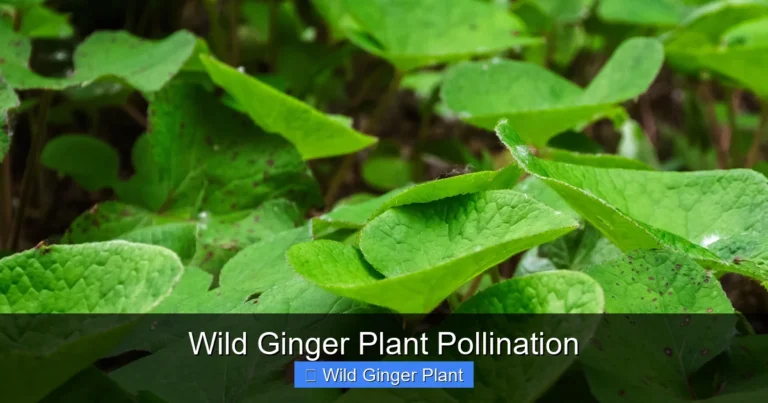
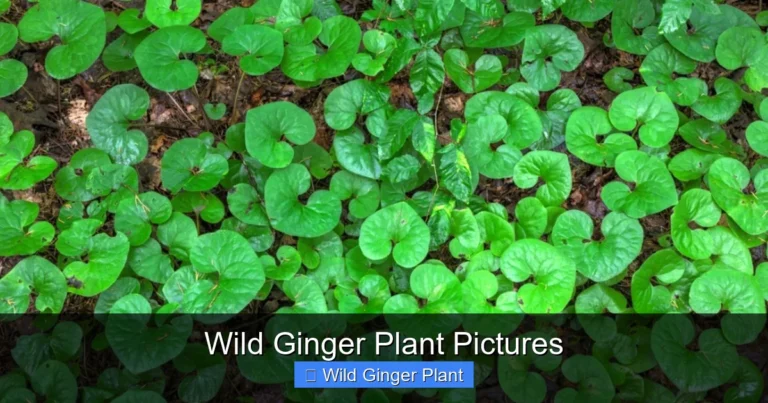
Wild ginger leaves are perhaps the most recognizable feature. They emerge in pairs from the rhizome nodes, each leaf borne on a long petiole (leaf stalk) that can reach 6 to 12 inches in length. The blades are typically 3 to 8 inches wide, broadly heart-shaped to kidney-shaped, with a deep sinus (notch) at the base where the petiole attaches.
The leaf surface often has a soft, slightly fuzzy texture due to fine hairs, especially when young. Upper surfaces are medium to dark green, sometimes with attractive mottling or silver patterns depending on species. Asarum virginicum is particularly prized for its strikingly variegated foliage. The undersides are usually paler and more densely hairy.
In milder climates or protected sites, some species remain evergreen through winter. Asarum caudatum and Asarum europaeum often keep their leaves year-round, while Asarum canadense is typically deciduous, with leaves dying back after hard frosts. New leaves emerge early in spring, often before the tree canopy fully leafs out.
The Hidden Flowers: Nature’s Ground-Level Secret
Wild ginger flowers are easy to miss—and that’s by design. They emerge directly from the rhizome at ground level, often partially buried in leaf litter or soil. This unusual positioning serves a specific ecological purpose: the flowers mimic fungal fruiting bodies or carrion to attract their primary pollinators—small flies, beetles, and ants.
Each flower consists of a calyx tube (the “jug” or “cup”) with three lobes or tips. There are no true petals. The calyx color ranges from brownish-purple to reddish-brown, greenish, or yellowish, often with a lighter interior. Asarum canadense flowers are roughly 1 inch long with triangular lobes. Asarum caudatum flowers have those signature long, tapering tails that can reach 1 to 2 inches.
Flowering typically occurs April through June, depending on latitude and elevation. The flowers are protogynous—the female stigma matures before the male anthers release pollen—which reduces self-pollination. After pollination, the flower develops into a fleshy capsule that splits open when ripe, revealing seeds with attached elaiosomes (fatty appendages) that attract ants for dispersal.
Rhizome Structure and Colonial Growth
The rhizome is the engine of wild ginger’s success. These horizontal underground stems grow just below the soil surface, typically 1 to 3 inches deep. They’re about 1/4 to 1/2 inch in diameter, segmented with nodes every 1 to 2 inches. Each node produces a pair of leaves above and roots below.
Rhizomes branch regularly, creating expanding colonies that can cover many square feet over time. A single plant can spread 6 to 12 inches per year under favorable conditions. The rhizomes are aromatic—scratch or crush a piece, and you’ll immediately understand the “ginger” name. The scent is warm, spicy, and distinctly ginger-like, though more earthy and less citrusy than true ginger.
This colonial habit makes wild ginger an excellent groundcover but also means it can be slow to establish from small divisions. Patience rewards the gardener with a dense, weed-suppressing mat that requires virtually no maintenance once established.
Natural Habitat and Ecological Role
Preferred Growing Conditions
Wild ginger thrives in conditions that challenge many other plants: deep shade, consistent moisture, and rich organic soil. In nature, you’ll find it in deciduous and mixed forests, often on north-facing slopes, along stream banks, in ravines, and in other mesic (moist but well-drained) woodland sites.
Soil preferences lean toward humus-rich, slightly acidic to neutral pH (5.5 to 7.0), with abundant leaf litter and decaying wood. The plants are indicators of high-quality, undisturbed woodland habitats. They struggle in compacted soils, heavy clay without organic amendment, or sites that dry out completely in summer.
Light requirements are specific: dappled to full shade. Morning sun is tolerated, especially in cooler climates, but afternoon sun typically causes leaf scorch and decline. Under dense coniferous shade, growth may be sparse. The ideal is the shifting light of a deciduous canopy—bright in spring before leaf-out, then moderated through summer.
Pollination Ecology: The Fly and Beetle Connection
Wild ginger’s ground-level flowers represent a fascinating pollination syndrome called “sapromyiophily”—pollination by insects attracted to decaying matter. The flowers emit subtle odors reminiscent of fungi or carrion, barely detectable to humans but powerful signals to small flies (particularly fungus gnats and phorid flies), beetles (especially rove beetles and carrion beetles), and ants.
These insects enter the flower cup seeking egg-laying sites or food. The interior of the calyx tube often has downward-pointing hairs that allow easy entry but hinder exit, temporarily trapping visitors. As they struggle, they contact the receptive stigma (if female phase) or pick up pollen from mature anthers (if male phase). Eventually they escape, often visiting another flower and transferring pollen.
This strategy is remarkably effective. Studies show high pollination rates despite the inconspicuous flowers. The ants attracted to the elaiosomes on seeds provide a secondary benefit: seed dispersal. Ants carry seeds to their nests, consume the elaiosome, and discard the intact seed in nutrient-rich waste piles—ideal germination sites.
Wildlife Value Beyond Pollination
Wild ginger supports woodland food webs in multiple ways. The dense foliage provides cover for small amphibians, reptiles, and mammals. Salamanders and frogs often shelter beneath the leaves during dry periods. The seeds, once freed from their elaiosomes, are eaten by various woodland birds and small mammals.
Deer and rabbits occasionally browse the foliage, though the aromatic compounds provide some deterrence. In areas with high deer pressure, wild ginger often persists where other spring ephemerals are eliminated. The rhizomes may be dug up by bears, wild turkeys, and rodents, but the plants typically recover from such disturbance.
Perhaps most importantly, wild ginger’s early spring growth and dense summer canopy help stabilize forest soils, reduce erosion on slopes, and maintain the cool, moist microclimate that many woodland organisms depend on. It’s a foundational species in healthy eastern and western forest understories.
Historical Uses and Cultural Significance
Indigenous Knowledge and Traditional Applications
Native American tribes across the continent developed extensive uses for wild ginger. The Cherokee, Iroquois, Ojibwe, Menominee, and many others harvested rhizomes for medicinal preparations. Common applications included decoctions for digestive complaints, colds and fevers, menstrual cramps, and as a general tonic.
The Meskwaki used wild ginger root as a contraceptive—a practice that modern research suggests may have had physiological basis, though not a safe one. The Omaha and Ponca tribes applied poultices of mashed fresh root to headaches and joint pain. Many groups also used the rhizome as a flavoring agent, adding it to foods for its aromatic quality.
Beyond medicine, wild ginger had ceremonial and practical uses. Some tribes used the leaves to wrap foods for cooking. The fibrous roots were occasionally incorporated into cordage. The plant’s presence indicated good hunting grounds, as it signaled rich, moist soil that attracted game animals.
European Adoption and Colonial Era Uses
Early European settlers quickly learned about wild ginger from Indigenous neighbors. With true ginger expensive and imported, the native substitute became valuable. Colonists candied the rhizomes, made syrups, and used them in baking. The candied root was a popular treat and remedy for “stomach complaints.”
European herbalists incorporated Asarum canadense and Asarum europaeum into their materia medica. The root was official in the United States Pharmacopeia from 1820 to 1882, listed as a stimulant, carminative, and diaphoretic. Physicians prescribed it for digestive issues, respiratory conditions, and to promote sweating during fevers.
The common name “colic root” reflects one widespread use: treating infant colic. Mothers would give weak decoctions to fussy babies—a practice we now know was dangerous due to aristolochic acid content. The plant was also an ingredient in commercial patent medicines of the 19th century.
Modern Understanding of Toxicity Concerns
Here’s where the story takes a serious turn. Research beginning in the 1990s revealed that aristolochic acid, present in all Asarum species tested, causes aristolochic acid nephropathy—a progressive, irreversible kidney disease—and is a potent carcinogen linked to urothelial cancers. This discovery came from investigating “Chinese herb nephropathy” in Belgium, where a weight-loss clinic inadvertently used an Aristolochia species instead of the intended herb.
The concentration of aristolochic acid varies by species, plant part, and growing conditions. Asarum europaeum tends to have higher levels than North American species, but all contain some amount. The compound is most concentrated in the roots/rhizomes—the very part traditionally used.
Regulatory agencies worldwide have taken action. The FDA has issued warnings about botanical products containing aristolochic acid. Germany banned Asarum europaeum from herbal medicines. China restricted use of several Asarum species in traditional medicine. The consensus: internal use of wild ginger cannot be recommended given current knowledge.
Growing Wild Ginger in Your Garden
Site Selection and Preparation
Success with wild ginger starts with honest assessment of your site. You need: shade (dappled to full), consistent moisture, and soil rich in organic matter. If you have a spot under mature deciduous trees where hostas and ferns thrive, wild ginger will likely do well. Avoid areas under shallow-rooted trees like maples unless you’re prepared to water regularly.
Prepare the planting area by removing invasive plants (especially garlic mustard, which allelopathically inhibits native woodland plants). Loosen the top 6 to 8 inches of soil and incorporate 2 to 3 inches of leaf compost, well-rotted manure, or forest humus. If your soil is heavy clay, add coarse sand or fine pine bark to improve drainage while retaining moisture.
Test soil pH if uncertain. Wild ginger prefers slightly acidic conditions. If your soil is strongly alkaline (above 7.5), incorporate elemental sulfur or pine needle mulch to gradually lower pH. Most woodland garden soils in eastern North America are naturally suitable.
Planting Techniques and Timing
Spring and fall are both excellent planting times. Spring planting (as soon as soil can be worked) gives plants a full growing season to establish before winter. Fall planting (4 to 6 weeks before ground freeze) allows root development in cool, moist conditions with less transplant stress.
Space plants 12 to 18 inches apart for groundcover effect, or 6 to 8 inches apart for faster fill-in. Plant divisions or nursery pots so the rhizome sits just below the soil surface—about 1 inch deep. The leaf petioles should emerge at soil level. Water thoroughly after planting and mulch with 2 inches of shredded leaves, pine needles, or fine bark.
If starting from seed, sow fresh seeds immediately after collection (June to July) in a prepared woodland seedbed or in pots sunk into the ground. Seeds require cold stratification (90 to 120 days at 35 to 40°F) followed by warm, moist conditions to germinate. Expect germination the following spring. Seedlings take 3 to 4 years to reach flowering size.
Ongoing Care and Maintenance
Once established, wild ginger is remarkably low-maintenance. The key is consistent moisture during the first two growing seasons. Water deeply once a week during dry spells, more often in sandy soils. After establishment, plants tolerate moderate drought but perform best with regular moisture.
Mulch annually with 1 to 2 inches of leaf mold or shredded leaves in fall. This mimics natural forest floor conditions, feeds soil organisms, and protects rhizomes from temperature extremes. Avoid heavy wood chip mulches, which can smother the shallow rhizomes.
No fertilizer is needed in properly prepared woodland soil. If growth seems weak, a light application of balanced organic fertilizer (like 5-5-5) in early spring is sufficient. Excess nitrogen produces lush foliage but reduces flowering and can make plants more susceptible to slug damage.
Divide colonies every 4 to 6 years in early spring or fall to rejuvenate growth and propagate new plants. Simply dig up a section, separate rhizome pieces with at least one node and attached roots, and replant immediately. Share divisions with friends—they make wonderful gifts for shade gardeners.
Companion Planting for Woodland Gardens
Wild ginger plays well with many native woodland companions. Excellent partners include:
- Ferns: Christmas fern, maidenhair fern, lady fern, and ostrich fern provide vertical contrast
- Spring ephemerals: Trilliums, bloodroot, Virginia bluebells, and trout lilies bloom before ginger’s full leaf expansion
- Shade perennials: Foamflower (Tiarella), coral bells (Heuchera), and woodland phlox (Phlox divaricata)
- Native sedges: Carex plantaginea (plantain-leaved sedge) and Carex appalachica (Appalachian sedge) add grassy texture
- Shrubs: Spicebush (Lindera benzoin), witch hazel (Hamamelis virginiana), and mountain laurel (Kalmia latifolia) provide the canopy layer
Avoid aggressive spreaders like English ivy, periwinkle (Vinca), or Japanese pachysandra, which will outcompete wild ginger. Also be cautious with large hostas, which can shade out smaller ginger colonies.
Propagation Methods for Gardeners and Conservationists
Division: The Most Reliable Method
Division is how most gardeners propagate wild ginger, and for good reason—it’s fast, reliable, and produces mature plants immediately. The best times are early spring (just as new growth emerges) or early fall (September to October in most regions).
To divide: Water the colony well the day before. Use a garden fork to loosen soil around the perimeter, then lift the entire clump or a section of it. Gently shake or wash off excess soil to reveal the rhizome network. Using clean, sharp pruners or a knife, separate rhizome segments 2 to 4 inches long, each with at least one growth node (where leaves emerge) and preferably some roots attached.
Trim any damaged roots. Replant divisions immediately at the same depth they were growing. Water well and mulch. Keep consistently moist for 4 to 6 weeks until established. Spring divisions often flower the same year; fall divisions wait until the following spring.
Seed Propagation: Patience Rewarded
Growing wild ginger from seed is a lesson in patience but allows genetic diversity and large-scale production for restoration projects. Collect seeds in early summer when capsules split open. Seeds are large (3 to 4 mm), brown, with a white elaiosome. Sow immediately—seeds lose viability quickly if dried.
For outdoor sowing: Prepare a shaded seedbed with fine, humus-rich soil. Press seeds into the surface (don’t bury deeply—they need light to germinate after stratification). Cover with a thin layer of fine leaf mulch. Mark the site well. Nature provides the cold stratification over winter; germination occurs the following spring.
For controlled stratification: Mix seeds with moist (not wet) sand or vermiculite in a plastic bag. Refrigerate at 35 to 40°F for 90 to 120 days. Then move to 65 to 70°F with light. Germination typically begins in 2 to 4 weeks. Transplant seedlings to individual pots when they have two true leaves. Grow in shade for a full season before planting out.
Rhizome Cuttings: An Alternative Approach
For species that are difficult to divide or when you want to maximize propagation material, rhizome cuttings work well. In early spring or fall, cut healthy rhizomes into 1-inch segments, each containing at least one node. Dust cut ends with cinnamon or sulfur powder as a natural fungicide.
Lay segments horizontally in a tray of moist, well-draining propagation mix (1:1 peat and perlite or sand). Cover lightly with mix. Keep in a shaded cold frame or unheated greenhouse at 50 to 60°F. Maintain high humidity with a clear cover, venting daily. Roots and shoots typically emerge in 4 to 8 weeks.
This method is particularly useful for rare or slow-spreading species where you don’t want to disturb the parent colony. It’s also how nurseries produce commercial quantities of named cultivars like Asarum europaeum ‘Album’ (white-flowered) or Asarum canadense ‘Eco Medley’ (variegated foliage).
Conservation Propagation Considerations
If you’re propagating wild ginger for ecological restoration, follow these guidelines: Collect seeds or divisions from multiple parent plants across a population to capture genetic diversity. Never collect more than 10% of seeds or 5% of plants from a wild population. Obtain proper permits for collection on public lands.
Document collection location, date, and habitat conditions. Grow plants in conditions matching the target restoration site. Use local ecotypes whenever possible—plants from your region will be better adapted than those from distant populations. Coordinate with local native plant societies or conservation organizations for larger projects.
Common Problems and Solutions
Pest Issues: Slugs, Snails, and More
Slugs and snails are the primary pests of wild ginger, especially in moist, mulched conditions. They chew irregular holes in leaves, often targeting tender new growth in spring. Control strategies include: beer traps, copper tape barriers around valuable specimens, diatomaceous earth (reapply after rain), hand-picking at night with a flashlight, and encouraging natural predators (ground beetles, toads, birds).
Aphids occasionally colonize flower stems and leaf undersides in spring. They’re rarely damaging but can be washed off with a strong water spray or treated with insecticidal soap if severe. Spider mites may appear during hot, dry spells in plants receiving too much sun—another reason to ensure proper shade.
Deer and rabbits browse foliage occasionally, particularly in early spring when other food is scarce. In high-pressure areas, apply repellents (rotating products for effectiveness) or use temporary fencing until plants are large enough to tolerate some browsing. The aromatic compounds provide moderate natural deterrence.
Disease Concerns: Fungal Issues in Wet Conditions
Wild ginger is generally disease-resistant, but overly wet, poorly drained conditions can lead to root and crown rots caused by Pythium, Phytophthora, or Rhizoctonia fungi. Symptoms include yellowing leaves, wilting despite moist soil, and blackened, mushy rhizomes.
Prevention is straightforward: ensure good drainage, avoid overwatering, don’t mulch too deeply against crowns, and provide adequate air circulation. If rot occurs, remove affected plants, improve drainage, and consider solarizing the soil before replanting.
Leaf spots caused by various fungi (Alternaria, Cercospora) sometimes appear in humid summers. They’re cosmetic—remove badly affected leaves and improve air flow. Powdery mildew is rare but can occur in dry, crowded conditions with poor air movement.
Environmental Stress Symptoms
Leaf scorch (brown, crispy leaf margins) indicates too much sun, insufficient moisture, or both. Relocate plants to shadier spots or increase watering and mulching. Yellowing leaves (chlorosis) in summer often signals soil pH too high (alkaline) or nutrient deficiency in very sandy soils. Test pH and amend accordingly.
Poor growth and failure to spread usually means the site is too dry, too sunny, soil is too compacted, or competition from tree roots is too intense. Consider creating a raised bed with imported woodland soil mix in difficult spots, or choose tougher alternatives like Asarum europaeum for marginally suitable sites.
Invasive Species Competition
Garlic mustard (Alliaria petiolata) is the nemesis of wild ginger and many woodland natives. It releases allelopathic chemicals that inhibit mycorrhizal fungi essential for native plant health. Remove garlic mustard aggressively—pull before it sets seed, bag and dispose of flowering plants (don’t compost).
Japanese stiltgrass (Microstegium vimineum), lesser celandine (Ficaria verna), and English ivy also threaten wild ginger colonies. Early detection and removal are critical. Establish a monitoring routine for your woodland garden, especially in spring when invasives are most visible and vulnerable.
Wild Ginger in Modern Context: Research and Applications
Current Scientific Research
Despite toxicity concerns, wild ginger continues to attract scientific interest. Researchers are investigating:
- Aristolochic acid biosynthesis pathways to understand how plants produce this compound and potentially engineer safer variants
- Antimicrobial properties of essential oil components (excluding aristolochic acid) for potential topical applications
- Pollination biology of the unique sapromyiophilous system, with implications for understanding plant-insect coevolution
- Population genetics of fragmented populations in urban and agricultural landscapes
- Phytoremediation potential for heavy metals, as some Asarum species tolerate contaminated soils
Several universities maintain research collections of Asarum species for comparative studies. The Arnold Arboretum, Missouri Botanical Garden, and University of Washington Botanical Gardens have significant holdings. Citizen scientists contribute distribution data through platforms like iNaturalist, helping track range shifts with climate change.
Commercial Cultivation and Market Presence
Wild ginger is a staple in the native plant nursery trade. Wholesale growers produce thousands of plants annually for landscaping, restoration, and retail. Named cultivars command premium prices: Asarum canadense ‘Eco Medley’ (silver-mottled leaves), Asarum europaeum ‘Album’ (white flowers), Asarum caudatum ‘Wintergreen’ (especially evergreen).
The essential oil, steam-distilled from rhizomes, appears in some natural perfumery and aromatherapy products. It’s valued for its warm, spicy, woody scent profile. However, reputable suppliers ensure aristolochic acid removal or confirm its absence in the distilled oil (which typically doesn’t carry over the water-soluble toxin).
Wild-harvested rhizomes occasionally appear at farmers’ markets and specialty food shops, marketed as “wild ginger root” for culinary use. This practice is discouraged by botanists and health authorities due to toxicity risks and sustainability concerns. Cultivated roots from known, tested sources are safer but still not recommended for regular consumption.
Climate Change Implications
As a species of cool, moist forests, wild ginger faces challenges from climate change. Models predict range contractions at southern edges and potential expansion northward—if suitable habitat exists and migration corridors allow. The plants’ limited seed dispersal (primarily by ants, moving seeds meters not kilometers) hinders rapid range shifts.
Phenological mismatches are another concern. Wild ginger’s early flowering depends on cues from soil temperature and moisture. If pollinator emergence shifts differently than plant flowering, reproductive success could decline. Some populations already show reduced seed set in warm springs.
Conservation strategies include: protecting north-facing slopes and ravines as climate refugia, maintaining habitat connectivity, assisted migration trials for southern populations, and ex situ conservation in botanical gardens across the predicted future range.
Conclusion
Wild ginger represents the best of what native woodland plants offer: quiet beauty, ecological value, historical depth, and practical garden utility. From its hidden flowers that rewrite the rules of pollination to its rhizomes that once flavored colonial kitchens and now caution us about botanical safety, this plant tells multiple stories.
For the gardener, wild ginger solves the perennial shade problem with elegance. For the ecologist, it’s an indicator of woodland health and a keystone understory species. For the historian, it’s a bridge between Indigenous knowledge and colonial adaptation. For the scientist, it’s a window into chemical ecology and evolutionary innovation.
Whether you encounter it on a spring hike—kneeling to find those secret flowers beneath the leaves—or cultivate it in your own shaded sanctuary, wild ginger rewards attention. Just remember the lesson it teaches: names can be deceiving, traditional uses need modern verification, and the most unassuming plants often hold the most surprises. The next time you search wild ginger plant wikipedia for a quick fact, know that you’re only scratching the surface of a remarkably complex and fascinating genus.
Frequently Asked Questions
What is the scientific name for wild ginger?
The most common North American species are Asarum canadense (eastern wild ginger) and Asarum caudatum (western wild ginger). The genus Asarum contains 60-70 species worldwide in the Aristolochiaceae family.
Does wild ginger make a good groundcover for deep shade?
Yes, wild ginger is one of the best native groundcovers for deep shade. It forms dense colonies that suppress weeds, tolerates root competition from trees, and maintains attractive foliage throughout the growing season with minimal maintenance.
How do I identify wild ginger in the wild?
Look for pairs of heart-shaped to kidney-shaped leaves on long petioles emerging from a creeping rhizome. In spring, gently pull back leaf litter at the base to find jug-shaped, three-lobed flowers at ground level. Crushed rhizomes smell distinctly of ginger.
Is wild ginger deer resistant?
Wild ginger is moderately deer resistant due to its aromatic compounds. Deer may browse it in early spring when other food is scarce or in areas with very high deer pressure, but it’s generally less preferred than hostas, tulips, or many other shade plants.
Can wild ginger grow in containers?
Yes, wild ginger adapts well to containers if given a wide, shallow pot (to accommodate horizontal rhizomes), rich organic potting mix, consistent moisture, and shade. It makes an excellent container plant for shaded patios and balconies.
Where can I buy native wild ginger plants?
Native plant nurseries, botanical garden sales, native plant society events, and online native plant retailers are the best sources. Avoid wild-collected plants; choose nursery-propagated stock from local ecotypes when possible for best adaptation.