Wild Ginger Plant Pictures
Wild ginger (Asarum canadense) is a native North American woodland perennial prized for its heart-shaped leaves and unique ground-level flowers. This comprehensive guide features detailed wild ginger plant pictures to help you identify, cultivate, and appreciate this remarkable native species in its natural habitat or your shade garden.
Have you ever wandered through a spring woodland and noticed those lovely heart-shaped leaves carpeting the forest floor? Chances are you’ve encountered wild ginger without even realizing it. This unassuming native plant often goes unnoticed because its fascinating flowers hide right at ground level, tucked beneath the leaf litter like nature’s secret treasure.
I first discovered wild ginger during a spring hike in the Appalachians. A knowledgeable friend pointed out the strange little maroon flowers peeking from beneath the leaves, and I was instantly hooked. Since then, I’ve spent countless hours photographing, studying, and growing this remarkable plant. Whether you’re a forager hoping to identify edible plants, a gardener seeking the perfect shade groundcover, or simply a nature enthusiast who loves learning about native flora, this guide will help you recognize and appreciate wild ginger in all its stages.
Key Takeaways
- Two main species exist: North American wild ginger (Asarum canadense) and European wild ginger (Asarum europaeum) share similar traits but differ in leaf shape and hardiness zones.
- Flowers hide at ground level: The distinctive jug-shaped blooms appear in early spring beneath leaf litter, often missed by casual observers.
- Not true ginger: Despite the name and aromatic rhizomes, wild ginger belongs to the birthwort family (Aristolochiaceae), not the ginger family (Zingiberaceae).
- Excellent shade groundcover: Forms dense colonies that suppress weeds and prevent erosion in woodland gardens.
- Historical medicinal uses: Indigenous peoples used rhizomes for digestive issues, colds, and as a flavoring agent, though modern use requires caution.
- Deer resistant and low maintenance: Once established, wild ginger thrives with minimal care in appropriate shady, moist conditions.
- Propagation by division works best: Seed germination is slow and unreliable; dividing established clumps in early spring yields faster results.
Quick Answers to Common Questions
Is wild ginger edible?
While historically used as a flavoring and medicine, wild ginger contains aristolochic acid which is nephrotoxic and carcinogenic. Modern experts advise against internal consumption. External use only, or avoid entirely.
How do I identify wild ginger in the woods?
Look for pairs of heart-shaped, slightly hairy leaves 4-8 inches wide growing in dense colonies on rich woodland floors. In early spring, gently move leaf litter at the base to find single maroon jug-shaped flowers at ground level.
Can I grow wild ginger in my garden?
Yes! Wild ginger makes an excellent shade groundcover in zones 2-8. Plant in rich, moist, well-drained soil with full to deep shade. Space 12-18 inches apart and mulch with shredded leaves. It’s deer-resistant and low-maintenance once established.
What’s the difference between wild ginger and culinary ginger?
They’re completely unrelated plants. Culinary ginger (Zingiber officinale) is a tropical plant in the Zingiberaceae family. Wild ginger (Asarum canadense) is a temperate woodland native in the Aristolochiaceae family. They share only a similar rhizome aroma.
How does wild ginger spread?
Wild ginger spreads slowly via creeping rhizomes underground, forming expanding colonies. Seeds are dispersed by ants (myrmecochory) but germination is slow. In gardens, division every 4-5 years is the fastest way to increase your planting.
📑 Table of Contents
- Understanding Wild Ginger: Not What You Might Expect
- Identifying Wild Ginger Through the Seasons
- Where to Find Wild Ginger: Habitat and Range
- Growing Wild Ginger in Your Garden
- Wild Ginger Plant Pictures: What to Photograph and How
- Ethical Foraging, Uses, and Conservation
- Propagation: Growing Your Own Patch
- Troubleshooting Common Issues
- Wild Ginger in the Landscape: Design Ideas
- Conclusion: A Plant Worth Knowing
Understanding Wild Ginger: Not What You Might Expect
The Name Confusion
Let’s clear up the biggest misconception right away. Wild ginger is not related to the culinary ginger (Zingiber officinale) you buy at the grocery store. Not even close. Culinary ginger belongs to the Zingiberaceae family, while wild ginger sits in the Aristolochiaceae family, commonly called the birthwort family. The name “wild ginger” comes solely from the rhizome’s spicy, ginger-like aroma when crushed.
This distinction matters tremendously. While culinary ginger is used freely in cooking worldwide, wild ginger contains aristolochic acid, a compound that can cause kidney damage and is carcinogenic with long-term use. Indigenous peoples certainly used it medicinally and as a flavoring, but they possessed generations of knowledge about proper preparation and dosage. Modern herbalists generally advise against internal use.
Two Primary Species You’ll Encounter
In North America, you’ll primarily find Asarum canadense, commonly called Canadian wild ginger or simply wild ginger. It’s native to eastern North America, from Manitoba to Nova Scotia, south to Georgia and Louisiana. The European counterpart, Asarum europaeum (European wild ginger or asarabacca), has naturalized in parts of the northeast but remains less common.
The key differences? Canadian wild ginger has larger, more distinctly heart-shaped leaves with a matte finish and deeper lobes at the base. European wild ginger features smaller, shinier, more kidney-shaped leaves with shallower lobes. Canadian wild ginger is hardier (zones 2-8) while European wild ginger prefers zones 4-7. Both make excellent garden plants, but if you’re planting for ecological value, choose the native species.
Why the Flowers Are So Easy to Miss
Here’s the thing about wild ginger flowers: they’re masters of hide-and-seek. Each plant produces a single flower that emerges at ground level, often completely buried beneath last year’s leaf litter. The flower sits on a very short stalk (peduncle) barely an inch long. You literally have to get down on your hands and knees and move leaves aside to find them.
This isn’t an accident. The flowers are pollinated by early-emerging flies and beetles that crawl along the forest floor. The maroon-brown color mimics decaying matter, attracting these ground-dwelling insects. The flower’s jug-like shape traps visitors temporarily, ensuring thorough pollen transfer before releasing them. It’s a fascinating evolutionary strategy that makes perfect sense once you understand it.
Identifying Wild Ginger Through the Seasons
Early Spring: The Emergence
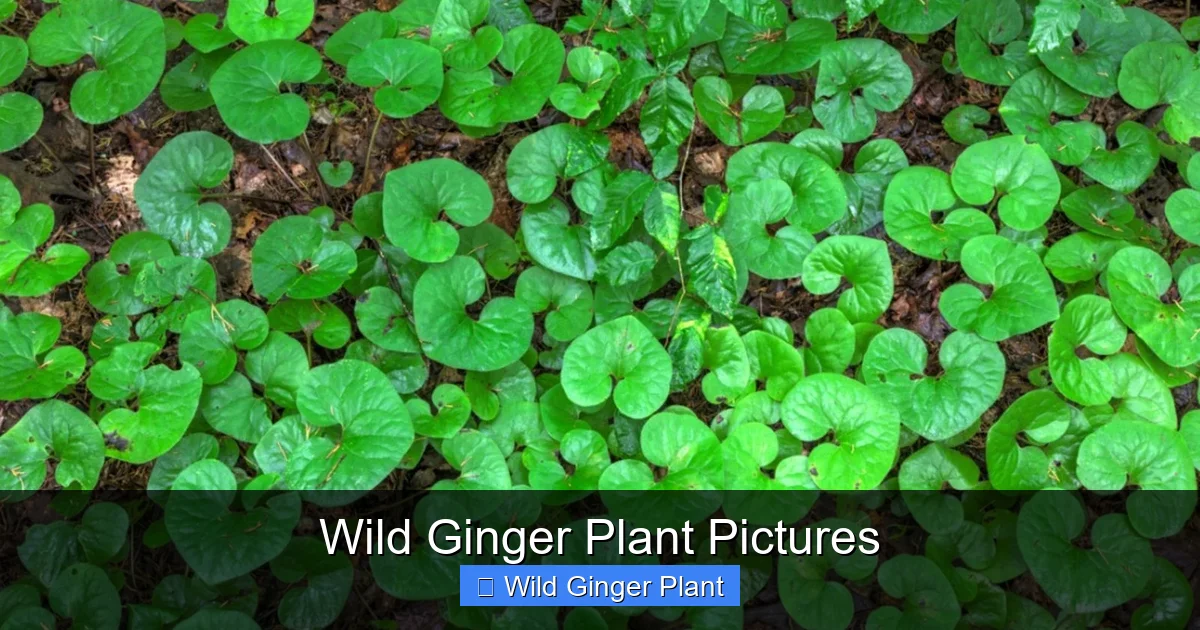
In early spring, often before the tree canopy leafs out, wild ginger shoots push through the duff. Each rhizome tip produces two leaves that start tightly furled, resembling tiny green cigars. As they unfurl, the heart shape becomes apparent. The leaves at this stage are soft, slightly hairy, and a vibrant fresh green.
Visual guide about Wild Ginger Plant Pictures
Image source: directnativeplants.com
This is also when the flowers appear, typically April through May depending on your latitude. Look for them at the base of the leaf stems, nestled right on the soil surface. They’re usually solitary, though occasionally a vigorous plant might produce two. The flower consists of three fused sepals forming a cup or jug shape, ranging from deep maroon to brownish-purple, sometimes with a greenish tinge. No petals exist; the sepals do all the work.
Pro tip for photographers: Bring a small hand mirror or use your phone’s selfie camera to peek under leaves without disturbing the plant. A kneeling pad saves your knees, and a diffused flash or reflector helps illuminate these shadow-dwelling blooms.
Late Spring to Summer: Full Foliage Glory
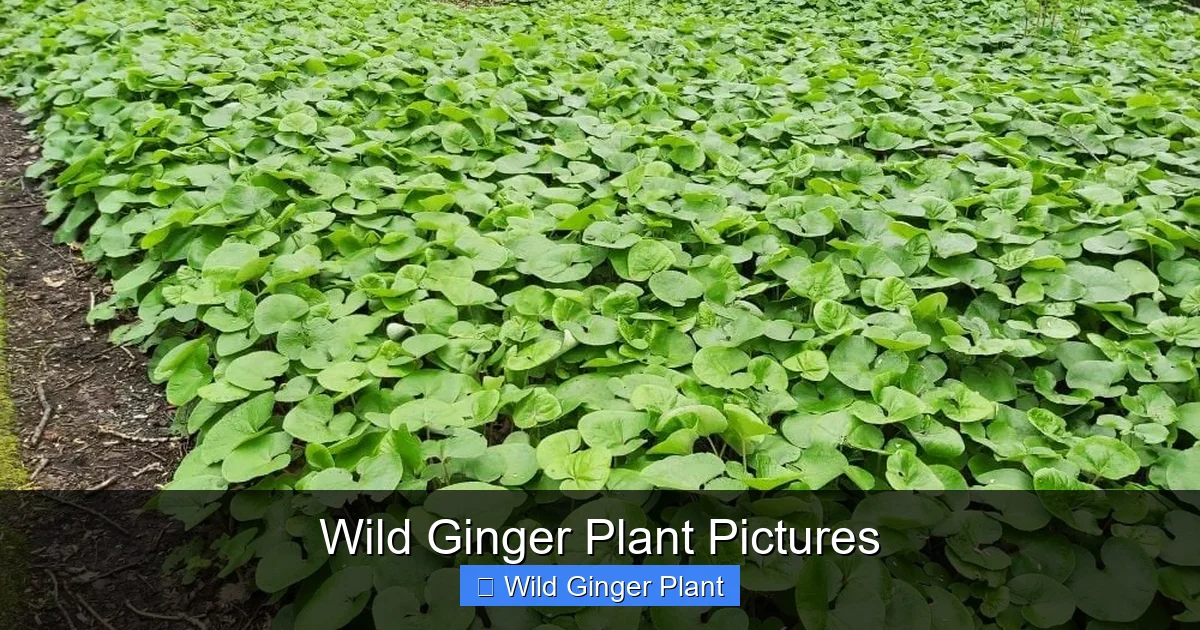
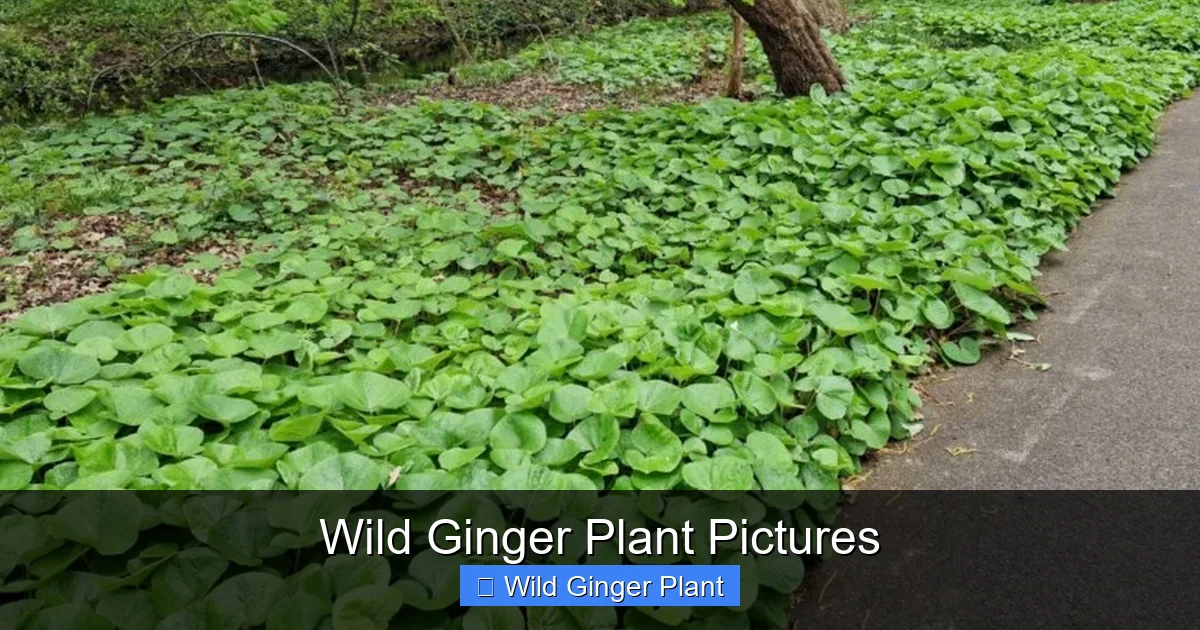
By late spring, the flowers have faded and the leaves reach full size, typically 4-8 inches wide. They form a dense, overlapping canopy that effectively shades out competing plants. The leaf texture is distinctive: slightly rough to the touch (scabrous) with fine hairs, especially on the underside and along veins. The leaf margins are entire (smooth, not toothed).
The leaves grow in pairs from each rhizome node, creating a symmetrical appearance. In ideal conditions—deep shade, rich soil, consistent moisture—the foliage creates a luxurious carpet 6-12 inches tall. Colonies can spread several feet across over time, with individual plants connected by the underground rhizomes.
Fall and Winter: Dormancy and Persistence
Unlike many spring ephemerals that vanish by summer, wild ginger leaves persist throughout the growing season. They don’t die back until hard frosts arrive. In fall, the leaves often develop attractive yellow tones before browning. The dead leaves frequently remain in place through winter, providing natural mulch for the colony.
If you gently brush away the leaf litter in late winter, you can often see the plump, pointed buds at the rhizome tips, waiting for spring warmth. These buds are next year’s leaves and flowers, already formed and ready to go. It’s a reminder that this plant is always preparing, always patient.
Where to Find Wild Ginger: Habitat and Range
Natural Distribution
Asarum canadense ranges across eastern North America’s deciduous forests. It’s common in the Great Lakes region, New England, the Appalachians, and the upper Midwest. Its southern limit follows the Appalachian Mountains into northern Georgia and Alabama. It’s largely absent from the coastal plain and the deep South’s hot, humid lowlands.
Visual guide about Wild Ginger Plant Pictures
Image source: epicgardening.com
Within this range, it’s not everywhere. Wild ginger has specific habitat requirements. You’ll find it in rich, mesic (moderately moist) deciduous woods, often on north-facing slopes, in ravines, along streams, and in bottomland forests. It prefers calcareous (limestone-influenced) or neutral soils but tolerates slightly acidic conditions. It’s an indicator species for high-quality, undisturbed woodlands.
Microhabitat Preferences
Walk through a promising woodland and you’ll notice wild ginger grows in patches, not uniformly. It favors spots where:
- Leaf litter accumulates but doesn’t become waterlogged
- Spring sunlight reaches the forest floor before canopy closure
- Soil is rich in organic matter from decades of leaf decomposition
- Moisture remains consistent through the growing season
- Competition from aggressive plants is minimal
You’ll often find it growing alongside other conservative woodland species: bloodroot (Sanguinaria canadensis), Dutchman’s breeches (Dicentra cucullaria), trilliums (Trillium spp.), blue cohosh (Caulophyllum thalictroides), and various ferns. These plant communities suggest a healthy, mature forest ecosystem.
When You Won’t Find It
Wild ginger avoids certain conditions entirely. You won’t find it in:
- Coniferous plantations (too acidic, too dark year-round)
- Heavily grazed woodlands (deer and livestock eat it)
- Recently logged areas (soil disturbance destroys rhizomes)
- Floodplains with standing water (rhizomes rot)
- Dry, sandy ridges (insufficient moisture)
- Heavily invaded areas (garlic mustard, Japanese stiltgrass outcompete it)
If you’re searching for wild ginger plant pictures in the wild, focus your efforts on mature, mesic hardwood forests with diverse spring flora. State parks, nature preserves, and national forests often harbor healthy populations. Always check regulations before photographing or collecting on public land.
Growing Wild Ginger in Your Garden
Site Selection: Mimic the Woodland
Success with wild ginger hinges on replicating its native conditions. Choose a site with:
- Full to deep shade: Dappled morning sun is acceptable; afternoon sun will scorch leaves.
- Rich, moisture-retentive soil: Amend with copious amounts of leaf mold, compost, or well-rotted manure.
- Good drainage: The soil should feel like a wrung-out sponge—moist but never soggy.
- Neutral to slightly alkaline pH: Test your soil; add lime if strongly acidic.
- Protection from wind: Which dries the soil and damages the broad leaves.
Ideal locations include the north side of buildings, under mature deciduous trees, in woodland garden beds, or shaded north-facing slopes. Avoid planting under shallow-rooted trees like maples or beeches unless you’re prepared to water frequently, as these trees outcompete wild ginger for moisture.
Planting Techniques
Spring is the optimal planting time, just as new growth emerges. Fall planting works too, provided roots establish before ground freeze. Here’s the process:
- Prepare the bed by removing weeds and incorporating 3-4 inches of organic matter into the top 8-10 inches of soil.
- Space plants 12-18 inches apart for a groundcover effect; they’ll fill in over 3-5 years.
- Plant at the same depth they grew in the container, or with rhizomes just below the soil surface.
- Water thoroughly after planting and apply 2 inches of shredded leaf mulch.
- Keep consistently moist through the first growing season.
If you’re starting with bare-root divisions (common from native plant nurseries), soak the rhizomes in water for an hour before planting. Trim any broken roots. Plant horizontally with the growing buds pointing up, barely covered with soil.
Ongoing Care: Less Is More
Once established, wild ginger is remarkably self-sufficient. The dense foliage suppresses weeds naturally. Fallen leaves provide perfect mulch and nutrients—don’t rake them out! Supplemental watering is only needed during extended droughts. No fertilization is required in properly prepared soil; excess nitrogen produces lush but weak growth.
The main maintenance task is managing tree seedlings that may sprout in the bed. Pull them while small. Also watch for slugs in wet springs; they occasionally nibble leaves but rarely cause serious damage. Deer typically avoid wild ginger, making it valuable in browsed landscapes.
Companion Planting for Woodland Gardens
Wild ginger shines as a groundcover beneath taller shade perennials. Excellent companions include:
- Ferns: Christmas fern, maidenhair fern, lady fern—contrasting textures
- Spring ephemerals: Virginia bluebells, trilliums, bloodroot—bloom before ginger fills in
- Sedges: Pennsylvania sedge (Carex pensylvanica)—grassy texture contrast
- Wild geranium: Geranium maculatum—pink flowers above ginger foliage
- Solomon’s seal: Polygonatum biflorum—arching stems rise through ginger carpet
- Foamflower: Tiarella cordifolia—similar habit, complementary flowers
Avoid aggressive spreaders like English ivy, periwinkle (Vinca), or goutweed (Aegopodium) which will smother wild ginger. Also avoid planting near black walnut trees; while wild ginger tolerates juglone better than many plants, it still struggles.
Wild Ginger Plant Pictures: What to Photograph and How
Essential Shots for Identification
If you’re documenting wild ginger for identification purposes—whether for iNaturalist, a field guide contribution, or your own records—capture these key features:
Whole plant habit: Show the paired leaves emerging from the ground, the colony formation, and the general growth pattern. Include a scale reference (hand, coin, ruler).
Leaf details: Photograph the upper surface (showing venation and texture), lower surface (showing hairiness), leaf base (showing the deep heart-shaped lobes), and leaf margin (smooth). A backlit leaf reveals beautiful venation patterns.
Flower close-ups: This is the money shot. Gently move leaf litter aside (replace it afterward!). Photograph the flower from the side showing the jug shape, from above showing the three-lobed opening, and a cut-away or dissected view showing the interior stamens and pistil. Note the flower color variations in your population.
Rhizome (if ethically exposed): Only photograph rhizomes if the plant is already disturbed (trail erosion, fallen tree) or with proper permits. Show the creeping habit, nodes with leaf scars, and root attachment points. The rhizome is typically 1/4 to 1/2 inch diameter, brown externally, white and aromatic internally.
Habitat context: Wide shots showing the forest type, companion plants, slope aspect, and soil conditions help others understand where this species thrives.
Photography Tips for Forest Floor Subjects
Photographing wild ginger presents unique challenges: low light, cluttered backgrounds, and ground-level subjects. Here’s what works:
- Use a tripod with a center column that inverts or a beanbag to get your camera down low. Your back will thank you.
- Diffused light is your friend. Bright overcast days are ideal. Sunny days create harsh contrast; use a diffuser (even a white umbrella) to soften light.
- Watch your background. Position yourself so the background is distant forest floor, not distracting sticks or bright sky patches. A wide aperture (f/2.8-f/4) blurs the background nicely.
- Focus stacking is invaluable for flower close-ups. Take multiple shots at different focus points and combine them in software for full depth of field.
- Carry a small LED panel or ring light for fill light in deep shade. Keep it subtle—you want natural-looking results.
- Shoot in RAW for maximum flexibility with white balance and exposure in the green-heavy forest environment.
Seasonal Photo Series
Consider documenting a single colony through the year. The transformation is remarkable:
- Early April: Furled leaves emerging, flowers at peak
- Early May: Leaves expanding, flowers fading
- June: Full foliage, dense canopy
- August: Mature leaves, possible seed capsules
- October: Yellowing foliage, autumn colors
- January: Dormant buds visible at soil surface
This type of phenological documentation is valuable for climate change research and makes a beautiful portfolio piece.
Ethical Foraging, Uses, and Conservation
Historical and Cultural Significance
Wild ginger has a rich ethnobotanical history. Numerous Indigenous nations across its range used the rhizomes medicinally and as a flavoring. The Cherokee, Iroquois, Ojibwe, Menominee, and many others prepared decoctions for colds, fevers, digestive complaints, and as a general tonic. It was also used as a seasoning for meats and in pemmican.
Early European settlers adopted these uses, and wild ginger appeared in the US Pharmacopeia from 1820 to 1882 as a stimulant and carminative. The common name “colic root” reflects its use for digestive issues. Colonists also used it as a ginger substitute in cooking, hence the name.
Modern Safety Concerns
Here’s where modern science intersects with traditional knowledge. Wild ginger contains aristolochic acid, particularly in the rhizomes. This compound is nephrotoxic (kidney-damaging) and carcinogenic. The FDA has warned against consuming products containing aristolochic acid since 2001.
Traditional preparation methods (prolonged boiling, specific harvesting times, combination with other herbs) may have reduced toxicity, but we lack scientific validation. Modern herbalists generally recommend external use only (poultices for wounds, infused oils for muscle pain) or avoiding it entirely given safer alternatives.
If you encounter wild ginger in foraging literature or older herbals recommending internal use, please understand the current safety consensus. The risk is real, cumulative, and not worth taking when true ginger and countless other safe flavorings exist.
Conservation Status and Threats
Globally, Asarum canadense is ranked G5 (secure). However, it’s listed as threatened, endangered, or of special concern in several states at its range edges: Maine, New Hampshire, Rhode Island, and parts of the Midwest. Even where not legally protected, local populations face threats:
- Habitat loss: Forest fragmentation, development, conversion to agriculture
- Invasive species: Garlic mustard (Alliaria petiolata) releases allelopathic chemicals that inhibit wild ginger’s mycorrhizal fungi
- Over-collection: For horticultural trade or misguided foraging
- Deer overbrowse: In areas with excessive deer populations
- Climate change: Altered precipitation patterns, earlier springs disrupting pollinator synchronization
Ethical Guidelines for Interaction
If you’re photographing, studying, or considering garden propagation:
- Never dig wild plants for your garden. Purchase from reputable native plant nurseries that propagate ethically.
- Stay on trails in natural areas. Trampling compacts soil and destroys rhizomes.
- Don’t collect flowers or leaves for pressing, crafts, or “just a little taste.”
- Share location data cautiously. Poachers monitor iNaturalist and social media for rare plant locations. Obscure coordinates for sensitive populations.
- Support conservation by donating to land trusts protecting mesic forests, volunteering for invasive species removal, and advocating for deer management.
Propagation: Growing Your Own Patch
Division: The Reliable Method
Division is by far the most successful propagation method for gardeners. In early spring, just as buds swell but before leaves unfurl:
- Dig up a mature clump (3+ years old) with a garden fork, minimizing root damage.
- Gently wash or shake off soil to see rhizome structure.
- Using a clean, sharp knife, cut rhizome sections 2-3 inches long, each with at least one healthy bud and some roots.
- Replant immediately at the same depth, water well, and mulch.
- Keep shaded and moist until established.
Each division typically produces a flowering plant within 1-2 years. Divide every 4-5 years to maintain vigor and expand your planting.
Seed: The Patient Approach
Growing from seed is rewarding but slow. Wild ginger seeds have double dormancy: they need warm stratification followed by cold stratification. In nature, seeds ripen in summer, experience warm fall soil, then winter cold, germinating the second spring.
To mimic this:
- Collect seeds when capsules split open in mid-late summer. They’re elaiosome-bearing (fleshy appendage) for ant dispersal.
- Sow immediately in pots with rich, moist seed mix. Cover lightly.
- Keep at 70-75°F for 60-90 days (warm stratification).
- Move to 35-40°F for 90-120 days (cold stratification). A refrigerator works.
- Move to 60-65°F for germination, which may take another 30-60 days.
- Seedlings grow slowly; transplant to individual pots after first true leaves.
- Expect 3-4 years to flowering size.
Ants often disperse seeds in garden settings, creating delightful surprise colonies. Don’t mulch too heavily if you want this natural propagation.
Rhizome Cuttings: For the Experimental
Some growers experiment with rhizome cuttings in late winter. Cut 1-inch sections of dormant rhizome, dust with rooting hormone, lay horizontally in moist sand-peat mix, barely covered. Keep at 50-55°F in darkness until shoots appear, then move to light. Success rates vary widely; division remains more reliable.
Troubleshooting Common Issues
Leaves Yellowing or Browning
Several causes exist:
- Too much sun: Leaves bleach, then brown at edges. Increase shade.
- Drought stress: Leaves wilt, then crisp from margins inward. Water deeply.
- Nutrient deficiency: Uniform yellowing suggests nitrogen lack in very poor soil. Top-dress with compost.
- Natural senescence: Fall yellowing is normal. Spring yellowing is not.
Poor Spread or Decline
If your patch isn’t expanding or seems to be shrinking:
- Tree root competition: Maples, beeches, and conifers outcompete for water. Consider a root barrier or more frequent watering.
- Soil pH too low: Test and amend with lime if below 6.0.
- Vole damage: These rodents eat rhizomes. Hardware cloth barriers help.
- Fungal issues: Poor drainage causes root rot. Improve drainage or relocate.
Pests and Diseases
Wild ginger is remarkably pest-free. Occasional issues include:
- Slugs/snails: Ragged holes in leaves. Beer traps, diatomaceous earth, or hand-picking at night.
- Leaf miners: Squiggly trails in leaves. Usually cosmetic; remove affected leaves.
- Rust fungi: Orange pustules on leaf undersides. Rare; improve air circulation.
- Viral infections: Mottled, distorted growth. Remove and destroy affected plants.
Wild Ginger in the Landscape: Design Ideas
Woodland Garden Carpets
The classic use: mass planting under deciduous trees. Space 12 inches apart in staggered rows. In 3-4 years, you’ll have a seamless green carpet that suppresses weeds, retains soil moisture, and provides habitat for beneficial insects. The spring flowers, though hidden, delight those who know to look.
Shade Border Edging
Plant a single row along the front of a shaded border. The bold foliage texture contrasts beautifully with fine-textured ferns and grassy sedges behind it. The low height (6-12 inches) keeps sightlines open.
Rain Garden Edges
Wild ginger tolerates periodic wetness (not standing water) making it suitable for the upper edges of rain gardens in shaded locations. Its dense roots stabilize soil and filter runoff.
Container Culture
Yes, you can grow wild ginger in pots! Use a wide, shallow container (rhizomes spread horizontally). Rich potting mix with extra compost. Keep in full shade, water consistently. Overwinter in an unheated garage or buried in the ground. Repot/divide every 2-3 years.
Restoration Projects
If you’re restoring a degraded woodland, wild ginger is an excellent candidate for reintroduction once invasive species are controlled and canopy closure provides sufficient shade. Plant in clusters of 5-7 divisions to establish genetic diversity and facilitate pollination.
Conclusion: A Plant Worth Knowing
Wild ginger represents everything I love about native plants: subtle beauty, ecological importance, fascinating biology, and deep cultural connections. Those heart-shaped leaves carpeting the forest floor aren’t just pretty—they’re feeding pollinators, stabilizing soil, indicating ecosystem health, and connecting us to centuries of human-plant relationships.
Whether you’re crouching in a spring woodland to photograph a hidden maroon flower, planting divisions in your shade garden, or simply learning to recognize this species on your hikes, you’re participating in a long tradition of attention and care. In a world where many native plants face mounting threats, that attention matters.
Next time you’re in a rich deciduous woods in April or May, slow down. Look down. Move a few leaves gently aside. You might just discover wild ginger’s secret flowers, waiting patiently at ground level for the few who know where to look. And when you do, take a picture—you’ll want to remember the moment you found nature’s hidden treasure.
Remember: Photograph freely, tread lightly, buy nursery-propagated plants, and share your knowledge. That’s how we ensure wild ginger continues carpeting our forest floors for generations to come.
Frequently Asked Questions
When is the best time to plant wild ginger?
Early spring, just as new growth emerges, is ideal for planting wild ginger. Fall planting also works if done 4-6 weeks before ground freeze, allowing roots to establish. Avoid summer planting during hot, dry periods.
Does wild ginger flower every year?
Yes, mature wild ginger plants typically flower annually in early spring (April-May). However, the flowers are easily missed since they grow at ground level beneath leaf litter. Younger plants may not flower for their first 2-3 years.
Is wild ginger invasive?
No, wild ginger is not invasive. It’s a native North American species that spreads slowly via rhizomes, forming well-behaved colonies. It does not aggressively outcompete other native plants or escape cultivation into unwanted areas.
What animals eat wild ginger?
Deer generally avoid wild ginger, making it valuable in browsed landscapes. The flowers are pollinated by small flies and beetles. Ants disperse seeds. Slugs occasionally nibble leaves but rarely cause significant damage. Voles may eat rhizomes in winter.
Can wild ginger grow in full sun?
No, wild ginger cannot tolerate full sun. It requires full to deep shade, mimicking its native deciduous forest floor habitat. Even partial afternoon sun will scorch the leaves. Dappled morning sun is the maximum light exposure it can handle.
How long does wild ginger live?
Individual wild ginger plants are long-lived perennials, with rhizomes persisting for decades under favorable conditions. Colonies can expand slowly for many years. In gardens, dividing clumps every 4-5 years rejuvenates growth and maintains vigor indefinitely.