Wild Ginger Plant Near Me
Wild ginger plant near me searches reveal a fascinating native groundcover thriving in shaded woodlands across North America. This low-growing perennial offers unique heart-shaped leaves and hidden flowers, making it a rewarding find for nature enthusiasts and foragers alike.
Have you ever wandered through a shaded forest and wondered about those low-growing plants with heart-shaped leaves carpeting the ground? Chances are you have encountered wild ginger without even knowing it. This unassuming native plant has a rich history and some surprising secrets hiding right at your feet.
When people search for wild ginger plant near me, they are often looking for a connection to the natural world right in their backyard. This guide will walk you through everything you need to know about finding, identifying, and appreciating this wonderful woodland native. Whether you are a curious hiker, a native plant gardener, or someone interested in traditional plant uses, you are in the right place.
Key Takeaways
- Native range: Wild ginger grows throughout eastern and central North America in rich, moist woodlands.
- Identification features: Look for heart-shaped leaves, hairy stems, and distinctive jug-shaped flowers hiding at ground level.
- Best search times: Spring through early summer offers the easiest identification with fresh foliage and blooms.
- Habitat clues: Search north-facing slopes, ravines, and stream banks with rich, well-drained soil.
- Ethical foraging: Harvest sparingly from abundant populations, never taking more than 10 percent of a patch.
- Look-alike awareness: Distinguish from similar plants like violets and snakeroot by checking for the spicy ginger aroma.
- Cultivation option: Consider growing your own from reputable native plant nurseries to protect wild populations.
Quick Answers to Common Questions
Is wild ginger related to the ginger root I buy at the store?
No, wild ginger (Asarum canadense) is not botanically related to culinary ginger (Zingiber officinale). They belong to different plant families. The name comes from the similar spicy aroma of the rhizomes.
When is the best time to search for wild ginger plant near me?
Early spring (April through May) is the best time. The foliage is fresh, the distinctive flowers are blooming (though hidden at ground level), and the plant is easy to spot before taller vegetation grows up.
Can I eat wild ginger safely?
Wild ginger contains aristolochic acid, which can cause kidney damage and cancer with prolonged use. The FDA advises against consuming it. Occasional culinary use of very small amounts is considered lower risk by some herbalists, but daily or medicinal use is not recommended.
How do I identify wild ginger versus look-alikes like violets?
Wild ginger has smooth leaf margins, hairy leaf stems, and a distinct spicy ginger scent when crushed. Violets have toothed leaf margins, smooth stems, and a floral scent. The hidden jug-shaped flowers of wild ginger are also unique.
Where can I buy wild ginger plants for my garden?
Purchase from reputable native plant nurseries that propagate their own stock. Check your state native plant society sales, botanical garden plant sales, and local conservation district sales. Never dig plants from the wild.
📑 Table of Contents
- Understanding What Wild Ginger Actually Is
- Where to Find Wild Ginger Plant Near Me
- Identification Guide: Confidently Recognizing Wild Ginger
- Ethical Foraging and Sustainable Practices
- Growing Your Own Wild Ginger Patch
- Wild Ginger in the Ecosystem: More Than Just a Plant
- Troubleshooting Common Search Challenges
- Conclusion: Your Wild Ginger Journey Starts Now
Understanding What Wild Ginger Actually Is
Not Related to Culinary Ginger
First things first. Despite the name, wild ginger (Asarum canadense) is not related to the ginger you buy at the grocery store (Zingiber officinale). They belong to completely different plant families. The common name comes from the spicy, ginger-like aroma released when you crush the roots or stems. Early European settlers gave it this name because the scent reminded them of the familiar spice from their homeland.
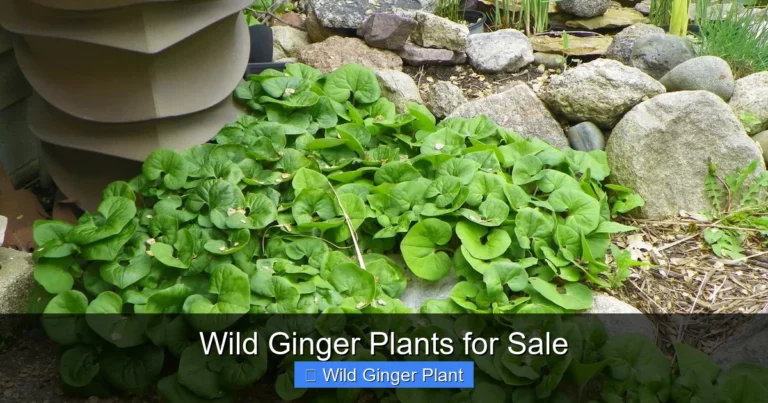
Wild ginger belongs to the birthwort family (Aristolochiaceae). It is a low-growing, colony-forming perennial that spreads slowly by underground rhizomes. The plant typically reaches only six to twelve inches in height. It creates a beautiful, dense groundcover in the right conditions.
Two Main Species in North America
When you search for wild ginger plant near me in eastern and central North America, you are most likely looking for Asarum canadense, commonly called Canadian wild ginger or eastern wild ginger. This species ranges from Manitoba to New Brunswick, south to Georgia and Louisiana.
On the West Coast, a different species dominates. Asarum caudatum, known as western wild ginger or long-tailed wild ginger, grows from British Columbia to California and east to Montana. It has similar growth habits but features longer, more dramatic “tails” on its flowers.
Unique Flower Structure
One of the most fascinating aspects of wild ginger is its flower. Unlike showy garden blooms, these flowers are hidden at ground level, often buried under leaf litter. They are shaped like little jugs or bells, usually reddish-brown to purplish in color. The three sepals fuse into a cup with three pointed tips that flare outward.
This unusual placement serves a purpose. The flowers are pollinated by small flies and beetles that crawl around on the forest floor. The color and scent mimic decaying matter, attracting these ground-dwelling insects. It is a clever evolutionary strategy that many people never witness because the flowers are so well concealed.
Where to Find Wild Ginger Plant Near Me
Preferred Habitat Conditions
Understanding habitat preferences is the key to a successful search. Wild ginger thrives in rich, moist, deciduous woodlands. It loves deep shade but can tolerate dappled sunlight, especially in spring before the tree canopy fully leafs out. The soil should be well-drained but consistently moist, rich in organic matter, and slightly acidic to neutral.
Look for it on north-facing slopes, in ravines, along stream banks, and in bottomland forests. It often grows alongside other shade-loving natives like bloodroot, trillium, jack-in-the-pulpit, and various ferns. If you see a healthy population of spring ephemerals, wild ginger is likely nearby.
Geographic Distribution Details
The range of Asarum canadense covers a vast area. In the United States, it is found in most states east of the Mississippi River, plus Minnesota, Iowa, Missouri, Arkansas, Louisiana, and parts of the Great Plains. In Canada, it grows from southern Manitoba eastward through Ontario, Quebec, New Brunswick, and Nova Scotia.
Asarum caudatum occupies the Pacific Northwest. Its range extends from southwestern British Columbia south through western Washington and Oregon into northwestern California. It also appears in northern Idaho and western Montana. There are also several other Asarum species with more restricted ranges in the southeastern US and the Southwest.
Using Online Resources to Locate Populations
Modern technology makes finding wild ginger plant near me easier than ever. Start with the USDA Plants Database, which provides county-level distribution maps for both species. The Biota of North America Program (BONAP) offers even more detailed maps. iNaturalist is fantastic for recent, verified observations with exact locations and photos.
State natural heritage programs often maintain databases of rare plant locations, though sensitive species data may be restricted. Local native plant societies, botanical gardens, and university herbaria are goldmines of local knowledge. Many host field trips specifically for wildflower identification. Do not overlook county park systems and state parks. Naturalists on staff often know exactly where the best patches grow.
Seasonal Timing for Best Results
Timing your search dramatically improves success. Early spring (April to May in most regions) is ideal. The leaves emerge early, often before the tree canopy closes. The distinctive flowers bloom in April and May, though you have to get down on your hands and knees to find them. Summer foliage remains attractive but blends in more with other vegetation.
Fall offers another window. The leaves often persist until hard frost, turning a lovely yellow before dying back. Winter reveals nothing above ground. The plant goes completely dormant, surviving as rhizomes beneath the soil. If you are searching in winter, you are out of luck for visual identification.
Identification Guide: Confidently Recognizing Wild Ginger
Leaf Characteristics
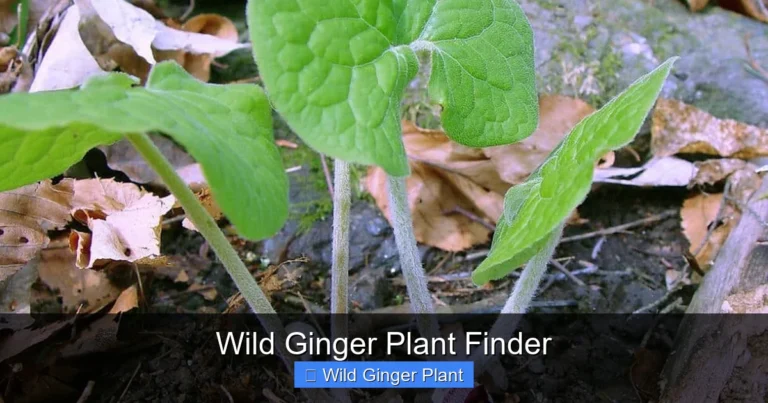
The leaves are your primary identification feature for most of the growing season. They are basal, meaning they arise directly from the rhizome at ground level. Each leaf sits on a long, hairy petiole (leaf stalk) that can be six to twelve inches long. The blade is heart-shaped (cordate) to kidney-shaped (reniform), typically three to six inches wide.
The leaf surface is soft and velvety to the touch, covered in fine hairs. The color is a rich, deep green. Veins are prominent and palmate, radiating from the base like fingers on a hand. The leaf margin is entire (smooth, not toothed). When crushed, the leaves release a faint spicy aroma, though the roots are much stronger.
Flower Details for Positive ID
If you are lucky enough to find the flowers, identification becomes certain. Gently pull back leaf litter at the base of the plant. The solitary flower sits on a short, curved pedicel (flower stalk) right at ground level. It has no petals. Instead, three sepals fuse into a bell-shaped tube (the calyx) with three triangular lobes that spread or curve backward.
The color ranges from brownish-purple to deep maroon. The interior often has a whitish or pale yellow pattern. Asarum canadense flowers are roughly three-quarters to one inch long. Asarum caudatum flowers are similar but have dramatically elongated, tapering sepal tips (the “tails”) that can extend an inch or more beyond the tube.
Root and Rhizome Features
The rhizomes are the source of the strong ginger scent. They are shallow, creeping horizontally just below the soil surface. They are typically half an inch to an inch thick, segmented, and covered in fine roots. When scratched or broken, they release an intense, spicy, ginger-like fragrance. The interior is whitish to pale yellow.
Important note: Do not dig up plants just to check the roots. This kills the plant. Only examine roots of plants already disturbed by erosion, trail maintenance, or fallen trees. The scent test works on a small piece of leaf stem too, though it is much subtler.
Common Look-Alikes and How to Differentiate
Several plants share the woodland habitat and can confuse beginners. Violets (Viola spp.) have heart-shaped leaves but the leaf margins are usually toothed (crenate), not smooth. Violet flowers are showy and held above the leaves on distinct stalks. The scent is floral, not spicy.
Snakeroot (Ageratina altissima, formerly Eupatorium rugosum) has opposite leaves, not basal. The leaves are more triangular with toothed margins. It grows much taller (two to four feet) and blooms in late summer with white flower clusters.
Mayapple (Podophyllum peltatum) has deeply lobed, umbrella-like leaves, not heart-shaped. It grows in colonies but the leaves are distinctly different. Canada mayflower (Maianthemum canadense) has two or three heart-shaped leaves per stem but they are smaller, alternate on a short stem, and lack the hairy texture.
The ultimate test for wild ginger is the scent. Crush a small piece of leaf stem or rhizome. That unmistakable spicy, ginger-citrus aroma confirms it. None of the look-alikes produce this scent.
Ethical Foraging and Sustainable Practices
Why Conservation Matters
Wild ginger grows slowly. A colony expands only inches per year through rhizome growth. Seed dispersal is limited, relying on ants (a process called myrmecochory). The seeds have a fatty appendage (elaiosome) that attracts ants. The ants carry seeds to their nests, eat the elaiosome, and discard the seed in their nutrient-rich waste piles. This is a beautiful but slow process.
Overharvesting can devastate local populations that took decades to establish. Many states list wild ginger as a species of concern, though not yet endangered. Habitat loss from development, invasive species (especially garlic mustard and earthworms), and deer browse add pressure. When you search for wild ginger plant near me, remember you are visiting a fragile community.
Guidelines for Responsible Harvest
If you must harvest, follow these strict guidelines. First, positively identify the plant. Second, ensure the population is large and healthy. Look for hundreds of plants covering a wide area. Third, harvest only what you need, never more than ten percent of the visible plants in a patch. Fourth, take only leaves or a small piece of rhizome from the edge of a colony, leaving the center intact.
Use a sharp knife or scissors to cleanly cut leaves. If taking rhizome, use a trowel to carefully expose a small section at the colony edge. Cut a piece no longer than your finger. Rebury the remaining rhizome immediately. Fill the hole and replace leaf litter exactly as you found it. The plant should recover.
Never harvest from parks, preserves, or public lands without explicit permission. Many prohibit all plant collection. Private land requires landowner permission. Better yet, grow your own. It is easy, rewarding, and eliminates any impact on wild populations.
Traditional and Modern Uses
Indigenous peoples across North America used wild ginger extensively. The rhizomes were used as a seasoning, a tea for colds and fevers, a poultice for wounds, and a remedy for digestive issues. The Cherokee, Iroquois, Ojibwe, and many other nations had specific preparations. Early European settlers adopted many of these uses.
Modern herbalists sometimes use wild ginger as a stimulating diaphoretic (promotes sweating) for colds, or as a digestive aid. However, important safety warning: Wild ginger contains aristolochic acid, a compound linked to kidney damage and cancer with prolonged or high-dose use. The FDA warns against consuming plants in the Aristolochiaceae family. Occasional culinary use of small amounts is generally considered low risk by some herbalists, but daily or medicinal use is not recommended.
Many foragers today use the leaves as a mild seasoning in soups or stews, removing them before serving. The rhizome can flavor syrups or vinegars. The flavor is more complex than commercial ginger, with earthy, citrus, and floral notes alongside the spice. Always start with tiny amounts to test your tolerance.
Growing Your Own Wild Ginger Patch
Why Cultivation Beats Wild Harvesting
Growing wild ginger at home solves almost every problem. You get a sustainable, ethical supply right outside your door. You protect wild populations. You learn the plant’s life cycle intimately. And you create habitat for native pollinators and other woodland creatures. It is a win-win-win.
Wild ginger is surprisingly easy to cultivate in the right spot. It asks for what it gets in nature: shade, moisture, and rich soil. If you have a shaded yard, a north-facing bed, or a woodland edge, you likely have a perfect spot. Even a large container on a shaded porch can work.
Sourcing Plants Ethically
Never dig plants from the wild for your garden. This is unethical and often illegal. Instead, buy from reputable native plant nurseries. Look for nurseries that propagate their own plants from seed or division, not wild-collected stock. Many state native plant societies hold annual sales. Botanical gardens often sell propagated natives.
When you search for wild ginger plant near me with the intent to buy, add “nursery” or “native plant sale” to your search terms. Ask the seller about their propagation methods. A good nursery will happily tell you their plants are nursery-propagated. Avoid any seller who cannot verify this.
Planting and Establishment
Plant in spring or fall. Spring planting gives the roots time to establish before winter. Fall planting allows root growth during cool, moist months. Space plants twelve to eighteen inches apart. They will slowly fill in. Prepare the bed by incorporating plenty of leaf compost or well-rotted wood chips. Mimic the forest floor.
Plant at the same depth they grew in the pot. The rhizome should be just below the surface, barely covered. Water well after planting. Mulch with two to three inches of shredded leaves. This retains moisture, suppresses weeds, and feeds the soil as it breaks down. Water weekly during dry spells the first year.
Long-Term Care and Division
Once established, wild ginger is low maintenance. No fertilizer needed. The leaf mulch provides everything. Keep the area weed-free, especially of invasive species like garlic mustard. Hand-pull weeds carefully to avoid damaging the shallow rhizomes.
Every five to ten years, the center of a clump may die out, forming a ring. This is the perfect time to divide. Dig the clump in early spring or fall. Tease apart the rhizomes. Replant vigorous sections from the outer edges. Discard the woody center. Share divisions with friends or expand your own patch.
Ants will likely disperse seeds to new spots in your garden. You may find volunteer seedlings. Let them grow where they land, or move them to preferred locations. This is the plant doing what it evolved to do. Enjoy the process.
Wild Ginger in the Ecosystem: More Than Just a Plant
Pollination Partnerships
The hidden flowers of wild ginger tell a story of specialized pollination. The primary pollinators are small flies (especially fungus gnats and phorid flies) and some beetles. These insects are attracted to the flower’s color, which mimics fungal growth or decaying matter, and its musty scent.
The insects crawl into the flower tube seeking a place to lay eggs or feed. The interior of the tube is lined with downward-pointing hairs that allow easy entry but make exit difficult. The insect becomes temporarily trapped. As it struggles, it picks up pollen from the mature anthers. Eventually, the hairs wither, and the insect escapes, carrying pollen to the next flower.
This is not a mutually beneficial relationship. The plant deceives the insects, offering no nectar or reward. The insects waste time and energy. But it works for the plant. Seed set is typically high in healthy populations. This deception strategy is common in the Aristolochiaceae family.
Ant Partnerships for Seed Dispersal
After pollination, the flower develops into a fleshy capsule that splits open when ripe. Inside are numerous seeds, each with a fatty, protein-rich appendage called an elaiosome. This is a bribe for ants.
Ants (particularly Aphaenogaster species) find the seeds, carry them back to their nests, and feed the elaiosome to their larvae. The seed itself is discarded in the nest’s waste chamber or outside the nest. These sites are perfect for germination: protected, nutrient-rich, and with reduced competition.
This mutualism, myrmecochory, is common in spring woodland herbs. It explains why wild ginger spreads so slowly. The ants move seeds only short distances, usually less than two meters. Long-distance dispersal is rare. This makes the plant vulnerable to habitat fragmentation. Populations cannot easily recolonize isolated woodlots.
Wildlife Value Beyond Pollinators
Wild ginger provides more than nectar and seeds. The dense foliage creates microhabitat for amphibians, especially salamanders and small frogs. The cool, moist environment under the leaves is perfect for them. Insects and spiders hunt and shelter there.
Deer occasionally browse the foliage, though it is not a preferred food. The aromatic compounds likely deter heavy browsing. In areas with extreme deer pressure, they may eat it anyway. Rabbits and woodchucks may nibble young leaves. The rhizomes are eaten by mice, voles, and chipmunks, especially in winter.
The plant also plays a role in soil stabilization. The network of shallow rhizomes and fibrous roots holds the forest floor in place on slopes. The leaf litter trapped by the foliage builds soil organic matter. It is a small but important player in the woodland community.
Troubleshooting Common Search Challenges
“I Can’t Find Any Near Me”
If your search for wild ginger plant near me comes up empty, consider these factors. You may be outside the natural range. Check the USDA map carefully. You may be looking in the wrong habitat. Open woods, pine plantations, young forests, and disturbed areas rarely support it. It needs mature, rich, mesic forest.
Timing could be off. In late summer, the leaves can be tattered and hidden by taller vegetation. In winter, nothing shows. Go in April or May. You might be missing it because the flowers are hidden. Get low. Move leaf litter gently. The plants are often more abundant than they appear at first glance.
Invasive species may have displaced it. Garlic mustard (Alliaria petiolata) is a major threat. It releases chemicals that kill the soil fungi wild ginger needs. Earthworms (non-native in glaciated regions) consume the leaf litter layer, exposing rhizomes to drying and freezing. Heavy deer browse can eliminate it.
Misidentification Issues
Many people think they have found wild ginger but have actually found violets, snakeroot, or mayapple. Review the identification section carefully. The scent test is your best friend. Crush a leaf stem. No ginger scent? Not wild ginger. The hairs on the leaf stems and petioles are also a key feature. Violets have smooth petioles.
If you find a plant with the right leaves but growing in full sun, dry soil, or a weedy field edge, it is probably not wild ginger. This plant is a conservative species. It indicates high-quality habitat. Its presence tells you the ecosystem is functioning well.
Access and Permission Problems
You found a beautiful patch, but it is on private land, or in a preserve with no-collection rules. Respect the boundaries. Trespassing damages relationships between landowners and nature enthusiasts. Collecting in preserves undermines conservation goals.
Instead, photograph the population. Record the location in iNaturalist (obscure the exact coordinates if the species is sensitive). Contact the landowner or manager. Ask permission to visit, not to collect. Many landowners are proud to have rare natives and will welcome respectful visitors. Offer to share your photos or knowledge.
If you want plants for your garden, buy them. The cost of a few nursery plants is far less than the cost of a trespassing ticket or the ecological damage of wild collection. Plus, nursery plants establish better because they have intact root systems and are acclimated to cultivation.
Conclusion: Your Wild Ginger Journey Starts Now
Searching for wild ginger plant near me opens a door to a deeper relationship with your local landscape. This humble plant connects you to indigenous knowledge, ecological partnerships, and the subtle beauty of the forest floor. Whether you find it on a spring hike, grow it in your shade garden, or simply learn to recognize its heart-shaped leaves, you have gained a new way of seeing.
Remember the key points. Know the habitat. Time your search for spring. Identify with confidence using leaves, flowers, and scent. Practice ethical restraint. Consider cultivation as a sustainable alternative. Share your knowledge gently. And always, always leave the place better than you found it.
The next time you walk a woodland path in April, slow down. Look down. Pull back a handful of leaves. You might just find a little jug-shaped flower winking up at you, smelling of spice and ancient forests. That moment of discovery is what makes the search worthwhile. Happy hunting.
Frequently Asked Questions
What does wild ginger look like when it first comes up in spring?
In early spring, wild ginger emerges as tightly rolled, hairy leaf buds pushing through the leaf litter. They quickly unfurl into the characteristic heart-shaped leaves, often appearing before the tree canopy fully leafs out.
Does wild ginger spread aggressively in a garden setting?
No, wild ginger spreads slowly by rhizomes, typically only a few inches per year. It forms a well-behaved, dense groundcover over time but is not invasive or aggressive. Division every few years maintains vigor.
Why are the flowers of wild ginger so hard to find?
The flowers are produced at ground level, often partially buried in leaf litter or soil. They are pollinated by ground-dwelling flies and beetles, so their hidden position and decay-mimicking color serve an ecological purpose.
Can wild ginger grow in full shade?
Yes, wild ginger thrives in deep shade. It actually prefers full to dappled shade and can struggle in too much sun, which can scorch the leaves and dry out the soil. Morning sun with afternoon shade is ideal.
Is wild ginger deer resistant?
Wild ginger is moderately deer resistant due to its aromatic compounds. However, in areas with high deer pressure and limited food, deer may browse the foliage. It is rarely a first choice for deer.
How long does it take for wild ginger to form a solid groundcover?
From small nursery plugs, it typically takes three to five years to form a continuous groundcover under optimal conditions. Planting divisions spaced twelve inches apart speeds up the process compared to single plants.