Essential Iron for Raspberry Health
Essential iron for raspberry health is a critical nutrient that keeps canes green, fruit sweet, and plants resistant to disease. By testing soil, adding the right chelated iron, and monitoring pH, you can fix deficiencies fast and enjoy a bigger harvest.
Key Takeaways
- Iron drives chlorophyll: Without enough iron, raspberry leaves turn yellow between the veins.
- Soil pH controls availability: High pH locks iron away from roots.
- Chelated iron works best: It stays soluble and reaches the plant quickly.
- Foliar sprays give rapid results: They bypass soil problems and green up leaves in days.
- Regular testing prevents surprises: A simple kit tells you when to act.
- Balance with other nutrients: Too much phosphorus or calcium can block iron uptake.
- Mulch and organic matter help: They keep pH stable and improve root health.
Quick Answers to Common Questions
What is the first sign of iron deficiency in raspberries?
The first sign is yellowing between the veins on the newest leaves while the veins stay green.
Can I use regular ferrous sulfate instead of chelated iron?
You can, but it works only in acidic soil; in higher pH it precipitates and becomes unavailable.
How often should I test soil pH for raspberries?
Test at least three times a season: early spring, mid‑summer, and after harvest.
Is foliar spray enough to fix a severe deficiency?
Foliar spray greens leaves quickly but does not correct soil pH; combine it with a soil drench for lasting results.
What mulch works best to keep iron available?
Pine bark, straw, or composted leaves are excellent because they release organic acids that maintain iron solubility.
📑 Table of Contents
Why Iron Matters for Raspberries
Raspberries need a steady supply of essential iron for raspberry health to build chlorophyll. Chlorophyll captures sunlight and turns it into energy. When iron runs low, the plant cannot make enough green pigment. The result is pale leaves, weak canes, and smaller berries.
Role of Iron in Plant Physiology
Iron acts like a catalyst in many enzymes. It helps move electrons during photosynthesis. It also assists in nitrogen fixation and hormone production. Without essential iron for raspberry health, these processes slow down. The plant shows stress quickly.
Symptoms of Iron Deficiency
Look for interveinal chlorosis on the newest leaves. The veins stay green while the tissue between them turns yellow. In severe cases, leaf edges brown and curl. Fruit may be tart, small, or misshapen. Catching these signs early saves the crop.
Testing Soil and Plant Tissue
You cannot fix what you do not measure. Testing tells you if essential iron for raspberry health is truly lacking or if something else is wrong.

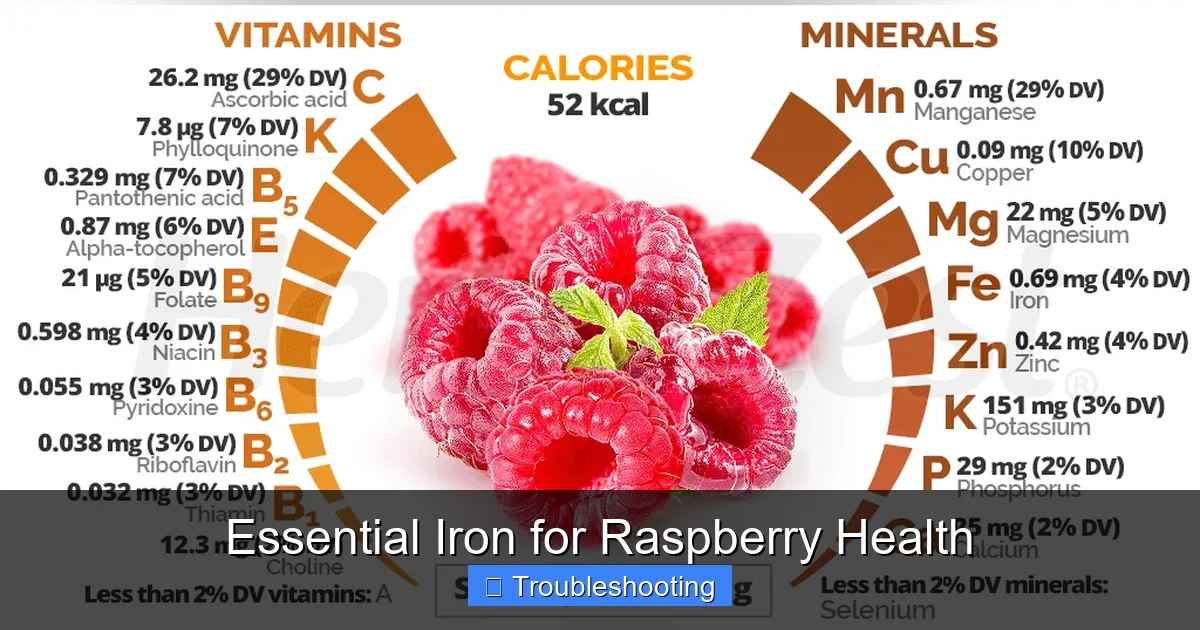
Visual guide about Essential Iron for Raspberry Health
Image source: m.media-amazon.com
Soil pH and Iron Availability
Raspberries thrive in slightly acidic soil, around pH 5.5 to 6.5. When pH climbs above 7, iron becomes insoluble. Roots cannot absorb it even if the soil contains plenty. A simple pH meter or test strip gives you a quick snapshot.
Simple Home Test Kits
Garden centers sell kits that measure pH, nitrogen, phosphorus, potassium, and micronutrients. Follow the instructions, mix soil with the reagent, and compare the color chart. For a more precise reading, send a sample to a local extension service. They also test leaf tissue, which shows what the plant actually takes up.
Choosing the Right Iron Supplement
Not all iron products are equal. The form you pick determines how fast essential iron for raspberry health reaches the plant.
Visual guide about Essential Iron for Raspberry Health
Image source: images.healthshots.com
Chelated vs. Non‑Chelated Forms
Chelated iron binds the mineral to an organic molecule. This keeps it soluble across a wider pH range. Common chelates include EDTA, DTPA, and EDDHA. EDDHA works best in alkaline soils. Non‑chelated salts like ferrous sulfate are cheap but precipitate quickly when pH is high.
Application Rates and Timing
Follow label rates. A typical soil drench uses 1 to 2 tablespoons of chelated iron per gallon of water per 100 square feet. Apply in early spring before new growth starts. Repeat after the first harvest if tests show a drop. Over‑applying can cause toxicity, so stick to recommendations.
Practical Application Tips
Getting iron into the plant can be done two ways. Each has pros and cons.
Foliar Sprays for Quick Fix
Mix a chelated iron solution at 1 teaspoon per gallon. Spray the underside of leaves early morning or late afternoon. The stomata are open, so absorption is fast. You will see greening within 3 to 5 days. Foliar sprays do not correct soil pH, so use them as a bridge while you adjust the root zone.
Soil Drenches for Long‑Term Health
Water the base of each cane with the drench solution. This feeds the root system directly. It also helps lower pH slightly if you use an acidic chelate. Apply after rain or irrigation to avoid runoff. A drench lasts several weeks, giving steady essential iron for raspberry health.
Mulching and Organic Matter
Add a 2‑inch layer of pine bark, straw, or composted leaves. Mulch conserves moisture, moderates temperature, and slowly releases organic acids that keep iron soluble. Compost also supplies beneficial microbes that enhance nutrient cycling.
Preventing Future Deficiencies
Prevention is easier than cure. Build habits that keep essential iron for raspberry health available all season.
Crop Rotation and Cover Crops
Rotate raspberries with legumes or grasses every 3 to 4 years. Legumes fix nitrogen and add organic matter. Cover crops like clover or rye protect soil from erosion and maintain a slightly acidic environment.
Monitoring pH Throughout the Season
Check pH at least three times: early spring, mid‑summer, and after harvest. Adjust with elemental sulfur if pH drifts upward. Small, regular adjustments are better than a single large dose.
Troubleshooting Common Problems
Even with good practices, issues can arise. Knowing the usual suspects helps you act fast.
Over‑Application Risks
Too much iron can cause leaf burn, dark spots, and root damage. It also interferes with manganese and zinc uptake. If you see bronzed leaf margins after a drench, flush the soil with clean water and hold off on further iron for a few weeks.
Interactions with Other Nutrients
High phosphorus levels bind iron into insoluble phosphates. Excess calcium from lime does the same. Balance your fertilizer program. Use a complete fertilizer with a modest phosphorus ratio and avoid heavy liming unless a soil test calls for it.
By now you should feel confident managing essential iron for raspberry health. Test regularly, choose chelated products, and apply them at the right time. Combine foliar sprays for speed with soil drenches for lasting effect. Keep pH in the sweet spot, mulch generously, and rotate crops. Your raspberry patch will reward you with vibrant green canes, sweet berries, and a bountiful harvest year after year.
Frequently Asked Questions
Why do raspberry leaves turn yellow between the veins?
Yellowing between the veins, called interveinal chlorosis, indicates the plant cannot produce enough chlorophyll because essential iron for raspberry health is lacking or locked up by high soil pH.
What pH range is ideal for raspberry iron uptake?
Raspberries absorb iron best when soil pH stays between 5.5 and 6.5; above 7.0 iron becomes insoluble and unavailable to roots.
Which chelated iron form works in alkaline soils?
EDDHA chelated iron remains soluble in alkaline conditions and is the most reliable choice for high‑pH gardens.
Can too much iron harm my raspberry plants?
Yes, excess iron causes leaf burn, dark spots, and can block uptake of manganese and zinc, leading to secondary deficiencies.
How do I apply a soil drench correctly?
Mix the recommended amount of chelated iron in water, then pour it evenly around the base of each cane after rain or irrigation to prevent runoff.
Does mulching really help with iron availability?
Mulch conserves moisture, moderates temperature, and slowly releases organic acids that keep iron in a soluble form, supporting steady essential iron for raspberry health.