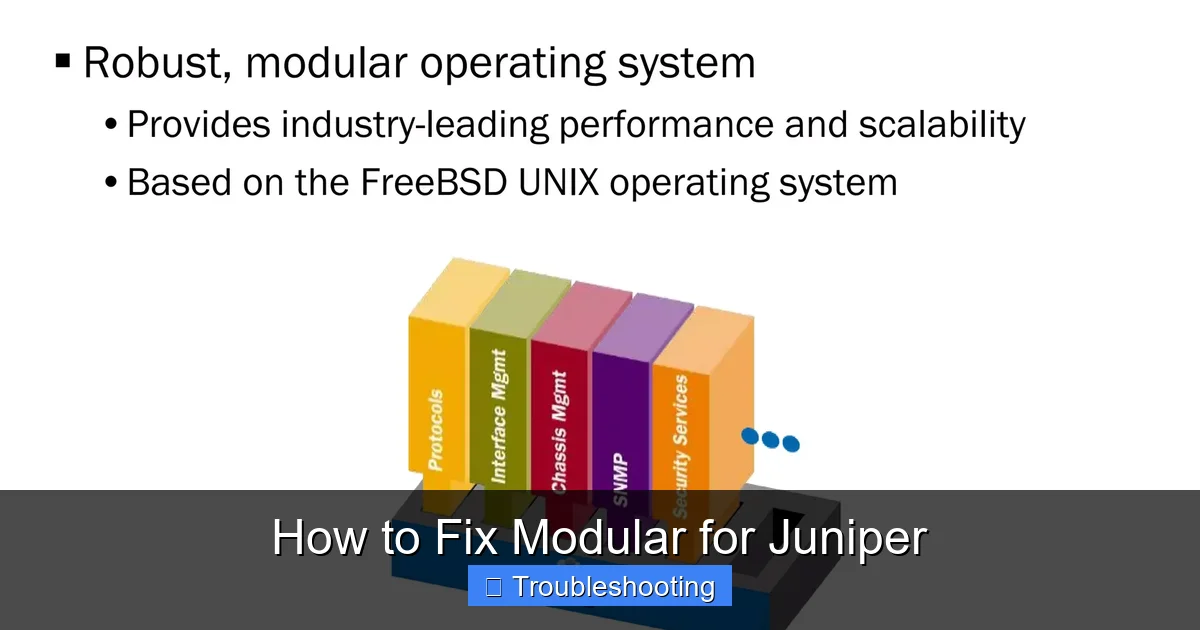
How to Fix Modular for Juniper
Fixing modular for juniper is straightforward when you follow a clear step‑by‑step guide. Identify the error, apply the correct patch, and run a quick test to confirm the fix.
Welcome to the guide on fixing modular for juniper. This article walks you through every step in plain language. You will learn how to spot trouble, run the right commands, and keep your gear healthy.
Modular for juniper devices power many networks today. When a module fails the whole system can feel the impact. A clear process saves time and money.
Read on to get a practical checklist you can use right away.
Key Takeaways
- Know the system: Understand how modular for juniper works before you troubleshoot.
- Collect logs first: Logs give you the exact error code for modular for juniper.
- Check config files: A small typo can break modular for juniper.
- Apply patches in order: Follow the vendor sequence for modular for juniper updates.
- Test after each step: Verify modular for juniper returns to normal before moving on.
- Schedule regular maintenance: Prevent future modular for juniper issues with routine checks.
- Know when to escalate: Complex modular for juniper problems need expert help.
Quick Answers to Common Questions
What is the first step to fix modular for juniper?
Gather logs from the device to see the exact error.
How do I know which module is faulty?
Look at the slot number in the alarm message.
Can I upgrade firmware on a single module?
Yes, you can reboot only the affected module after install.
When should I replace a line card?
Replace it if errors persist after firmware upgrade and config check.
What monitoring should I enable?
Enable SNMP traps for module alarms and set thresholds.
📑 Table of Contents
Understanding the Modular for Juniper System
Modular for juniper is a flexible network component. It lets you add or remove functions without a full reboot. The design uses separate modules that talk to a central controller. Each module has its own firmware and config. This makes upgrades easy. But it also adds points of failure. Knowing the architecture helps you fix problems fast.
What Is Modular for Juniper
Modular for juniper is a chassis based platform. It supports line cards, service cards, and control boards. You can mix and match cards to meet traffic needs. The system runs a unified operating system. All cards share a common management plane. This gives you a single view of the network.
Core Components
The main parts are the chassis, the control board, and the line cards. The chassis provides power and cooling. The control board runs the management software. Line cards handle packet forwarding. Each part has a status LED. Green means good. Red means fault.
Why It Matters
Modular for juniper powers many enterprise and service provider networks. Downtime costs money. A quick fix restores service and saves revenue. Understanding the system reduces guesswork. It also helps you plan capacity upgrades.
Typical Deployment Scenarios
You may see modular for juniper in data centers, campus cores, and edge routers. Each scenario uses a different mix of line cards. Knowing the scenario helps you pick the right troubleshooting path.
- Data center: High density 100G line cards.
- Campus core: Mix of 10G and 40G cards.
- Edge router: Service cards for VPN and firewall.
Architecture Overview
The chassis houses a midplane that connects every module. The control board runs the routing engine. Line cards plug into the midplane and get power and data paths. The management plane runs on the control board and talks to each line card via a dedicated channel. This separation keeps control traffic away from user traffic.
Module Types
Common module types include packet forwarding engines, service processing cards, and fabric cards. Each type has a specific role. Forwarding engines move packets. Service cards run firewall, NAT, or load balancing. Fabric cards provide high speed interconnect between line cards.
Interconnect Fabric
The fabric uses a high speed switch fabric that scales with the number of slots. It provides non‑blocking throughput. Fabric health is reported in the chassis alarms. A fabric error often shows as a module fault on multiple slots.
Management Plane
The management plane handles configuration, monitoring, and upgrades. It exposes a CLI, NETCONF, and REST APIs. All modules register with the management plane at boot. If a module fails to register, the management plane raises an alarm.
Power and Cooling
Each slot has a dedicated power budget. The chassis monitors current draw per slot. Over‑temperature sensors trigger fan speed changes. A power supply failure can cause multiple modules to go offline.
Common Symptoms When Things Go Wrong
When modular for juniper misbehaves you see clear signs. Recognizing them early speeds up repair.
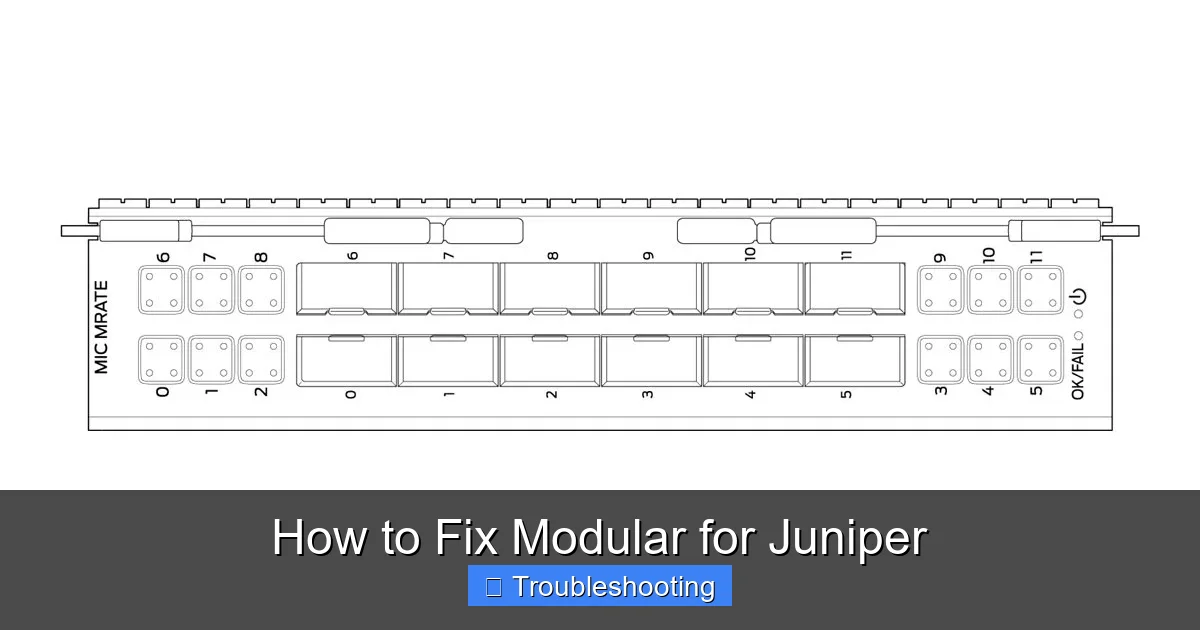
Visual guide about How to Fix Modular for Juniper
Image source: cdn.cs.1worldsync.com
Error Messages
The CLI shows alarms like Module Failure or Link Down. Each alarm includes a module slot number. Write the slot number down. It points you to the faulty card.
Performance Drops
Throughput may fall below baseline. Latency spikes appear in monitoring graphs. These drops often trace to a single line card. Check the card counters for errors.
Connection Losses
Neighbors may flap or go down. BGP sessions reset. OSPF adjacencies fail. These symptoms usually mean a hardware or firmware issue in modular for juniper.
Environmental Alerts
Temperature alarms or fan failures can also indicate a modular for juniper problem. Check the chassis sensors before you assume a line card fault.
- High temperature: Clean dust filters and verify airflow.
- Fan failure: Replace the fan module promptly.
Log Patterns
Syslog entries often contain the phrase modular for juniper followed by an error code. Look for repeated codes within a short window. Repeated codes point to a persistent fault.
SNMP Traps
Enable SNMP traps for module state changes. Traps arrive in real time. They include the slot, severity, and description. Use a trap receiver to correlate events.
Performance Metrics
Collect interface counters, CPU usage, and memory usage per module. A sudden rise in CPU on one card often precedes a crash. Graph the metrics to spot trends.
Hardware Indicators
LEDs on the front panel give instant status. A solid amber LED means the module is in a degraded state. A blinking red LED means a critical fault. Use the LED map in the hardware guide.
Step‑by‑Step Troubleshooting Guide
Follow these steps in order. Do not skip any step. Each step builds on the previous one.
Gather Logs
Run the command show log messages. Save the output to a file. Look for timestamps that match the outage. Search for the keyword modular for juniper in the logs. This narrows the cause.
Check Configuration
Display the running config with show configuration. Compare it to a known good baseline. Look for missing interfaces or wrong VLAN tags. A single typo can break modular for juniper.
Isolate the Fault
Use the command show chassis hardware to see module status. Identify any module showing Offline or Fault. Power cycle only that module if the chassis supports per‑slot reset.
Run Diagnostics
Execute the built‑in self‑test on the suspect module. The command request diagnostics module
Apply the Fix
If a firmware bug is found, download the latest image from the vendor site. Copy the image to the control board. Run the install command. Reboot the affected module only. This limits impact.
Verify the Fix
After reboot run show chassis hardware. Confirm the module shows Online. Run a ping test across the link. Check that error counters stay at zero. If all good, the modular for juniper issue is resolved.
Document the Resolution
Write a short note in the change log. Include the error code, the command used, and the result. This helps future troubleshooting of modular for juniper.
- Log the error code.
- Note the firmware version.
- Record the test outcome.
Collect Core Dumps
If the module crashes, enable core dump collection. The command set system core-dump
Engage Vendor Support
Open a ticket if the fault persists after the above steps. Attach logs, config, and core dump. Provide the exact slot number and error code. Vendor engineers can run remote diagnostics.
Advanced Fixes for Persistent Issues
Some problems need deeper action. Use these methods when basic steps fail.
Firmware Upgrade
Upgrade the entire chassis to the latest stable release. Schedule a maintenance window. Back up configs first. Apply the image to all modules. Verify each module version matches.
Module Replacement
If a line card stays faulty, replace it. Power down the slot. Remove the card. Insert a spare of the same model. Power up the slot. Run the verification steps again.
Custom Scripts
Write a small script to poll module health every minute. Alert on any non‑zero error counter. Automate ticket creation. This catches modular for juniper problems before users notice.
Rollback Procedure
If a new firmware introduces a regression, roll back to the previous version. Keep the old image on the control board. Use the rollback command. Test the modular for juniper service after rollback.
- Keep two firmware images.
- Test rollback in lab first.
FPGA Upgrade
Some line cards have field programmable gate arrays that need separate upgrades. Follow the vendor FPGA upgrade guide. Do not interrupt power during the FPGA flash. Verify the FPGA version after reboot.
Backplane Test
Run the chassis backplane diagnostic if multiple slots show faults. The command request chassis backplane-test runs a loopback test on each fabric lane. A failure indicates a chassis level issue.
Redundancy Switchover
If the control board is suspect, trigger a graceful switchover to the backup routing engine. Use the command request chassis routing-engine master switch. Verify the new master takes over without traffic loss.
Config Migration
When moving to a new hardware revision, migrate the configuration using the vendor migration tool. Validate the migrated config with a dry‑run before committing. This avoids syntax errors that break modular for juniper.
Preventive Maintenance Tips
Regular care keeps modular for juniper running smooth.
Regular Audits
Run a quarterly audit of all modules. Check firmware versions. Verify config backups. Document any changes.
Automated Monitoring
Enable SNMP traps for module alarms. Feed traps into a monitoring platform. Set thresholds for temperature and CPU. Get alerts early.
Documentation Habits
Keep a change log for every modular for juniper modification. Note who made the change and why. This history speeds future troubleshooting.
Spare Parts Management
Maintain a small stock of critical line cards and fan modules. Label each spare with the slot it protects. Rotate spares yearly to avoid shelf aging.
- Label spares.
- Rotate stock.
Firmware Baseline
Define a firmware baseline for each hardware model. Only deploy images that match the baseline. Track deviations in a compliance report.
Capacity Planning
Monitor interface utilization trends. Add line cards before utilization exceeds 70 percent. This prevents sudden congestion that stresses modular for juniper.
Change Management
Require a change request for any config or firmware change. Include rollback steps. Approve changes in a change advisory board.
Training
Train operators on the CLI, GUI, and automation APIs. Run quarterly lab drills that simulate module failures. Prepared staff resolve modular for juniper incidents faster.
When to Call Professional Support
Know your limits. Some cases need vendor expertise.
Complex Errors
If you see unknown error codes after all steps, open a TAC case. Provide logs and config. The vendor can decode proprietary messages.
Hardware Failures
Multiple modules failing at once may indicate a chassis issue. Only field engineers can test backplane health.
Time Constraints
When downtime exceeds your SLA, escalate immediately. Faster resolution protects revenue.
Security Incidents
If a modular for juniper breach is suspected, involve the security team and vendor at once. Preserve logs for forensic analysis.
- Open a TAC case.
- Share sanitized configs.
Escalation Matrix
Define internal escalation levels. Level 1 handles basic logs. Level 2 runs diagnostics. Level 3 engages vendor. Document response times for each level.
Support Tiers
Match vendor support tier to business impact. Critical services get 24×7 phone support. Non‑critical services can use email tickets.
Contractual Obligations
Review the support contract for response time guarantees. Keep contract numbers handy when opening a case. This avoids delays in modular for juniper resolution.
Fixing modular for juniper does not have to be hard. Start with logs. Check config. Apply the right patch. Test thoroughly. Keep a maintenance schedule. Escalate when needed. With these habits your network stays reliable and fast.
Frequently Asked Questions
What does modular for juniper mean?
Modular for juniper refers to a chassis based platform that uses interchangeable line cards and service modules.
How often should I audit modular for juniper modules?
Perform a full audit at least once per quarter.
Can a configuration typo break modular for juniper?
Yes, a single typo in an interface definition can cause a module to go offline.
Is it safe to reboot only one module?
Rebooting a single module is safe if you follow the vendor install procedure.
What logs are most useful for modular for juniper troubleshooting?
System messages and chassis alarms give the clearest clues.
When should I open a vendor support case?
Open a case when errors are unknown, multiple modules fail, or SLA breach is imminent.