Troubleshooting T8 for Bonsai
Troubleshooting T8 for bonsai helps you diagnose and fix common fluorescent lighting problems that stunt tree growth. This guide covers flickering bulbs, wrong color temperature, insufficient intensity, and fixture placement so your indoor bonsai thrives year-round.
Growing bonsai indoors under artificial light feels rewarding until something goes wrong. Leaves yellow, internodes stretch, or a tube starts strobing like a disco light. Most hobbyists blame the tree, the soil, or their watering routine. Often the real culprit sits overhead. Troubleshooting T8 for bonsai means learning to read the light the way you read soil moisture. This guide walks you through every common failure mode, from ballast hum to spectrum drift, so you can keep your miniature forest healthy without guesswork.
We will cover ballast diagnostics, tube aging, color temperature mismatches, intensity drops, fixture geometry, photoperiod errors, and environmental side effects like heat buildup. Each section gives you a quick test, a clear fix, and a prevention habit. By the end you will treat your lighting rack like any other bonsai tool: inspected, calibrated, and replaced on schedule.
Key Takeaways
- Check ballast first: A failing ballast causes flickering, buzzing, and short bulb life before the tube itself goes bad.
- Match spectrum to species: Use 5000K to 6500K tubes for vegetative growth; add 3000K for flowering or fruiting bonsai.
- Measure actual output: Cheap meters reveal when tubes drop below 50% output even though they still light up.
- Keep distance tight: Position tubes 4 to 8 inches above canopy for strong, compact growth without leggy internodes.
- Run proper photoperiod: 14 to 16 hours on, 8 to 10 hours off mimics spring summer day length for most temperate species.
- Rotate trees weekly: Even light distribution prevents one-sided growth and weak branches on the shaded side.
- Replace on schedule: Swap T8 tubes every 12 to 18 months; phosphor degradation cuts usable PAR long before visible dimming.
Quick Answers to Common Questions
How often should I replace T8 tubes for bonsai?
Replace T8 tubes every 12,000 hours or 18 months, whichever comes first, because phosphor decay cuts usable PAR long before the tube looks dim.
What color temperature is best for vegetative bonsai growth?
Use 5000K to 6500K tubes for vegetative growth; the blue rich spectrum keeps internodes short and leaves compact.
How close should T8 tubes be to the bonsai canopy?
Position tubes 4 to 8 inches above the tallest leaves to deliver 200 to 400 µmol/m²/s PAR for strong, compact growth.
Why is my T8 fixture buzzing and flickering?
Buzzing and flickering usually indicate a failing electronic ballast; test by swapping tubes between sockets to isolate the bad channel.
Can I use LED T8 tubes in my existing fluorescent fixture?
Most LED T8 tubes require ballast bypass rewiring; do not install them without confirming compatibility or you risk fire and tube failure.
📑 Table of Contents
- Understanding T8 Technology Basics
- Diagnosing Ballast and Electrical Issues
- Spectrum and Color Temperature Problems
- Intensity Loss and Tube Aging
- Fixture Placement and Canopy Geometry
- Photoperiod and Timer Mistakes
- Heat, Humidity, and Airflow Side Effects
- Species Specific Troubleshooting Scenarios
- Maintenance Schedule and Record Keeping
- Budget Friendly Upgrades That Work
- Common Myths Debunked
- Emergency Fixes When You Cannot Replace Today
- Building a Spare Parts Kit
- Conclusion
Understanding T8 Technology Basics
What makes a T8 tube different
T8 refers to a tubular lamp eight eighths of an inch in diameter, or one inch thick. Modern T8s run on electronic ballasts that operate at high frequency, usually above 20 kHz. This eliminates visible flicker and audible hum found in old magnetic ballasts. The tube interior holds a phosphor coating that converts ultraviolet mercury discharge into visible light. Phosphor blend determines color temperature and spectral power distribution. For bonsai we care about photosynthetically active radiation (PAR) between 400 and 700 nanometers.
Key specs to know before buying
Look for three numbers on the package. Color temperature in Kelvin (K) tells you warm versus cool appearance. Color rendering index (CRI) rates how faithfully colors appear; aim for 85 or higher. Lumen output measures total visible light but does not equal plant usable light. Check the rated life in hours, typically 20,000 to 30,000 for quality T8s. Finally note the ballast factor: a 0.88 factor ballast delivers 88 percent of the tube rated lumens. Match ballast factor to your fixture label.
Why T8 still beats T5 and LED for many growers
T5 high output tubes pack more PAR per inch but run hotter and cost more per foot. LED retrofit tubes vary wildly in spectrum quality; cheap ones spike in blue and red with gaps in green that hurt canopy penetration. A good 6500K T8 delivers smooth full spectrum light, runs cool enough to touch, and costs under ten dollars per tube. For hobbyists with two to four shelves, T8 remains the sweet spot of performance, price, and simplicity.
Diagnosing Ballast and Electrical Issues
Symptoms of a failing ballast
Ballast failure shows up before the tube dies. Watch for delayed start, where tubes glow dim for ten seconds then brighten. Listen for a low buzz or high pitched whine. Feel the ballast casing after thirty minutes; it should be warm not hot. If one tube in a two tube fixture works fine while the other flickers, swap tubes. If the problem follows the tube, the tube is bad. If it stays in the same socket, the ballast channel is failing.
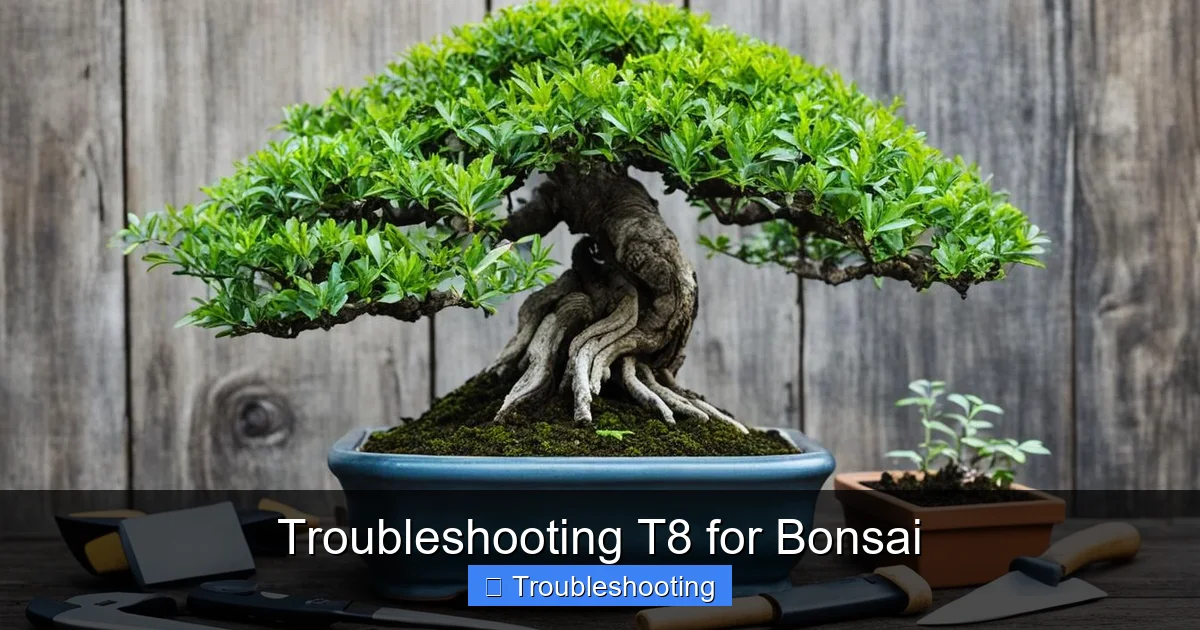
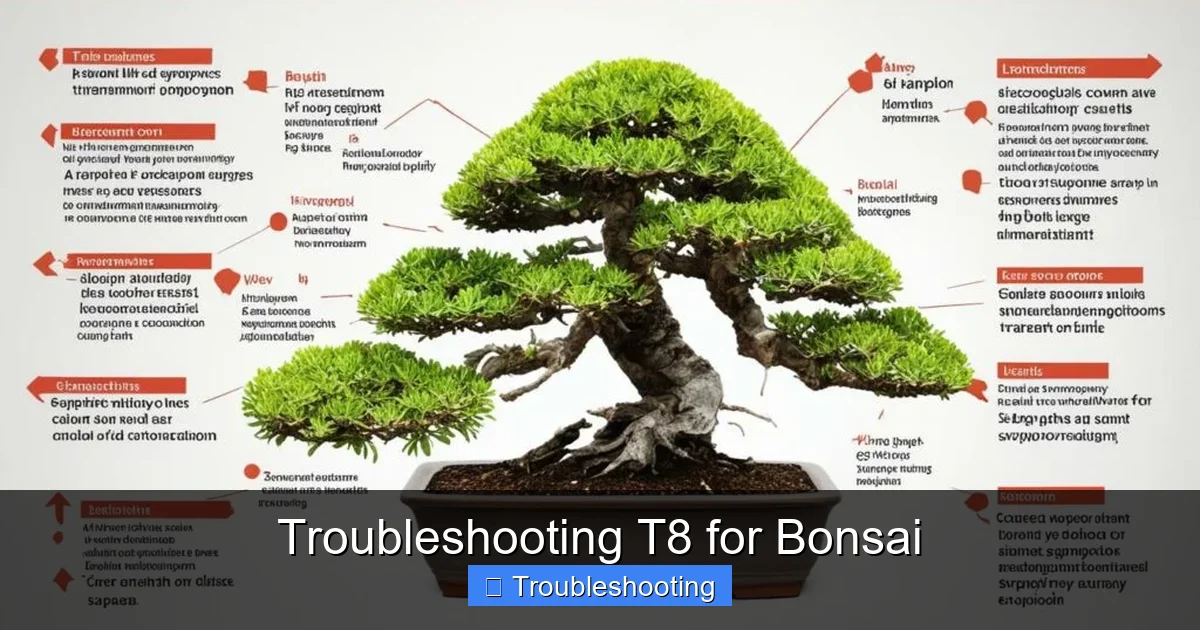
Visual guide about Troubleshooting T8 for Bonsai
Image source: bonsaibasics.com
Quick multimeter test
Unplug the fixture. Remove both tubes. Set meter to AC volts. Probe the tombstone sockets where tube pins insert. You should read zero volts with power off. Plug in and measure again; a healthy electronic ballast outputs 200 to 600 volts depending on model. No voltage means open circuit or dead ballast. Always keep fingers clear of sockets when powered. If unsure, hire an electrician. Safety first.
Replacing ballast versus whole fixture
Electronic ballasts cost fifteen to thirty dollars. Fixtures cost forty to eighty. If the fixture housing is rusted, tombstones cracked, or wiring brittle, replace the whole unit. New fixtures come with modern high efficiency ballasts and better reflectors. Keep the old fixture as a parts donor only if it passes a full safety inspection.
Grounding and surge protection
Electronic ballasts hate voltage spikes. Plug your rack into a surge protector rated 1000 joules or higher. Ensure the outlet shows proper ground with a three prong tester. Floating ground causes erratic starts and shortens ballast life. In older homes, run a dedicated ground wire to a cold water pipe if code allows.
Spectrum and Color Temperature Problems
Why Kelvin matters for bonsai
Color temperature describes the visual warmth or coolness of light. 3000K looks amber like incandescent. 4100K is neutral white. 5000K to 6500K mimics midday sun. Bonsai in vegetative stage need blue rich light around 5000K to 6500K to suppress elongation. Flowering species like azalea or bougainvillea benefit from added 3000K tubes during bud set. Mixing tubes in a two lamp fixture gives a broader spectrum than any single tube.
Spotting spectrum drift in aging tubes
Phosphors degrade unevenly. Blue phosphor fades faster than red. A two year old 6500K tube may visually still look white but its blue output drops thirty percent. The tree responds with longer internodes and larger leaves. Use a cheap spectrometer app with a diffuser or a PAR meter with spectral sensor to catch this. If blue PAR falls below fifteen percent of total, replace the tube even if it looks bright.
Fixing wrong spectrum without new fixtures
If you bought 4100K tubes by mistake, add a single 6500K tube in a four lamp fixture or supplement with a small LED bar rich in 450nm blue. For flowering, screw in a 2700K CFL in a nearby clamp lamp during bud initiation. These patches cost less than re-lamping the whole rack.
Measuring PAR not lumens
Lumens weight green light heavily because human eyes peak at 555nm. Plants use red and blue more efficiently. A 3000 lumen tube with poor red output grows weak bonsai. Target 200 to 400 micromoles per square meter per second (µmol/m²/s) at canopy level for most species. Use a quantum PAR meter. Phone apps with diffuser give rough trends but calibrate against a real meter once.
Intensity Loss and Tube Aging
The invisible fifty percent cliff
T8 tubes maintain ninety percent output for the first 8,000 hours. After that phosphor decay accelerates. At 15,000 hours output often sits at fifty percent while the tube still appears white. Your trees see half the energy but your eyes see a lit shelf. Mark install date on each tube with a silver sharpie. Replace at 12,000 hours or eighteen months whichever comes first.
Reflector degradation
White painted reflectors yellow and lose twenty percent reflectivity in two years. Mylar film delaminates. Clean reflectors monthly with isopropyl alcohol and a soft cloth. Replace yellowed panels with fresh white acrylic or 95% reflective Mylar. A clean reflector gains you a free fifteen percent PAR boost.
Dust and water film on tubes
Misting bonsai coats tubes with mineral film. Wipe tubes weekly with a damp microfiber cloth when cool. Hard water deposits block UV and blue light disproportionately. Use distilled water in humidifiers to cut residue. A clean tube transmits ninety five percent; a dirty one drops to seventy percent.
Voltage sag on long runs
Daisy chaining four fixtures on one circuit with 14 gauge wire can drop voltage three percent at the far end. Electronic ballasts compensate but run hotter. Run dedicated 12 gauge circuits for racks over eight feet. Check voltage at each fixture under load; it should stay within five percent of nominal.
Fixture Placement and Canopy Geometry
The inverse square law in your living room
Light intensity falls with the square of distance. Doubling tube to canopy distance cuts PAR to twenty five percent. At twelve inches a 6500K T8 delivers maybe 80 µmol. At six inches it delivers 300 µmol. Keep tubes four to eight inches above the tallest leaf. Raise fixtures as trees grow. Use adjustable chains or shelf brackets.
End dark zones
T8 output drops sharply within three inches of tube ends. A four foot tube gives even light only in the center thirty inches. Place trees so their canopies sit under the strong zone. Stagger tubes in multi shelf racks so shelf A tubes align with shelf B gaps. This eliminates dark stripes.
Side lighting for thick trunks
Top light alone creates apical dominance. Add vertical T8 tubes on rack ends aimed at trunk bases. Two watts per linear foot of side light encourages back budding and taper. Run side lights on same timer. Keep them six inches from trunks to avoid heat stress.
Rotating for symmetry
Even perfect fixtures cast slight gradients. Rotate each tree ninety degrees weekly. Mark pot with a dot on the north side. This prevents one sided branch thickening and ensures even root development in shallow pots.
Photoperiod and Timer Mistakes
Matching nature not convenience
Temperate bonsai expect long days in summer, short in winter. Running sixteen hours year round confuses dormancy cues. Use a programmable timer with seasonal presets. Spring summer: fourteen to sixteen hours. Autumn: twelve hours. Winter dormancy: eight to ten hours or lights off for cold hardy species in unheated space.
Timer drift and power outages
Mechanical timers lose minutes per month. Digital timers reset on power loss unless battery backed. Check timer against phone clock monthly. Plug timer into a UPS if outages are common. A single missed night can trigger unwanted bud break in winter.
Night interruption for short day species
Some tropicals flower only under short days. If your room has ambient light after timer off, cover rack with blackout cloth. Even streetlight leakage through curtains can prevent flowering. Test with a lux meter; anything above five lux at canopy counts as light pollution.
Gradual transitions
Changing photoperiod by more than thirty minutes per week stresses trees. Ramp up or down ten minutes daily. This mimics natural seasonal change and reduces shock leaf drop.
Heat, Humidity, and Airflow Side Effects
Ballast heat buildup
Electronic ballasts run ninety to one hundred ten degrees Fahrenheit. In a closed shelf they raise ambient five to ten degrees. Mount ballasts outside the growing chamber or use remote ballast fixtures. Add a 120mm computer fan blowing across ballasts. Cooler ballasts last twice as long.
Leaf temperature versus air temperature
Leaves under T8 run two to four degrees above air temp due to absorbed radiation. Use an infrared thermometer on leaf surface. If leaf temp exceeds eighty five Fahrenheit, raise tubes or increase fan speed. High leaf temp closes stomata and halts photosynthesis.
Humidity management
T8 fixtures dry the air. Target fifty to seventy percent relative humidity. Run a humidifier on a hygrostat. Group trees on humidity trays with pebbles and water. Mist foliage morning only so leaves dry before lights off. Wet leaves at night invite fungal issues.
Air circulation prevents boundary layer stagnation
Still air creates a stagnant boundary layer on leaf undersides where CO2 depletes. A gentle oscillating fan moving one to two miles per hour across canopy refreshes this layer. Point fan so leaves flutter slightly not blast. Run fan twenty four seven for best gas exchange.
Species Specific Troubleshooting Scenarios
Juniper and pine needle browning
Conifers hate low blue light. If tips brown and internodes stretch, swap to 6500K tubes and drop distance to four inches. Add a 12 inch 450nm LED bar per shelf. Ensure sixteen hour summer photoperiod. Check for spider mites; they love dry warm racks.
Maple and elm large leaves weak branches
Broadleaf deciduous need high intensity to stay compact. Target 350 µmol at canopy. Use four lamp fixtures. Rotate weekly. Defoliate in early summer under strong light to force smaller second flush. Reduce nitrogen fertilizer; high N plus low light equals giant leaves.
Azalea and bougainvillea no flowers
Flowering bonsai need short days and red rich spectrum. In autumn switch two tubes to 3000K. Drop photoperiod to ten hours. Keep night temps fifty five to sixty Fahrenheit. Stop high nitrogen feed. Buds appear in six to eight weeks.
Ficus and tropical leaf drop after changes
Ficus drops leaves when light changes abruptly. When swapping tubes or moving racks, acclimate over two weeks. Raise tubes two inches per day. Increase photoperiod fifteen minutes daily. Keep humidity high. New leaves emerge adapted to new regime.
Shohin and mame tiny pots dry fast
Small pots under T8 dry in hours. Use humidity domes with vents. Check soil twice daily. Bottom water by setting pots in tray for ten minutes. Mulch surface with sphagnum. Group shohin together to create microclimate.
Maintenance Schedule and Record Keeping
Weekly five minute checklist
Wipe tubes. Check fan operation. Verify timer matches phone. Feel ballast temps. Inspect leaves for tip burn or stretch. Note any flicker. Log in notebook or phone app.
Monthly deep check
Measure PAR at three canopy spots per shelf. Clean reflectors. Test ballast voltage. Rotate trees. Check humidity calibration. Backup timer settings.
Quarterly tube evaluation
Compare PAR readings to baseline. If any shelf drops twenty percent, replace those tubes. Update install date marks. Budget for replacements.
Annual fixture audit
Inspect wiring, tombstones, cords. Test ground continuity. Replace surge protector. Review species list and adjust spectrum plan for next year. Archive old logs.
Budget Friendly Upgrades That Work
Add Mylar reflectors for ten dollars
Buy 95% reflective Mylar roll. Line fixture interiors and shelf backs. Gains fifteen percent PAR free. Replace yearly when it dulls.
Supplemental LED bars for blue boost
Twelve inch 450nm LED bars cost fifteen dollars. Stick to fixture underside with magnets. Run same timer. Adds targeted blue without heat.
Remote ballast conversion
Move ballasts to cool side of rack. Extend wires with rated connectors. Lowers canopy temp five degrees. Extends ballast life.
Smart plug monitoring
WiFi smart plug logs runtime and power draw. Alerts if fixture draws zero watts during scheduled on time. Catches ballast failure early.
Common Myths Debunked
More watts always better
Excess intensity photoinhibits. Leaves bleach, growth stalls. Match PAR to species need. Four 32 watt tubes at six inches often beats two 54 watt T5s at twelve inches.
Lumens equal plant growth
Human vision peaks green. Plants need red blue. A 2800 lumen 3000K tube grows better than 3200 lumen 4100K if red output is higher. Trust PAR meter not lumen label.
Tubes last until they burn out
Phosphor death is silent. Replace on hours not visibility. Your trees know the difference.
Any 6500K tube works
Cheap shop lights use halophosphors with poor red. Triphosphor or full spectrum horticultural tubes cost two dollars more and deliver thirty percent more usable PAR. Read the spec sheet.
LED tubes drop in directly
Most LED T8s require ballast bypass rewiring. Wrong wiring kills tubes or starts fire. Stick with fluorescent unless you rewire properly.
Emergency Fixes When You Cannot Replace Today
Flickering tube quick patch
Clean pins with pencil eraser. Reseat firmly. Swap ends. If still flickers, run fixture on single tube mode if ballast allows. Order replacement tonight.
Sudden intensity drop
Check for dust film. Wipe tubes. Verify timer did not shift to winter hours. Confirm no new obstruction like a fallen branch shading canopy.
Ballast hum in bedroom
Place rubber feet under fixture. Add mass loaded vinyl barrier on shelf above. Move rack to closet if possible. Order silent electronic ballast.
Heat spike during heat wave
Raise tubes two inches. Add second fan. Run lights night cycle when ambient cooler. Mist foliage midday. Monitor leaf temp hourly.
Building a Spare Parts Kit
Essential items to keep on hand
Two spare tubes per fixture type. One spare ballast per rack. Tombstone sockets. Wire nuts rated 600V. Silver sharpie for dates. PAR meter calibration card. Microfiber cloths. Isopropyl alcohol. Mylar sheet. Zip ties. Velcro straps for cord management.
Storage tips
Store tubes vertical in original sleeves to prevent phosphor cracking. Keep ballasts in anti static bags. Label everything with purchase date. Rotate stock so oldest used first.
Conclusion
Troubleshooting T8 for bonsai is not magic. It is a habit of observing, measuring, and acting before small problems become tree killers. You now know how to read ballast symptoms, catch spectrum drift, maintain intensity, geometry, and photoperiod, and manage the side effects of heat and humidity. You have a maintenance calendar, a spare parts list, and budget upgrades that actually work.
Start this week. Mark your tubes. Clean your reflectors. Check your PAR. Set your timers to the season. Your bonsai will respond with tighter nodes, richer color, and the quiet confidence of trees growing under a steady, well tuned sun. Happy growing.
Frequently Asked Questions
What PAR level do indoor bonsai need under T8 lights?
Most bonsai species thrive at 200 to 400 µmol/m²/s measured at canopy level. Use a quantum PAR meter to verify output and adjust tube height accordingly.
How do I know if my T8 ballast is failing?
Signs include delayed startup, audible buzz or whine, one tube flickering while its partner works, and ballast casing feeling hot rather than warm after 30 minutes of operation.
Should I run my T8 lights on a seasonal photoperiod schedule?
Yes. Mimic nature: 14 to 16 hours in spring and summer, 12 hours in autumn, and 8 to 10 hours or lights off for winter dormancy of temperate species.
Can I mix different Kelvin tubes in the same fixture?
Absolutely. Mixing 6500K and 3000K tubes in a four lamp fixture broadens the spectrum, supporting both vegetative growth and flowering phases for species like azalea.
Why are my bonsai leaves large and pale under T8 lights?
Large pale leaves indicate insufficient blue light or low intensity. Switch to 6500K tubes, lower fixtures to 4 to 6 inches, and ensure reflectors are clean and tubes are under 12,000 hours old.
Is it safe to mist bonsai while T8 lights are on?
Mist only when lights are off or early in the photoperiod so foliage dries before night. Wet leaves under intense light can cause lens effect burns, and wet leaves at night invite fungal disease.