Oxalis Care for Home Office
Oxalis plants thrive in home offices with bright indirect light, consistent moisture, and cool temperatures. Understanding their natural dormancy cycle prevents panic when leaves die back, while proper watering and pest management keep your shamrock plant healthy year-round.
Adding plants to your home office isn’t just about aesthetics. Research shows greenery boosts productivity, reduces stress, and improves air quality. Among the most charming options for desk-side companionship is the oxalis, often called false shamrock or wood sorrel. With its delicate triangular leaves that fold up at night and reopen with morning light, this plant brings a touch of whimsy to any workspace.
But oxalis has a reputation for being finicky. Many plant parents panic when their shamrock suddenly drops all its leaves, assuming they’ve killed it. The truth? This dramatic die-back is usually just dormancy, a natural part of the plant’s life cycle. Once you understand the rhythm of oxalis care for home office environments, you’ll find it’s one of the most rewarding and long-lived desk plants you can grow.
Key Takeaways
- Light Requirements: Oxalis needs bright indirect light; east or north-facing windows work best for home office placement.
- Watering Balance: Keep soil consistently moist but never soggy; water when top inch feels dry to touch.
- Dormancy Is Normal: Leaf die-back signals natural rest period; reduce watering and wait for new growth.
- Temperature Preferences: Cool temperatures between 60-75°F promote healthy growth; avoid heat vents and drafts.
- Pest Prevention: Inspect weekly for spider mites and aphids; treat early with neem oil or insecticidal soap.
- Repotting Timing: Repot in early spring before active growth; use well-draining potting mix with perlite.
- Propagation Made Easy: Divide bulbs during repotting to create new plants for free office decor.
Quick Answers to Common Questions
Why is my oxalis dropping all its leaves suddenly?
This is likely natural dormancy, not death. Oxalis bulbs need rest periods. Stop watering, place in a cool dark spot for 8-10 weeks, then resume care.
How often should I water my office oxalis?
Water when the top inch of soil feels dry, typically every 5-7 days during active growth. Reduce significantly during dormancy.
Can oxalis survive in low light office conditions?
Oxalis tolerates lower light than many plants but needs bright indirect light to thrive. Add a small LED grow light if natural light is limited.
What causes brown crispy edges on oxalis leaves?
Low humidity, direct sun exposure, fertilizer burn, or underwatering. Increase humidity, move from direct sun, flush soil, or adjust watering.
When should I repot my oxalis?
Early spring before active growth begins. Only increase pot size by one increment. Use well-draining mix with perlite.
📑 Table of Contents
- Understanding Your Oxalis: The Basics
- Light Requirements for Healthy Growth
- Watering: The Goldilocks Principle
- Temperature and Airflow Needs
- Soil, Potting, and Repotting
- Fertilizing for Lush Growth
- Understanding and Managing Dormancy
- Common Problems and Solutions
- Propagation: Multiply Your Collection
- Styling Oxalis in Your Home Office
- Long-Term Care Calendar
- Troubleshooting Quick Reference
- Conclusion
Understanding Your Oxalis: The Basics
What Exactly Is Oxalis?
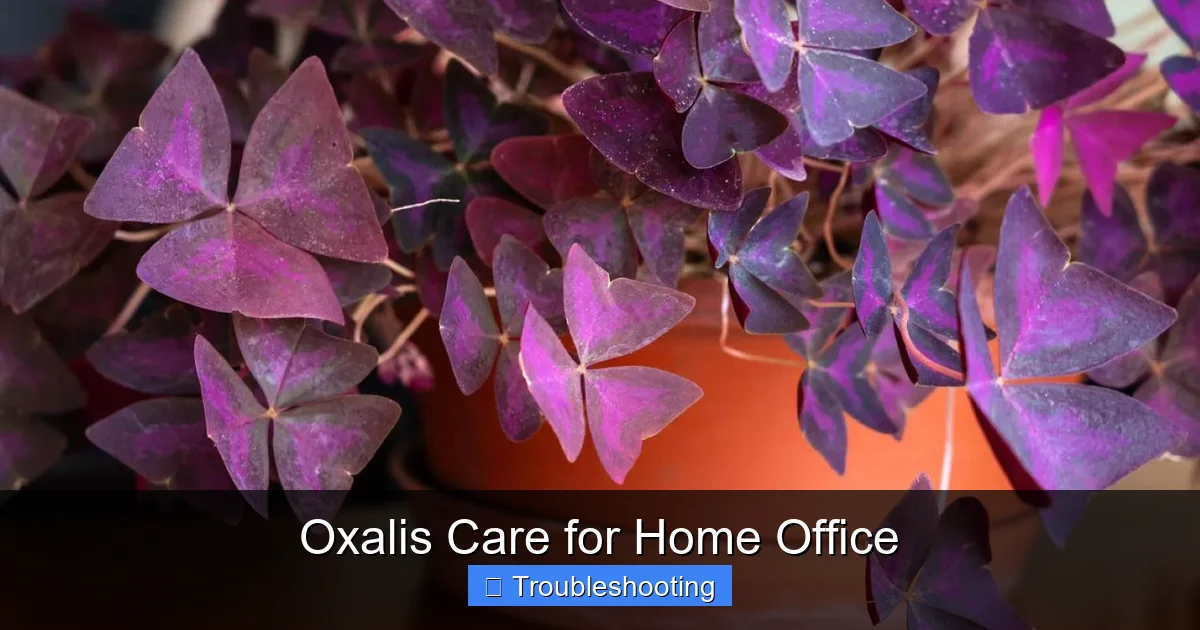
Oxalis belongs to the Oxalidaceae family and includes over 500 species worldwide. The varieties commonly sold as houseplants are typically Oxalis triangularis (purple shamrock) with deep burgundy leaves, or Oxalis regnellii (green shamrock) with bright green foliage. Both feature the characteristic three-leaflet structure that resembles clover, though they’re not related to true shamrocks.
These plants grow from small bulbs or rhizomes underground. This bulbous nature is key to their survival strategy. When conditions get tough, the plant retreats underground, storing energy in its bulbs until favorable conditions return. This adaptation makes oxalis surprisingly resilient once you stop fighting its natural cycles.
Why Oxalis Works Well in Home Offices
Home offices often provide the stable conditions oxalis prefers. Consistent temperatures, protection from harsh outdoor elements, and regular attention from someone working nearby create an ideal environment. The plant’s compact size fits easily on desks, shelves, or filing cabinets. Its nyctinastic movement, leaves folding at night and opening by day, adds subtle animation to your workspace without being distracting.
Oxalis also tolerates the lower light conditions typical of interior rooms better than many flowering plants. While it won’t thrive in deep shade, a spot several feet from a bright window often provides sufficient light. This flexibility makes it easier to place than light-hungry succulents or cacti.
Light Requirements for Healthy Growth
Finding the Sweet Spot
Oxalis needs bright indirect light to maintain compact growth and vibrant leaf color. Direct afternoon sun scorches the delicate leaves, causing brown crispy edges. Too little light produces leggy, weak stems that flop over. An east-facing window provides gentle morning sun that energizes the plant without burning. North-facing windows work well too, though growth may be slower.
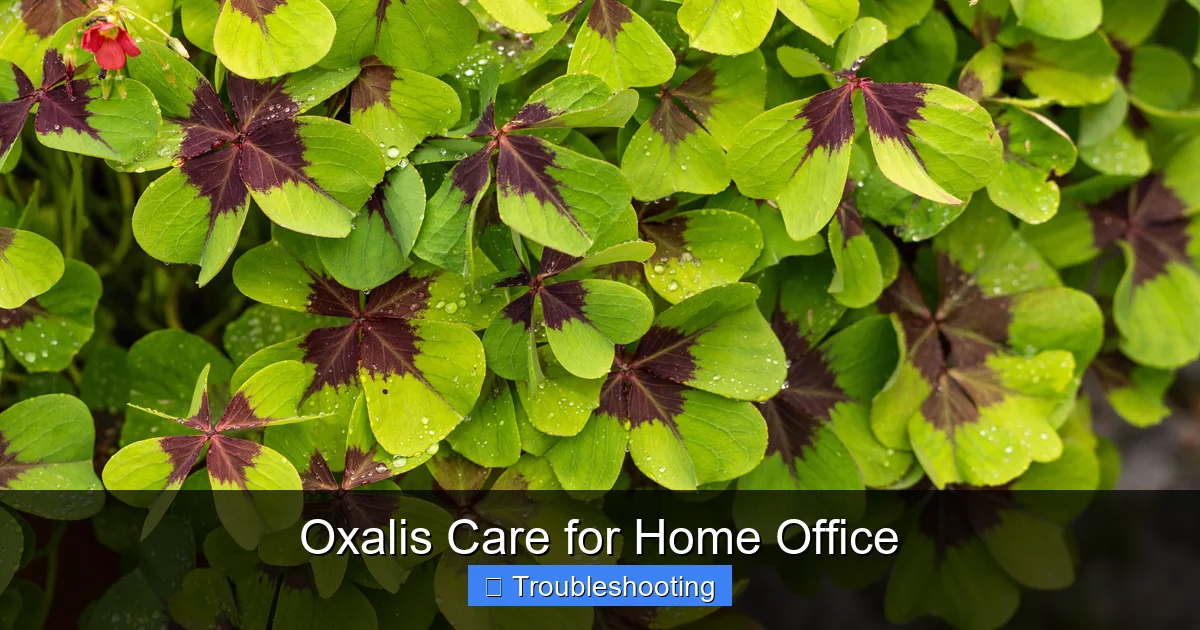
Visual guide about Oxalis Care for Home Office
Image source: thespruce.com
In a home office, you might not have perfect window access. If your desk sits against an interior wall, consider a small LED grow light. A 10-15 watt full-spectrum bulb positioned 12-18 inches above the plant for 10-12 hours daily mimics natural light effectively. Many office workers find clip-on plant lights that attach to monitor stands or shelf edges.
Signs Your Light Is Off
Watch your plant’s behavior for clues. Leaves reaching dramatically toward the light source indicate insufficient brightness. Faded or washed-out leaf color, especially on purple varieties losing their deep hue, signals the same issue. Conversely, bleached patches or crispy brown edges mean too much direct exposure.
Rotate your oxalis a quarter turn each week. This prevents lopsided growth and ensures all sides receive equal light. The habit also gives you a regular opportunity to inspect for pests or watering needs.
Seasonal Light Adjustments
Winter brings shorter days and lower sun angles. Your oxalis may need relocation closer to windows during darker months. Just avoid cold drafts from single-pane glass. In summer, you might need to pull the plant back from south or west windows to prevent leaf scorch. Sheer curtains diffuse harsh light beautifully while maintaining brightness.
Watering: The Goldilocks Principle
Consistent Moisture, Not Soggy Soil
Oxalis prefers evenly moist soil. Think of a wrung-out sponge, damp throughout but not dripping. Water when the top inch of soil feels dry to your fingertip. This usually means watering every 5-7 days in active growth, less in winter or during dormancy. Always use room-temperature water. Cold water shocks the roots.
Water thoroughly until liquid drains from the bottom holes. Empty the saucer after 15 minutes. Standing water leads to root rot, the number one killer of oxalis. If your pot lacks drainage holes, repot immediately. No amount of careful watering compensates for missing drainage.
Water Quality Matters
Tap water high in minerals or chlorine can build up in soil over time, causing leaf tip burn. If your water is heavily treated, let it sit overnight before use. This allows chlorine to evaporate. Alternatively, use filtered water or collected rainwater. Your oxalis will show appreciation with cleaner leaf margins.
Humidity Considerations
Home offices often have dry air, especially with heating or AC running. Oxalis appreciates moderate humidity around 40-50%. Group plants together to create a microclimate. A pebble tray with water beneath the pot adds localized humidity without risking root rot. Misting helps temporarily but doesn’t raise ambient humidity significantly.
Crispy leaf edges often indicate air too dry. Brown tips that progress inward suggest either low humidity or fertilizer salt buildup. Flush the soil monthly by running water through for several minutes to prevent mineral accumulation.
Temperature and Airflow Needs
Cool and Stable Wins the Race
Oxalis thrives in temperatures between 60-75°F (15-24°C). This range aligns perfectly with typical home office comfort zones. Avoid placing your plant near heating vents, radiators, or air conditioning units. These create temperature fluctuations and dry air that stress the plant.
Nighttime temperature drops of 10-15 degrees actually benefit oxalis, mimicking its natural environment. If your office cools down after hours, that’s fine. Just avoid freezing temperatures. Frost kills the foliage and can damage bulbs if prolonged.
Draft Protection
Cold drafts from frequently opened doors or leaky windows cause leaf drop. Hot drafts from vents dry out foliage rapidly. Position your plant away from direct airflow paths. A corner spot on a stable surface works better than a windowsill above a radiator.
Summer Vacation Care
If you travel for work, oxalis handles short absences well. Water thoroughly before leaving. Move the plant to a slightly shadier spot to reduce water needs. For trips longer than two weeks, consider a self-watering spike or ask a colleague to check in. The bulbs store enough energy to survive brief neglect, but extended drought forces premature dormancy.
Soil, Potting, and Repotting
The Perfect Mix
Oxalis needs well-draining soil that retains some moisture. A quality potting mix amended with perlite or pumice works beautifully. Aim for a ratio of 2 parts potting soil to 1 part perlite. This provides aeration for healthy roots while holding enough water for consistent moisture.
Avoid heavy garden soil or mixes with moisture-retaining crystals. These stay too wet too long. Cactus mix alone drains too fast. You can also create your own blend: 2 parts peat moss or coco coir, 1 part perlite, 1 part compost or worm castings for nutrients.
Choosing the Right Pot
Shallow pots work better than deep ones. Oxalis bulbs sit near the surface, spreading horizontally. A wide, shallow container accommodates this growth habit. Ensure multiple drainage holes. Terracotta pots wick moisture, helpful if you tend to overwater. Plastic or glazed ceramic retain moisture longer, better for forgetful waterers.
Pot size matters. Only go up one size when repotting. Excess soil around bulbs stays wet, inviting rot. A snug pot encourages flowering and prevents waterlogging.
Repotting Step by Step
Early spring, just before active growth resumes, is ideal repotting time. Gently remove the plant from its pot. Shake off loose old soil. Inspect bulbs for firmness. Discard any mushy or shriveled ones. Healthy bulbs feel firm like a garlic clove.
Place fresh soil in the new pot. Position bulbs about an inch below the rim, pointed end up. Space them an inch apart. Cover with soil, leaving the top of each bulb barely visible. Water lightly to settle. Don’t pack soil down. Roots need air pockets.
After repotting, keep the plant in slightly lower light for a week. Hold off on fertilizer for 4-6 weeks. Fresh soil contains enough nutrients initially.
Fertilizing for Lush Growth
Less Is More
Oxalis isn’t a heavy feeder. Over-fertilizing causes salt buildup and weak, floppy growth. During active growth (spring through fall), apply a balanced liquid fertilizer at quarter strength every 3-4 weeks. A 10-10-10 or 20-20-20 formula diluted to 1/4 teaspoon per gallon works well.
Stop fertilizing entirely during dormancy. The plant isn’t actively growing and can’t use nutrients. Resume when you see new shoots emerging. Organic options like fish emulsion or seaweed extract work beautifully but smell stronger. In a home office, you might prefer odorless synthetic alternatives.
Signs of Nutrient Issues
Pale green leaves with darker veins suggest nitrogen deficiency. Slow growth and small leaves indicate overall underfeeding. Brown leaf tips and crusty white soil surface signal over-fertilizing. Flush the soil thoroughly if you suspect salt buildup. Run water through for 5-10 minutes. Let drain completely.
Understanding and Managing Dormancy
The Great Die-Back
This is where most oxalis owners panic. Your thriving plant suddenly yellows, wilts, and loses all leaves within days. It looks dead. You might toss it, thinking you failed. Stop. This is normal. Oxalis enters dormancy triggered by temperature changes, shorter days, or simply completing a growth cycle.
Dormancy typically lasts 1-3 months. The bulbs rest underground, gathering strength for the next flush. Purple varieties (Oxalis triangularis) often go dormant in summer. Green varieties (Oxalis regnellii) may rest in winter. But indoor conditions blur these patterns. Your plant follows its own internal clock.
How to Handle Dormancy
When leaves start yellowing en masse, stop watering. Let the soil dry completely. Move the pot to a cool, dark spot. A closet shelf works perfectly. Temperature around 50-60°F is ideal. Mark your calendar for 8-10 weeks. Then bring it back to its bright spot, water lightly, and wait.
Don’t pull off yellowing leaves. Let them transfer energy back to the bulbs. Once completely brown and dry, they detach easily. Premature removal robs the plant of stored resources.
Waking Up Your Plant
After the rest period, return the pot to its growing location. Water once, thoroughly. Place in bright indirect light. New shoots usually appear within 2-3 weeks. Resume normal care when growth is established. The new foliage often emerges more vigorous than before.
If no growth appears after 4 weeks, gently probe the soil. Firm bulbs mean patience needed. Mushy bulbs indicate rot. Dry, papery bulbs mean they desiccated. Either way, you’ll know for next time.
Common Problems and Solutions
Pest Invasions
Spider mites love dry office air. Look for fine webbing between leaves and stippled, dusty foliage. Aphids cluster on new growth, leaving sticky honeydew. Fungus gnats indicate overwatering. Their larvae feed on roots.
Weekly inspection catches problems early. Wipe leaves with a damp cloth monthly. This removes dust and dislodges early pests. For spider mites, increase humidity and spray with neem oil weekly for three weeks. Aphids wash off with strong water spray or succumb to insecticidal soap. Fungus gnats require drying out the top soil layer and yellow sticky traps.
Disease Issues
Root rot from overwatering is the primary disease. Symptoms include yellowing lower leaves, mushy stems, and foul soil odor. If caught early, unpot, trim rotten roots, dust with cinnamon (natural fungicide), and repot in fresh dry mix. Water sparingly until recovery.
Powdery mildew appears as white dust on leaves in humid, stagnant air. Improve airflow. Remove affected leaves. Spray with 1 tablespoon baking soda per quart water plus a drop of dish soap.
Leaf Problems Decoded
Leggy stems with wide leaf spacing: insufficient light. Move closer to window or add grow light.
Leaves folding during day: underwatering or extreme heat. Check soil moisture.
Yellow leaves with green veins: nutrient deficiency or alkaline soil. Fertilize or repot in fresh mix.
Brown crispy edges: low humidity, fertilizer burn, or direct sun. Address the specific cause.
Sudden total leaf loss: dormancy or severe shock. Check bulbs. Adjust care accordingly.
Propagation: Multiply Your Collection
Division During Repotting
The easiest propagation method happens naturally during spring repotting. As you separate bulbs, each becomes a potential new plant. Pot bulbs individually in 3-inch pots or group 3-5 in a larger container. They’ll establish quickly since they already have root systems.
Leaf Cuttings (Advanced)
Some gardeners propagate from leaf cuttings, though success rates vary. Select a healthy leaf with a short stem piece. Dip in rooting hormone. Plant in moist perlite. Cover with a plastic bag for humidity. Place in bright indirect light. Roots may form in 4-6 weeks. A tiny bulb develops at the base.
Seed Collection
Oxalis produces small seed pods after flowering. When pods turn brown and split, collect seeds. Sow immediately on moist soil surface. Don’t cover. Keep warm and humid. Germination takes 2-4 weeks. Seedlings take a year to reach mature size but offer genetic variation.
Styling Oxalis in Your Home Office
Desk Placement Strategies
A single oxalis in a beautiful ceramic pot makes a statement on a cleared desk corner. Choose a pot color that complements your office palette. White pots highlight purple foliage dramatically. Terracotta warms green varieties. Ensure the pot has a matching saucer to protect surfaces.
If desk space is tight, wall-mounted planters or floating shelves keep plants visible but out of the work zone. Macramé hangers add bohemian flair. Just ensure you can easily reach the plant for watering and rotation.
Grouping for Impact
Three oxalis plants in coordinating pots create a curated look. Vary heights with plant stands or books. Mix purple and green varieties for contrast. Add a trailing plant like pothos or string of pearls for texture variation. Groupings also simplify care, water all at once.
Seasonal Decor Integration
Oxalis fits holiday decorating naturally. Its shamrock shape suits St. Patrick’s Day without kitsch. Purple varieties complement autumn tones. For winter, add tiny fairy lights to the foliage. The delicate leaves catch light beautifully. Just avoid heavy ornaments that damage stems.
Long-Term Care Calendar
Spring (March-May)
Repot if needed. Resume fertilizing. Increase watering as growth accelerates. Watch for pests on new growth. Propagate divisions. Enjoy flowering period.
Summer (June-August)
Monitor for heat stress. Increase humidity. Check soil daily in warm weather. Possible dormancy for purple varieties. Reduce water if leaves yellow.
Fall (September-November)
Reduce fertilizing. Prepare for possible dormancy. Clean leaves. Check for pests before heating season dries air.
Winter (December-February)
Minimal watering. No fertilizer. Maximize light exposure. Protect from cold drafts. Possible dormancy for green varieties. Plan spring repotting.
Troubleshooting Quick Reference
Plant Looks Dead Suddenly
Check bulbs. Firm? It’s dormancy. Follow dormancy protocol. Mushy? Root rot. Emergency repot. Dry and papery? Dehydration. Soak pot in water 30 minutes.
No Flowers
Oxalis flowers need maturity, bright light, and proper dormancy. Young plants may not bloom. Ensure winter rest period. Increase light. Be patient.
Leaves Won’t Open
Nyctinastic movement stops if light is too low or plant is stressed. Check soil moisture. Move to brighter spot. Ensure night darkness period.
Stems Falling Over
Leggy growth from low light. Stake with small bamboo supports temporarily. Move to brighter location permanently. Rotate weekly.
Conclusion
Oxalis care for home office success comes down to respecting the plant’s natural rhythms. Provide bright indirect light, consistent moisture, cool temperatures, and well-draining soil. Accept dormancy as a feature, not a failure. Your shamrock will reward you with years of charming foliage, delicate flowers, and the quiet satisfaction of nurturing a living thing alongside your work.
The relationship between plant and person in a home office goes both ways. You provide care. The oxalis provides beauty, air purification, and a gentle reminder to pause, breathe, and notice the small miracles unfolding on your desk. Those leaves folding at sunset and reopening at dawn? They’re keeping time with you, marking the hours of focused work and well-earned rest.
Start with one plant. Learn its language. Soon you’ll be the colleague sharing divisions and advice, spreading the joy of oxalis through the office ecosystem, one shamrock at a time.
Frequently Asked Questions
Is oxalis toxic to pets?
Yes, oxalis contains oxalic acid which is toxic to cats, dogs, and horses if ingested in large quantities. Keep plants out of reach of curious pets. The bitter taste usually deters significant consumption, but contact your vet if you suspect ingestion.
Why are my oxalis leaves closing during the day?
Daytime leaf folding usually indicates stress from underwatering, extreme heat, or root problems. Check soil moisture immediately. If dry, water thoroughly. If wet, check for root rot. Ensure the plant isn’t near a heat vent.
How do I get my oxalis to flower?
Mature oxalis plants flower with proper care: bright indirect light, consistent moisture, regular fertilizing during growth, and a cool dormancy period. Flowers typically appear in spring or fall. Young plants may take a year or two to bloom.
Can I grow oxalis under artificial lights only?
Yes, oxalis adapts well to full-spectrum LED grow lights. Provide 10-12 hours daily at 12-18 inches distance. A 10-15 watt bulb is sufficient for a small plant. This makes oxalis ideal for windowless offices.
What’s the difference between purple and green oxalis care?
Care requirements are nearly identical. Purple oxalis (Oxalis triangularis) often goes dormant in summer, while green oxalis (Oxalis regnellii) may rest in winter. Purple varieties show light stress more dramatically, fading to green in low light.
How long does oxalis dormancy last?
Typically 1-3 months depending on variety and conditions. Some plants skip dormancy entirely in stable indoor environments. Others cycle regularly. Don’t force dormancy if the plant keeps growing happily.