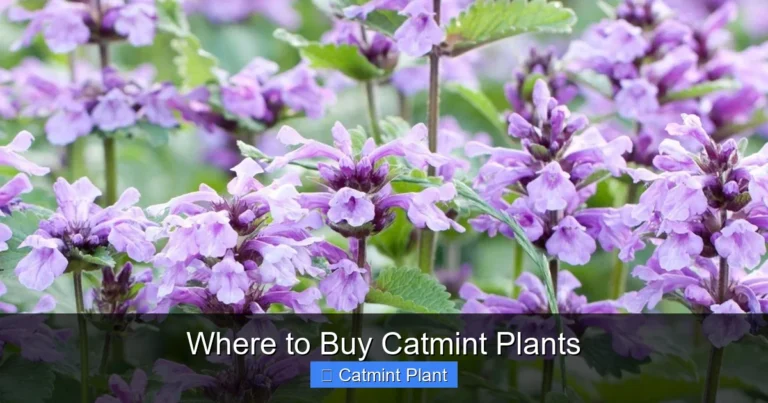
Walkers Low Catmint Plant
Walkers Low Catmint Plant is a stunning perennial that produces masses of lavender-blue flowers from late spring through fall. This low-maintenance, drought-tolerant plant attracts bees and butterflies while resisting deer and rabbits, making it perfect for sunny borders and cottage gardens.
If you are looking for a plant that gives you months of color with very little fuss, the Walkers Low Catmint Plant should be at the top of your list. This perennial has earned a loyal following among gardeners for good reason. It blooms for a long time. It handles heat and drought like a champ. And it brings in the bees and butterflies you want in your yard. I have grown this plant in my own garden for years, and it never disappoints.
In this guide, we will cover everything you need to know about growing and caring for the Walkers Low Catmint Plant. We will talk about planting, watering, pruning, and design ideas. We will also answer the most common questions gardeners have. By the end, you will feel confident adding this superstar to your landscape.
Key Takeaways
- Award-winning variety: Named Perennial Plant of the Year in 2007 for its outstanding garden performance
- Long blooming season: Produces lavender-blue flowers from late spring through early fall with proper deadheading
- Drought tolerant once established: Thrives in hot, dry conditions after the first growing season
- Pollinator magnet: Attracts bees, butterflies, and beneficial insects throughout the growing season
- Deer and rabbit resistant: Aromatic foliage naturally deters common garden pests
- Versatile landscape use: Works beautifully in borders, rock gardens, containers, and as ground cover
- Low maintenance: Requires minimal care beyond occasional watering and annual pruning
Quick Answers to Common Questions
How tall does Walkers Low Catmint Plant grow?
Walkers Low Catmint Plant typically grows 24 to 30 inches tall and spreads 24 to 36 inches wide, forming a mounded clump.
When does Walkers Low Catmint Plant bloom?
It blooms from late spring through early fall, especially if sheared back after the first flush of flowers fades in early summer.
Is Walkers Low Catmint Plant deer resistant?
Yes, the aromatic foliage of Walkers Low Catmint Plant naturally repels deer and rabbits, making it an excellent choice for areas with browsing pressure.
How often should I water Walkers Low Catmint Plant?
Water regularly during the first growing season to establish roots. Once established, it is drought tolerant and only needs water during prolonged dry spells.
Can Walkers Low Catmint Plant grow in containers?
Yes, it grows well in large containers (18+ inches wide) with well-draining potting mix, but requires more frequent watering than in-ground plants.
📑 Table of Contents
- What Is Walkers Low Catmint Plant
- Why Gardeners Love Walkers Low Catmint Plant
- How to Plant Walkers Low Catmint Plant
- Care and Maintenance
- Design Ideas and Companion Plants
- Common Problems and Solutions
- Propagation Methods
- Walkers Low Catmint Plant vs. Other Catmints
- Seasonal Care Calendar
- Buying Guide: What to Look For
- Environmental Benefits
- Frequently Asked Questions
- Conclusion
What Is Walkers Low Catmint Plant
The Walkers Low Catmint Plant is a cultivar of Nepeta racemosa. It is often called catmint or catnip, though it is different from the true catnip (Nepeta cataria) that drives cats wild. This variety was discovered in a garden in Ireland in the 1970s. It was introduced to the wider market in the 1980s. In 2007, the Perennial Plant Association named it the Perennial Plant of the Year. That award tells you a lot about its reliability and beauty.
Botanical Background
This plant belongs to the mint family, Lamiaceae. Like its relatives, it has square stems and aromatic leaves. The foliage is a soft gray-green color. The leaves are small and toothed. When you brush against them, they release a pleasant, minty scent. This scent is what keeps deer and rabbits away. It is also what makes the plant unappealing to most insect pests.
Growth Habit and Size
Despite the name “Low,” this is not a tiny ground hugger. The Walkers Low Catmint Plant forms a mounded clump. It typically reaches 24 to 30 inches tall. It spreads 24 to 36 inches wide. It has a relaxed, slightly sprawling habit. This makes it look natural and soft in the garden. It does not stay rigid and upright like some perennials. That loose form is part of its charm.
Flower Power
The flowers are the main show. They appear in dense spikes at the ends of the stems. The color is a lovely lavender-blue. Some people describe it as periwinkle. The blooms start in late spring. In many zones, they continue well into early fall. If you shear the plant back after the first big flush, you get a second and even third round of flowers. The flowers are small and tubular. They are packed tightly together. This creates a hazy cloud of color that looks amazing in mass plantings.
Why Gardeners Love Walkers Low Catmint Plant
There are hundreds of perennials you could choose. So why does this one get so much attention? It comes down to a combination of traits that are hard to beat. Let’s break down the specific benefits.
Exceptional Bloom Time
Many perennials bloom for two or three weeks. The Walkers Low Catmint Plant blooms for months. The initial flush in late spring is heavy. With deadheading or shearing, the show continues until frost. This gives you incredible value for your garden space. You get color when other plants are taking a break.
Drought Tolerance
Once established, this plant laughs at dry weather. It has a deep taproot system. This allows it to access moisture deep in the soil. It is a top choice for xeriscaping. It is perfect for that hot, dry spot by the driveway or mailbox. It saves you water and time.
Pollinator Paradise
If you want to support bees and butterflies, plant catmint. The flowers are rich in nectar. Honeybees, bumblebees, and native bees visit constantly. Butterflies love it too. Hummingbirds will sometimes stop by. It is a buzzing, fluttering hub of activity all summer long. Planting Walkers Low Catmint Plant is one of the easiest ways to make your garden wildlife-friendly.
Pest and Disease Resistance
This plant is tough. The aromatic oils in the leaves repel deer and rabbits. They rarely touch it. Insect pests generally ignore it. It has very few disease problems. Good air circulation prevents the only real issue, which is powdery mildew in humid climates. You rarely need to spray anything on this plant.
Versatility in Design
The Walkers Low Catmint Plant fits almost any garden style. It looks right at home in a cottage garden. It works in a modern, minimalist planting. It softens the edges of a formal border. It thrives in a rock garden. It spills beautifully over a wall. You can even grow it in a large container. Its soft texture contrasts well with bold foliage plants like hostas or ornamental grasses.
How to Plant Walkers Low Catmint Plant
Success starts with proper planting. The Walkers Low Catmint Plant is not fussy, but giving it a good start pays off. Here is the step-by-step process.
Choosing the Right Location
Sun is non-negotiable. This plant needs full sun. That means at least six hours of direct sunlight per day. Eight hours is even better. In too much shade, the plant gets leggy. It flops open in the center. It produces fewer flowers. It is also more susceptible to fungal issues. Pick the sunniest spot you have.
Soil drainage is the other critical factor. The Walkers Low Catmint Plant hates wet feet. Heavy clay soil that stays soggy will kill it. If you have clay, amend it heavily with compost and grit. Or plant in a raised bed. A slope is ideal. The soil does not need to be rich. Average to lean soil is fine. In fact, overly rich soil encourages floppy growth.
When to Plant
Spring and fall are the best times. Spring planting gives the roots all summer to establish before winter. Fall planting works well in zones 5 and warmer. The soil is warm, encouraging root growth. The air is cool, reducing stress. Avoid planting in the heat of summer. If you must plant in summer, provide shade cloth and water diligently.
Spacing
Space plants 24 to 30 inches apart. This allows for their mature spread. It ensures good air flow. Good air flow prevents disease. If you are planting a mass or drift, you can space them slightly closer, around 18 to 20 inches. They will knit together faster.
Planting Steps
- Dig a hole twice as wide as the pot. Make it the same depth.
- Gently remove the plant from its container. Loosen the roots if they are circling.
- Place the plant in the hole. The top of the root ball should be level with the surrounding soil.
- Backfill with the native soil. Do not amend the backfill soil heavily. You want the roots to venture out into the native earth.
- Firm the soil gently around the base.
- Water deeply to settle the soil and eliminate air pockets.
- Apply a thin layer of mulch. Keep mulch away from the crown.
Care and Maintenance
The Walkers Low Catmint Plant is famously low maintenance. But “low” does not mean “zero.” A few simple tasks keep it looking its best.
Watering
Water regularly during the first growing season. This establishes the deep root system. Aim for about an inch of water per week. Once established, water only during prolonged dry spells. In many regions, rainfall is enough. Overwatering is a bigger risk than underwatering. Soggy soil leads to root rot.
Fertilizing
Skip the fertilizer. Seriously. The Walkers Low Catmint Plant prefers lean soil. Fertilizer, especially nitrogen, makes the stems weak and floppy. It reduces flowering. It makes the plant more susceptible to aphids. If your soil is extremely poor, a light side-dressing of compost in spring is plenty.
Deadheading and Shearing
This is the secret to months of bloom. After the first heavy flush fades in early summer, shear the whole plant back by half. Use hedge shears or large scissors. It looks drastic. But within two weeks, you will see fresh green growth. Buds will follow quickly. You get a second major bloom. You can do this again in late summer for a fall show. If you don’t want to shear the whole plant, you can deadhead individual spent spikes. Shearing is faster and keeps the mound shape tidy.
Dividing
Divide the clump every three to four years. Do this in early spring. The center of old clumps can die out. Dividing rejuvenates the plant. Dig up the whole clump. Use a sharp spade or knife to cut it into sections. Each section needs roots and shoots. Replant the divisions immediately. Water them well. Share extras with friends.
Winter Care
In cold climates (zones 3-4), leave the dead foliage standing over winter. It protects the crown. Cut it back to the ground in early spring before new growth starts. In warmer zones, you can cut it back in late fall if you prefer a tidy look. Or leave it for winter interest and habitat.
Design Ideas and Companion Plants
The Walkers Low Catmint Plant is a team player. Its soft blue color and mounding shape make it easy to combine. Here are some winning combinations.
Classic Rose Companion
This is the classic pairing. Plant catmint at the base of roses. The lavender-blue hides the bare “knees” of rose bushes. The colors look beautiful together. Pink, red, yellow, or white roses all work. The catmint also attracts beneficial insects that eat rose pests like aphids.
Hot Color Contrast
Pair the cool blue flowers with hot colors. Think Echinacea (coneflower) in orange or red. Try Gaillardia (blanket flower). Add Coreopsis (tickseed) in bright yellow. The contrast is electric. It creates a high-energy, cheerful border.
Grasses and Texture
Ornamental grasses provide structure. The fine texture of catmint contrasts with the bold blades of grasses. Try Panicum virgatum (switchgrass) ‘Shenandoah’ or ‘Northwind’. Calamagrostis (feather reed grass) ‘Karl Foerster’ is another great partner. The grass stands tall. The catmint fills the base.
Silver and White Theme
For a moon garden or cool-toned bed, combine Walkers Low Catmint Plant with silver foliage. Stachys byzantina (lamb’s ear) is perfect. Artemisia ‘Powis Castle’ adds feathery silver. White flowers like Leucanthemum (Shasta daisy) or white Phlox complete the look. This palette glows at dusk.
Container Planting
Yes, you can grow it in a pot. Choose a large container. At least 18 inches wide and deep. Use a gritty, well-draining potting mix. Mix in some perlite or coarse sand. Water when the top two inches of soil are dry. Fertilize once in spring with a slow-release, low-nitrogen fertilizer. Shear it back after flowering just like in the ground. In winter, move the pot to a protected spot in cold zones.
Common Problems and Solutions
The Walkers Low Catmint Plant is trouble-free for the most part. But occasionally, issues arise. Here is how to handle them.
Floppy, Open Center
This is the number one complaint. The plant splits open in the middle. Stems lie flat on the ground. Causes: too much shade, too much water, too much fertilizer, or the plant is old and needs dividing. Solution: Move to full sun. Stop fertilizing. Water less. Shear it back hard after the first bloom. Divide in spring if it is over three years old.
Powdery Mildew
This looks like white dust on the leaves. It happens in humid weather with poor air flow. Solution: Space plants properly. Water at the base, not overhead. Thin out crowded stems. If it is severe, cut the plant back to the ground. It will regrow clean. Fungicides are rarely needed.
Root Rot
The plant wilts even though the soil is wet. The roots turn brown and mushy. Cause: Poor drainage. Solution: Improve drainage or move the plant. Once root rot sets in, the plant usually cannot be saved. Prevention is key. Plant in well-drained soil.
Aphids
Occasionally, aphids cluster on new growth. Solution: Blast them off with a strong jet of water. Or spray with insecticidal soap. Ladybugs and lacewings usually take care of them naturally. The Walkers Low Catmint Plant attracts these beneficials aromatic foliage usually keeps them away.
Propagation Methods
Want more plants? You have three easy options.
Division
This is the fastest way to get a mature plant. Do it in early spring. Dig up the clump. Cut into sections. Replant. You get instant plants that bloom the same year.
Softwood Cuttings
Take cuttings in late spring or early summer. Cut 4 to 6 inch stems. Remove lower leaves. Dip in rooting hormone. Stick in moist perlite or sand. Cover with a plastic bag. Keep in bright, indirect light. Roots form in 3 to 4 weeks. Pot up and grow on.
Seed
The Walkers Low Catmint Plant does not come true from seed. Seedlings will be variable. They might be taller, shorter, or different colors. If you want the exact cultivar, use division or cuttings. If you want to experiment, sow seeds indoors 6 to 8 weeks before last frost. Or direct sow in fall.
Walkers Low Catmint Plant vs. Other Catmints
There are many catmints on the market. How does this one compare?
Walkers Low vs. ‘Six Hills Giant’
‘Six Hills Giant’ is taller, reaching 36 inches. It is more upright. It flops more. ‘Walkers Low’ is more compact and mound-shaped. ‘Walkers Low’ has a longer bloom time. ‘Walkers Low’ is generally considered the better garden plant.
Walkers Low vs. ‘Junior Walker’ (Ppaf)
‘Junior Walker’ is a dwarf sport of ‘Walkers Low’. It stays 15 to 18 inches tall. It is great for the front of the border. It has the same long bloom time. Choose ‘Junior Walker’ for small spaces. Choose ‘Walkers Low’ for massing and mid-border.
Walkers Low vs. ‘Cat’s Pajamas’
‘Cat’s Pajamas’ is a newer, very compact variety. It is 12 to 14 inches tall. It blooms earlier. It is very dense. ‘Walkers Low’ is larger and looser. Both are excellent. ‘Walkers Low’ has the track record.
Walkers Low vs. Nepeta sibirica (Siberian Catmint)
Siberian catmint spreads aggressively by rhizomes. It can be invasive. Walkers Low Catmint Plant is a clumper. It stays put. It is much better behaved in the garden.
Seasonal Care Calendar
Here is a quick reference for the year.
Early Spring
- Cut back dead foliage to the ground.
- Divide clumps if needed (every 3-4 years).
- Apply a thin layer of compost around the base.
Late Spring
- First major flush of flowers begins.
- Enjoy the pollinator show.
- Water if dry.
Early Summer
- First flush fades.
- Shear plant back by half.
- Water well after shearing.
Mid Summer
- Second flush of flowers appears.
- Monitor for pests (rare).
- Water during drought.
Late Summer
- Optional: Shear again for fall bloom.
- Stop watering as weather cools.
Fall
- Enjoy final flowers.
- Leave foliage standing for winter protection (cold zones).
- Or cut back for tidiness (warm zones).
Winter
- No care needed.
- Plan next year’s companions.
Buying Guide: What to Look For
When shopping for Walkers Low Catmint Plant, you have options.
Local Nursery vs. Mail Order
Local nurseries let you see the plant. You can check for health. You support local business. Selection may be limited. Mail order offers huge selection. Plants arrive bare root or in small pots. They need more care initially. Reputable online nurseries guarantee their plants.
What to Inspect
- Green, perky foliage. No yellowing.
- No signs of powdery mildew.
- Roots should be white and firm, not brown and mushy.
- Plant should not be root-bound in the pot.
- Look for a plant with multiple stems emerging from the crown.
Size to Buy
Quart pots (4 inch) are economical. They catch up fast. Gallon pots give instant impact. They cost more. For mass planting, quarts or plugs are fine. For a specimen, a gallon is nice.
Environmental Benefits
Planting Walkers Low Catmint Plant does more than look pretty.
Water Conservation
Its drought tolerance reduces irrigation needs. This saves a precious resource. It is a responsible choice for sustainable landscaping.
Pollinator Support
It provides nectar for months. This supports declining bee populations. It helps butterflies. It supports the food web.
Reduced Chemical Use
Because it resists pests and diseases, you do not need pesticides or fungicides. This keeps your garden ecosystem healthy. It protects beneficial insects.
Erosion Control
The spreading root system holds soil on slopes. The dense foliage slows rainfall impact. It is a great choice for banks.
Frequently Asked Questions
Let’s tackle the questions I hear most often.
Does Walkers Low Catmint Plant attract cats?
It can. It contains nepetalactone, the compound that affects cats. However, it is much less potent than true catnip (Nepeta cataria). Some cats ignore it. Some roll on it. If neighborhood cats are a problem, you might see some flattened plants. Most gardeners find it is not a major issue.
Is Walkers Low Catmint Plant invasive?
No. It is a clump-forming perennial. It does not run by rhizomes. It does self-seed lightly. The seedlings are easy to pull or transplant. It is not considered invasive in any region.
Can I grow Walkers Low Catmint Plant in shade?
Not successfully. It needs full sun. In part shade (4-6 hours), it will survive but get leggy. It will flower poorly. It will be prone to mildew. Full sun is required for the classic mound and heavy bloom.
When should I cut back Walkers Low Catmint Plant?
Cut back dead foliage in early spring. Shear back by half after the first bloom in early summer. You can shear again in late summer. Do not cut back in late fall in cold zones; the foliage protects the crown.
Why is my Walkers Low Catmint Plant not flowering?
Most likely cause: not enough sun. Second cause: too much nitrogen fertilizer. Third cause: the plant is old and woody and needs dividing. Fourth cause: you sheared it too late in the season and cut off the buds.
Can Walkers Low Catmint Plant grow in clay soil?
Only if the clay is amended for drainage. Pure clay holds too much water. Mix in lots of compost and coarse sand or grit. Or plant in a raised bed. A slope helps.
Conclusion
The Walkers Low Catmint Plant is a garden workhorse. It asks for so little. Sun. Drainage. A haircut now and then. In return, it gives you months of beautiful blue flowers. It feeds the bees. It ignores the deer. It handles the heat. It softens the hard edges of your hardscape. It plays well with almost every other plant.
Whether you are a new gardener looking for a sure win, or an experienced designer needing a reliable filler, this plant delivers. It has held a spot in my garden for over a decade. I cannot imagine my sunny borders without that hazy cloud of lavender-blue. Give it a try. Plant it in a drift of three or five. Watch it fill in. Watch the pollinators arrive. You will see why it won Plant of the Year. And you will wonder how you ever gardened without it.
Happy planting!
Frequently Asked Questions
Does Walkers Low Catmint Plant spread aggressively?
No, Walkers Low Catmint Plant is a clump-forming perennial that stays in place. It does not run by underground rhizomes like some mint relatives. It may self-seed lightly, but volunteers are easy to remove or transplant.
What is the difference between Walkers Low and Junior Walker catmint?
Junior Walker is a dwarf sport of Walkers Low, staying only 15 to 18 inches tall. Walkers Low reaches 24 to 30 inches. Both have the same long bloom time and lavender-blue flowers, but Junior Walker is better for small spaces and front-of-border planting.
Should I fertilize my Walkers Low Catmint Plant?
No, fertilizing is not recommended. Walkers Low Catmint Plant prefers lean soil. Fertilizer, especially high nitrogen, causes weak, floppy stems and reduces flowering. A light compost mulch in spring is sufficient if soil is very poor.
Why is my Walkers Low Catmint Plant flopping open in the center?
Flopping is usually caused by too much shade, overwatering, over-fertilizing, or an old clump that needs division. Ensure full sun, reduce water and fertilizer, shear back after first bloom, and divide every 3-4 years in spring.
Can Walkers Low Catmint Plant survive winter in zone 3?
Yes, Walkers Low Catmint Plant is hardy to USDA zone 3. In cold zones, leave the dead foliage standing over winter to protect the crown, then cut back to the ground in early spring before new growth emerges.
Is Walkers Low Catmint Plant the same as catnip?
No, Walkers Low Catmint Plant (Nepeta racemosa ‘Walkers Low’) is an ornamental perennial. Catnip (Nepeta cataria) is a different species grown for its effect on cats. Walkers Low has much lower nepetalactone content and is grown for its flowers and garden performance.