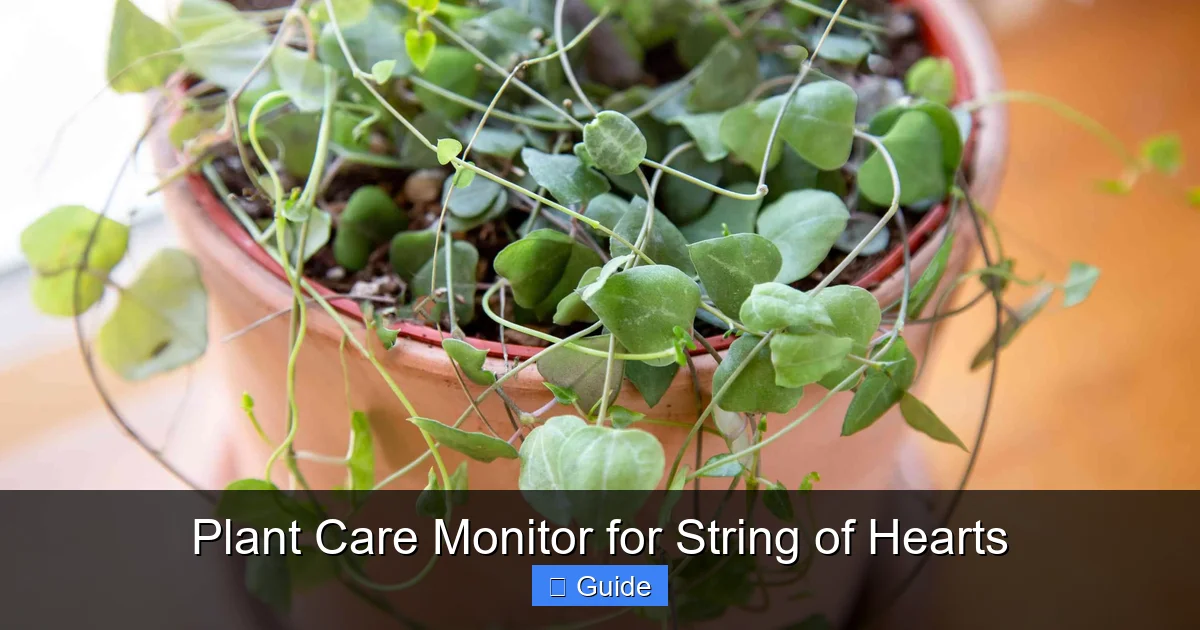
Plant Care Monitor for String of Hearts
A plant care monitor for String of Hearts takes the guesswork out of caring for this delicate trailing succulent. These smart devices track soil moisture, light levels, temperature, and humidity in real time, sending alerts straight to your phone. With the right monitor, you can prevent root rot, sunburn, and dehydration while keeping your Ceropegia woodii happy and thriving year-round.
If you have ever stared at your String of Hearts wondering if it needs water, you are not alone. This charming trailing plant, also known as Ceropegia woodii, has stolen hearts everywhere with its delicate heart-shaped leaves and cascading vines. But here is the thing — it can be surprisingly tricky to keep happy. Too much water and the tubers rot. Too little and the leaves shrivel. Too much direct sun and they scorch. Too little light and the gaps between leaves stretch out, making the plant look sparse and leggy.
That is where a plant care monitor for String of Hearts comes in. These handy little gadgets take the guesswork out of plant parenting. They measure the exact conditions your plant lives in and send the data to your phone. No more sticking your finger in the soil and hoping for the best. No more wondering if that windowsill is actually bright enough. You get real numbers, real alerts, and real peace of mind. In this guide, we will walk through everything you need to know about choosing, setting up, and using a plant care monitor for your String of Hearts. Let us dig in.
Key Takeaways
- String of Hearts needs precise care: This semi-succulent hates soggy soil but also suffers when bone dry for too long.
- Smart monitors track four key metrics: Soil moisture, light intensity, temperature, and humidity all matter for healthy growth.
- App alerts prevent common problems: Real-time notifications help you catch overwatering, low light, or temperature stress early.
- Bluetooth vs WiFi matters: Bluetooth works for nearby plants; WiFi models let you check from anywhere.
- Probe depth affects accuracy: Choose a monitor with a probe long enough to reach the root zone in your pot.
- Data history reveals patterns: Long-term tracking helps you adjust care with the seasons.
- Integration with smart home systems adds convenience: Some monitors work with Alexa, Google Home, or Apple HomeKit.
Quick Answers to Common Questions
What is the ideal soil moisture level for String of Hearts?
Water your String of Hearts when the soil moisture drops to 15-20 percent. The plant stores water in its tubers, so it prefers to dry out significantly between waterings. Avoid letting it stay below 10 percent for extended periods.
Can I use a cheap moisture meter instead of a smart monitor?
You can, but a basic meter only gives a snapshot when you remember to check it. A smart plant care monitor for String of Hearts provides continuous tracking, alerts, and historical data that prevent problems before they start.
How much light does String of Hearts really need?
String of Hearts thrives with a daily light integral (DLI) of 8-12 mol/m²/day. That translates to bright indirect light — around 400-800 foot-candles for most of the day. Direct afternoon sun can burn the leaves.
Do I need WiFi or is Bluetooth enough for a plant monitor?
Bluetooth works well if you are home most days and keep the plant within 30-50 feet. Choose WiFi if you travel often or want to check your plant from anywhere and integrate with smart home systems.
How often should I calibrate my plant care monitor?
Calibrate when you first set it up, after repotting into fresh soil, and if readings seem off. Monthly probe cleaning helps maintain accuracy. Most monitors hold calibration well for 6-12 months in stable conditions.
📑 Table of Contents
- Why String of Hearts Needs Special Monitoring
- Types of Plant Care Monitors Available
- Key Features to Look For in a String of Hearts Monitor
- Setting Up Your Plant Care Monitor for String of Hearts
- Interpreting the Data: What the Numbers Mean for Your Plant
- Common Problems and How Your Monitor Solves Them
- Advanced Tips for Power Users
- Choosing the Right Monitor for Your Budget
- Maintaining Your Plant Care Monitor
- Conclusion
Why String of Hearts Needs Special Monitoring
String of Hearts is not your average houseplant. It sits in a sweet spot between succulent and tropical vine. The plant stores water in its tuberous roots and thickened leaves, which means it handles drought better than flooding. But it also comes from South Africa, where it grows in dappled shade under shrubs and rocks. It wants bright indirect light, warm temperatures, and moderate humidity. Get any of these wrong, and the plant lets you know — sometimes dramatically.
The Overwatering Trap
Overwatering is the number one killer of String of Hearts. The tubers rot quickly in soggy soil. Once rot sets in, it spreads fast. You might not see the damage until the vines start collapsing. A plant care monitor for String of Hearts catches this early. It tells you when the soil is still wet at the root level, even if the surface looks dry. This is huge because the top inch of soil can feel dry while the bottom stays soaked. That mismatch fools a lot of people.
The Underwatering Risk
On the flip side, letting the plant go bone dry for too long causes the leaves to wrinkle and the tubers to shrivel. The plant can bounce back from mild dehydration, but severe drying damages the water storage tissue. A good monitor alerts you before the plant hits crisis mode. You get a notification when moisture drops below your set threshold. That means you water on the plant’s schedule, not yours.
Light Sensitivity
String of Hearts loves bright light but hates harsh direct sun, especially in the afternoon. A few hours of gentle morning sun is perfect. Strong midday rays bleach the leaves and cause brown crispy patches. Too little light leads to etiolation — long gaps between leaves, thin stems, and pale color. A monitor with a light sensor tells you exactly how many foot-candles or lux your plant receives. You can then move it to a better spot or add a grow light with confidence.
Temperature and Humidity Nuances
This plant prefers temperatures between 65 and 85 degrees Fahrenheit. It can tolerate brief dips to 50 degrees but suffers in prolonged cold. Hot drafts from heaters or cold drafts from windows stress it out. Humidity around 40 to 50 percent is ideal. Dry indoor air in winter can cause leaf tip browning. A monitor that tracks both temperature and humidity helps you create a stable microclimate. You might add a humidifier, move the plant away from a vent, or group it with other plants to boost local humidity.
Types of Plant Care Monitors Available
Not all plant monitors are created equal. Some measure just one thing. Others measure everything. Some talk to your phone via Bluetooth. Others connect to WiFi. Some run on batteries for a year. Others need charging every few weeks. Understanding the differences helps you pick the right tool for your String of Hearts.
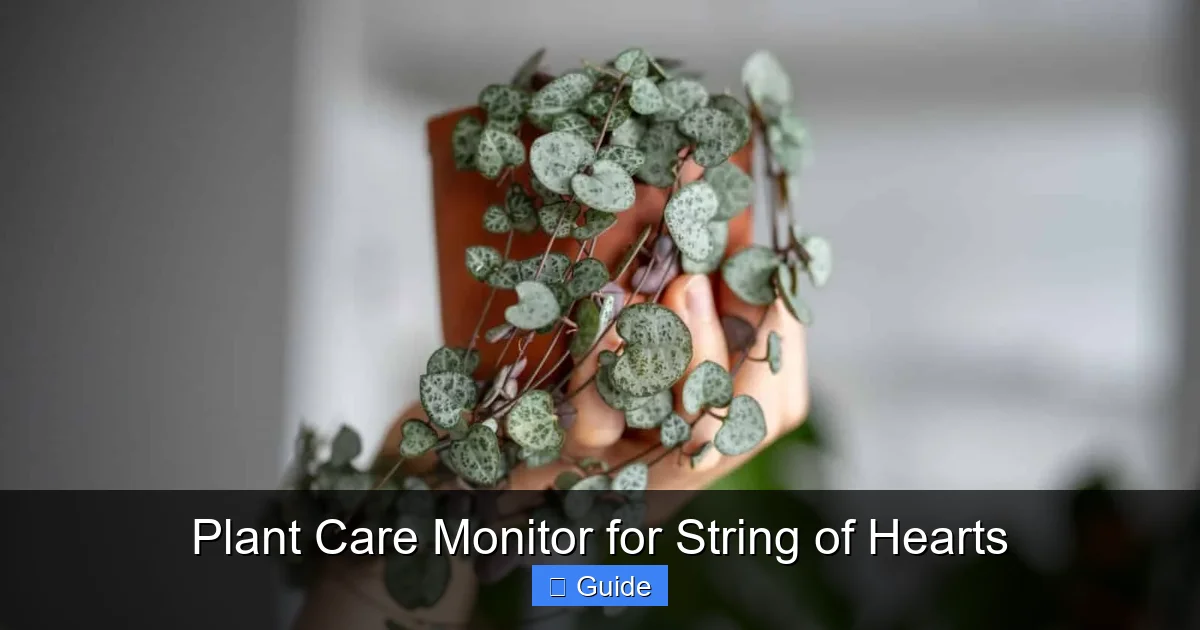
Visual guide about Plant Care Monitor for String of Hearts
Image source: planetnatural.com
Single-Function Moisture Meters
These are the simplest and cheapest options. You stick a probe in the soil, and a dial or digital readout shows the moisture level. No app. No connectivity. No history. They are fine for a quick check, but they do not track trends. You have to remember to check them. For a plant as sensitive as String of Hearts, they leave a lot of gaps. You might check on Monday, but the soil dries out by Wednesday. Without an alert, you miss the window.
Bluetooth Multi-Sensor Monitors
These are the most popular for home plant parents. They measure moisture, light, temperature, and sometimes humidity and fertilizer levels (EC). They connect to an app on your phone via Bluetooth. Range is usually 30 to 50 feet indoors. You get real-time readings, historical graphs, and push notifications when conditions go out of range. Battery life ranges from a few months to over a year. Brands like Xiaomi, Govee, and Flower Care dominate this space. They offer great value for the price.
WiFi-Enabled Smart Monitors
WiFi monitors do everything Bluetooth models do, plus they connect to your home network. That means you can check your String of Hearts from work, vacation, or the grocery store. They often integrate with smart home platforms like Apple HomeKit, Google Home, or Amazon Alexa. Some even trigger smart plugs to turn on grow lights or humidifiers automatically. The trade-off is higher cost, shorter battery life, and more complex setup. But for frequent travelers or tech lovers, they are worth it.
Professional-Grade Environmental Sensors
These are built for greenhouses, grow tents, and serious collectors. They offer lab-grade accuracy, data logging to SD cards or cloud servers, and multiple probe support. You can monitor several plants from one base station. They often include VPD (vapor pressure deficit) calculations, PAR (photosynthetically active radiation) sensors, and CO2 monitoring. Overkill for a single String of Hearts? Probably. But if you have a whole shelf of rare succulents, they make sense.
Key Features to Look For in a String of Hearts Monitor
When shopping for a plant care monitor for String of Hearts, certain features matter more than others. The plant’s specific needs — shallow roots, light sensitivity, tuber rot risk — mean you should prioritize a few things.
Probe Length and Design
String of Hearts often grows in shallow pots or hanging baskets. The roots stay near the surface. A probe that is too long hits the bottom of the pot without measuring the root zone. A probe that is too short misses the deeper moisture. Look for a probe around 3 to 5 inches long. Some monitors let you insert the probe at an angle to reach the root ball in shallow containers. A slender probe minimizes root disturbance.
Moisture Measurement Technology
Capacitive sensors are the gold standard. They measure the dielectric constant of the soil, which changes with water content. They do not corrode like resistive probes (the ones with two metal prongs). Resistive probes also give false readings as fertilizer salts build up. Capacitive sensors last longer and stay accurate. If the specs do not say capacitive, ask. It matters.
Light Sensor Range and Accuracy
Your monitor should measure from deep shade (under 50 foot-candles) to bright indirect light (1000+ foot-candles). Some cheap sensors max out at 2000 lux (about 185 foot-candles), which is useless for String of Hearts. Look for a range up to at least 10,000 lux or 1000 foot-candles. Accuracy within 10 percent is good. The app should show both instant readings and daily light integral (DLI) — the total light energy the plant receives in a day. DLI helps you know if your plant gets enough cumulative light.
Customizable Alert Thresholds
Every plant is different. Your String of Hearts in a terracotta pot in a sunny room dries faster than one in a plastic pot in a humid bathroom. The app must let you set custom thresholds for each metric. You want to say: alert me when moisture drops below 20 percent, when light exceeds 800 foot-candles, when temperature goes below 60 or above 90. Preset plant profiles are a nice starting point, but customization is essential.
Battery Life and Power Options
Bluetooth monitors typically run on coin cells (CR2032 or CR2450) or AAAs. Coin cells last 6 to 18 months. AAAs last longer but make the device bulkier. WiFi monitors drain batteries fast — sometimes weeks. Some offer USB charging or solar panels. If you hate changing batteries, look for a model with a year-plus battery life or a rechargeable option. Check if the battery is user-replaceable. Some sealed units become e-waste when the battery dies.
App Usability and Data Export
The app is your window into the plant’s world. It should be clean, fast, and intuitive. Graphs should be easy to read. You should be able to label each sensor (for example, “String of Hearts — Hanging Basket”). Data export to CSV is a huge plus for tracking long-term trends or sharing with a plant doctor. Multiple device support matters if you grow more than one plant. Cloud backup prevents data loss if you switch phones.
Durability and Water Resistance
The probe goes in wet soil. The body sits near watering cans and misters. At minimum, the probe should be IP67 rated (dustproof and waterproof to 1 meter). The electronics housing should be at least splash-resistant. Some monitors have a separate probe on a cable, keeping the electronics high and dry. That design is smart for hanging plants where the sensor body might dangle.
Setting Up Your Plant Care Monitor for String of Hearts
You bought the monitor. Now what? Proper setup makes the difference between useful data and frustrating noise. Let us walk through the steps.
Unboxing and Pairing
Open the box. Check for the sensor, probe (if separate), battery (sometimes pre-installed with a pull tab), and quick start guide. Download the manufacturer’s app from the App Store or Google Play. Create an account. Turn on Bluetooth (and WiFi if needed). Follow the in-app pairing instructions. Usually, you press a button on the sensor or pull the battery tab. The app finds it. Name the sensor something clear — “SOH Living Room” or “String of Hearts Hanging.” Assign it to a room if the app supports rooms.
Calibrating the Moisture Sensor
Most monitors need a baseline calibration. The app will ask you to insert the probe into dry soil, then wet soil, or it will auto-calibrate over the first few days. For String of Hearts, use your actual potting mix. A gritty succulent mix reads differently than peat-based soil. If the app lets you select soil type, choose “succulent” or “cactus” or “custom.” Do the calibration when the soil is truly dry (wait a few days after watering) and again after a thorough soak. This teaches the sensor what 0 percent and 100 percent look like in your specific setup.
Probe Placement Strategy
Insert the probe near the edge of the pot, angled toward the center where the tuber cluster sits. Avoid stabbing the tubers directly — they are fragile. In a hanging basket, insert from the side at root depth. Make sure the probe body sits firmly so it does not wiggle loose. If the monitor has a separate probe on a cable, tuck the electronics into the pot rim or hang them from the basket chain. Keep the light sensor exposed — do not bury it or cover it with leaves.
Setting Your Thresholds
Now the fun part. Open the settings for your sensor. Set moisture alert low at 15 to 20 percent. Set high alert at 70 to 80 percent (though you rarely need a high moisture alert for this plant). Set light low alert at 100 foot-candles (minimum for maintenance) and high alert at 1000 foot-candles (risk of sunburn). Set temperature low at 60°F, high at 90°F. Set humidity low at 35 percent. Enable push notifications for all. Test each by temporarily changing a threshold to trigger an alert. Make sure your phone buzzes.
Creating a Baseline Week
Do not change your care routine for the first 7 to 10 days. Just watch the data. Note how fast moisture drops after watering. See the daily light pattern. Watch temperature swing day to night. This baseline tells you what is normal for your plant in your home. After a week, you will spot anomalies instantly. You will also learn the perfect watering interval — maybe every 10 days in spring, every 14 in winter. The monitor teaches you your plant’s rhythm.
Interpreting the Data: What the Numbers Mean for Your Plant
Data is just noise until you understand it. Let us translate the key metrics into actionable insights for String of Hearts.
Reading Moisture Trends
The moisture graph should look like a sawtooth: sharp rise at watering, gradual decline over days. A steep drop means fast drainage (good) or small pot (dries fast). A flat line after watering means poor drainage or compacted soil — repot soon. If the line never drops below 40 percent, you are overwatering. If it hits 5 percent and stays there for days, you are underwatering. The sweet spot: water when it hits 15 to 20 percent. The tubers still have reserves, but the soil is dry enough to prevent rot.
Understanding Light Patterns
Look at the daily light integral (DLI). String of Hearts wants a DLI of 8 to 12 mol/m²/day for strong growth. Lower than 5 and the plant stretches. Higher than 15 risks bleaching. The hourly graph shows when light peaks. A smooth curve means consistent indirect light. Sharp spikes mean direct sun beams hitting the sensor. If spikes exceed 2000 foot-candles, move the plant or add a sheer curtain. Morning spikes are gentler than afternoon spikes.
Temperature Stability
String of Hearts hates swings. A day-night difference of 10 degrees is fine. Twenty degrees stresses the plant. Watch for heater blasts in winter or AC blasts in summer. If the graph shows sudden spikes, relocate the plant. Consistency beats perfection. A steady 72°F is better than 65°F to 85°F swings.
Humidity Trends
Indoor humidity often crashes to 20 percent in winter. If your monitor shows sustained lows below 35 percent, group plants together, use a pebble tray, or run a humidifier. High humidity (above 70 percent) with poor airflow invites fungal issues. The monitor helps you balance it.
Correlating Metrics
The real power is seeing how metrics interact. High light + high temperature = faster drying. Low light + high moisture = rot risk. Low humidity + high temperature = crispy leaf tips. The app’s multi-graph view lets you overlay charts. Spot the correlations. Adjust one variable and watch the others respond. That is how you become a pro.
Common Problems and How Your Monitor Solves Them
Let us match specific String of Hearts struggles to monitor features.
Problem: Sudden Vine Collapse
One day the vines look fine. Next day they are mushy and falling off. Cause: tuber rot from chronic overwatering. Monitor fix: Moisture alerts at 20 percent prevent watering too soon. Historical data shows if you have been keeping soil above 50 percent for weeks. Fix the pattern before the plant dies.
Problem: Leaves Curling and Wrinkling
The hearts look like raisins. Cause: severe dehydration. Monitor fix: Low moisture alert at 15 percent reminds you before the plant crisps. If you see wrinkling despite alerts, your threshold is too low — raise it to 25 percent.
Problem: Long Gaps Between Leaves (Leggy Growth)
The vine stretches with inches between leaf pairs. Cause: insufficient light. Monitor fix: DLI reading below 5 mol/m²/day confirms it. Move to brighter spot or add grow light. Watch DLI rise. New growth will be compact.
Problem: Bleached or Brown Crispy Patches
Leaves turn pale yellow or develop brown burns. Cause: too much direct sun. Monitor fix: Light spikes above 1500 foot-candles correlate with damage. Diffuse the light. Monitor confirms the fix.
Problem: Yellowing Leaves Near Base
Older leaves yellow and drop. Cause: could be natural aging, but also root stress from temperature swings or fertilizer burn. Monitor fix: Check temperature graph for swings. Check EC (electrical conductivity) if your monitor has it. High EC means salt buildup — flush the soil.
Problem: No Flowers
String of Hearts produces cute lantern-shaped flowers in late summer. No flowers? Cause: usually not enough light or wrong temperature cycle. Monitor fix: Ensure DLI hits 10+ in growing season. Ensure night temps drop 5 to 10 degrees below day temps in late summer to trigger blooming.
Advanced Tips for Power Users
Once you master the basics, level up with these strategies.
Seasonal Profile Switching
Create different threshold sets for spring/summer vs fall/winter. In winter, raise moisture low alert to 25 percent (plant uses less water). Lower light low alert to 50 foot-candles (sun is weaker). Adjust temperature lows for your heating schedule. Some apps let you save profiles. Switch with one tap.
Multi-Plant Comparison
If you have multiple String of Hearts in different spots, put a monitor on each. Compare their data. One gets more light? It dries faster. One stays cooler? It needs less water. You learn microclimate differences in your own home. This is how you optimize every location.
Automating with Smart Home
WiFi monitors + smart plugs = automation. Set a rule: if light DLI < 5 for 3 days, turn on grow light at 6 AM, off at 10 PM. If humidity < 35%, turn on humidifier. If temperature > 85°, turn on fan. Your plant care runs itself. You just refill water and enjoy.
Tracking Fertilizer with EC
Some monitors measure electrical conductivity (EC), which estimates dissolved salts (fertilizer). String of Hearts needs very little fertilizer — maybe 1/4 strength once a month in growing season. EC baseline in fresh succulent soil is around 0.5 to 1.0 mS/cm. After fertilizing, it spikes. Watch it return to baseline. If it creeps up over months, flush the pot. Prevents root burn.
Using Data for Propagation Timing
Want to propagate? The best time is when the plant is actively growing — high light, warm temps, regular moisture cycles. Your monitor data shows this window clearly. Take cuttings when DLI is high, temps are 75 to 80°F, and moisture cycles are steady. Root them in a separate pot with its own monitor. Track the baby plant from day one.
Choosing the Right Monitor for Your Budget
Good monitors exist at every price point. Here is what to expect.
Budget Friendly (Under $25)
Single moisture probe with Bluetooth. Measures moisture only. Maybe temperature. App is basic. Battery lasts a year. Good for: one plant, simple needs, learning the ropes. Brands: Xiaomi Mi Flora (older version), generic Tuya sensors.
Mid-Range ($25 to $50)
Four-in-one: moisture, light, temperature, humidity. Bluetooth. Good app with graphs, alerts, export. Battery 12 to 18 months. Good for: serious hobbyists, multiple plants, want light data. Brands: Govee H5075, Flower Care 2, Wanfei.
Premium ($50 to $100)
WiFi or Thread/Matter support. Five sensors including EC. Cloud sync. Smart home integration. Rechargeable or solar. Sleek design. Good for: travelers, tech enthusiasts, valuable collections. Brands: Ecowitt, SensorPush, Vivosun (WiFi models).
Professional ($100+)
Base station + multiple wireless probes. PAR sensor. VPD calculation. Data logging to SD/Cloud. API access. Good for: grow tents, greenhouses, commercial, obsessed collectors. Brands: Pulse, Aranet, TrolMaster.
Maintaining Your Plant Care Monitor
The monitor takes care of your plant. You need to take care of the monitor.
Clean the Probe Monthly
Mineral buildup on the probe skews readings. Once a month, pull the probe, wipe with a damp cloth, and dry. If you see white crust, soak in vinegar water (1:10) for 10 minutes, rinse, dry. Recalibrate after cleaning.
Check Battery Before Vacation
Nothing worse than a dead sensor while you are away. Check battery level in the app before trips. Replace if under 20 percent. Carry spares for coin cell models.
Update Firmware
Manufacturers push updates that fix bugs, improve accuracy, add features. Enable auto-update in the app or check monthly.
Recalibrate After Repotting
New soil = new baseline. When you repot your String of Hearts (every 2 to 3 years), run the calibration routine again. The old calibration is invalid.
Protect the Electronics
If your monitor has a separate probe, keep the electronics body dry. Do not let it sit in water drainage. Do not mist directly on it. Mount it on the pot rim or hang it.
Conclusion
A plant care monitor for String of Hearts is more than a gadget. It is a translator. It speaks the language of your plant — moisture, light, temperature, humidity — and turns it into numbers you can act on. No more guessing. No more heartbreak over rotted tubers or leggy vines. You water when the plant needs it. You move it when the light is wrong. You adjust humidity before the tips crisp. The monitor does not replace your intuition. It sharpens it. After a few months, you will know your plant’s rhythms better than ever. You will catch problems days before they show on the leaves. And your String of Hearts will reward you with lush cascades of silver-green hearts, maybe even those sweet little lantern flowers. So pick a monitor that fits your budget and style. Set it up with care. Watch the data. Learn the patterns. And enjoy the quiet satisfaction of a plant that is truly, deeply understood. Your String of Hearts deserves it. And so do you.
Frequently Asked Questions
What is the best plant care monitor for String of Hearts?
The best monitor depends on your needs. For most people, a Bluetooth 4-in-1 sensor like the Govee H5075 or Flower Care 2 offers moisture, light, temperature, and humidity tracking at a great price. If you travel often, a WiFi model like the Ecowitt WH51L lets you check remotely.
Can a plant monitor prevent root rot in String of Hearts?
Yes. A plant care monitor for String of Hearts alerts you when soil moisture stays too high for too long. By watering only when the probe reads 15-20 percent moisture, you avoid the soggy conditions that cause tuber rot.
Where should I place the probe in a hanging String of Hearts basket?
Insert the probe at an angle from the side of the basket, aiming for the center where the tuber cluster sits. Keep the probe tip in the root zone, not just the top layer of soil. Avoid stabbing the tubers directly.
Does String of Hearts need a monitor with a light sensor?
Absolutely. String of Hearts is sensitive to both low light (causing leggy growth) and high direct light (causing burns). A light sensor helps you find the perfect spot and verify grow light effectiveness.
How long do plant monitor batteries last?
Bluetooth monitors with coin cell batteries typically last 6-18 months. AA battery models can last 2+ years. WiFi monitors drain faster — often 1-3 months — unless they have solar charging or are plugged in.
Can I use one monitor for multiple String of Hearts plants?
You can move a monitor between plants, but you lose continuous data and alerts for the unmonitored plants. For best results, use one monitor per plant or per distinct microclimate (different window, different pot type).