How to Fertilize Haworthia
Haworthia succulents need minimal fertilization — typically once or twice during their active growing season in spring and summer. Use a balanced, water-soluble fertilizer diluted to quarter-strength, and never fertilize during winter dormancy. Over-fertilizing causes more harm than under-fertilizing, leading to weak, leggy growth and root burn.
If you’re reading this, you probably have a Haworthia sitting on your windowsill looking pretty good — but you’re wondering if it could look even better. Maybe you’ve heard succulents don’t need fertilizer at all. Maybe you’ve heard they need special cactus food. The truth sits somewhere in the middle, and getting it right makes all the difference between a plant that merely survives and one that truly thrives.
I’ve been growing Haworthia for years, and I’ve made every mistake in the book. I’ve burned roots with full-strength fertilizer. I’ve skipped feeding entirely and watched plants stall out. I’ve fertilized in December and wondered why my plants looked unhappy. Through trial, error, and a lot of reading, I’ve figured out what actually works. This guide shares everything I know so you don’t have to learn the hard way.
Key Takeaways
- Fertilize sparingly: Haworthia only needs feeding 1-2 times per year during active growth in spring and summer.
- Dilute heavily: Always use fertilizer at 1/4 to 1/2 the recommended strength to prevent root burn.
- Choose balanced formulas: A 10-10-10 or 20-20-20 NPK ratio works well, or use a specialized succulent fertilizer.
- Skip winter feeding: Never fertilize during dormancy (late fall through winter) when the plant isn’t actively growing.
- Watch for signs of over-fertilization: Brown leaf tips, soft mushy growth, and white crust on soil indicate too much fertilizer.
- Water before feeding: Always water your Haworthia first, then apply diluted fertilizer to moist soil to protect roots.
- Repotting refreshes nutrients: Fresh succulent soil during repotting often eliminates the need for fertilizer that year.
Quick Answers to Common Questions
How often should I fertilize my Haworthia?
Fertilize 1-2 times per year during active growth (spring/summer). Use quarter-strength balanced fertilizer. Skip fall and winter entirely.
What is the best fertilizer for Haworthia?
A balanced water-soluble fertilizer (10-10-10 or 20-20-20) diluted to 1/4 strength works perfectly. Specialized succulent fertilizers are fine but not necessary.
Can I fertilize Haworthia in winter?
No. Haworthia are dormant in winter. Fertilizing during dormancy causes salt buildup and root burn since the plant isn’t actively taking up nutrients.
What are signs of over-fertilizing Haworthia?
Brown crispy leaf tips, mushy transparent leaves, weak stretched growth, white crust on soil surface, and wilting despite moist soil all indicate fertilizer burn.
Should I water before or after fertilizing?
Always water first with plain water, let drain, then apply diluted fertilizer solution. Never apply fertilizer to dry soil — it burns roots instantly.
📑 Table of Contents
- Understanding Haworthia Nutritional Needs
- When to Fertilize Haworthia
- Choosing the Right Fertilizer
- How to Apply Fertilizer Correctly
- Common Mistakes and How to Avoid Them
- Special Situations and Advanced Tips
- Building a Simple Fertilizing Routine
- Frequently Asked Questions About Haworthia Fertilizing
- Conclusion
Understanding Haworthia Nutritional Needs
Why Haworthia Are Different From Other Houseplants
Most tropical houseplants — your pothos, your monsteras, your fiddle leaf figs — come from nutrient-rich rainforest floors. They expect regular feeding. Haworthia? They’re from South Africa. Specifically, they come from arid, rocky regions where the soil is poor, sandy, and low in organic matter. These plants evolved to survive on very little.
This evolutionary history matters. When you fertilize a Haworthia like a tropical plant, you’re essentially force-feeding a desert survivor a feast it never asked for. The result? Weak, stretched growth (etiolation), split leaves, and root systems that can’t handle the salt buildup. Less really is more here.
What “Low Nutrient Needs” Actually Means
Low nutrient needs doesn’t mean zero nutrients. In their native habitat, Haworthia get a slow, steady trickle of minerals from weathering rock and the occasional bird dropping or insect carcass. It’s a constant, dilute supply — not periodic heavy doses. Our job in cultivation is to mimic that trickle.
A healthy Haworthia in fresh, quality succulent soil can go a full year without any added fertilizer. The soil itself provides enough minerals. Fertilizer becomes useful when: the plant has been in the same soil for 12+ months, you’re trying to encourage offset production, or the plant shows signs of nutrient deficiency (pale color, stalled growth during active season).
Signs Your Haworthia Might Need Fertilizer
Before you reach for the fertilizer bottle, check for these indicators. A Haworthia that needs feeding will show: noticeably slower growth during spring/summer compared to previous years, leaves that are paler than usual (losing that deep green or characteristic translucency), fewer or no new offsets forming, and the plant has been in the same pot with the same soil for over a year.
But — and this is crucial — these same symptoms can also mean: not enough light, root rot from overwatering, pest infestation, or the plant is simply entering dormancy. Rule out those first. Fertilizer won’t fix a light problem, and it’ll make a rot problem worse.
When to Fertilize Haworthia
The Golden Rule: Active Growth Only
This is the single most important rule: only fertilize when your Haworthia is actively growing. For most Haworthia species, that means spring and summer. Some growers also feed in early fall if the weather stays warm and the plants keep pushing new growth. But once days shorten and temperatures drop, stop completely.
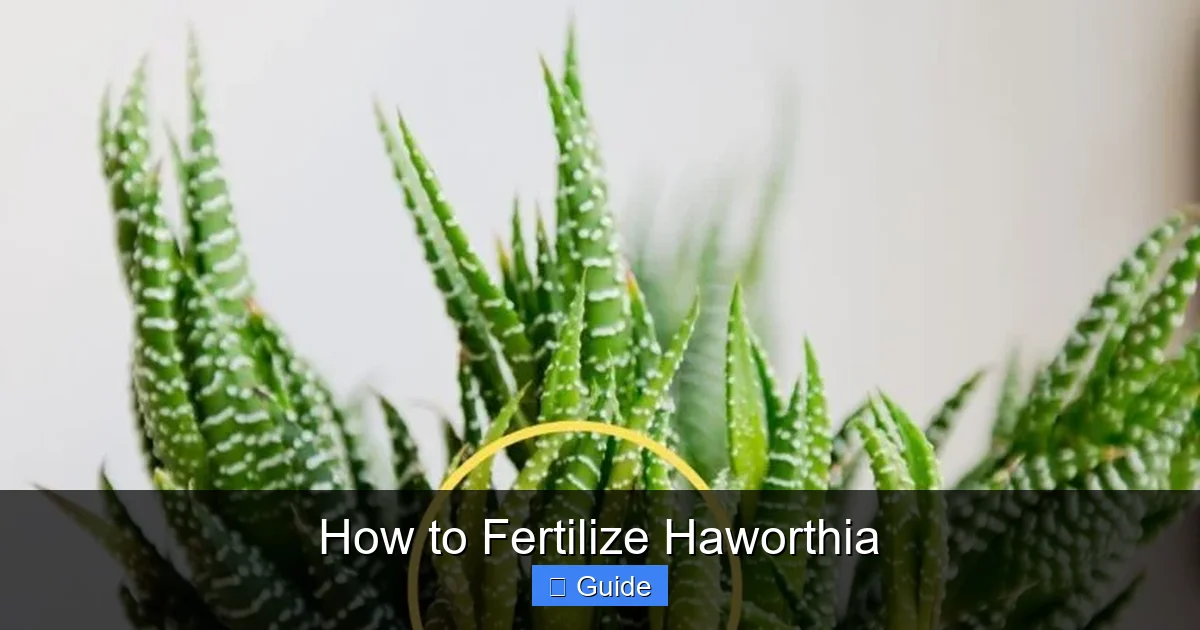
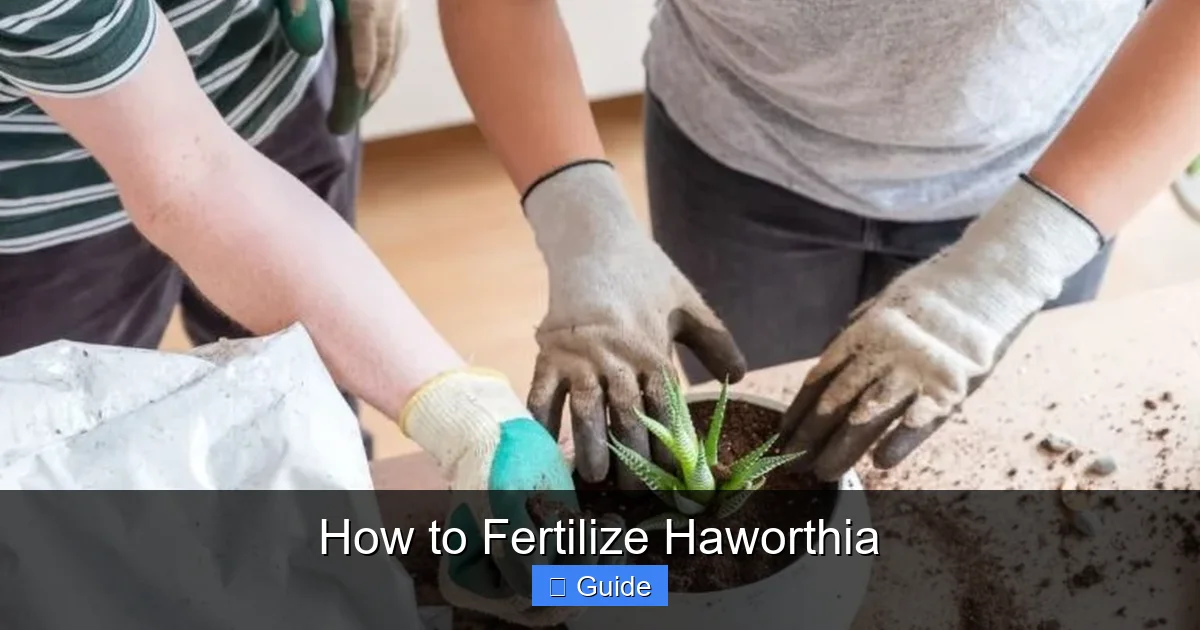
Visual guide about How to Fertilize Haworthia
Image source: nurserylady.com
Why does this matter? During dormancy, the plant’s metabolic processes slow down dramatically. It’s not taking up water or nutrients at any meaningful rate. Fertilizer applied during this time sits in the soil, concentrates as water evaporates, and burns the roots when the plant finally wakes up. It also encourages weak, spindly growth that the plant can’t support in low winter light.
Identifying Your Haworthia’s Growth Cycle
Not all Haworthia follow the exact same calendar. Most common species (H. attenuata, H. fasciata, H. cooperi, H. truncata, H. retusa) are winter-dormant, summer-growers. But some — particularly certain Haworthiopsis and Tulista species — can be opportunistic, growing whenever conditions are right.
Watch your plant. New leaf emergence from the center, offset formation at the base, and root growth visible at drainage holes all signal active growth. That’s your green light. If the plant sits unchanged for weeks, leaves look a bit shriveled despite watering, or growth has visibly paused, that’s your red light.
Seasonal Fertilizing Calendar
Here’s a practical calendar for the northern hemisphere. Adjust for your local climate:
- March – April: Spring wake-up. First feeding of the year as growth resumes.
- May – June: Peak growth. Second feeding optional if plant looks vigorous.
- July – August: Hot summer. Many Haworthia slow down in extreme heat. Skip feeding if growth pauses.
- September: Early fall. Final light feeding only if growth continues strong.
- October – February: Zero fertilizer. Dormancy period.
If you live in a climate without distinct seasons (like parts of California, Florida, or indoors under grow lights), watch the plant, not the calendar. Feed when you see active growth. Don’t feed when you don’t.
Choosing the Right Fertilizer
NPK Ratios Explained Simply
Every fertilizer label shows three numbers: N-P-K. That’s nitrogen (N), phosphorus (P), and potassium (K). Nitrogen drives leaf growth. Phosphorus supports roots and flowers. Potassium regulates water uptake and overall plant health.
For Haworthia, you want balanced or slightly lower nitrogen. A 10-10-10, 20-20-20, or 5-10-10 works well. Avoid high-nitrogen formulas like 30-10-10 — they’ll push soft, weak leaves that split and rot easily. Some growers use a “bloom booster” formula (lower nitrogen, higher phosphorus) in late summer to encourage root development before winter.
Liquid vs. Granular vs. Slow-Release
Liquid fertilizers are my top choice for Haworthia. They’re easy to dilute precisely, apply evenly, and flush through the soil. You control exactly how much the plant gets each time. Look for water-soluble concentrates.
Granular fertilizers sprinkled on the soil surface are risky. They create hot spots of concentrated salts. Water doesn’t distribute them evenly in gritty succulent mixes. You might burn one section of roots while another gets nothing.
Slow-release pellets (like Osmocote) sound convenient but are dangerous for succulents. They release nutrients based on temperature and moisture — factors you can’t fully control. A heat wave can trigger a massive dump of fertilizer right when your plant is dormant. I’ve lost plants this way. Avoid.
Synthetic vs. Organic Options
Both work. Synthetic fertilizers (Miracle-Gro, Jack’s Classic, Dyna-Gro) give you precise, consistent nutrient ratios. They’re predictable and cheap. Organic options (fish emulsion, seaweed extract, worm casting tea) are gentler and add beneficial microbes, but they’re less consistent, smell stronger, and can attract fungus gnats if overused.
My personal approach: I use a synthetic balanced fertilizer at quarter-strength for routine feeding. Once a year in spring, I’ll top-dress with a thin layer of worm castings or water with diluted seaweed extract for the micronutrients and microbial benefits. This gives the best of both worlds.
Specialized Succulent Fertilizers: Worth It?
You’ll see fertilizers marketed specifically for cacti and succulents. These typically have lower nitrogen (like 2-7-7 or 1-7-6) and added calcium. They’re fine, but honestly? A regular balanced fertilizer diluted more heavily does the same job for less money. The “succulent” label is largely marketing. If you already have a good all-purpose fertilizer, just use it at 1/4 strength.
How to Apply Fertilizer Correctly
The Quarter-Strength Rule
This is non-negotiable: dilute to 1/4 the label’s recommended strength. If the bottle says “1 teaspoon per gallon,” use 1/4 teaspoon per gallon. If it says “1 capful per quart,” use 1/4 capful per quart.
Why so weak? Haworthia roots are adapted to very low nutrient concentrations. Full-strength fertilizer creates an osmotic gradient that pulls water OUT of the roots — the opposite of what you want. This is “fertilizer burn,” and it kills roots fast. Quarter-strength mimics the slow mineral trickle these plants evolved with.
Some growers go even weaker — 1/8 strength — and feed more frequently (every 2-3 weeks during active growth). This “weakly, weekly” approach works well if you’re consistent. I prefer 1/4 strength every 4-6 weeks because I’m lazy and it’s harder to mess up.
Step-by-Step Application Process
Here’s my exact process, refined over years:
- Check the soil. Is it dry? Good. If it’s wet from recent watering, wait.
- Water first. Give the plant a normal thorough watering. Let it drain completely. This pre-moistens the soil and protects roots from sudden salt exposure.
- Mix fertilizer. Prepare your quarter-strength solution in a watering can or jug. Use room-temperature water.
- Apply. Pour the fertilizer solution evenly over the soil until it runs out the drainage holes. Don’t splash the leaves.
- Don’t double-water. The fertilizer solution IS the watering. Don’t water again tomorrow.
- Flush monthly. Once a month during growing season, water thoroughly with plain water (no fertilizer) to flush accumulated salts. This prevents buildup.
Foliar Feeding: Yes or No?
Some growers swear by foliar feeding — spraying diluted fertilizer on the leaves. For Haworthia, I don’t recommend it. Their leaves are thick, waxy, and designed to minimize water loss. They don’t absorb nutrients efficiently through the leaf surface. Plus, fertilizer solution sitting in the leaf crevices (especially on H. truncata or H. cooperi) invites rot and fungal issues. Stick to soil application.
Fertilizing Newly Repotted vs. Established Plants
Just repotted your Haworthia into fresh succulent mix? Don’t fertilize for at least 3-4 months. Quality succulent soil has enough nutrients to last that long. Fertilizing too soon after repotting stresses roots that are already recovering from the move.
For plants that haven’t been repotted in 12+ months, the soil is likely depleted. These benefit most from fertilizer. But also consider: maybe it’s just time to repot. Fresh soil > fertilizer on old soil.
Common Mistakes and How to Avoid Them
Over-Fertilizing: The Silent Killer
Over-fertilizing is the #1 way people kill Haworthia with kindness. It doesn’t happen overnight. Salt builds up gradually. The plant looks fine for weeks, then suddenly: leaf tips turn brown and crispy, lower leaves go mushy and transparent, growth becomes weirdly fast but weak (leaves spacing out, losing compact form), and a white crust appears on the soil surface or pot rim.
If you see these signs: stop fertilizing immediately. Flush the pot thoroughly — run water through it for 2-3 minutes, let it drain, repeat 2-3 times over a week. Don’t fertilize again for the rest of the season. The plant may recover if caught early.
Fertilizing Dry Soil
Applying fertilizer to bone-dry soil is like pouring salt on a wound. The concentrated solution hits desiccated roots and causes instant damage. Always water first, fertilize second. This one habit prevents 90% of fertilizer burn cases.
Fertilizing During Dormancy
I mentioned this before, but it bears repeating. Winter fertilizing does not “give the plant a head start for spring.” It creates salt buildup in cold, wet soil that the dormant roots can’t process. Come spring, you have a root system that’s been chemically burned all winter. Just don’t do it.
Using the Wrong Water
If your tap water is very hard (high mineral content) or softened (high sodium), you’re adding minerals every time you water. Combined with fertilizer, this accelerates salt buildup. If you have problematic water, use rainwater, distilled, or RO water for mixing fertilizer. Your plants will thank you.
Ignoring the Flush
Even at quarter-strength, salts accumulate over time. Monthly flushing with plain water is essential. Skip this, and you’ll eventually get the same burn symptoms as over-fertilizing — just slower. Make it a habit: every fourth watering, use plain water only.
Special Situations and Advanced Tips
Fertilizing for Offset Production
Want more pups? A slight phosphorus boost in late spring can encourage offset formation. Use a 5-10-5 or similar formula at quarter-strength for one feeding. Don’t overdo it — too much phosphorus interferes with micronutrient uptake. And remember: genetics and light matter more than fertilizer for offset production. A well-lit plant in a slightly tight pot offsets more than a fertilized plant in poor light.
Fertilizing Variegated Haworthia
Variegated varieties (like H. ‘Variegata’ or H. cooperi variegata) have less chlorophyll. They grow slower and are more sensitive to fertilizer burn. Use 1/8 strength instead of 1/4, and feed half as often. Watch closely for any sign of the white/pink sections turning brown — that’s fertilizer damage showing up first on the most vulnerable tissue.
Hydroponic and Semi-Hydro Setups
If you’re growing in LECA, pon, or passive hydroponics, fertilizing is different. You’re the sole nutrient source — there’s no soil buffer. Use a complete hydroponic fertilizer (like General Hydroponics FloraSeries or Dyna-Gro Foliage-Pro) at 1/4 to 1/2 the label’s “maintenance” rate. Flush the reservoir monthly. Monitor EC/PPM if you have a meter. This is a whole different skill set — research specifically for your setup.
Seedlings and Young Plants
Baby Haworthia (under 1 year from seed) have tiny, delicate root systems. Don’t fertilize at all for the first 6-12 months. The seed starting mix provides enough. After that, use 1/8 strength once a month during active growth. Better to underfeed seedlings than burn them.
Rescuing an Over-Fertilized Plant
If you’ve already overdone it and the plant is showing damage: unpot immediately. Gently remove as much old soil as possible without shredding roots. Trim any black, mushy, or hollow roots. Repot into fresh, dry succulent mix. Don’t water for 5-7 days. Then water lightly, no fertilizer, and baby it for a month. Many recover if the crown is still firm.
Building a Simple Fertilizing Routine
My Personal Schedule (Template You Can Copy)
Here’s what I do for my 40+ Haworthia. Adjust for your collection size and climate:
- Early March: First watering of spring. Plain water only. Wake them up gently.
- Late March / Early April: First fertilizer feed. Quarter-strength balanced (20-20-20). Water first, then fertilize.
- Late May: Second feed. Same formula. Skip if summer heat has already slowed growth.
- June – August: Monitor. If growth continues, optional third feed in July at 1/8 strength. Usually I skip.
- Early September: Final feed only if plants are still actively growing. 1/8 strength.
- October – February: Zero fertilizer. Water sparingly. Just keep them alive.
- Monthly (year-round): Flush with plain water on a watering day. No exceptions.
Record Keeping Made Easy
You don’t need a spreadsheet. A sharpie mark on the pot bottom works: “F 3/25” means fertilized March 25. Or a note in your phone: “Haworthia fed 4/10, 6/5.” The point is knowing when you last fed so you don’t accidentally double up. Memory fails. Marks don’t.
Adjusting for Your Conditions
High light + warm temps + good airflow = more growth = slightly more fertilizer tolerance. Low light + cool temps + stagnant air = less growth = less fertilizer (or none). A Haworthia on a sunny Arizona patio needs different care than one on a north-facing windowsill in Seattle. Watch your plant, not just the calendar.
Frequently Asked Questions About Haworthia Fertilizing
Can I Use Coffee Grounds or Eggshells?
Please don’t. Coffee grounds are acidic, break down unpredictably, and can harbor mold. Eggshells take years to decompose and don’t release usable calcium in a timescale that matters. Both create more problems than they solve in gritty succulent mixes. Stick to proper fertilizer.
What About Epsom Salts for Magnesium?
Epsom salts (magnesium sulfate) are popular in gardening forums. Haworthia rarely show magnesium deficiency in cultivation. If you’re using a complete fertilizer with micros, you’re covered. Adding Epsom salts separately risks salt buildup without clear benefit. Skip it unless a soil test confirms deficiency.
Should I Fertilize When Bottom Watering?
Yes, but carefully. Add fertilizer to the bottom water tray at quarter-strength. Let the pot soak 10-15 minutes. Remove. The soil will wick up the solution. Next watering, use plain water to flush. Bottom watering distributes fertilizer more evenly but makes flushing harder — so don’t skip the monthly plain-water flush.
My Haworthia Flowered. Should I Fertilize Now?
Flowering doesn’t change the rules. If it’s during active growth season, your normal schedule applies. If it’s winter (some species flower off-cycle), don’t fertilize just because there’s a flower stalk. The plant is using stored energy, not current nutrients.
Can I Use Orchid Fertilizer?
Orchid fertilizers (often 20-20-20 or 30-10-10 with added calcium/magnesium) work fine at quarter-strength. They’re formulated for epiphytes in bark, which is similar to succulents in gritty mix — low organic matter, fast drainage. Just dilute heavily.
How Do I Know If My Soil Has Salt Buildup?
White crust on soil surface or pot rim. Brown, crispy leaf tips on multiple leaves. Plant wilts despite wet soil (roots can’t take up water due to osmotic stress). A cheap EC meter (under $20) gives you a number — above 2.0 mS/cm in the runoff means it’s time for a heavy flush.
Conclusion
Fertilizing Haworthia isn’t complicated — but it is easy to overdo. The core principles are simple: feed only during active growth, dilute heavily (quarter-strength), use balanced fertilizer, water first, flush monthly, and stop completely in winter. Everything else is just details.
Your Haworthia doesn’t need a complex feeding regimen. It needs you to respect its desert origins. When in doubt, skip the fertilizer. A slightly hungry Haworthia stays compact, colorful, and resilient. An overfed one stretches, splits, and rots. I’ve seen both outcomes too many times.
Start conservative. Watch your plant. Adjust slowly. And remember — the best fertilizer for Haworthia is often just fresh soil and good light. Everything else is a supplement, not a requirement.
Happy growing. Your Haworthia will thank you with tight rosettes, vivid colors, and a steady parade of offsets — all on its own terms.
Frequently Asked Questions
How do I know if my Haworthia needs fertilizer?
Look for stalled growth during spring/summer, pale leaf color, no new offsets, and the plant being in the same soil for over a year. Rule out light, water, and pest issues first.
Can I use Miracle-Gro on Haworthia?
Yes, standard Miracle-Gro all-purpose plant food (24-8-16) works well at 1/4 the recommended strength. Avoid the “succulent” version — regular diluted more is cheaper and equally effective.
Is it okay to fertilize Haworthia right after repotting?
No. Wait 3-4 months after repotting. Fresh succulent soil contains enough nutrients. Fertilizing too soon stresses recovering roots.
What happens if I accidentally over-fertilize?
Flush the pot thoroughly: run water through for 2-3 minutes, let drain, repeat 2-3 times over a week. Stop fertilizing for the rest of the season. Trim damaged roots if repotting.
Do variegated Haworthia need different fertilizing?
Yes. Variegated varieties are more sensitive. Use 1/8 strength (half the normal dilution) and feed half as often. Watch for browning on white/pink sections.
Can I put slow-release fertilizer pellets in my Haworthia soil?
Avoid slow-release pellets (like Osmocote). They release unpredictably with temperature changes and can dump fertilizer during dormancy, burning roots. Use liquid fertilizer you control instead.