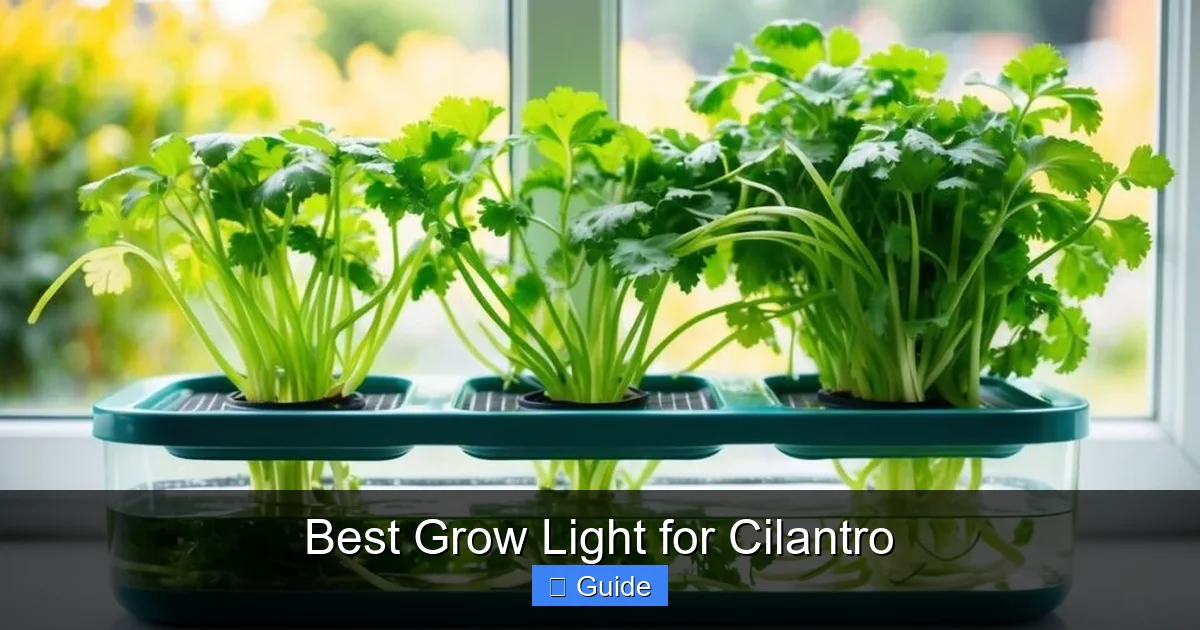
Best Grow Light for Cilantro
Choosing the best grow light for cilantro means matching the herb’s love for cool, bright conditions with a light that delivers the right spectrum and intensity. This guide breaks down the science, reviews top models, and shows you how to set up and maintain a system that keeps your cilantro thriving year‑round.
Key Takeaways
- Cilantro prefers cool temperatures and 12‑16 hours of light daily. A light that mimics spring daylight works best.
- Full‑spectrum LEDs with a strong blue component promote leafy growth without triggering premature bolting.
- Look for adjustable intensity and timer functions. They let you fine‑tune the photoperiod as the plant matures.
- Heat output matters. Low‑heat fixtures keep the growing area near 65‑70 °F, which cilantro loves.
- Energy efficiency saves money. Modern LEDs use a fraction of the power of older fluorescent tubes.
- Proper mounting height (12‑18 inches) ensures even coverage and prevents leaf burn.
- Regular cleaning and firmware updates keep the light performing at peak output for years.
Quick Answers to Common Questions
What light spectrum is best for cilantro?
A spectrum heavy in blue (4000‑5000 K) with a modest red component promotes leafy growth and delays bolting.
How many hours of light does cilantro need daily?
Cilantro thrives with 12‑16 hours of light per day; 14 hours is a solid starting point.
Can I use a regular shop light for cilantro?
Standard shop lights lack the blue intensity cilantro needs and often run hotter, making them a poor choice.
What is the ideal hanging height for a LED grow light over cilantro?
Start at 18 inches for seedlings, then lower to 12‑14 inches once true leaves appear, adjusting for PPFD targets.
Do I need a timer for my grow light?
Yes, a timer ensures a consistent photoperiod, which is critical to prevent premature flowering.
📑 Table of Contents
Why Light Matters for Cilantro
Cilantro is a cool‑season herb that bolts quickly when temperatures rise or when it receives too much red‑heavy light. The right grow light mimics the gentle, blue‑rich daylight of early spring. That spectrum encourages dense, aromatic leaves and delays flowering. If you have ever tried growing cilantro on a sunny windowsill, you know the struggle: the plant stretches, turns pale, and then bolts. A purpose‑built grow light solves that problem by giving you control over spectrum, intensity, and photoperiod.
When you search for the best grow light for cilantro, you will see many options. Not all of them are created equal. Some are designed for fruiting plants and push a lot of red light. Others are cheap shop lights that lack the blue wavelengths cilantro craves. Understanding the basics of light science helps you cut through the marketing noise and pick a fixture that truly matches the herb’s needs.
Understanding Cilantro Light Requirements
Photoperiod and Duration
Cilantro thrives with 12 to 16 hours of light each day. A consistent schedule tells the plant it is still in the vegetative stage. Use a timer to automate the on/off cycle. If you leave the light on 24 hours, the plant may stress and bolt early. If you give it less than 10 hours, growth slows and leaves become thin.
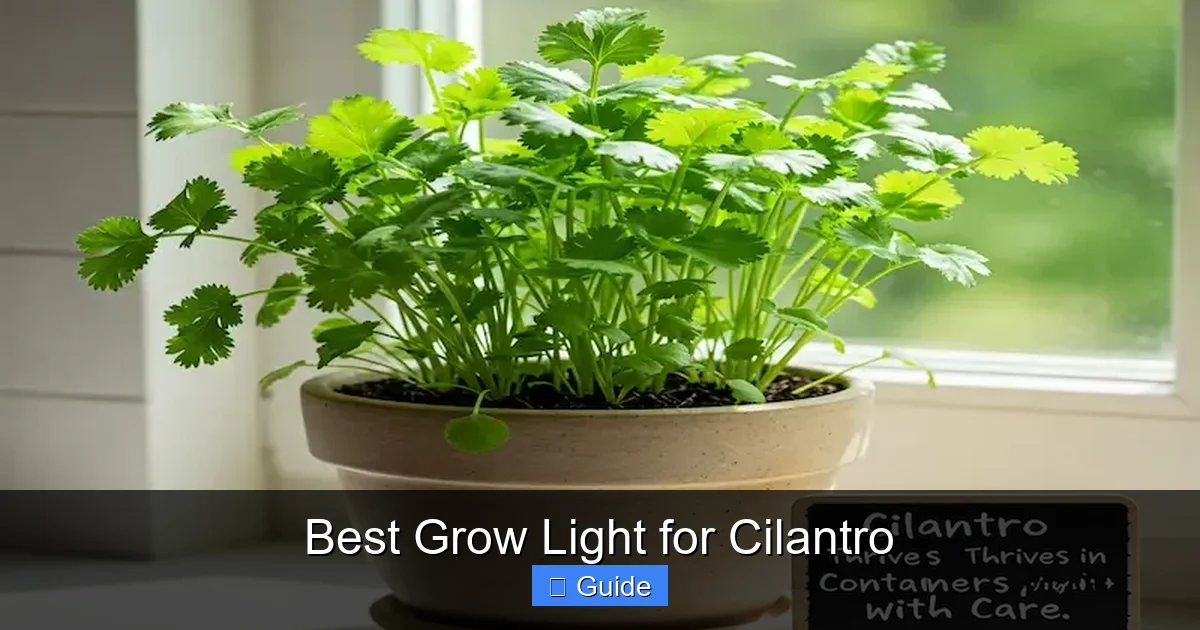
Visual guide about Best Grow Light for Cilantro
Image source: mybestvegetables.com
Spectral Quality
Blue light (400‑500 nm) drives compact, leafy growth. Red light (600‑700 nm) encourages flowering. For cilantro you want a higher blue‑to‑red ratio, roughly 3:1 or 4:1. Many full‑spectrum LEDs let you adjust the ratio or come preset with a “veg” mode that emphasizes blue. That is exactly what the best grow light for cilantro should provide.
Intensity and PPFD
Photosynthetic Photon Flux Density (PPFD) measures how many photons hit the canopy each second. Cilantro does well at 150‑250 µmol·m⁻²·s⁻¹. Too high and you risk leaf burn; too low and the plant stretches. Most quality LEDs list PPFD at a given hanging height. Aim for the middle of that range and adjust height as the plant grows.
Temperature Considerations
Even the best spectrum cannot compensate for excess heat. Cilantro prefers 65‑70 °F (18‑21 °C). High‑output HID lamps raise ambient temperature quickly. LEDs run cool, making them the natural choice for a herb that dislikes warmth. Keep a small thermometer in the grow area and adjust ventilation if temperatures creep above 75 °F.
Types of Grow Lights and How They Compare
Fluorescent T5 and T8
Fluorescent tubes have been a staple for herb growers for decades. They are inexpensive, run relatively cool, and offer a decent blue spectrum. However, they degrade fast—output drops 20‑30 % after 10,000 hours. They also lack the fine‑tuned spectrum control of modern LEDs. For a small windowsill setup they can work, but they are rarely the best grow light for cilantro in a serious indoor garden.
High‑Intensity Discharge (HID) – Metal Halide & High‑Pressure Sodium
Metal halide lamps emit a strong blue spectrum, which sounds perfect for cilantro. The downside is heat. A 400 W MH bulb can raise a 4 × 4 ft tent by 15‑20 °F. You would need powerful exhaust fans, which adds cost and noise. High‑pressure sodium is heavy on red light and unsuitable for leafy herbs. HID is generally overkill for a low‑light herb like cilantro.
LED Panels and Bars
LED technology has matured. Modern panels deliver full‑spectrum light with programmable channels. You can dial in a veg‑mode that boosts blue, set a timer, and even control via smartphone. They run at 30‑50 % of the wattage of comparable HID, produce minimal heat, and last 50,000 + hours. This makes LED the clear winner for the best grow light for cilantro in most home and small‑scale commercial setups.
COB (Chip‑On‑Board) LEDs
COB modules pack many tiny diodes into a single emitter, giving very high PPFD in a compact footprint. They are excellent for dense canopy penetration but can create hot spots if not diffused. For cilantro, a diffused COB panel with a wide beam angle works well, especially in vertical farming racks.
Smart Wi‑Fi Enabled LEDs
Some brands integrate Wi‑Fi or Bluetooth, letting you schedule light recipes, monitor PPFD via an app, and receive firmware updates. While not strictly necessary, the convenience can justify the extra cost if you manage multiple trays or want to experiment with light recipes.
Top Picks for the Best Grow Light for Cilantro
1. Spider Farmer SF‑1000 – Full‑Spectrum Quantum Board
The SF‑1000 uses Samsung LM301B diodes and a Mean Well driver. It draws 100 W and delivers ~200 µmol·m⁻²·s⁻¹ at 12 inches. The spectrum is heavy on blue (4000 K) with a touch of 660 nm red for balanced growth. It runs silent, has a dimmer knob, and includes a hanging kit. Price‑to‑performance makes it a favorite for herb growers.
2. Mars Hydro TS 1000 – White Light Quantum Board
Mars Hydro’s TS 1000 offers a 3000 K white spectrum that mimics natural daylight. At 150 W it provides ~250 µmol·m⁻²·s⁻¹ at 12 inches. The built‑in dimmer and daisy‑chain port let you expand later. It stays under 90 °F at the canopy, keeping cilantro happy.
3. Viparspectra P1000 – Adjustable Spectrum Panel
The P1000 features separate veg and bloom switches. In veg mode the blue channel dominates, perfect for cilantro. It pulls 100 W, outputs ~180 µmol·m⁻²·s⁻¹ at 14 inches, and includes a quiet fan. The aluminum heat sink keeps the fixture cool to the touch.
4. HLG 100 V2 – High‑Efficiency Quantum Board
Horticulture Lighting Group’s 100 V2 uses top‑bin Samsung diodes and a high‑efficiency driver. It delivers 150 µmol·m⁻²·s⁻¹ at 12 inches with only 95 W. The 4000 K spectrum is ideal for leafy herbs. It is a bit pricier but the build quality and warranty (5 years) justify the cost for serious growers.
5. Barrina T5 LED Grow Light Strips – Budget Friendly
If you only need a few square feet, Barrina’s 2‑ft T5 strips (4 × 20 W) give a combined 80 W. They emit a 5000 K spectrum with strong blue. Mount them under a shelf for a compact herb rack. They lack dimming but are plug‑and‑play and very affordable.
Comparison Table (Quick Reference)
- Spider Farmer SF‑1000: 100 W, 200 µmol, dimmable, silent, $130
- Mars Hydro TS 1000: 150 W, 250 µmol, dimmable, daisy‑chain, $150
- Viparspectra P1000: 100 W, 180 µmol, veg/bloom switch, fan, $120
- HLG 100 V2: 95 W, 150 µmol, premium diodes, 5‑yr warranty, $210
- Barrina T5 Strips: 80 W total, 120 µmol, fixed output, $80
Setting Up Your Grow Light System
Choosing the Right Space
Cilantro does not need a massive footprint. A 2 × 2 ft shelf or a 3 × 3 ft tent works well. Ensure the area has access to power and a way to exhaust warm air if you use a higher‑wattage fixture. A simple inline fan with a carbon filter keeps temperatures stable and odors low.
Mounting Height and Coverage
Start with the light 18 inches above the seed tray. As seedlings emerge, lower to 12‑14 inches for the vegetative stage. Use the manufacturer’s PPFD chart to verify you are in the 150‑250 µmol range. If you see leaf tip burn, raise the light 2‑3 inches. If plants stretch, lower it slightly.
Timer and Photoperiod Programming
Plug the fixture into a digital timer. Set 14 hours on / 10 hours off for the first three weeks. After the first true leaves appear, you can extend to 16 hours on if you want faster biomass. Consistency is key—any abrupt change can shock the plant.
Air Circulation
A small clip‑on fan blowing across the canopy strengthens stems and prevents fungal issues. Aim for a gentle breeze; you should see leaves flutter, not flap violently. Good airflow also helps dissipate the minimal heat from LEDs.
Nutrient and Water Management
Light drives photosynthesis, but nutrients fuel growth. Use a balanced hydroponic nutrient at ½ strength for seedlings, then full strength once the plant has 4‑5 true leaves. Keep the growing medium evenly moist—cilantro hates both drought and soggy roots. A moisture meter helps avoid guesswork.
Common Mistakes and How to Avoid Them
Over‑Lighting
More light is not always better. Pushing PPFD above 300 µmol for cilantro can cause photoinhibition, leading to bleached leaves and early bolting. Stick to the recommended range and use a light meter or the manufacturer’s chart to confirm.
Wrong Spectrum
Using a bloom‑heavy lamp (high red) will signal the plant to flower. Always select a veg‑mode or a fixture with a high blue ratio. If your light has a switch, keep it on veg for the entire cilantro cycle.
Ignoring Heat
Even low‑heat LEDs can raise a sealed tent a few degrees. Monitor temperature daily. If it exceeds 75 °F, increase exhaust fan speed or add a passive intake vent.
Inconsistent Photoperiod
Forgetting to turn the light off or on at the same time each day confuses the plant’s internal clock. A timer eliminates human error. If you must manually adjust, do it gradually—shift by 15 minutes per day.
Neglecting Cleaning
Dust on the lens reduces output by up to 15 %. Wipe the fixture with a microfiber cloth every two weeks. For bars, remove the diffuser and clean both sides.
Maintenance and Long‑Term Tips
Firmware Updates
Smart LEDs occasionally receive firmware upgrades that improve spectrum tuning or fix bugs. Check the manufacturer’s app or website quarterly.
Driver Health Checks
Inspect the driver and wiring every six months. Look for discoloration, loose connectors, or unusual smells. Early detection prevents catastrophic failure.
Replacing Diodes
Quality LEDs last 50,000 + hours, but individual diodes can fail. If you notice a dark spot on the board, contact the vendor—most reputable brands offer a 3‑5 year warranty covering diode loss.
Seasonal Adjustments
In winter, ambient room temperature drops. You may need a small heater to keep the grow zone at 65‑70 °F. In summer, increase exhaust fan speed. Adjust light height accordingly as the plant’s canopy changes.
Record Keeping
Log light schedule, PPFD readings, nutrient EC/pH, and harvest dates. Over multiple cycles you’ll see patterns that let you fine‑tune the system for maximum yield and flavor.
Conclusion
Finding the best grow light for cilantro is about matching the herb’s love for cool, blue‑rich light with a fixture that gives you control over intensity, spectrum, and timing. LED quantum boards like the Spider Farmer SF‑1000 or Mars Hydro TS 1000 hit the sweet spot of performance, efficiency, and price. Pair the light with a reliable timer, good airflow, and a consistent nutrient regimen, and you’ll enjoy fresh, aromatic cilantro leaves all year long—no bolting, no stretching, just pure flavor. Happy growing!
Frequently Asked Questions
What is the best grow light for cilantro in a small apartment?
The Spider Farmer SF‑1000 offers a compact footprint, silent operation, and a dimmable full‑spectrum output that fits easily on a shelf or in a 2 × 2 ft tent.
How do I know if my cilantro is getting too much light?
Signs include bleached or yellowing leaf tips, curled edges, and early flower stalk formation. Reduce intensity or raise the fixture.
Can I grow cilantro under a 3000 K white LED?
Yes, a 3000 K white LED provides enough blue for vegetative growth, but a 4000‑5000 K veg‑mode is slightly better for maximizing leaf density.
What temperature should the grow area stay at for cilantro?
Maintain 65‑70 °F (18‑21 °C). Temperatures above 75 °F increase bolting risk.
How often should I clean my grow light?
Wipe the lens and heat sink every two weeks with a dry microfiber cloth to keep output at peak levels.
Is a dimmable grow light necessary for cilantro?
Dimming lets you fine‑tune PPFD as the plant grows, preventing both light stress and stretching, so it is highly recommended.