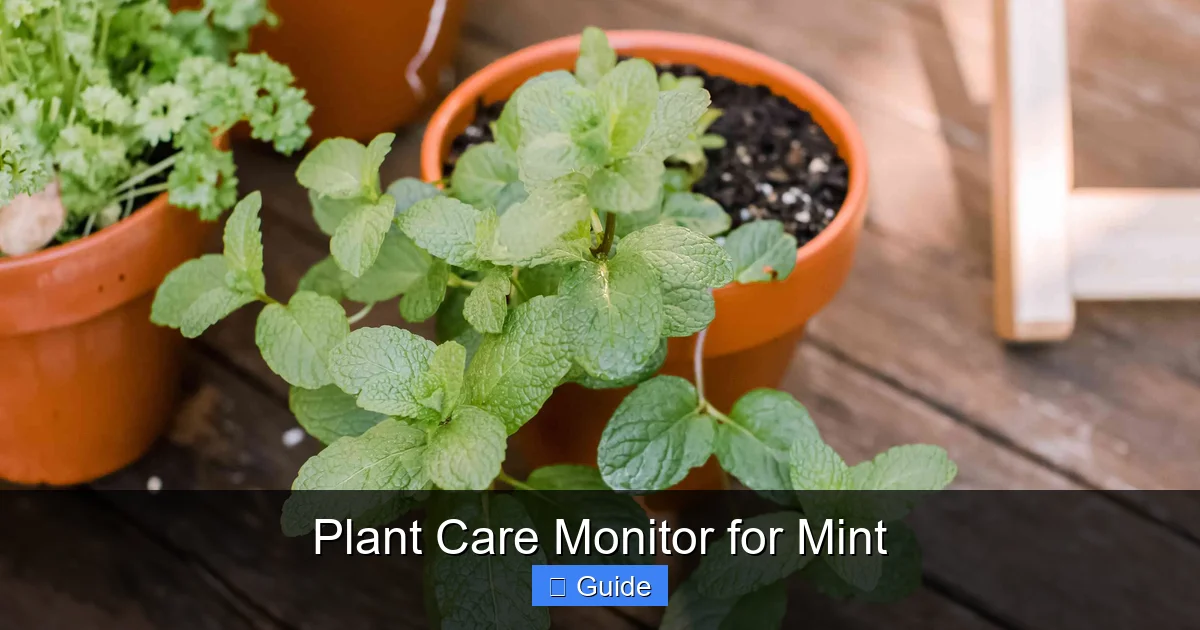
Plant Care Monitor for Mint
A plant care monitor for mint takes the guesswork out of growing this vigorous herb by tracking soil moisture, light levels, and nutrient needs in real time. These smart devices help prevent common issues like root rot from overwatering or leggy growth from insufficient light. With the right monitor and a few simple habits, you’ll enjoy abundant, flavorful mint harvests from spring through fall.
Mint might be the most forgiving herb in your garden, but even this vigorous grower has its limits. Too much water and the roots rot. Too little light and the stems stretch thin with pale leaves. Skip feeding for too long and the flavor fades. A plant care monitor for mint solves these guesswork problems by giving you real-time data on exactly what your plants need, when they need it. Whether you’re growing spearmint in a windowsill pot or chocolate mint in a raised bed, the right monitor turns reactive gardening into proactive care.
I learned this lesson the hard way after losing three mint plants in one summer. The first drowned in a self-watering pot I forgot to check. The second stretched toward a north-facing window until it looked like pale spaghetti. The third simply stopped producing flavorful leaves because I’d never fertilized it. A simple soil moisture meter would have saved the first. A light meter would have fixed the second. A nutrient monitor would have caught the third. Today, a single plant care monitor for mint handles all three jobs, and my mint patch has never been more productive.
Key Takeaways
- Real-time data prevents overwatering: A plant care monitor for mint alerts you when soil moisture drops below optimal levels, stopping root rot before it starts.
- Light tracking ensures bushy growth: Monitors with light sensors help you position mint for the 4-6 hours of direct sun it needs for compact, flavorful leaves.
- Nutrient monitoring reduces fertilizer waste: Advanced models measure soil EC levels so you only feed mint when nitrogen, phosphorus, and potassium actually run low.
- Mobile apps create care history: Connected monitors log weeks of data, letting you spot seasonal patterns and adjust care before problems appear.
- Probe depth matters for mint’s shallow roots: Choose a monitor with sensors at 2-4 inches to match where mint’s feeder roots actually live.
- Battery life affects reliability: Select a plant care monitor for mint with 6+ month battery life or solar charging to avoid gaps in critical growing periods.
- Calibration improves accuracy: Monthly calibration against known soil conditions keeps readings trustworthy for precise mint care decisions.
Quick Answers to Common Questions
How deep should I insert a plant care monitor for mint?
Insert probes at a 45-degree angle 3 inches from the plant crown, reaching 3-4 inches deep to target mint’s shallow feeder roots without damaging rhizomes.
What moisture level is ideal for mint on a plant care monitor?
Mint thrives at 40-60% volumetric water content. Water when readings drop below 40% and stop when they reach 55-60% to prevent root rot.
Can a plant care monitor for mint measure nutrients accurately?
Monitors with EC (electrical conductivity) sensors track dissolved nutrient levels effectively. Target 1.2-1.6 mS/cm for soil-grown mint and 1.8-2.2 mS/cm for hydroponic systems.
How often should I calibrate my plant care monitor for mint?
Calibrate monthly using wet/dry baselines for moisture, noon sun/shade references for light, and known fertilizer solutions for EC. Recalibrate anytime readings seem off.
Do I need a different plant care monitor for mint in containers versus ground?
Container mint needs shallower probes (3 inches) and more frequent monitoring since pots dry faster. Ground mint benefits from multiple probes across the bed and longer battery life for buried sensors.
📑 Table of Contents
- Why Mint Needs Specialized Monitoring
- Types of Plant Care Monitors for Mint
- Choosing the Right Monitor for Your Mint Setup
- Setting Up Your Plant Care Monitor for Mint
- Interpreting Data and Taking Action
- Advanced Monitoring Techniques for Serious Mint Growers
- Troubleshooting Common Monitor Issues
- Maintaining Your Plant Care Monitor for Mint Year-Round
- Conclusion
Why Mint Needs Specialized Monitoring
Mint grows differently than most garden herbs, and understanding its quirks explains why a dedicated plant care monitor for mint pays off. This herb spreads through underground runners called rhizomes that sit just below the soil surface. These shallow roots absorb water and nutrients quickly but also dry out faster than deep-rooted plants. At the same time, mint’s aggressive growth habit means it depletes soil nutrients faster than slower herbs like rosemary or thyme.
Shallow Root Zone Demands Precision
Mint’s feeder roots concentrate in the top 2-4 inches of soil. Traditional moisture meters with 6-inch probes miss this critical zone entirely, reading moisture deeper down where mint doesn’t even have roots. A proper plant care monitor for mint places its sensors at exactly the right depth to measure what the plant actually experiences. This precision matters because the top inch of soil can dry completely while moisture sits untouched at 5 inches, leading you to overwater a plant that’s already drowning at root level.
Rapid Nutrient Cycling Requires Frequent Checks
During peak growing season, a healthy mint plant can double its biomass every two weeks. That explosive growth consumes nitrogen rapidly, especially when you’re harvesting leaves regularly for tea or cooking. A plant care monitor for mint with electrical conductivity (EC) sensors tracks dissolved nutrient levels in real time. Instead of fertilizing on a calendar schedule that might be too early or too late, you feed exactly when the data shows nutrient levels dropping below optimal ranges.
Light Sensitivity Affects Flavor Compounds
Mint produces its signature essential oils — menthol, menthone, and limonene — in response to light intensity. Plants getting less than 4 hours of direct sun produce fewer flavor compounds, leaving you with bland leaves no amount of fertilizer can fix. A plant care monitor for mint with a built-in PAR (photosynthetically active radiation) sensor quantifies exactly how much usable light reaches your plants. This data helps you rotate pots, add grow lights, or relocate beds before flavor quality declines.
Types of Plant Care Monitors for Mint
Not every monitor works well for mint’s specific needs. The market offers everything from $5 analog probes to $200 WiFi-enabled systems. Understanding the categories helps you match features to your growing situation without overpaying for capabilities you won’t use.
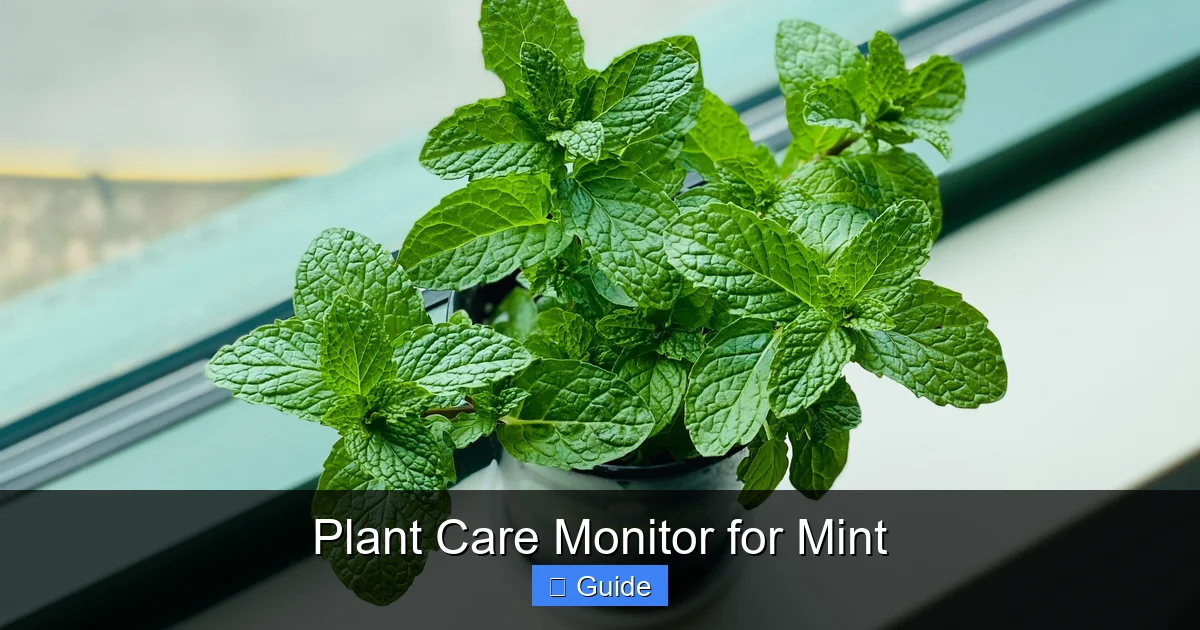
Visual guide about Plant Care Monitor for Mint
Image source: decormatters-blog-uploads.s3.amazonaws.com
Basic Analog Moisture Probes
These battery-free metal probes use electrical conductivity between two metals to estimate soil moisture. They’re inexpensive, durable, and require zero setup. For mint, look for models with 3-4 inch probes rather than the standard 6-8 inch versions. The shorter probe reaches mint’s root zone without pushing past it. Analog probes work best for gardeners who check plants daily and want instant readings without apps or calibration. Their main limitation: they only measure moisture, not light or nutrients.
Digital 3-in-1 Soil Meters
These handheld devices combine moisture, light, and pH sensors in one unit. Most run on button-cell batteries lasting 6-12 months. The moisture probe should be 3-4 inches for mint. Light sensors on these units measure ambient brightness, not PAR, so they’re better at distinguishing “bright shade” from “direct sun” than measuring exact photon counts. pH sensors help you maintain mint’s preferred 6.0-7.0 range. These meters suit container gardeners who move pots seasonally and want quick checks across multiple locations.
Bluetooth-Enabled Smart Sensors
These small probes stay permanently in the soil and transmit data to your phone via Bluetooth. You place them once and check readings whenever you’re within 30-50 feet. Most track moisture, temperature, light intensity, and sometimes fertilizer levels via EC. Battery life ranges from 4 months to 2 years. The companion apps store weeks of history, send push notifications when thresholds cross, and some even recommend care actions. These excel for gardeners who want monitoring without daily manual checks.
WiFi and Cellular Connected Systems
Professional-grade monitors connect directly to your home network or cellular data, letting you check mint conditions from anywhere. These systems often include multiple probes for different beds or containers, centralized hubs, and advanced analytics like evapotranspiration calculations and growth stage predictions. They’re ideal for serious herb growers, market gardeners, or anyone with mint in hard-to-reach locations like rooftop gardens or greenhouse benches. Expect prices from $150-$500+ for complete systems.
DIY Arduino and Raspberry Pi Solutions
For technically inclined gardeners, building a custom plant care monitor for mint costs $30-80 in components and lets you choose exact sensors, probe depths, data intervals, and alert thresholds. Popular builds use capacitive moisture sensors (which don’t corrode like resistive probes), BH1750 light sensors, DS18B20 temperature probes, and ESP32 microcontrollers with WiFi. You’ll need basic soldering skills and comfort with code, but the result perfectly matches your specific mint setup.
Choosing the Right Monitor for Your Mint Setup
Your growing method — containers, raised beds, in-ground, hydroponic — determines which monitor features matter most. A windowsill pot needs different monitoring than a 4×8 foot mint bed. Match the tool to the situation for best results.
Container and Windowsill Mint
Pots dry faster than ground soil, especially terra cotta and small containers. A plant care monitor for mint in containers needs high moisture sensitivity at shallow depths. Bluetooth sensors work perfectly here — place one in each pot, check your phone while having morning coffee. Look for models with temperature compensation, since dark pots in sun heat soil significantly, affecting both moisture readings and root health. Light monitoring matters most for indoor mint; choose a sensor that distinguishes grow-light spectrum from window light.
Raised Bed and In-Ground Mint
Ground soil buffers moisture and temperature swings better than pots, but mint’s spreading habit means conditions vary across the bed. Deploy multiple probes — one near the center, one at the edge, one in a shadier corner. WiFi systems with 3-4 probes give complete coverage without daily walks. For in-ground mint, prioritize probes with corrosion-resistant materials (stainless steel or capacitive sensors) since they’ll stay buried for months. Battery life becomes critical; choose 12+ month models or solar-powered units.
Hydroponic and Aquaponic Mint
Soilless systems need entirely different monitoring. Traditional soil probes won’t work in water, clay pebbles, or nutrient film channels. Instead, use EC and pH probes designed for liquid solutions, plus water temperature sensors. A plant care monitor for mint in hydroponics should track reservoir levels, nutrient concentration, pH drift, and solution temperature continuously. Alert thresholds are tighter — EC changes of 0.2 mS/cm or pH shifts of 0.3 units can stress mint quickly in soilless media.
Greenhouse and High Tunnel Mint
Protected growing amplifies both benefits and risks. Light levels stay high but temperature swings can be extreme. A plant care monitor for mint in greenhouses needs robust temperature tracking (both soil and air), humidity sensors to prevent fungal issues, and PAR measurement to optimize supplemental lighting. Cellular-connected systems work well where WiFi doesn’t reach. Look for industrial-rated housings that withstand condensation, fertilizer splash, and temperature extremes from freezing to 120°F.
Setting Up Your Plant Care Monitor for Mint
Even the best monitor gives useless data if installed incorrectly. Proper placement, calibration, and initial configuration determine whether you’ll trust the readings or second-guess them all season.
Probe Placement Strategy
Insert moisture probes at a 45-degree angle 3 inches from the plant’s crown, reaching 3-4 inches deep. This targets the densest root zone without damaging major rhizomes. For light sensors, mount them at canopy height — roughly 6-8 inches above soil for established mint — facing the primary light source. Avoid placing sensors directly under leaves where they’ll read shade instead of available light. In multi-probe setups, space probes at least 12 inches apart to capture meaningful variation.
Initial Calibration Routine
Before trusting automated alerts, calibrate your plant care monitor for mint against known conditions. For moisture: saturate the soil completely, wait 30 minutes for drainage, then record the “wet” baseline. Let the same pot dry until leaves just begin to wilt, then record the “dry” baseline. Set your alert thresholds at 60% of the wet-to-dry range for optimal mint growth. For light: take readings at noon on a clear day in full sun (your 100% reference) and in full shade (your 0% reference). For EC: test your fertilizer solution at target strength and record that as your “optimal” baseline.
App Configuration and Threshold Setting
Most smart monitors let you create plant profiles. Select “mint” or “herbs” if available, or create a custom profile with these parameters: moisture alert at 40-50% volumetric water content, light minimum at 200-400 µmol/m²/s PAR for 4+ hours daily, EC range 1.0-1.8 mS/cm for mature mint, temperature alert below 50°F or above 85°F soil temp. Enable daily summary notifications but disable hourly alerts unless you’re troubleshooting a specific issue. Set data export to weekly CSV if you want to analyze trends in spreadsheets later.
Multi-Plant Monitoring Strategy
If you grow multiple mint varieties — spearmint, peppermint, chocolate mint, apple mint — they have slightly different preferences. Peppermint tolerates more sun and drier soil. Chocolate mint prefers consistent moisture and afternoon shade. Apple mint handles heat better. A plant care monitor for mint deployed across varieties should use variety-specific thresholds. Label each probe in the app with the variety name. This prevents applying peppermint’s drought tolerance to chocolate mint’s moisture needs.
Interpreting Data and Taking Action
Data without decisions is just noise. The value of a plant care monitor for mint comes from translating numbers into specific care actions at the right time. Here’s how to read the signals and respond effectively.
Moisture Patterns and Watering Decisions
Mint likes consistently moist but not soggy soil. Ideal volumetric water content sits at 40-60% for most varieties. When your monitor shows moisture dropping below 40%, water deeply until it reaches 55-60%. If readings stay above 70% for more than 24 hours, improve drainage or reduce watering frequency. Watch for the “afternoon dip” — moisture naturally drops 5-10% on hot afternoons as transpiration peaks. Don’t water based solely on this temporary dip; check morning readings for the true baseline. A sudden moisture crash (20% drop in 2 hours) often means a broken irrigation line or rodent damage.
Light Data and Positioning Adjustments
Your plant care monitor for mint tracks daily light integral (DLI) — total photons delivered per square meter per day. Mint needs 12-18 mol/m²/day DLI for peak flavor. If your monitor shows consistent DLI below 10, add supplemental lighting or relocate. Morning sun counts more than afternoon sun for mint; 4 hours of morning light often outperforms 6 hours of harsh afternoon exposure. Use weekly light summaries to detect seasonal shifts. A 30% DLI drop from June to August might mean a nearby tree leafed out, signaling time to move pots.
Nutrient Trends and Fertilization Timing
EC readings reveal nutrient availability trends. Rising EC with stable watering means salts accumulating — flush with plain water. Falling EC means mint consuming nutrients faster than you replace them. Target EC for mint: 1.2-1.6 mS/cm in soil, 1.8-2.2 mS/cm in hydroponics. When EC drops 0.3 mS/cm below your variety’s target, apply half-strength balanced fertilizer. Don’t fertilize based on calendar dates; the monitor tells you when the plant actually needs it. This prevents both nutrient deficiency and the bitter flavor that comes from over-fertilizing.
Temperature Alerts and Seasonal Protection
Mint grows best at 65-75°F soil temperature. Your plant care monitor for mint tracks this critical metric. Below 55°F, growth slows dramatically. Below 40°F, roots risk damage. Above 85°F, respiration outpaces photosynthesis and flavor compounds degrade. Use temperature alerts to time spring planting (wait for consistent 55°F+), deploy shade cloth (when midday soil hits 80°F), and apply winter mulch (when soil approaches 40°F). In containers, soil temperature swings 10-15°F more than ground soil — monitor closely during cold snaps and heat waves.
Advanced Monitoring Techniques for Serious Mint Growers
Once you’re comfortable with basic monitoring, these advanced approaches extract even more value from your plant care monitor for mint. They require more attention but reward you with exceptional harvests and deeper understanding.
Growth Stage Tracking with Accumulated Data
Export your monitor’s historical data monthly and plot moisture, light, and EC against harvest dates and yields. You’ll discover patterns like: “Highest oil content correlates with 10-day dry-down cycles before harvest” or “Peppermint yield drops when DLI exceeds 20 for more than 3 consecutive days.” This retrospective analysis turns a season’s data into next season’s protocol. Some advanced apps now offer built-in correlation tools that flag these relationships automatically.
Microclimate Mapping Across Growing Areas
Deploy 5-6 probes temporarily across your property for a week each season. Map the results to discover hidden microclimates: the spot that stays 5°F warmer in spring (plant mint there 2 weeks earlier), the corner that gets 30% more afternoon sun (ideal for peppermint, bad for chocolate mint), the low area where moisture lingers 2 days longer (perfect for thirsty varieties). A plant care monitor for mint becomes a site assessment tool, not just a plant monitor.
Automated Irrigation Integration
Connect your monitor to a smart irrigation controller via IFTTT, Home Assistant, or direct API. Set rules like: “If soil moisture < 40% AND time between 6-8 AM AND no rain forecast, run zone 3 for 12 minutes." This creates truly responsive watering that adapts to weather, plant size, and seasonal change automatically. Start with manual override enabled, review logs weekly, and only go fully autonomous after a month of successful operation. The monitor prevents the classic "watering in the rain" waste.
Companion Plant Monitoring Experiments
Mint’s aggressive roots affect neighbors. Place probes in adjacent beds with and without mint borders. Monitor how mint’s water draw creates dry zones 12-18 inches beyond its visible spread. Track nutrient depletion patterns in companion plants. This data helps you design buffer zones, irrigation zoning, and fertilization schedules that account for mint’s competitive nature. A plant care monitor for mint becomes a tool for whole-garden management.
Troubleshooting Common Monitor Issues
Even quality monitors develop problems. Knowing the symptoms and fixes keeps your data reliable all season.
Drifting Moisture Readings
If your plant care monitor for mint shows moisture slowly creeping up or down over weeks without watering changes, the probe likely has salt buildup or corrosion on the sensing elements. Remove the probe, soak the sensing portion in white vinegar for 10 minutes, rinse thoroughly with distilled water, and reinsert in a fresh location. Recalibrate using the wet/dry baseline routine. Capacitive sensors resist this better than resistive probes but still benefit from annual cleaning.
Erratic Light Measurements
Sudden light reading spikes or drops usually mean the sensor got covered — by a growing leaf, soil splash, or bird droppings. Check and clean the sensor window weekly with a microfiber cloth and lens cleaner. If readings remain erratic after cleaning, the sensor may have water ingress. Most Bluetooth probes aren’t fully waterproof despite claims. Mount light sensors under a small clear acrylic roof (like a 3-inch square on wire legs) to shed water while passing light.
Connectivity Gaps and Data Loss
Bluetooth monitors lose connection beyond 30 feet through walls. WiFi units drop off during router reboots or internet outages. Cellular systems fail in dead zones. All create gaps in your mint’s data record. Mitigate by: placing Bluetooth hubs centrally, using WiFi extenders for garden coverage, choosing dual-SIM cellular units for carrier redundancy. Enable local data logging on the probe itself (most store 30+ days onboard) so gaps backfill when connection restores.
Battery Failure at Critical Times
Dead batteries during a July heat wave or January freeze leave you blind when mint needs monitoring most. Set calendar reminders for battery replacement based on manufacturer specs minus 20% safety margin. For solar units, clean panels monthly — dust and pollen cut charging efficiency 40%+. Keep spare CR2032 or AA batteries in your garden tote. Some advanced monitors send low-battery alerts 2 weeks before failure; enable these notifications.
Maintaining Your Plant Care Monitor for Mint Year-Round
A monitor that lasts 3-5 years costs less per season than one replaced annually. Proper maintenance protects your investment and keeps data accurate.
Monthly Maintenance Checklist
First weekend of each month: remove each probe, wipe sensing elements with distilled water and soft cloth, check for corrosion or physical damage, verify firmware updates in the app, test against calibration reference (keep a “calibration pot” with known moisture/EC), clean light sensor windows, check battery voltage in app, verify data sync for last 30 days. This 10-minute routine prevents 90% of accuracy issues.
Seasonal Deep Maintenance
Spring: full recalibration against fresh baselines, replace probes showing >10% drift from reference, update plant profiles for new varieties, adjust alert thresholds for longer days. Summer: add UV-protective sleeves to probe cables (sun degrades insulation), verify high-temp alert function, clean solar panels weekly. Fall: reduce monitoring frequency as growth slows, protect probes from freeze-thaw cycles with mulch cover. Winter: store unused probes indoors at 50% charge, run monthly maintenance on active probes in winter mint.
Probe Replacement Timeline
Even with care, sensors degrade. Resistive moisture probes last 12-18 months in active soil. Capacitive probes last 3-5 years. Light sensors degrade 5-10% annually from UV exposure. EC probes need replacement when calibration drift exceeds 15% or response time exceeds 30 seconds. Budget for probe replacement as a recurring cost, not a one-time purchase. A plant care monitor for mint with modular, replaceable probes saves money over sealed units you throw away entirely.
Data Backup and Long-Term Storage
Export your monitor’s full history quarterly. Cloud services change, companies shut down, apps stop updating. Keep local CSV backups on your computer and cloud storage. Label files clearly: “mint_monitor_2024_Q1.csv”. Include a readme.txt with probe locations, varieties monitored, calibration values, and any anomalies noted. This archive becomes invaluable for multi-year trend analysis and proves useful if you ever sell the property or mentor another gardener.
Conclusion
A plant care monitor for mint transforms herb growing from hopeful guessing into informed stewardship. The data reveals what your mint actually experiences — not what you assume it gets. That knowledge lets you water precisely when roots need moisture, fertilize exactly when nutrients deplete, and adjust light before flavor suffers. The result: more harvests, better flavor, fewer lost plants, and the quiet satisfaction of truly understanding what your garden needs.
Start simple. A $25 Bluetooth moisture probe in your largest mint pot teaches you more in two weeks than years of calendar-based watering. Watch the patterns. Learn the rhythms. Upgrade when you hit the limits of what basic data tells you. Whether you end up with a single trusty probe or a networked greenhouse system, the principle stays the same: measure what matters, act on what you learn, and enjoy mint that tastes like mint should — bright, clean, and unmistakably fresh.
Your mint has been trying to tell you what it needs all along. A plant care monitor for mint finally lets you listen.
Frequently Asked Questions
What’s the best plant care monitor for mint for beginners?
A Bluetooth-enabled 3-in-1 sensor (moisture, light, temperature) with a 3-4 inch probe offers the best balance of ease, data quality, and price for new mint growers. Look for models with 12+ month battery life and intuitive apps that suggest care actions based on readings.
Can I use a general houseplant monitor for mint?
General monitors often have 6-8 inch probes that miss mint’s shallow root zone. Choose a plant care monitor for mint with adjustable or shorter probes (3-4 inches) and herb-specific threshold settings for accurate, actionable data.
How does a plant care monitor for mint prevent overwatering?
Real-time moisture alerts notify you when soil drops below 40% volumetric water content, so you water only when needed. This prevents the common mistake of watering on a schedule regardless of actual soil conditions, which causes root rot in mint.
Will a plant care monitor for mint work in hydroponic systems?
Soil probes won’t work in water-based systems. Use a monitor designed for hydroponics with solution EC, pH, water temperature, and reservoir level sensors. These track the precise nutrient concentrations mint needs in soilless growing.
How long do plant care monitor probes last in mint beds?
Resistive moisture probes last 12-18 months before corrosion affects accuracy. Capacitive probes last 3-5 years. Light sensors degrade 5-10% annually. Budget for probe replacement as regular maintenance, not a one-time purchase.
Can a plant care monitor for mint help with winter care?
Yes. Soil temperature alerts protect roots from freezing damage (below 40°F). Moisture monitoring prevents winter rot in dormant plants. Light data helps position indoor mint for maximum winter sun. Some monitors track humidity to prevent fungal issues in protected winter growing.