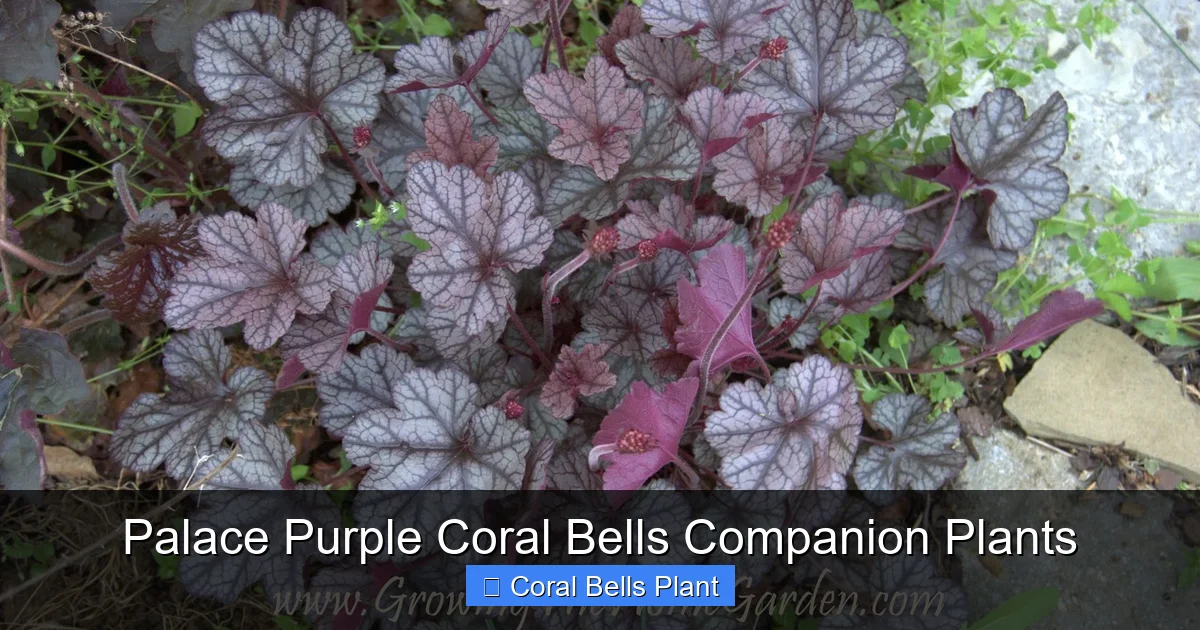
Palace Purple Coral Bells Companion Plants
Palace Purple coral bells thrive alongside shade-loving perennials like hostas, ferns, and astilbes that share similar moisture and light needs. Choose companions with contrasting foliage textures and complementary bloom times to create a dynamic, low-maintenance garden display that shines from spring through fall.
If you have ever grown Heuchera ‘Palace Purple’, you know exactly why this plant has earned its place in countless shade gardens. Those deep, ruffled leaves in shades of burgundy, bronze, and purple create instant drama. They catch the light in a way that makes the whole garden bed glow. But here is the thing: Palace Purple coral bells companion plants can take that drama to a whole new level.
Choosing the right neighbors is not just about aesthetics. It is about creating a community of plants that thrive together. They share similar needs for light, water, and soil. They cover each other’s bare spots. They bloom in succession so the show never stops. In this guide, we will walk through everything you need to know to design stunning, healthy plant combinations around your Palace Purple coral bells.
Key Takeaways
- Ideal growing conditions: Palace Purple coral bells prefer partial to full shade with moist, well-draining soil rich in organic matter.
- Top companion plants: Hostas, Japanese painted ferns, astilbes, foamflowers, and lungworts create stunning foliage contrasts.
- Seasonal interest: Pair with early bloomers like hellebores and late-season stars like Japanese anemones for continuous color.
- Container combinations: Mix with trailing plants like creeping jenny and upright accents like carex for gorgeous potted displays.
- Foliage-first design: Focus on leaf color, texture, and form since coral bells are primarily grown for their dramatic purple foliage.
- Wildlife benefits: Companion plantings attract pollinators and beneficial insects while deterring common garden pests.
- Maintenance tips: Divide clumps every 3-4 years, mulch annually, and remove spent flower stalks to keep plants vigorous.
Quick Answers to Common Questions
What are the best companion plants for Palace Purple coral bells?
Hostas, Japanese painted ferns, astilbes, foamflowers, lungworts, hellebores, and Japanese forest grass are top choices due to shared shade and moisture preferences.
Can Palace Purple coral bells grow in full sun?
In cooler northern zones (4-6), they tolerate morning sun with adequate moisture. In hot climates, they need afternoon shade to prevent leaf scorch.
How often should I divide Palace Purple coral bells?
Divide clumps every 3 to 4 years in early spring to prevent the center from becoming woody and dying out.
Are Palace Purple coral bells deer resistant?
They are considered deer-resistant due to bitter compounds in the leaves, but hungry deer may still browse them. Companion planting with deer-proof plants like ferns and hellebores helps.
What causes coral bells to heave out of the ground?
Frost heave from freeze-thaw cycles pushes shallow crowns up. Heavy winter mulch after the ground freezes prevents this issue.
📑 Table of Contents
- Understanding Palace Purple Coral Bells
- Design Principles for Companion Planting
- Top Perennial Companions for Shade Gardens
- Ground Cover Companions for the Front Edge
- Grass-Like and Strappy-Leaved Accents
- Container Combinations: Palace Purple in Pots
- Seasonal Interest: A Year in the Garden
- Troubleshooting Common Issues
- Maintenance Calendar for Peak Performance
- Design Inspiration: Three Garden Vignettes
- Where to Buy and What to Look For
- Propagation: Multiply Your Favorites
- Conclusion
Understanding Palace Purple Coral Bells
Before we talk about companions, let us get to know the star of the show. Heuchera micrantha ‘Palace Purple’ is a classic cultivar that has been a garden favorite since the 1980s. It won the Perennial Plant Association’s Plant of the Year award in 1991, and for good reason.
Foliage Characteristics
The leaves are the main attraction. They emerge in spring with a bright, almost metallic purple sheen. As summer heat arrives, they deepen to a rich bronze-purple with darker veining. In cooler fall temperatures, they often shift again, showing hints of red and amber. The leaves are large, lobed, and ruffled, forming a dense mound typically 12 to 18 inches tall and wide.
Flower Details
In late spring to early summer, slender stems rise above the foliage. They carry airy panicles of tiny, creamy-white to pale pink bell-shaped flowers. The blooms are delicate and charming, attractive to hummingbirds and bees. However, most gardeners grow this plant for the foliage. The flower stems can be removed after blooming to keep the focus on the leaves.
Growing Requirements
Understanding what Palace Purple needs is the first step to finding great palace purple coral bells companion plants.
- Light: Partial shade to full shade. In cooler northern zones, it can handle more sun. In hot southern climates, afternoon shade is essential to prevent leaf scorch.
- Soil: Rich, humusy, well-draining soil. It dislikes heavy clay that stays soggy and sandy soil that dries too fast.
- Moisture: Consistent moisture is key. The shallow root system dries out quickly. Mulch helps tremendously.
- Hardiness: USDA zones 4 through 9. It is remarkably cold-hardy.
- Maintenance: Low. Remove tattered winter leaves in early spring. Divide clumps every three to four years to prevent the center from dying out.
Design Principles for Companion Planting
Great plant combinations do not happen by accident. They follow a few core design principles. Keep these in mind as you shop for palace purple coral bells companion plants.
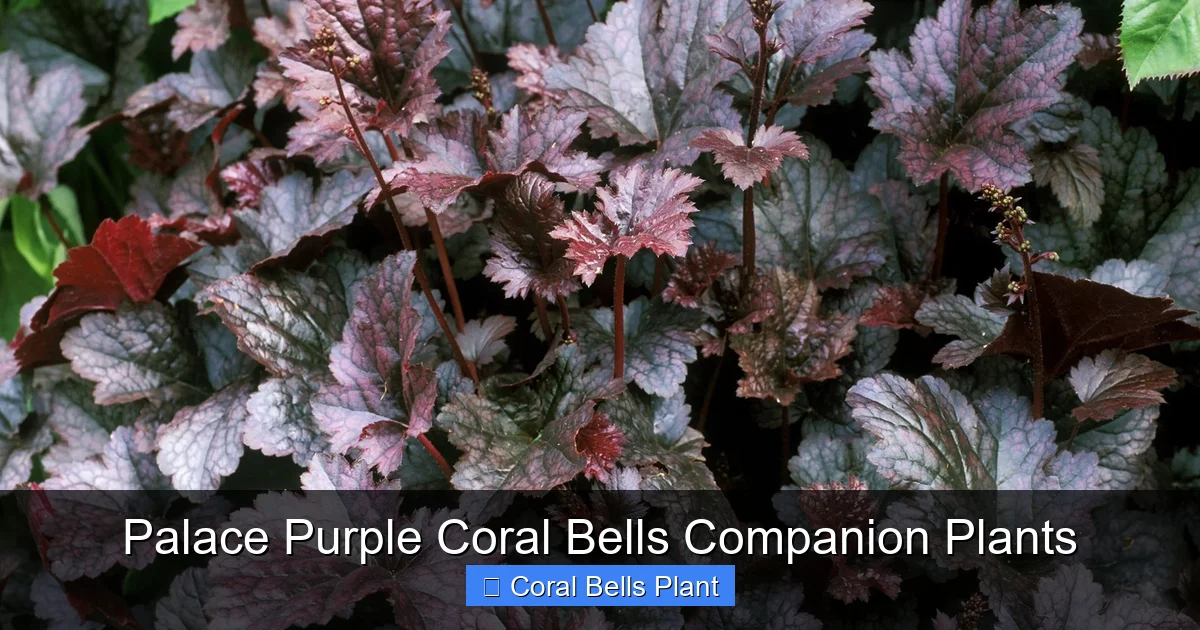
Visual guide about Palace Purple Coral Bells Companion Plants
Image source: images.immediate.co.uk
Contrast Foliage Texture and Shape
Palace Purple has large, rounded, ruffled leaves. Look for neighbors with different leaf shapes. Think strappy, feathery, heart-shaped, or needle-like. Contrast creates visual excitement. A bed of nothing but broad leaves looks flat. A mix of textures looks alive.
Play with Color Echoes and Complements
The purple-bronze foliage is a strong color anchor. You can echo it with other purple-leaved plants like ‘Black Scallop’ ajuga or ‘Purple Heart’ tradescantia. Or you can complement it. Chartreuse, silver, gold, and deep green all pop against that dark backdrop. Variegated foliage adds another layer of interest.
Stagger Bloom Times
Coral bells bloom in early summer. Choose companions that bloom before, during, and after. Hellebores and pulmonaria bloom in early spring. Astilbes and hostas bloom in mid-summer. Japanese anemones and toad lilies bloom in fall. This ensures your shade garden has flowers for six months or more.
Match Cultural Needs
This is the practical side. All plants in the grouping should want the same things: shade, moist rich soil, similar pH. If you pair a moisture-lover with a drought-tolerant plant, one will suffer. Palace purple coral bells companion plants should be shade-garden stalwarts with similar appetites.
Consider Vertical Layers
Think in three layers. Ground covers (under 6 inches). Mid-layer mounds (6 to 18 inches). Taller accents (18 inches to 3 feet). Palace Purple sits in the mid-layer. Add creepers at its feet and vertical spires behind it. This creates a lush, full look that suppresses weeds naturally.
Top Perennial Companions for Shade Gardens
These are the tried-and-true perennials that make excellent palace purple coral bells companion plants. They share the same love for dappled light and rich soil.
Hostas: The Classic Partners
Hostas and coral bells are the peanut butter and jelly of the shade garden. They are a match made in horticultural heaven. Hostas offer bold, broad leaves in endless variations: blue, green, gold, variegated, rippled, smooth. Their mounding habit mirrors the coral bells, creating a cohesive rhythm.
Great pairings:
- Hosta ‘Sum and Substance’ – Huge chartreuse leaves glow against the dark purple.
- Hosta ‘June’ – Gold centers with blue-green margins; a sophisticated color echo.
- Hosta ‘Patriot’ – Deep green with crisp white margins; high contrast drama.
- Hosta ‘Blue Angel’ – Massive blue-green leaves provide a cool, calm backdrop.
Tip: Plant hostas slightly behind or to the side of coral bells. Hostas emerge later in spring. The coral bells give you early color while the hostas wake up.
Ferns: Feathery Texture Contrast
Nothing beats ferns for texture. Their delicate, divided fronds are the perfect foil to the solid, ruffled coral bells leaves. They bring movement. The slightest breeze sets them dancing.
Top choices:
- Athyrium niponicum ‘Pictum’ (Japanese Painted Fern) – Silver, burgundy, and green fronds. The burgundy tones echo the coral bells perfectly. 12 to 18 inches tall.
- Dryopteris erythrosora (Autumn Fern) – New fronds emerge coppery-orange, maturing to deep green. Semi-evergreen. 18 to 24 inches.
- Matteuccia struthiopteris (Ostrich Fern) – Tall, dramatic, vase-shaped. Great as a backdrop. Can spread aggressively; give it room.
- Adiantum pedatum (Maidenhair Fern) – Wiry black stems with delicate fan-shaped leaflets. Airy and elegant. Needs consistent moisture.
Astilbes: Feathery Plumes of Color
Astilbes bring something coral bells lack: showy, colorful flower plumes in pink, red, white, and lavender. They bloom in early to mid-summer, right after the coral bells flowers fade. Their fern-like foliage stays attractive all season if kept moist.
Recommended varieties:
- Astilbe ‘Fanal’ – Deep red plumes, bronze-green foliage. Compact, 18 to 24 inches.
- Astilbe ‘Visions’ – Raspberry-pink plumes, bronze foliage. Drought-tolerant once established. 15 to 18 inches.
- Astilbe ‘Bridal Veil’ – Pure white plumes, glossy green leaves. Brightens dark corners. 24 to 30 inches.
- Astilbe chinensis ‘Pumila’ – Low-growing, lavender-pink plumes. Great ground cover. 8 to 12 inches.
Critical note: Astilbes need more consistent moisture than coral bells. Plant them in the lowest, moistest part of the bed. Mulch heavily.
Foamflowers (Tiarella): Native Charm
Foamflowers are close relatives of coral bells (both in the Saxifragaceae family). They share the same preference for woodland conditions. Their maple-shaped leaves often have striking dark centers or veining. In spring, they produce foamy spikes of white or pink flowers.
Excellent selections:
- Tiarella ‘Spring Symphony’ – Deeply lobed leaves with black centers. Pale pink flowers. 12 inches.
- Tiarella ‘Sugar and Spice’ – Green leaves with heavy black veining. Light pink buds open white. 10 inches.
- Tiarella cordifolia (Running Foamflower) – Spreads by stolons to form a loose ground cover. White flowers. Great for naturalizing.
Lungworts (Pulmonaria): Early Spring Stars
Lungworts are among the first perennials to bloom in spring. Their spotted or silvered foliage is stunning all season. They thrive in the same cool, moist shade. The flowers open pink and turn blue, often showing both colors at once.
Best varieties:
- Pulmonaria ‘Silver Bouquet’ – Almost entirely silver leaves. Coral-pink flowers. 12 inches.
- Pulmonaria ‘Raspberry Splash’ – Silver-spotted leaves. Raspberry-pink flowers. Resistant to powdery mildew. 12 inches.
- Pulmonaria ‘Trevi Fountain’ – Silver-spotted leaves. Deep cobalt blue flowers. Vigorous. 12 inches.
Hellebores: Winter and Early Spring Blooms
Hellebores (Lenten roses) bloom when almost nothing else does: late winter to early spring. Their leathery, evergreen leaves provide year-round structure. They are long-lived, drought-tolerant once established, and deer-resistant.
Pairing tips:
- Plant hellebores behind coral bells. They are taller (18 to 24 inches).
- Choose varieties with outward-facing flowers for better visibility.
- Helleborus x hybridus cultivars offer the widest color range: white, pink, red, purple, yellow, near-black.
- Remove old foliage in late winter before flower buds emerge to showcase the blooms.
Japanese Anemones: Fall Finale
When the rest of the shade garden is winding down, Japanese anemones hit their stride. They bloom from late summer into fall on tall, wiry stems. The flowers are simple, elegant, single or double, in white or pink. They spread by rhizomes to form colonies.
Consider these:
- Anemone hupehensis ‘September Charm’ – Single pink flowers with yellow centers. 2 to 3 feet tall.
- Anemone x hybrida ‘Honorine Jobert’ – Classic single white. Heirloom variety. 3 to 4 feet.
- Anemone ‘Wild Swan’ – White petals with blue-purple reverse. Blooms intermittently from summer to fall. 18 to 24 inches.
Caution: They can be aggressive in ideal conditions. Site them where they have room to roam, or use a root barrier.
Ground Cover Companions for the Front Edge
Low-growing spreaders at the feet of your coral bells suppress weeds, conserve moisture, and soften edges. They complete the layered look.
Creeping Jenny (Lysimachia nummularia ‘Aurea’)
Chartreuse gold foliage that trails and roots as it goes. It is a high-contrast beacon against the dark purple leaves. It loves moisture and part shade. Keep an eye on it; it can be enthusiastic. The golden color is brightest with a few hours of morning sun.
Sweet Woodruff (Galium odoratum)
A classic woodland ground cover. Whorls of narrow, bright green leaves on thin stems. White starry flowers in spring. It forms a dense, weed-smothering mat. It smells like fresh hay when crushed. Perfect for naturalistic plantings.
Barrenwort (Epimedium)
Epimediums are tough, drought-tolerant once established, and incredibly ornamental. Heart-shaped or arrow-shaped leaves, often with red edges or veining in spring. Delicate “bishop’s hat” flowers in spring. They handle dry shade better than almost anything else.
Great varieties:
- Epimedium x rubrum – Red-edged new leaves, red and yellow flowers. 12 inches.
- Epimedium ‘Amber Queen’ – Amber-yellow flowers with long spurs. Evergreen. 18 inches.
- Epimedium grandiflorum ‘Purple Pixie’ – Purple-tinged new growth, lavender flowers. Compact.
Wild Ginger (Asarum canadense / Asarum europaeum)
Native wild ginger (canadense) has large, soft, kidney-shaped leaves. European ginger (europaeum) has smaller, glossy, evergreen leaves. Both form slow, steady colonies. Flowers are hidden at ground level, pollinated by ants. Excellent for the deepest shade.
Ajuga (Bugleweed)
Low rosettes of colorful foliage. Short spikes of blue flowers in spring. ‘Black Scallop’ has near-black, scalloped leaves that echo the coral bells’ darkness. ‘Burgundy Glow’ offers tricolor foliage: pink, cream, and green. It spreads by stolons. Can be aggressive in lawns; keep it in beds with edging.
Grass-Like and Strappy-Leaved Accents
Plants with linear foliage provide the strongest textural contrast to the mounded, lobed coral bells. They add vertical punctuation and movement.
Japanese Forest Grass (Hakonechloa macra)
This is arguably the single best grass for shade. It forms cascading mounds of bamboo-like leaves. It moves with every breeze. It turns golden in fall. ‘Aureola’ is the classic gold-and-green variegated form. ‘All Gold’ is solid chartreuse. ‘Nicolas’ has red-tipped foliage in fall. It emerges late in spring, so pair it with early bulbs or hellebores.
Sedges (Carex)
Sedges are not true grasses, but they play the same role. Many are evergreen or semi-evergreen. They come in a shocking array of colors and sizes.
Top picks for shade:
- Carex oshimensis ‘Evergold’ – Creamy yellow center stripe, dark green margins. Arching fountain. 12 to 16 inches. Evergreen.
- Carex morrowii ‘Ice Dance’ – Dark green leaves with bright white margins. Stiffly arching. 12 inches. Evergreen. Spreads slowly.
- Carex siderosticha ‘Variegata’ – Broad, white-margined leaves. Creeping habit. Good ground cover. Deciduous.
- Carex ‘Banana Boat’ – Bright gold leaves, green margins. Compact, 10 inches.
Liriope and Ophiopogon
Lilyturf (Liriope) and Mondo Grass (Ophiopogon) are tough, evergreen, grass-like staples. Liriope has wider leaves and showy purple flower spikes in late summer. Mondo grass has finer, darker leaves. ‘Nigrescens’ (Black Mondo Grass) is jet black. Stunning with Palace Purple. Both handle root competition from trees well.
Solomon’s Seal (Polygonatum)
Arching stems with alternating leaves. Dangling white or green-tipped bell flowers in spring. Blue-black berries in fall. Golden yellow fall color. It adds an architectural, woodland grace. Polygonatum odoratum ‘Variegatum’ has white-edged leaves. Polygonatum biflorum is the native species. They spread slowly by rhizomes.
Container Combinations: Palace Purple in Pots
Coral bells are container superstars. Their mounding habit, evergreen foliage (in mild zones), and shallow roots make them perfect for pots. Palace purple coral bells companion plants in containers need to share the same potting mix and watering schedule.
The “Thriller, Filler, Spiller” Formula
This classic container design recipe works beautifully with coral bells as the filler.
- Thriller (tall, vertical): Carex ‘Evergold’, Hakonechloa ‘Aureola’, Fern (Autumn or Japanese Painted), Heucherella ‘Sweet Tea’ (taller relative).
- Filler (mounding, mid-height): Palace Purple coral bells (the star), Hosta ‘Mouse Ears’ (mini), Tiarella, Pulmonaria.
- Spiller (trailing): Creeping Jenny ‘Aurea’, Lamium ‘White Nancy’, Vinca minor ‘Illumination’, Ivy (small-leaved varieties).
Container Recipe 1: The Jewel Box
Pot size: 16 to 18 inches diameter.
- 1 Palace Purple coral bells (center/back)
- 1 Japanese Painted Fern (back)
- 3 Creeping Jenny ‘Aurea’ (edges)
- 1 Carex ‘Evergold’ (side accent)
- 3-5 bulbs of species tulips or crocus (planted deep, for early spring)
Why it works: Silver fern, purple coral bells, gold grass, gold trailer. A metallic color palette. The bulbs give early joy before the perennials fill in.
Container Recipe 2: The Woodland Miniature
Pot size: 12 to 14 inches diameter. Use a shallow, wide trough.
- 1 Palace Purple coral bells
- 1 Epimedium ‘Amber Queen’
- 1 Miniature Hosta (‘Blue Mouse Ears’ or ‘Pandora’s Box’)
- 1 small division of European Wild Ginger
- Top-dress with moss and small stones
Why it works: All plants are compact, slow-growing, and love the same conditions. It looks like a slice of forest floor. Low maintenance for years.
Container Care Tips
- Use high-quality potting mix with compost. Not garden soil.
- Add slow-release fertilizer at planting. Supplement with liquid feed monthly in growing season.
- Water when top inch is dry. Pots dry faster than ground.
- In zones 6 and colder, protect pots in winter. Move to unheated garage, sink in ground, or wrap with bubble wrap.
- Repot or divide every 2 to 3 years as plants fill the container.
Seasonal Interest: A Year in the Garden
One of the joys of well-planned palace purple coral bells companion plants is the shifting show. Let us walk through the seasons.
Late Winter to Early Spring (February – March)
Stars: Hellebores, Snowdrops, Crocus, Winter Aconite.
The coral bells may look a bit tattered. Evergreen companions shine. Hellebores bloom. Bulbs pop up between the crowns. This is the time to cut back old coral bells leaves to the ground before new growth starts.
Spring (April – May)
Stars: Pulmonaria, Tiarella, Epimedium, Brunnera, Bleeding Heart, Virginia Bluebells, Hostas emerging.
Palace Purple pushes fresh, vibrant purple leaves. It looks its absolute best now. Foamflowers and lungworts bloom. Hostas unfurl. The garden feels lush and new. Apply a fresh layer of shredded leaf mulch.
Early Summer (June)
Stars: Coral bells flowers, Astilbe, Lady’s Mantle, Geranium, Iris cristata.
Coral bells send up wands of tiny bells. Astilbes plume. This is peak flower time. Deadhead coral bells after bloom to tidy the mound. Watch for leaf scorch if sun hits too hard.
Mid to Late Summer (July – August)
Stars: Hostas (flowers), Hakonechloa (form), Ferns, Ligularia, Cimicifuga (Bugbane).
The foliage show takes center stage. Hostas bloom. Grasses cascade. Ligularia offers bold leaves and yellow daisies. Bugbane sends up tall, fragrant white wands. Water deeply during dry spells. This is when mulch earns its keep.
Fall (September – October)
Stars: Japanese Anemones, Toad Lilies (Tricyrtis), Actaea, Autumn Fern color, Hakonechloa gold.
The second wind. Anemones dance. Toad lilies sparkle with orchid-like spotted flowers. Coral bells often intensify in color with cool nights. Grasses turn gold. Stop fertilizing. Let plants harden off.
Early Winter (November – December)
Stars: Evergreen ferns, Hellebore foliage, Carex, Ophiopogon, Coral bells (in mild zones).
Structure remains. The “bones” of the garden are visible. In zones 7+, coral bells stay evergreen. In colder zones, they flatten but the crown survives. Leave the leaves for winter protection. Clean up in late winter.
Troubleshooting Common Issues
Even the best plant combinations hit snags. Here is how to handle the most common problems with palace purple coral bells companion plants.
Heaving (Frost Heave)
Coral bells have shallow crowns. Freeze-thaw cycles can push them out of the ground, exposing roots.
Fix: Mulch heavily (3 inches) after ground freezes. Use evergreen boughs or straw. If heaving occurs, gently press plants back in during a thaw. Plant slightly deep (crown 1/2 inch below soil) at planting time.
Leaf Scorch
Brown, crispy leaf edges. Usually from too much sun, wind, or drought.
Fix: Move to shadier spot. Increase water. Ensure mulch is in place. Companion plants like large hostas or ferns can provide living shade if planted on the sunny side.
Crown Rot
Plant collapses at base. Mushy crown. Foul smell. Caused by poor drainage, burying the crown, or excessive winter wet.
Fix: Improve drainage with grit or compost. Plant high. Avoid heavy mulch right against crown. Divide and replant healthy sections in better location.
Vine Weevil Damage
Notched leaf edges (adults) or root destruction (grubs). Common in containers and light soils.
Fix: Apply beneficial nematodes (Steinernema kraussei) in spring and fall. Use sticky traps for adults. Drench soil with neem oil. Repot containers with fresh mix if infested.
Powdery Mildew
White dusty coating on leaves. More common on companions (especially Pulmonaria, Astilbe) than coral bells.
Fix: Improve air circulation (don’t overcrowd). Water at base, not overhead. Choose resistant varieties (many modern Pulmonaria are resistant). Remove badly affected leaves.
Deer and Rabbit Browsing
Coral bells are somewhat deer-resistant (bitter compounds), but not deer-proof. Hostas are deer candy. Ferns, hellebores, epimedium, and carex are usually ignored.
Strategy: Plant deer-resistant companions on the outer edge. Use repellents. Fence if pressure is high. Interplant with strong-smelling herbs (mint, alliums) as deterrents.
Maintenance Calendar for Peak Performance
A little timely care keeps the whole community thriving.
Early Spring (March – April)
- Cut back all tattered evergreen foliage (hellebores, epimedium, carex, coral bells).
- Apply 1 to 2 inches of compost or leaf mold around crowns.
- Divide overcrowded clumps (coral bells, hostas, astilbes, carex).
- Apply slow-release organic fertilizer.
- Refresh mulch to 2 to 3 inches.
Late Spring (May)
- Deadhead spent flowers on pulmonaria, tiarella, epimedium.
- Monitor for slugs on hostas; use iron phosphate bait if needed.
- Water new divisions regularly.
- Stake tall plants (cimicifuga, tall astilbes) before they flop.
Summer (June – August)
- Deadhead coral bells and astilbes after bloom.
- Water deeply once a week during dry spells (more for containers).
- Remove any diseased foliage promptly.
- Enjoy the garden!
Fall (September – November)
- Plant new additions; fall is ideal for root establishment.
- Divide spring-blooming perennials if needed.
- Cut back foliage of herbaceous plants (astilbe, geranium) after frost.
- Leave evergreen and semi-evergreen foliage (hellebores, carex, ferns, coral bells).
- Apply winter mulch after ground freezes.
Winter (December – February)
- Check for heaving during thaws; press plants back gently.
- Brush heavy snow off evergreen foliage to prevent breakage.
- Plan next year’s additions; order bare-root plants.
- Sharpen tools. Dream of spring.
Design Inspiration: Three Garden Vignettes
Here are three complete planting plans using palace purple coral bells companion plants. Adapt the plant counts to your space.
Vignette 1: The Serene Woodland (10 x 6 feet, Full Shade)
Back Layer (North side):
- 3 Japanese Painted Ferns
- 2 Autumn Ferns
- 1 Cimicifuga ‘Hillside Black Beauty’ (dark foliage, fragrant white wands)
Middle Layer:
- 5 Palace Purple Coral Bells (staggered)
- 3 Hostas ‘June’
- 3 Hostas ‘Patriot’
- 3 Astilbe ‘Visions’
- 1 Solomon’s Seal ‘Variegatum’
Front Layer:
- 6 Epimedium x rubrum
- 5 European Wild Ginger
- Drifts of Snowdrops, Crocus, Species Tulips (planted throughout)
Ground Cover: Sweet Woodruff seeded between plants.
Vignette 2: The High-Contrast Modern Bed (8 x 8 feet, Part Shade / Morning Sun)
Focal Point: 1 Japanese Maple ‘Bloodgood’ or ‘Crimson Queen’ (small specimen).
Surrounding Matrix:
- 7 Palace Purple Coral Bells
- 5 Hakonechloa ‘All Gold’
- 5 Carex ‘Evergold’
- 3 Heuchera ‘Caramel’ (for amber contrast)
- 3 Heuchera ‘Lime Rickey’ (for electric chartreuse)
- 1 Ophiopogon ‘Nigrescens’ (Black Mondo Grass) – dark echo
Spring Bulbs: 50 White Species Tulips (T. tarda), 50 Blue Scilla.
Why it works: A restricted palette of purple, gold, black, and lime. Grassy textures dominate. Very low maintenance. High impact all season.
Vignette 3: The Pollinator Pocket Garden (6 x 6 feet, Dappled Shade)
Goal: Maximum nectar and pollen from spring to fall.
- 3 Palace Purple Coral Bells (flowers for bees, hummingbirds)
- 2 Tiarella ‘Spring Symphony’ (early spring)
- 2 Pulmonaria ‘Raspberry Splash’ (early spring)
- 2 Aquilegia canadensis (Wild Columbine) – self-sows, hummingbirds
- 2 Geranium maculatum (Wild Geranium) – spring, bees
- 2 Astilbe ‘Fanal’ (early summer)
- 2 Cimicifuga racemosa (Bugbane) – late summer, fragrant, pollinator magnet
- 2 Anemone ‘September Charm’ (fall)
- 1 Actaea pachypoda (Doll’s Eyes) – white berries on red stems, birds
- Ground cover: Violet (Viola sororia) – host plant for fritillary butterflies
No pesticides. Leave leaf litter. Provide a water dish.
Where to Buy and What to Look For
Healthy plants establish faster and resist problems better.
Local Nurseries vs. Mail Order
Local nurseries: You see the plant. Check root health. Support local business. Immediate gratification. Best for common varieties.
Mail order specialists: Wider selection of rare/new cultivars. Plants shipped dormant (bareroot) or in pots. Reputable sources: Plant Delights, Bluestone Perennials, Walters Gardens (wholesale but lists retailers), Digging Dog Nursery, Far Reaches Farm. Order early for best selection.
Selecting Healthy Plants
- Foliage: Clean, unblemished, good color for the variety. No yellowing, spots, or holes.
- Crown: Firm, not mushy. Multiple growing points (eyes) visible.
- Roots: Gently slip pot. Roots should be white/tan, firm, filling the pot but not a solid mat circling the bottom.
- Weeds: No weeds in the pot. Indicates good nursery hygiene.
- Labels: Accurate, with cultivar name and patent info if applicable.
Bareroot vs. Container
Bareroot plants (common for hostas, astilbes, ferns, epimediums) are cheaper and lighter to ship. Plant them immediately on arrival. Soak roots 1 hour before planting. Spread roots over a mound of soil in the hole. Container plants can be planted anytime ground isn’t frozen. They establish faster in summer heat.
Propagation: Multiply Your Favorites
Most palace purple coral bells companion plants are easy to divide. It rejuvenates old clumps and gives you free plants.
Division Basics
- When: Early spring (just as growth starts) or early fall (4-6 weeks before frost). Spring is safer in cold zones.
- Tools: Sharp spade, garden fork, old knife or saw, tarp.
- Process: Dig whole clump. Shake/wash off soil. Pull or cut into sections. Each division needs roots and 3-5 eyes/shoots. Discard woody, dead centers. Replant immediately at same depth. Water well. Mulch.
Plant-Specific Tips
- Coral Bells: Divide every 3-4 years. Woody center = time to divide. Spring preferred.
- Hostas: Spring or fall. Easy. Can cut with spade in ground.
- Astilbes: Spring. Fibrous roots. Keep moist.
- Ferns: Spring. Divide crowns. Don’t let roots dry.
- Epimediums: Late summer/fall after flowering. Rhizomes. Slow to establish.
- Carex: Spring. Cut foliage back by half before dividing.
- Hellebores: Rarely need division. Resent disturbance. Move only if necessary, in fall.
- Pulmonaria: Fall. Spreads by rhizomes. Easy.
Seed Propagation
Coral bells, heucherellas, tiarellas, and pulmonarias self-sow modestly. Seedlings are variable (not true to cultivar). Fun for experiments. Collect seed when pods dry. Sow fresh in pots outdoors. Cold stratification needed. Transplant seedlings when they have true leaves.
Conclusion
Creating a garden around Palace Purple coral bells is one of the most rewarding shade gardening projects you can undertake. This plant brings so much to the table: four-season foliage color, neat habit, pollinator flowers, and tough constitution. But it truly sings when surrounded by the right friends.
We have explored a world of palace purple coral bells companion plants. From the bold leaves of hostas to the airy fronds of ferns. From the spring jewels of pulmonaria to the fall dancers of Japanese anemones. From the golden cascades of Hakonechloa to the evergreen structure of carex. Each brings a unique texture, color, and season of interest.
Remember the core principles: match cultural needs, contrast textures, stagger blooms, and layer vertically. Start with a few proven combinations. Observe how they grow together in your specific conditions. Edit, move, add. Gardening is a conversation with the land, not a one-time installation.
Whether you have a sprawling woodland acre or a single container on a shaded balcony, you can build a community of beauty around this remarkable plant. Your Palace Purple coral bells will thank you with deeper color, fuller mounds, and years of reliable performance. And you will have a garden that feels alive, layered, and deeply satisfying in every season.
Now grab your trowel, pick a few companions from this guide, and start planting. The best time to plant was ten years ago. The second best time is today. Happy gardening!
Frequently Asked Questions
What soil conditions do Palace Purple coral bells prefer?
Palace Purple coral bells thrive in rich, humusy, well-draining soil with a slightly acidic to neutral pH (6.0-7.0). They dislike heavy clay that stays soggy and sandy soil that dries too quickly. Amending planting holes with compost improves both drainage and moisture retention.
When is the best time to plant coral bells and their companions?
Early spring and early fall are ideal planting times. Spring planting allows roots to establish before summer heat. Fall planting (6 weeks before frost) gives a head start for next spring. Avoid planting during hot, dry summer periods unless you can provide constant moisture.
How do I prevent leaf scorch on Palace Purple coral bells?
Plant in partial to full shade, especially protecting from harsh afternoon sun. Maintain consistent soil moisture with regular watering and a 2-3 inch mulch layer. In hot climates, choose a site with dappled light or morning sun only. Companion plants like large hostas can provide living shade.
Can I grow Palace Purple coral bells in containers?
Yes, they are excellent container plants due to their shallow roots and mounding habit. Use a high-quality potting mix with compost, ensure drainage holes, and water when the top inch feels dry. In zones 6 and colder, protect pots in winter by moving to an unheated garage or sinking into the ground.
Why is the center of my coral bells plant dying out?
This is natural aging. Coral bells develop woody centers after 3-4 years. The solution is division: dig the clump in early spring, discard the woody center, and replant the vigorous outer sections with roots and shoots. This rejuvenates the plant.
Do Palace Purple coral bells attract pollinators?
Yes, the airy flower spikes in late spring to early summer attract hummingbirds, bees, and butterflies. The tiny bell-shaped flowers provide nectar. For maximum pollinator support, pair with other shade-blooming plants like tiarella, geranium, and cimicifuga that flower at different times.