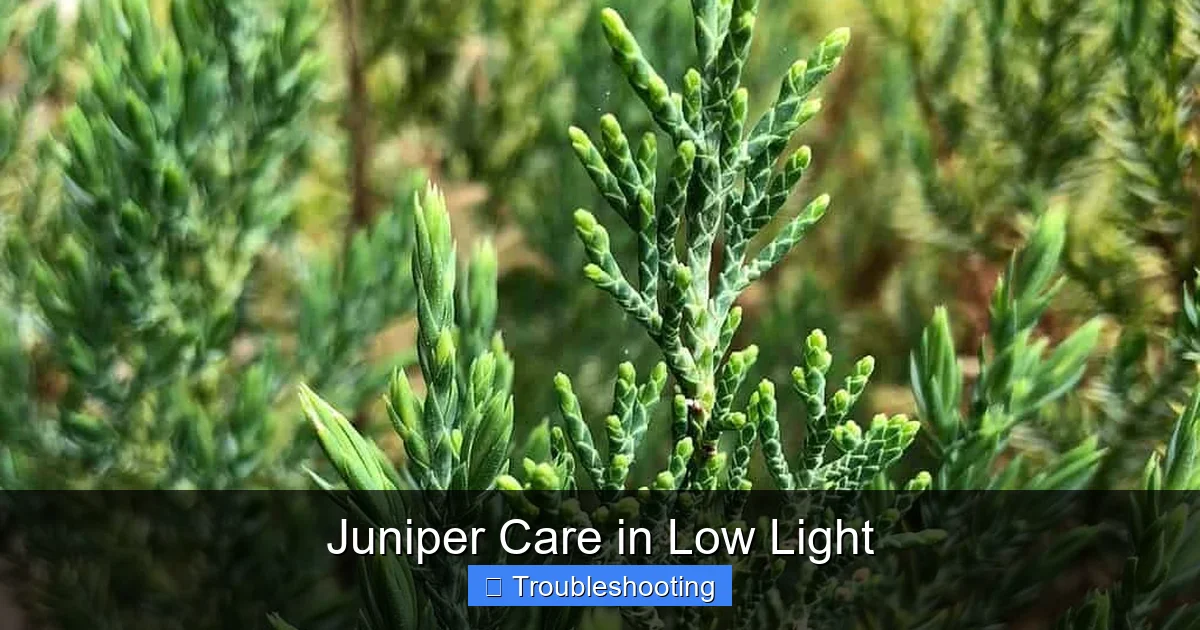
Juniper Care in Low Light
Juniper care in low light is challenging but possible with the right variety and adjustments. Choose shade-tolerant types like ‘Blue Star’ or ‘Green Mound,’ reduce watering frequency, ensure excellent drainage, and supplement with grow lights for best results.
You brought home a beautiful juniper. It looked perfect at the nursery. Now it sits in your living room, and something feels wrong. The needles turn pale. Tips brown. Branches stretch toward the window like they are begging. You wonder if juniper care in low light is even possible.
The short answer: it is hard. Junipers evolved for open, sunny hillsides. They crave intense light. But life happens. Apartments have north-facing windows. Offices have fluorescent tubes. You want that evergreen beauty anyway. Good news: with the right variety, realistic expectations, and a few smart adjustments, you can keep a juniper alive and reasonably happy in less-than-ideal light. This guide walks you through everything you need to know.
Key Takeaways
- Most junipers need full sun: Low light causes weak growth, needle drop, and disease susceptibility.
- Select shade-tolerant varieties: ‘Blue Star,’ ‘Green Mound,’ and ‘Nana’ perform better in dim conditions.
- Water less frequently: Low light reduces evaporation, so let soil dry more between waterings.
- Use grow lights for best results: 12-14 hours of supplemental light prevents etiolation and maintains color.
- Improve air circulation: Stagnant air in low light encourages fungal issues like spider mites and root rot.
- Fertilize sparingly: Reduced growth means lower nutrient needs; overfeeding burns roots.
- Monitor for pests weekly: Stressed junipers attract spider mites, scale, and aphids quickly.
Quick Answers to Common Questions
Can junipers survive in low light indoors?
Yes, but they will not thrive. Choose shade-tolerant varieties like ‘Blue Star’ or ‘Nana,’ use grow lights, and reduce watering to prevent root rot.
How often should I water a juniper in low light?
Water only when the top two inches of soil feel dry. In low light, this often means every two to three weeks in winter and weekly in summer.
What is the best grow light for indoor junipers?
Full-spectrum white LED lights (4000K-6500K) at 20-40 watts per square foot, positioned 12-18 inches above the plant for 12-14 hours daily.
Why are my juniper needles turning brown in low light?
Browning usually indicates overwatering, spider mites, or fungal disease. Low light weakens the plant, making it susceptible to these issues.
Can I put my indoor juniper outside in summer?
Yes, and it is highly recommended. Gradually acclimate over two weeks. Outdoor summer growth builds reserves for winter indoor survival.
📑 Table of Contents
- Understanding Juniper Light Needs
- Signs Your Juniper Needs More Light
- Best Low-Light Juniper Varieties
- Optimizing Indoor Growing Conditions
- Watering and Soil Adjustments for Low Light
- Long-Term Maintenance and Troubleshooting
- Creating a Juniper-Friendly Microclimate
- Realistic Expectations and Mindset
- Conclusion
Understanding Juniper Light Needs
Why Junipers Crave Sun
Junipers are conifers. Their native habitats span rocky mountainsides, coastal cliffs, and open prairies. Full sun means six to eight hours of direct light daily. In those conditions, they grow dense, compact, and richly colored. Their needles produce thick waxy cuticles. This protects against UV damage and water loss.
When light drops, everything changes. Photosynthesis slows. The plant cannot produce enough energy to maintain dense growth. It stretches. Internodes lengthen. Needles become larger, thinner, and paler. This is etiolation. The plant literally reaches for photons. The result looks leggy, sparse, and sad.
What Counts as Low Light
Low light does not mean darkness. It means bright indirect light. Think near a north window. Or several feet from an east or west window. Or under office fluorescents. Light intensity measures in foot-candles. Full sun hits 10,000 foot-candles. A bright indoor spot might offer 200 to 500. That is a massive gap.
Junipers need at least 1,000 foot-candles to maintain quality growth. Below 500, they survive but decline slowly. Below 200, they barely hang on. Know your numbers. A cheap light meter or phone app helps. Measure at plant level, midday. You might be surprised how dim your “bright” spot actually is.
The Seasonal Light Shift
Winter changes everything. Sun angle drops. Days shorten. A spot that worked in July fails in January. Deciduous trees outside lose leaves, which helps. But indoor heating dries air. Growth slows or stops. Water needs drop. This seasonal rhythm matters. Adjust care monthly, not just once.
Signs Your Juniper Needs More Light
Early Warning Signals
Catch problems early. The first sign is color change. Healthy juniper needles show vibrant green, blue-green, or gold depending on variety. In low light, they fade. The waxy bloom dulls. New growth emerges pale yellow-green. This chlorosis means insufficient chlorophyll production.
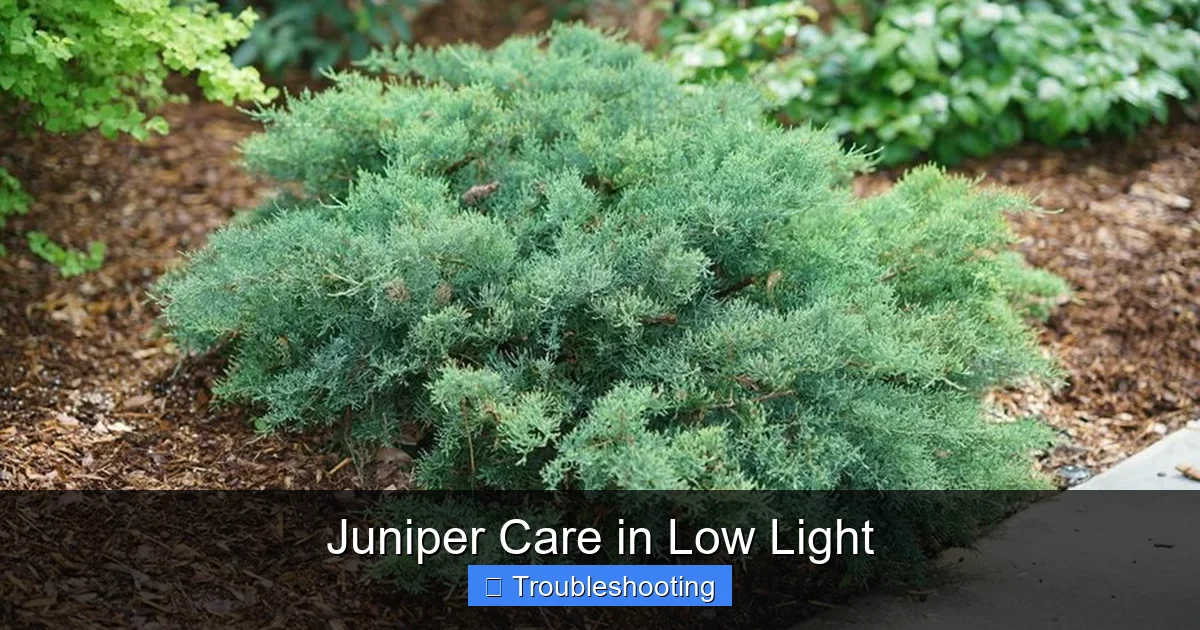
Visual guide about Juniper Care in Low Light
Image source: gardendesign.com
Next comes stretching. Look at the tips. Are they reaching? Are internodes (spaces between needle whorls) longer than normal? Compare to older growth. Etiolated stems are weak. They flop. They break easily. The plant loses its natural compact form.
Advanced Decline Symptoms
If low light persists, needle drop begins. Interior needles yellow and fall first. The plant sacrifices old growth to feed new. But new growth is weak too. Branches die back. The canopy thins. You see bare wood inside.
Fungal issues follow. Weak tissue resists pathogens poorly. Phomopsis tip blight appears as brown, dying tips. Kabatina blight shows similar damage. Root rot creeps in because wet soil stays wet longer without sun-driven evaporation. Spider mites explode in dry, stagnant indoor air. The plant enters a death spiral.
Varietal Differences in Symptoms
Not all junipers show stress the same way. Groundcover types like ‘Blue Rug’ turn purple-bronze in stress. Upright types like ‘Skyrocket’ stretch dramatically. Dwarf cultivars like ‘Nana’ just sulk and slowly brown. Know your variety’s normal look. That baseline helps you spot trouble fast.
Best Low-Light Juniper Varieties
Top Performers for Dim Spaces
No juniper truly loves shade. But some tolerate it better. Juniperus squamata ‘Blue Star’ tops the list. This slow-growing dwarf forms a neat mound. Steel-blue needles hold color well in moderate shade. It stays compact, rarely exceeding three feet tall and wide. Perfect for containers.
Juniperus procumbens ‘Nana’ (Japanese garden juniper) handles lower light than most. Its tight, layered branches create a bonsai-like look naturally. Green needles darken nicely in shade. It spreads slowly, making a dense mat. Very forgiving of indoor conditions.
Juniperus horizontalis ‘Green Mound’ offers bright green foliage that resists bronzing. Low, mounding habit. Good for shallow pots. Handles dry indoor air better than many. Juniperus chinensis ‘Shimpaku’ is the classic bonsai choice. Naturally small needles, dense branching, and remarkable shade tolerance for a juniper.
Varieties to Avoid Indoors
Skip the tall, fast growers. ‘Skyrocket’ and ‘Blue Arrow’ need intense light to stay columnar. In shade, they flop open. ‘Blue Rug’ and ‘Wiltonii’ groundcovers brown out quickly without sun. ‘Spartan’ and ‘Wichita Blue’ get sparse and leggy. Large landscape junipers simply cannot adapt to indoor light levels.
Consider Bonsai Specimens
Pre-trained juniper bonsai often come from shade-tolerant stock. They are already adapted to container life. Their root systems are pruned for shallow pots. Many have been grown under shade cloth at nurseries. A quality juniper bonsai from a reputable seller has better odds than a landscape plant shoved into a pot.
Optimizing Indoor Growing Conditions
Supplemental Lighting: The Game Changer
If you do one thing, add a grow light. Modern LEDs make this easy. Look for full-spectrum lights around 4000K to 6500K color temperature. Aim for 20 to 40 watts per square foot. Position 12 to 18 inches above the canopy. Run 12 to 14 hours daily. Use a timer. Consistency matters more than intensity.
Clip-on gooseneck lights work for single plants. Panel lights cover groups. Tube lights fit shelves. Avoid purple “blurple” grow lights unless you enjoy that aesthetic. White full-spectrum looks natural and lets you see true needle color. Your juniper will thank you with tighter growth and better color.
Window Placement Strategy
No grow light? Maximize natural light. South windows give most light but risk heat stress. East offers gentle morning sun. West brings intense afternoon heat. North gives consistent but weak light. Rotate the pot weekly. This prevents one-sided stretching.
Clean windows. Dust blocks surprising amounts of light. Sheer curtains diffuse harsh rays but cut intensity. Remove screens in winter. Every percentage helps. Consider a mirror behind the plant to bounce light back. White walls reflect. Dark walls absorb.
Temperature and Humidity Control
Junipers prefer cool nights. 50 to 60°F is ideal. Indoor heating pushes 70°F+. This disrupts dormancy. The plant keeps growing weakly instead of resting. Place near a cool window. Avoid heat vents. A humidifier helps. Target 40 to 50% humidity. Pebble trays work but need frequent refilling.
Air circulation prevents fungal issues. A small fan on low, running a few hours daily, mimics outdoor breeze. It strengthens stems too. Just don’t blow directly on foliage. That increases transpiration and drying.
Pot and Soil Selection
Terra cotta breathes. Plastic retains moisture. For low light, terra cotta wins. It wicks excess water. Roots get oxygen. Choose a pot just one size up from the root ball. Large pots hold too much wet soil.
Soil must drain fast. Mix one part pine bark fines, one part pumice or perlite, one part akadama or coarse sand. No peat-heavy potting soils. They stay soggy. Add a handful of horticultural charcoal to prevent anaerobic pockets. Repot every two to three years in early spring.
Watering and Soil Adjustments for Low Light
The Golden Rule: Water Less
Low light means slow growth. Slow growth means low water use. The number one killer of indoor junipers is overwatering. Stick your finger two inches deep. Water only when dry at that depth. In winter, this might mean every two to three weeks. In summer with grow lights, maybe weekly.
When you water, water thoroughly. Run water until it exits drainage holes. This flushes salts. Never let the pot sit in a saucer of water. Empty it immediately. Junipers hate wet feet. Root rot starts in hours, not days.
Seasonal Watering Calendar
Spring: Increase frequency as growth resumes. Check twice weekly. Summer: Peak water use. Check weekly. Fall: Taper off as light drops. Check every 10 days. Winter: Minimal. Check every two to three weeks. Adjust for your specific conditions. Heating systems dry air fast.
Signs of Over vs Under Watering
Overwatered: Needles turn yellow-brown from bottom up. Stems feel soft. Soil smells sour or fungal. Fungus gnats appear. Underwatered: Needle tips brown and crispy. Foliage feels brittle. Soil pulls away from pot edges. Plant looks dull, not shiny. Both look similar at a glance. Check soil to tell.
Fertilizing in Low Light
Less light equals less fertilizer. Use half-strength balanced liquid fertilizer (10-10-10 or 20-20-20) monthly April through September. Skip October through March. Or use slow-release pellets at quarter rate in spring. Never fertilize dry soil. Water first, then feed. Excess salts burn roots fast in low-light conditions.
Long-Term Maintenance and Troubleshooting
Pruning for Shape and Health
Prune in early spring before new growth. Remove dead, crossing, or inward-growing branches. Thin dense areas to improve light penetration and air flow. Never cut back to bare wood. Junipers rarely bud from old wood. Leave green foliage on every branch you keep.
Pinch new growth tips in late spring to encourage branching. This creates density. Use fingers or sharp shears. Do not shear like a hedge. That creates a dead zone inside. Maintain natural form. A juniper should look like a juniper, not a green meatball.
Pest Management
Spider mites love dry, stressed junipers. Check weekly. Tap a branch over white paper. Tiny moving dots? Mites. Webbing? Advanced infestation. Spray neem oil or insecticidal soap weekly for three weeks. Increase humidity. Rinse foliage monthly in shower.
Scale insects look like tiny bumps on stems. Scrape with fingernail. If it squishes, it’s alive. Treat with horticultural oil in spring. Aphids cluster on new growth. Blast with water. Follow with soap spray. Fungus gnats mean overwatering. Let soil dry more. Use yellow sticky traps.
Disease Prevention and Treatment
Phomopsis tip blight: Brown tips in spring. Prune infected tips two inches into green wood. Sterilize tools between cuts. Apply copper fungicide. Kabatina blight: Similar but appears late winter. Same treatment. Root rot: Mushy roots, foul smell. Unpot. Trim rot. Repot in fresh dry mix. Water sparingly. Pray.
Cedar-apple rust: Orange gelatinous galls in spring. Only if near apple trees. Remove galls. Not usually fatal. Needle cast: Inner needles brown and drop. Improve air flow. Reduce overhead watering. Fungicide if severe.
Repotting and Root Care
Repot every two to three years. Early spring best. Gently remove pot. Loosen circling roots. Trim longest roots by one-third. Remove old soil. Check for rot. Use fresh mix. Water well. Keep shaded two weeks. No fertilizer for a month.
Root pruning stimulates new feeder roots. It keeps the plant sized for its pot. It refreshes soil structure. Do not fear it. Junipers handle root work well if timed right. Never repot in summer heat or winter cold.
Vacation Care
Going away? Water thoroughly. Move to coolest, brightest spot. Group plants to raise humidity. Use self-watering spikes if trusted. Or ask a friend to check. Better: hire a plant sitter. Junipers can survive two weeks alone if prepped. Three weeks is pushing it.
Creating a Juniper-Friendly Microclimate
Grouping for Humidity
Plants transpire. Grouping creates a humidity bubble. Place your juniper with other cool-loving plants. Ferns, ivy, peace lily. Keep a few inches between for air flow. The collective transpiration raises local humidity 5 to 10%. Every bit helps.
Using Humidity Trays Effectively
Fill a large saucer with pebbles. Add water to just below pebble tops. Set pot on pebbles, not in water. Refill as water evaporates. Clean monthly to prevent algae. This passive method adds 5% humidity. Not huge, but free and easy.
Mini Greenhouse Options
For serious growers, a small indoor greenhouse cabinet works wonders. Add LED strips. Add a small fan. Add a humidifier on timer. You control light, humidity, temp, airflow. Junipers thrive. It becomes a feature piece. IKEA cabinets hacked with lights are popular for this.
Outdoor Summer Vacation
If you have any outdoor space, move your juniper out late spring through early fall. Harden off gradually. One hour shade day one. Add hour daily. Two weeks later, full outdoor life. Rain, wind, real sun. It will put on a year’s growth in three months. Bring in before frost.
This outdoor period resets the plant. It builds reserves. It hardens foliage. It breaks pest cycles. Even a fire escape or balcony helps. Just ensure the pot does not bake in sun. Terra cotta dries fast outdoors. Check water daily.
Realistic Expectations and Mindset
Accept Slower Growth
Your indoor juniper will not grow like a nursery specimen. It may add one to two inches yearly. That is okay. Slow growth means less pruning. Less water. Less fertilizer. It stays in scale with your space. Enjoy the meditative pace. Bonsai masters value this.
Expect Some Needle Drop
Even healthy junipers shed oldest needles annually. Usually in fall. Interior needles yellow and drop. This is normal. If new growth looks good, do not panic. Only worry if tips brown or drop exceeds 20% of foliage.
Know When to Let Go
Sometimes a juniper declines despite everything. If more than half the foliage is dead. If root rot is advanced. If it hasn’t put on new growth in two years. Thank it. Compost it. Start fresh with a better-suited variety. Or switch to a truly low-light plant like ZZ plant or snake plant. No shame in matching plant to place.
Celebrate Small Wins
New green tips in spring. Rich color holding through winter. A flush of growth after summer outdoors. These are victories. Growing junipers in low light is advanced plant parenting. You are creating a microclimate against the odds. That deserves respect.
Conclusion
Juniper care in low light asks more of you than most houseplants. You become the sun. You become the wind. You become the rain. But the reward is unique. That resinous scent when you brush past. The sculptural forms. The connection to ancient mountains. A living piece of wilderness in your home.
Start with the right variety. ‘Blue Star’ or ‘Nana’ forgive mistakes. Add a grow light if you can. It changes everything. Water with restraint. Watch closely. Adjust seasonally. Accept imperfection. Your juniper will not look like a catalog photo. It will look like your juniper. Shaped by your care. Surviving against odds. That is more beautiful anyway.
Remember: every expert killed junipers first. You learn by doing. By observing. By adjusting. The fact that you are reading this means you care. That is the real secret. Care consistently, and your juniper has a fighting chance. Good luck. Enjoy the journey.
Frequently Asked Questions
What juniper variety is best for low light conditions?
Juniperus squamata ‘Blue Star’ and Juniperus procumbens ‘Nana’ are the most shade-tolerant varieties. They maintain compact growth and good color in moderate indoor light better than upright or groundcover types.
How do I know if my juniper is getting enough light?
Healthy junipers show tight, dense growth with vibrant color. Stretching stems, pale new needles, and sparse foliage indicate insufficient light. A light meter reading above 1,000 foot-candles is ideal.
Should I mist my indoor juniper for humidity?
Misting provides only temporary humidity and can encourage fungal issues. Use a humidifier, pebble tray, or group plants instead. Good air circulation matters more than misting.
Can I use regular potting soil for my juniper?
No. Regular potting soil retains too much moisture. Use a fast-draining mix of pine bark, pumice or perlite, and akadama or coarse sand. Terra cotta pots further improve drainage.
When should I fertilize a juniper in low light?
Apply half-strength balanced fertilizer monthly from April through September only. Skip winter entirely. Low light reduces growth, so nutrient needs are minimal. Over-fertilizing burns roots.
How do I treat spider mites on my indoor juniper?
Spray neem oil or insecticidal soap weekly for three weeks, covering all surfaces. Increase humidity to 50%+. Rinse foliage monthly. Check weekly for recurrence. Isolate infected plants immediately.