Is Canadian Wild Ginger a Host Plant for Pipevine
Canadian wild ginger (Asarum canadense) is not a host plant for pipevine swallowtail butterflies. Despite its common name, it belongs to a completely different plant family than true pipevines (Aristolochia species). Pipevine swallowtails rely exclusively on Aristolochia plants for their caterpillars to survive and develop.
If you’ve spent any time researching butterfly gardening or native plants, you’ve probably come across Canadian wild ginger. It’s a gorgeous native groundcover with heart-shaped leaves that thrives in shade gardens across eastern North America. And if you’re hoping to attract pipevine swallowtail butterflies, you might have heard whispers that this plant could help. But here’s the thing — those whispers are wrong. Canadian wild ginger is not a host plant for pipevine swallowtails. Not even close. Let’s dig into why this confusion exists and what you should plant instead.
The mix-up makes sense at first glance. Both plants share family ties. Both have “ginger” in their common names. Both grow in similar woodland habitats. But when it comes to supporting pipevine swallowtail caterpillars, only one of these plants does the job. Understanding the difference matters — not just for your butterfly garden’s success, but for appreciating the fascinating evolutionary relationships between insects and plants.
Key Takeaways
- Canadian wild ginger is not a pipevine host plant: It belongs to the Aristolochiaceae family but is a different genus (Asarum) than true pipevines (Aristolochia) that pipevine swallowtails require.
- Pipevine swallowtails need Aristolochia species: These butterflies lay eggs only on plants in the Aristolochia genus, which contain specific chemical compounds their caterpillars can process.
- Name confusion causes the mix-up: Both plants share the “ginger” and “pipevine” common names due to historical naming conventions, but they serve completely different ecological roles.
- Canadian wild ginger supports other wildlife: While not a pipevine host, it provides excellent groundcover, prevents erosion, and supports native beetles and ants that disperse its seeds.
- Plant true pipevines for swallowtails: To attract pipevine swallowtails, plant native Aristolochia species like Dutchman’s pipe (Aristolochia macrophylla) or Virginia snakeroot (Aristolochia serpentaria).
- Both plants belong in native gardens: Canadian wild ginger makes a beautiful shade groundcover, while pipevines provide vertical interest and butterfly habitat — they complement each other well.
- Proper identification matters: Learn to distinguish Asarum canadense (heart-shaped leaves, ground-hugging) from Aristolochia species (vine habit, distinctive pipe-shaped flowers) to avoid planting mistakes.
Quick Answers to Common Questions
Is Canadian wild ginger a host plant for pipevine swallowtail butterflies?
No, Canadian wild ginger (Asarum canadense) is not a host plant for pipevine swallowtails. Only plants in the genus Aristolochia serve as host plants for this butterfly species.
Why do people think Canadian wild ginger hosts pipevine swallowtails?
The confusion stems from shared family membership (Aristolochiaceae), overlapping common names containing “ginger” or “pipevine,” and similar woodland habitats — but they are different genera with different chemical profiles.
What plants actually host pipevine swallowtail caterpillars?
Native Aristolochia species host pipevine swallowtails, including Dutchman’s pipe (Aristolochia macrophylla) and Virginia snakeroot (Aristolochia serpentaria) in eastern North America.
Can I plant Canadian wild ginger and pipevines together?
Yes, they make excellent companions. Canadian wild ginger covers the ground while pipevines climb vertically, creating a complete habitat that supports different wildlife.
Is Canadian wild ginger edible like true ginger?
While historically used as a ginger substitute, modern research shows Canadian wild ginger contains aristolochic acid, a known carcinogen and kidney toxin. It should not be consumed.
📑 Table of Contents
- The Short Answer: No, It’s Not a Host Plant
- Why the Confusion Exists
- What Pipevine Swallowtails Actually Need
- Canadian Wild Ginger’s Real Ecological Value
- Designing a Garden for Both Plants
- Common Mistakes to Avoid
- The Bigger Picture: Why Host Plant Specificity Matters
- How to Identify Each Plant with Confidence
- Frequently Asked Questions About Host Plants
- Conclusion: Plant the Right Plant for the Right Purpose
The Short Answer: No, It’s Not a Host Plant
Let’s start with the bottom line. Canadian wild ginger (Asarum canadense) does not serve as a host plant for pipevine swallowtail butterflies (Battus philenor). The caterpillars of this striking butterfly species cannot survive on it. They won’t eat it. They won’t develop on it. Female pipevine swallowtails won’t even lay their eggs on it.
This isn’t a matter of preference — it’s a matter of survival. Pipevine swallowtail caterpillars have evolved to feed exclusively on plants in the genus Aristolochia. These true pipevines contain specific chemical compounds called aristolochic acids. The caterpillars sequester these toxins in their bodies, making them unpalatable to predators. Canadian wild ginger, despite its family connection, doesn’t produce these compounds in the same way or in the same amounts.
So if you’ve planted Canadian wild ginger hoping to see pipevine swallowtails laying eggs, you’ll be waiting a long time. But don’t rip it out! This native groundcover has tremendous value in its own right. It just plays a different role in the ecosystem.
Why the Confusion Exists
Shared Family, Different Genera
Here’s where the mix-up starts. Both Canadian wild ginger and true pipevines belong to the same plant family: Aristolochiaceae. That’s the birthwort family. But family is a broad classification. Think of it like cats — lions and house cats are both in the family Felidae, but you wouldn’t expect a house cat to hunt like a lion.
Visual guide about Is Canadian Wild Ginger a Host Plant for Pipevine
Image source: inaturalist-open-data.s3.amazonaws.com
Canadian wild ginger sits in the genus Asarum. True pipevines sit in the genus Aristolochia. These genera diverged millions of years ago. They’ve evolved different chemical profiles, different growth habits, and different ecological relationships. The pipevine swallowtail’s relationship is specifically with Aristolochia.
Common Name Overlap
Common names are notoriously unreliable. Canadian wild ginger gets its name from the ginger-like scent of its rhizomes when crushed. Early settlers used it as a ginger substitute. True pipevines get their name from their distinctive pipe-shaped flowers. But some Aristolochia species are also called “wild ginger” or “snakeroot.” And some Asarum species are called “little brown jugs” or “heartleaf.”
This overlapping vernacular creates genuine confusion. A gardener hears “wild ginger is a host plant for pipevine swallowtails” and assumes their Asarum canadense qualifies. The statement is true — but only for the Aristolochia species that also carry the “wild ginger” common name.
Similar Habitat Preferences
Both plants love rich, moist woodland soils. Both thrive in shade to part-shade. Both are native to eastern North America. You’ll often find them growing near each other in the wild. This ecological overlap reinforces the mental association. But proximity doesn’t equal host plant suitability.
What Pipevine Swallowtails Actually Need
The Aristolochia Connection
Pipevine swallowtails have an obligate relationship with Aristolochia species. “Obligate” means they have no choice — it’s the only genus their caterpillars can eat. This specialization evolved over millions of years. The butterflies developed the ability to detoxify and sequester aristolochic acids. In return, they gained chemical protection from birds and other predators.
The adult butterflies retain these toxins. Their bright blue-green hindwing markings serve as a warning signal: “I taste bad, don’t eat me.” Other butterfly species, like the red-spotted purple and the spicebush swallowtail, mimic this coloration to gain protection without paying the metabolic cost of sequestering toxins. It’s a fascinating evolutionary arms race — and it all starts with the right host plant.
Native Aristolochia Species for Eastern Gardens
If you want pipevine swallowtails, you need to plant native Aristolochia. Here are the best options for eastern North American gardens:
- Dutchman’s pipe (Aristolochia macrophylla): A vigorous woody vine with large heart-shaped leaves. Creates dense coverage on trellises, arbors, or fences. The flowers are subtle but fascinating — shaped like tiny curved pipes. This is the most commonly cultivated host plant for pipevine swallowtails in the region.
- Virginia snakeroot (Aristolochia serpentaria): A low-growing perennial herb, not a vine. Reaches 1-2 feet tall. Perfect for woodland garden edges. Less showy than Dutchman’s pipe but equally valuable as a host plant. Disappears in winter and re-emerges in spring.
- White-veined pipevine (Aristolochia fimbriata): Native to the south-central US but grown as an annual or tender perennial farther north. Striking white-veined leaves and fringed flowers. Great for containers.
Avoid non-native Aristolochia species like Aristolochia gigantea (Brazilian Dutchman’s pipe) or Aristolochia elegans (calico flower). Some research suggests these tropical species may be toxic to pipevine swallowtail caterpillars or fail to provide adequate nutrition. Stick with natives.
How Female Butterflies Find Host Plants
Female pipevine swallowtails locate host plants through a combination of visual and chemical cues. They’re attracted to the specific volatile organic compounds released by Aristolochia leaves. When a female lands on a potential host, she drums her feet on the leaf surface — tasting it with chemoreceptors on her tarsi. If the chemical signature matches Aristolochia, she lays eggs. If not, she moves on.
This is why Canadian wild ginger fails the test. Its chemical signature is different. A female pipevine swallowtail might briefly investigate it — especially if it’s growing near a true pipevine — but she won’t stay and she won’t lay eggs.
Canadian Wild Ginger’s Real Ecological Value
A Superstar Shade Groundcover
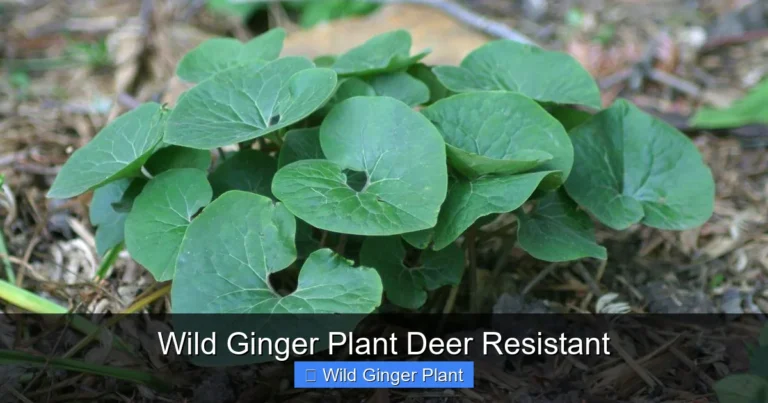
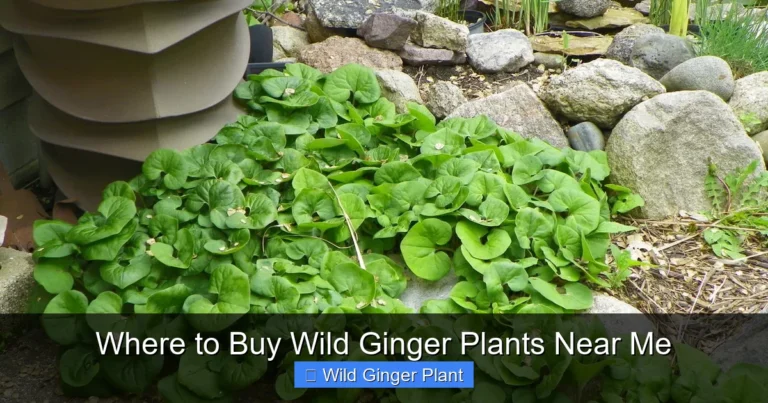
Just because it’s not a pipevine host doesn’t mean Canadian wild ginger isn’t valuable. It’s one of the best native groundcovers for shade gardens. The large, velvety, heart-shaped leaves form a dense mat that suppresses weeds, retains soil moisture, and prevents erosion on slopes. It spreads slowly by rhizomes, creating colonies that can live for decades.
In spring, each plant produces a single fascinating flower at ground level. It’s jug-shaped, brownish-purple, and often hidden beneath the leaf litter. This unusual flower is pollinated by small flies and beetles attracted to its faint fungal scent — a clever mimicry strategy. After pollination, the flower develops into a capsule that splits open to reveal seeds with fleshy appendages called elaiosomes.
Ants and Seed Dispersal
Those elaiosomes are key to Canadian wild ginger’s dispersal strategy. Ants carry the seeds back to their nests, eat the nutritious elaiosomes, and discard the intact seeds in their waste piles — perfect germination sites. This mutualism, called myrmecochory, is common in spring woodland wildflowers. It’s why you’ll often find Canadian wild ginger growing in patches near ant colonies.
The plant also provides cover for small amphibians, insects, and other ground-dwelling creatures. Its dense foliage creates a cooler, moister microclimate at the soil surface. In a native plant garden, it fills the critical “ground layer” niche that many designs overlook.
Historical Human Uses
Indigenous peoples across eastern North America used Canadian wild ginger medicinally and as a flavoring. The rhizomes were dried and ground as a ginger substitute — hence the common name. They also used it to treat colds, fevers, and digestive issues. Early European settlers adopted these uses.
Important note: Modern research has identified aristolochic acid in Asarum canadense, though in lower concentrations than in Aristolochia species. Aristolochic acid is a known carcinogen and kidney toxin. Do not consume Canadian wild ginger. Enjoy it for its beauty and ecological value, not as a culinary ingredient.
Designing a Garden for Both Plants
They’re Companions, Not Competitors
Here’s the good news: you don’t have to choose. Canadian wild ginger and native pipevines make excellent companions in a woodland or shade garden. They occupy different vertical layers. Canadian wild ginger carpets the ground. Dutchman’s pipe climbs upward on a trellis, arbor, or tree trunk. Virginia snakeroot fills the middle layer as a low perennial.
Together, they create a more complete habitat. The pipevines feed pipevine swallowtail caterpillars. The wild ginger provides groundcover, erosion control, and ant habitat. Both contribute to the native plant diversity that supports healthy ecosystems.
Sample Garden Layout
Imagine a shaded corner of your yard beneath a mature oak. Install a sturdy trellis or arbor against a fence. Plant Dutchman’s pipe at the base. It will climb the structure, creating a living wall of large green leaves. At the base of the vine, plant a colony of Canadian wild ginger. It will spread slowly, covering the soil with velvety hearts. Add Virginia snakeroot at the garden’s edge where it gets a bit more light. Throw in some foamflower (Tiarella cordifolia), wild geranium (Geranium maculatum), and Christmas fern (Polystichum acrostichoides) for seasonal interest.
This combination gives you: pipevine swallowtail host plants at multiple heights, beautiful groundcover, spring flowers, summer foliage, and winter structure. It’s a functioning mini-ecosystem.
Maintenance Tips
Both plants are low-maintenance once established. Canadian wild ginger needs consistent moisture during its first year. After that, it’s quite drought-tolerant in shade. Mulch with shredded leaves to mimic its natural forest floor environment. Don’t rake too aggressively — the leaf litter protects the shallow rhizomes and harbors beneficial insects.
Dutchman’s pipe needs a strong support. It gets heavy. Prune in late winter to control size and remove dead wood. Virginia snakeroot dies back to the ground each winter — mark its location so you don’t accidentally disturb it in spring. All three plants benefit from a top-dressing of compost in fall.
Common Mistakes to Avoid
Planting Non-Native Aristolochia
This is the biggest mistake. Garden centers sometimes sell tropical Aristolochia species as “Dutchman’s pipe” without specifying the scientific name. Aristolochia gigantea has huge, showy flowers — tempting! But it may not support native pipevine swallowtails. Some evidence suggests the chemical profile differs enough to cause caterpillar mortality or poor development. Always check the label. Buy Aristolochia macrophylla or Aristolochia serpentaria from native plant nurseries.
Expecting Instant Results
Pipevine swallowtails may not find your plants immediately. It can take a season or two for them to discover a new host plant patch. Don’t give up. Keep the plants healthy. Avoid pesticides — even organic ones like Bt can harm swallowtail caterpillars. Provide nectar sources for adults: native phlox, milkweed, joe-pye weed, buttonbush. Create a complete habitat, not just a host plant island.
Confusing Lookalikes
Several plants resemble Canadian wild ginger. European wild ginger (Asarum europaeum) is commonly sold as an ornamental groundcover. It’s evergreen, smaller-leaved, and not native. It doesn’t support the same insect relationships. Hexastylis species (little brown jugs) are native southeastern relatives with evergreen, mottled leaves. They’re lovely but also not pipevine hosts. Learn to identify Asarum canadense by its deciduous, softly hairy, heart-shaped leaves and solitary ground-level flower.
The Bigger Picture: Why Host Plant Specificity Matters
Coevolution in Action
The pipevine swallowtail–Aristolochia relationship showcases coevolution at its finest. The plants evolved toxic compounds to deter herbivores. The butterflies evolved resistance and turned the toxins into their own defense. This evolutionary arms race drives biodiversity. When we plant the wrong host — or worse, remove native hosts — we break these ancient connections.
Canadian wild ginger has its own coevolutionary partners: the ants that disperse its seeds, the flies and beetles that pollinate its hidden flowers, the insects that feed on its leaves (specialists that can handle its chemistry). Every native plant has a web of relationships. Understanding these webs helps us garden more ecologically.
Conservation Implications
Pipevine swallowtails have declined in parts of their range due to habitat loss and the removal of Aristolochia species. In some areas, Dutchman’s pipe was considered a “weed” and eradicated from fencerows and woodland edges. Replanting native pipevines in gardens, parks, and restoration projects helps rebuild populations.
Canadian wild ginger faces its own pressures: invasive species like garlic mustard and Japanese stiltgrass outcompete it in woodlands. Deer browse it heavily in some areas. Protecting and planting it maintains the forest floor diversity that makes eastern woodlands unique.
Your Garden as a Link
When you plant both Canadian wild ginger and native pipevines, your garden becomes a link in a larger ecological network. Pipevine swallowtails that develop in your yard may disperse to nearby natural areas. Ants that disperse wild ginger seeds connect your garden to the broader landscape. Native plants in residential areas create corridors for wildlife movement.
This is why getting the host plant right matters. It’s not just about checking a box on a butterfly gardening list. It’s about supporting the specific, evolved relationships that sustain biodiversity. A garden full of “butterfly plants” that don’t actually host local caterpillars is a garden that looks pretty but functions poorly.
How to Identify Each Plant with Confidence
Canadian Wild Ginger (Asarum canadense)
- Growth habit: Low, colonial groundcover, 6-12 inches tall
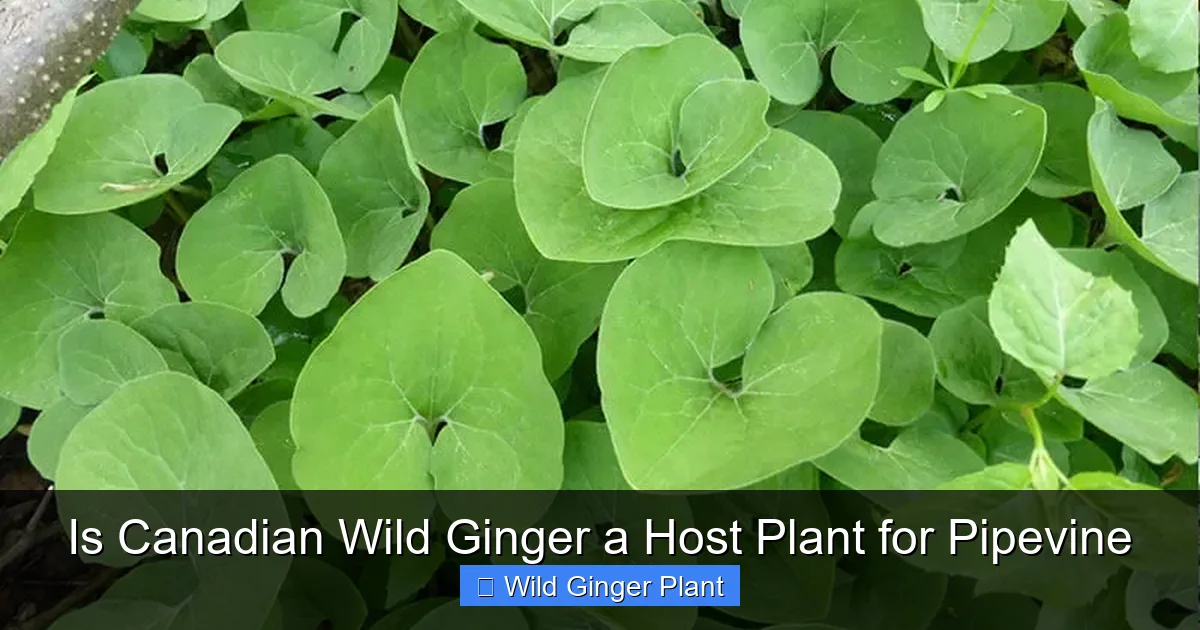
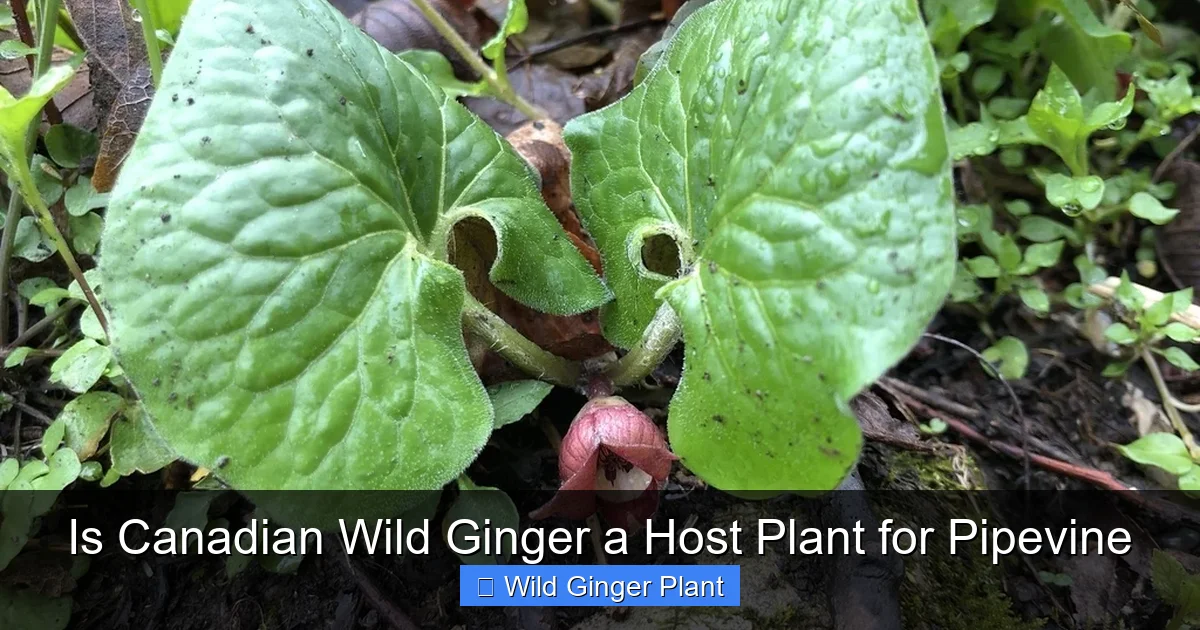
- Leaves: Heart-shaped (cordate), 4-8 inches wide, softly hairy, deciduous, paired at each node
- Flowers: Single, jug-shaped, brownish-purple, at ground level, hidden by leaves, spring
- Roots: Shallow rhizomes with ginger scent when crushed
- Habitat: Rich, moist, deciduous woods, often on slopes
- Range: Eastern North America, Manitoba to Nova Scotia, south to Georgia, west to Kansas
Dutchman’s Pipe (Aristolochia macrophylla)
- Growth habit: Woody vine, climbs 20-30 feet by twining
- Leaves: Very large, heart-shaped, 6-12 inches wide, smooth, deciduous, alternate
- Flowers: Pipe-shaped, yellowish-green with brownish-purple lobes, 1-2 inches long, late spring to early summer
- Fruit: Cylindrical capsule, 2-3 inches long, splits open when ripe
- Habitat: Rich woods, stream banks, ravines
- Range: Eastern US, New England to Georgia, west to Minnesota and Kansas
Virginia Snakeroot (Aristolochia serpentaria)
- Growth habit: Herbaceous perennial, 1-2 feet tall, not vining
- Leaves: Heart-shaped to arrowhead-shaped, 2-4 inches long, alternate
- Flowers: Small, pipe-shaped, purplish-brown, at base of stem, often hidden in leaf litter
- Roots: Fibrous, aromatic
- Habitat: Dry to moist woods, often on slopes
- Range: Eastern and central US, Connecticut to Florida, west to Texas and Kansas
Carry this mental checklist when plant shopping. If the label just says “wild ginger” or “Dutchman’s pipe” without a scientific name, ask. Reputable native plant nurseries will know the difference.
Frequently Asked Questions About Host Plants
Can pipevine swallowtail caterpillars eat any plant in the Aristolochiaceae family?
No. They specialize on the genus Aristolochia. They cannot survive on Asarum (wild gingers) or Hexastylis (little brown jugs), even though these genera share the family. The chemical differences are significant enough to prevent feeding and development.
Will pipevine swallowtails lay eggs on Canadian wild ginger if no Aristolochia is available?
No. Female butterflies have highly specific chemosensory mechanisms. They will not oviposit on unsuitable hosts. They’ll either continue searching or die without reproducing. This is why host plant availability directly limits butterfly populations.
Is European wild ginger (Asarum europaeum) a host plant?
No. It’s in the same genus as Canadian wild ginger (Asarum) and shares the same chemical profile. Pipevine swallowtails cannot use it. It’s also not native to North America, so it doesn’t support our native insect relationships in the same way.
Can I grow Dutchman’s pipe in a container?
Yes, but use a large container (at least 18-24 inches wide and deep) and provide a sturdy trellis. The vine gets heavy. Keep it well-watered — containers dry out faster than ground soil. Overwinter in a protected location in colder zones (below zone 5).
How long does it take for Dutchman’s pipe to establish and attract butterflies?
First-year plants focus on root establishment. You might see some foliage growth but minimal flowering. By year two or three, the vine should be substantial enough to support caterpillars. Pipevine swallowtails may find it in year one if there’s a local population, but don’t be discouraged if it takes longer.
Do pipevine swallowtails damage the vine?
Caterpillars can defoliate a young vine significantly. Established vines usually recover fine. If you’re concerned, plant multiple vines or supplement with Virginia snakeroot. Remember — eaten leaves mean successful butterfly reproduction! That’s the goal.
Conclusion: Plant the Right Plant for the Right Purpose
So there you have it. Canadian wild ginger is a fantastic native plant — just not for pipevine swallowtails. It’s a shade-loving groundcover that prevents erosion, supports ants and beetles, and adds beautiful texture to woodland gardens. But if you want those stunning blue-green swallowtails fluttering through your yard, you need true pipevines: Aristolochia macrophylla, Aristolochia serpentaria, or other native Aristolochia species.
The confusion is understandable. Shared family. Overlapping common names. Similar habitats. But nature doesn’t work on common names — it works on chemistry and coevolution. Pipevine swallowtails need the specific compounds found in Aristolochia. Canadian wild ginger has its own chemical story and its own ecological partners.
Here’s my advice: plant both. Give Canadian wild ginger the shady slope or woodland edge where it can spread its velvety leaves. Give Dutchman’s pipe a sturdy arbor where it can climb and flower. Give Virginia snakeroot a spot at the garden’s edge. Together, they create a richer, more resilient, more ecologically functional garden than either could alone.
And when you see that first pipevine swallowtail laying eggs on your Dutchman’s pipe — or watch ants carrying wild ginger seeds across the forest floor — you’ll know you’ve done more than plant pretty flowers. You’ve restored a piece of an ancient ecological web. That’s what native plant gardening is all about.
Frequently Asked Questions
What is the scientific name of Canadian wild ginger?
Canadian wild ginger’s scientific name is Asarum canadense. It belongs to the birthwort family (Aristolochiaceae) but is in a different genus than true pipevines (Aristolochia).
Do pipevine swallowtails ever lay eggs on Canadian wild ginger by mistake?
No, female pipevine swallowtails use highly specific chemical cues to identify host plants. They will not oviposit on Asarum canadense because it lacks the aristolochic acid profile their caterpillars require.
Can pipevine swallowtail caterpillars survive if transferred to Canadian wild ginger?
No, pipevine swallowtail caterpillars cannot survive on Canadian wild ginger. They are obligate specialists on Aristolochia species and will starve rather than eat unsuitable plants.
What are the best native pipevines for a butterfly garden in the Northeast?
Dutchman’s pipe (Aristolochia macrophylla) and Virginia snakeroot (Aristolochia serpentaria) are the best native pipevines for northeastern butterfly gardens. Both support pipevine swallowtail caterpillars.
Does Canadian wild ginger support any butterfly species?
Canadian wild ginger is not a significant butterfly host plant. Its primary ecological relationships are with ants (seed dispersal), small flies and beetles (pollination), and some specialist leaf-feeding insects adapted to its chemistry.
How can I tell the difference between Canadian wild ginger and Dutchman’s pipe?
Canadian wild ginger is a low groundcover (6-12 inches) with paired heart-shaped leaves and hidden ground-level flowers. Dutchman’s pipe is a woody vine (20-30 feet) with alternate large heart-shaped leaves and conspicuous pipe-shaped flowers on the vine.