Is the Plant Wild Ginger an Ephermeral Spring Flower
Wild ginger (Asarum canadense) is not a true spring ephemeral. Unlike ephemerals that complete their life cycle in weeks, wild ginger keeps its leaves all summer and spreads slowly via rhizomes to form a lasting ground cover.
If you have ever wandered through a rich, deciduous forest in April, you have likely seen the broad, heart-shaped leaves of wild ginger carpeting the ground. The plant looks right at home among the trilliums, bloodroot, and spring beauties that define the spring ephemeral parade. Because it appears at the same time as these famous fleeting flowers, many gardeners and nature lovers ask the same question: is the plant wild ginger an ephemeral spring flower? The short answer is no, but the full story is much more interesting. Understanding the difference changes how you use this plant in your garden and how you appreciate it in the wild.
True spring ephemerals are the sprinters of the plant world. They emerge, bloom, set seed, and vanish underground all before the tree canopy closes overhead. Wild ginger takes a different approach. It emerges early, yes, and it flowers early, but then it stays. Its leaves persist through summer heat, autumn chill, and often right up until hard frost. This distinction matters for garden design, for ecological restoration, and for the simple joy of knowing what you are looking at on a spring hike. Let us dig into the details of this wonderful native perennial and clear up the confusion once and for all.
Key Takeaways
- Not a true ephemeral: Wild ginger retains its foliage throughout the growing season instead of dying back by early summer.
- Spring bloomer: It flowers in early spring (April to May), but the blooms are hidden beneath the leaves at ground level.
- Rhizomatous spread: The plant expands slowly through underground stems, creating dense colonies over many years.
- Shade specialist: It thrives in deep to dappled shade with rich, moist, well-drained soil typical of woodland floors.
- Pollination strategy: Its unusual flowers are pollinated by beetles and flies, not bees, and often self-pollinate as backup.
- Long-lived perennial: Individual plants can persist for decades, making them a permanent fixture in native shade gardens.
- Ecological value: Provides early-season nectar, hosts pipevine swallowtail caterpillars, and stabilizes soil on slopes.
Quick Answers to Common Questions
Is wild ginger a true spring ephemeral?
No, wild ginger retains its leaves throughout the growing season and does not go dormant in early summer like true ephemerals.
When does wild ginger bloom?
Wild ginger flowers in early spring, typically April through May, with flowers hidden at ground level beneath the leaves.
How does wild ginger spread?
It spreads slowly via underground rhizomes, forming dense colonies over many years, and also disperses seeds via ants.
Can I eat wild ginger root?
The rhizome smells like culinary ginger but contains aristolochic acid, which can cause kidney damage; internal use is not recommended.
Is wild ginger deer resistant?
Yes, wild ginger is highly deer resistant due to aromatic compounds in the leaves that deter browsing.
📑 Table of Contents
- What Defines a True Spring Ephemeral
- Wild Ginger’s Life Cycle Through the Seasons
- Key Differences Between Wild Ginger and True Ephemerals
- Why the Confusion Exists
- Wild Ginger in the Garden: Using Its True Nature
- Ecological Role and Wildlife Value
- Identifying Wild Ginger in the Wild
- Propagation Methods for Gardeners
- Conservation and Ethical Considerations
- Frequently Asked Questions About Wild Ginger
- Conclusion
What Defines a True Spring Ephemeral
Before we can answer whether wild ginger fits the category, we need a clear definition of what a spring ephemeral actually is. The term gets thrown around loosely in garden centers and on hiking trails, but ecologists use it with precision.
The Narrow Window of Opportunity
Spring ephemerals are perennial woodland plants that complete their entire above-ground life cycle in a compressed window of roughly six to eight weeks. They emerge as soon as the soil thaws, often pushing through leaf litter while snow still patches the ground. They race to photosynthesize, flower, and produce seeds before the overhead canopy leafs out and cuts off the light. By late June, sometimes earlier, their leaves yellow and wither. The plant retreats entirely underground as a root, tuber, or rhizome, invisible until the following spring.
Classic Examples of Ephemerals
Think of spring beauty (Claytonia virginica), trout lily (Erythronium americanum), Dutchman’s breeches (Dicentra cucullaria), squirrel corn (Dicentra canadensis), and bloodroot (Sanguinaria canadensis). These plants share a strategy: store energy underground all year, spend it all in a mad dash in spring, then disappear. They do not maintain photosynthetic foliage during the summer. If you return to the same spot in July, you would never know they were there.
Why the Strategy Exists
This strategy evolved to exploit the high light levels on the forest floor before trees leaf out. In a dense deciduous forest, summer light at ground level can be less than one percent of full sun. That is not enough to support active growth for most herbaceous plants. Ephemerals avoid the problem entirely by being dormant when the shade is deepest. It is a brilliant adaptation, but it is not the only way to survive on the forest floor.
Wild Ginger’s Life Cycle Through the Seasons
Now let us follow wild ginger through a full year. You will see quickly why it does not match the ephemeral playbook.
Early Spring Emergence
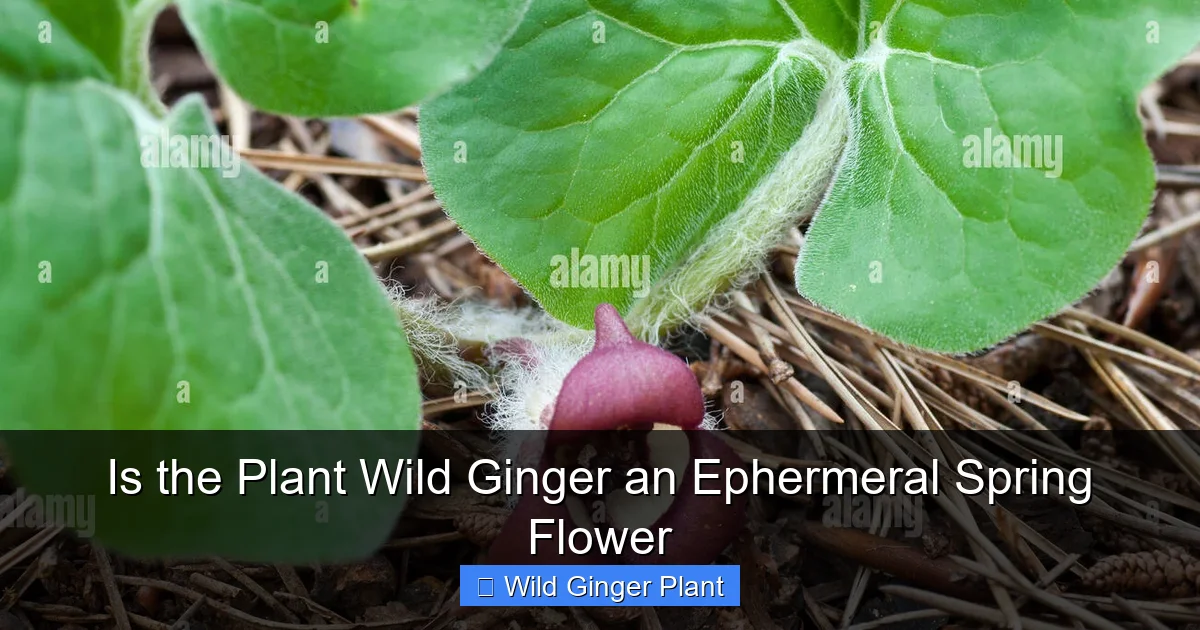
In March or April, depending on your latitude, the tightly furled leaves of wild ginger push up through the duff. They are covered in soft, silvery hairs that protect the tender tissue from late frosts. The leaves unfurl into the classic kidney or heart shape, reaching four to six inches wide. At this stage, the plant looks very much like its ephemeral neighbors. It is green, active, and soaking up the spring light.
The Hidden Flowers
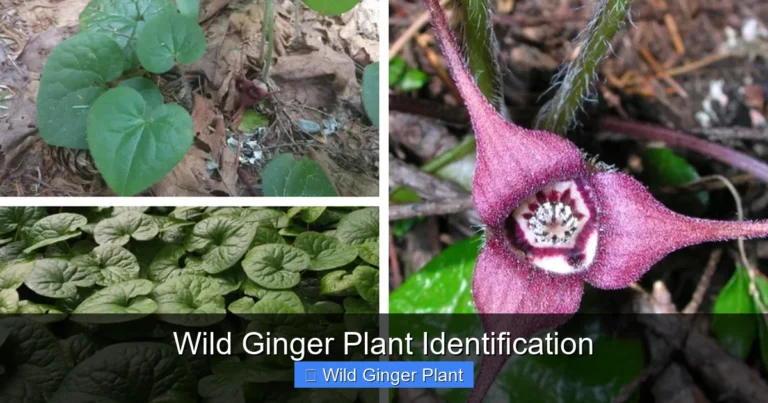
Flowering happens early, usually April to May. But you have to get on your hands and knees to see them. The flowers sit at ground level, tucked right at the base of the leaf stems, often buried under leaf litter. Each flower is a deep burgundy or brownish-purple, shaped like a little jug or bell with three pointed lobes flaring outward. There are no petals, just a thick, fleshy calyx. The color and position mimic fungus or carrion, attracting the plant’s preferred pollinators: small beetles, flies, and gnats. Bees rarely visit.
Summer Persistence
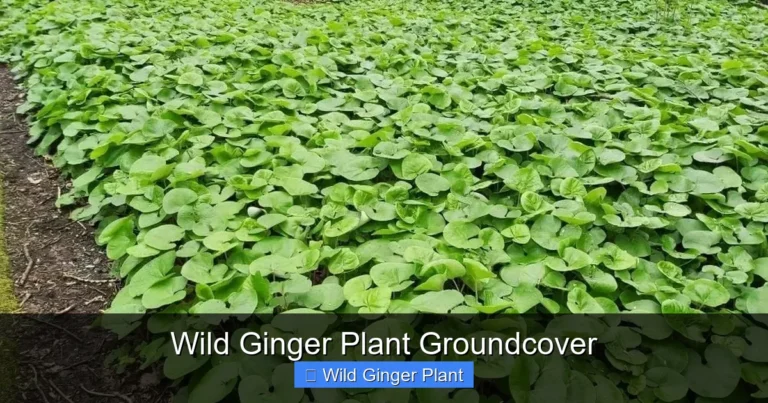
Here is the critical difference. After flowering, the ephemerals start to fade. Wild ginger does not. Its leaves remain dark green, leathery, and fully functional all summer long. They continue to photosynthesize in the deep shade, building energy reserves in the rhizome. The plant forms a solid, weed-suppressing ground cover that looks attractive from April through October. In milder climates or protected spots, the leaves may even persist through winter, making it semi-evergreen.
Autumn and Winter Dormancy
When hard frosts arrive, the leaves finally die back. But the plant is not gone. The rhizome, a thick, aromatic underground stem, lies just below the surface, packed with stored starches. It waits. Next spring, it will push up new leaves from the same growing tips, and the colony will be a little wider than the year before.
Key Differences Between Wild Ginger and True Ephemerals
Let us line up the traits side by side. The contrasts are clear and consistent.
Foliage Duration
Ephemerals: leaves present for six to eight weeks. Wild ginger: leaves present for six to eight months. This is the single most important distinction. Wild ginger is a seasonal green plant, not a fugitive one.
Growth Rate and Spread
Ephemerals often spread slowly by seed or tiny offsets. Wild ginger spreads steadily by rhizomes, extending several inches per year. A single plant becomes a colony. Over a decade, a few starts can cover a large shaded area. This makes it a structural plant in the garden, not a transient accent.
Root Structure
Many ephemerals have small tubers, corms, or fibrous roots. Wild ginger has a robust, branching rhizome that smells strongly of ginger when crushed (hence the common name). This rhizome stores significant energy, allowing the plant to maintain summer foliage and survive drought or herbivory better than ephemerals can.
Reproductive Timing
Ephemerals must set seed quickly, often within weeks of flowering. Wild ginger takes its time. The seed capsules mature in mid to late summer. Seeds have an elaiosome, a fleshy appendage that attracts ants. The ants carry seeds to their nests, eat the elaiosome, and discard the seed in a nutrient-rich midden. This ant dispersal (myrmecochory) is common in ephemerals too, but wild ginger’s later seed ripening means it avoids the spring rush.
Shade Tolerance
Ephemerals need high spring light. They struggle in deep, year-round shade like the north side of a building or under dense evergreens. Wild ginger thrives in those spots. Its leathery leaves are adapted for low-light photosynthesis. It is one of the few plants that looks lush in the darkest corners of a woodland garden.
Why the Confusion Exists
If the differences are so clear, why do so many people think wild ginger is an ephemeral? Several factors feed the misunderstanding.
Shared Bloom Time
Wild ginger flowers at exactly the same time as the classic ephemerals. When you see it blooming alongside trillium and hepatica, your brain groups them together. The bloom period is the most visible part of a plant’s life, so it dominates our mental categorization.
Early Spring Emergence
It emerges early, often before the last frost. That “spring awakening” behavior feels ephemeral. We notice plants when they first appear. We pay less attention to them in July when they are just quietly being green.
Woodland Habitat Overlap
Wild ginger grows in the same rich, mesic forests as the ephemerals. It is part of the same plant community. Field guides often list it in the “spring wildflower” section because that is when people are out looking. The context reinforces the category error.
Colonial Appearance
A dense patch of wild ginger in April looks like a carpet of ephemerals. The visual effect is similar: a sea of green leaves on the forest floor. But come back in August. The ephemeral carpet is gone. The ginger carpet remains.
Misleading Common Names and Labels
Some nurseries and older field guides lump it with “spring wildflowers” without distinguishing life history strategies. The term “spring flower” describes when it blooms, not its life cycle. Precision matters.
Wild Ginger in the Garden: Using Its True Nature
Knowing that wild ginger is a long-lived, summer-green ground cover changes how you use it. It is not a plant you tuck in for a brief show. It is a foundation plant for the shade garden.
Ideal Planting Conditions
Give it what it wants: deep to dappled shade, rich soil high in organic matter, consistent moisture but good drainage, and a neutral to slightly acidic pH. It loves a slope where water moves through but does not stand. Mulch with shredded leaves annually to mimic the forest floor. Avoid heavy clay that stays soggy or sandy soil that dries fast.
Companion Planting Strategy
Because wild ginger stays up all summer, it pairs beautifully with true ephemerals. Plant it behind or around spring beauty, trout lily, and Virginia bluebells. The ephemerals put on their show in April and May, then fade. Wild ginger’s expanding leaves cover the bare ground left behind. It also works well with later-blooming shade plants like foamflower (Tiarella), wild geranium (Geranium maculatum), and Solomon’s seal (Polygonatum).
Establishment and Patience
Wild ginger is slow to establish from seed. Most gardeners buy bare-root rhizome divisions or potted plants. Space them twelve to eighteen inches apart. They will touch in three to five years. Do not disturb the rhizomes once planted. They resent transplanting. Weed carefully by hand until the colony closes ranks. After that, it suppresses most weeds on its own.
Deer and Rabbit Resistance
The leaves contain aromatic compounds (including aristolochic acid) that make them unpalatable to most mammals. Deer and rabbits rarely browse wild ginger. This is a huge advantage in areas with high browsing pressure where hostas and other shade plants get decimated.
Container Growing
You can grow wild ginger in pots, but use a wide, shallow container to accommodate the creeping rhizome. Keep it shaded and never let it dry out completely. It makes a lovely, unusual container plant for a north-facing porch.
Ecological Role and Wildlife Value
Wild ginger is not just a pretty ground cover. It plays specific, important roles in the forest ecosystem.
Pollinator Relationships
The flowers are a specialist’s game. They produce no nectar. Instead, they offer pollen and a sheltered, warm microclimate inside the calyx. Small beetles (especially rove beetles) and flies enter, feed on pollen, mate, and shelter overnight. The flower traps them temporarily, ensuring pollen transfer. Some studies suggest self-pollination is common and effective, a backup for unreliable insect visitors in cold springs.
Host Plant for Butterflies
Wild ginger is a larval host for the pipevine swallowtail (Battus philenor). The caterpillars feed on the leaves, sequestering the plant’s toxic compounds for their own defense. If you see holes in the leaves in June, celebrate. You are supporting a stunning butterfly. The damage is usually cosmetic and the plant recovers easily.
Ant Mutualism
The seeds’ elaiosomes attract ants (Aphaenogaster and other genera). Ants disperse seeds an average of one to two meters, sometimes farther. This moves the colony slowly across the landscape and plants seeds in nutrient-rich, aerated ant nest soil. It is a classic mutualism: the ant gets food, the plant gets planting service.
Soil Stabilization
The dense, interwoven rhizome network holds soil on slopes and stream banks. In restoration projects, wild ginger is valued for erosion control in shaded areas where grasses fail. Its roots also foster mycorrhizal fungi, improving soil structure and nutrient cycling for the whole plant community.
Winter Cover
In milder zones (USDA 6 and warmer), the persistent leaves provide winter cover for small invertebrates and amphibians. The leaf litter trapped by the ginger layer insulates the soil, moderating temperature extremes.
Identifying Wild Ginger in the Wild
If you are out hiking and want to confirm you are looking at wild ginger, here are the field marks.
Leaf Shape and Texture
Leaves are basal, meaning they all arise from the base. Each leaf is heart-shaped to kidney-shaped, four to six inches wide, with a deep sinus at the base. The texture is thick, slightly leathery, and matte, not shiny. The upper surface is medium green. The underside is paler and often finely hairy. The petiole (leaf stalk) is long, hairy, and arises directly from the rhizome.
Flower Details
Look at the base of the leaf stems in April or May. Gently pull back leaf litter. You will see a solitary flower on a very short stalk. It is bell-shaped, three-lobed, fleshy, and deep maroon to brown. No petals. Six to twelve stamens inside. The style is short with six stigmatic branches. The whole flower is usually less than an inch across.
Rhizome and Scent
If you carefully expose a bit of the underground stem (please do this sparingly and only on your own property or with permission), you will see a thick, branching rhizome, light brown outside, white inside. Scratch it. The scent is unmistakably ginger-like, spicy and warm. This is the source of the common name, though it is not the culinary ginger (Zingiber officinale).
Similar Species
European wild ginger (Asarum europaeum) is sometimes planted and escapes. Its leaves are shinier, more leathery, and often evergreen. The flowers are similar. Canadian wild ginger (Asarum canadense) is our native. There are also several western species (Asarum caudatum, Asarum hartwegii) with longer flower lobes. All share the same basic life history: not ephemeral.
Propagation Methods for Gardeners
Want more wild ginger? You have three main options.
Rhizome Division
This is the fastest and most reliable method. In early spring (just as leaves emerge) or early fall, dig a section of rhizome with at least one growing tip and some roots. Replant immediately at the same depth. Water well. The division will often flower the next spring.
Seed Sowing
Collect seeds in summer when the capsule splits. They must be sown fresh. They have double dormancy: they need a warm period followed by a cold period to germinate. Sow in pots outdoors in a shaded cold frame. Germination can take eighteen months to two years. Seedlings take three to four years to reach flowering size. This is for the patient gardener.
Ant Dispersal Observation
If you have an established patch, watch for ants carrying seeds in late summer. You can sometimes find seedlings near ant nests. Transplant these tiny volunteers in early spring. It is a fun way to expand your colony for free.
Conservation and Ethical Considerations
Wild ginger is not federally listed as threatened, but it faces pressures.
Habitat Loss
Conversion of rich mesic forests to agriculture, development, or pine plantations destroys habitat. Wild ginger does not colonize disturbed sites easily. It needs intact forest soils with their fungal networks. Once lost from a site, it rarely returns on its own.
Overharvesting
The rhizome has a history of medicinal and culinary use by Indigenous peoples and early settlers. Modern foragers sometimes dig whole plants for the rhizome. This kills the plant. Because spread is slow, overharvesting can eliminate local populations. Never dig wild plants. Buy from nurseries that propagate their own stock.
Invasive Species Competition
Garlic mustard (Alliaria petiolata), Japanese stiltgrass (Microstegium vimineum), and lesser celandine (Ficaria verna) invade the same habitats. They emerge earlier, grow faster, and can crowd out wild ginger. Invasive removal helps wild ginger persist.
Climate Change
Warmer springs may desynchronize flowering and pollinator activity. Summer droughts stress the persistent foliage. The long-term outlook depends on the pace of change and the availability of microrefugia (cool, moist microsites).
Frequently Asked Questions About Wild Ginger
Let us tackle the questions that come up again and again.
Is wild ginger edible?
The rhizome smells and tastes like ginger and was used historically as a substitute. However, it contains aristolochic acid, a compound linked to kidney damage and cancer with long-term or high-dose use. Most modern herbalists advise against internal use. Enjoy the scent. Do not eat it regularly.
Does wild ginger spread aggressively?
No. It spreads slowly, a few inches per year. It forms a tight colony but does not run across the garden like mint or bamboo. It is well-behaved and easy to contain by edging or digging outliers.
Can wild ginger grow in full sun?
No. Full sun scorches the leaves and stresses the plant. It may survive with constant moisture, but it will look poor and decline. It needs shade. Dappled light or morning sun only is the maximum.
Why are my wild ginger leaves turning yellow in summer?
Usually drought stress. The soil dried out. Wild ginger wants consistent moisture. Mulch heavily and water during dry spells. Yellowing can also indicate nutrient-poor soil. Top-dress with compost or leaf mold.
Will wild ginger choke out other plants?
It can outcompete very small, delicate plants like some spring ephemerals if planted too close. Give ephemerals a buffer zone. It coexists fine with larger perennials like ferns, hostas, and Solomon’s seal.
Is wild ginger deer proof?
Nothing is absolutely deer proof. But wild ginger is highly deer resistant. The aromatic compounds deter browsing. In severe winters with deep snow and starving deer, they might nibble it, but it is rarely a preferred food.
Conclusion
So, is the plant wild ginger an ephemeral spring flower? Definitely not. It blooms in spring, yes. It emerges early, yes. But it refuses to disappear. Its leaves stay green and working all summer, building a rhizome that fuels decades of growth. It is a marathon runner, not a sprinter. This makes it one of the most valuable native ground covers for shade gardens. It bridges the gap between the spring ephemeral show and the summer woodland lull. It supports specialized pollinators, hosts butterfly caterpillars, partners with ants, and holds the soil. And it asks for little in return: shade, moisture, rich soil, and time.
Next time you see that heart-shaped leaf in April, take a moment to appreciate the strategy. It is not rushing. It is not fading. It is settling in for the long haul. And if you have a shady spot in your garden that needs a reliable, beautiful, ecologically powerful plant, wild ginger is waiting. Plant it once. Enjoy it for a lifetime.
Frequently Asked Questions
What is the difference between wild ginger and culinary ginger?
Wild ginger (Asarum canadense) is a North American woodland perennial with heart-shaped leaves and a ginger-scented rhizome. Culinary ginger (Zingiber officinale) is a tropical Asian plant grown for its edible rhizome. They are unrelated botanically.
Does wild ginger need full shade?
Wild ginger thrives in deep to dappled shade. It can tolerate morning sun but will scorch and decline in full afternoon sun. Consistent soil moisture is essential in brighter spots.
How fast does wild ginger spread in the garden?
Wild ginger spreads slowly, typically a few inches per year via rhizomes. A small planting may take three to five years to form a continuous ground cover, but it is long-lived and low-maintenance once established.
Why are my wild ginger flowers hidden under leaves?
The flowers emerge at ground level at the base of the leaf stems, often covered by leaf litter. This position mimics fungi or carrion to attract beetle and fly pollinators, which prefer dark, sheltered spaces.
Is wild ginger invasive?
No, wild ginger is a native North American plant that spreads slowly and is not considered invasive. It stays in clumps and does not aggressively take over natural areas or gardens.
Can wild ginger be grown from seed?
Yes, but seeds require double dormancy breaking (warm then cold stratification) and can take eighteen months to two years to germinate. Seedlings take several more years to flower. Division of rhizomes is much faster.