What Does a Wild Ginger Plant Look Like
Wild ginger plants are low-growing perennials with heart-shaped, velvety leaves and unique bell-shaped flowers that hide at ground level. They spread through aromatic rhizomes and thrive in shady, moist woodland environments across North America.
Have you ever wandered through a spring woodland and noticed patches of lush, heart-shaped leaves hugging the forest floor? Chances are you stumbled upon a wild ginger plant colony. These charming native perennials are among the most distinctive ground covers in North American forests, yet many hikers and gardeners walk right past them without a second glance.
Today we are going to take a close look at what makes a wild ginger plant so special. We will explore every part of the plant from the fuzzy leaf stems to the secretive flowers hiding at ground level. By the end of this guide you will feel confident spotting wild ginger on your next nature walk or evaluating it for your shade garden.
Key Takeaways
- Heart-shaped leaves: Wild ginger features pairs of large, kidney-to-heart-shaped leaves with a soft, velvety texture and deep green color.
- Hidden flowers: The unusual jug-shaped flowers bloom at soil level in early spring, often concealed beneath leaf litter.
- Aromatic rhizomes: Underground stems smell strongly of ginger when crushed, though they are not true culinary ginger.
- Shade-loving habit: These plants form dense colonies in rich, moist forest soils under deciduous tree canopies.
- Two main species: Asarum canadense (eastern) and Asarum caudatum (western) share similar traits but differ in leaf shape and flower structure.
- Distinct from look-alikes: Wild ginger lacks the fuzzy stems of violet seedlings and the three-leaf pattern of poison ivy.
- Slow but steady spread: Colonies expand gradually through rhizome growth, creating beautiful ground cover over time.
Quick Answers to Common Questions
Is wild ginger related to the ginger root I buy at the grocery store?
No, wild ginger (Asarum species) is not botanically related to culinary ginger (Zingiber officinale). They belong to completely different plant families. Wild ginger earned its name because the rhizomes smell similar to true ginger when crushed.
Can I eat wild ginger from my yard?
While historically used by Indigenous peoples and early settlers, modern research shows wild ginger contains aristolochic acid which can cause kidney damage and cancer with prolonged use. Most experts advise against consuming it.
Why can’t I find the flowers on my wild ginger plants?
Wild ginger flowers bloom at ground level and are often hidden beneath leaf litter or the plant’s own leaves. You need to gently move debris aside at the base of the plant to spot the small jug-shaped flowers.
How fast does wild ginger spread in a garden?
Wild ginger spreads slowly, typically expanding 1-3 inches per year per growing point. It forms dense colonies over many years rather than aggressively taking over. This makes it a well-behaved ground cover for shade gardens.
Will wild ginger grow under pine trees?
Wild ginger prefers deciduous shade with rich, neutral to slightly acidic soil. Dense coniferous shade is often too dark and the soil too acidic for optimal growth. It may survive but won’t thrive under pines.
📑 Table of Contents
- Getting to Know the Wild Ginger Plant
- Leaves: The Most Noticeable Feature
- Flowers: Hidden Gems at Ground Level
- Roots and Rhizomes: The Underground Story
- Common Look-Alikes and How to Tell Them Apart
- Where to Find Wild Ginger in Nature
- Growing Wild Ginger in Your Garden
- Ecological Importance and Wildlife Value
- Historical and Cultural Uses
- Conclusion
Getting to Know the Wild Ginger Plant
Before we dive into the visual details let us cover some basics. The wild ginger plant belongs to the genus Asarum in the birthwort family Aristolochiaceae. Despite the common name these plants are not related to the tropical ginger Zingiber officinale found in grocery stores. They earned their name because the rhizomes release a spicy ginger-like aroma when crushed.
Two primary species grow wild in North America. Asarum canadense commonly called Canadian wild ginger or eastern wild ginger ranges across eastern and central United States and into southeastern Canada. Asarum caudatum known as western wild ginger or long-tailed wild ginger inhabits the Pacific Northwest and parts of California. Several other Asarum species exist but these two are the most widespread and commonly encountered.
Growth Habit and Overall Form
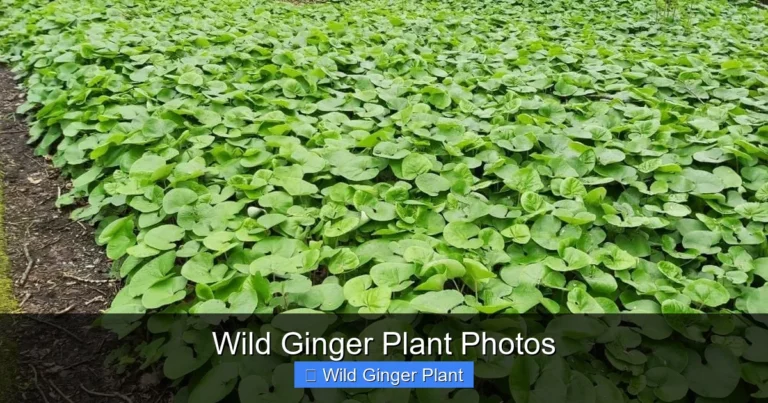
A wild ginger plant grows as a low herbaceous perennial typically reaching just four to eight inches in height. The plant spreads horizontally through thick fleshy rhizomes that creep just below the soil surface. Each rhizome segment produces a pair of leaves annually creating a slowly expanding colony. Over many years a single plant can form a dense mat several feet across.
The overall silhouette is a tidy mound of foliage. Unlike many woodland plants that send up tall flowering stalks wild ginger keeps everything close to the ground. This ground-hugging habit helps the plant conserve moisture and avoid browsing by deer. The leaves emerge in early spring often before the tree canopy fully leafs out taking advantage of the brief window of abundant light on the forest floor.
Seasonal Changes Throughout the Year
Understanding the wild ginger plant means watching it through the seasons. In late winter the plant is completely dormant with no visible above-ground parts. As soil temperatures rise in early spring the tightly folded leaf buds push through the duff layer. These emerging leaves look like small furled umbrellas covered in fine silvery hairs.
By mid-spring the leaves have fully expanded to their mature size. This is also when the flowers appear though you will need to get down on your knees to find them. Summer brings a period of steady photosynthesis and energy storage in the rhizomes. The foliage remains attractive and functional throughout the growing season unlike many spring ephemerals that vanish by midsummer.
In autumn the leaves may develop yellow or bronze tones before dying back completely with hard frosts. The rhizomes persist underground insulated by soil and leaf litter ready to begin the cycle again next spring. This reliable perennial life cycle makes wild ginger a dependable presence in stable woodland communities.
Leaves: The Most Noticeable Feature
If you spot a wild ginger plant the leaves will almost certainly be what catches your eye first. They are distinctive enough that once you know them you will recognize the plant instantly even from a distance.
Shape and Size Details
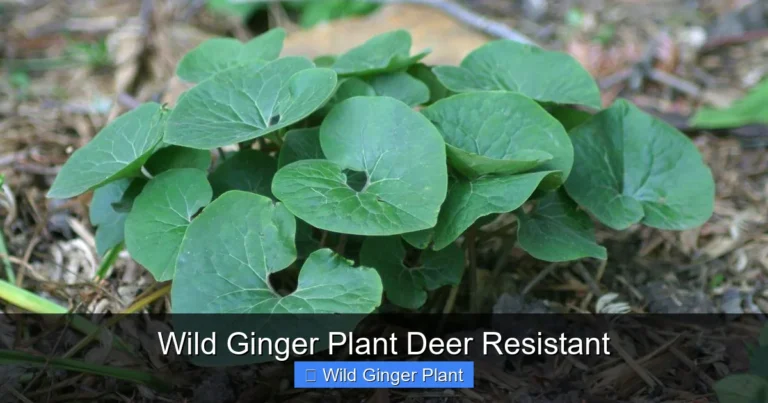
Each wild ginger plant produces two leaves per growing point though large colonies make it appear as a continuous carpet of foliage. The leaves are broadly heart-shaped or kidney-shaped botanically described as reniform to cordate. They measure three to six inches wide and long sometimes larger in ideal conditions. The leaf base forms a deep notch where the stem attaches creating the classic heart silhouette.
The leaf margins are entire meaning smooth without teeth or lobes. The tip is usually rounded or very slightly pointed. Western wild ginger Asarum caudatum tends to have more elongated leaves with a distinct narrow tip giving rise to the name long-tailed wild ginger. Eastern wild ginger Asarum canadense leaves are more broadly rounded.
Texture and Surface Characteristics
Run your fingers over a wild ginger leaf and you will immediately notice the velvety texture. Both upper and lower surfaces are covered in fine soft hairs giving the foliage a matte appearance rather than a glossy shine. This pubescence is especially dense on young leaves and on the leaf petioles or stems.
The hairs serve multiple functions. They reduce water loss by creating a boundary layer of still air. They deter small herbivores like slugs and leaf-cutter bees. And they may help reflect excess light in the rare moments when direct sun hits the forest floor. The tactile experience of touching wild ginger leaves is one of the plant’s most endearing qualities.
Color Variations
Mature wild ginger leaves display a rich deep green color often with a slightly bluish cast. Spring leaves emerge lighter sometimes with bronze or purplish tints along the veins and margins. This anthocyanin pigmentation protects tender new tissue from intense early spring UV radiation before the canopy closes.
In dense shade the leaves become larger thinner and darker green maximizing light capture. In brighter spots they stay smaller thicker and may show more pronounced veining. The leaf veins follow a palmate pattern radiating from the base with several main veins curving toward the margins. This venation is visible but not prominently raised.
Leaf Stems and Arrangement
The leaf petioles are another key identification feature. They are surprisingly long often four to twelve inches elevating the leaf blades well above the rhizome. The petioles are densely hairy like the leaf blades and arise directly from the rhizome not from an above-ground stem. This basal arrangement means the plant has no visible stem just leaves and flowers emerging from ground level.
Each rhizome tip produces one pair of leaves per season. The two petioles emerge side by side from the same point creating a symmetrical appearance. As the colony expands these pairs create the characteristic dense ground cover. Old leaf bases persist on the rhizome as papery scales marking previous years of growth.
Flowers: Hidden Gems at Ground Level
Many people grow wild ginger for years without ever seeing the flowers. They are that well hidden. But once you know where and how to look the flowers become one of the most fascinating aspects of the wild ginger plant.
Unique Flower Structure
Wild ginger flowers are unlike any other woodland bloom. They lack petals entirely. Instead the calyx forms a fleshy bell-shaped or jug-shaped tube with three flared triangular lobes. The flower sits directly on the rhizome at soil level often partially buried in leaf litter or duff. This ground-level positioning gives rise to the term “little jugs” used by old-time naturalists.
The flower color ranges from deep maroon to brownish-purple sometimes with greenish tips on the lobes. The interior is often paler with intricate patterns. The whole structure measures just half an inch to an inch across. Twelve stamens ring the central pistil. The ovary is inferior meaning it sits below the attachment of the other floral parts.
Blooming Time and Duration
Wild ginger flowers appear in early to mid-spring typically April through May depending on latitude and elevation. They emerge just as or slightly before the new leaves expand. Each flower lasts about two to three weeks but they do not all open simultaneously. A colony may have flowers in various stages for a month or more.
The timing coincides with the activity of early spring pollinators particularly small flies and beetles. The flowers emit a faint musty or fungal odor barely detectable to humans but attractive to these insects. Some researchers suggest the flowers mimic fungal fruiting bodies both in appearance and scent to lure pollinators.
Pollination Strategy
The wild ginger plant employs a fascinating pollination strategy. The flowers are protogynous meaning the female parts mature before the male parts. When a flower first opens the stigma is receptive but the stamens have not yet released pollen. This prevents self-pollination within a single flower.
Small flies and gnats enter the flower tube seeking shelter or attracted by the scent. They crawl around the interior picking up or depositing pollen on their bodies. As the flower ages the stamens mature and release pollen onto any remaining visitors. The flower then withers and if pollination occurred the ovary begins to swell.
Finding the Flowers
To see wild ginger flowers you must get low. Gently push aside the leaf litter at the base of the plant. Look for the distinctive jug shapes nestled against the rhizome. They are often right at the soil surface or slightly below. A small hand mirror can help you peer underneath the foliage without disturbing the plant.
Western wild ginger Asarum caudatum has notably different flowers. The calyx lobes are dramatically elongated into long tapered tails sometimes two inches long giving the flower a spidery appearance. These tails may function to guide pollinators or increase the flower’s visual target. Eastern wild ginger Asarum canadense has short triangular lobes.
Roots and Rhizomes: The Underground Story
The parts of a wild ginger plant you rarely see are arguably the most important for identification and for the plant’s survival. The rhizome system defines how the plant grows spreads and persists.
Rhizome Appearance and Growth
Wild ginger rhizomes are thick fleshy horizontal stems typically half an inch to an inch in diameter. They are segmented with distinct nodes spaced one to two inches apart. Each node represents a year of growth and bears the scars of previous leaf pairs. The rhizome color is light tan to brownish with a slightly rough texture.
Fresh rhizomes are firm and snap cleanly when bent. They exude a clear watery sap. The most famous characteristic is the scent. Scratch or crush a rhizome and a strong spicy ginger aroma fills the air. This comes from compounds including bornyl acetate and other terpenes. The scent is strongest in fresh material and fades quickly when dried.
The rhizomes grow just below the soil surface usually within the top two inches. They branch occasionally creating a network. Roots emerge from the underside of the rhizome at the nodes. These roots are fine fibrous and light colored anchoring the plant and absorbing water and nutrients.
Colony Formation Over Time
A single wild ginger plant expands slowly but steadily. Each year the rhizome tip extends one to three inches producing a new pair of leaves. Side branches may form creating additional growing points. Over a decade a plant can spread three to six feet across. Very old colonies in undisturbed forests may cover dozens of square feet.
This clonal growth means what appears to be many plants may be a single genetic individual. The colony shares resources through the connected rhizome network. If one section experiences drought or damage the rest can support it. This integration makes wild ginger remarkably resilient once established.
Transplanting and Root Handling
If you are considering moving wild ginger understanding the rhizome is crucial. The best time to transplant is early spring just as leaves emerge or fall after leaf senescence. Dig widely to capture a good length of rhizome with several nodes. Keep the rhizomes moist and shaded during the move.
Plant the rhizome horizontally just below the surface with the growing tip pointed in the direction you want the colony to expand. Water well and mulch with leaf litter. New transplants may not flower for a year or two as they establish. Patience rewards you with a thriving patch.
Common Look-Alikes and How to Tell Them Apart
Several plants share superficial similarities with wild ginger. Learning the differences prevents confusion and ensures you are identifying the real thing.
Violet Seedlings and Young Plants
Young violet plants especially Canada violet Viola canadensis can resemble wild ginger at a glance. Both have heart-shaped leaves on long petioles emerging from a central point. However violet leaves are thinner less hairy and have distinct teeth or serrations along the margins. Wild ginger leaf margins are always smooth.
Violets also produce obvious above-ground stems as they mature and their flowers are the classic five-petaled violet shape held well above the foliage on slender stalks. Wild ginger never produces aerial stems and its flowers stay at ground level. The scent test is definitive. Violet rhizomes have no ginger aroma.
Poison Ivy Seedlings
This is an important distinction for safety. Very young poison ivy Toxicodendron radicans seedlings have three leaflets that can look somewhat heart-shaped. But the “leaves of three” rule applies even to seedlings. Wild ginger always produces leaves in pairs not threes. Poison ivy leaflets have distinct stalks and the central leaflet has a longer stalk than the side ones.
Poison ivy seedlings quickly develop woody stems and a vine or shrub habit. Wild ginger remains herbaceous and ground-hugging. If you are uncertain do not touch. The old adage “leaves of three let it be” is sound advice. Wild ginger leaves are in pairs and have a completely different texture.
Hexastylis Species Little Brown Jugs
In the southeastern United States several Hexastylis species called little brown jugs or heartleaf grow in similar habitats. They were once classified as Asarum and look very similar. The key difference is leaf texture. Hexastylis leaves are leathery evergreen and often beautifully mottled with silver or light green patterns. Wild ginger leaves are soft deciduous and plain green.
Hexastylis flowers are also jug-shaped but typically smaller and more rounded. They bloom later in spring. If you are in the Southeast and find a wild ginger-like plant with evergreen patterned leaves it is likely Hexastylis. Both are wonderful native plants but they are different genera.
European Ginger Asarum europaeum
Gardeners sometimes encounter European ginger an introduced species that has naturalized in parts of the Northeast. It looks very similar to native wild ginger but the leaves are glossy not velvety and they are evergreen persisting through winter. The flowers are also slightly different in shape. European ginger can be more aggressive in gardens. If you want the true native experience stick with Asarum canadense or Asarum caudatum.
Where to Find Wild Ginger in Nature
Knowing the preferred habitat of wild ginger dramatically increases your chances of finding it. These plants have specific ecological requirements that limit where they thrive.
Ideal Growing Conditions
Wild ginger plants flourish in rich mesic deciduous forests. They need deep well-drained but consistently moist soil high in organic matter. The ideal pH is slightly acidic to neutral. They are most abundant on north and east facing slopes where conditions stay cool and damp. Heavy clay or very sandy soils are less suitable.
They require substantial shade especially in summer. A closed canopy of maple beech oak basswood or similar hardwoods provides perfect conditions. Coniferous shade is often too dense and acidic. You will rarely find wild ginger in open woods pine plantations or disturbed areas with broken canopy.
Geographic Distribution
Asarum canadense ranges from Manitoba and Quebec south to Georgia and west to the Great Plains. It is most abundant in the Great Lakes region Appalachians and New England. Asarum caudatum occurs from British Columbia south through Washington Oregon and into northern California mostly west of the Cascade crest. Several other Asarum species have restricted ranges in the Southeast and Southwest.
Within their ranges wild ginger is not everywhere. It indicates high-quality undisturbed woodland. If you find a healthy colony the site likely has intact soil structure diverse native flora and minimal invasive species. It is a good indicator species for conservation value.
Associated Plant Communities
Wild ginger grows alongside a characteristic suite of spring woodland plants. Common companions include spring beauty Claytonia virginica trout lily Erythronium americanum bloodroot Sanguinaria canadensis trilliums Trillium species and various ferns. The presence of these species together suggests prime wild ginger habitat.
In the western range look for it with redwood sorrel Oxalis oregana inside-out flower Vancouveria hexandra and western trillium Trillium ovatum. The specific associates vary by region but the theme is consistent. Rich moist diverse deciduous forest understory.
Seasonal Timing for Observation
Early to mid-spring is the prime time to find wild ginger in bloom. The leaves are fresh the flowers are out and the forest floor is alive. Summer visits reveal the full foliage display. Fall offers a chance to see seed pods if any were pollinated. Winter shows nothing above ground but you can locate colonies by the persistent leaf litter patterns.
Growing Wild Ginger in Your Garden
Many native plant enthusiasts want to bring wild ginger into their shade gardens. It makes an excellent ground cover when given the right conditions. Here is what you need to know for success.
Site Selection and Preparation
Choose a spot with full to dappled shade. Morning sun is tolerated but afternoon sun will scorch the leaves. The soil should be rich loose and moisture-retentive. Amend heavy clay or sandy soil generously with compost leaf mold or well-rotted manure. Aim for a woodland soil mimic.
Test drainage by digging a hole filling it with water and timing how long it takes to drain. Wild ginger likes moisture but not standing water. If water sits for hours improve drainage or choose a different spot. A slight slope is beneficial.
Planting Techniques
Space plants twelve to eighteen inches apart for eventual ground cover. Plant rhizomes horizontally one to two inches deep with the growing tip just below the surface. Water thoroughly after planting and apply a two-inch mulch of shredded leaves or pine needles. Avoid heavy bark mulch which can smother the shallow rhizomes.
Fall planting allows root establishment before summer heat. Spring planting works too but requires more attentive watering. Mark the planting locations clearly. The plants will be invisible for months after the foliage dies back.
Long-Term Care and Maintenance
Once established wild ginger is remarkably low-maintenance. Water during extended dry spells especially in the first two years. Do not fertilize. The plants are adapted to nutrient cycling from leaf litter. Simply allow fallen leaves to remain in place each autumn. They provide perfect mulch and slow-release nutrients.
Remove any invasive plants that encroach particularly garlic mustard Alliaria petiolata and Japanese stiltgrass Microstegium vimineum which thrive in the same conditions. Wild ginger cannot compete with aggressive invaders. Hand-pull weeds carefully to avoid damaging the shallow rhizomes.
Propagation Methods
Division is the easiest propagation method. In early spring or fall dig a section of rhizome with several nodes. Replant immediately. Seed propagation is possible but slow. Seeds require cold stratification and may take two years to germinate. Seedlings take three to five years to reach flowering size. Division gives you mature plants instantly.
Ecological Importance and Wildlife Value
The wild ginger plant plays subtle but significant roles in forest ecosystems. Understanding these connections deepens appreciation for this unassuming plant.
Pollinator Relationships
As mentioned the flowers attract small flies gnats and beetles. These often-overlooked insects are crucial early-season pollinators for many spring wildflowers. By providing nectar and pollen when few other flowers are open wild ginger supports these insect populations. Some ants also visit the flowers possibly for nectar.
Seed Dispersal by Ants
Wild ginger seeds bear a fleshy appendage called an elaiosome rich in lipids and proteins. Ants carry the seeds to their nests consume the elaiosome and discard the intact seed in nutrient-rich waste piles. This myrmecochory disperses seeds short distances and plants them in ideal germination sites. It is a classic woodland mutualism.
Ground Cover and Soil Protection
Dense wild ginger colonies stabilize soil on slopes reduce erosion and maintain soil moisture. The leaf litter trapped by the foliage decomposes in place enriching the soil. The rhizome network binds soil particles. In areas with heavy deer browse wild ginger often persists where other understory plants are eliminated providing residual ground cover.
Deer Resistance
White-tailed deer rarely browse wild ginger. The aromatic compounds that give the rhizomes their scent likely deter herbivores. This makes wild ginger valuable in gardens and restoration projects where deer pressure is high. However in extreme starvation conditions deer may sample almost anything.
Historical and Cultural Uses
People have interacted with wild ginger for centuries. The plant has a rich ethnobotanical history worth exploring.
Indigenous Uses
Many Native American tribes used wild ginger medicinally and as a flavoring. The rhizomes were dried and ground as a spice substitute for tropical ginger. Teas and poultices treated colds fevers digestive issues and wounds. The Cherokee Iroquois Ojibwe and many other nations had specific preparations and uses.
Some tribes used wild ginger as a contraceptive or menstrual regulator. The plant contains compounds including aristolochic acid which has documented biological activity. Modern research confirms some traditional uses but also raises safety concerns.
Early European Settler Adoption
European colonists quickly learned to use wild ginger from Indigenous neighbors. It became a common household remedy and cooking ingredient in frontier communities. The rhizomes were candied made into syrups or dried for winter use. It was one of the few native spices available in eastern forests.
Modern Safety Considerations
Important note. Wild ginger contains aristolochic acid a compound linked to kidney damage and cancer with prolonged or high-dose use. The FDA warns against consuming products containing aristolochic acid. While traditional use involved small occasional amounts modern herbalists generally advise against internal use. Enjoy the plant for its beauty and aroma not as a regular food or medicine.
Contemporary Garden Value
Today the primary value of wild ginger is ornamental and ecological. It is a star of native shade gardens woodland restorations and naturalistic landscapes. Its deer resistance low maintenance and beautiful foliage make it a designer favorite. The fact that it supports native pollinators and ants adds ecological credibility.
Conclusion
Now you know exactly what a wild ginger plant looks like from the velvety heart-shaped leaves to the secret jug flowers hiding at ground level. You can distinguish it from violet seedlings poison ivy and other look-alikes. You understand its growth habit seasonal rhythms and ecological preferences.
Whether you are a hiker hoping to identify plants on the trail a gardener seeking the perfect native ground cover or simply someone who loves learning about the natural world wild ginger rewards attention. It is a plant that teaches patience observation and the joy of discovering hidden beauty.
Next time you are in a rich deciduous forest in spring slow down. Get low. Push aside the leaves at the base of those heart-shaped foliage mounds. You may just find a little jug flower waiting to show you one of nature’s cleverest designs. And if you crush a leaf stem and catch that spicy scent you will understand why generations of people have valued this remarkable plant.
The wild ginger plant may not shout for attention but once you know it you will see it everywhere in the spring woods. It is a quiet treasure of the forest floor a living link to ecological history and a reminder that some of the most fascinating plants are the ones you have to kneel to meet.
Frequently Asked Questions
What is the scientific name for wild ginger?
The two most common North American species are Asarum canadense (eastern wild ginger) and Asarum caudatum (western wild ginger). Several other Asarum species exist regionally.
When does wild ginger bloom?
Wild ginger blooms in early to mid-spring, typically April through May depending on your location and elevation. The flowers appear just as or slightly before the new leaves fully expand.
Is wild ginger deer resistant?
Yes, wild ginger is highly deer resistant. The aromatic compounds in the foliage and rhizomes deter browsing. It is one of the few native ground covers that persists in areas with heavy deer pressure.
How do I propagate wild ginger?
The easiest method is rhizome division in early spring or fall. Cut sections with several nodes and replant horizontally just below the soil surface. Seed propagation is possible but very slow, taking years to reach maturity.
What soil conditions does wild ginger prefer?
Wild ginger thrives in rich, moist, well-drained soil high in organic matter with a slightly acidic to neutral pH. It mimics the conditions of a mature deciduous forest floor with deep leaf litter.
Can wild ginger be grown in containers?
Yes, wild ginger adapts well to containers if given a wide shallow pot, rich woodland soil mix, consistent moisture, and full shade. Ensure good drainage and protect from freezing solid in winter by insulating the pot.