Essential Usb-powered for Haworthia Fasciata Health
Essential USB-powered for haworthia fasciata health means using compact USB grow lights, fans, and moisture sensors to give your zebra plant the right light, airflow, and water balance. These devices plug into any USB port, making them perfect for desks, shelves, or small apartments.
Welcome to the guide on essential USB-powered for haworthia fasciata health. I will share simple tips that work for any home. You do not need a big garden. A desk or a windowsill is enough.
Haworthia fasciata is also called zebra plant. It likes bright indirect light. It likes good airflow. It likes soil that dries between waterings. USB gadgets can give all three. They are cheap. They are easy to use.
In this article you will learn about lights, fans, sensors, and power options. You will see real examples. You will get troubleshooting steps. Let us start.
Key Takeaways
- Light matters: essential USB-powered for haworthia fasciata health grow light gives bright indirect light.
- Airflow helps: essential USB-powered for haworthia fasciata health fan prevents stagnant air and reduces rot risk.
- Moisture monitoring: essential USB-powered for haworthia fasciata health sensor tells you when to water.
- Power flexibility: essential USB-powered for haworthia fasciata health devices run on any USB port or power bank.
- Compact size: essential USB-powered for haworthia fasciata health gear fits on a desk or shelf without crowding the plant.
- Easy troubleshooting: essential USB-powered for haworthia fasciata health plug‑and‑play tools let you fix light, air, or water issues fast.
Quick Answers to Common Questions
What is essential USB-powered for haworthia fasciata health?
Essential USB-powered for haworthia fasciata health refers to compact USB devices like grow lights, fans, and moisture sensors that provide the light, airflow, and watering cues the zebra plant needs.
Can I run all devices from one USB hub?
Yes, a powered USB hub with enough total current can run a light, a fan, and a sensor simultaneously without voltage drops.
How long should the USB grow light stay on each day?
Run the USB grow light for about twelve hours daily to mimic bright indirect sunlight for essential USB-powered for haworthia fasciata health.
Do USB fans dry out the soil too fast?
Use a low‑speed setting and run the fan only after watering; this gives airflow for essential USB-powered for haworthia fasciata health without excessive drying.
What should I do if the moisture sensor reads wrong?
Insert the probe deeper, calibrate via the app, and replace the probe if readings stay inaccurate for essential USB-powered for haworthia fasciata health.
📑 Table of Contents
- essential USB-powered for haworthia fasciata health: Understanding Plant Needs
- essential USB-powered for haworthia fasciata health: Choosing the Right USB Grow Light
- essential USB-powered for haworthia fasciata health: Adding USB Fans for Airflow
- essential USB-powered for haworthia fasciata health: Using USB Soil Moisture Sensors
- essential USB-powered for haworthia fasciata health: Powering Your USB Devices Safely
- essential USB-powered for haworthia fasciata health: Troubleshooting Common Issues
essential USB-powered for haworthia fasciata health: Understanding Plant Needs
essential USB-powered for haworthia fasciata health: Light Requirements
essential USB-powered for haworthia fasciata health light is the first need. The plant wants bright but indirect sun. A small USB grow light can mimic that. Place the light about six inches above the leaves. Run it for twelve hours each day. The light stays cool. It does not burn the plant. You can plug it into a laptop or a power bank. This makes the setup portable.
Essential USB-powered for haworthia fasciata health light schedule can be automated with a timer. Set the timer for twelve hours on and twelve hours off. This mimics day night cycles. The plant will develop compact rosettes. Check the light distance weekly. Adjust if leaves stretch. A consistent schedule reduces stress. The timer plugs into the same USB hub. You can also use a smart plug for remote control.
essential USB-powered for haworthia fasciata health: Airflow and Humidity
essential USB-powered for haworthia fasciata health airflow keeps the leaves dry. Stagnant air invites fungus. A tiny USB fan moves air gently. Point the fan across the plant, not directly at it. Run the fan for a few hours each morning. This reduces moisture buildup. The fan uses very little power. You can run it from the same USB hub as the light.
Essential USB-powered for haworthia fasciata health humidity can be raised with a small USB humidifier. Place the humidifier near the plant but not on the leaves. Run it for short periods during dry winter months. Monitor the leaf tips for browning. Adjust run time based on room humidity. The humidifier draws little current. It shares the hub without overload.
essential USB-powered for haworthia fasciata health: Choosing the Right USB Grow Light
essential USB-powered for haworthia fasciata health: Light Spectrum Basics
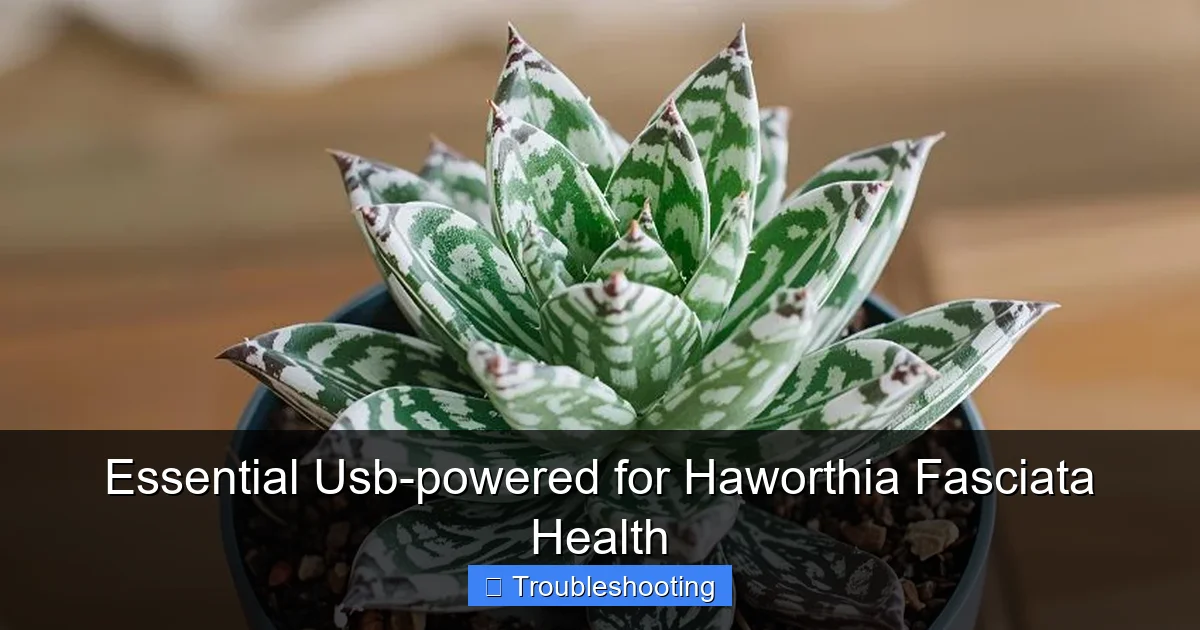
essential USB-powered for haworthia fasciata health spectrum matters. The plant uses blue and red wavelengths. Look for a light that lists a full spectrum. Many cheap USB lights claim full spectrum but only give white light. Check the spec sheet before buying. A good light shows a peak near 450 nanometers and 660 nanometers. This matches the plant’s photosynthesis peaks.
Visual guide about Essential Usb-powered for Haworthia Fasciata Health
Image source: indoorplantsclub.com
Essential USB-powered for haworthia fasciata health spectrum can be verified with a phone app. Some apps read the light output from the sensor. Compare the reading to the manufacturer chart. If the blue peak is weak, choose another model. A balanced spectrum promotes tight rosettes. Keep the light clean for best output. Dust reduces intensity quickly.
essential USB-powered for haworthia fasciata health: Adjustable Brightness
essential USB-powered for haworthia fasciata health brightness control helps you avoid stress. Some USB lights have a dimmer knob. Others use a mobile app. Start at low intensity. Increase slowly over a week. Watch the leaf color. Dark green means good light. Pale or stretched leaves mean too little. Burnt tips mean too much. Adjust accordingly.
Essential USB-powered for haworthia fasciata health dimming can be scheduled. Set a sunrise ramp for the first hour. Then hold full intensity for the main period. End with a sunset fade for the last hour. This mimics natural light changes. The plant experiences less shock. Use the app to save the schedule. Reuse it each season.
essential USB-powered for haworthia fasciata health: Adding USB Fans for Airflow
essential USB-powered for haworthia fasciata health: Fan Size and Speed
essential USB-powered for haworthia fasciata health fan size should match the plant area. A 40‑millimeter fan works for a single pot. A 80‑millimeter fan covers a small shelf. Choose a fan with low RPM. High speed can dry the soil too fast. Low speed gives gentle circulation. Most USB fans have two speed settings. Use the low setting for daily use.
Visual guide about Essential Usb-powered for Haworthia Fasciata Health
Image source: jardineriaon.com
Essential USB-powered for haworthia fasciata health fan noise can be reduced with rubber mounts. Place a small rubber pad under the fan base. This absorbs vibration. The fan runs quieter on a desk. Check the fan blades monthly for dust. Clean them with a soft brush. A clean fan moves air more efficiently.
essential USB-powered for haworthia fasciata health: Placement Tips
essential USB-powered for haworthia fasciata health placement changes airflow pattern. Put the fan behind the plant. Aim the breeze across the leaf tops. Avoid blowing directly into the crown. This prevents water from sitting on the leaves. Run the fan for thirty minutes after watering. This helps excess moisture evaporate. The fan can share a USB hub with the light.
Essential USB-powered for haworthia fasciata health airflow can be directed with a simple cardboard shield. Cut a small piece to guide the breeze. Position it so air flows around the pot. This reduces dead zones. The shield is cheap and replaceable. Adjust it as the plant grows. Good circulation keeps fungal spores away.
essential USB-powered for haworthia fasciata health: Using USB Soil Moisture Sensors
essential USB-powered for haworthia fasciata health: Sensor Types
essential USB-powered for haworthia fasciata health sensors come in two main types. Resistive probes measure electrical resistance. Capacitive probes measure dielectric constant. Capacitive probes last longer because they do not corrode. Both plug into a USB port. Some send data to a phone app via Bluetooth. Others just light an LED when dry. Choose the type that fits your habit.
Essential USB-powered for haworthia fasciata health sensor calibration improves accuracy. Follow the manufacturer steps for the first reading. Insert the probe at the same depth each time. Record the baseline wet and dry values. Use those numbers for future watering decisions. Re‑calibrate after repotting. Consistent data prevents overwatering.
essential USB-powered for haworthia fasciata health: Reading the Data
essential USB-powered for haworthia fasciata health data tells you when to water. A reading below 30 percent means the soil is dry. Water until the meter rises above 60 percent. Wait until it drops again before the next watering. This cycle mimics the natural dry‑wet rhythm. The sensor saves you from guesswork. It also prevents overwatering which causes root rot.
Essential USB-powered for haworthia fasciata health alerts can be set on your phone. Many apps push a notification when moisture falls below a threshold. You receive a reminder even when away. This keeps the watering schedule on track. Adjust the threshold for seasonal changes. The plant stays healthy with minimal effort.
essential USB-powered for haworthia fasciata health: Powering Your USB Devices Safely
essential USB-powered for haworthia fasciata health: USB Hub Choice
essential USB-powered for haworthia fasciata health hub must supply enough current. A standard USB 2.0 port gives 500 milliamps. A USB 3.0 port gives 900 milliamps. A powered hub with its own adapter can give 2 amps per port. Add up the draw of light, fan, and sensor. Choose a hub that exceeds the total. This avoids voltage drops that flicker the light.
Essential USB-powered for haworthia fasciata health hub protection matters. Look for over‑current and short‑circuit safeguards. A hub with individual port switches lets you turn off unused devices. This saves power and reduces heat. Mount the hub on a ventilated surface. Keep cables tidy to avoid accidental unplugging.
essential USB-powered for haworthia fasciata health: Power Bank Options
essential USB-powered for haworthia fasciata health power banks make the system mobile. Look for a bank with at least 10,000 milliampere‑hours. It should support 5‑volt 2‑amp output. Some banks have pass‑through charging. That means you can charge the bank while it powers the devices. This keeps the plant lit during a power outage.
Essential USB-powered for haworthia fasciata health battery life can be extended with solar panels. A small foldable panel recharges the bank during daylight. This is useful for balcony setups. Choose a panel with a USB output. Connect it to the bank’s input. The system becomes truly off‑grid. Monitor the bank level weekly.
essential USB-powered for haworthia fasciata health: Troubleshooting Common Issues
essential USB-powered for haworthia fasciata health: Light Not Turning On
essential USB-powered for haworthia fasciata health light failure is often a loose cable. Check the USB plug. Try a different port. Test the light on another device. If it still fails, the driver may be dead. Replace the light unit. Keep a spare USB light for quick swap.
Essential USB-powered for haworthia fasciata health power cycling can revive a stuck driver. Unplug the hub for ten seconds. Plug it back in. The light often restarts. If the problem repeats, inspect the cable for damage. Replace frayed wires immediately. A stable connection prevents future outages.
essential USB-powered for haworthia fasciata health: Fan Making Noise
essential USB-powered for haworthia fasciata health fan noise usually means dust on blades. Unplug the fan. Use a soft brush to clean the blades. Spin the blades by hand to feel resistance. If it still whines, the bearing may be worn. Replace the fan. A quiet fan keeps the plant stress low.
Essential USB-powered for haworthia fasciata health vibration can be dampened with a silicone pad. Place the pad under the fan base. This reduces resonance on a desk. Check the pad monthly for wear. Replace it if it hardens. A stable fan runs smoother and lasts longer.
essential USB-powered for haworthia fasciata health: Sensor Giving Wrong Readings
essential USB-powered for haworthia fasciata health sensor errors happen when the probe sits in a dry pocket. Insert the probe deeper into the soil. Make sure the tip touches moist media. Calibrate the sensor using the app if available. If readings stay off, replace the probe. Accurate data keeps watering on schedule.
Essential USB-powered for haworthia fasciata health probe placement influences consistency. Use the same spot each time. Mark the depth with a small piece of tape. Avoid the pot edge where soil dries faster. Consistent placement yields reliable trends. Trust the trend more than a single reading.
You now have a complete toolkit for essential USB-powered for haworthia fasciata health. Start with a light, add a fan, and finish with a sensor. Plug everything into a powered hub. Watch your zebra plant thrive on a desk or shelf. Happy growing.
Frequently Asked Questions
Is a USB grow light enough for Haworthia fasciata?
A quality USB grow light with a full spectrum can meet the light needs of Haworthia fasciata when used for twelve hours a day.
Can I use a regular phone charger to power the USB hub?
A phone charger that supplies 5 volts and at least 2 amps can power a small USB hub for essential USB-powered for haworthia fasciata health devices.
How often should I water based on the sensor?
Water when the sensor shows soil moisture below thirty percent and stop when it rises above sixty percent for essential USB-powered for haworthia fasciata health.
What size fan is best for a single pot?
A 40‑millimeter low‑RPM USB fan provides gentle airflow without drying the soil too quickly for essential USB-powered for haworthia fasciata health.
Can I leave the USB devices on all night?
It is safe to leave the light on a timer for twelve hours and the fan on a short cycle; continuous operation is not required for essential USB-powered for haworthia fasciata health.
What if my USB hub overheats?
Choose a hub with built‑in over‑current protection and ensure good ventilation; overheating can damage essential USB-powered for haworthia fasciata health gear.