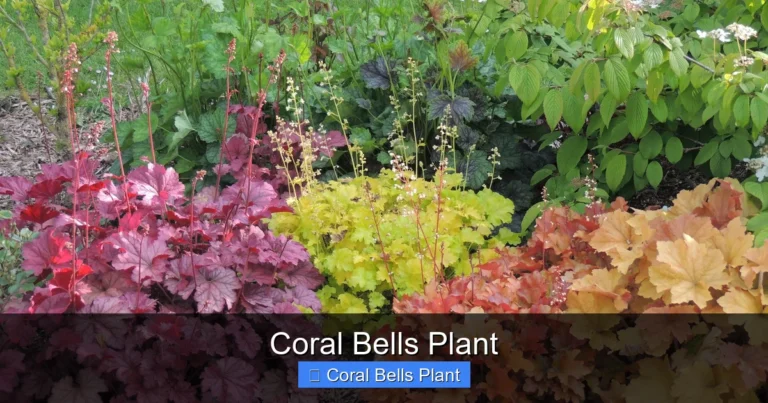
Coral Bella Plant
The coral bella plant, commonly known as coral bells or heuchera, is a versatile perennial prized for its colorful foliage and delicate flowers. It thrives in shade to part sun, offering year-round interest with minimal maintenance once established.
Key Takeaways
- Foliage First: The main attraction is the stunning leaves, which come in shades of purple, caramel, lime, silver, and near-black.
- Shade Tolerant: Most varieties perform best in partial shade, though some newer cultivars handle full sun with adequate moisture.
- Well-Drained Soil Is Critical: These plants hate wet feet; amend heavy clay soil with compost or plant in raised beds.
- Low Maintenance: Once established, they require little watering, rare fertilizing, and only occasional division every few years.
- Year-Round Interest: In mild climates, the foliage stays evergreen through winter, providing structure when other plants sleep.
- Pollinator Friendly: The airy flower spikes attract hummingbirds and bees in late spring to early summer.
- Versatile Design Element: Use them for edging, containers, mass plantings, or mixed borders to add texture and color contrast.
Quick Answers to Common Questions
How much sun does a coral bella plant need?
Most varieties prefer partial shade (morning sun, afternoon shade). Dark-leaved types tolerate more sun; light-leaved types need more shade. In hot climates, full shade is often best.
Why is my coral bells plant dying in the center?
This is normal aging. The crown becomes woody after 3-4 years. Dig it up in spring or fall, discard the dead center, and replant the healthy outer rosettes.
Can I grow coral bells in containers?
Yes, they are excellent container plants. Use a pot with drainage holes, quality potting mix, and water when the top inch of soil is dry. Protect pots in harsh winters.
Do coral bells spread aggressively?
No, they are clump-forming perennials. They slowly widen but do not run or self-sow aggressively. Division every few years keeps them vigorous.
When should I cut back my coral bella plant?
Do a major cleanup in early spring before new growth starts. Remove dead leaves and spent flower stalks. Avoid cutting back in fall; the foliage protects the crown over winter.
📑 Table of Contents
- Introduction: Why Gardeners Love the Coral Bella Plant
- Getting to Know the Coral Bella Plant
- Picking the Perfect Spot: Light and Soil Needs
- How to Plant Your Coral Bells for Success
- Essential Care: Watering, Feeding, and Mulching
- Keeping Plants Healthy: Pruning, Dividing, and Winter Care
- Troubleshooting Pests, Diseases, and Common Issues
- Creative Design Ideas and Companion Plants
- Choosing the Best Varieties for Your Garden
- Propagation: Making More Plants for Free
- Conclusion: A Plant That Gives Back
Introduction: Why Gardeners Love the Coral Bella Plant
If you want a plant that delivers reliable color without demanding constant attention, the coral bella plant should be at the top of your list. Known botanically as Heuchera and commonly called coral bells, this North American native has undergone a renaissance in recent decades. Plant breeders have transformed a humble wildflower into a foliage superstar. Today, you can find leaves in electric lime, deep amber, shiny metallic silver, and rich plum so dark it looks black.
I remember the first time I added a few to a shady corner of my own yard. I was skeptical. Could a plant really look this good with so little work? Three years later, those same clumps are bigger, brighter, and still turning heads. They ask for so little: decent drainage, a drink during droughts, and a haircut in spring. In return, they give you months of flowers and a lifetime of fabulous leaves. Whether you are a seasoned pro or planting your very first garden bed, this guide will walk you through everything you need to know.
Getting to Know the Coral Bella Plant
Botanical Background and Name Confusion
Let us clear up the name right away. You will see this plant sold as coral bells, alumroot, or heuchera. The term “coral bella plant” is a popular variation often used in nurseries and online searches, but it refers to the exact same genus: Heuchera. There are roughly 37 species native to North America, ranging from rocky cliffs to woodland floors. Modern garden hybrids are complex crosses, mostly derived from H. sanguinea (for flowers) and H. americana or H. villosa (for foliage and heat tolerance).
Foliage: The Real Showstopper
While the flowers are charming — tiny bells on wiry stems — the leaves are why people buy them. The leaves form a neat mound, usually 8 to 18 inches tall and wide. Texture varies from smooth and glossy to heavily ruffled or deeply veined. Color intensity often shifts with the seasons. A variety like ‘Caramel’ emerges gold in spring, burns orange in summer, and settles into a warm peach by fall. ‘Palace Purple’ holds its deep bronze-red all year in mild winters. This chameleon quality means your garden design evolves without you lifting a finger.
Flowers and Wildlife Value
Do not ignore the blooms. In late spring to early summer, slender stems rise 1 to 3 feet above the mound. They carry dozens of tiny, bell-shaped flowers in white, pink, or red. Hummingbirds adore them. Bees visit too. The stems are excellent for cut arrangements, adding an airy, ethereal touch to bouquets. Deadheading spent spikes keeps the plant tidy and may encourage a light rebloom.
Picking the Perfect Spot: Light and Soil Needs
Decoding Sun Requirements
One of the biggest myths is that every coral bella plant needs deep shade. The truth is nuanced. Generally, lighter-colored leaves (lime, yellow, silver) prefer more shade to prevent scorching. Darker leaves (purple, black, red) tolerate more sun, especially in northern zones. In the Deep South, almost all varieties appreciate afternoon shade. A spot with morning sun and dappled afternoon light is the sweet spot for most. If you only have full sun, look for villosa hybrids like ‘Southern Comfort’ or ‘Citronelle’ bred for heat and light tolerance.
Soil: The Make-or-Break Factor
If there is one non-negotiable, it is drainage. These plants have a woody crown that sits right at the soil line. If water pools around it, rot sets in fast. Heavy clay is the enemy. Before planting, dig in a generous amount of compost, leaf mold, or fine pine bark. Aim for a loose, humus-rich texture that holds moisture but lets excess drain away. A slightly acidic to neutral pH (6.0 to 7.0) is ideal. If your soil is stubbornly alkaline, add elemental sulfur or peat moss to the planting hole.
Container Growing Tips
No garden bed? No problem. Coral bells shine in pots. Choose a container at least 12 inches wide with drainage holes. Use a high-quality potting mix blended with perlite or coarse sand for extra drainage. Water when the top inch feels dry. Feed with a slow-release fertilizer in spring. In winter, move pots to a sheltered spot or bury them in the ground to protect roots from freeze-thaw cycles.
How to Plant Your Coral Bells for Success
Timing: Spring vs. Fall
You can plant almost any time the ground isn’t frozen, but spring and fall are best. Spring planting gives roots a full season to establish before winter. Fall planting lets roots grow in cool, moist soil without the stress of summer heat. If you buy plants in summer, keep them shaded and watered until temperatures drop.
Step-by-Step Planting Guide
Follow these steps for a strong start:
- Water the pot thoroughly an hour before planting.
- Dig a hole twice as wide as the root ball and just as deep.
- Loosen the roots gently if they are circling the pot.
- Set the plant so the crown (where stems meet roots) sits slightly above the surrounding soil level. This is crucial. Burying the crown invites rot.
- Backfill with your amended soil, firming gently.
- Water deeply to settle soil and eliminate air pockets.
- Mulch with 1 to 2 inches of shredded bark or leaf mold, keeping mulch away from the crown.
Spacing for Airflow
Space plants 12 to 18 inches apart depending on the mature width of your variety. Good air circulation reduces fungal issues like powdery mildew. If you are planting a mass drift, stagger them in a triangle pattern rather than straight rows for a more natural look.
Essential Care: Watering, Feeding, and Mulching
Watering Wisdom
New plants need consistent moisture for the first 6 to 8 weeks. Water at the base, avoiding wet leaves. Once established, the coral bella plant is surprisingly drought-tolerant thanks to its woody rootstock. In average garden soil, a deep soak every 7 to 10 days during dry spells is plenty. In sandy soil or containers, check more often. Wilting leaves that perk up by morning are fine; leaves that stay limp mean it is thirsty.
Fertilizing: Less Is More
These are light feeders. Too much nitrogen produces lush, soft leaves that flop and attract pests. In spring, scratch a balanced, slow-release granular fertilizer (like 10-10-10) into the soil around the clump. Alternatively, top-dress with an inch of compost. That is usually all they need for the year. Skip liquid feeds unless growth looks pale or stunted.
Mulch Matters
Maintain a thin layer of organic mulch year-round. It conserves moisture, suppresses weeds, and slowly improves soil structure. Shredded leaves, pine straw, or bark fines work well. Keep the mulch pulled back from the crown by an inch. In winter, a slightly deeper mulch (3 inches) helps prevent frost heaving, where freezing and thawing pushes the plant out of the ground.
Keeping Plants Healthy: Pruning, Dividing, and Winter Care
The Spring Cleanup
In early spring, before new growth emerges, remove any tattered, brown, or winter-damaged leaves. Use clean scissors or your fingers. Cut stems back to the base. This tidies the plant and removes overwintering disease spores. If the whole plant looks rough, you can shear the whole mound to 2 inches — it will bounce back fast.
Deadheading for Looks
After the main flush of flowers fades, snip the flower stalks down to the foliage mound. This redirects energy back into leaf production and keeps the plant looking neat. It takes two minutes and makes a big visual difference.
Dividing: The Fountain of Youth
Every 3 to 4 years, the center of the clump gets woody and dies out. The plant loses vigor and may heave out of the ground. Division fixes this. Do it in early spring or early fall. Dig up the whole clump. Pull or cut apart the vigorous outer rosettes, each with roots attached. Discard the woody center. Replant the divisions at the proper depth, water well, and mulch. You just turned one tired plant into three or four fresh ones.
Winter Protection
In zones 4 through 9, most varieties are reliably hardy. The main winter threat is not cold but freeze-thaw cycles heaving the crown. Ensure good drainage. Apply a loose mulch of evergreen boughs or straw after the ground freezes. Do not cut back foliage in fall; the leaves protect the crown. In spring, clean up as described above.
Troubleshooting Pests, Diseases, and Common Issues
Foliar Nematodes: The Invisible Enemy
These microscopic worms live inside leaves, causing angular brown patches between veins. There is no cure for infected plants. Remove and destroy affected leaves. Avoid overhead watering. Space plants for airflow. Buy only from reputable nurseries.
Powdery Mildew
Looks like white dust on leaves. It thrives in humid, still air with cool nights. Prevention is key: space plants, water at the base, choose resistant varieties (villosa hybrids show good resistance). If it appears, remove badly affected leaves. Spray with a homemade mix of 1 tablespoon baking soda, 1 teaspoon horticultural oil, and 1 gallon water weekly.
Root and Crown Rot
Caused by soggy soil. Leaves yellow, wilt, and pull away easily at the base. The stem turns black and mushy. Once rot hits, the plant is usually a goner. Prevention is everything: plant high, amend clay, do not overwater.
Vine Weevils
Adult beetles notch leaf edges at night. Larvae eat roots underground, causing sudden wilting. Check pots and soil for white, C-shaped grubs. Apply beneficial nematodes (Steinernema kraussei) in late summer to control larvae. Hand-pick adults at night with a flashlight.
Deer and Rabbits
Good news: the coral bella plant is rarely browsed. The leaves have a slightly astringent taste. In severe winters, hungry deer may nibble, but they usually move on to tastier options.
Scorched Leaves
Crispy brown edges mean too much sun or not enough water. Move the plant to a shadier spot in fall or spring. Increase watering temporarily. Some varieties simply cannot handle your sun intensity; swap them for a sun-tolerant type.
Creative Design Ideas and Companion Plants
Shade Garden Stars
Pair coral bells with hostas, ferns, astilbes, and foamflowers (Tiarella). The bold, ruffled heuchera leaves contrast beautifully with the fine texture of ferns or the broad, smooth hosta leaves. Try ‘Obsidian’ (near-black) next to ‘Sum and Substance’ hosta (chartreuse) for high drama.
Woodland Edge and Rock Gardens
Because many species are native to rocky slopes, they fit perfectly in rock gardens or along woodland paths. Tuck them between stones where drainage is sharp. Their evergreen habit hides the bare ankles of taller shrubs.
Container Recipes
Use the “thriller, filler, spiller” formula. A tall fern or grass is the thriller. The coral bella plant is the perfect filler — mounding, colorful, long-lasting. Add a trailing ivy, creeping jenny, or lobelia as the spiller. Refresh the pot annually by replacing the spiller and dividing the heuchera if needed.
Mass Plantings for Ground Cover
Plant a single variety in drifts of 5, 7, or 9 for a carpet of color. Space them 12 inches apart. They will knit together in two seasons, suppressing weeds. ‘Caramel’ or ‘Peach Flambe’ create a warm, glowing river through a shady border.
Cut Flower Accents
Don’t forget the vase. The wiry stems and dainty bells add a professional touch to homegrown bouquets. Cut stems when half the bells are open. They last 5 to 7 days in water with floral preservative.
Choosing the Best Varieties for Your Garden
Top Picks for Foliage Color
- ‘Palace Purple’: The classic. Deep bronze-purple leaves. Tough, reliable, seed-grown so some variation occurs.
- ‘Obsidian’: Jet black, shiny leaves that hold color all season. Vigorous and sun-tolerant.
- ‘Caramel’: Warm peachy-gold to amber. Villosa heritage gives great heat and humidity tolerance.
- ‘Lime Rickey’: Electric chartreuse, ruffled edges. Brightens dark corners. Needs shade to prevent burn.
- ‘Berry Smoothie’: Large, rose-pink leaves with a metallic sheen. Stunning in spring.
- ‘Forever Purple’: Ultra-saturated purple with fluted edges. Keeps color without fading.
- ‘Silver Scrolls’: Silver leaves with dark purple veins. Elegant and refined.
Best for Flowers
If you want a floral show, look for Heuchera sanguinea hybrids like ‘Firefly’, ‘Snow Angel’, or the ‘Melting Fire’ series. They push more bloom stems and have larger individual bells.
Heat and Humidity Champions
Gardeners in the Southeast or Midwest should seek villosa hybrids. ‘Southern Comfort’, ‘Mocha’, ‘Georgia Peach’, and ‘Citronelle’ handle steamy summers without melting out.
Propagation: Making More Plants for Free
Division (Easiest and Fastest)
As described in the care section, division in spring or fall yields mature plants instantly. It is the only way to guarantee an exact clone of a named cultivar.
Seed (For Species and Fun)
Species like H. sanguinea or H. americana come true from seed. Hybrids will produce variable offspring — often interesting, but not the same as the parent. Sow fresh seed on the surface of moist seed-starting mix. Do not cover; light aids germination. Keep at 65 to 70°F. Seedlings appear in 2 to 4 weeks. Transplant to individual pots when they have two true leaves. Grow on for a season before planting out.
Leaf Cuttings (Advanced)
Some enthusiasts propagate from leaf-bud cuttings. Take a leaf with a small piece of stem (the “bud”) attached. Dip in rooting hormone. Stick in perlite/peat mix. Cover with a humidity dome. Roots form in 4 to 6 weeks. This works best in a greenhouse or under lights.
Conclusion: A Plant That Gives Back
Few perennials offer so much for so little. The coral bella plant asks only for decent drainage and a bit of shade. In return, it paints your garden with a palette that shifts through the seasons. It feeds hummingbirds. It suppresses weeds. It looks good in a pot on the porch or in a drift under the oaks. And every few years, it lets you divide it, gifting you new plants to share or spread.
If you have not tried them yet, pick up one or two this spring. Plant them where you will see them daily — by the front walk, outside the kitchen window, beside the patio chair. Watch how the light catches the ruffles, how the color deepens after rain, how the flower stems dance in a breeze. You will understand why this native wildflower has become a garden essential. Happy planting.
Frequently Asked Questions
Are coral bells deer resistant?
Yes, coral bells are generally considered deer resistant. Their leaves have a slightly bitter, astringent taste that deer and rabbits usually avoid, though starving animals may nibble in winter.
What is the difference between heuchera and coral bells?
There is no difference; they are the same plant. Heuchera is the botanical genus name, while “coral bells” and “alumroot” are common names. “Coral bella plant” is a popular variation of the common name.
Why are the leaves on my coral bells turning brown and crispy?
Brown, crispy edges usually indicate too much direct sun (leaf scorch) or insufficient water. Move the plant to a shadier location or increase watering frequency, especially during hot, dry spells.
Do coral bells bloom all summer?
Most varieties bloom in late spring to early summer for 3-4 weeks. Deadheading spent flower stems can sometimes encourage a light second flush, but the foliage is the main season-long attraction.
Can I plant coral bells under trees?
Yes, they are excellent for dry shade under trees. Their shallow roots compete well with tree roots once established. Add compost at planting and water regularly the first year to help them settle in.
How deep should I plant coral bells?
Plant so the crown (where leaves meet roots) sits slightly above the soil line. Planting too deep is the number one cause of crown rot. Mulch around the plant, not over the crown.