Cilantro Watering Schedule and Tips
Cilantro thrives with consistent moisture but hates soggy roots. Water deeply when the top inch of soil feels dry, typically every 2-3 days in spring and daily in summer heat. Proper watering prevents bolting and extends your harvest window significantly.
Growing cilantro feels like a race against time. One day you have lush, aromatic leaves perfect for tacos and salsa. The next, your plant shoots up a tall flower stalk and the leaves turn bitter. Most gardeners blame heat for this sudden change. But here is the secret: water plays a bigger role than temperature. A solid cilantro watering schedule and tips routine keeps plants in leaf-producing mode weeks longer.
I learned this the hard way. My first cilantro patch bolted in June despite mild weather. I watered when I remembered. Sometimes daily. Sometimes weekly. The plants hated my inconsistency. Once I switched to a simple routine based on soil feel rather than the calendar, everything changed. My harvest window stretched from three weeks to nearly two months. Let me share exactly how to water cilantro for the longest, tastiest harvest possible.
Key Takeaways
- Check soil daily: Water when the top inch feels dry to the touch, not on a fixed calendar schedule.
- Water deeply: Soak the root zone thoroughly rather than frequent light sprinklings to encourage deep roots.
- Morning is best: Water early so foliage dries before evening, reducing fungal disease risk.
- Mulch matters: Apply 2 inches of organic mulch to retain moisture and keep roots cool.
- Container needs differ: Pots dry faster than ground soil; check twice daily in hot weather.
- Watch for bolting: Inconsistent watering triggers premature flowering; steady moisture delays it.
- Adjust by season: Cut back water as temperatures cool in fall to prevent root rot.
Quick Answers to Common Questions
How often should I water cilantro in summer?
Water cilantro daily in summer heat, sometimes twice daily for containers. Check soil moisture morning and evening; water deeply at dawn and mist foliage at noon if plants wilt.
Can I overwater cilantro?
Yes, overwatering causes yellow leaves, mushy stems, fungus gnats, and root rot. Let soil dry two inches deep between waterings and ensure excellent drainage.
What time of day is best to water cilantro?
Early morning (dawn to 10 AM) is ideal. Foliage dries quickly, reducing fungal disease risk, and roots absorb moisture before afternoon heat.
Does mulch help with cilantro watering?
Absolutely. Two to three inches of organic mulch like straw or shredded leaves cuts evaporation in half, keeps roots cool, and extends time between waterings.
Why does my cilantro bolt even with regular watering?
Inconsistent moisture (wet-dry cycles) triggers bolting more than heat alone. Maintain steady, even soil moisture and use mulch to buffer temperature swings.
📑 Table of Contents
Understanding Cilantro Water Needs
Why Cilantro Is Picky About Moisture
Cilantro has a taproot. That long central root wants to dive deep into cool, moist soil. When the surface dries out, the plant panics. It thinks drought is coming. Survival mode kicks in. The plant rushes to make flowers and seeds before it dies. This is bolting. Once it starts, you cannot stop it. Consistent moisture tells the plant life is good. Keep making leaves. No need to reproduce yet.
The herb also hates wet feet. Standing water rots the taproot fast. Root rot kills cilantro quicker than drought. You need that sweet spot. Moist but not soggy. Cool but not cold. Think of a wrung-out sponge. That is your target soil moisture level.
How Root Depth Changes Watering
Young seedlings have shallow roots. They need frequent, light watering. The top half-inch must stay damp. Once plants reach six inches tall, the taproot stretches down. Now you water less often but deeper. Soak the soil six to eight inches down. This trains roots to chase moisture deeper. Deep roots survive heat waves better. They access water shallow roots cannot reach.
Signs Your Cilantro Needs Water
Learn to read your plants. Wilting in afternoon sun is normal. Wilting in morning means trouble. Leaves lose their perky stance. They feel limp, not crisp. The color dulls from bright green to grayish-green. Soil pulls away from pot edges. Stick your finger in. If the top inch is dry, water now. Do not wait for severe wilt. Recovery stress triggers bolting.
Creating Your Cilantro Watering Schedule
Spring Schedule Cool Weather Routine
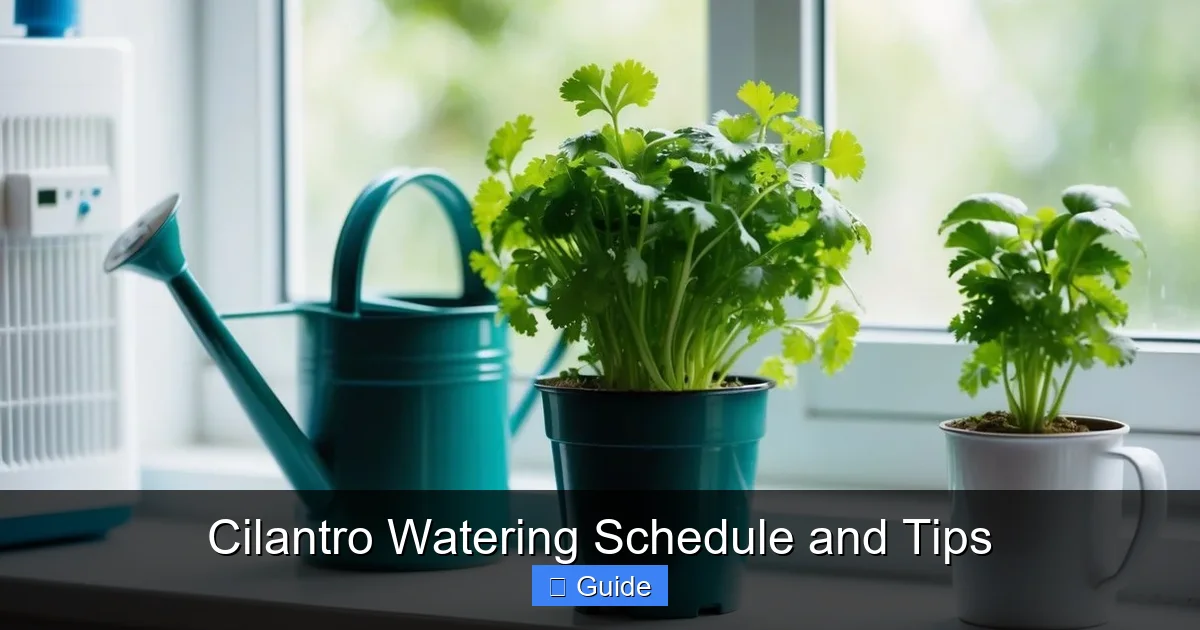
Spring is cilantro’s favorite season. Temperatures stay in the sixties and seventies. Soil holds moisture well. Water every three to four days usually works. Check soil first. Rain counts. Skip watering if you got half an inch of rain. Morning watering lets leaves dry. This prevents fungal spots. Aim for one inch of water per week total including rain. A rain gauge helps track this.
Visual guide about Cilantro Watering Schedule and Tips
Image source: koala.sh
Summer Schedule Heat Wave Survival
Summer changes everything. Eighty-five degrees plus means daily watering. Sometimes twice daily for containers. Check morning and evening. Soil dries fast. Mulch becomes critical. Two inches of straw or shredded leaves cuts evaporation in half. Water deeply at dawn. If leaves wilt by noon, give a light afternoon mist. Cool the foliage. Do not soak soil again. Just a refreshing spritz.
Fall Schedule Tapering Off
Fall brings relief. Cut back to every four to five days. Shorter days mean less evaporation. Cool nights reduce plant stress. But do not stop watering. Fall cilantro often tastes best. Sweet leaves develop in cool weather. Keep soil evenly moist until hard frost. Then let nature take over. The plant will die back naturally.
Container vs Ground Adjustments
Pots dry three times faster than garden beds. Terracotta breathes. Plastic holds moisture longer. Dark pots absorb heat. Light pots reflect it. Check containers daily. Stick a chopstick deep in the soil. Pull it out. If it comes out clean, water. If soil clings, wait. Self-watering pots help. But do not rely on them blindly. Check the reservoir weekly.
Raised Bed Considerations
Raised beds drain fast. Great for preventing rot. Bad for holding moisture. Add extra compost. It acts like a sponge. Water more often than in-ground beds. But each watering can be lighter. The soil mix matters. Peat-based mixes dry fast. Compost-rich mixes hold water better. Know your mix. Adjust accordingly.
Best Watering Techniques for Cilantro
Deep Watering Method
Deep watering builds strong roots. Apply water slowly. Let it soak in. No runoff. A soaker hose works perfectly. Lay it along the row. Run it for thirty minutes. Check depth with a screwdriver. It should slide in six inches easy. If not, run longer. Do this two to three times a week instead of daily sprinkles. Your cilantro will thank you.
Drip Irrigation Setup
Drip irrigation is the gold standard. Emitters at each plant. Timer controls frequency. Zero leaf wetness. Zero waste. Set it for early morning. Twenty minutes every other day in spring. Daily in summer. Adjust emitters as plants grow. Move them out to the drip line. That is where feeder roots gather. Cover lines with mulch. Hide them. Protect from sun damage.
Hand Watering Done Right
No irrigation system? Hand watering works fine. Use a watering can with a rose attachment. Or a hose with a gentle shower setting. Water the soil, not the leaves. Circle each plant. Go slow. Let water penetrate. Come back for a second pass. The first pass breaks surface tension. The second soaks deep. Take your time. It is meditation for gardeners.
Bottom Watering for Containers
Bottom watering prevents fungus gnats. Keeps leaves dry. Fill a tray with water. Set pots in it. Wait twenty minutes. Soil wicks moisture up. Top stays dry. Roots grow down toward water. Perfect for cilantro taproots. Dump excess water. Do not let pots sit in it overnight. Rot risk increases.
Mulching and Moisture Retention
Best Mulch Materials for Cilantro
Straw is my top pick. Clean, light, cheap. Shredded leaves work great too. Free if you have trees. Grass clippings in thin layers. Avoid thick mats. They get slimy. Compost doubles as mulch and slow fertilizer. Wood chips work but tie up nitrogen initially. Add extra nitrogen if using fresh chips. Cocoa hulls smell amazing but cost more. Any organic mulch beats bare soil.
How to Apply Mulch Correctly
Wait until seedlings are three inches tall. Mulch too early smothers babies. Pull mulch back one inch from stems. Wet mulch against stems causes rot. Apply two to three inches deep. Less than two inches does little. More than four inches blocks rain. Replenish monthly. Mulch breaks down. It becomes soil. That is good. Just keep the layer consistent.
Living Mulch Companion Plants
Plant low growers around cilantro. Sweet alyssum. Creeping thyme. White clover. They shade soil. Reduce evaporation. Attract beneficial insects. Clover fixes nitrogen. Free fertilizer. Just do not let them crowd cilantro. Trim back aggressively. Cilantro needs air flow. Crowding invites aphids and mildew.
Common Watering Mistakes to Avoid
Overwatering Symptoms and Fixes
Yellow leaves starting at the bottom. Mushy stems near soil. Fungus gnats flying around. Soil stays wet days after watering. Green algae on soil surface. These scream overwatering. Stop immediately. Let soil dry two inches down. Improve drainage. Add perlite to heavy soil. Raise containers on pot feet. Increase air circulation. Remove mulch temporarily. Let sun hit soil.
Underwatering Symptoms and Fixes
Crispy leaf edges. Slow growth. Bitter taste. Premature flowering. Soil hydrophobic. Water runs straight through. Submerge pot in bucket until bubbles stop. For ground plants, water slowly for an hour. Use a soaker. Add wetting agent if soil repels water. Mulch heavily after rehydrating. Check daily for two weeks. Rebuild trust with your plants.
Inconsistent Watering Dangers
Feast then famine. Wet then bone dry. This stresses cilantro more than steady slight drought. The plant never knows what to expect. It bolts early. Seeds form fast. Leaves turn bitter. Set phone reminders. Use a timer. Automate if possible. Consistency beats perfection. Slightly dry every day beats soaking once a week.
Watering at Wrong Times
Midday watering wastes water. Evaporation steals half. Wet leaves in sun can scorch. Magnifying glass effect. Evening watering leaves foliage wet all night. Fungal paradise. Powdery mildew loves this. Morning is non-negotiable. Dawn to 10 AM. Leaves dry fast. Roots drink deep. Plant faces the day hydrated.
Special Situations and Troubleshooting
Starting Seeds Moisture Management
Seeds need constant moisture. Not wet. Not dry. Cover seed tray with plastic dome. Or plastic wrap. Check daily. Mist if surface looks dry. Remove cover once half sprout. Air flow prevents damping off. Bottom water only after true leaves appear. Top watering displaces tiny seeds. Patience. Cilantro germinates in seven to fourteen days. Keep faith.
Transplanting Water Protocol
Water seedlings thoroughly one hour before transplanting. Hydrated roots survive shock. Water planting hole before setting plant. Fill hole. Let drain. Plant. Water again. Settle soil. Eliminate air pockets. Mulch immediately. Shade for two days if hot. Check morning and evening. Transplants dry fast. Tiny root balls have zero reserve.
Heat Wave Emergency Care
Forecast shows ninety-five degrees. Act now. Water deeply night before. Mulch thick. Three to four inches. Set up shade cloth. Thirty percent block. Water at dawn. Deep soak. Mist at noon if wilted. Do not fertilize. Stressed plants cannot process nutrients. Harvest outer leaves. Reduce plant burden. Pray for a cool front.
Vacation Watering Solutions
Going away for a week? Group containers together. Shade them. Mulch heavily. Water deeply before leaving. Use watering spikes. Wine bottles work. Fill. Invert. Push into soil. Slow drip for days. Or ask a neighbor. Leave clear instructions. Water when dry one inch down. Not every day. Show them the finger test. Bribe with fresh cilantro.
Indoor Cilantro Watering
Indoor air is dry. Heating makes it worse. Check daily. Water when top half-inch dry. Use room temperature water. Cold shocks roots. Ensure drainage holes work. Empty saucers. No standing water. Humidity tray helps. Pebbles in saucer. Water below pebble tops. Pot sits on pebbles. Evaporation humidifies air. Rotate pot weekly. Even growth.
Harvesting and Watering Connection
Pre-Harvest Watering Strategy
Water the day before harvesting. Fully hydrated leaves store better. Crisp texture. Intense flavor. Dry leaves wilt fast in fridge. Do not water morning of harvest. Wet leaves invite rot in storage. Harvest mid-morning. After dew dries. Before afternoon heat. Cut stems one inch above soil. Leave growing point. Plant regrows.
Post-Harvest Watering Boost
After cutting, give a good drink. Plant needs energy to regrow. Add liquid kelp. Gentle boost. No heavy nitrogen. That forces weak growth. Kelp builds resilience. Water at soil level. Keep leaves dry. New shoots appear in days. Repeat cycle. Three to four harvests possible before bolting.
Extending Harvest Through Water Management
Succession planting beats any watering trick. Sow seeds every two weeks. Continuous supply. But water management extends each planting. Cool roots delay bolting. Mulch. Afternoon shade. Consistent moisture. Pinch flower buds immediately. The plant tries again. Pinch again. You buy time. Eventually heat wins. But you gained weeks.
Seasonal Watering Calendar Quick Reference
Monthly Watering Guide
March: Every 4 days. Cool soil. Watch for rain. April: Every 3 days. Warming up. Mulch now. May: Every 2 days. Heat arriving. Daily check. June: Daily. Often twice for pots. Shade cloth ready. July: Daily. Deep soak dawn. Mist noon. Mulch thick. August: Daily. Peak heat. Succession sow in shade. September: Every 3 days. Cooling. Reduce slowly. October: Every 5 days. Light water. Prep for frost. November: As needed. Until hard freeze.
Regional Adjustments
Desert Southwest: Water twice daily summer. Drip essential. Heavy mulch. Shade mandatory. Pacific Northwest: Watch for rain. Fungal risk high. Air flow critical. Water less often. Deep South: Humidity high. Soil stays wet. Raised beds help. Water morning only. Never evening. Mountain West: Intense sun. Fast evaporation. Wind steals moisture. Windbreaks help. Mulch thick.
Conclusion
Mastering cilantro watering schedule and tips transforms your herb garden. No more three-week wonders. You get months of fresh, vibrant leaves. The secret is simple. Check soil daily. Water deeply when dry. Mulch religiously. Morning only. Adjust for season. Adjust for container. Adjust for weather. Your plants will tell you everything. Listen with your fingers. Feel the soil. Watch the leaves. Respond with consistency.
Remember that taproot. It wants to go deep. Help it. Deep watering builds the root system that survives summer. Shallow watering creates dependent, weak plants. Be the gardener who waters with intention. Not habit. Not guesswork. Knowledge. Your tacos will taste the difference. Your salsa will sing. And that moment when you reach for cilantro in December from your indoor pot? That is the victory. Happy growing.
Frequently Asked Questions
How do I know if my cilantro needs water?
Stick your finger one inch into the soil. If it feels dry at that depth, water now. Morning wilting, dull grayish-green leaves, and soil pulling away from pot edges also signal thirst.
Should I water cilantro seeds differently than mature plants?
Yes. Keep the soil surface constantly moist (not soggy) for germinating seeds. Use a humidity dome and mist daily. Once true leaves appear, switch to deeper, less frequent watering.
Can I use tap water for cilantro?
Tap water works fine for cilantro. Let it sit overnight if heavily chlorinated. Room temperature water is best; cold water shocks roots, especially for indoor plants.
How much water does cilantro need per week?
Cilantro needs about one inch of water per week including rainfall. In summer heat, this may double. Measure with a rain gauge and supplement as needed.
Is bottom watering better for cilantro in pots?
Bottom watering works well for cilantro containers. It keeps foliage dry, prevents fungus gnats, and encourages the taproot to grow downward toward the moisture source.
What should I do if I accidentally overwatered my cilantro?
Stop watering immediately. Let soil dry two inches deep. Improve drainage with perlite or pot feet. Remove mulch temporarily. Increase air circulation. Resume watering only when soil feels dry.