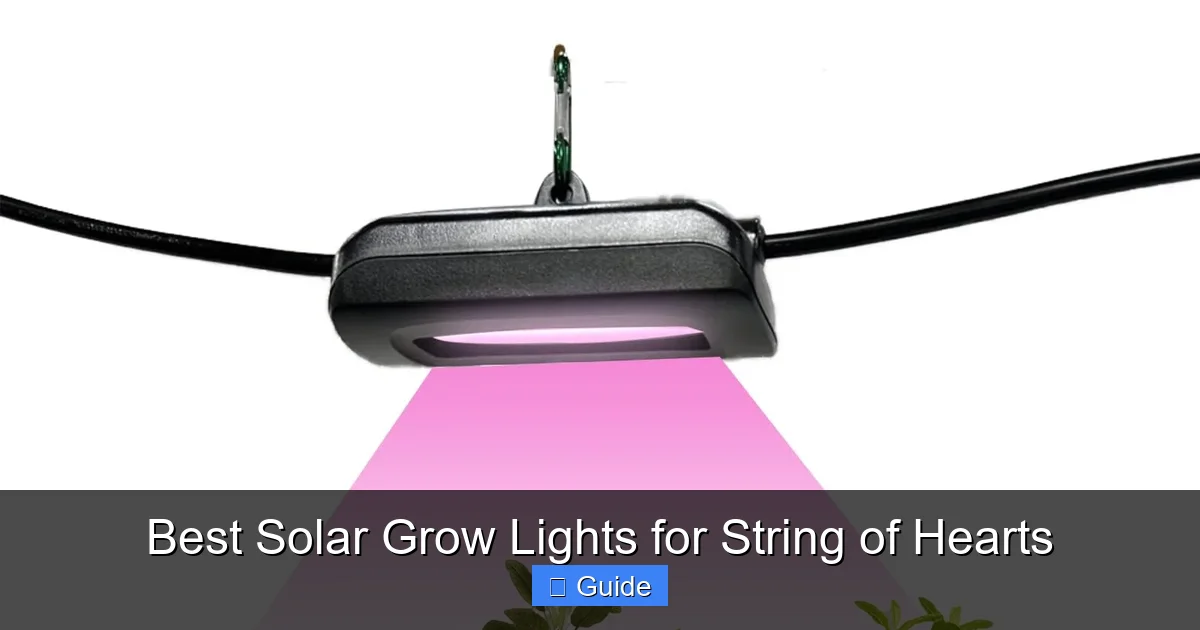
Best Solar Grow Lights for String of Hearts
The best solar grow lights for string of hearts give free bright light that mimics the sun. They are easy to set up and keep vines healthy all year.
String of hearts loves bright light. Without enough light the vines become thin. A solar grow light solves this problem. It uses free sun energy. You get strong growth without high electric bills.
Choosing the right light can feel confusing. Many products claim to be the best solar grow lights for string of hearts. This guide breaks down the key features. It also shares top picks and setup tips. You will feel confident after reading.
We will cover why light matters. We will explain what to look for in a solar grow light. We will list top models. We will show how to install and use them. We will give ongoing care advice. Let us start.
Key Takeaways
- Free Energy: Solar panels turn sunlight into power for the light.
- Right Spectrum: Choose lights with blue and red wavelengths for vine growth.
- Easy Mounting: Clip or hang the unit near a sunny window.
- Timer Control: Use a timer to give 12 to 14 hours of light daily.
- Weather Proof: Pick a model rated for outdoor use if you place it outside.
- Low Heat: LED solar lights stay cool and protect delicate leaves.
Quick Answers to Common Questions
What is the ideal light duration for string of hearts?
12 to 14 hours of light per day works best for healthy growth.
Can I use a solar grow light indoors only?
Yes, place the solar panel near a sunny window and the light unit near the plant.
How do I know if my solar panel is charging?
Most units have an LED indicator that shows charging status.
Do solar grow lights work on cloudy days?
They still charge but at a reduced rate; a larger battery helps bridge gaps.
What spectrum should I look for?
Full spectrum with strong blue and red peaks supports leaf and vine development.
📑 Table of Contents
Why Light Matters for String of Hearts
Natural Light Needs
String of hearts originates from bright regions. It prefers at least six hours of direct sun. Indoor windows often give less. Low light leads to leggy stems. Leaves lose their rich color. Growth slows dramatically.
Supplemental light fills the gap. A solar grow light mimics the sun spectrum. It provides blue light for leaf growth. It provides red light for flowering. The plant responds with thicker vines. Color becomes vivid again.
Using free solar power is smart. No wiring needed. No monthly cost. The panel charges during the day. The light runs at night. You get consistent light cycles. The plant thrives on this routine.
Signs of Low Light
Watch for long internodes. Stems stretch toward any light source. Leaves become pale green. New growth appears small. The plant may drop older leaves. These signals mean more light is needed.
Check the distance from the window. A south facing window is best. East or west windows work if bright. North windows often lack intensity. Move the plant closer if possible. Add a solar grow light if distance cannot change.
Measure light with a simple meter. Aim for 200 to 400 micromoles per square meter per second. This range supports healthy photosynthesis. A solar grow light can hit this target easily. Adjust height to reach the sweet spot.
Benefits of Supplemental Light
Supplemental light extends the growing season. Winter days are short. A solar grow light adds hours. The plant keeps producing new leaves. You enjoy a fuller display year round.
Consistent light reduces stress. Stress makes plants prone to pests. Healthy vines resist spider mites. They also resist fungal spots. A stable light schedule builds resilience.
Energy savings are real. Solar panels use free sunlight. No grid electricity needed. Over a year the cost difference is large. You invest once and benefit forever.
Key Features of a Good Solar Grow Light
Spectrum and Intensity
Look for full spectrum output. Blue wavelengths around 450 nanometers boost leaf growth. Red wavelengths around 660 nanometers support flowering. A balanced mix gives best results. Many LED panels list the spectrum on the box.
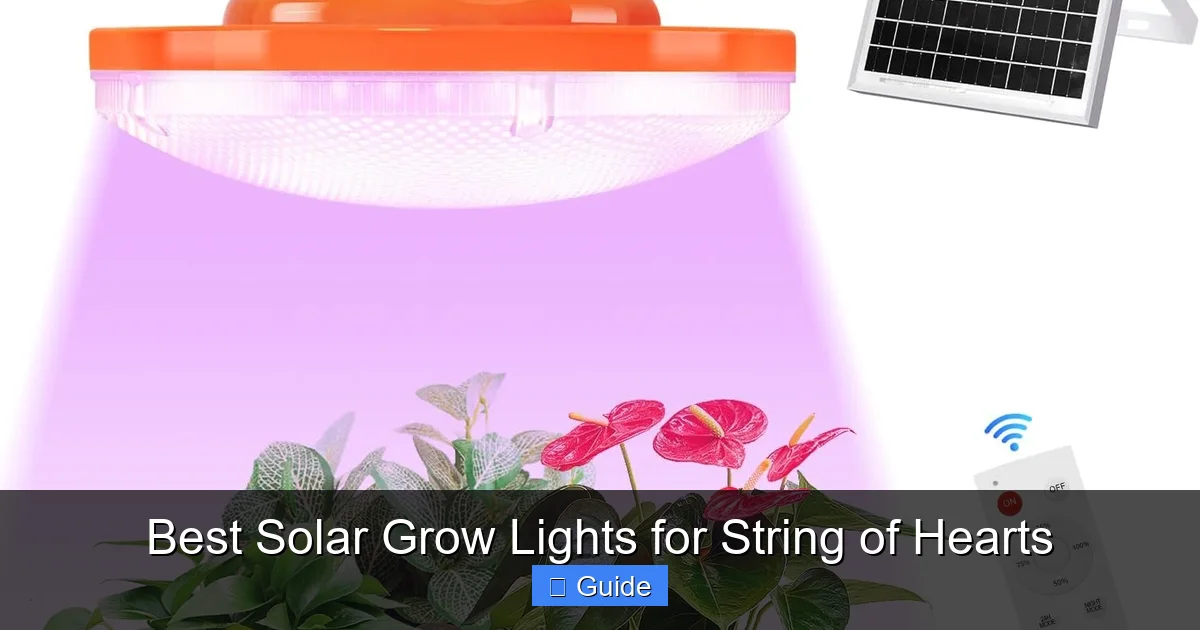
Visual guide about Best Solar Grow Lights for String of Hearts
Image source: m.media-amazon.com
Intensity matters as much as spectrum. Check the PPFD rating. Aim for at least 200 µmol/m²/s at canopy level. Higher is better for fast growth. Adjustable brightness lets you fine tune. Dimmer settings protect young seedlings.
Color rendering index (CRI) above 80 is ideal. High CRI shows true leaf color. It also helps you spot problems early. Choose a light with good CRI for visual checks.
Battery Life and Charging
Battery capacity determines run time. Look for at least 2000 mAh for a small panel. Larger panels may have 5000 mAh or more. Longer battery means more night hours. Cloudy days still give some charge.
Charging speed depends on panel size. A 5 watt panel charges a 2000 mAh battery in about four hours of sun. Bigger panels charge faster. Consider your average sun hours. Match panel wattage to battery size.
Smart controllers protect the battery. Overcharge protection extends life. Low voltage cut off prevents deep discharge. These features add reliability. They also reduce maintenance.
Durability and Mounting Options
Outdoor rated housing is a must for balcony use. IP65 rating resists rain and dust. UV resistant plastic prevents yellowing. Sturdy brackets hold the panel firm. Vibration from wind should not loosen the mount.
Flexible arms allow precise aiming. Clip mounts work on shelves. Magnetic bases stick to metal frames. Choose a mount that fits your space. Easy adjustment saves time later.
Weight matters for hanging setups. Light units under one kilogram are easy to suspend. Heavier units need strong hooks. Check ceiling load before installing. Safety first always.
Top Picks for String of Hearts
Model A – Compact Panel Light
Model A is a 10 watt foldable panel. It folds to a small bag. The panel charges a 3000 mAh battery. Run time reaches 12 hours on full charge. Spectrum covers 400 to 700 nanometers. It is one of the best solar grow lights for string of hearts in a compact form.
Mounting uses a built‑in kickstand. You can set it on a windowsill. The angle adjusts from 0 to 90 degrees. Light weight makes it portable. Great for renters who move often.
Price sits in the mid range. Warranty covers two years. Users report strong vine thickening after three weeks. The simple on/off switch is foolproof. No app needed.
Model B – Adjustable Arm Light
Model B features a 15 watt panel on a flexible arm. The arm extends up to 60 centimeters. You can aim light exactly at the canopy. Battery is 5000 mAh for up to 14 hours. It ranks high among the best solar grow lights for string of hearts for precision.
Base includes a heavy clamp. It grips tables up to 5 centimeters thick. The arm rotates 360 degrees. You can light multiple pots from one unit. Ideal for a small indoor garden.
Built‑in timer offers 4, 8, 12 hour cycles. Set it once and forget. LED indicator shows battery level. The unit is IP65 rated for balcony use. Durable aluminum frame resists corrosion.
Model C – Full Spectrum Strip Light
Model C is a 20 watt flexible strip. It adheres to any flat surface with strong tape. The strip covers a 1 meter length. Battery pack is separate, 6000 mAh. Run time reaches 16 hours. Many growers call it the best solar grow lights for string of hearts for shelf setups.
Spectrum includes UV and far red. This mimics natural sunlight closely. Plants show faster internode shortening. Leaves develop a waxy sheen. The strip can be cut every 10 centimeters for custom length.
Controller offers dimming from 10 to 100 percent. You can program sunrise and sunset ramps. This reduces shock to the plant. The kit includes a solar panel, battery, and mounting clips. All parts are weather proof.
How to Install and Use Solar Grow Lights
Choosing the Right Spot
Place the solar panel where it gets maximum sun. South facing roof or balcony is ideal. Avoid shade from trees or buildings. Even a few hours of shade cuts charge dramatically. Test with a phone compass app.
Mount the light unit close to the plant. Distance of 30 to 45 centimeters works well. Too close can cause leaf burn. Too far reduces intensity. Use a ruler to measure. Adjust as the plant grows.
Keep the panel clean. Dust blocks sunlight. Wipe with a damp cloth weekly. Check for bird droppings. Clean panels charge faster. A clean panel adds up to 20 percent more energy.
Wiring and Timer Setup
Connect the panel to the battery using the supplied cable. Polarity matters. Red to red, black to black. Secure connectors with zip ties. Loose wires cause intermittent charging.
Plug the light into the battery output. Turn on the timer. Set the desired photoperiod. Most string of hearts like 12 to 14 hours. Program the timer for consistent on/off times. Consistency drives steady growth.
Test the system for a full day. Verify the light turns on at night. Check battery level indicator. If battery drains too fast, increase panel size. If light stays dim, clean the panel. Simple checks prevent long term issues.
Seasonal Adjustments
Winter sun is lower and shorter. Increase timer to 14 hours. Add a reflective foil behind the plant. Foil bounces light back to leaves. This boosts effective intensity without extra power.
Summer days are long. Reduce timer to 10 hours. Too much light can stress the plant. Watch for leaf curling. Adjust down if you see signs. The plant will thank you.
Move the panel angle with the season. Tilt steeper in winter. Flatten in summer. Many panels have adjustable brackets. A small angle change adds up to 15 percent more charge. Keep a seasonal checklist handy.
Ongoing Care and Troubleshooting
Watering with Light in Mind
Light drives photosynthesis and water uptake. Bright light increases transpiration. Check soil moisture daily. Water when the top centimeter feels dry. Overwatering in high light causes root rot.
Use a well draining mix. Add perlite or pumice. Good drainage prevents soggy roots. A moisture meter helps beginners. Aim for a reading of 3 to 4 on a 1 to 10 scale.
Fertilize lightly during active growth. A balanced liquid fertilizer at quarter strength every two weeks works. Skip feeding in low light months. Excess nutrients burn roots under strong light.
Monitoring Growth and Health
Measure vine length weekly. Record in a notebook. Steady increase means light is sufficient. Stalled growth signals a problem. Compare to previous months.
Inspect leaves for color changes. Yellow edges often mean nitrogen deficiency. Brown tips can indicate light burn. Adjust light distance or intensity accordingly. Early action saves the plant.
Check for pests weekly. Spider mites love dry, bright conditions. Spray neem oil if you see webs. Keep humidity moderate. A small humidifier helps in dry indoor air.
Fixing Common Problems
If the light never turns on, check the battery. A dead battery needs replacement. Most units use standard 18650 cells. Swap them easily. Keep spare cells on hand.
If the panel does not charge, inspect the cable. Frayed wires break the circuit. Replace the cable if damaged. Also verify the panel faces the sun. A simple reposition often solves it.
If growth remains leggy, increase light hours. Add a second panel if needed. Combine two units for higher PPFD. The plant will respond with compact growth. Patience and observation are key.
Conclusion
String of hearts thrives with bright, consistent light. Solar grow lights give you that light for free. Choose a model with full spectrum, good battery, and sturdy mount. Install the panel where sun is abundant. Set a timer for 12 to 14 hours. Water wisely and watch for pests. Adjust seasonally for best results. With the right setup your vines will cascade beautifully all year. Happy growing.
Frequently Asked Questions
How long does a solar grow light battery last?
A typical 3000 mAh battery runs the light for 10 to 12 hours on a full charge. Battery life spans 2 to 3 years with proper care.
Can I leave the solar panel outside all year?
Yes, choose an IP65 rated panel for rain and dust resistance. Clean it regularly for optimal performance.
What distance should the light be from the plant?
Keep the light 30 to 45 centimeters above the canopy. Adjust as the plant grows to maintain intensity.
Do I need a timer for my solar grow light?
A timer ensures a consistent photoperiod. Most models include a built‑in timer with multiple cycle options.
Will a solar grow light increase my electricity bill?
No, the system runs on stored solar energy. There is no grid electricity consumption after the initial purchase.
Can I use multiple solar grow lights together?
Yes, you can combine units to raise light intensity. Ensure each panel has its own battery or a shared controller.